I compiled a list of as fabrics, fibres and related items as possible (278 items which I will make available at the end of the A to Z), from several sources, the most comprehensive of which was Wikipedia. Since there are only 26 letters in the alphabet, I could not write in detail about every instance so I have taken snippets of text for the brief descriptions and linked to the source in the name of the item. I am indebted to all the contributors to those Wikipedia pages and the depth of knowledge to be found there…
Printing on Fabrics
There are many techniques for printing on fabric, ranging from ancient and artisanal to the very latest digital and modern chemical processes. A company specialising in digital printing has produced a splendid guide to all the methods here, and I have taken the main ideas from it below, but they give detailed pros and cons for each method – check them out… Needless to say, Wikipedia also has a compendious article on fabric printing which says more about preparing the fabrics and dyestuffs.
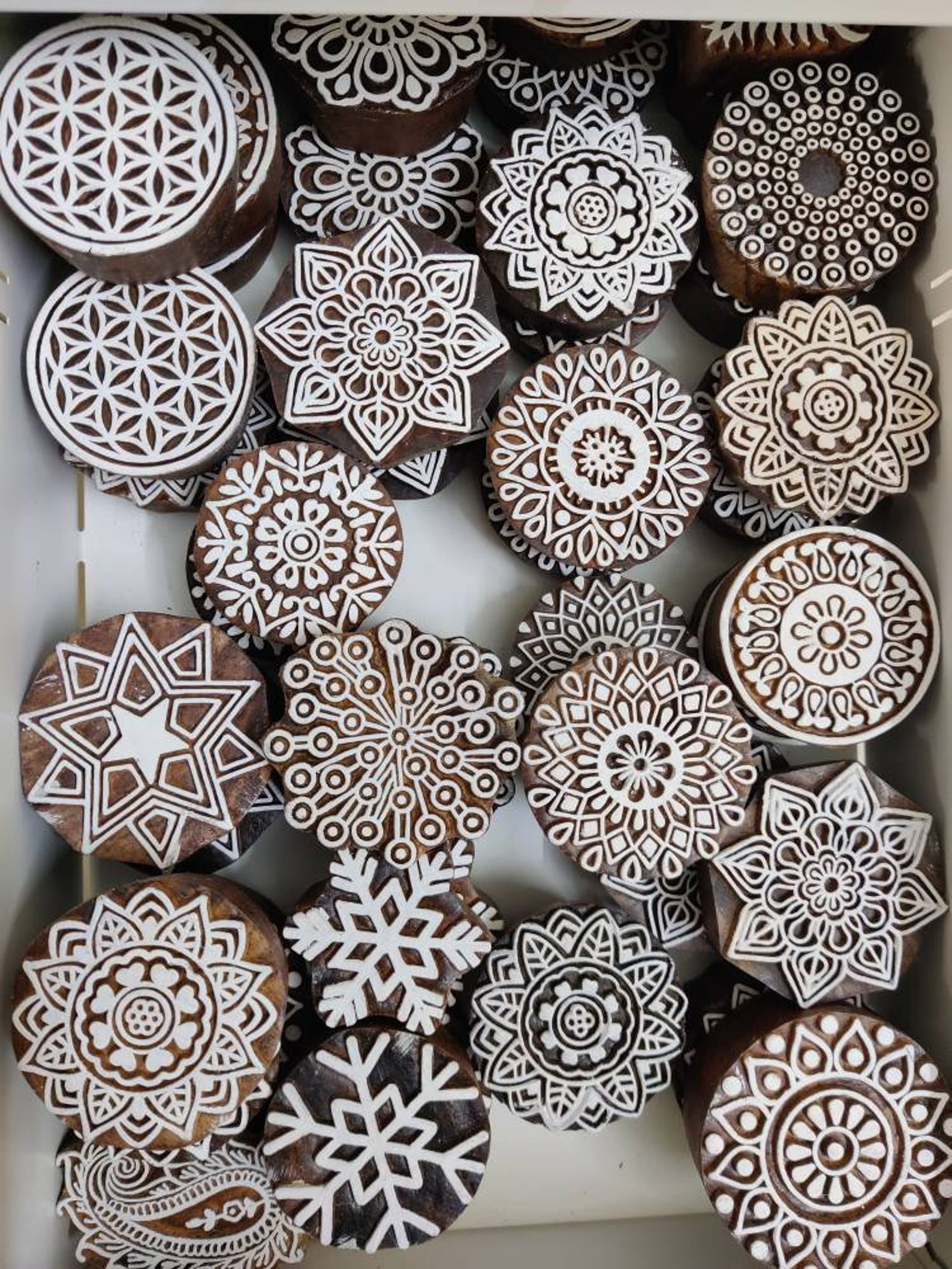
Block Printing
This method of carving wooden blocks into a design or pattern, inking it up and applying to a fabr either singly or as a repeat, is centuries old.
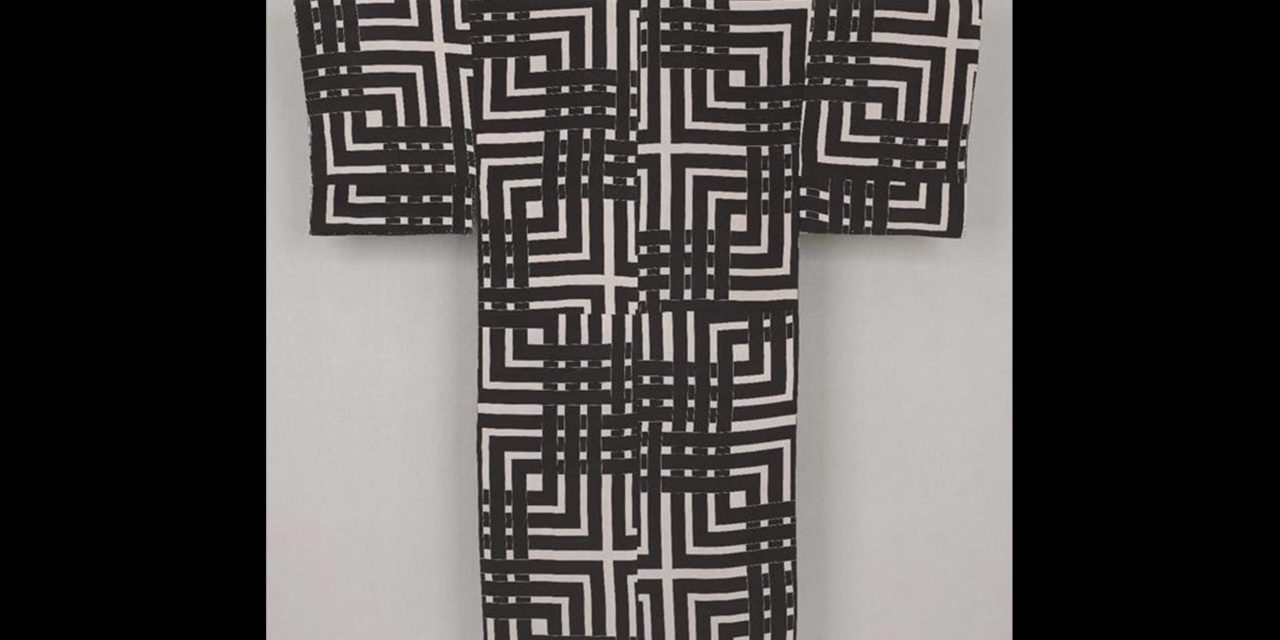
Stencil Printing
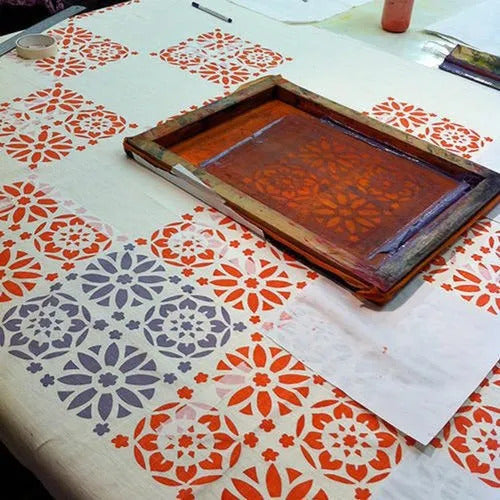
Also Artisanal, Stencil printing involve cutting a stencil and applying ink through the holes – it is also labour intensive…
“Japanese paper stencils, or katagami (literally pattern paper), are the pattern-bearing tools used in a textile-dyeing process known as katazome. In this process, a dye-resistant paste is applied to cloth through a stencil made of mulberry paper which has been waterproofed with persimmon juice.” – katazome (stencil printing)
I compiled a list of as fabrics, fibres and related items as possible (278 items which I will make available at the end of the A to Z), from several sources, the most comprehensive of which was Wikipedia. Since there are only 26 letters in the alphabet, I could not write in detail about every instance so I have taken snippets of text for the brief descriptions and linked to the source in the name of the item. I am indebted to all the contributors to those Wikipedia pages and the depth of knowledge to be found there…
Rotary Printing
Rotary printing is a high-speed fabric printing technique that is commonly used for mass production. It involves the use of cylindrical screens, which are engraved with the desired design and rotated continuously to print the fabric. Rotary printing allows for large quantities of fabric to be printed quickly and efficiently, making it a preferred choice for manufacturers.
Flock Printing
Flock printing is a fabric printing technique that involves applying tiny fibers, called flock, onto the fabric to create a velvety texture. The flock is typically made of nylon or polyester and is adhered to the fabric using adhesive or heat. Flock printing offers a unique and luxurious look, adding depth and texture to the fabric.
Flock printed wallpapers used to be popular but have gone out of fashion but velour and flock printed fabrics are still in demand. The examo#ple below is based on Van Gogh’s Starry Sky and produced, unsurprisingly, by a Dutch company…

Digital Printing
Digital printing has revolutionized the world of fabric printing, offering endless possibilities and creative freedom. Unlike traditional printing methods, digital printing allows for precise and detailed designs to be printed directly onto fabric using specialized inkjet printers. This innovative technique has transformed the textile industry, making it easier and more efficient to produce customized fabrics with vibrant colors and intricate patterns.
House of U blog
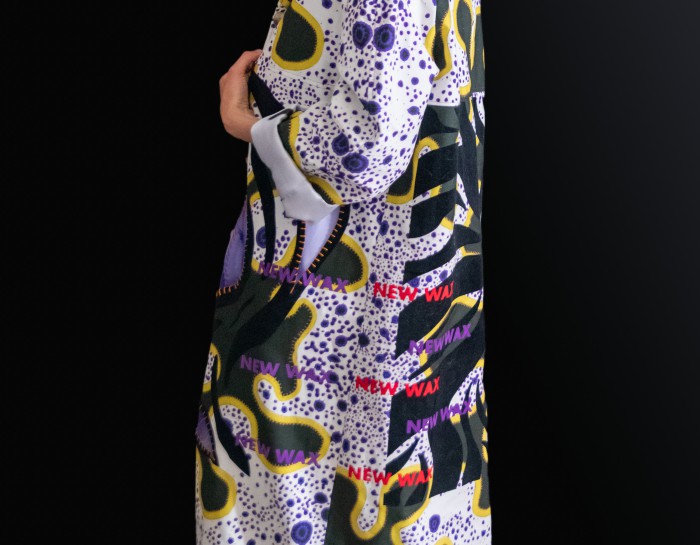
Silk Screen Printing
Screen printing is one of the most versatile and widely used methods for fabric printing. It involves transferring ink through a mesh screen onto the fabric, creating a vibrant and long-lasting design. Screen printing is particularly suitable for large-scale productions, as it allows for quick and efficient printing on a variety of fabrics.
The process of screen printing begins with the creation of a stencil, which is then attached to a fine mesh screen. Ink is applied to the screen, and a squeegee is used to push the ink through the stencil and onto the fabric.
House of U blog
Sublimation Printing – Heat Transfer
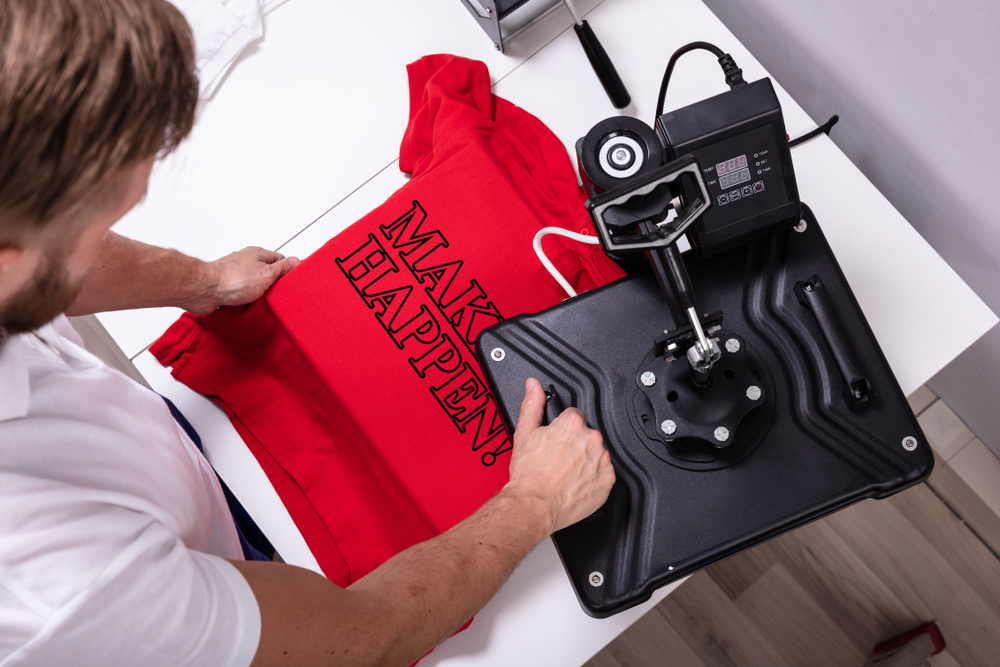
Designs can be prepared on special paper and then heat-pressed onto the fabric. I mself started a business making Needlepoint Tapestry kits by heat transferring designs created on the computer, printed using a laser printer onto the special paper. Traditionally, such kits were silk-screen printed which meant a separate screen for each colour and since that would take up a lot of storage space, the whole print run would have to be done at once and the screens discarded. Using sublimation printing, I was able to print a single print for a customer!
Discharge Printing
Discharge printing is a technique that involves removing the color from a dyed fabric to create unique and faded designs. It utilizes a chemical agent that reacts with the fabric’s dye, causing it to lose its color. The result is a soft and vintage-like appearance, with the design appearing as if it has been bleached or faded over time.

“P” Fabrics
Paduasoy (French: peau de soie) – a luxurious strong corded or grosgrain silk textile that originated in Early Modern Europe. The term paduasoy first appeared in English in 1663. Paduasoy silk was woven in a variation of the satin weave, with bindings arranged to create fine cross-ridges across the fabric.

Percale – a closely woven plain-weave fabric often used for bed covers. Percale has a thread count of about 180 or higher and is noticeably tighter than twill or sateen. It has medium weight, is firm and smooth with no gloss, and washes very well. It is made from both carded and combed yarns, and may be woven of various fibers, such as cotton, polyester, or various blends.
Piqué – using either a specialized weaving or knitting process to create a raised, textured pattern, like a honeycomb or waffle weave. Woven piqué uses a dobby or Jacquard loom with additional “stuffer” yarns for depth. Knitted piqué uses a cross-tuck knit structure on a knitting machine. The resulting fabric is typically medium-weight, made from cotton or cotton blends, and is durable, breathable, and has a structured, polished look.

Pleated Linen – a form of processing linen which results in a fabric which is heavily pleated and does not crease like normal linen fabric. The earliest form of pleated linen dates from ancient Egypt and can be seen in a garment known as the Tarkhan dress, which is over 5000 years old and is believed to be one of the oldest dresses in existence. In the 1950s the Irish fashion designer, Sybil Connolly, developed a method of hand-pleating linen with the handkerchief linen manufacturer Spence Bryson. Handkerchief linen is a light form of linen, and this pleating process used 9 yards of the material to create 1 yard of pleated linen. The pleating of the fabric meant that unlike other linen garments, ones made with pleated linen were uncrushable, could be packed without becoming creased and maintained their shape.

Plush – a textile having a cut nap or pile the same as fustian or velvet. Its softness of feel gave rise to the adjective “plush” to describe something soft or luxurious, which was extended to describe luxury accommodation, or something rich and full. This has also been known to be described as früh, or middlefrüh in more affordable varieties. Originally the pile of plush consisted of mohair or worsted yarn, but now silk by itself or with a cotton backing is used for plush, the distinction from velvet being found in the longer and less dense pile of plush. The soft material is largely used for upholstery and furniture purposes, and is also much employed in dress and millinery. Modern plush are commonly manufactured from synthetic fibres such as polyester. One of the largest uses of this fabric is in the production of stuffed toys, with small plush toys made from plush fabric, such as teddy bears, to the point these are often addressed as “plush toys” or “plushies” in North American English.
Polar Fleece – a soft fabric made from polyester that is napped and insulating.

Pongee – a type of slub-woven fabric, created by weaving with yarns that have been spun by varying the tightness of the yarn’s twist at various intervals. Pongee is typically made from silk, and results in a textured, “slubbed” appearance; pongee silks range from appearing similar to satin to appearing matte and unreflective. Though pongee is typically made out of silk, it can be woven from a variety of fabrics, such as cotton, linen and wool.
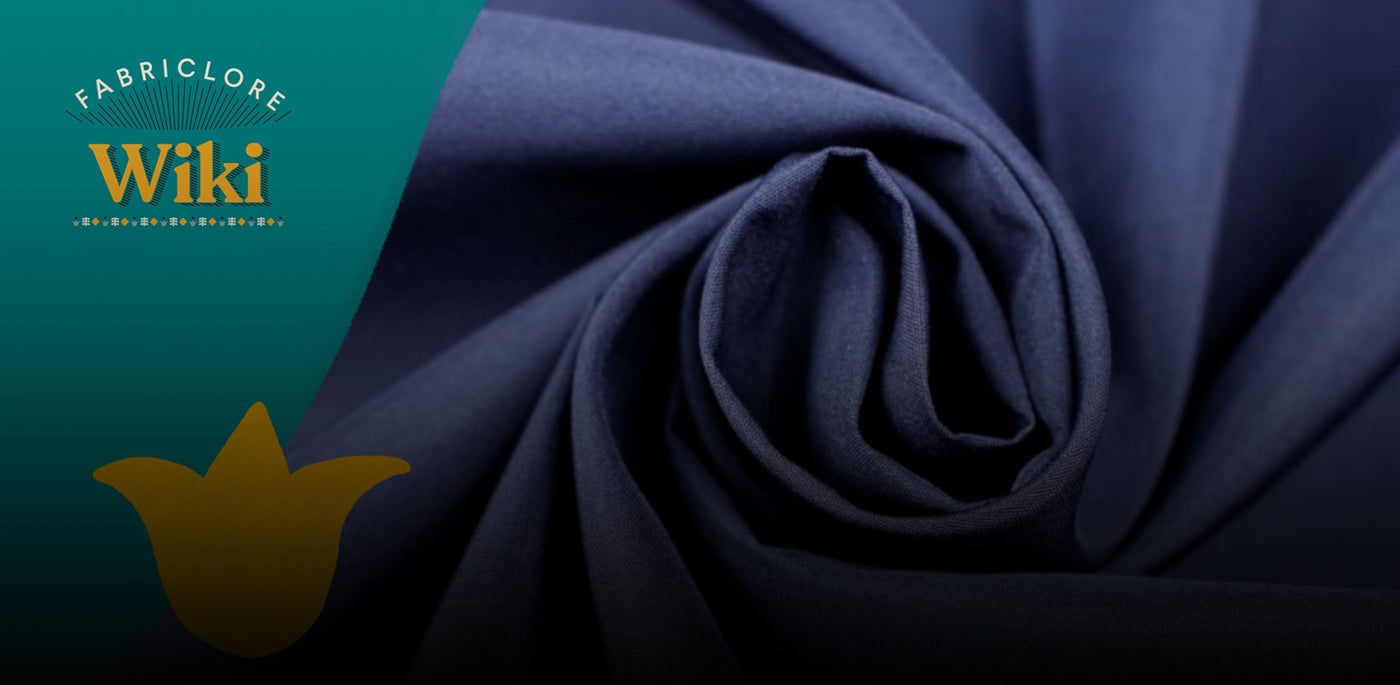
Poplin, Tabbinet, (US – Broadcloth) – a fine (but thick) wool, cotton or silk fabric with crosswise ribs that typically give a corded surface. Nowadays, the name refers to a strong material in a plain weave of any fiber or blend. Poplin traditionally consisted of a silk warp with a weft of worsted yarn. In this case, as the weft is in the form of a stout cord, the fabric has a ridged structure, like rep, which gives depth and softness to the lustre of the silky surface.[3] The ribs run across the fabric from selvedge to selvedge.
I compiled a list of as many fabrics, fibres and related items as possible (278 items), from several sources, the most comprehensive of which was Wikipedia. Since there aer only 26 letters in the alphabet, I could not write in detail about every instance so I have taken snippets of text for the brief descriptions and linked to the source in the name of the item. I am indebted to all the contributors to those Wikipedia pages and the depth of knowledge to be found there…
So many different printing techniques. There are some graphic arts classes at the schools, and they do some of this printing there. At least, it used to be one of the projects they did during the school year.
There are indeed and recently I learned that you can do “lino” printing with blocks of rubber and that it is easier to work, so I think I might like to take it up again…
Block printing and screen printing is labor intensive. Maybe rare to see these methods in operation now.
Block printing might have retreated to a few artisanal fabric printers but screen-printing is big business still. Whilst heat press is good for small quantities, one even, printing say 100 t-shirts is much cheaper per unit with screen-printing…
Thanks for this clarification. I saw a cottage industry company doing block printing on cloth. You are correct. They did block printing of artistic designs.
They probably charged high prices for the ‘atrisanal’ work too, I bet…
Pleating reminded me of the fabulous Fortuny Delphos gown from 1909:
https://www.fortuny.shop/delphos-gown-fortuny-dress/
In my dreams, I would own one of these gorgeous creations, but there would not be many occasions to wear it in the back woods of rural Nova Scotia…..
This would be my dream garment to wear to the New York Metropolitan Opera if I were transformed like Cher in Moonstruck 🙂
Well you could put it on to watch Opera on the big small-screen in the exclusive box of your own home…
first video was mesmerizing to watch
I see what you mean, Li…
Block printing is my jam! Although I haven’t done all that much on fabric.
https://nydamprintsblackandwhite.blogspot.com/2026/04/p-is-for-pandora.html
Could be another string to your bow, Anne…
Really enjoyed reading this. My husband is a letterpress printer and we had a job shop for many years, printing loads of posters and bumper stickers, as well as tickets, wedding invitations, the lot. He did printed from linoleum blocks and woodcuts he made himself, and well as from metal engravings. We did print on cloth occasionally, and I love the effect.
It’s really fun to read the descriptions of the varies of fabric that one has visualized and inferred from the context in reading over the years. . .poplin, jacquard, twill. Percale I have encountered when reading the labels on sheets. I usually avoid them when I see the word, because they tend not to be 100% cotton, but I appreciate from your description that they are a good tight weave.
Thanks, Josna, it is comments like this that make the whole exercise of this year’s theme worthwile, of course I answered my own curiosity but I’m glad I answered questions for others too…