“Choose any subject you would like to write about…” that is the object of the A to Z Challenge, and thinking of things that interest me is not a problem for me, but choosing a subject not only to write about, but to write in a way that other people will catch my interest – that is the real challenge! This year I turn to a subject, close to our skin if not our hearts, and yet, again, I wonder if this subject will get some people past the title on the list – dismissed as niche? For this year, my theme is What We Wear – Fabrics and Fibres
I could only find one fabric beginning with “U” and casting around for a theme for today, Underwear fabrics was what I came up with…
Silk
Following on from the recent S for Silk, silk has long been the fabric of choice for underwear – if you could afford it – after all, what does anyone, female or male want from the garments we wear next to our skin? Silky smoothness – not just for the feel of it, but to allow outer garments to move unimpeded, thinness – minimise the VPL, comfort, breathability and, if we anticipate our underwear being seen in the right circumstances, lustre, the projection of wealth and quality. So a lot rides on silk underwear or whatever other fibres you can afford… Of course there are other factors around choosing underwear fabric other than cost – warmth, practicality, stretchability, longevity, and so the majority of underwear is not silk, even though some modern fabrics may seek to emulate the illustrious silk (which is hard to maintain and wash).
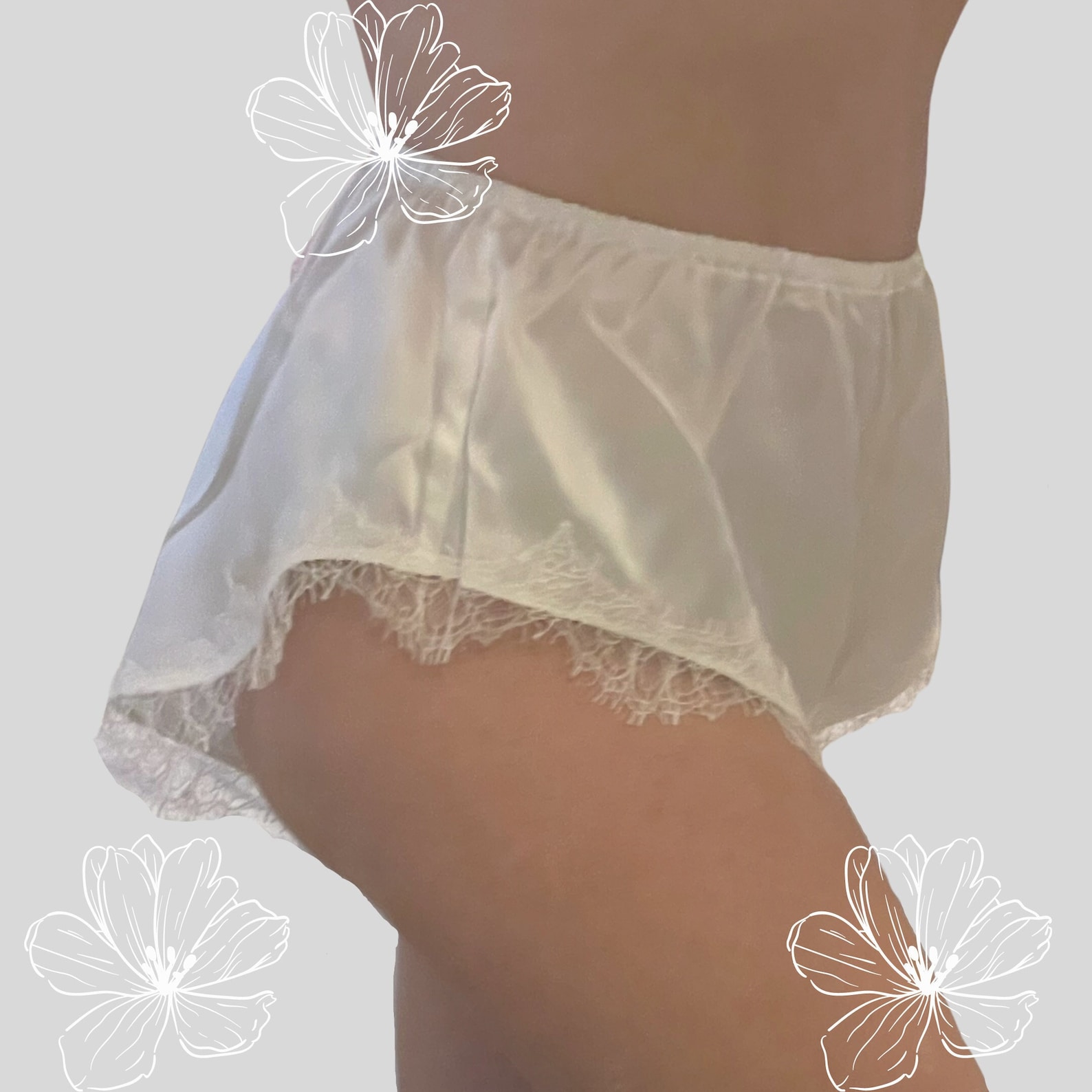
These 100% Silk French Cami Knickers are made by an Australian firm and sell for £79.21! Not only do they confirm the costliness of silk, still, but they also introduce the other element which often enhances even the luxury of silk – a touch of lace trim…
Satin
The first substitute for silk in underwear was probably satin – a fabric where the satin weave creates the lustrous shine of silk – at least on one side (usually the outside) and satin was the affordable fabric for a certain style of underwear up to the present day, although the fibre composing the satin has changed with the advent of synthetics and semi-synthetics.
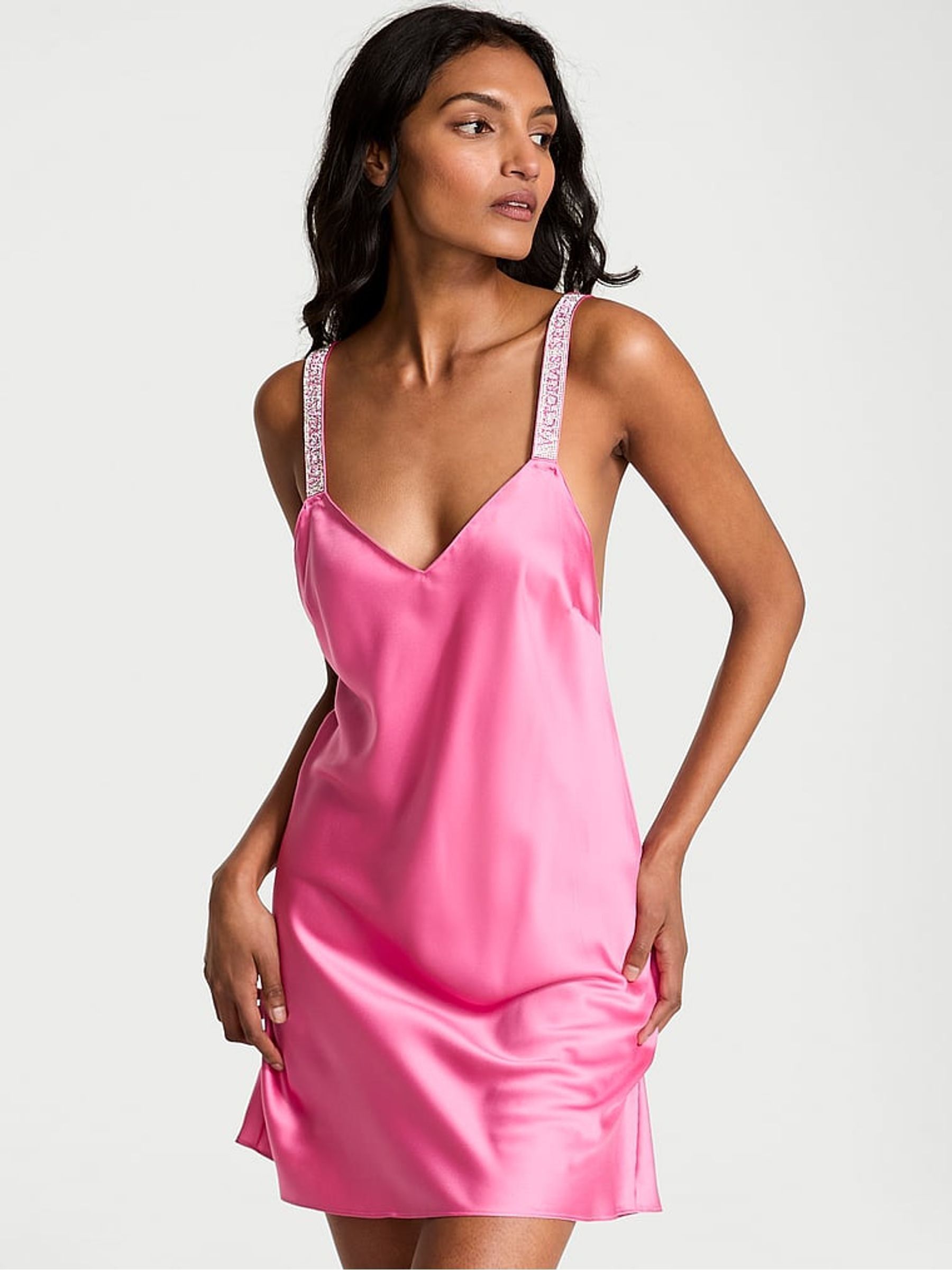
This Rose Garden Pink Shine Satin Strappy Back Slip from Victoria’s Secret demonstrates the shine of satin
Synthetics
Synthetic fabric underwear (polyester, nylon, spandex) is popular for its lightweight, stretchy, and moisture-wicking properties, ideal for activewear. However, these materials often lack breathability, trapping heat and moisture, which can cause skin irritation and increase the risk of bacterial or yeast infections. For many women who are more prone to irritation, rashes, and other infections, synthetic underwear is simply not an option for them. This leaves many women feeling torn in their choice of underwear.
Beach Candy are a company who “continues to work to channel all the benefits of synthetic underwear – including flexibility, durability, and mobility – into a more sustainable, yet still comfortable undergarment.”
Cotton
100% cotton is the go-to option for many women who are seeking comfort in their underwear, it lacks the moisture-wicking element.
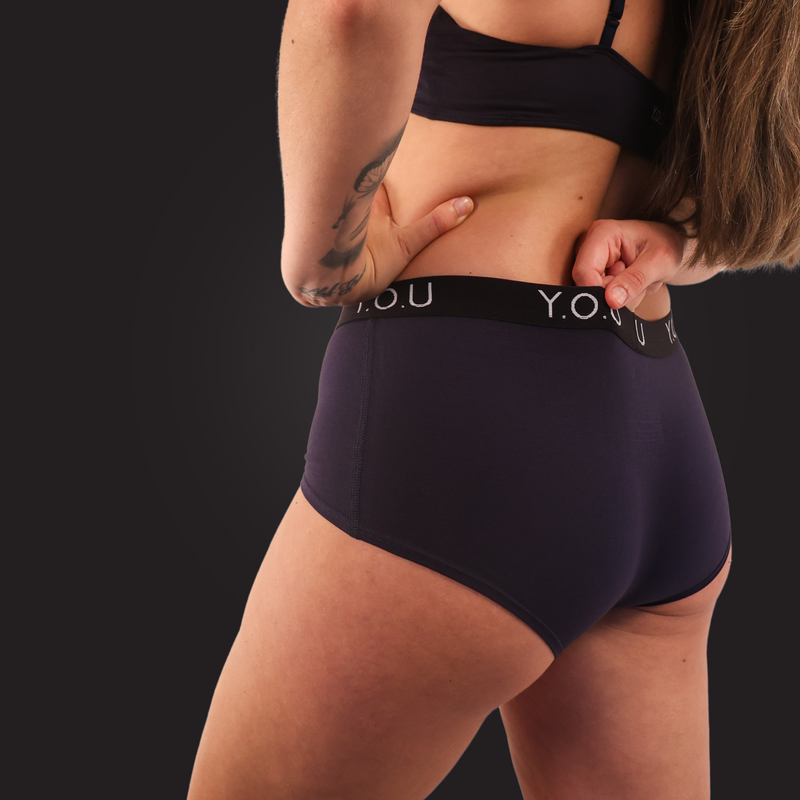
These Boy Shorts from Y.O.U. are marketed as Ethical clothing being made of 100% Organic cotton made from Fairtrade and GOTS certified organic cotton that is PETA-Approved vegan.
The picture above shows us, perhaps, two things – firstly, in the 1920’s, when dresses were long, the popular colours for underwear (of the more fashionable kind) were peach and flesh tones but with the advent of the mini-skirt in the 1960’s offering the3 possibility of underwear being glimpsed, colours, patterns and printed words mitigated againdt the underwear being mistaken for flesh and the “boy shorts” above, go further in being deliberately unfeminine rejecting any idea of being for display and sexy.
Blends
Blended fabric underwear combines natural fibres like cotton or bamboo with synthetic materials such as spandex, elastane, or modal to improve elasticity, moisture-wicking, and durability. These blends offer better shape retention after washing, superior comfort, and enhanced breathability compared to 100% cotton. Popular, durable choices include 95% cotton/5% spandex.
Yes! Men wear underwear too! These Boxer Briefs from Step One, have “Bamboo/Viscose, Anti-chafe ‘Technology””
Semi-Synthetics
The Boxer briefs above are blends but they are also semi-synthetics – viscose is made from wood pulp cellulose and bamboo fibre is made by extracting the cellulose from bamboo and spinning it like a synthetic fibre. (See my A to Z “S” post). Modal is another semi-synthetic and you can read a comparison between Modal and Bamboo fabrics here.
So in summary, your choice of fabric for underwear will depend on cost, style, comfort, ethical considerations, breathability, moisture wicking, and durability. Personally, I prefer cotton jersey shorts which fit most of those criteria for me, and may I say that in writing this article, this intrepid researcher has had to look at more pictures of underwear than since discovering catalogues as a teenager… I hope this has been a cogent if scanty rifle through the underwear drawer…
A “U” Fabric
Ultrasuede – Ultrasuede is the trade name for a synthetic ultra-microfiber fabric which mimics suede leather. It has a woven fabric surface, but resists pilling or fraying because it is combined with a polyurethane foam in a non-woven structure.
Polyester fibers are made through a process called polymerization. These fibers are finer than regular polyester, giving them a smooth texture.
Spinning
The fibers are turned into a non-woven fabric through methods like needle-punching or heat bonding, forming a soft and strong material.
Microfiber Treatment
The fabric is treated to soften and refine the fibers, giving it a smooth, suede-like finish.
Surface Finishing
The fabric is treated with brushing, heat or mechanical processes to improve its texture and durability, giving it a soft, suede-like finish.
Cutting & Shaping
The fabric is cut to the necessary size for use in fashion items, upholstery or automotive interiors.
Quality Control
The fabric is tested for texture, color and durability to ensure it is soft, stain-resistant and long-lasting.
I compiled a list of as many fabrics, fibres and related items as possible (278 items), from several sources, the most comprehensive of which was Wikipedia. Since there are only 26 letters in the alphabet, I could not write in detail about every instance so I have taken snippets of text for the brief descriptions and linked to the source in the name of the item. I am indebted to all the contributors to those Wikipedia pages and the depth of knowledge to be found there…
I compiled a list of as fabrics, fibres and related items as possible (278 items which I will make available at the end of the A to Z), from several sources, the most comprehensive of which was Wikipedia. Since there are only 26 letters in the alphabet, I could not write in detail about every instance so I have taken snippets of text for the brief descriptions and linked to the source in the name of the item. I am indebted to all the contributors to those Wikipedia pages and the depth of knowledge to be found there…
Printing on Fabrics
There are many techniques for printing on fabric, ranging from ancient and artisanal to the very latest digital and modern chemical processes. A company specialising in digital printing has produced a splendid guide to all the methods here, and I have taken the main ideas from it below, but they give detailed pros and cons for each method – check them out… Needless to say, Wikipedia also has a compendious article on fabric printing which says more about preparing the fabrics and dyestuffs.
Block Printing
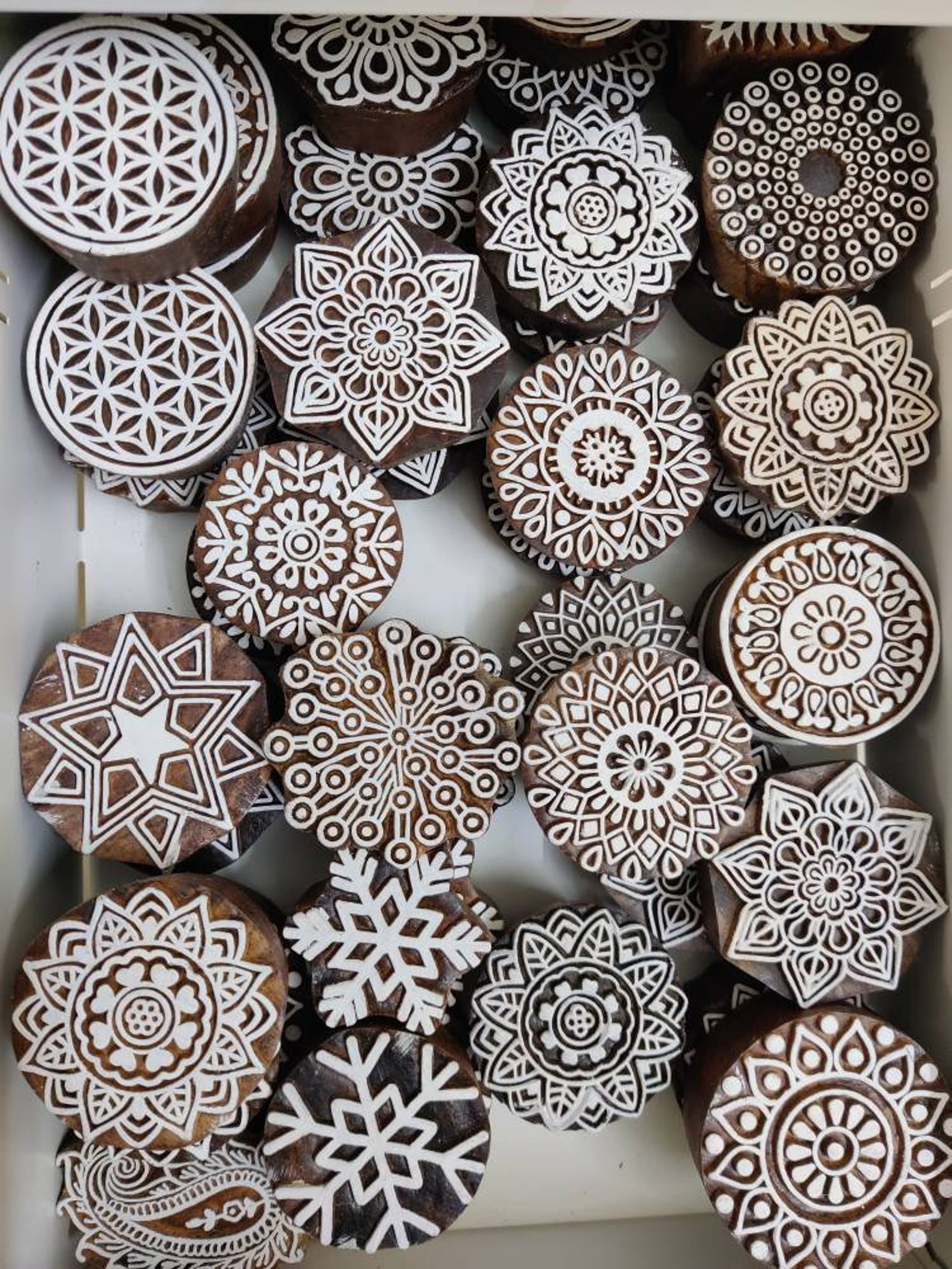
This method of carving wooden blocks into a design or pattern, inking it up and applying to a fabr either singly or as a repeat, is centuries old.
Hand carved Indian wooden printing blocks for sale on Etsy
Stencil Printing
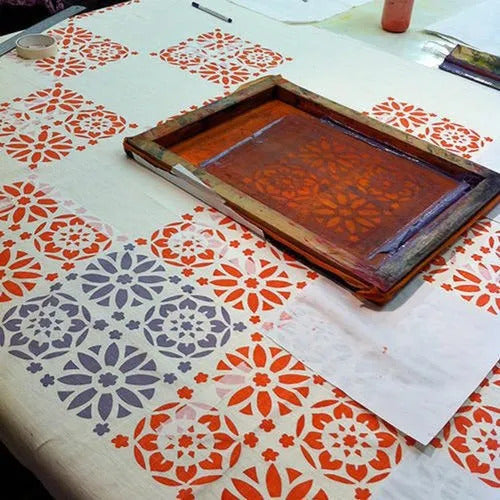
Also Artisanal, Stencil printing involve cutting a stencil and applying ink through the holes – it is also labour intensive…
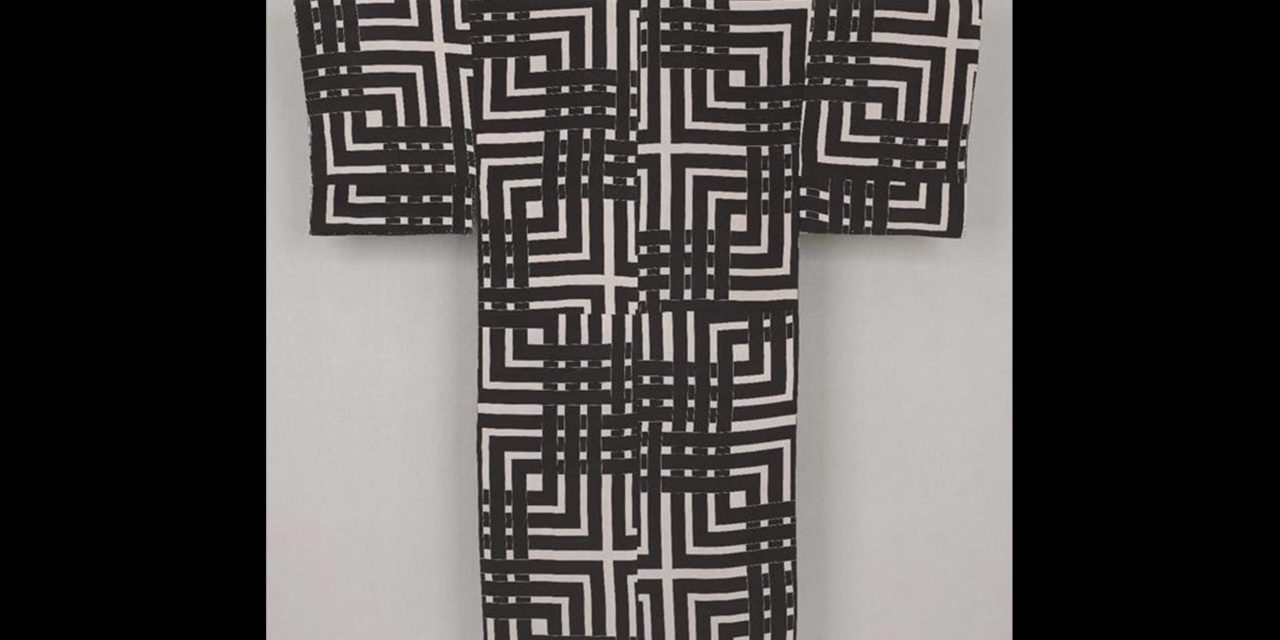
“Japanese paper stencils, or katagami (literally pattern paper), are the pattern-bearing tools used in a textile-dyeing process known as katazome. In this process, a dye-resistant paste is applied to cloth through a stencil made of mulberry paper which has been waterproofed with persimmon juice.” – katazome (stencil printing)
I compiled a list of as fabrics, fibres and related items as possible (278 items which I will make available at the end of the A to Z), from several sources, the most comprehensive of which was Wikipedia. Since there are only 26 letters in the alphabet, I could not write in detail about every instance so I have taken snippets of text for the brief descriptions and linked to the source in the name of the item. I am indebted to all the contributors to those Wikipedia pages and the depth of knowledge to be found there…
Rotary Printing
Rotary printing is a high-speed fabric printing technique that is commonly used for mass production. It involves the use of cylindrical screens, which are engraved with the desired design and rotated continuously to print the fabric. Rotary printing allows for large quantities of fabric to be printed quickly and efficiently, making it a preferred choice for manufacturers.
Flock Printing
Flock printing is a fabric printing technique that involves applying tiny fibers, called flock, onto the fabric to create a velvety texture. The flock is typically made of nylon or polyester and is adhered to the fabric using adhesive or heat. Flock printing offers a unique and luxurious look, adding depth and texture to the fabric. Flock printed wallpapers used to be popular but have gone out of fashion but velour and flock printed fabrics are still in demand. The examo#ple below is based on Van Gogh’s Starry Sky and produced, unsurprisingly, by a Dutch company…
Digital Printing
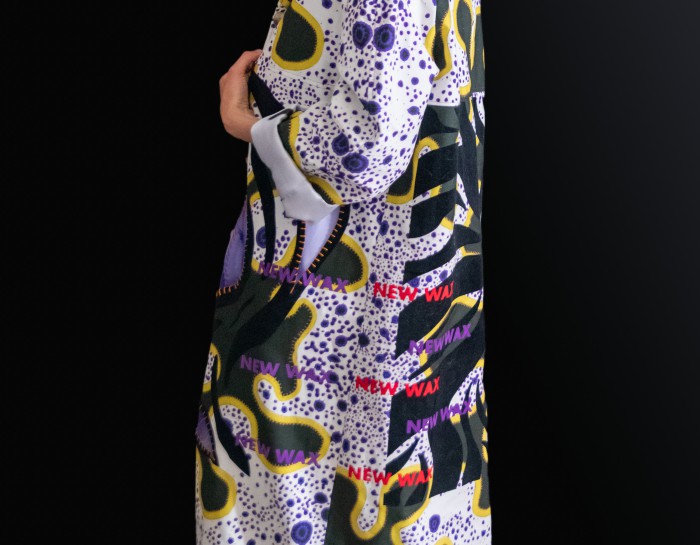
Digital printing has revolutionized the world of fabric printing, offering endless possibilities and creative freedom. Unlike traditional printing methods, digital printing allows for precise and detailed designs to be printed directly onto fabric using specialized inkjet printers. This innovative technique has transformed the textile industry, making it easier and more efficient to produce customized fabrics with vibrant colors and intricate patterns. House of U blog
Maechouw’s striking design stands out beautifully as the colors and patterns combine nicely with the texture of the fabric. The details also reflect beautifully on the material. – House of U
Silk Screen Printing
Screen printing is one of the most versatile and widely used methods for fabric printing. It involves transferring ink through a mesh screen onto the fabric, creating a vibrant and long-lasting design. Screen printing is particularly suitable for large-scale productions, as it allows for quick and efficient printing on a variety of fabrics.
The process of screen printing begins with the creation of a stencil, which is then attached to a fine mesh screen. Ink is applied to the screen, and a squeegee is used to push the ink through the stencil and onto the fabric. House of U blog
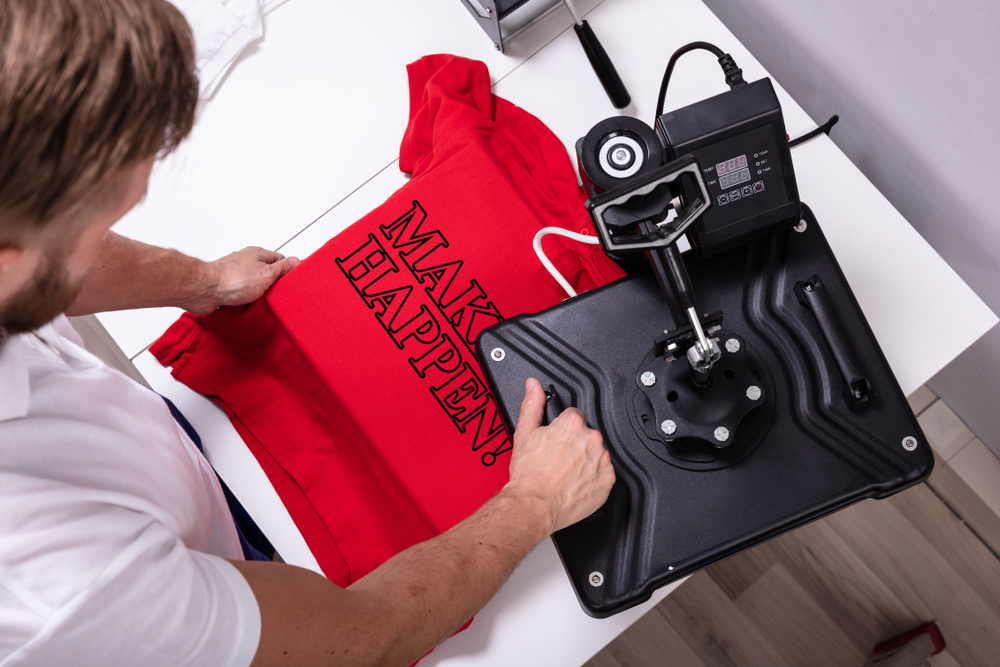
Designs can be prepared on special paper and then heat-pressed onto the fabric. I mself started a business making Needlepoint Tapestry kits by heat transferring designs created on the computer, printed using a laser printer onto the special paper. Traditionally, such kits were silk-screen printed which meant a separate screen for each colour and since that would take up a lot of storage space, the whole print run would have to be done at once and the screens discarded. Using sublimation printing, I was able to print a single print for a customer!
Discharge printing is a technique that involves removing the color from a dyed fabric to create unique and faded designs. It utilizes a chemical agent that reacts with the fabric’s dye, causing it to lose its color. The result is a soft and vintage-like appearance, with the design appearing as if it has been bleached or faded over time.
Paduasoy (French: peau de soie) – a luxurious strong corded or grosgrain silk textile that originated in Early Modern Europe. The term paduasoy first appeared in English in 1663. Paduasoy silk was woven in a variation of the satin weave, with bindings arranged to create fine cross-ridges across the fabric.
Percale – a closely woven plain-weave fabric often used for bed covers. Percale has a thread count of about 180 or higher and is noticeably tighter than twill or sateen. It has medium weight, is firm and smooth with no gloss, and washes very well. It is made from both carded and combed yarns, and may be woven of various fibers, such as cotton, polyester, or various blends.
Piqué – using either a specialized weaving or knitting process to create a raised, textured pattern, like a honeycomb or waffle weave. Woven piqué uses a dobby or Jacquard loom with additional “stuffer” yarns for depth. Knitted piqué uses a cross-tuck knit structure on a knitting machine. The resulting fabric is typically medium-weight, made from cotton or cotton blends, and is durable, breathable, and has a structured, polished look.
Pleated Linen – a form of processing linen which results in a fabric which is heavily pleated and does not crease like normal linen fabric. The earliest form of pleated linen dates from ancient Egypt and can be seen in a garment known as the Tarkhan dress, which is over 5000 years old and is believed to be one of the oldest dresses in existence. In the 1950s the Irish fashion designer, Sybil Connolly, developed a method of hand-pleating linen with the handkerchief linen manufacturer Spence Bryson. Handkerchief linen is a light form of linen, and this pleating process used 9 yards of the material to create 1 yard of pleated linen. The pleating of the fabric meant that unlike other linen garments, ones made with pleated linen were uncrushable, could be packed without becoming creased and maintained their shape.
Jacqueline Kennedy’s official White House portrait featuring a pleated linen Sybil Connolly design Wikipedia
Plush – a textile having a cut nap or pile the same as fustian or velvet. Its softness of feel gave rise to the adjective “plush” to describe something soft or luxurious, which was extended to describe luxury accommodation, or something rich and full. This has also been known to be described as früh, or middlefrüh in more affordable varieties. Originally the pile of plush consisted of mohair or worsted yarn, but now silk by itself or with a cotton backing is used for plush, the distinction from velvet being found in the longer and less dense pile of plush. The soft material is largely used for upholstery and furniture purposes, and is also much employed in dress and millinery. Modern plush are commonly manufactured from synthetic fibres such as polyester. One of the largest uses of this fabric is in the production of stuffed toys, with small plush toys made from plush fabric, such as teddy bears, to the point these are often addressed as “plush toys” or “plushies” in North American English.
Polar Fleece – a soft fabric made from polyester that is napped and insulating.
Blankets made out of polar fleece
Pongee – a type of slub-woven fabric, created by weaving with yarns that have been spun by varying the tightness of the yarn’s twist at various intervals. Pongee is typically made from silk, and results in a textured, “slubbed” appearance; pongee silks range from appearing similar to satin to appearing matte and unreflective. Though pongee is typically made out of silk, it can be woven from a variety of fabrics, such as cotton, linen and wool.
Poplin, Tabbinet, (US – Broadcloth) – a fine (but thick) wool, cotton or silk fabric with crosswise ribs that typically give a corded surface. Nowadays, the name refers to a strong material in a plain weave of any fiber or blend. Poplin traditionally consisted of a silk warp with a weft of worsted yarn. In this case, as the weft is in the form of a stout cord, the fabric has a ridged structure, like rep, which gives depth and softness to the lustre of the silky surface.[3] The ribs run across the fabric from selvedge to selvedge.
I compiled a list of as many fabrics, fibres and related items as possible (278 items), from several sources, the most comprehensive of which was Wikipedia. Since there aer only 26 letters in the alphabet, I could not write in detail about every instance so I have taken snippets of text for the brief descriptions and linked to the source in the name of the item. I am indebted to all the contributors to those Wikipedia pages and the depth of knowledge to be found there…
“Choose any subject you would like to write about…” that is the object of the A to Z Challenge, and thinking of things that interest me is not a problem for me, but choosing a subject not only to write about, but to write in a way that other people will catch my interest – that is the real challenge! This year I turn to a subject, close to our skin if not our hearts, and yet, again, I wonder if this subject will get some people past the title on the list – dismissed as niche? For this year, my theme is What We Wear – Fabrics and Fibres
Beta Cloth
Beta cloth is a type of fireproof silica fiber cloth that was used in the production of Apollo/Skylab A7L space suits, the Apollo Thermal Micrometeoroid Garment, the McDivitt Purse, and in a variety of other specialized applications.
It is a material similar to fiberglass that is woven into a very tiny mesh, resulting in a cloth that does not catch fire and will only melt at temperatures higher than 650 degrees Celsius.
Teflon is used to coat the fibers so that they have less of a propensity to break or fold while they are being handled and so that they last longer. from Fabriclore
Beta Cloth
Lest you think that Wikipedia is my only source of knowledge, both Btea Cloth and Buckram (below), are described in another great resource Fabriclore, which although a commercial site, has great articles and tools for fashion designers…
Buckram
Despite its long history, Buckram did not fall into “historical” fabrics because it is still being made today.
The cotton or hemp that is woven into buckram cloth results in a coarse, heavy, and open plain weave fabric.
Because the fabric is soaked in starch and other sizing agents before being dried, the cloth had the characteristics of being stiff and coarse.
Buckram is mostly used in the clothing industry to give clothes shape and structure. from Fabriclore
You may remember the raincoat materials in “B” for Brands – it seems that nothing has stimulated the development of new technology in the field of Fabrics, like protection from rain, cold, heat and sweating. C_CHANGE® MEMBRANE, by Swiss experts Schoeller-Textilles, contains a membrane layer which is set to a predetermined temperature range. Once the climate inside the garment warms (due to physical exertion or higher ambient temperatures), the polymer membrane structure opens up to allow water vapour to escape through the membrane. As the temperature falls, the membrane closes to its original structure, preserving body heat. This is inspired by pine cones which open and close in response to changes in ambient temperature, and can be regarded as an example of biomimicry …
Char Cloth
We are talking Tinder! No not the kind you swipe for hot action but a fabric that has a low ignition temperature, used as tinder when lighting a fire. It is the main component in a tinderbox. It is a small swatch of fabric made from a natural fibre (such as linen, cotton, jute etc.) that has been converted through pyrolysis. Pyrolysis is defined as “a thermochemical decomposition of organic material at elevated temperatures in the absence of oxygen”.[1] Essentially, pyrolysis is turning organic matter into charcoal, a low weight, high energy content, very easily ignited matter. (Wikipedia)
Organdy/Organdie, is a starched plain weave cotton which is transparent and very structured. Organda is a very similar fabric made originally from silk, but now woven with synthetic filament fibres such as polyester or nylon. I first encountered Organdy when learning Silk-screen printing, and I guess Organza gave the name to that art form. Its sheer appearance and crisp finish make it a popular choice for creating voluminous garments such as evening gowns, bridal dresses, and decorative elements like curtains or tablecloths. (What is Organdy Fabric?)
Historically silk but today, cotton, wool, synthetics like polyester, rayon, Ottoman fabric is defined by its large rib effect using different thicknesses or amounts of weft (crosswise) yarn compared to the warp (lengthwise) yarn in a plain weave.
Ottoman fabric has a lifted surface and is densely woven. It feels firm and looks neat. You’ll see tiny, flat lines running across the fabric. These lines come from a special way of weaving, where more threads are added sideways than up and down.
Because of this weave, the fabric looks structured and feels strong. It doesn’t stretch out or wrinkle easily. That’s why it’s often used for sofas, chairs, jackets, and other things that need to hold their shape well. (What Is Ottoman Fabric Made Of?)
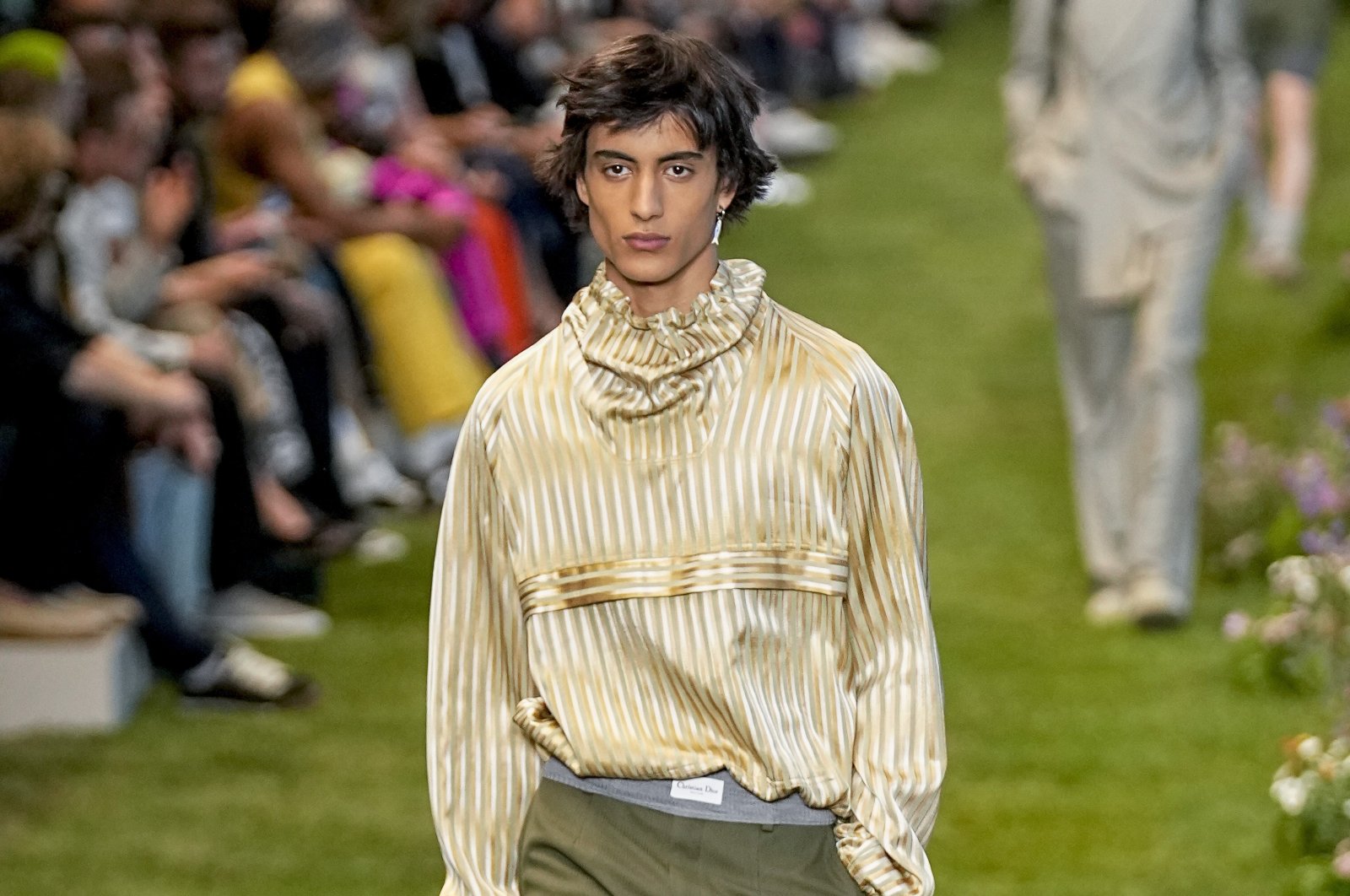
A model wears a yellow top piece is made by kutnu fabric, Paris, France, June 24, 2022. (AP Photo) rench fashion giant Dior displayed the precious fabric used by the Ottoman sultans in the 2022 Paris Fashion Week.
I compiled a list of as many fabrics, fibres and related items as possible (278 items which I will make available at the end of the A to Z), from several sources, the most comprehensive of which was Wikipedia. Since there are only 26 letters in the alphabet, I could not write in detail about every instance so I have taken snippets of text for the brief descriptions and linked to the source in the name of the item. I am indebted to all the contributors to those Wikipedia pages and the depth of knowledge to be found there…
“Choose any subject you would like to write about…” that is the object of the A to Z Challenge, and thinking of things that interest me is not a problem for me, but choosing a subject not only to write about, but to write in a way that other people will catch my interest – that is the real challenge! This year I turn to a subject, close to our skin if not our hearts, and yet, again, I wonder if this subject will get some people past the title on the list – dismissed as niche? For this year, my theme is What We Wear – Fabrics and Fibres
Why, when our Bonobo chimp-like ancestors were forced by climate change to emerge from the shrinking forests and live out in the open, did they become less hirsute such that as we spread to almost all parts of the world, there were places we could only survive by clothing ourselves in the fur of other animals. In warmer places, we had used other things to fashion clothes out of, such as bark, and possibly even the apocryphal fig-leaves! When agriculture enabled us to produce food more efficiently, we had the time to develop new skills like spinning and weaving, but we still use leather and fur to this day, even if, for ethical or economic reasons, we prefer faux-leather and faux-fur. Of course, most leather is also a byproduct of the meat industry (just as much wool is a byproduct of rearing sheep for meat rather than wool) and until true acceptance of the reality of our current climate change forces us to eat less meat, we will continue to produce leather…
Leather
I am not going to lift the entire and very excellent Wikipedia article on making leather, but suffice it to say that there are three main stages – Preparatory (10 possible sub-stages), Tanning, and Crusting with an optional stage of Surface Coating. The reason all this is necessary is because without it, animal skin would be stiff when dried and once wetted again, would resume rotting. So elements of the skin are removed, acidity levels ar manipulated at several points in the process and dyeing and surface treating are used to make the leather we use for shoes, handbags and clothes.
Non-woven Fabric
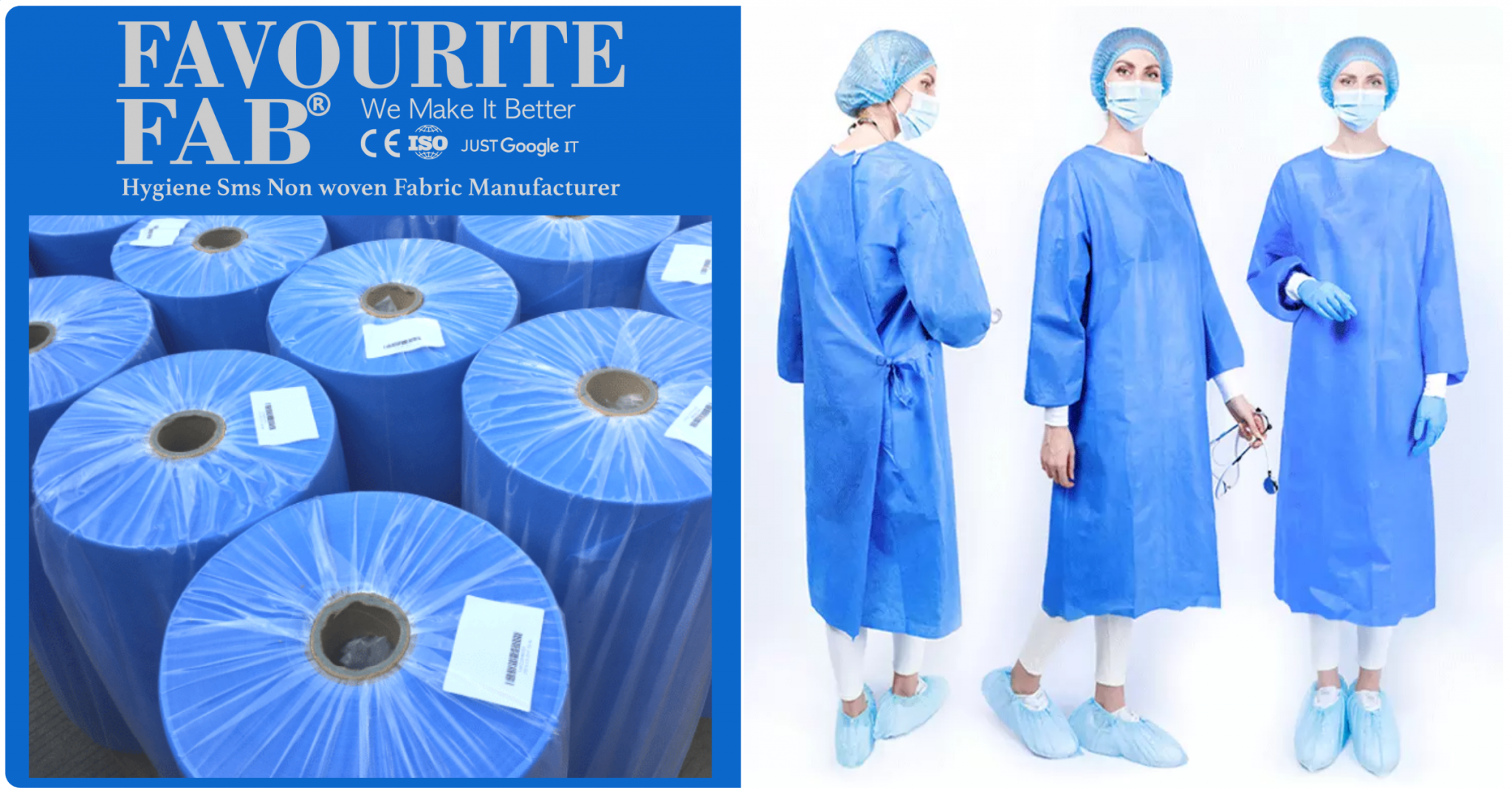
Nonwoven fabric or non-woven fabric is a fabric-like material made from staple fibre (short) and long fibres (continuous long), bonded together by chemical, mechanical, heat or solvent treatment. The term is used in the textile manufacturing industry to denote fabrics, such as felt, which are neither woven nor knitted.[1] Some non-woven materials lack sufficient strength unless densified or reinforced by a backing. Wikipedia
This category of fabrics includes a number of production processes but often, some form of felting (mechanical entanglement of fibres), is followed by heat-treating to melt the “felt” into one cohesive fabric, possibly with some additional filler materials introduced into the felt first. You may not have heard the term non-woven but you are likely using any number of them every day! Check out the links in the picture captions for more…
Felt
Felt from wool is one of the oldest known textiles. Excavations at Çatal Hüyük in Anatolia have revealed possible evidence of felting about 6000 BCE; more definitely, felt hats found in the Mongolian Autonomous Region of China date to c. 1800 BCE. – Wikipedia – Felt
Although Felt can be made from both natural and artificial fibres, natural fibre felt has special properties, it is “fire-retardant and self-extinguishing; it dampens vibration and absorbs sound; and it can hold large amounts of fluid without feeling wet…” and for one of the oldest fabrics, it is still produced for many commercial purposes todat, but is also hugely popular in crafting circles where both matted felting and needle felting are carried out. Both of these processes have their place in industrial felt production too. Here is a great piece of jargon from a description of that industrial felting process – “Fibers are first spun, cut to a few centimeters length, and put into bales. The staple fibers are then blended, “opened” in a multistep process, dispersed on a conveyor belt, and spread in a uniform web by a wetlaid, airlaid, or carding/crosslapping process.”
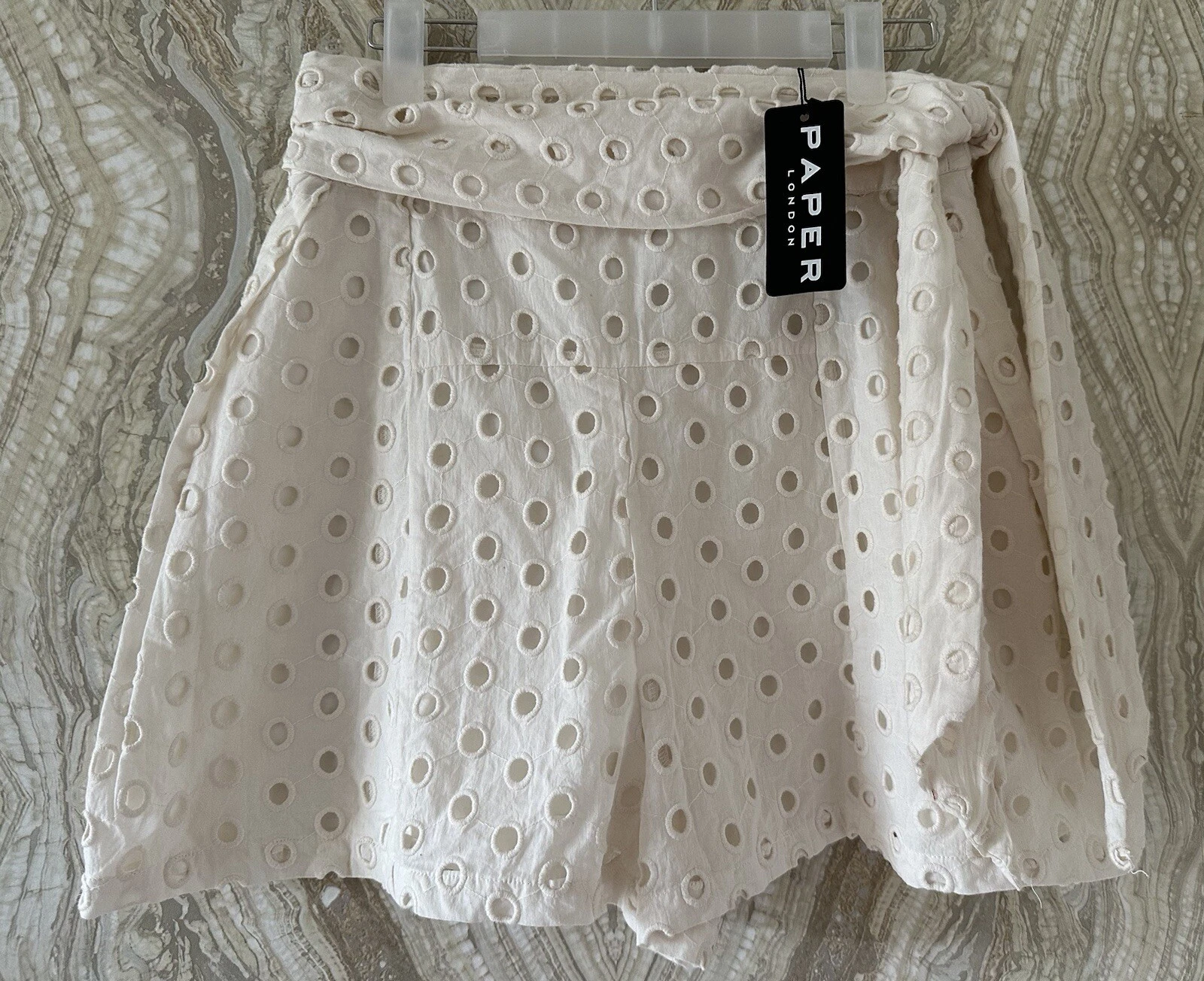
Making paper is very similar to felt-making – the fibres – and many materials can be used, including recycled textiles – are dispersed in a water bath and then lifted out in a dekle – a kind of sieve that is agitated to make the fibres “fel” together as the water drains out. The resulting layer is pressed and treated in various ways to make it less porous and more durable. This also makes the paper stiff, but take a brown paper bag, screw it up, carefully smooth it out and repeat several times and you will have a flexible fabric. Add some tougher long fibres into the paper mix and you have a material that can make clothing, albeit of limited lifespan…
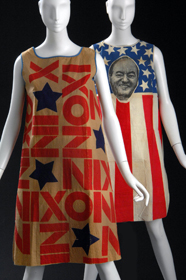
PAPER London women’s US 6 Antigua SHORTS Cream Spot Eyelet
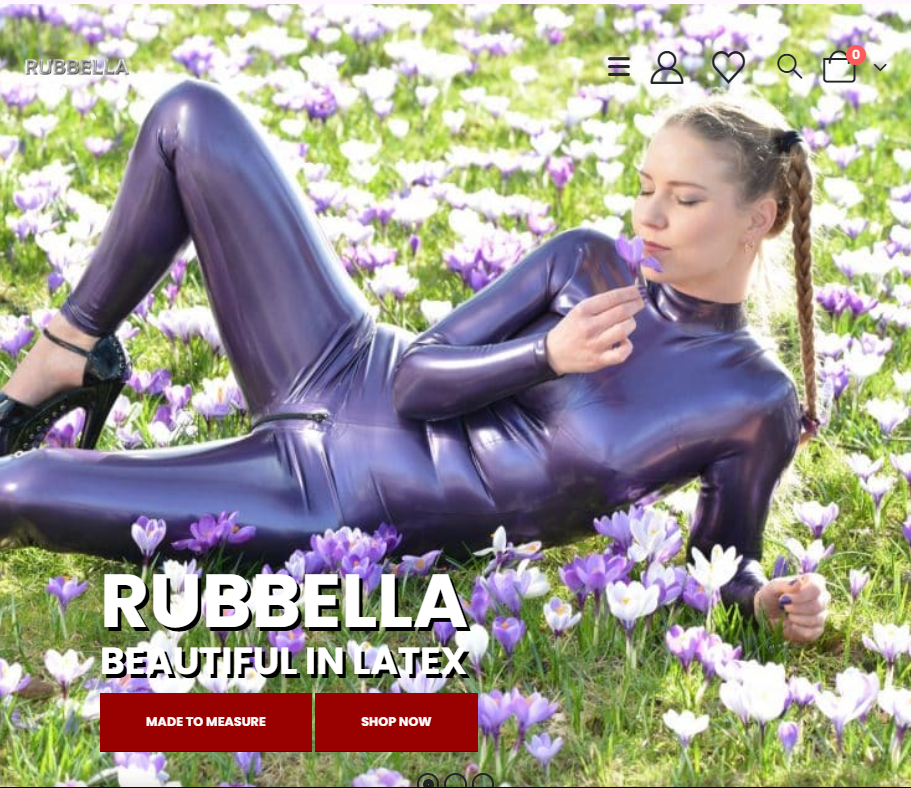
If the fear with paper clothes might be that of them tearing or dissolving in a rain-shower, then the fear (however unfounded) around wearing latex clothing, must surely be that the item might pop like a balloon, shrivelling away to nothing in what would surely be the ultimate fashion accident!
https://www.rubbella.nl/?lang=en
Latex rubber is used in the manufacture of many types of clothing. It has traditionally been used to make protective clothing, including gas masks and Wellington boots. Mackintoshes have traditionally been made from rubberized cloth. However, rubber has now generally been replaced in these applications by synthetic polymers.
Latex rubber as a clothing material is common in fetish fashion and among BDSM practitioners, and is often worn at fetish clubs. It is sometimes also used by couturiers for its unusual appearance. Several magazines are dedicated to its use. Latex clothing tends to be skin-tight, but can also be loose-fitting. – Wikipedia
Moving swiftly on…
“N” Fabrics
Nankeen – (also called Nankeen cloth) is a kind of pale yellowish cloth originally made in Nanjing, China from a yellow variety of cotton, but subsequently manufactured from ordinary cotton that is then dyed. The term blue nankeen describes hand-printed fabric of artistic refinement and primitive simplicity, which originated on the Silk Road over three thousand years ago.
Noil – refers to the short fibres that are removed during the combing process in spinning. These fibres are often then used for other purposes. Fibres are chosen for their length and evenness in specific spinning techniques, such as worsted.[1] The short noil fibres are left over from the combing of wool or spinning silk. We already encountered one form of Noil in Matka, made from damaged silk cocoons resulting in a slubby finished silk. Noil is similar in the fabrics spun and then woven from it. Noil fibres can also be added to other fibre blends.
I compiled a list of as many fabrics, fibres and related items as possible (278 items which I will make available at the end of the A to Z), from several sources, the most comprehensive of which was Wikipedia. Since there are only 26 letters in the alphabet, I could not write in detail about every instance so I have taken snippets of text for the brief descriptions and linked to the source in the name of the item. I am indebted to all the contributors to those Wikipedia pages and the depth of knowledge to be found there…
“Choose any subject you would like to write about…” that is the object of the A to Z Challenge, and thinking of things that interest me is not a problem for me, but choosing a subject not only to write about, but to write in a way that other people will catch my interest – that is the real challenge! This year I turn to a subject, close to our skin if not our hearts, and yet, again, I wonder if this subject will get some people past the title on the list – dismissed as niche? For this year, my theme is What We Wear – Fabrics and Fibres
The choice of fabric for military clothing is a good illustration of the balancing act required in all fabric choices, but military clothing is subject to more extreme uses and thus requirements – warmth for cold climates, breathability and sweat wicking for hot climates, durability, resistance to tearing, ability to assert power on the one hand, or camouflage the wearer on the other.
We already encountered the fabric that dominated military clothing in the 18th and 19th centuries – Broadcloth, under H for Historical Fabrics – from the assertive red uniforms of the British army, to the uniforms of the British Royal Navy, broadcloth reigned supreme. Britain excelled in wool production and broadcloth – first woven, oversize and then hammered to felt and shrink it, made it tough, warm and water-resistant and still warm enough when fully wet. One might pity the soldiers forced to wear red which presumably made them easy targets for the sake of projecting power…
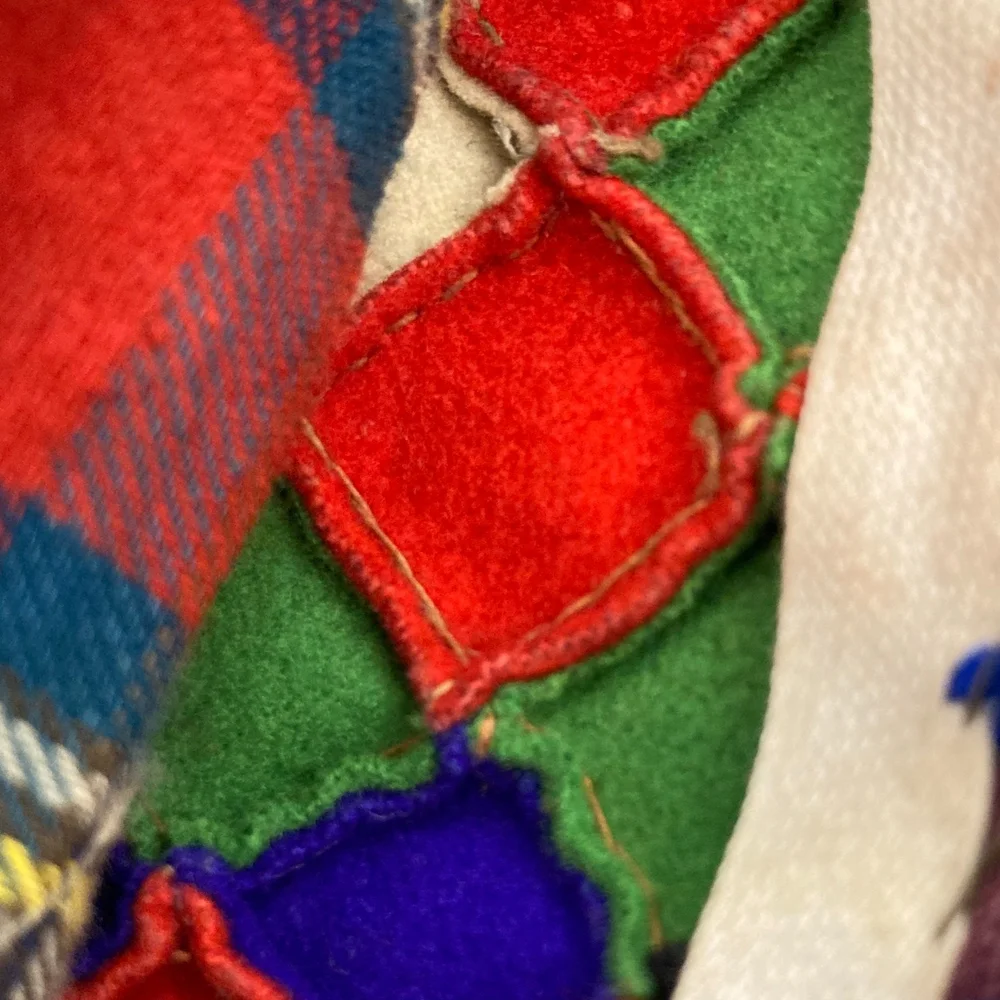
Because of the dense nature of broadcloth, very small seam allowances will suffice and this webpage examines quilts made by soldiers and sailors using scraps of uniform fabric and these tiny seams are shown below – a photograph which also shows the nature of broadcloth.
Kent Uniform Coverlet Quilters’ Guild Collection From YorkStitcher – Textile Artist
Kent Uniform Coverlet Quilters’ Guild Collection Detail of the reverse showing stitching and seams From YorkStitcher – Textile Artist
Kersey, or Kerseymere – was a thinner, cheaper imitator of broadcloth and clothed the lower ranks – originating in East Anglia around the village of Kersey in Suffolk by the 18th Century the largest production was in West Yorkshire, particularly in the Keighley area (where I live).
The properties of Kersey made it popular for coats and cloaks for the lower orders. Frequently used during the Civil War as a cloth for soldiers’ coals and breeches, by the latter half of the 18th Century these items were made from Broadcloth. However, Double-Milled Kersey was used for sailors’ jackets by the Admiralty and for Army greatcoats, Cavalry cloaks (in red or blue for heavy and light) and fatigue jackets (in natural or buff for buff faced Regiments). – https://louisebyford.blogspot.com/2013/06/historical-fabric.html
Serge – Like Bay, Serge is a cloth with a worsted warp and woollen weft, although in this case twill woven. The twill helps to maintain the stability whilst retaining enough flexibility to be used as a lining material. Sturdy, but itchy, and absorbing huge amounts of water, which made it difficult to dry out.
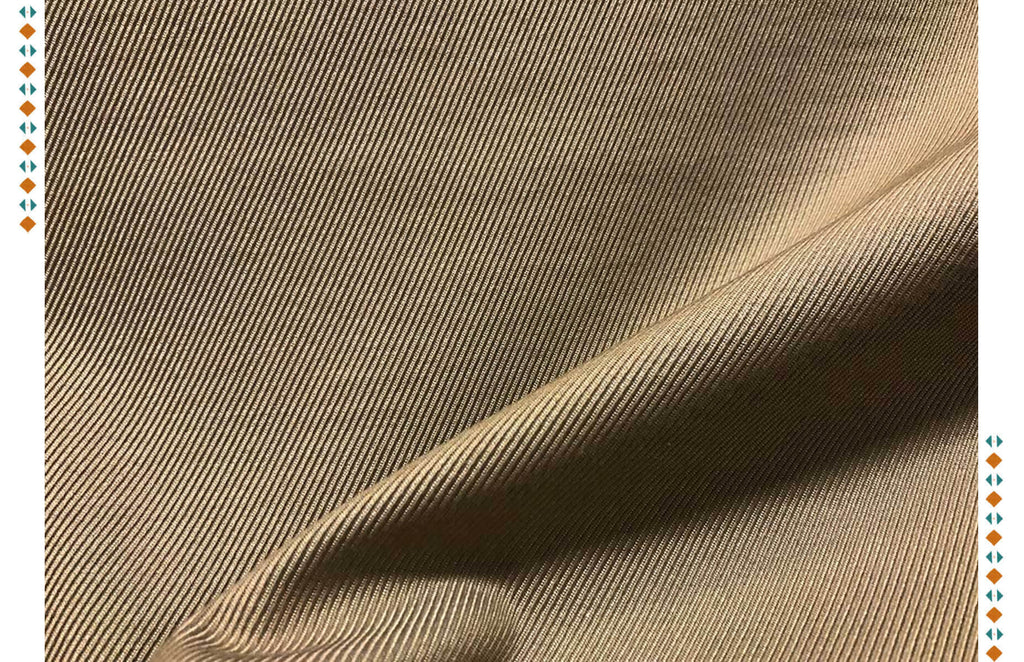
Khaki – By the late 18th century, the industrial weaving of cloth and the changing sensibilities around the idea of camouflaging soldiers led to the introduction of Khaki a cotton fabric dyed in earthy shades to blend with the natural environment. This early version of camouflage had a profound impact on future military clothing.
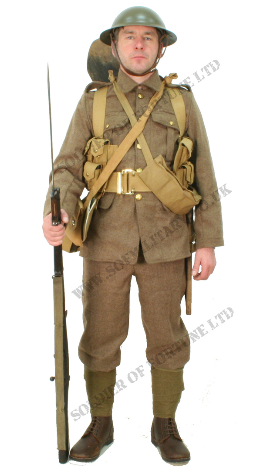
By the First World War, the uniforms in the trenches were a combination of wool and cotton offering warmth, durability, and comfort in trench warfare conditions and just as red uniforms had, in the past, meant that blood did not show up (increasing the idea of invulnerability), the khaki uniforms did not show up the mud of the trenches so badly thus preserving the idea of a uniformed army…
This website gives a complete breakdown of the WW1 British Army uniform.
The coming of Synthetics – the Second World War saw the advent of synthetic fabrics like nylon and polyester, which offered lightweight, durable, and weather-resistant properties. I received a pair of “indestructible” socks for Christmas one year made from pure nylon and soon discovered, that whilst they were indeed tough, they made for very smelly feet! This page looks at the pros and cons of nylon! However, as a blend with other fibers such as cotton, nylon can lend strength to fabrics and the right balance was soon found.
Postwar fabrics and the uniforms made from them continued to evolve and the uniforms tended towards evermore specialist kit for different theatres of war, different requrements, different camouflage and the incorporation of new synthetics like Gore-Tex – both waterproof and yet breathable, Kevlar the miracle bullet-proofing fabric, but more of that when I get to Synthetics.
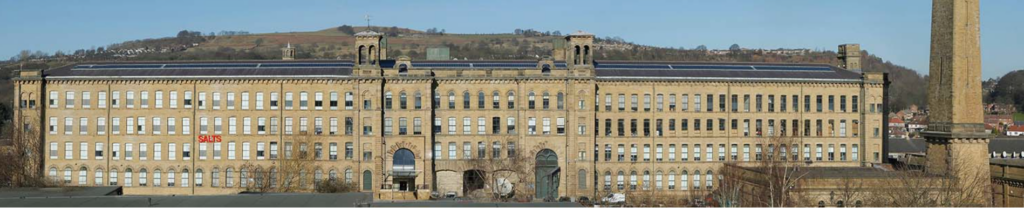
Almost every town or village in the area in which I live in West Yorkshire has a mill – or more precisely, if they lie along the Leeds-Liverpool Canal. The canal brought coal to power the steam engines that drove the mill machines, cotton from America via Liverpool, and the finished goods were shipped to Leeds for distribution to all points South or to Liverpool for export from the docks to the rest of the world.
Above is Salts Mill, which, when built, had the largest room in the world, stretching the entire length of the building! Sir Titus Salt, the mill owner, built it to new specifications regarding fire, following lethal fires in previous mills, where aerialised lint and wooden floors caused rapid upward spread of fires killing many workers. Sir Titus created brick arch ceilings with a foot of ash on top and the next floor on top of that. He built the neighbouring Saltaire to house his workers (no pubs though as he was teetotal) and lived in nearby Bradford. Bradford had more millionaires in the 19th century than any other city in the world. There was no shortage of ash since every mill produced tons of the stuff and so every mill site has a great mountain of the toxic stuff somewhere nearby. In our village of Silsden, a steep little stream valley was culverted and the valley filled for some 300 yards with ash…
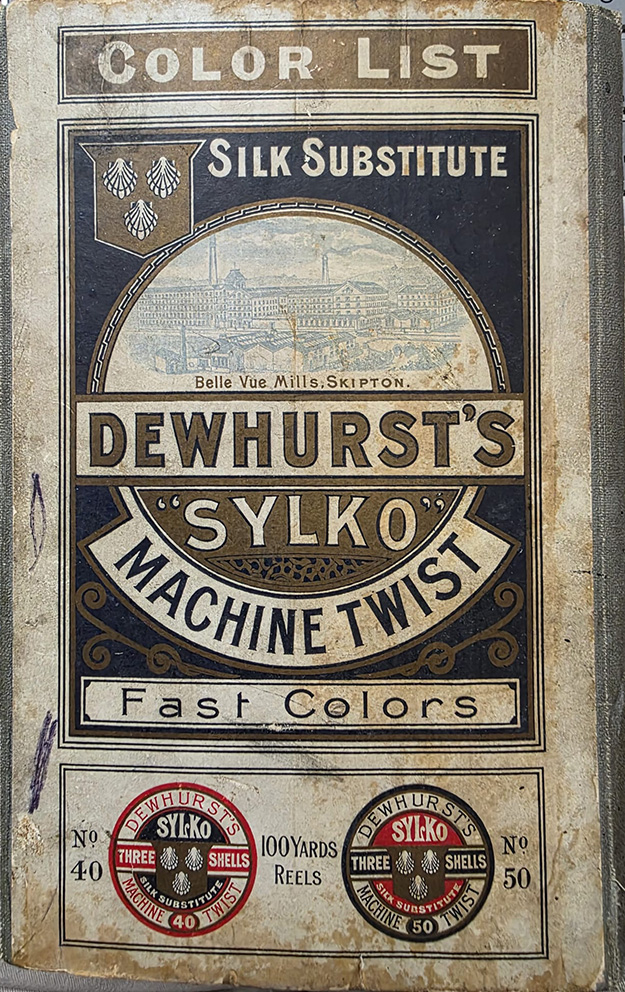
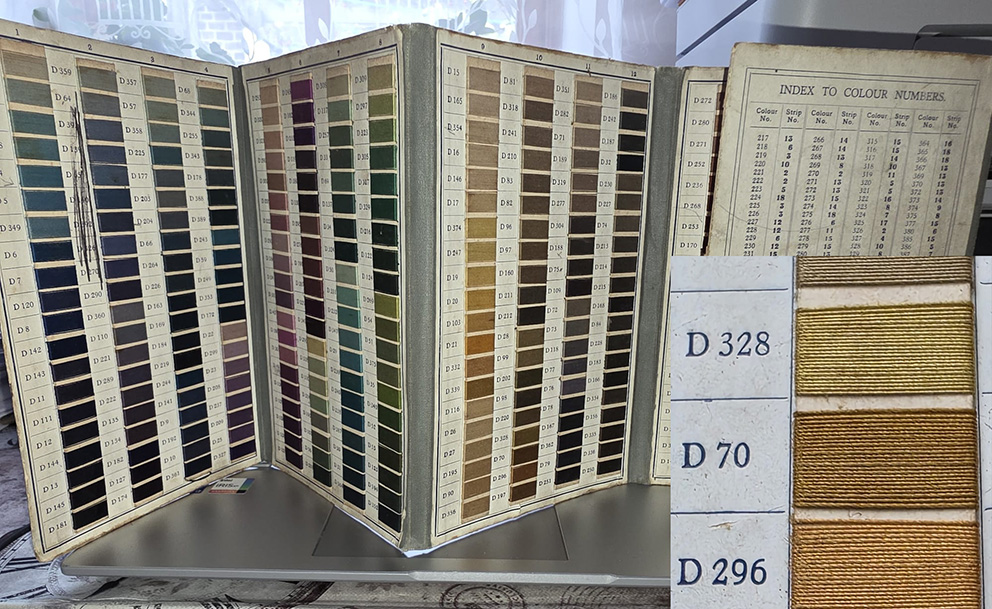
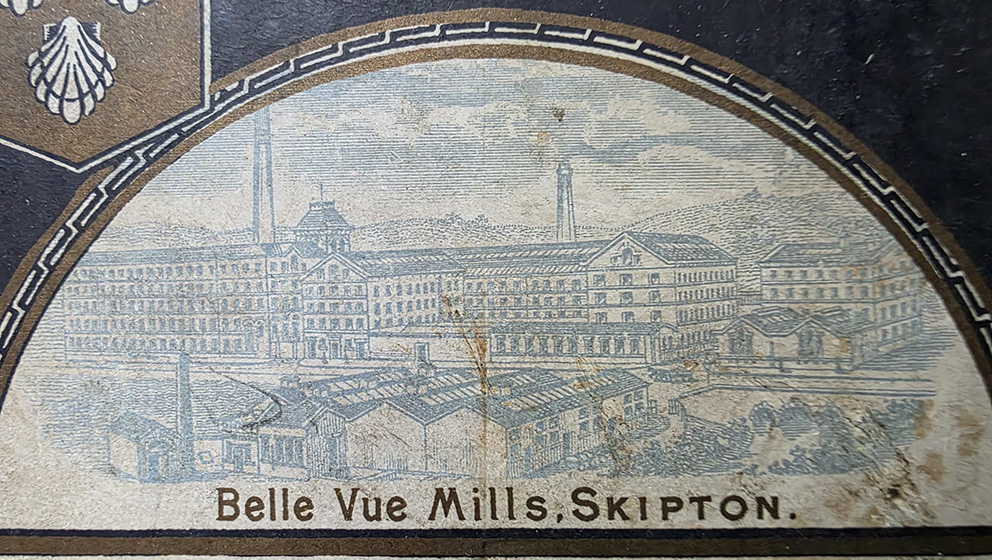
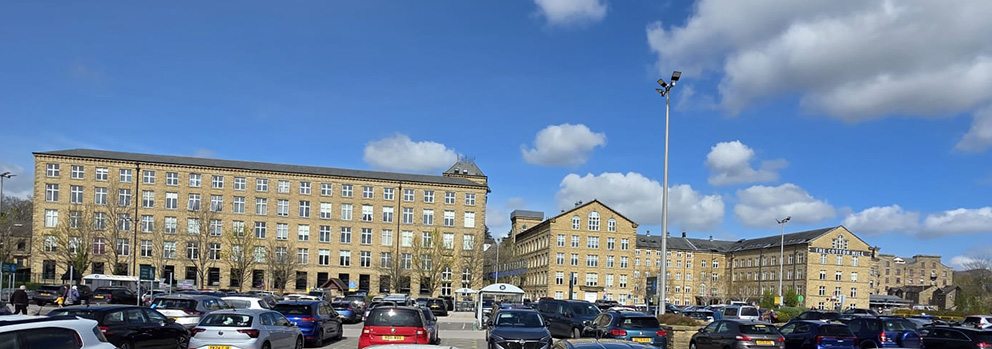
Amongst other things, Salt’s Mill houses a permanent David Hockney Gallery – another Bradfordian made good and there is a small museum about the history of the mill – however, there is not a single piece of fabric known to have been made in the great mill – all that is mere ephemera… So imagine my pleasure in finding a Dewhurst “Sylko” Machine Twist colour sample chart from the Belle Vue Mill in Skipton – the other direction from our house from Saltaire. Grubby on the outside, the threads still look great inside. I took a photo of the mill – now converted to apartments just this week…
The chimneys are gone but otherwise, Belle Vue mill is still much the same on the outside…
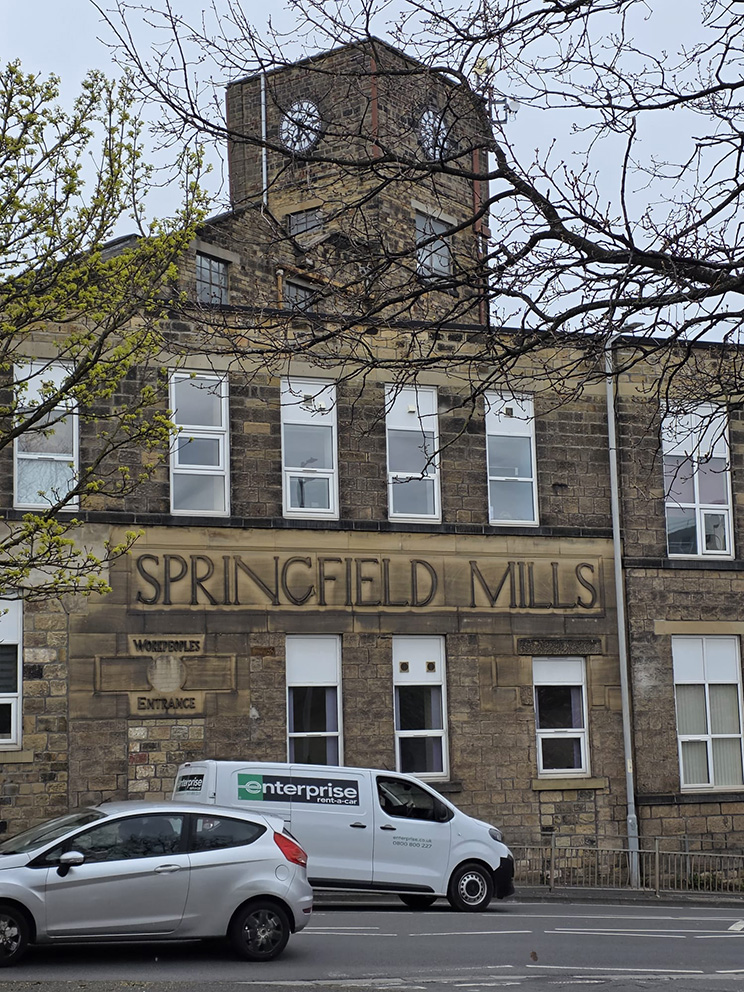
A smaller mill in Keighley but look at the pride and assurance with which the name is carved in stone. This was the “Workpeoples Entrance” now bricked up…
“M” Fabrics
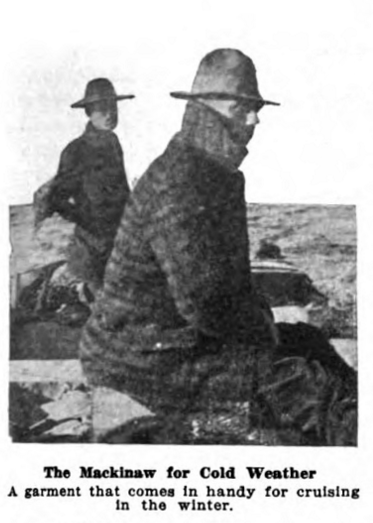
Mackinaw -The story of Mackinaw is fascinating and varied encompassing a smuggled contraband item concealed in the covers of Prairie wagons, an iconic lumberjack shirt and the sometime “uniform” of the Beach Boys – I refer you to the Wikipedia account...
The Beach Boys, 1963.
Madapollam – is a soft cotton fabric manufactured from fine yarns with a dense pick laid out in linen weave. Madapollam is used as an embroidery and handkerchief fabric and as a base for fabric printing.[1][2] The equal warp and weft mean that the tensile strength and shrinkage is the same in any two directions at right angles and that the fabric absorbs liquids such as ink, paint and aircraft dope equally along its X and Y axes.
Madapollam fabric was used as the covering for the de Havilland Mosquito a pioneer of wooden monocoque airframe construction in military aircraft, as well as in other aircraft, where it was tautened and stiffened with aircraft dope. Wikipedia
Madras – a lightweight cotton fabric with typically patterned texture and tartan design, used primarily for summer clothing such as pants, shorts, lungi, dresses, and jackets. The fabric takes its name from the former name of the city of Chennai in India.
Both sides of the cloth must bear the same pattern, and it must be handwoven (evidenced by the small flaws in the fabric).[2] Madras was most popular in the 1960s.
Cotton madras is woven from a fragile, short-staple cotton fiber that cannot be combed, only carded.[2] This results in bumps known as slubs which are thick spots in the yarn that give madras its unique texture. The cotton is hand-dyed after being spun into yarn, woven, and finished in some 200 small villages in the Madras area. – Wikipedia
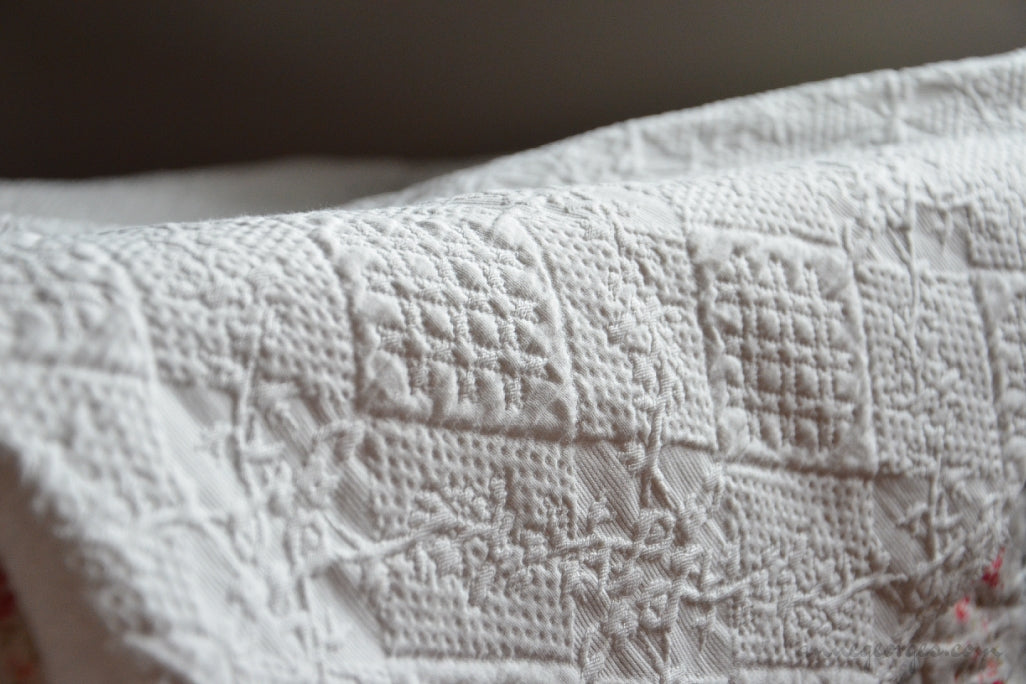
Matelassé – (French: [matlase]) is a weaving or stitching technique yielding a pattern that appears quilted or padded. Matelassé may be achieved by hand, on a jacquard loom, or using a quilting machine. It is meant to mimic the style of hand-stitched quilts made in Marseille, France. It is a heavy, thick textile that appears to be padded but actually has no padding within the fabric.
Matka – is made from silk moth coccoons where the insect has already emerged and, in the process, has broken the silk threads so that the cocoon cannot be unwound (spooled). However, the fibres can be spun like any other short fibres and this made work for poorer, less skilled workers and the resulting cloth is coarser than regular silk. People who object to the killing of the insects (as required to unwind regular silk) such as Buddhists and Jains, prefer Matka.
Melton– is a fabric made from very tightly woven wool, which the surface is then manipulated to hide the weave structure, making it look like it is bonded.
Milliskin – a knit fabric, specifically a type of tricot. It is characterized by its stretchiness and is made from a blend of nylon and spandex, which gives it its durability and ability to be form-fitting. Milliskin fabric is made by blending nylon and 4-way stretch spandex (or Lycra). That’s why it is fairly thinner and tauter than heavy-set types of spandex like moleskin. The basic milliskin fabric is usually plain white and can be dyed to reflect virtually any color.
Moire -although moire is an effect achieved by looking through two meshes, as a fabric, a facsimilie of this effect is produced by passing silk, but also wool, cotton, and rayon, through heated rollers.
Moleskin – a heavy cotton fabric, woven and then shorn to create a short, soft pile on one side. The feel and appearance of its nap is suede-like, less plush than velour and more like felt or chamois.
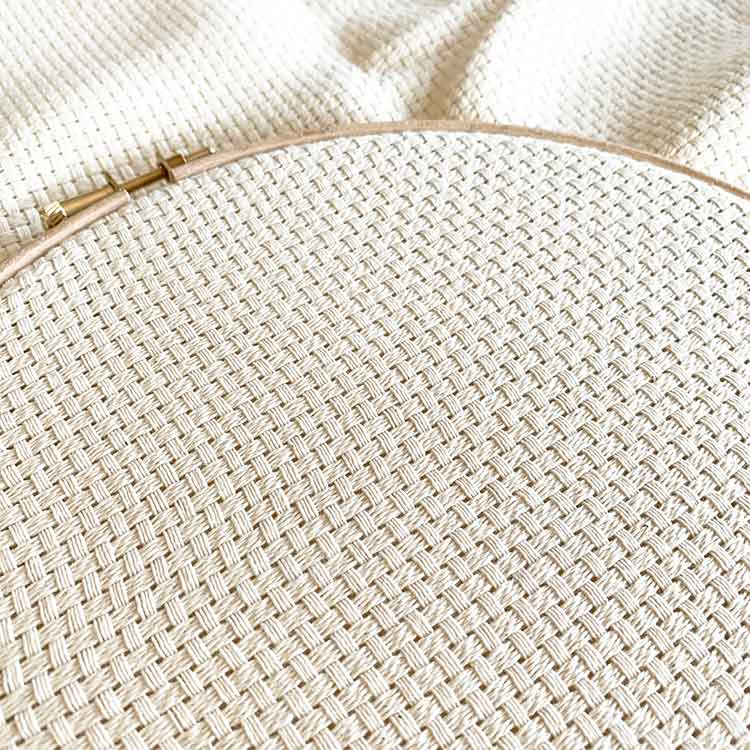
Monk’s Cloth – is the base for embroidery or for Tufting work. The Monk’s cloth was woven with basketweave, usually with 2×2 or 4×4. Basketweave is a plain weave, with the difference that it allows two or more filling yarn to pass over and under two or more warp yarns and forms a check pattern.
Muslin – is a cotton fabric of plain weave. It is made in a wide range of weights from delicate sheers to coarse sheeting. It is commonly believed that it gets its name from the city of Mosul, Iraq. There were about 28 varieties of muslin, of which jamdani is still widely used. During the 17th and 18th centuries, Mughal Bengal emerged as the foremost muslin exporter in the world, with Dhaka as capital of the worldwide muslin trade.] In the latter half of the 18th century, muslin weaving ceased in Bengal due to cheap fabrics from England. In India in the latter half of the 20th century and in Bangladesh in the second decade of the 21st century, initiatives were taken to revive muslin weaving, and the industry was revived.
The term ‘muslin’ was not used in the seventeenth- and eighteenth-century documents that are the sources for the project, instead a variety of cloths which early modern European consumers, as well as us today, would categorize as muslins were referred to by names that indicated different origins, qualities, and varying local naming conventions. In this project’s data, the following terms are all types of muslins: adathaies, alliballies, bethilles, caffa, camcanys, dimity, douriasten, guldars, hammans, jamdanies, mallemolens, sanen, tanjeebs, and therindains (in alphabetical order). Other types of muslin known to Europeans that don’t appear in this data include: cummuns, dosooties, humhums, khasas, nainsooks, rehings, sallowes, seerbands, seerbettees, seerhaudconnaes, serribaffs, shalbadts, shash—either the Dutch did not trade these types or they used different terminology. – Dutch Textile Trade
I compiled a list of as fabrics, fibres and related items as possible (278 items which I will make available at the end of the A to Z), from several sources, the most comprehensive of which was Wikipedia. Since there are only 26 letters in the alphabet, I could not write in detail about every instance so I have taken snippets of text for the brief descriptions and linked to the source in the name of the item. I am indebted to all the contributors to those Wikipedia pages and the depth of knowledge to be found there…
It is 18 months since my last essay exploring AI back in 2023 and there have been many developments since then – certainly more and more people, from poets of my acquaintance to businesses, have explored and made use of AI in one form or another and the industry is full of startups offering AI solutions in all sorts of areas such as creating training videos in which you prime the AI with the content you want delivered and the AI concocts slides with a voiceover or even a fully imagined video trainer to articulate your training needs.
Public awareness has continued to grow, the alarm over AI taking away jobs, or taking over the world and eradicating humans is perhaps less hysterical and the debate more focused. One way in which this is happening is that writers and artists have challenged the AI companies for the currently unregulated and voracious use of their (the creatives) material in training the AI’s LLM’s or Large Language Models. These are the vast bodies of existing work, written and visual, that are fed to AI’s and from which they both learn and plagiarise when prompted to generate an image or a piece of writing “in the style of”. When I first started exploring Generative AI, these ethical battlelines were not so apparent. Still, now we must seriously consider the ethical questions raised by how we choose to use AI – especially when we reference existing artwork or literature. You may feel that the damage is already done, the genie already out of the bottle and that there is no point in bolting the stable door after the horse has bolted, but the laws need changing to protect the copywriter issues advanced by creatives and perhaps there will emerge a statute of limitations so that older work, out of copywrite is usable whilst currently, copyrighted material is either out of bounds or attracts a fee for the use of… Below is an illustration I tried and purely for experiment, I asked for it to be “in the style of” Studio Ghibli – a Japanese animation studio based in Koganei, Tokyo. The exact prompt was “Alice in Wonderland at the Court of the Red Queen in the style of studio ghibli directed by Hayao Miyazaki“
As you can see, Alice is there, in a dining room sumptuous enough to be that of the Red Queen but there are no other characters present and the AI (Midjourney) has become fixated on the Fly Agaric toadstools that Alice found the hookah-smoking Caterpillar sitting on. Does this image owe much to Studi Ghibli and Director Hayao Miyazaki – it certainly could be an animation style – I don’t know his work well enough – I just saw the style in a list of things you could prompt AI with and decided to experiment – but the fact that the AI recognised the name of Studio Ghibli means that it was trained, at some point, by looking at the studio’s work…
So I have decided, for three reasons, to be more circumspect about my use of “in the style of”. Firstly out of fairness to current creatives, secondly because it remains as difficult as ever to get AI to produce the image exactly as you have in your mind’s eye, and lastly I have made less use of AI images to accompany poems – in part because the brilliance of them, not only illustrates the poem but threatens to eclipse or distract from it. However, whilst I am a competent artist in some respects, I am not an illustrator with a wide range of drawing skills and so below, I am going to show you the blend of AI-generated image elements and their combination in PhotoShop to arrive at an image I had in mind for a commissioned illustration. My friend Melissa Lemay, is launching an online journal called Collaborature to showcase collaborative poems and works of literature as well as interviews with authors – she sent me her mission statement and gave me carte blanche to produce an illustration for the launch…
My idea is to have a woman absorbed in reading a book with a “thought bubble” rising up into a night sky showing the moon, and a rocket on it’s way to the moon – all inspired by her reading…
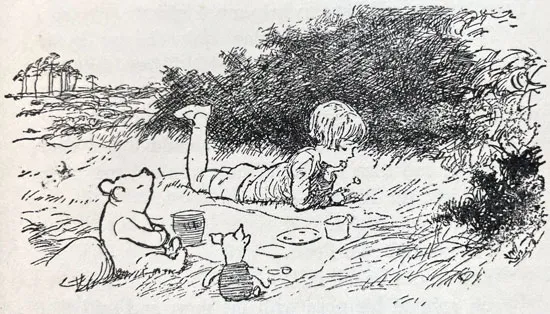
To begin with, I decided on a black-and-white illustration with “drawn” elements combined, which made it slightly easier to achieve consistency. Firstly I wanted a young woman but drawn “in the style of” the E.H.Shepard illustration from “Now We Are Six” by A.A. Milne. – or rather, I wanted her in the pose below, which is not quite the same thing…
The results below, despite what I thought to be a very detailed prompt describing the young woman, her clothes and her pose, was not right…
Black and white line drawing of a young woman wearing a sleeveless dress with hemline just above the knee lying on her stomach elbows stretched out and head supported by hands reading a book propped up in front of her legs bent at the knee and bent upwards in the style of E.H.Shepard
Cetainly I think the style has little to do with E.H.Shepard and in the lower left picture, the young woman, far from being excited, her imagination fired by reading, has fallen asleep! I tried making variations but nothing worked any better so I then decided to try for a picture of a young girl instead and got the result below.
Black and white line drawing of a young girl wearing a sleeveless mini-dress with hemline just above the knee lying flat on her stomach head supported by hands reading a book propped up in front of her legs bent back and over her knees in the style of E.H.Shepard
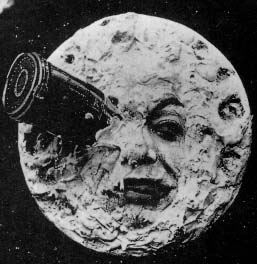
Once again we have a sleeping beauty, but I decided I could accept the top left image. Next I wanted to have a thought bubble form the girl, featuring a rocket to the moon inspired in the girl’s imagination, by her reading. I was remembering the Moon face in the 1902 film A Trip to the Moon (French: Le voyage dans la lune) by pioneer film director Georges Méliès.
And so I used the prompt “Black and white line drawing of moon against a black background in the style of Georges Melies” to obtain this:-
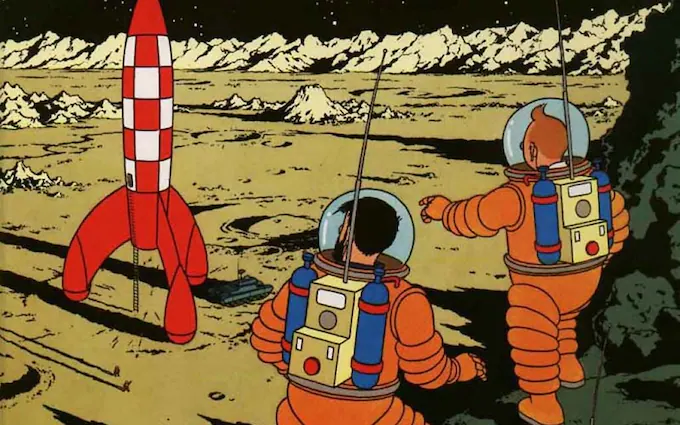
Nothing like George Melies’ image so no qualms about using the quite straight forward “drawing-style” moon. Next to a rocket, and I have always loved the rocket (was it inspired by the German V2 rockets?) from The Adventures of Tintin, the comics series by Belgian cartoonist Hergé.
And so using this prompt “Black and white rocket against a dark grey background in the style of Tintin Explorers on the Moon” I obtained these images from Midjourney.
Once again, I don’t think the similarity of the rockets warrants the term plagiarism so much as “inspired by…” and I was happy to go with the bottom right image.
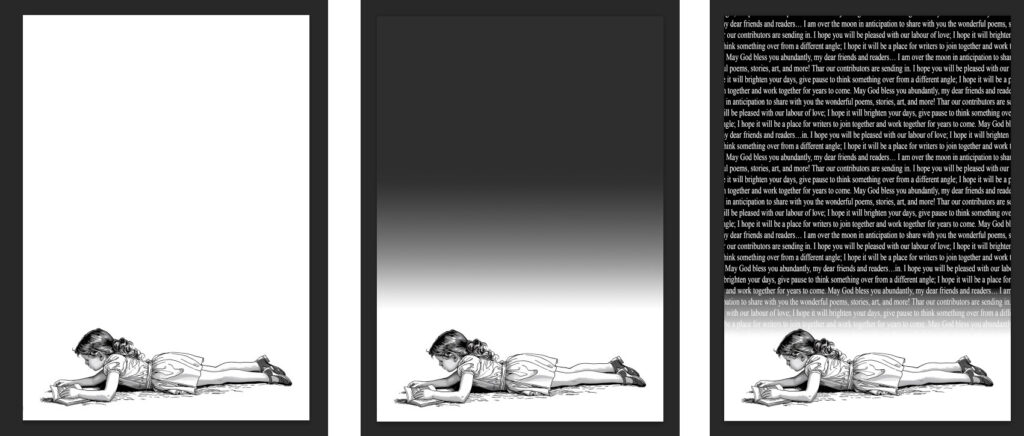
Now that I had all the elements, it was time to start assembling them in Adobe PhotoShop – this process is essentially like building a collage except that you can go back and work on each layer ad infinitum, resizing, adjusting the tones, cropping etc. even rearranging the order of the layers – so what hides what…
Having decided on the size and proportion of the Background, I placed the girl before adding a Gradient layer for the night sky. Then, having pasted multiple copies of the Mission Statement text, I placed a text layer in white text so that it fades out at the bottom of the picture but is readable against the black of the sky. I then brought the girl to the front again as the white letters were going over her.
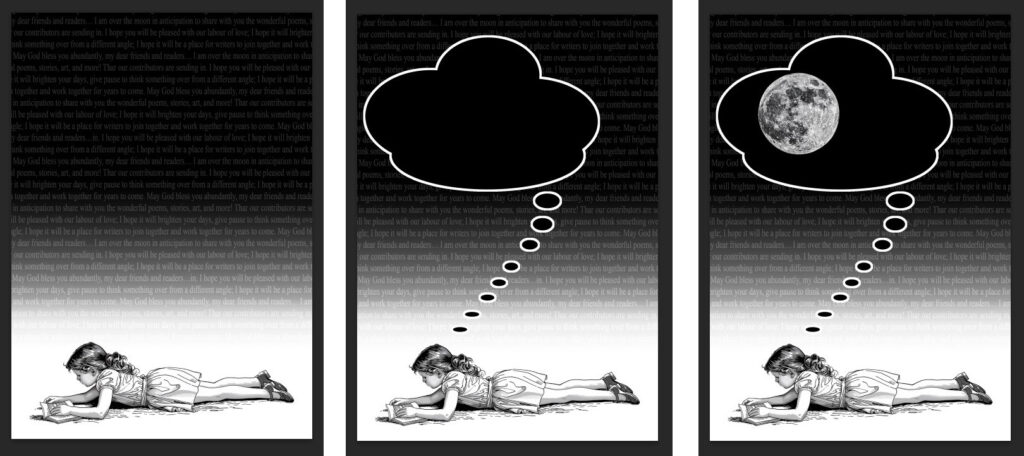
The white letters looked too strong so I increased their transparency to tone them down. Next I added the thought bubbles giving them white edges to stand out and then placed the moon into the large bubble.
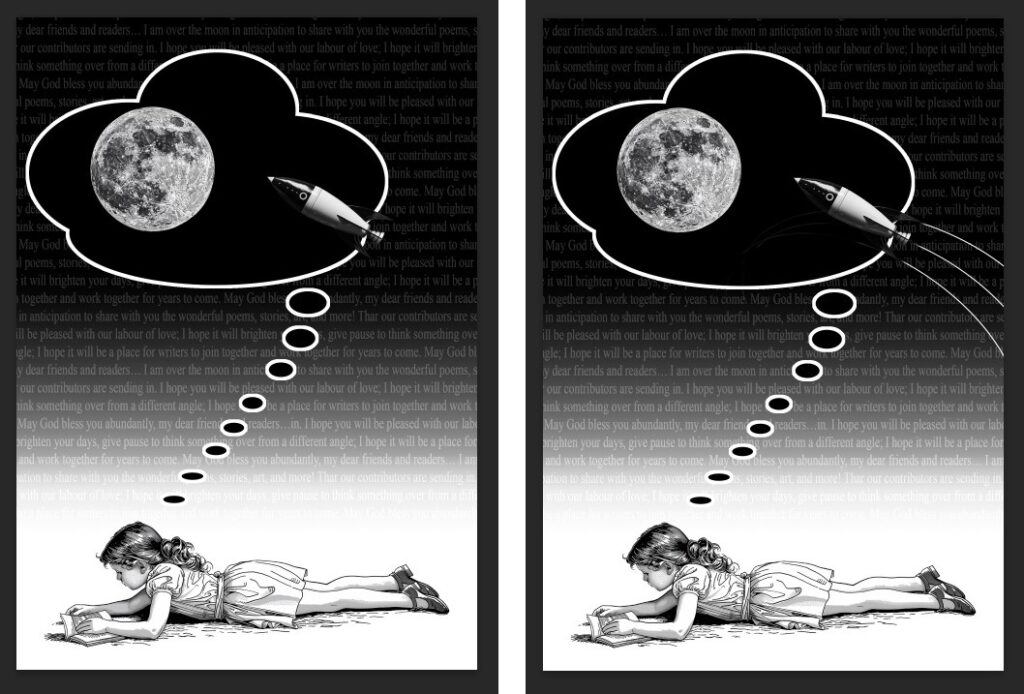
I could have added the rocket within the thought bubble, like the moon, but I thought it added to the portrayal of the act of imagination if it came from outside the thought bubble – as if it had come from a different bubble perhaps… Lastly, the rocket looked too static and so I added some “motion streaks” to complete the picture.
So there you have it – each element of the picture was produced by Midjourney generative AI, yet I could never have got an AI to see and conform to the design I had in mind and so I had to assemble them in the way I wanted, after the event and this is one way in which I think AI can be used to aid the graphic designer – after all, collage of existing print material is a very old tradition…
Dear Roberta Using an AI to make images can be wondrous, frustrating, puzzling and incredible in varying degrees but sometimes, the sheer beauty simply makes one gasp…
This last year, both I and many poets I know (in the Internet sense as opposed to the real world or the biblical), have started illustrating their work using AI images whose results are sometimes so stunning as to distract from the poems being illustrated. Yet we poets often work to prompts and we must construct prompts for the AI…
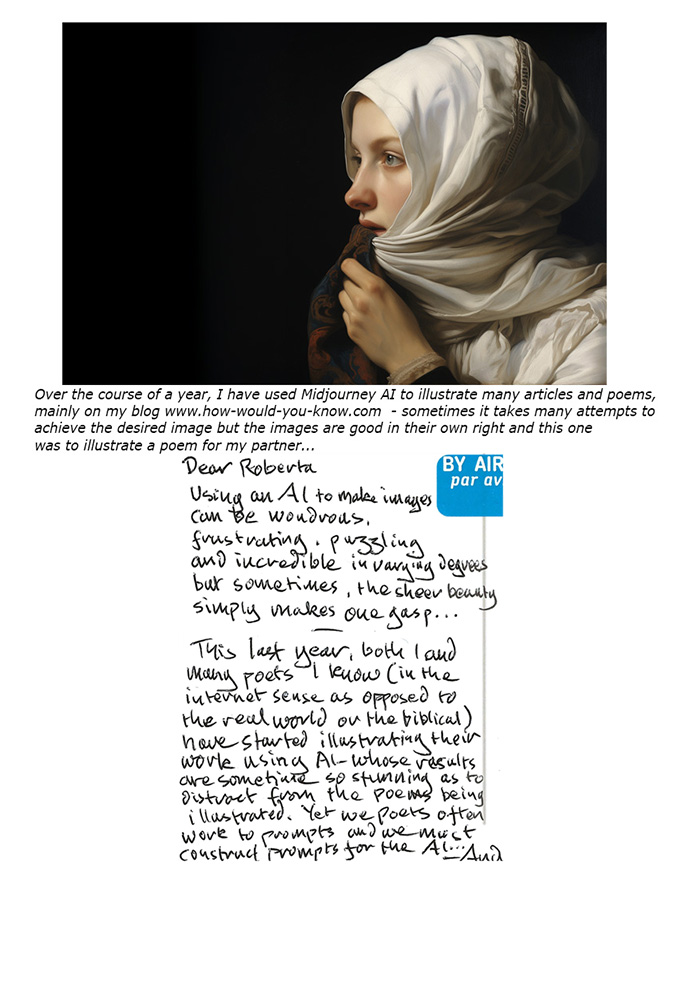
The Poetry Postcard Fest is a challenge which encourages poets to write an unedited poem on a postcard and send it to a stranger. Organised by the Cascadia Poetics Lab, who organise the participants into lists of 31 + yourself for you to address your offerings to. This was my second year and I was on List 10. The lists are sent out in early July and you have until the end of August to send out your missives – to date I have received 16 of 31 possibles and now that we are into September, it is allowable to share the cards and poems you sent. Although the original poem is to be sent as written – crossings out, blots and all, I have typed them out for people who can’t read my writing and I am allowing myself to edit if I feel like it…
We have gone far beyond a love affair with the car, the motor car, the automobile, we are beyond the comfortable love of wedded bliss and we have reached the time when divorce must be considered, with all the compromises and new freedoms that implies…
The Love Affair
And it was a Love affair to begin with! Admittedly, one that could only be pursued by the rich – the freedom given to those Edwardian pioneers, to go further than on horseback, to travel in a group, and oh! the speed – think of Toad in The Wind in the Willows – “Poop, poop!”! Then came The First World War with lorries and ambulances. The interwar years when cars spread to the middle classes and finally, after The Second World War, we were truly wedded to the car, cars for all but the poorest and our world and lives changing beyond recognition.
Urban Sprawl and the Escape to the Country…
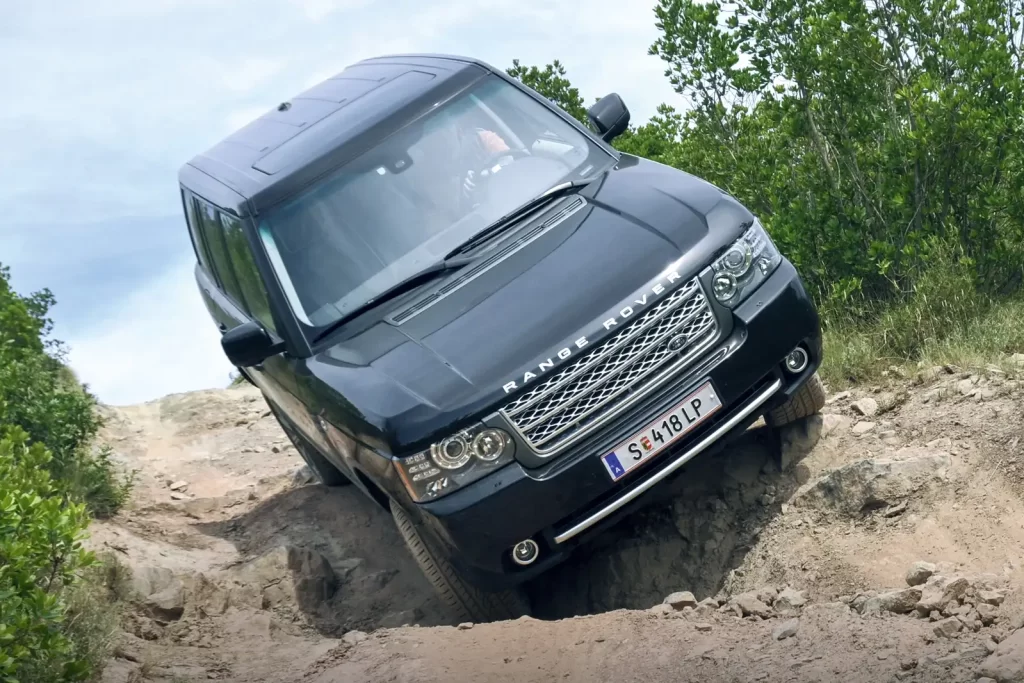
How were we seduced into these changes and what form did they take? It’s a tale of city and countryside, of congestion and the freedom of “the open road”. We live, mostly, in cities and towns but we dream, most of us, of living in the country. How many people drive 4-wheel drive monsters that were originally designed for country-dwelling landowners but became must-have status symbols of the urban elite – Chelsea Tractors as they are known – how many of those owners ever go off-road or ever use their 4-wheel drive? Incidentally, these huge cars, often justified as being safer for your family (if you can afford them)- take an unjustified amount of both materials and energy to construct, so that’s a very un-Green and inequitable contribution to Climate Change right there!
Advertising campaigns focus on a romantic image of the SUV as the car of the great outdoors.
Levelling Up
Recent changes in internet technology and in working practices stimulated by the Covid lockdown, mean that we can work wherever we want to – from home or at the office, the office usually being in the city and the home wherever we choose or can afford. But in this respect, those who live in the country, are still disadvantaged since the high-speed optical transmission available in cities, has not always yet reached the countryside. There is a clamour from rural populations for a levelling up so that the commuters, enabled post-war, by the motor car to live outside the cities, and commute in to work, may not be disadvantaged by slower broadband, that they may take full advantage of living in the country.
There are other things not available in the rural areas, such as supermarkets – another phenomenon that grew with the car, because even if you live in the city, the supermarket, unlike the corner shop, is likely to be some distance away from home and how else are you to manage to get a weekly shop home without a car? Food, DIY, furnishings, and any kind of specialist shops are in the urban environment and unavailable out in the country – at least if you want to touch and feel goods – because we now have online shopping. Assuming your broadband is fast enough for shopping online, you can order things online, have them delivered (by motor vehicle – anything from a lorry to a private car) and if it does not match the expectation (that touch and feel would have obviated) you can send it back, by vehicle again – still it’s better to have one vehicle doing a round of rural locations than dozens of rural dwellers motoring into town and back… This leads to other, less obvious environmental impacts – clothing retailers are very poor at standardising garment sizes so consumers may order a minimum of three items to bracket their size and having tried them on, return two of them, which the retailer cannot be bothered to repack and resell – best case they go to a third-party retailer like TK Maxx – worst case, they go to landfill, still in their torn-open plastic bags. 92 million tons of clothing end up in landfills. Only 20% of textiles are collected for reuse or recycling globally.
The Suburban Deserts…
It is not just country- dwellers who are dependent on cars – as the car became more widely owned between the war – ribbon development spread out along the arterial roads stretching out from the cities towards those aspirational countryside locations and post-Second World War, the spaces between those roads were infilled with suburban housing estates. These estates were not provided with shops or pubs and buses – buses still modelled on earlier urban trams, did not, on the whole, extend their routes into these estates (as they do now, using smaller buses) – so another “driver” towards mass ownership of the car. There is now guidance on how to design housing estates in order to be bus-friendly but it depends on local authorities being prepared to press this home.
-and “Liberation”
Once you had a car, many other uses for it became apparent and were catered to, holidays at the coast demanded an ever-improving road network and the upgrading of A-roads to motorways and with car ferries and later, the Euro-Tunnel, motorists could even take their cars abroad if only to stock up with beer and fags on a day trip to France. How much was saved when the petrol was factored in, I wonder? Trips to the dump, car-boot sales, lazy trips to the corner shop, driving the kids to school, sometimes even when the distance is walkable and the exercise would do both kids and parents good, Z-cars (car crime demands police cars), driving to watch motor racing, banger racing, picnics in the rain, dogging, actually making babies, babies being born and too many people dying in cars– and so it goes on – the love affair was over and we became truly wedded to our cars.
Divorce
Divorce is going to be painful and it is going to have to happen, because there can no longer be any doubt that climate change is happening and happening faster and more damagingly than we imagined possible. The time for tinkering about with lightbulb replacement is past, we must all take more serious steps towards doing our bit to arrest the worsening problems affecting rich and poor countries alike, though the effect on poor countries is worse and the contributory factors of any kind of mitigation lie with the rich ones. Changing lightbulbs was, initially, a costly outlay because the energy-efficient bulbs were not cheap, but then came LED and suddenly lighting fixtures themselves changed and every public building must change colour constantly at night. However, even changing lightbulbs was a struggle to sell to people initially – because of the cost – even if the long-term effect was a saving – it was cash upfront and savings later and we humans are not good at deferred gratification. If lightbulbs were hard, how much harder will it be to make serious changes in our car usage? No wedded person wants to get divorced, not least because of the massive cost both financial and emotional and this divorce is no different – when you blow up a life together, it’s hard to believe there might even be any upside, or be able to see beyond the chaos to a new and settled life…
Like a divorce, changing our relationship with the car is not going to be a single, simple matter, no more than you can change housing, separate finances, account for custody of children, divvy up the record collection, who gets the dog, who keeps the friends, let alone the emotional toll, good breakups, the bad breakups, the goodbye sex, the loss of support and confidant – divorce is messy and the solutions are multi-faceted and often unique to each couple and it will be no different with the car. Going electric is only a part of the story and presently, a dubious part at that – so let’s examine some of the many parts that might contribute to the solution.
Social Changes
There are two avenues to be considered – the technological and the behavioural and neither is easy or straightforward. Taking the social first, there have been studies showing that already, some people would save money by ditching their own cars and simply hiring a car for those occasions that they need them – holidays, weddings, big shopping trips but many would question the use of the word “simply” because nothing is without any cost – yes you would need to plan ahead and make a booking but is that really so onerous? Yes – you would no longer have a status symbol that you feel reflects something about you sitting on your drive and some people might think you “gone down in the world” for leaving the ranks of the car owners – but then again, many would applaud you…
Good Government – Hands On or Hands Off?
Another example of the need for social attitude change is the term “Public Transport” which now carries a whiff of class distinction – let us rechristen it as Green Transport or Make a Friend Transport – for in the words of a British railway advert – “Let the Train Take the Strain!” – I can vouch for this as after breaking hip in a car crash, I was unable to drive for at least a year and enjoyed travelling by bus to my nearest city, some 35 miles away so much, that I didn’t return to driving a car for five years. Not only was I able to more fully enjoy the beautiful scenery where I lived back then, but the bus afforded me the opportunity to meet people I would otherwise not chanced to talk to… By contrast, the Conservative party here in the UK, took great pride in announcing via posters at railway stations, how the UK had the lowest subsidy for railways of any country, however the list that the poster detailed, might have been the list of railway operators from best to worst, with the UK at the bottom. The Conservatives are the party of the car and they also adopted, as part of Neoliberalism, the idea that for governments to govern – to make considered decisions about what works best for the country and nudge or even legislate for it – is a bad thing and that market forces (read unabashed greed and profiteering) should determine the course of things. They sold off (euphemism – De-nationalised) British Rail, breaking it up into a series of franchises operated by the highest bidder and disastrously, made the rails themselves, the purview of another company. Operating for profit almost always means cutting corners and this, plus the disjuncture between infrastructure and operators, contributed, in large part to many incidents, the worst of which was the Reading Station crash in which six people died and sixty-one were injured. Major rail crashes also occurred at Southall, Ladbroke Grove, Hatfield, Potters Bar and Stonehaven.
There are already schemes bringing commuters together such as Car Pooling where people who work together, or in nearby home/job locations, share car and/or petrol expenses – what if we took this idea further wherein people within a given neighbourhood would belong to a co-owned carpool and could book a car suitable for “the day that’s in it “– a small runaround for taking and collecting the kids from school or doing the weekly shop and an estate car for that annual holiday – perhaps even a sports car to impress on that first date… There might need to be changes to insurance rules to facilitate such schemes but it’s not insuperable. In Canada, the distances to be travelled are vast and although it is illegal to hitchhike anywhere except at a petrol station, it is common to accept passengers who pay their share of the petrol. All these ideas are facilitated by online connections – either informal or actual websites, and this demonstrates both that people are willing to co-operate for a change benefitting the environment, even if there are some small inconveniences in co-ordinating themselves and secondly that these things, once mooted, can be organised from the grassroots up – with a minimum of governmental interference but perhaps the odd facilitation.
The Lessons of Oxford
I grew up in Oxford and would naturally have ridden a bicycle as soon as I was old enough even if I hadn’t had a father who became a crusader for “Intermediate Technology” (simple rather than high-tech solutions). I never learned to drive until I was 35 and had stopped living in London where I continued to ride a bicycle when possible or took public transport – busses or trains if the weather was inclement. If more people took to bikes and public transport, there would be fewer cars on the road and the benefits would be safer cycling, healthier bodies as well as the immediate environmental benefits – think Amsterdam or Oxford. Oxford has embraced and been the testbed for every measure to try and reign in the motor car. First it built a Ring Road or Bypass coupled with creating one-way streets that made it less attractive to go through the centre. Far from killing commerce in towns, many places have discovered that a more car-free city centre is such a boon that it promotes shopping, eating and sightseeing! Next, Oxford introduced bus lanes (which also facilitate bicycles and taxis) and shortly after, Park-and-Ride schemes. The latest scheme in Oxford has however, brought a backlash, not exclusively from those immediately affected (or benefitted, depending on your point of view) but as a rallying point for car defenders from far and wide who see Oxford’s latest experiment as the thin edge of the wedge – the enforcing of automotive divorce. What is this dastardly attack on the institution of marriage to the car? It stems from the idea of the “Fifteen Minute City” That every city be divided into neighbourhoods within which all the essential needs for living – shops, pubs, meeting places, bus routes out – should all be found within a fifteen-minute walking distance – innocuous you might think, but Oxford’s implementation – a retrospective planning measure, is to ring-fence such neighbourhoods with car-barriers to limit ingress and egress for cars – and this has been seen by some as a totally unwarranted attack, not just on car owners, but on their very human rights! Protesters were not merely local residents but car supporters from far and wide who flocked to oppose the dastardly council who dared to challenge the rights of the motorist! In our necessary divorce from the motor car – a front line has been drawn… True, such cellular enclaves have been devised before by town planners – anyone who has visited a friend in the suburbs of that planned city, Milton Keynes, will know the nightmare of entering such a cell and then not being able to find the way out. Not least, this is because the suburban cells of Milton Keynes were designed without the shops and facilities that would have made them into 15-minute solutions but would also have provided landmarks for navigation in a sea of identical housing. Planning for the future means making sure that housing estates are more than just housing, that the cars are parked or garaged around the outside of neighbourhoods, or at least, like the mews coach-houses of old – at the back of the houses with pedestrian thoroughfares leading to shops et al, at the front. Private developers are particularly notorious for neglecting to build any community facilities and merely cramming as many houses with concomitant roads, drives and garages as it takes to carry the occupants out of their housing only ghetto. Reto-fitting is, as Oxford has discovered, more challenging still…
Technological Options
Turning to the technological options for environmental solutions to divorce us from the CO2 emitting motor cars, vans and lorries – “What of the electric vehicle?” I hear you say. Setting aside the fact that you still have to generate the electricity to power electric vehicles and all the difficulties in weaning power generation off fossil fuels, there are major flaws in the current approach to electric cars.
The current generation of electric cars is predicated on the idea that people want a car that does exactly the same things as the cars they will be giving up – carry five people, travel at 70 miles per hour or more, have a capacious boot, carry forward all the crumple zone technology which keeps us safe, up to a point, in the event of a crash – and it is worth remembering that it has been determined that once over 30 m.p.h. – there is very little that a driver can do to influence the outcome of a crash and also, that the speed of impact in a collision between two cars is the sum of their two speeds so two cars travelling at 30 m.p.h. smash together at 60 m.p.h. Of course, if we travelled much slower, then such high-speed collisions and the ingenious and weighty crumple zones which have been designed to protect us in such events, would be less necessary.
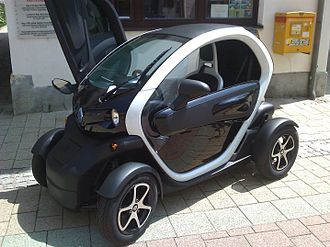
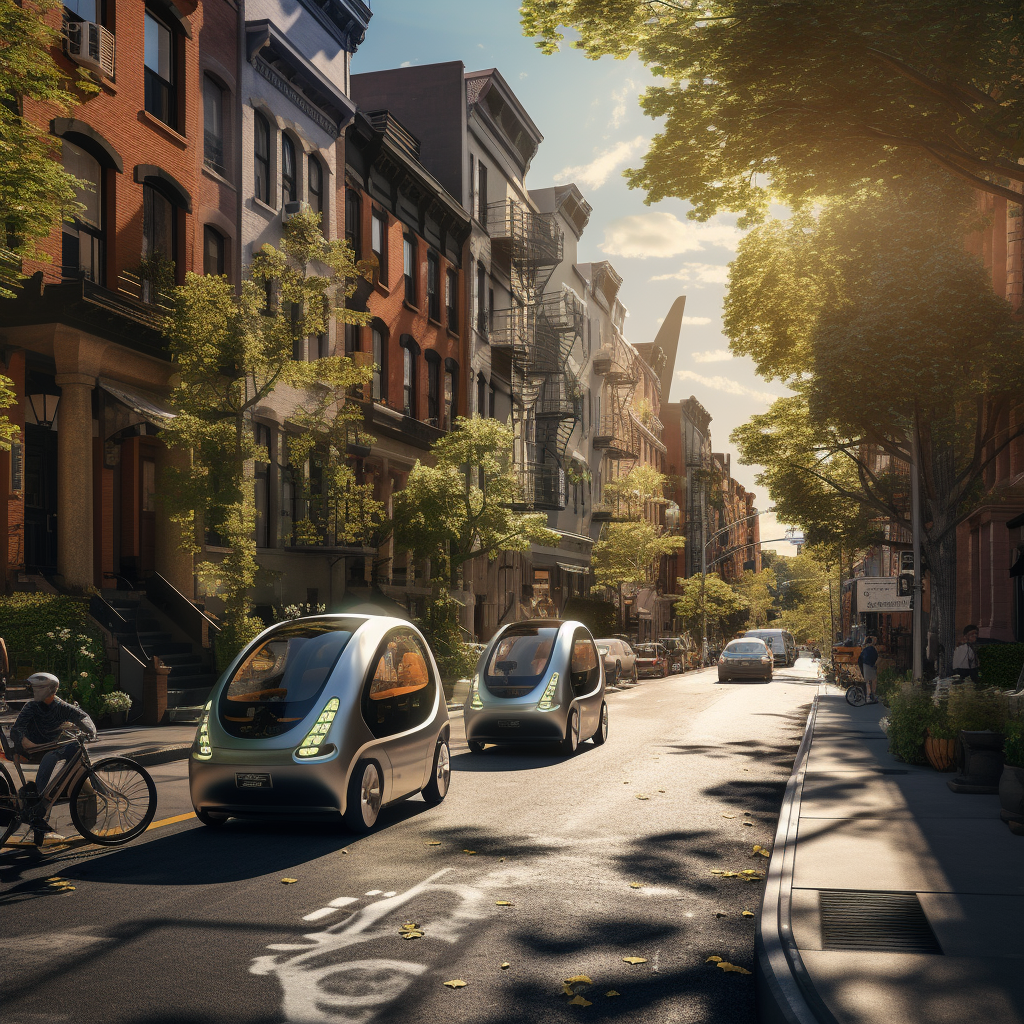
What has disappointed me about these new electric cars is that they look exactly as before, take the same massive amount of energy and share of Earth’s resources to construct, worse if you think of the issues around Lithium for the batteries and they are, at this stage affordable only by the relatively rich. I had imagined a wholly new style of lightweight runarounds – cars perhaps a little like the Smart cars – economical two-seaters, but if you want to achieve all the old requirements of a car listed above, then you have to go big – as big as existing cars, because you cannot fit a big enough battery to supply the range or speed to carry the weigh of all that crumple zone protective steel in a small car. It just can’t be done, and in any case, the first adopters of electric cars are the better off and it has been much easier to sell them the idea of going green by simply changing to a “greener” propulsion of an equally capable large car rather than that of a small one which they are not in the market for anyway.
Small is Beautifull…1
If we accept the reality that people who live and mostly drive only in cities, neither need a high-performance large car nor can utilise the capacities of such cars due to congestion slowing things down, then would it not be better, for when you need to use a car, to have a small electric vehicle! There is a class of cars termed Neighbourhood Electric Vehicles (how friendly does that sound!) which are small, light weight, much less greedy in manufacturing and material costs, and travel at the modest speeds actually suitable for driving in urban environs. That they have not gained greater popularity is in part due to the hazard of driving such lightweight cars in a mix with larger, faster, heavier beasts and partly due to the failure to grasp the necessity of switching to such vehicles.
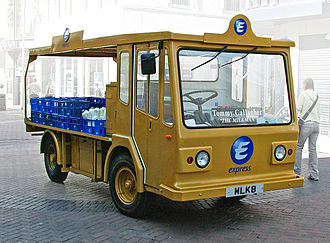
Electric cars are not a new idea, in fact, they were quite common until petrol engines gained ascendancy, what about the electric milk-float – operating with heavy lead-acid batteries rather than the current lighter-weight Lithium ones, these workhorses carried a good load, travelled at moderate speeds and had enough range to get the job done – proof that a realistic spec. for an urban vehicle is eminently possible!
What if, instead of trying to change habits by applying punitive Low Emission and Congestion Charges to big cities (which become rallying points for the motoring rights lobby) we take joined-up government decisions to promote cities being small electric vehicle zones? What does joined up mean in this context? It means first promoting the manufacture of such vehicles up to and past the point of mass adoption, facilitating charging points by legislation where necessary (ie. all new homes to include them), and only then enforcing the adoption of the small vehicles in cities. Those who want to retain their old-style monsters might be forced to leave them in outskirt car parks and continue their journeys inward with a small vehicle or a bus. To get there from here is never going to be a single simple solution but always many parts that will eventually be greater than the sum of those parts.
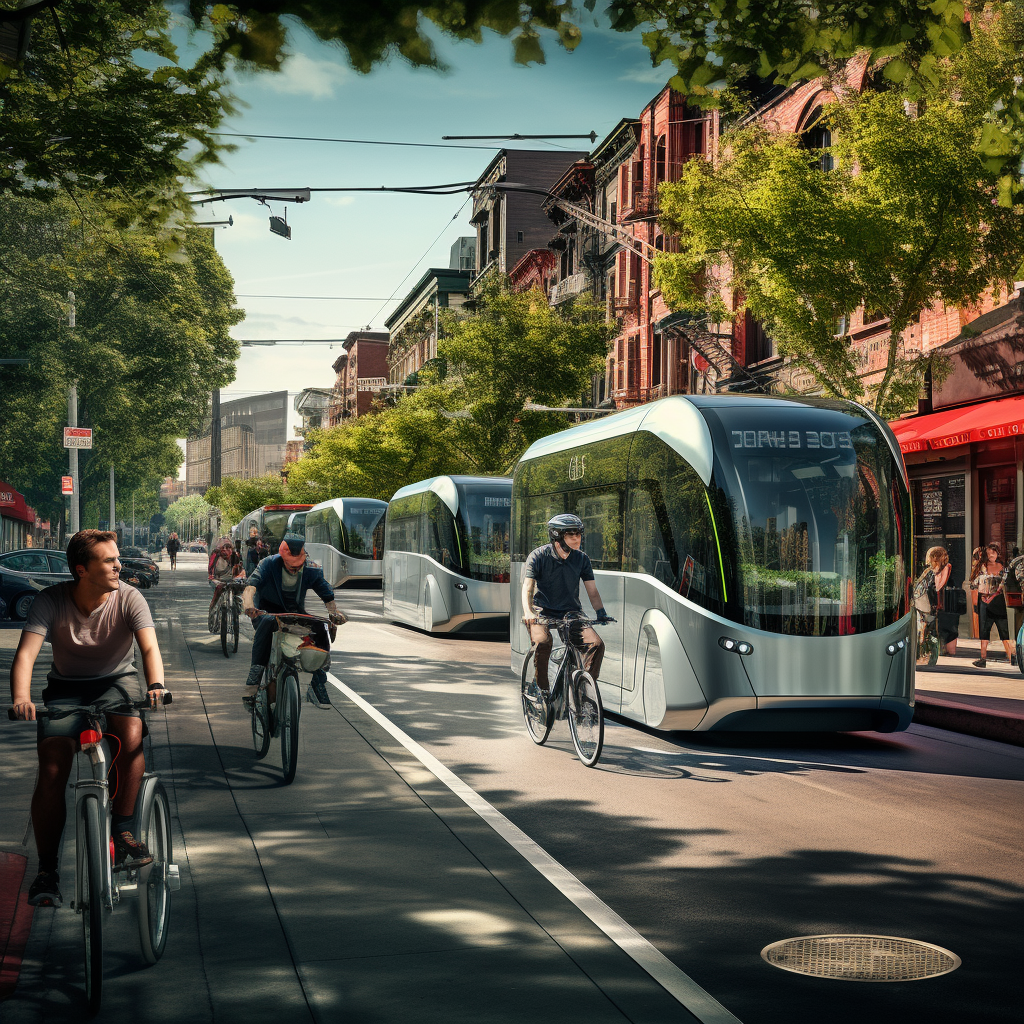
My vision of the future is that there will be a two-tier division between town and country and it will probably reflect the difference in wealth that already exists between many (but not all) rural dwellers and those who live in towns and cities. Having said that, there will be a levelling up in many ways – more bus routes in town and out; smaller electric busses, electric vehicles in town and even in the country, they could be used to get to the station or connect with a bus route; status will not be judged by the car you own, in fact, ownership might not be the prime model.
New Ways of Doing Things
In Liverpool they have a company operating a fleet of electric scooters that registered users can pick up and use wherever they find them and are charged by distance travelled. All GPS locatable, the company goes round at night and collects the scooters to take back to base for recharging. Imagine how this might work for Neighbourhood Electric Vehicles. For sure you couldn’t go around with a car transporter picking them up at night – but wait! There are other clever technological solutions available! Firstly, if you operate a reasonably expensive drone, the last thing you want is for it to run out of power and crash miles away from you – so they have a sensor such that when they only have just enough power to get back to you – that’s exactly what they do – turn tail and use GPS to automatically get themselves back to you. Combine that with driverless cars – and a company could automatically retrieve vehicles back to base and deliver them to customers’ doorsteps for whenever they have been ordered. One of the issues around driverless technology is that it is aiming to be used in current type motor cars up to and including a mix of lorries and cars on motorways – imagine how much safer it would be if the technology were used to control new, slower, lighter vehicles around town.
There are so many aspects of our necessary divorce from the motorcar as we now use it and just as the effects of the growth of the car brought incremental consequences, so the solution to how to adopt a new relationship must also be incremental and multi-faceted. Let me leave you with one last anecdote that shows the interconnected nature of things. There are fleets of electric buses already operating and some of them are contributing to solving one of the problems of the regulation of power supply – especially renewable power supply which can be occasionally irregular. When the busses return to their depots after taking commuters home, they arrive back at the very peak time when those same commuters are cooking their suppers. So the buses can return whatever charge is left in their batteries to the grid and then later in the night, when the TV goes off, the buses recharge their batteries ready for the morning. Building storage batteries to smooth out the supply and demand for energy from renewable sources is one of the major drawbacks and costs to switching to those power sources but in this case, we can see how buses, and perhaps even private electrical vehicles could become part of the battery solution – food for thought…
What can you do?
The most useful thing that an individual can do at this moment is to examine the situation both personally and in terms of the wider picture – take an inventory of your own circumstances and figure out whether you could change things in your own relationship with the car as things stand now. If not – then what would need to change to make it possible for you – petition for more bus routes; wait for electric vehicles to get smaller and more affordable; buy a bike and start to use it for more than just leisure or exercise; discover car-sharers in your area or advertise if you can’t find any. So much depends on attitudinal change that you might start discussions with other people to explore the problems and solutions – knowledge and insight are vital to change.
And please, if you have responses, questions or opinions on what I have said – post a comment and start the discussion…
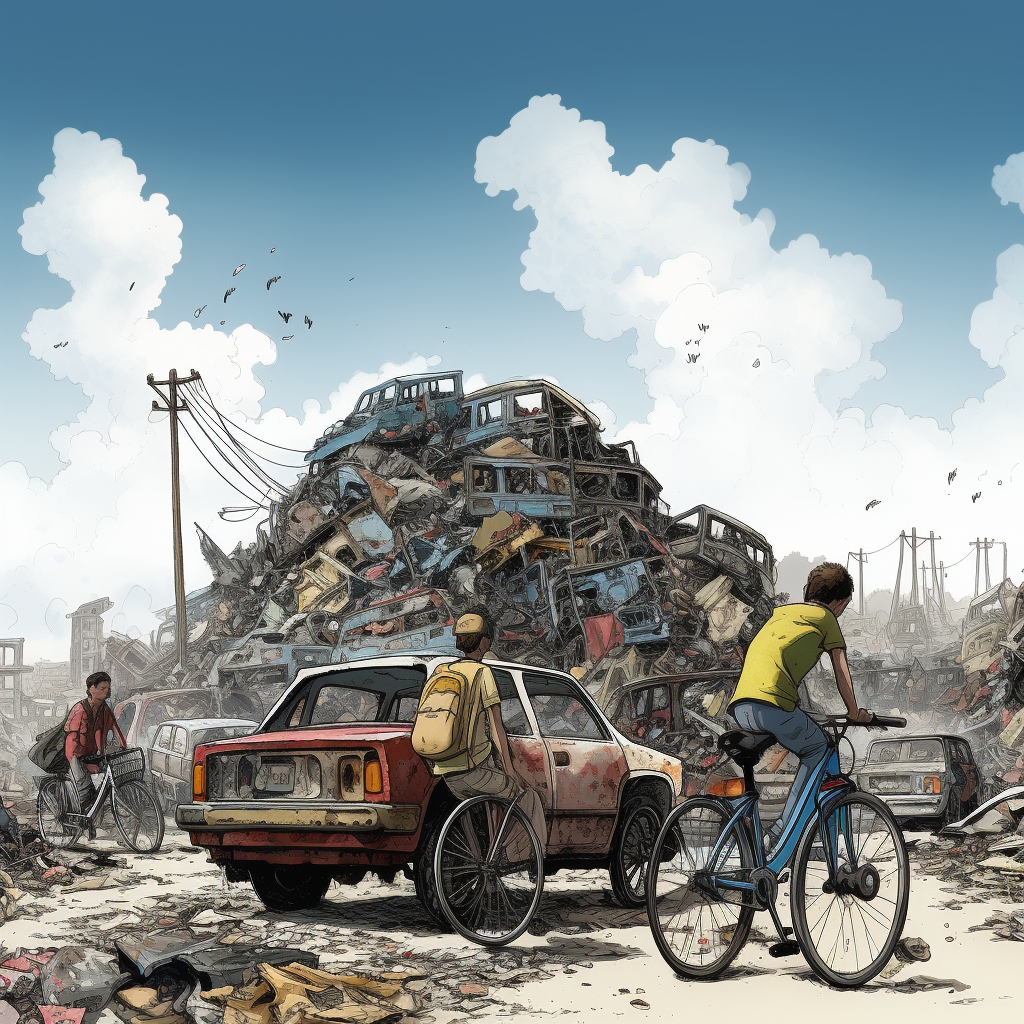
Image generated with Midjourney AI by Andrew Wilson
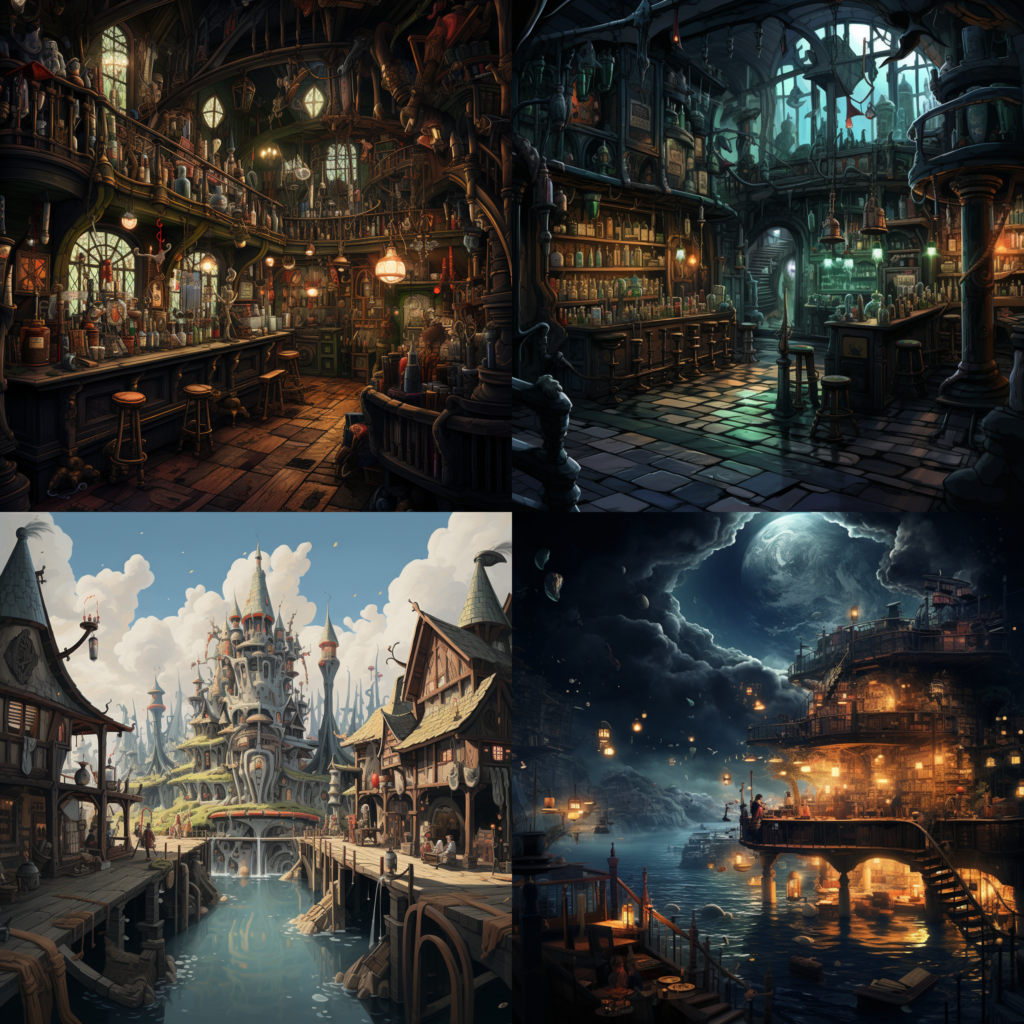
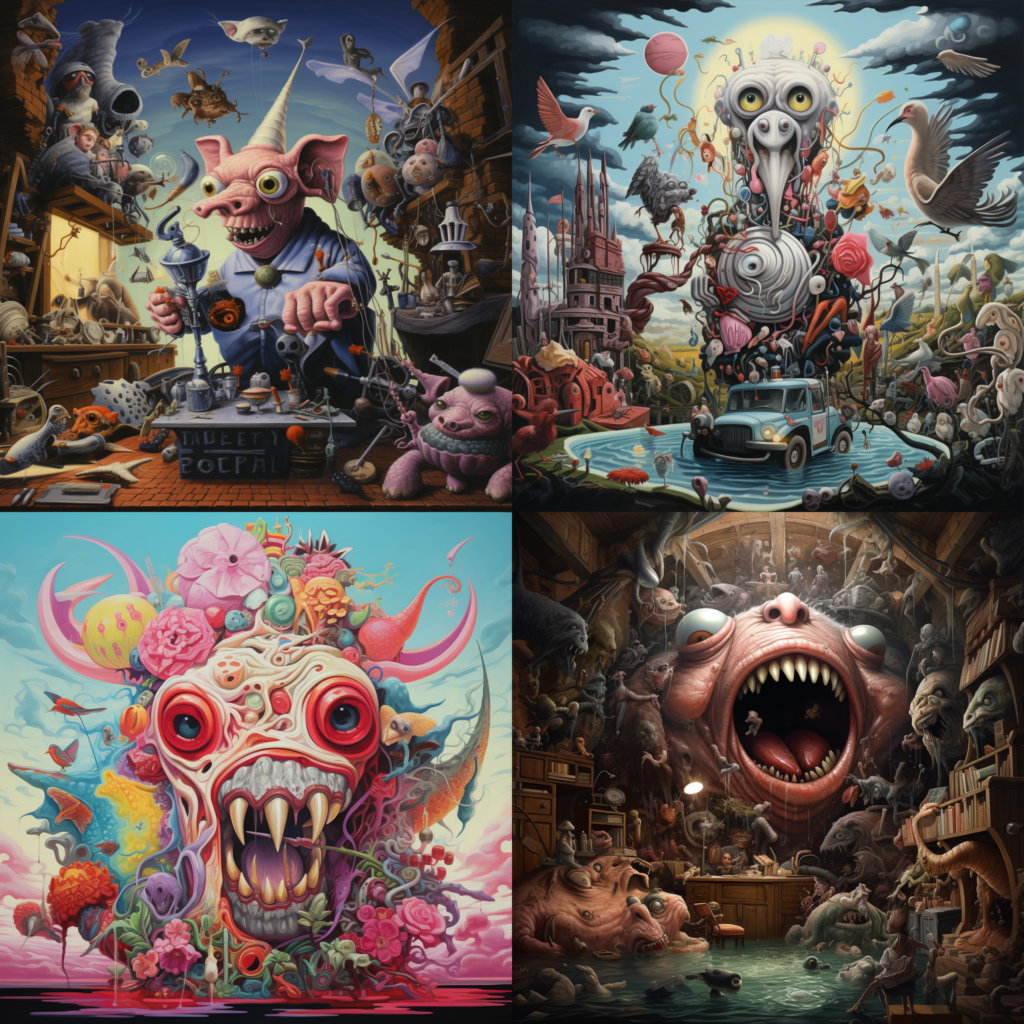
My AI muse Misky, recently made a post entitled Barglefloop and I quote her “barglefloop, means to mess with words in your AI prompt in order to confuse it, to turn nouns into verbs, to make single words compound, etc.” It occurred to me to experiment by adding the same prompt to Midjourney as Misky had used and see if the AI came back with the same images as she got – it did not! Here are the first four I got using the prompt “Barglefloop“
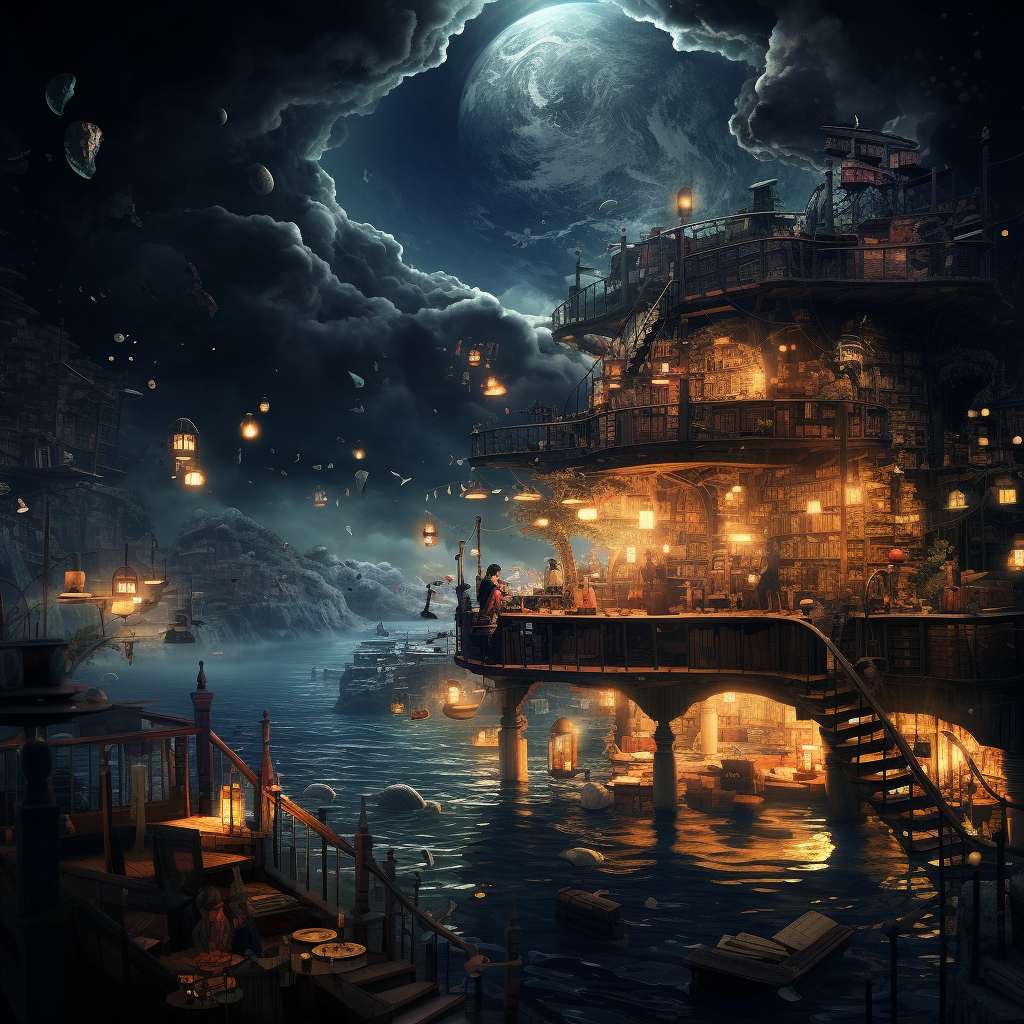
Where Misky’s images tended towards Hieronymous Bosch – mine were Harry Potter meets Lord of the Rings Rivertown. Below is the fourth image enlarged to show the level of detail the AI has put in…
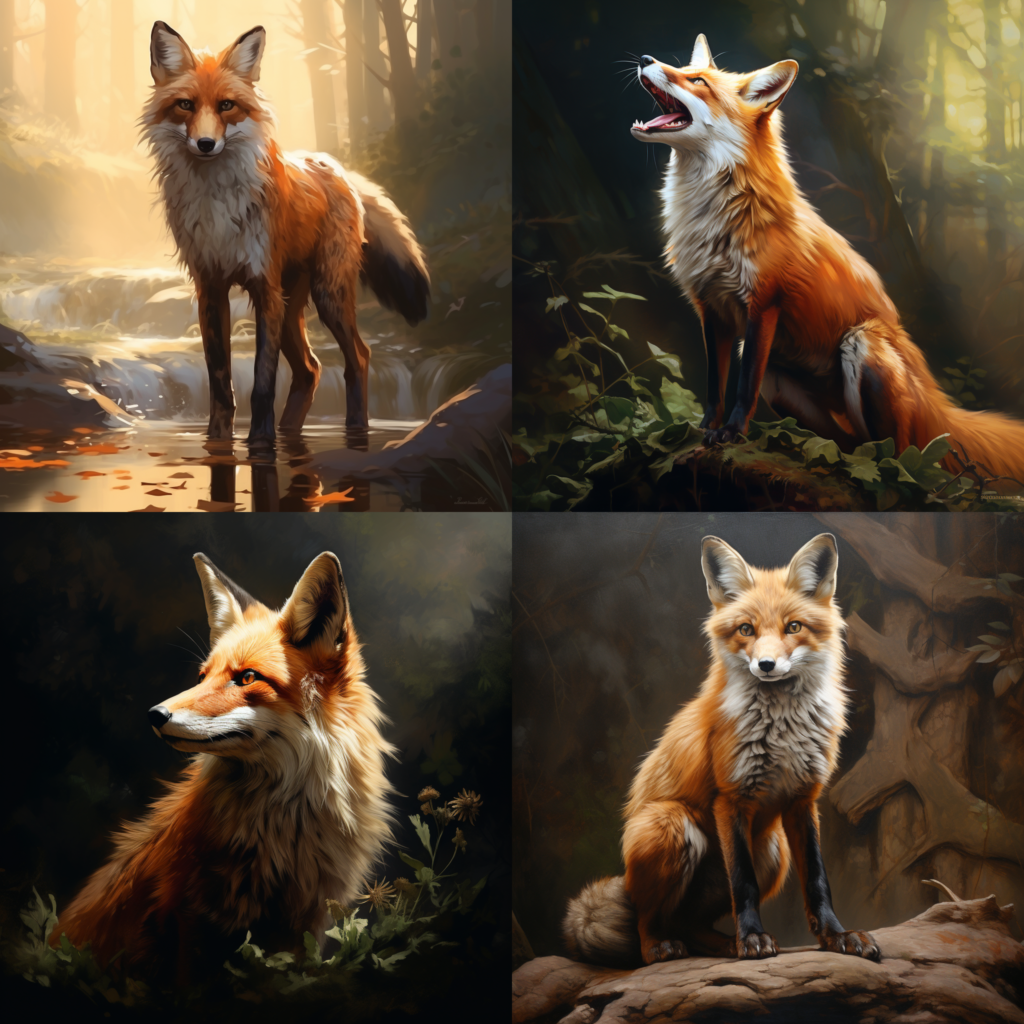
But what does this tell us about the way Midjourney works – that Barglefloop is nonsense and so the AI creates whatever it wants to – let off the leash so to speak? I decided to add some more nonsense “barglefloop female foxing blithy toves” – Foxing – as a noun gone verb, and “slithy toves” from Lewis Carrol’s Jabberwocky (’twas brillig and the slithy toves…). This time the AI seized on the only bit of the prompt that made sense Fox and gave me four fox pictures, ignoring the rest of the senseless prompt – so Midjourney, whilst known to hallucinate as much as the next AI was not so desperate to act freely – released by nonsense…
Cute but no cigar for Midjourney so now I went for all the nonsense, none of the foxing around “barglefloop blithy toves” and now we get something quite nightmarish in a Snarky/Jabberwocky Carrollian sort of way, with perhaps a hint of Bosch…
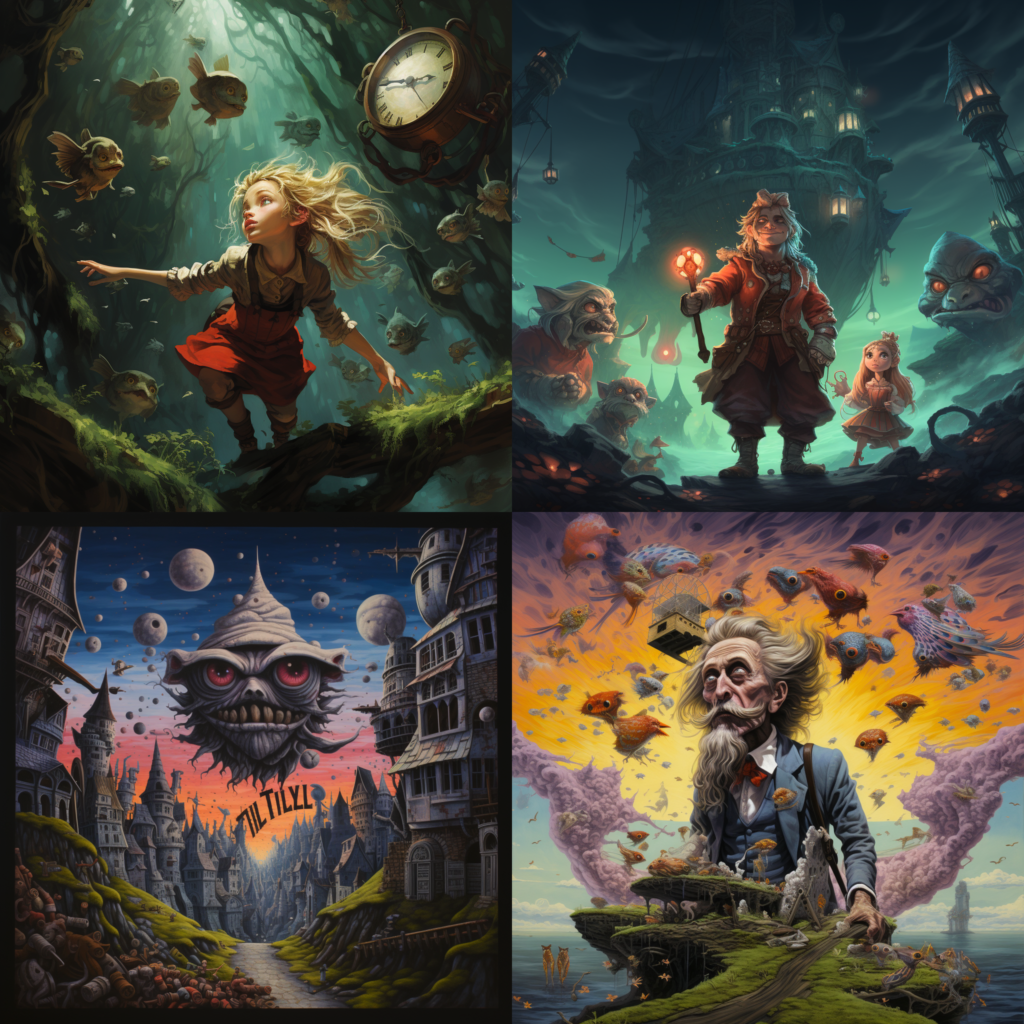
So lastly I decided to miss out the Barglefloop and just retain the Lewis Carrol words “twas brillig and the blithy toves” and now we can see an Alice in Wonderland flavour to the images – particularly the top two…
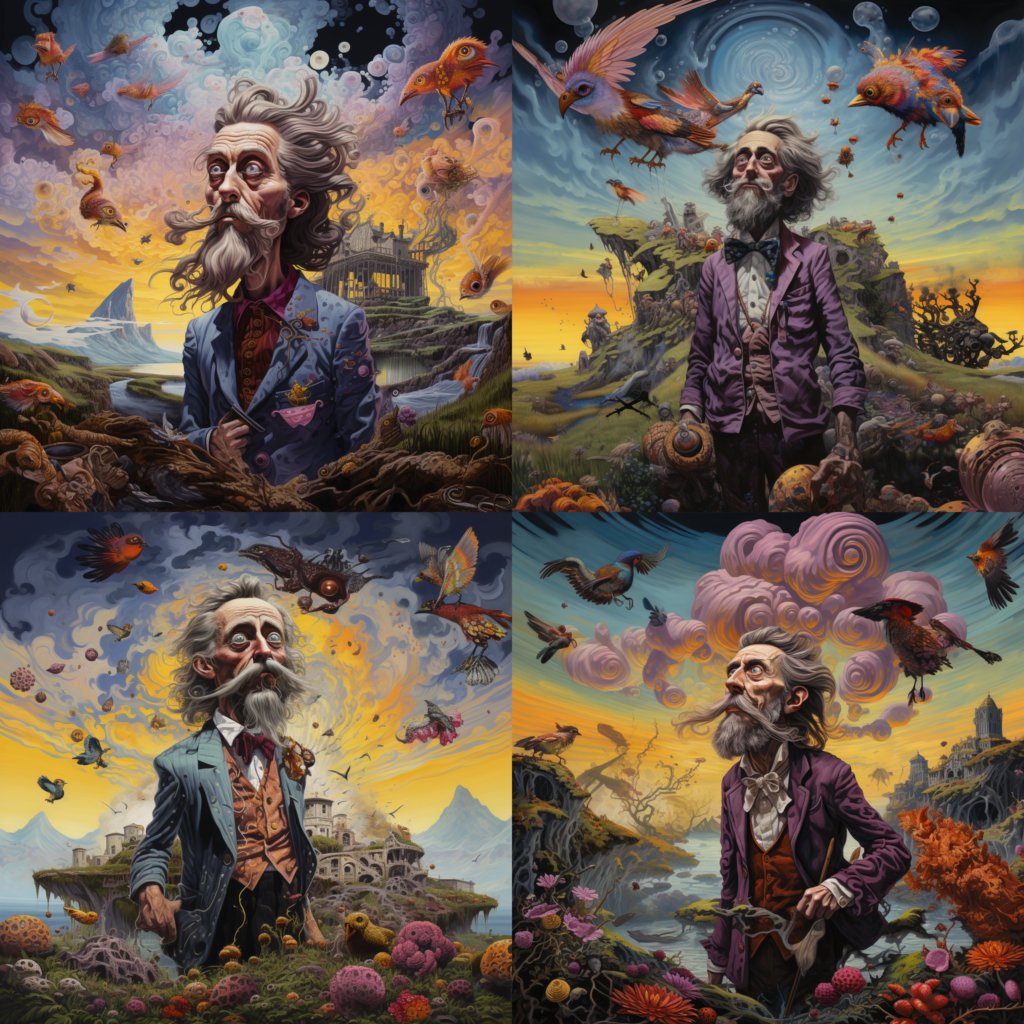
Lastly, I asked for variations on the bottom right image – a rather mad-looking figure with a slightly Victorian flavour…
Does this tell us much about the way the “mind” of an AI works – I will let you be the judge – and stay away from hookah-smoking caterpillars seated on toadstools – my advice…
During the month of April this year, whilst participating in the A to Z Challenge, I was privileged to encounter the work of Misky whose blog It’s Still Life, showcases two distinct things, poetry written by Misky and illustrated using Generative Artwork created by Misky using the Midjourney AI app. So amazing were these images to someone who is in part, a visual artist, that it inspired me to make an exploration of Generative AI for myself. At the same time, AI has been hitting the headlines big time and mainly for its use in text generation and the impact it might have on jobs and since writing is another thing that I do in my day job, I was also intrigued to see whether AI might be of any use in a company such as I work for. (I am the gradually retiring General Manager of a food manufacturing company). It has been a fascinating voyage of discovery and to cap it all, lying awake at 4 o’clock this morning, I found myself listening to “The Conversation” on the BBC World Service and what should be the topic, but AI with special reference to the involvement of women. So – mind on fire, I am going to draw this series together, although I freely acknowledge I have but dipped my toe in the waters of AI and I may return to the topic in the future…
To recap the three articles I have already written:- In the first one, I tried out ChatGPT to see what it research and write about one of the topics from my A to Z and immediately encountered the phenomena of AI hallucination – the ability, in fact tendency of AI to make things up. I also “showcased” my first attempts at visual collaboration with the Midjourney bot . In the second report, I compared ChatGPT to Writesonic which produces more lengthy articles – testing them against a typical (for me) work assignment. In the third report, I looked at the most controversial assertion about AI – that AI might in the future, eliminate human beings – Terminator-style and referenced articles that thoroughly refute the need to worry about that particular outcome – go re-assure yourselves! However, there are many things about our present and future use of AI that do bear looking at and these were raised in the episode of “The Conversation” that woke me up this morning. The programme, presented by a woman, featured two women working in the field of AI, one a philosopher and one an expert in data analysis and as well as the general concerns that need addressing about AI, they highlighted the general lack of representation of women in the field of AI – only one CEO, qualifying women failing to get jobs in the industry and so on. They did however point out that one of the changes to AI itself in recent times, has been the accessibility of use – no longer do you need to have a degree in computer programming – you could make your first interaction with ChatGPT in the same time it would take you to query something on Google. Which brings me back to Misky…
Misky was not only the inspiration for my (deepish?) dive into AI, but was extremely helpful and encouraging to me at the outset, itself a reflection of how women tend to be more collaborative, good team players – a fact which the contributors to “The Conversation” suggested is a good reason for women to me more involved in AI companies, in reviewing the implications and in forming the regulation which is undoubtedly necessary around AI. A few days ago, I was delighted to meet Misky face-to-face on a Zoom call after many text interactions online and one of the things that she shared in our too-brief call, was that she had had some push-back from certain readers of her blog, about the use of AI images. I would like to talk to her more about these issues, but the participants in “The Conversation” raised the issue of how artists, whose work has been studied by AI to create new images “in the style of”, are being short-changed. You may have been wondering about the image at the top of this post – I created in Midjourney by prompting it to “imagine” Knaresborough railway viaduct “in the style of Hokusai” – a master of Japanese woodblock prints. I have used this subject as my test piece for exploring what Midjourney can do as you will see in the previous post. Now Hokusai is long dead and so the issue of compensation is hardly an issue, but another group of more recent artists might object. I am working on a spoof post – “How to Make a Body” a tale of human reproduction in the style of an Internet recipe ad although, like Misky, the writing is all my own, I wanted an illustration to fit with the tone of the piece and prompted Midjourney to “imagine” a woman in a hospital bed, holding her newborn baby and with her husband leaning in “in the style of a Ladybird book cover”. For those of you who may not be familiar with Ladybird books, they were written for children starting in the 1940’s and running until the 1980’s and they feature a distinct style of illustration.
In recent years, a series of spoof books in the Ladybird style and aimed at those who had grown up with the original series, have been vert successful, for example…
I had no idea whether Midjourney would be able to fulfil my prompt, there are lists of artists’ styles you can use with Midjourney but I hadn’t seen this one – I was not disappointed!
I am keeping my powder dry as to the final image I chose but this first set of four (Midjourney shows off by producing not one, but four attempts in under sixty seconds) – which was done to the prompt of “A new mother in a hospital bed with her husband leaning in as she holds their new baby in the style of a Ladybird Book Cover” has misunderstood my intention and the mother is holding a magazine rather than a baby – though the graphic style is very Ladybird book-like. I acknowledge that I am still only a beginner in my use of prompts with all the forms of AI I have tried so far and there is undoubtedly an “art” to getting it right which is why I said “I created in Midjourney”. Although I am a competent watercolourist, screen-printer and other forms of illustrative art, I could not produce images such as the above and certainly not in sixty seconds. So, how much of this creation is my prompt, how much is the brilliant programming behind Midjourney and how much is owed to the various artists who could produce the illustrations of the Ladybird books? I cannot begin to answer that question but it does raise an issue which needs considering in formulating regulation around the use of AI. Meanwhile, like Misky and I, jump in and have a go and get a feel for yourself of the answer to the god-like feeling of creating with an AI tool…
Much of the debate around the consequences of the rise of AI, is around its impact on jobs and the potential losses and gains. As I described in my first report, the development of computer spreadsheets swept away the lowly positions in Accountancy but opened up many more jobs at the high end of the profession and although this might be the hope for AI, that it liberates us from the menial and allows us to create new roles – roles which might be beyond the capability of AI to imagine, at present, it is not just the menial tasks that are being threatened by bots like ChatGPT, but some roles higher up in various industries. Having said that, given the tendency of AI’s to hallucinate, I wouldn’t trust an AI’s writing without an experienced human checking the output of any writing before sending it out! Also, when you are a creative individual yourself, then trying to get AIs to produce exactly what you have in mind is tricky. In my 2021 A to Z challenge, I was trying to complete a science-fiction novel and the exercise gave me enough momentum to indeed finish it a few months later. Then I set about creating a book cover for it – to feature the final denouement – a tense scene set in a space-elevator on the edge of space. I prepared the background view by Photoshopping some NASA photographs looking the length of the Red Sea towards Palestine, painted in a great river estuary as per my planet, and then superimposed some 3D elements which I drew up in AutoCAD and finally added the title and my name. You can see this below, however, I felt that the result was not quite up to the standard of artwork commissioned by big sci-fi publishers and imagined that in the unlikely event of the novel being published, an improved version of the cover would be substituted for my “sketch”.
Back to today, and naturally, I thought it would be a good test of Midjourney to see whether it could be used to produce a better version of my cover. Well, the first attempts were brilliant style-wise, but nothing like the image I wanted and many attempts followed to no avail…
My prompt read “space lift arriving at 300 miles above Earth like planet over Sahara like region array of cargo containers spread out in one layer small spaceship approaching“Midjourney couldn’t understand Space lift and I had to change lift to elevator, it couldn’t understand “array of cargo containers” but it did have all the sci-fi style I wanted. So then I decided to create a space view background without the lift and substitute it into my own cover illustration. Bingo!
Still I hanker for the crisply detailed images of the elevator that Midjourney is capable of if only I could prompt it correctly – so a work in progress… What this exercise does show, is that it is possible to use AI for the things it can do better in combination with human talent.
In Conclusion…
This exploration of AI has felt like a marathon and it is just one person’s experience and I am really only at the beginning of my exploration, I’m sure I will find both text and image-generative bots to be of use in my future work and play. I urge you all to experiment for yourselves, form your own judgements (and please share your results by linking in the comments), join the debate over the regulation of AI, and explore other artists, in particular, Misky, who began this journey…