A to Z Challenge 2026 – Knitting and Crochet and “K” Fabric

“Choose any subject you would like to write about…” that is the object of the A to Z Challenge, and thinking of things that interest me is not a problem for me, but choosing a subject not only to write about, but to write in a way that other people will catch my interest – that is the real challenge! This year I turn to a subject, close to our skin if not our hearts, and yet, again, I wonder if this subject will get some people past the title on the list – dismissed as niche? For this year, my theme is What We Wear – Fabrics and Fibres

I have a book from the 1950’s which is simply entitled “Stitchcraft” and it contains instructions for how to knit and crochet. Go into a large newsagents with a full selection of magazines today, and you will find magazines not just on Crochet, but Beaded Crochet, such is the sub-division of crafts in order to generate as much revenue from the world of crafters. In my book, you can find a pattern for making a knitted sweater but which has a panel of crochet worked into it – Sacré Bleu! Such mixing of crafts! Quelle horreur! Joking aside, There should be no hard and fast walls between all the various forms of stitchcraft! There! That is my rant, now back to Knitting and Crochet!

Knitting

Actually, before there was knitting, on two needles (Egypt, 11,000BC), there was nålbinding – literally  ‘binding with a needle’ and involves using short lengths of yarn which are joined together as they come to an end and in which the whole length of the yarn is passed though each loop – the end result looks very much like knitting, andthis technique occurs in many parts of the world – in the desert of Judea, in a Mesolithic fishing village in Denmark, Egypt and in the Paracas and Nazca cultures in Peru. The technique was often used in the round, to produce socks and slipper-like wear and it survived in parts of Europe into the 50’s. With the advent of the internet, a renewed interest in nålbinding has ocurred! The thumb is often used as a way of setting up the stitches and the diagrams below show some of the different stitches used and the video shows you how to have a go yourself…
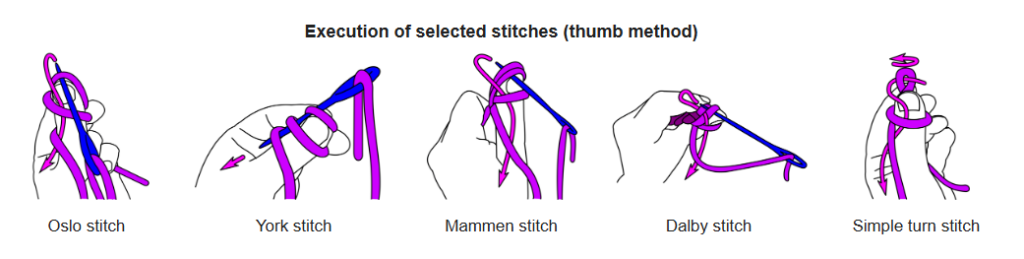
Nålebinding – Wikipedia

The earliest known true knitting is found in Egyptian socks from the 11th century CE. Interesting that the new form was used to develop the same product as the older nålbinding – socks! The earliest European pieces date to the 13th century and the early materials included cotton and silk, rather than wool and was not merely functional but often displayed high craftsmanship and served the elite and the Church. Silk would have been an expensive commodity having traversed the length of the Silk Road – all the way from China.

Knitting is the process of using two or more needles to pull and loop yarn into a series of interconnected loops in order to create a finished garment or fabric. The word is derived from knot, thought to originate from the Dutch verb knutten, similar to the Old English cnyttan, “to knot”
Wikipedia – History of Knitting

Some of the earliest European examples of knotting were by Muslim knitters employed by Christian families in Spain showing how the technique had spread from Egypt and through the Middle East and, although archaeological finds sometimes turn up fragments of knitting, being made of natural fibres, they are prone to being eaten by insects and so are hard to find preserved. And it’s not just the fabric but even the stitches could become lost – the two most common stitches today are knit and purl, and the purl stitch, though seen in the earliest Egyptian knitting, seems to have lost in its travels through Europe – appearing again only in the 16th century.

What makes knitted fabric so useful, is that it has a natural elasticity allowing a range of fit to size for the wearer. As a technique, it requires no more equipment than two needles and so is ultra-portable and indeed you will see people knitting on trains and buses indeed, anywhere, especially today, when knitting is no longer a functional source of clothing but rather a hobby craft.

The Olympic swimmer, Tom Daley, may have given men’s knitting a boost recently, but this photograph from the book “People Knitting: A Century of Photographs” by Barbara Levine shows that it has long been practiced by men as well as women!

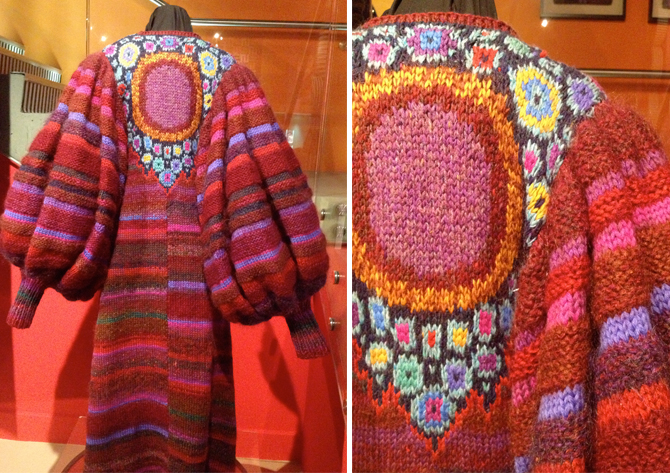
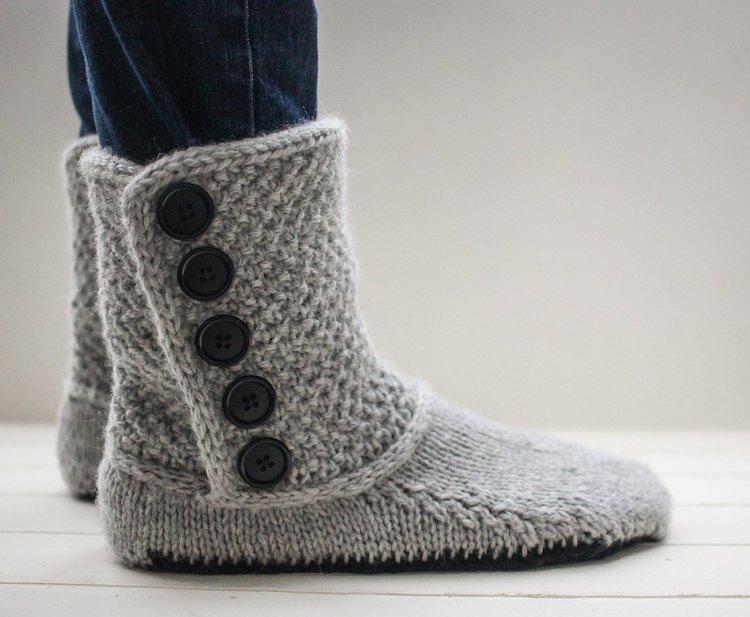
I am not going to try to cover the breadth of the world that is knitting, but here are some of the places it is going in the 21st Century…

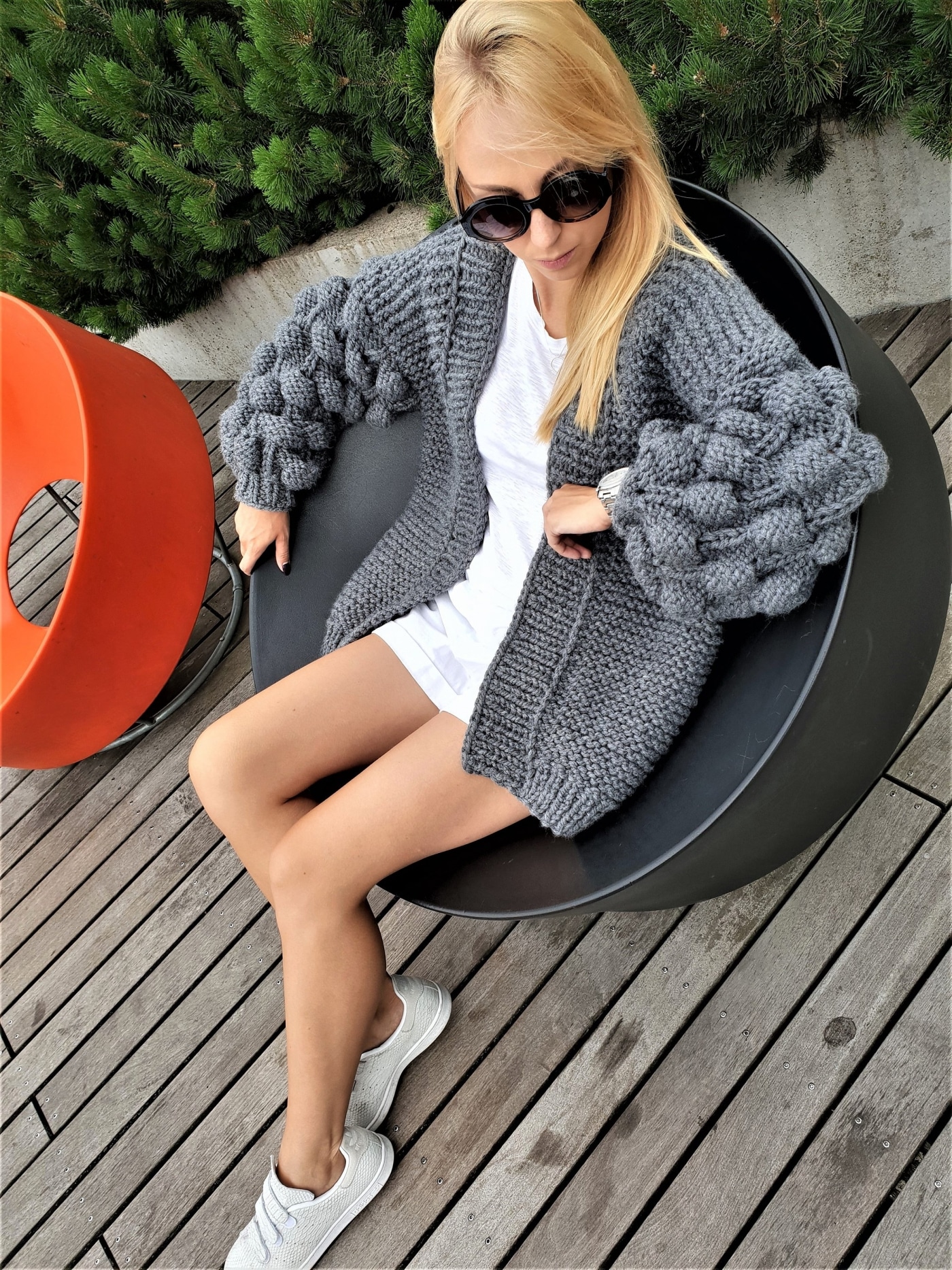
30 Knitting Patterns You Can Start Working on Right Away
By Sara Barnes on October 5, 2023

And of course, that staple of knitting – baby clothes – these booties don’t look to onerous tmewise – maybe even a person like me, who struggles to finish projects could manage these lol…

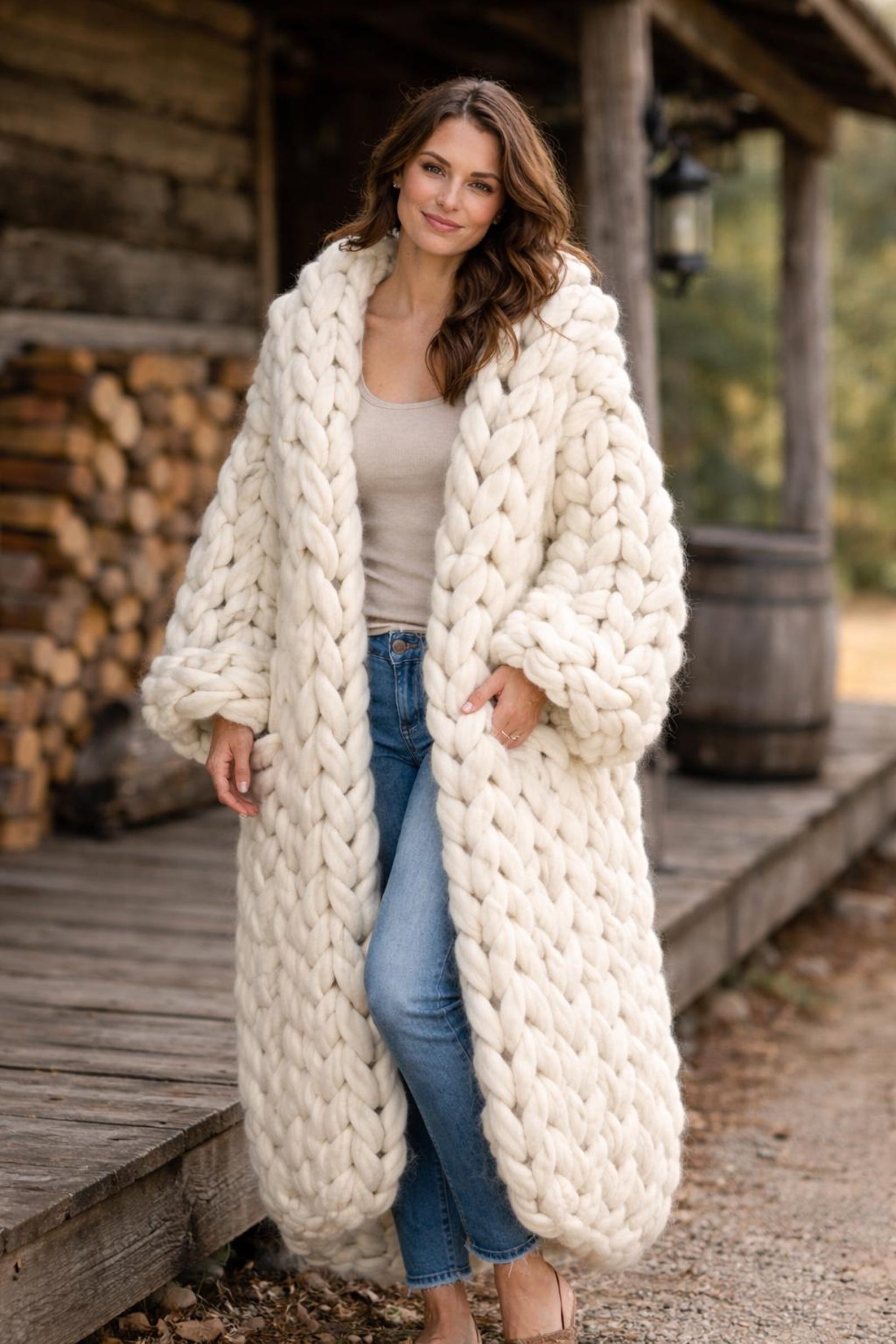
Of course, the other way to complete a project quickly is to go “extreme knitting ” – very chunky yarns on enormous needles!
Crochet
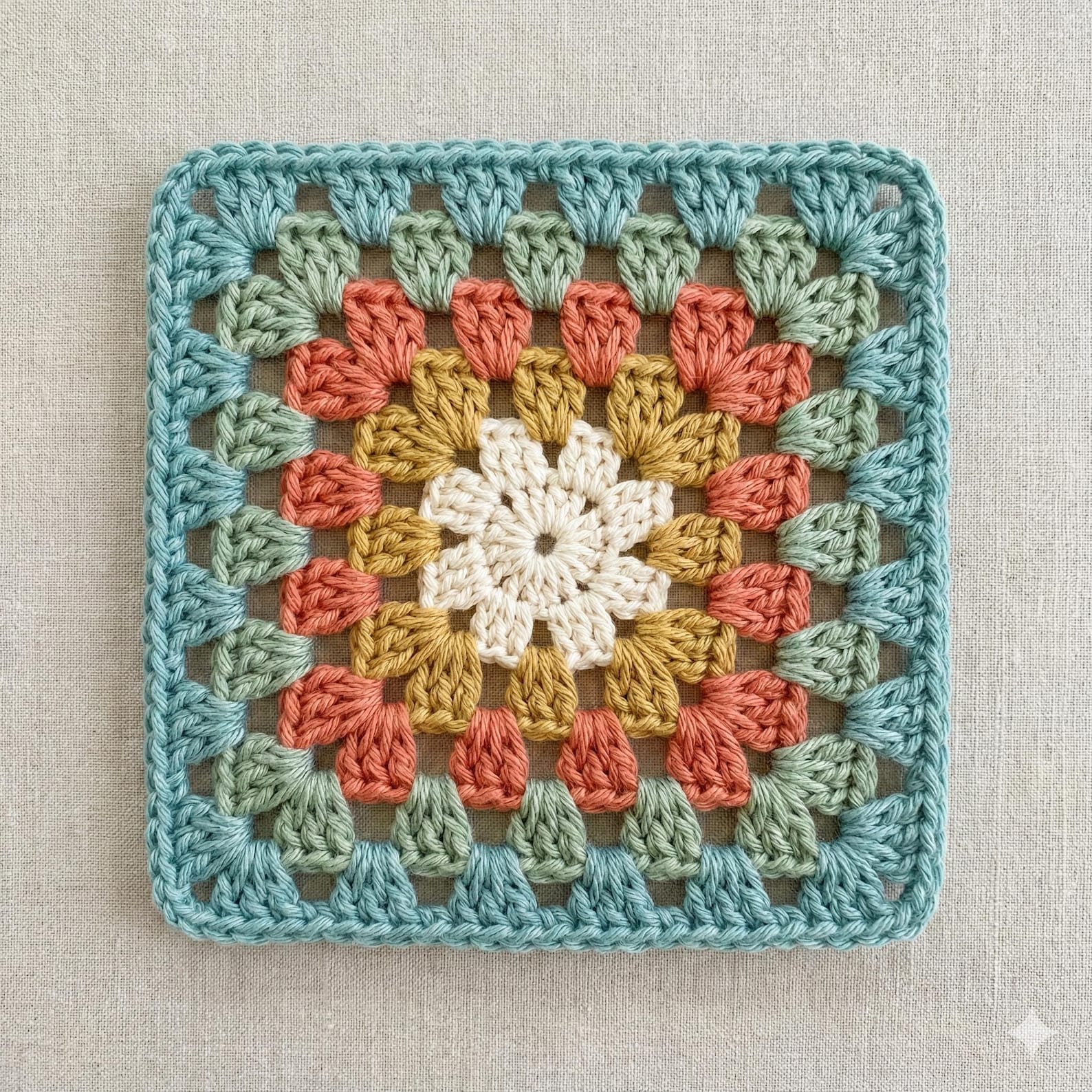
Hands up if your idea of Crochet is the “Granny Square”! I put mine up as my granny was certainly a crochet square afficianado! These little squares could eat up all those odd leftovers yarns from other projects, but tackled as serious projects – they could produce stunning blankets…
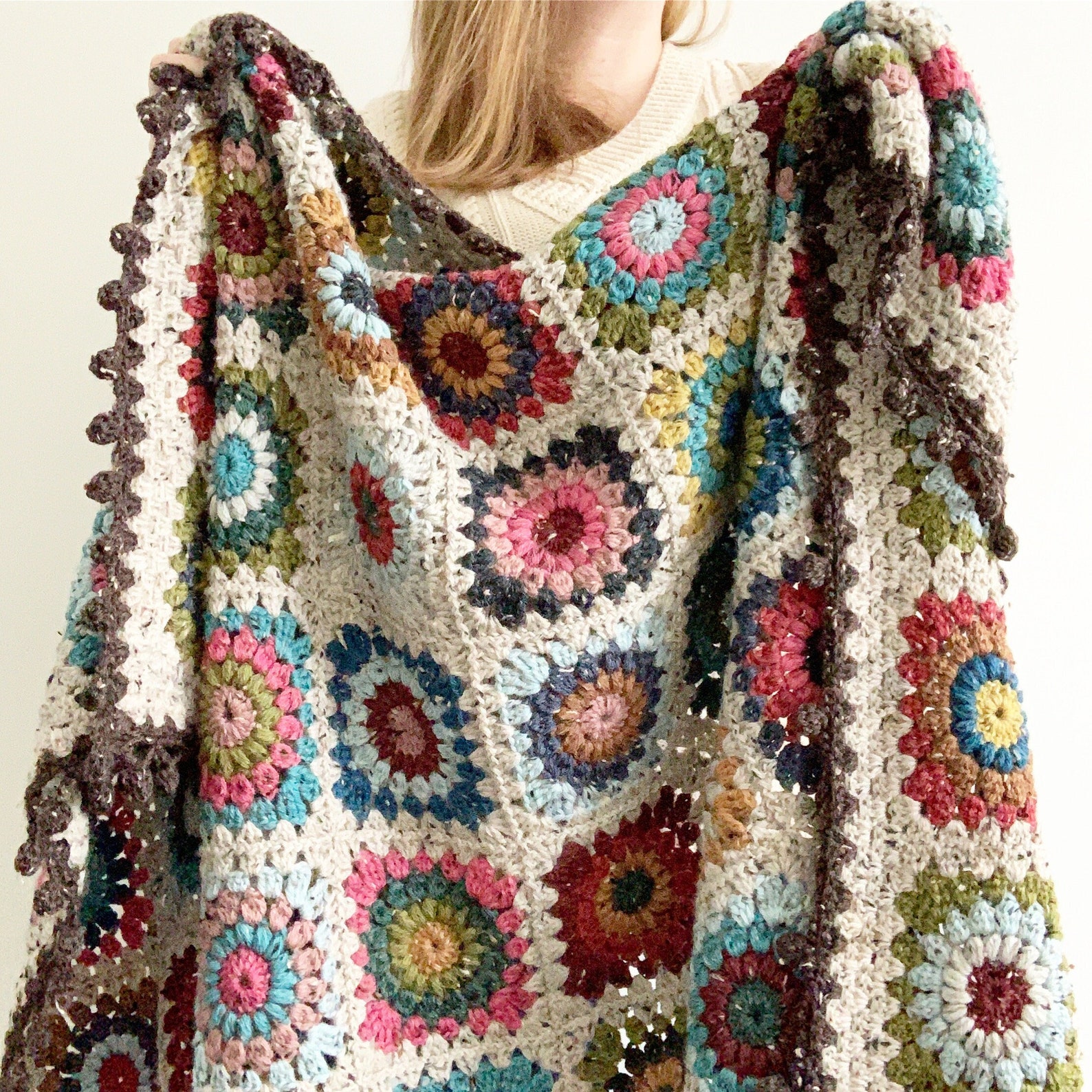
CROCHET PATTERN & VIDEO | Hygge Burst Blanket Pattern, Crochet Sunburst Granny Square, Vintage Inspired, Modern Crochet, Tweed Yarn
NautiKrall

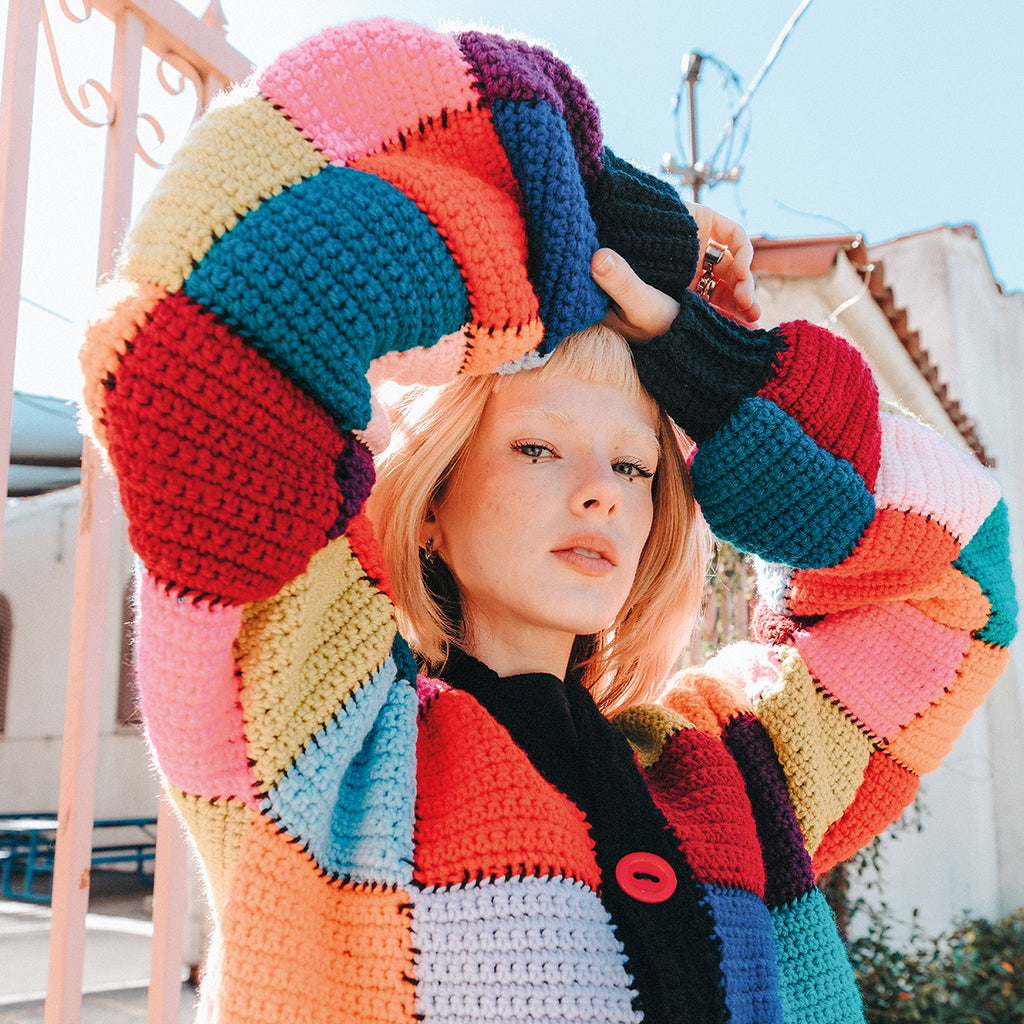
Or go wild and free with a more contemporary look…
If you want to jump in to Extreme (Giant) Crochet – here is an introduction!

I have a confession to make – I don’t know how to do standard crochet – BUT – I do do Tunisian Crochet, and this is how it happened… My sister Carol and I were sorting out my late mothers many knitting needles (she used to run knitting mornings at her retirement complex) and Carol spotted a pair of tortoiseshell needles she really fancied. At the same time, i picked up a large, knitting needle length piece with, seemingly, a crochet hook at one end. Noe crochet needles are usually short, because they hold only a few loops of wool at a time, so neither of us knew what this long needle was! Oh well, said Carol, you have that one and I will have these – and she added the tortoiseshells to her pile – sisters! You have to love them! Anyway, I eventually looked into what this strange beast might be and discovered Tunisian Crochet.
Tunisian Crochet is sometimes described as a cross between knitting and crochet in as much as it generates a width of fabric as wide as the needle used is long, and as deep as the number of rows you care you care to knit. Like knitting, there are a variety of stitches possible.

Fabric is worked in two passes instead of one

Multiple loops stay on the hook at the same time

The surface has strong vertical and horizontal structure

Finished pieces maintain shape exceptionally well
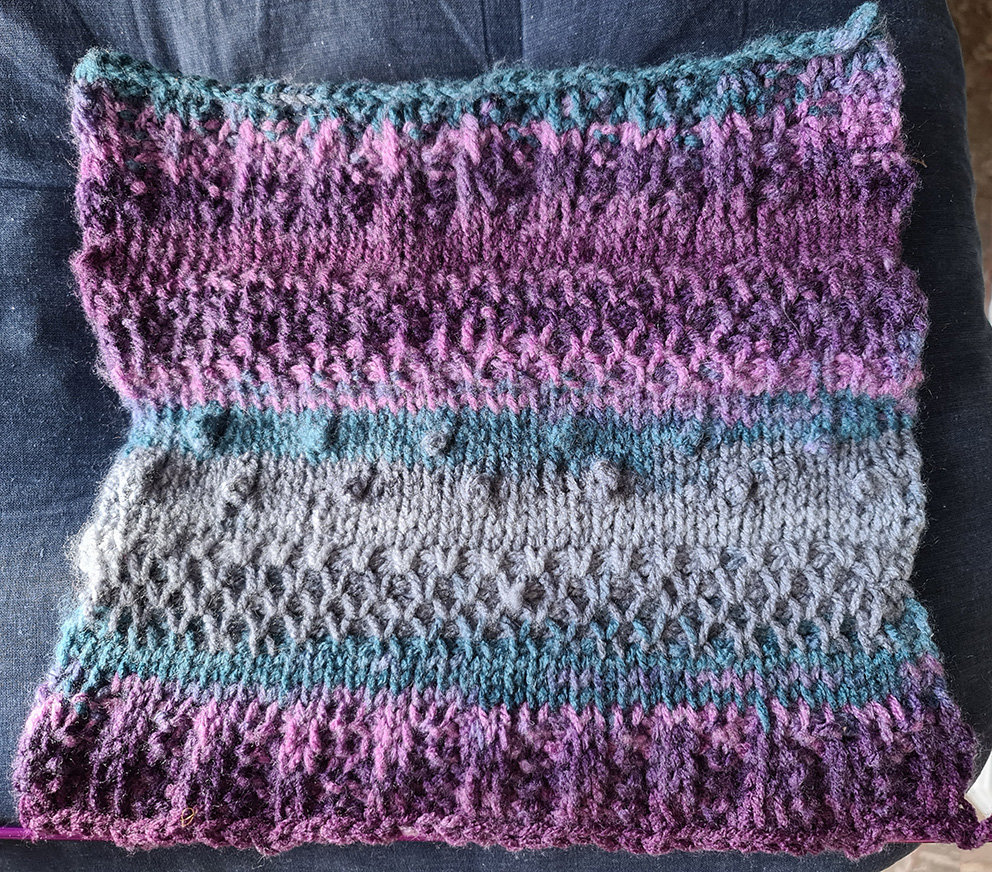
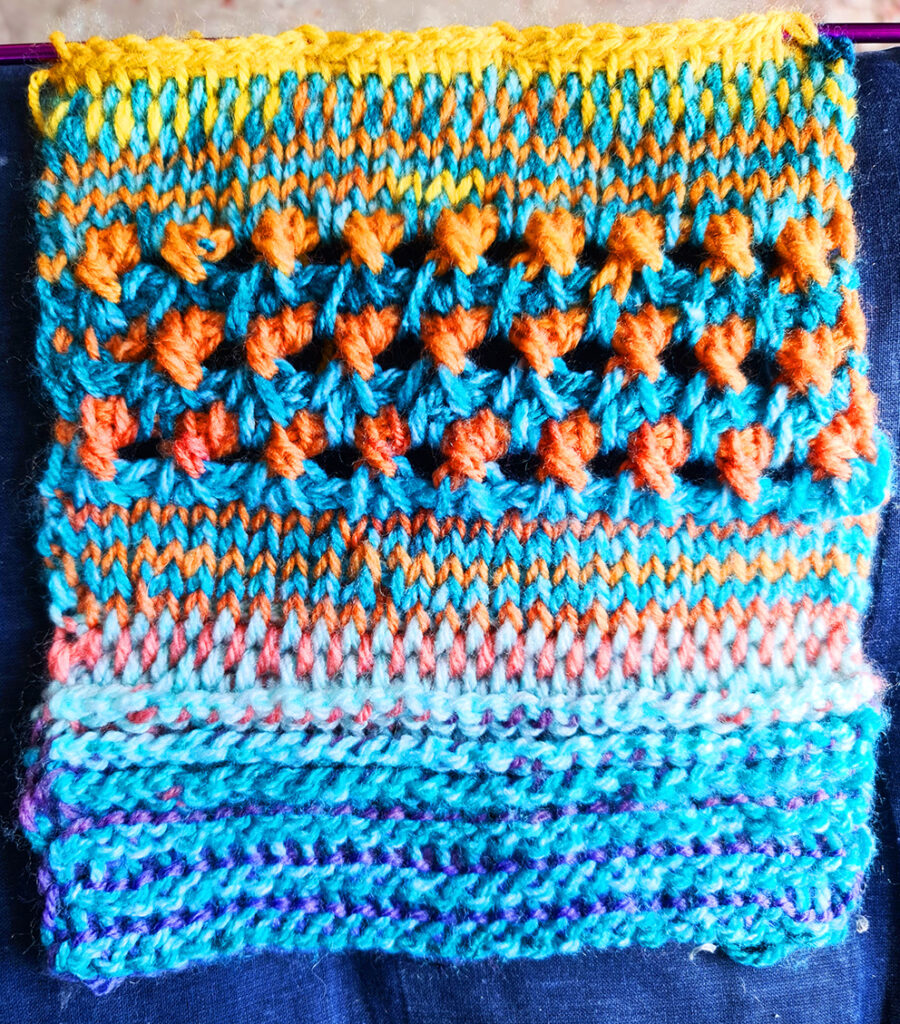
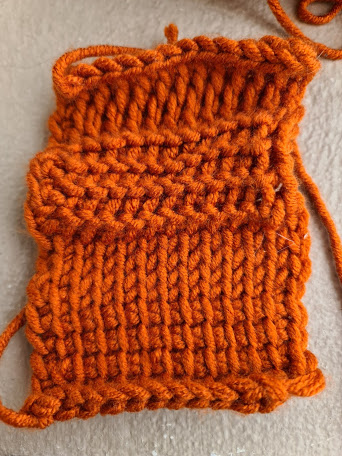
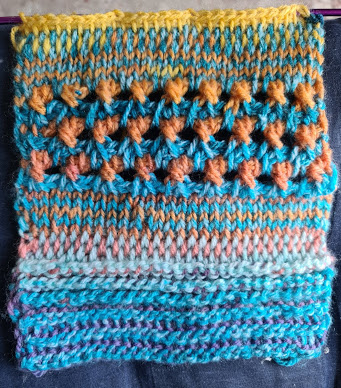
During lockdown, like many others, I explored craft and generated samplers of many kinds of Tunisian Crochet stitches…
and again…
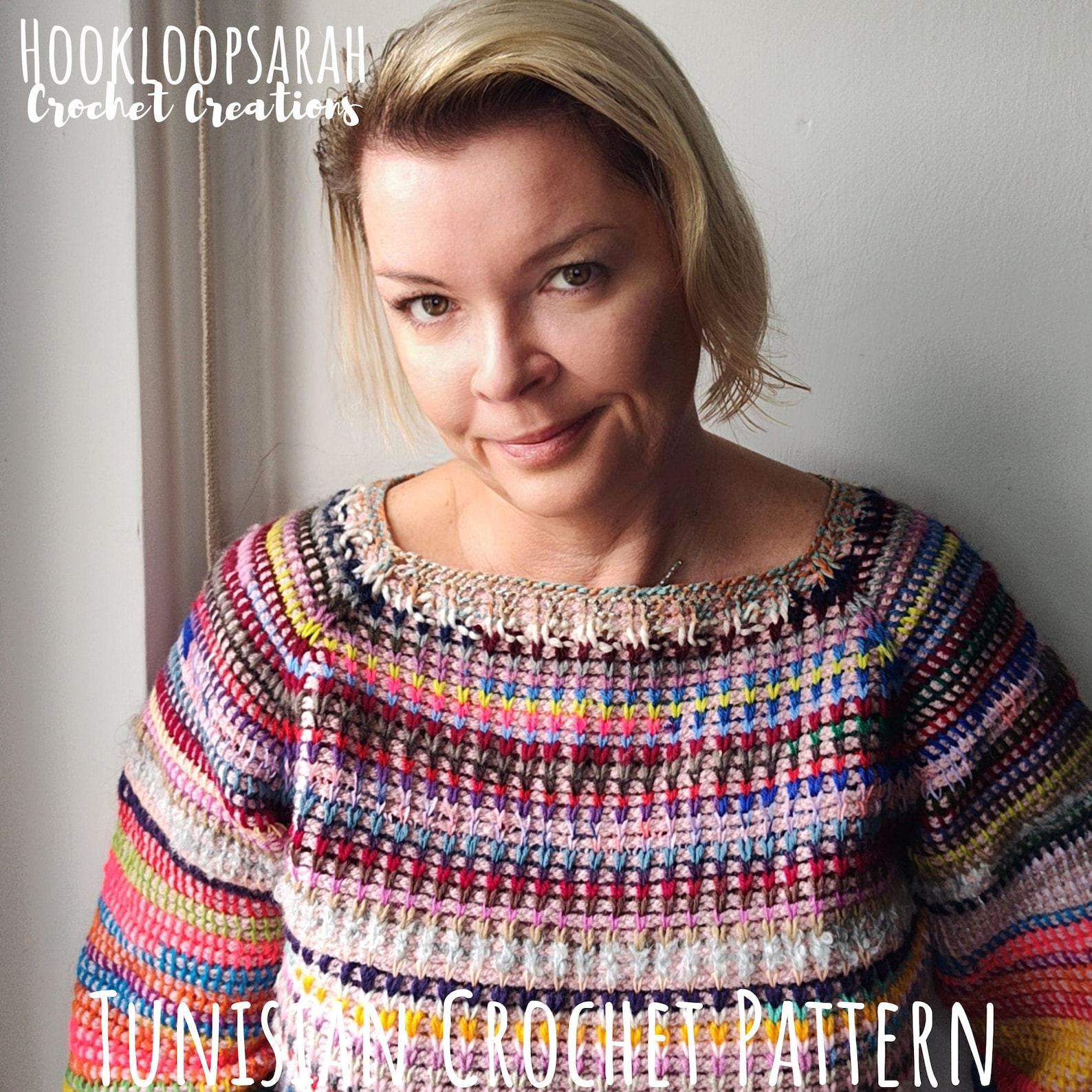
Tunisian Crochet Sweater PATTERN: Raglan Yoke, Ribbing by Hookloopsarah

Ideal for blankets – you will need a needle with a long flexible extension to crochet this width…

“K” Fabrics

Double Knit – Thick jersey fabric made with twin needles where the stitches are interlocked together.

Knit Stitch – Stockinette – the most basic knitted fabric; every stitch (as seen from the right side) is a knit stitch.[1] This fabric has also been referred to as Knit or Knitted, Front, Smooth, Jersey, Plain, Vertical and Plain Sweater Fabric. In the round, stocking stitch is produced by knitting every stitch; by contrast, in the flat, stocking stitch is produced by knitting and purling alternate rows. Variations on this fabric can be made by twisting stitches (knitting or purling through the back of each loop on the needle instead of the front) on one or both sides; Barbara Walker calls these “crossed” (only knitted stitches twisted) and “twisted” (knits and purl twisted) Stockinette. Stocking-stitch fabric is very smooth and each column (“wale”) resembles a stacked set of “V”‘s. It has a strong tendency to curl horizontally and vertically because of the asymmetry of its faces.

Trichot – Machine Knitting A macine form of knitting in which the yarn zigzags vertically, following a single column (“wale”) of knitting, rather than a single row (“course”), as is customary. Tricot and its relatives are very resistant to runs, and are commonly used in lingerie.
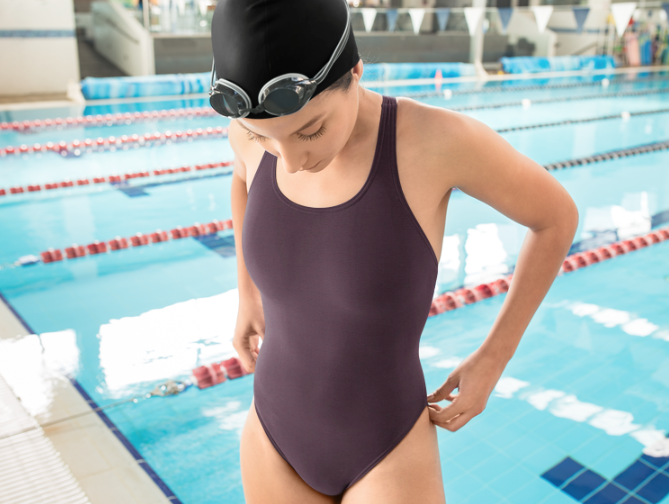
If you are a lady of a certain age, you may have been subjected to wearing knitted swimsuits – an experience, I am told, producing lasting trauma since the swimsuits, when wet, and due to the elastic nature of ordinary knitting, would sag unbelievably with the danger of a fashion accident… The swimsuit above is machine knit in Trichot which means that the vertically interlocking stitches do not sag when wet! From What is Tricot Fabric?

Khadi – A hand-spun and hand-woven natural fiber cloth, primarily from India. Khadi is typically made of cotton, but can also include silk or wool, which are all spun into yarn on a spinning wheel known as a charkha. It is a versatile fabric that is cool in Summer and warm in Winter.
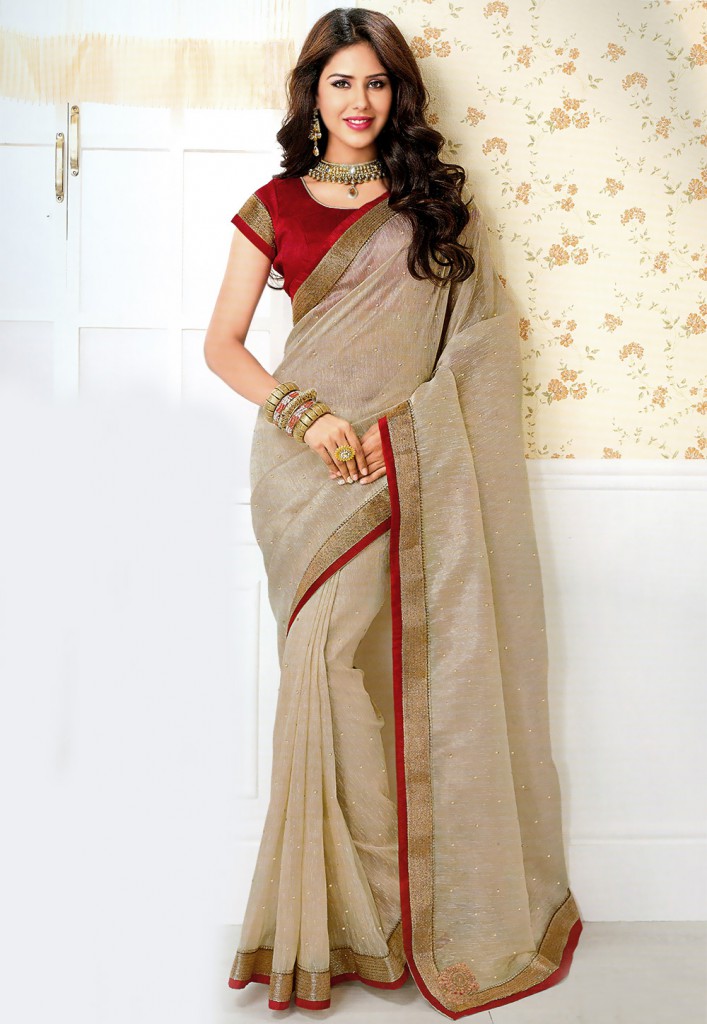
A Khadi fabricSari from Utsavpedia

I compiled a list of as fabrics, fibres and related items as possible (278 items), from several sources, the most comprehensive of which was Wikipedia. Since there are only 26 letters in the alphabet, I could not write in detail about every instance so I have taken snippets of text for the brief descriptions and linked to the source in the name of the item. I am indebted to all the contributors to those Wikipedia pages and the depth of knowledge to be found there…

A to Z 2025 – Knitting (and Crochet)

I confess I am not a great fan of autobiographies that begin at the beginning and follow a temporal path up to the present day – not that the person might not have some interesting stories, facts and opinions strung on their necklace, but it just doesn’t appeal as a structure. On the other hand, in my last, extra year at school in Oxford, retaking an A-level and adding a couple more, I was allowed out of school on my recognisance and saw a fascinating Exhibition at the Modern Art Gallery. The Artist had laid out and photographed every single possession of a single person – for example, all the cutlery was laid out in one shot, all the shoes in another. This more thematic approach appeals more and although I am not arranging the objects which I have chosen to tell my story in chronological order, I hope that my writing will be sufficiently interesting to keep your interest Dear Reader, and that on the journey from A to Z, you will assemble an impression of my life and who I am…

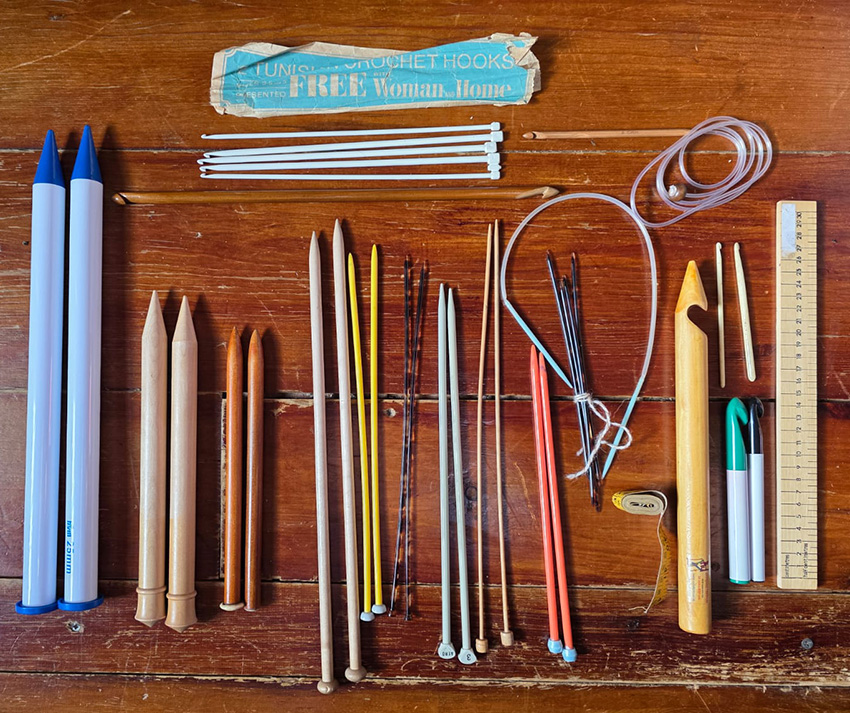
Knitting, Crochet, and Tunisian Crochet Needles. Top – Tunisian needles originally free with Women’s Home magazine, to the right, a Tunisian loop to allow long rows to be made, centre, a double-ended Tunisian needle. Main Row, left to right:- 1″ plastic knitting, 1/2″ wooden knitting, 1/4″ wooden needles, wooden, yellow plastic, plastic tortoiseshell, plastic, bamboo, orange plastic. A loop needle for knitting socks and a set of double-ended needles -the old way to knit socks. On the right side, there is an extreme crochet needle, two ivory and two plastic crochet hooks, a wooden ruler, and a cloth tape measure.
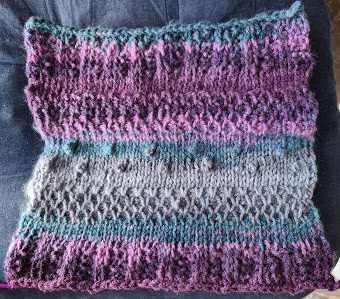
A sampler of Tunisian Crochet stitches done during lockdown – read more here

Knitting and Crochet

Why do I like to knit or crochet? To be sure, since this a kind of memoir, my mother knitted and passed on the bug to my late sister Carol, and I may have been shown how to knit too, but I think the real reason I like to experiment ith stitchcraft is simply the magic – and the perpetual attempt to understand how it works. Knitting offers the same fascination as watching a conjurer, (magic is a concept, not a real thing)and trying to work out how the illusion is carried out – except that knitting is real and produces tangible, useful and beautiful results – if you don’t drop a stitch, that is… I would say that I do understand the process now, especially with Tunisian Crochet and so now, the quest is to finish projects, something I am not always good at doing.

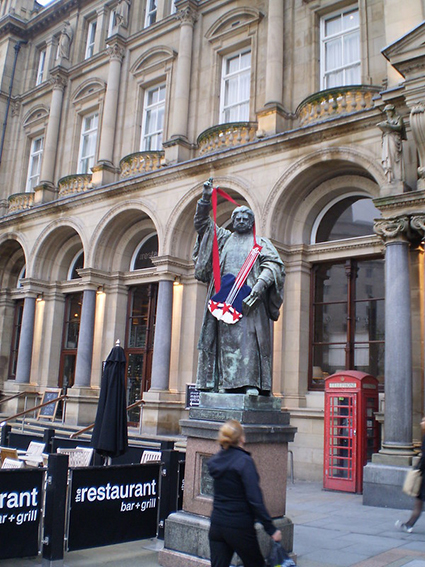
The work of the guerrilla knitting group “Knit a Bear Face” which I joined for a time in Leeds – you can see more of their activity and read my poem referencing them here

Part of understanding how it works relates to my wider skill as a designer – I want to understand how things are made, which in knitting means increasing and decreasing rows in order to shape the panels that will be sewn together to form a garment. I once did an evening class in Dressmaking where I learned to make myself a shirt – a project that covers many of the skills needed in dressmaking, cutting to pattern, gathered joins, pleats, cuffs and collars and buttonholes. I was living near Brixton, London in those days and as the only male and only white person (other than the teacher, a sometime dressmaker to the Queen’s ladies-in-waiting), I was a source of wonder and amusement to the West Indian matriarchs who made up the class. My father’s contribution to the family’s knitted clothes was to operate the Knitting Machine, which my mother found too technical to master. My partner feels uncomfortable seeing me knit whilst we watch TV (her father wouldn’t have been caught dead knitting), but there are many countries where it is considered normal for men to knit, sew and even embroider – let us not forget the great Kaffe Fassett. When I joined the guerrilla knitting group “Knit a Bear Face” who used to meet in the Victoria Arms, Leeds, I found both men and women happily knitting together.

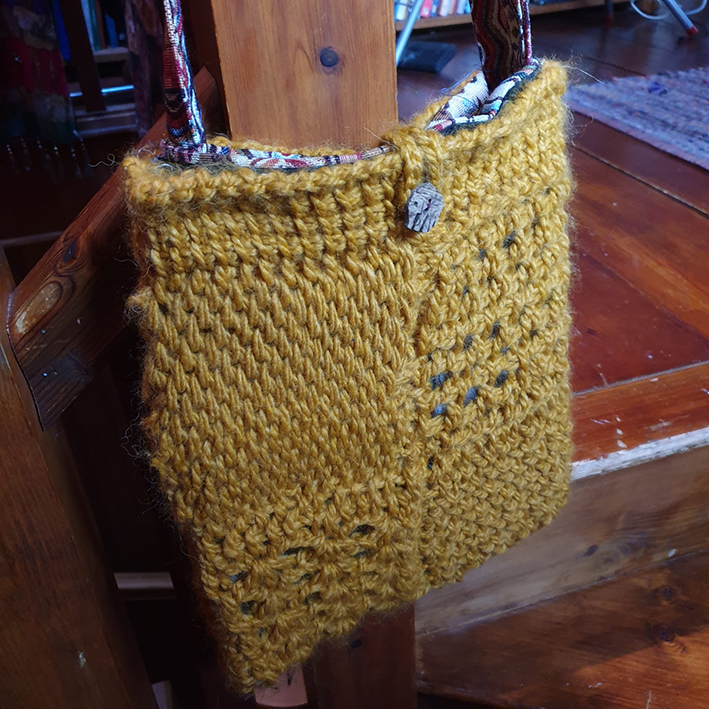
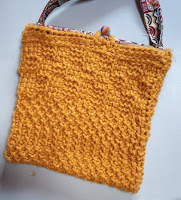
A Tunisian Crochet shoulder bag I made as a present – like all woolen baga it needs a sturdy lining to stop it sagging…

What is Tunisian Crochet, you may ask, and how did I get into it when in truth, I don’t know how to do ordinary crochet. Well when my mother died and both my sisters and myself were sorting out her apartment (a rare conjunction of the three of us), Carol and I were going through her many knitting needles – both Carol and my mother ran knitting groups and although Carol could probably have deployed the lot in her groups, she insisted that I should have some too. After most were divided, there remained a beautiful tortoiseshell pair of teedles (plastic – no tortoises were hurt in the making of them), and a curious long wooden needle with a hook like a crochet hook at one end. Neither Carol nor I knew what it was for – there is no need for a crochet hook to be long since it never holds multiple stitches, so Carol made an executive decision, “I’ll have the tortoiseshell ones and you can have this!” and she thrust the curiosity at me! Sisters! After I was back at home and I did a bit of research and discovered that this was a needle for Tunisian Crochet – sometimes described as a cross between knitting and crochet, and although the results can resemble either, in fact, it is not like either! I am going to have a little rant against the stitchcraft publishing industry – once upon a time, books of stitchcraft would contain both knitting and crochet and even give patterns which combined the two – a jersey with a panel of crochet inset, for example. But the plethora of books and magazines devoted to crafts has led to ever more specialisation – not just crochet, say, but beaded crochet – all in the hope of selling more copies. So Tunisian Crochet became overlooked for a long time, and it is only by the democratising process of YouTube videos that it is now making a comeback.

So why would you want to employ Tunisian Crochet in a project? Well. it produces a much thicker fabric, which is both stiffer and warmer, and so ideal for say, a coat rather than a cardigan. It has many varieties of stitch giving it lots of different looks, and IMHO, it is very easy to learn – go on – give it a go…

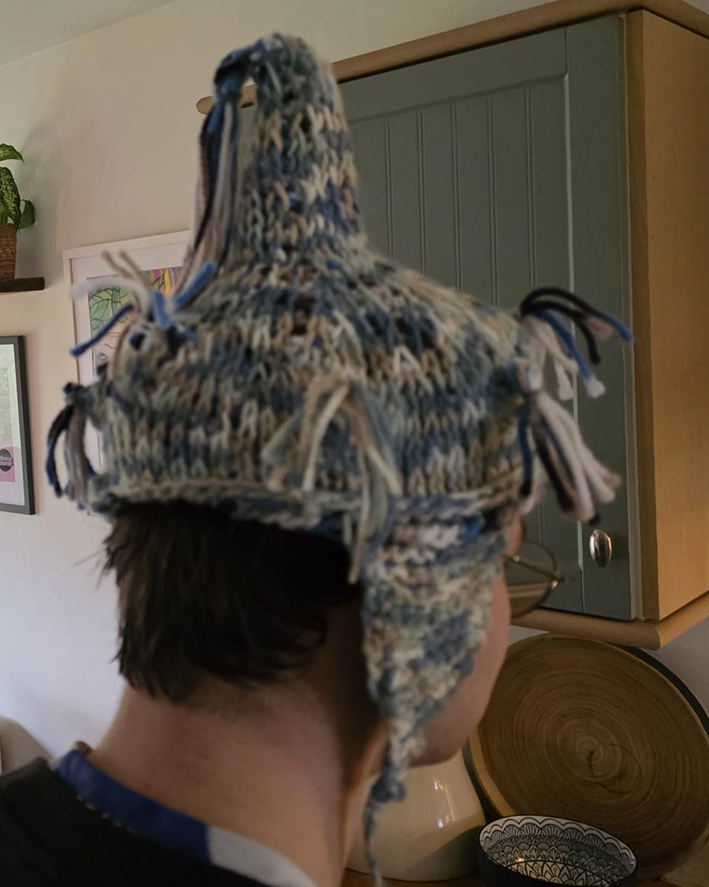
This hat was done as a continuous circle Tunisian crochet and is currently travelling in South America with one of my grandsons – he has promised to send a picture of him wearing it in Machu Picchu…

Other posts on stitchcraft:-

Lockdown Craftiness…

 My partner and I decided to spend the winter escaping the virus in the relative safety of Crete and rented two doors down from her sister in Mavrikiano, Elounda. barbara and Virginia plunged into knitting and eventually the itch to stitch got to much and I purchased a double-ended crochet needle from one of the knitting shops in nearby Agios Nikolaos before the lockdown was clamped down even tighter than in the UK. 

I have only made some samplers to explore new stitches in Tunisian Crochet which is my thing and to stitch with alternating colours on the pairs of rows. I can give more details if anyone is interested…


Roundup 2 – other blogs on the A to B 2020 Challenge

I am working my way through the list of participating blogs which is now over 500 of which I have opened 120 now – phew! Here are the more of the those i have decided to follow:-

I may be a man but I am first and foremost a designer so I have done an evening course in dressmaking and can make a shirt. I crochet but mostly Tunisian crochet which is slightly obscure. I help my partner with her sewing machine projects and this site Quilting Patchwork Applique appeals for a couple of reasons. First of all the selection of images in the banner are unusual including a wolf hiding in the forest. Secondly, the site is bi-lingual, everything duplicated in French and English – not just trusting to Google translate if people want to be bothered. For us English speaking peoples, it’s easy to forget that there is a whole world of other-language internet and this is a refreshing window…

Mk1 and Mk2 of a Tunisian Crochet handbag I made as a sampler of all the stitches I could find…

Sharon E Cathcart is a novelist but instead of using the Challenge to promote her writing directly, or practice writing to a theme, Sharon is sharing her research into Pompei which she has done for a future book and she is revealing some interesting details – hope she makes it to Z!

Jane Turley over at “The Witty Ways of a Wayward Woman” – what can I say – your description of making cabbage soup had me laughing out loud (I will not brook the acronym for that phrase in a blog) – does what it says on the tin!

Tommia’s Tablet – favourite things of a 50 year old woman – a photograph and a poem, what’s not to like!

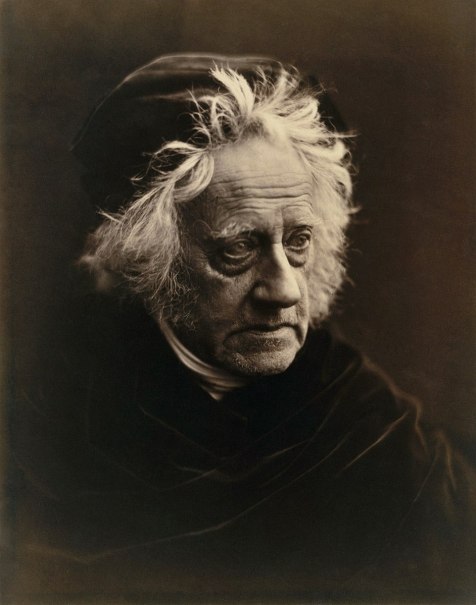
When I look down the list of blogs, a name like Zombie Flamingos gets me going and this site’s theme for the challenge is to introduce us to the life and work of Female Photographers. Sadly, in our still too male-dominated world, the names here will include those who are not so famous so watch this space. Having said this, the first up is Dianne Arbus – a favourite of mine ever since she was featured in a Sunday colour supplement back in the 70’s. Then we have some names I didn’t know though I had seen some of the work, Margaret Bourke-White, Julia Margaret Cameron (see below) and Rineke Dijkstra.


John Herscel by Julia Margaret Cameron – see Zombie Flamingos