
“Choose any subject you would like to write about…” that is the object of the A to Z Challenge, and thinking of things that interest me is not a problem for me, but choosing a subject not only to write about, but to write in a way that other people will catch my interest – that is the real challenge! This year I turn to a subject, close to our skin if not our hearts, and yet, again, I wonder if this subject will get some people past the title on the list – dismissed as niche? For this year, my theme is What We Wear – Fabrics and Fibres
I could only find one fabric beginning with “U” and casting around for a theme for today, Underwear fabrics was what I came up with…
Silk
Following on from the recent S for Silk, silk has long been the fabric of choice for underwear – if you could afford it – after all, what does anyone, female or male want from the garments we wear next to our skin? Silky smoothness – not just for the feel of it, but to allow outer garments to move unimpeded, thinness – minimise the VPL, comfort, breathability and, if we anticipate our underwear being seen in the right circumstances, lustre, the projection of wealth and quality. So a lot rides on silk underwear or whatever other fibres you can afford… Of course there are other factors around choosing underwear fabric other than cost – warmth, practicality, stretchability, longevity, and so the majority of underwear is not silk, even though some modern fabrics may seek to emulate the illustrious silk (which is hard to maintain and wash).
Satin
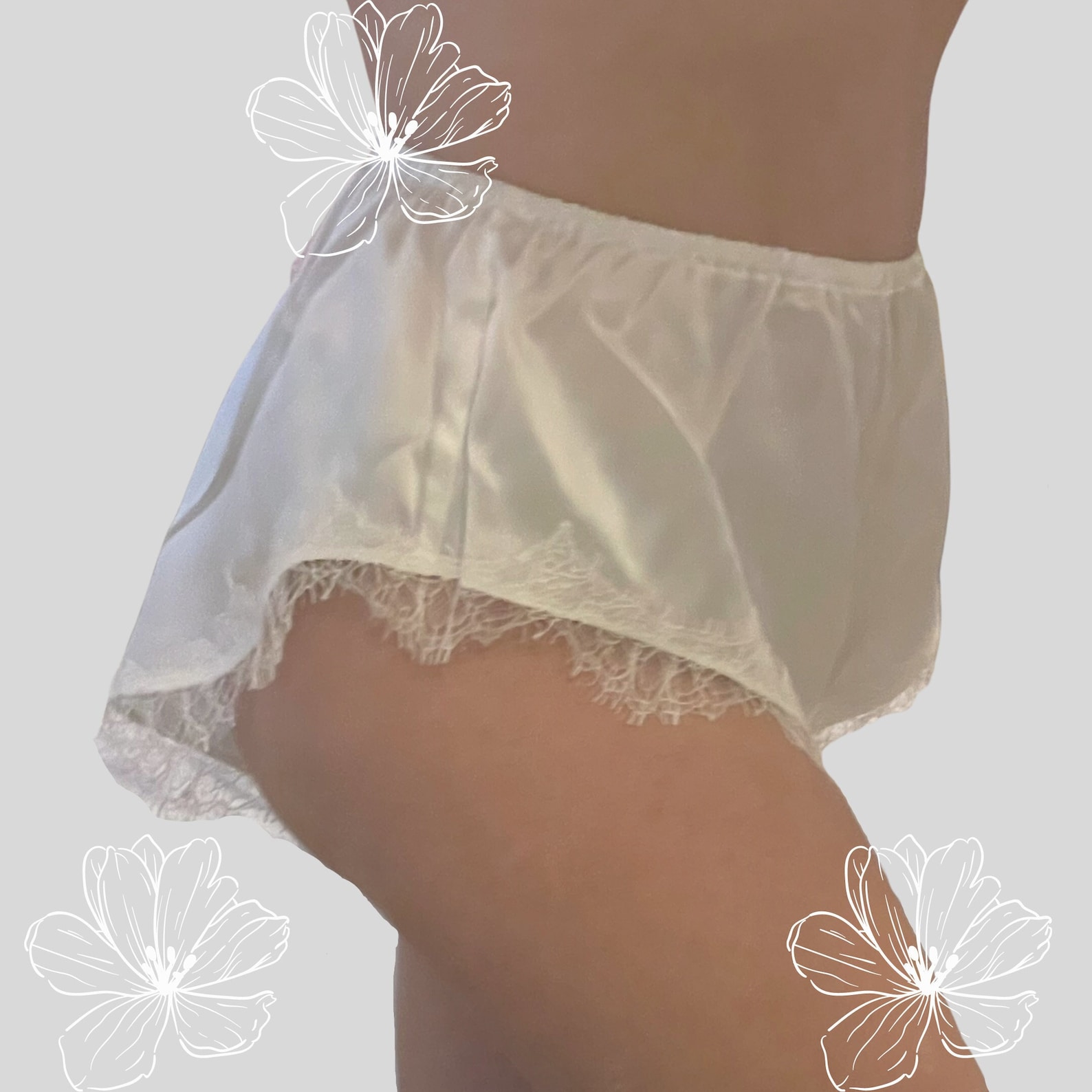
The first substitute for silk in underwear was probably satin – a fabric where the satin weave creates the lustrous shine of silk – at least on one side (usually the outside) and satin was the affordable fabric for a certain style of underwear up to the present day, although the fibre composing the satin has changed with the advent of synthetics and semi-synthetics.
Synthetics
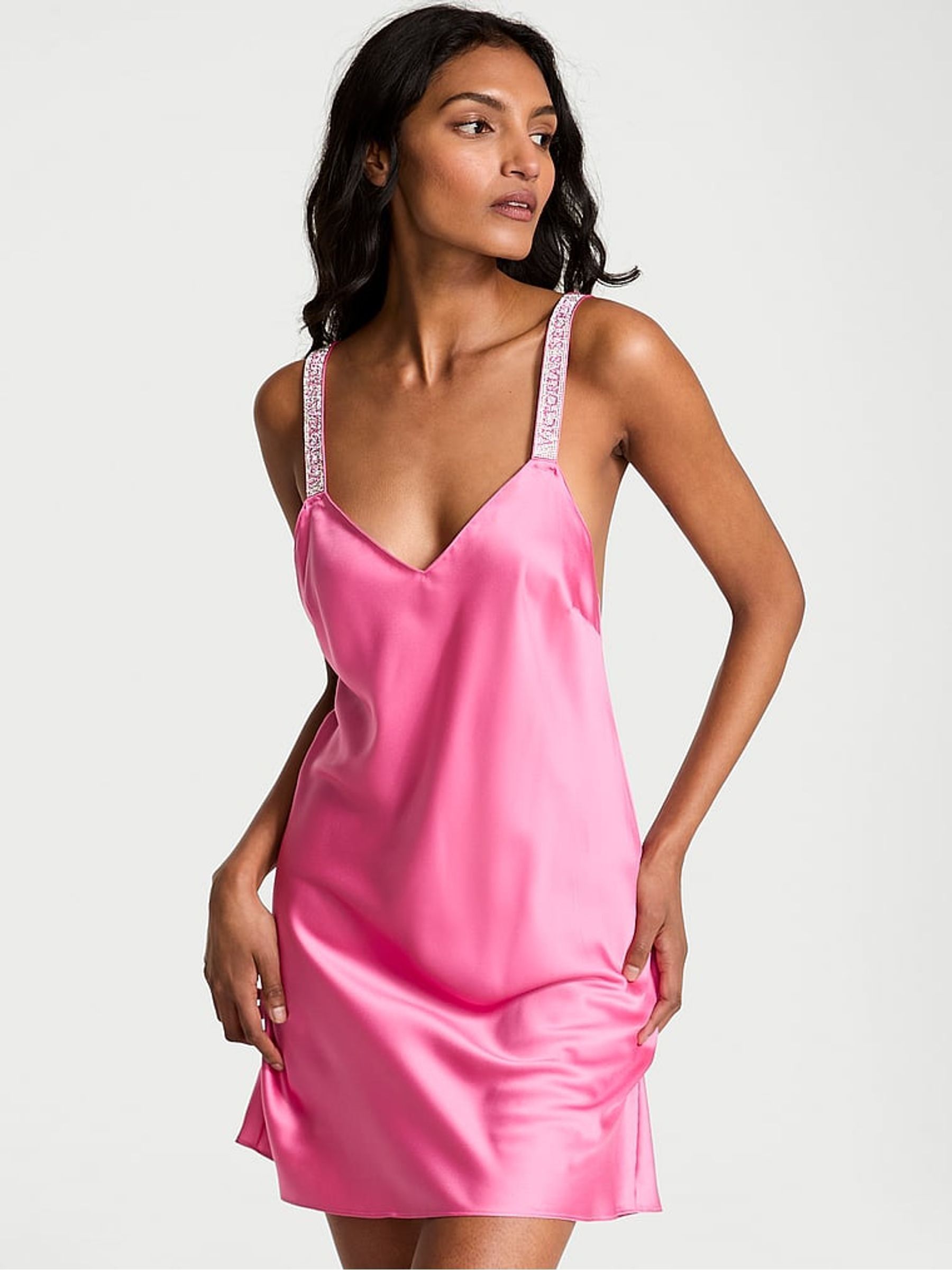
Synthetic fabric underwear (polyester, nylon, spandex) is popular for its lightweight, stretchy, and moisture-wicking properties, ideal for activewear. However, these materials often lack breathability, trapping heat and moisture, which can cause skin irritation and increase the risk of bacterial or yeast infections. For many women who are more prone to irritation, rashes, and other infections, synthetic underwear is simply not an option for them. This leaves many women feeling torn in their choice of underwear.
Cotton
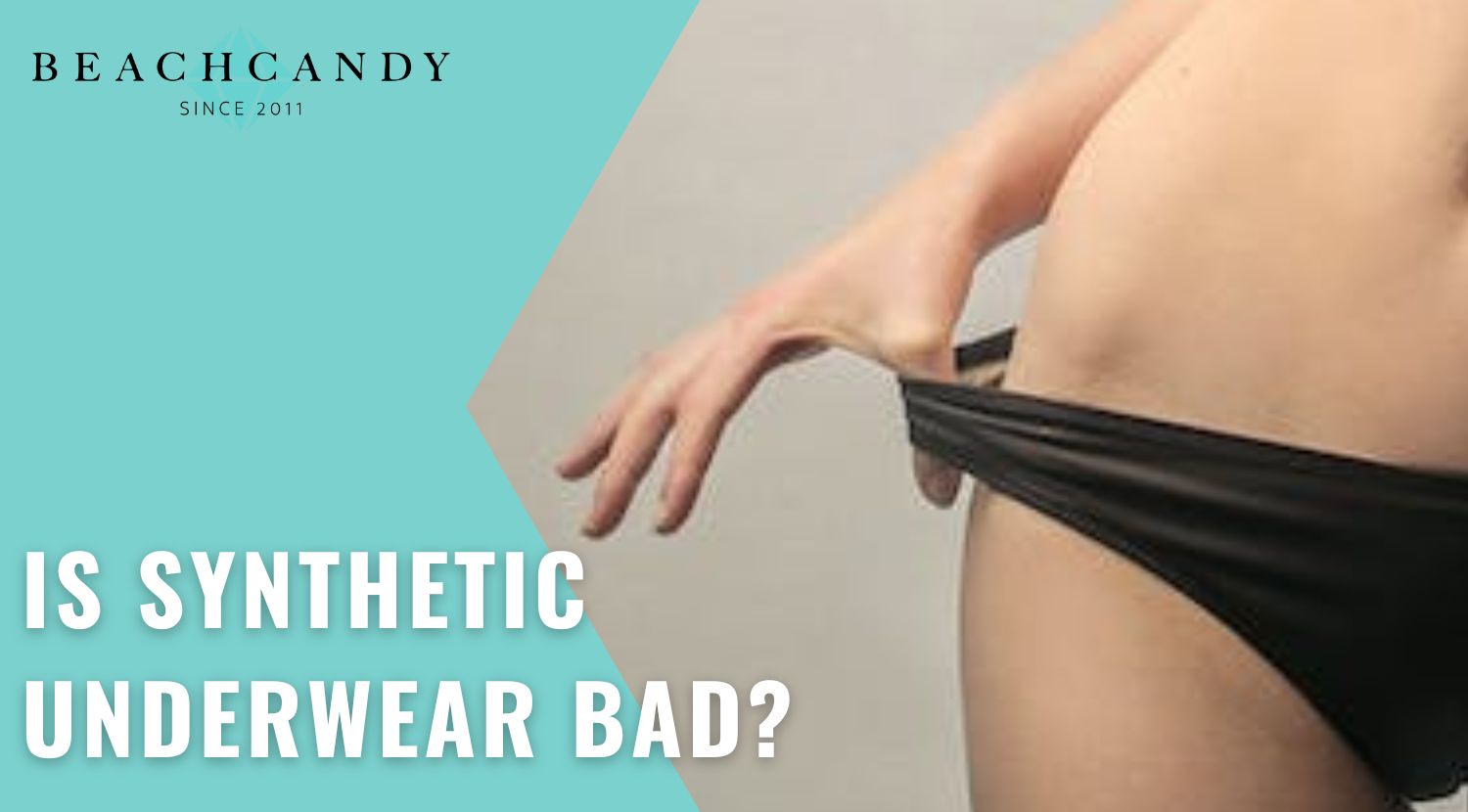
100% cotton is the go-to option for many women who are seeking comfort in their underwear, it lacks the moisture-wicking element.
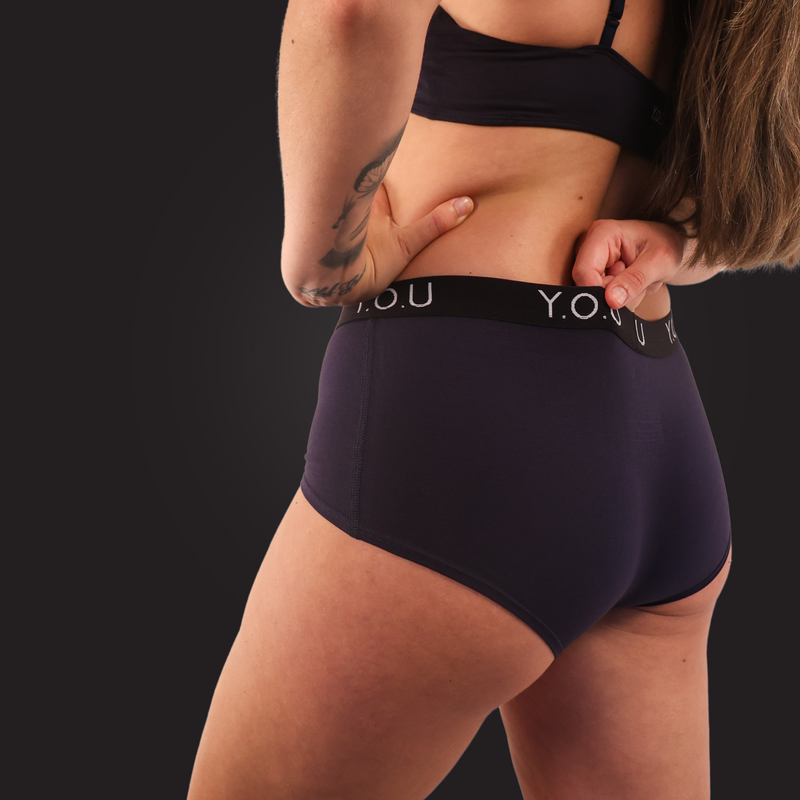
The picture above shows us, perhaps, two things – firstly, in the 1920’s, when dresses were long, the popular colours for underwear (of the more fashionable kind) were peach and flesh tones but with the advent of the mini-skirt in the 1960’s offering the3 possibility of underwear being glimpsed, colours, patterns and printed words mitigated againdt the underwear being mistaken for flesh and the “boy shorts” above, go further in being deliberately unfeminine rejecting any idea of being for display and sexy.
Blends
Blended fabric underwear combines natural fibres like cotton or bamboo with synthetic materials such as spandex, elastane, or modal to improve elasticity, moisture-wicking, and durability. These blends offer better shape retention after washing, superior comfort, and enhanced breathability compared to 100% cotton. Popular, durable choices include 95% cotton/5% spandex.

Semi-Synthetics
The Boxer briefs above are blends but they are also semi-synthetics – viscose is made from wood pulp cellulose and bamboo fibre is made by extracting the cellulose from bamboo and spinning it like a synthetic fibre. (See my A to Z “S” post). Modal is another semi-synthetic and you can read a comparison between Modal and Bamboo fabrics here.
So in summary, your choice of fabric for underwear will depend on cost, style, comfort, ethical considerations, breathability, moisture wicking, and durability. Personally, I prefer cotton jersey shorts which fit most of those criteria for me, and may I say that in writing this article, this intrepid researcher has had to look at more pictures of underwear than since discovering catalogues as a teenager… I hope this has been a cogent if scanty rifle through the underwear drawer…
A “U” Fabric
Ultrasuede – Ultrasuede is the trade name for a synthetic ultra-microfiber fabric which mimics suede leather. It has a woven fabric surface, but resists pilling or fraying because it is combined with a polyurethane foam in a non-woven structure.

Manufacturing Process of Ultrasuede Fabric:
Step Process Fiber Creation Polyester fibers are made through a process called polymerization. These fibers are finer than regular polyester, giving them a smooth texture. Spinning The fibers are turned into a non-woven fabric through methods like needle-punching or heat bonding, forming a soft and strong material. Microfiber Treatment The fabric is treated to soften and refine the fibers, giving it a smooth, suede-like finish. Surface Finishing The fabric is treated with brushing, heat or mechanical processes to improve its texture and durability, giving it a soft, suede-like finish. Cutting & Shaping The fabric is cut to the necessary size for use in fashion items, upholstery or automotive interiors. Quality Control The fabric is tested for texture, color and durability to ensure it is soft, stain-resistant and long-lasting.
I compiled a list of as many fabrics, fibres and related items as possible (278 items), from several sources, the most comprehensive of which was Wikipedia. Since there are only 26 letters in the alphabet, I could not write in detail about every instance so I have taken snippets of text for the brief descriptions and linked to the source in the name of the item. I am indebted to all the contributors to those Wikipedia pages and the depth of knowledge to be found there…