“Choose any subject you would like to write about…” that is the object of the A to Z Challenge, and thinking of things that interest me is not a problem for me, but choosing a subject not only to write about, but to write in a way that other people will catch my interest – that is the real challenge! This year I turn to a subject, close to our skin if not our hearts, and yet, again, I wonder if this subject will get some people past the title on the list – dismissed as niche? For this year, my theme is What We Wear – Fabrics and Fibres
Tapestry was originally a woven picture, often on a grand scale, to not only grace the walls of castles or stately homes, but also to cover those walls with fabric, to make the places a bit warmer and insulated. Grand tapestries have continued through the 20th Century but with the growth of hobbies and crafting, a smaller scale of stitched tapestry has also developed.

The late Medieval period was the zenith for large-scale tapestries, even though painting was on the rise. To produce large-scale works, artists such as Raphael first produced “cartoons” or as we would call them – sketches, which would enable craftspeople to carry out the tapestries to his design. The Raphael Cartoons are considered one of the greatest treasures of the Renaissance in the UK.
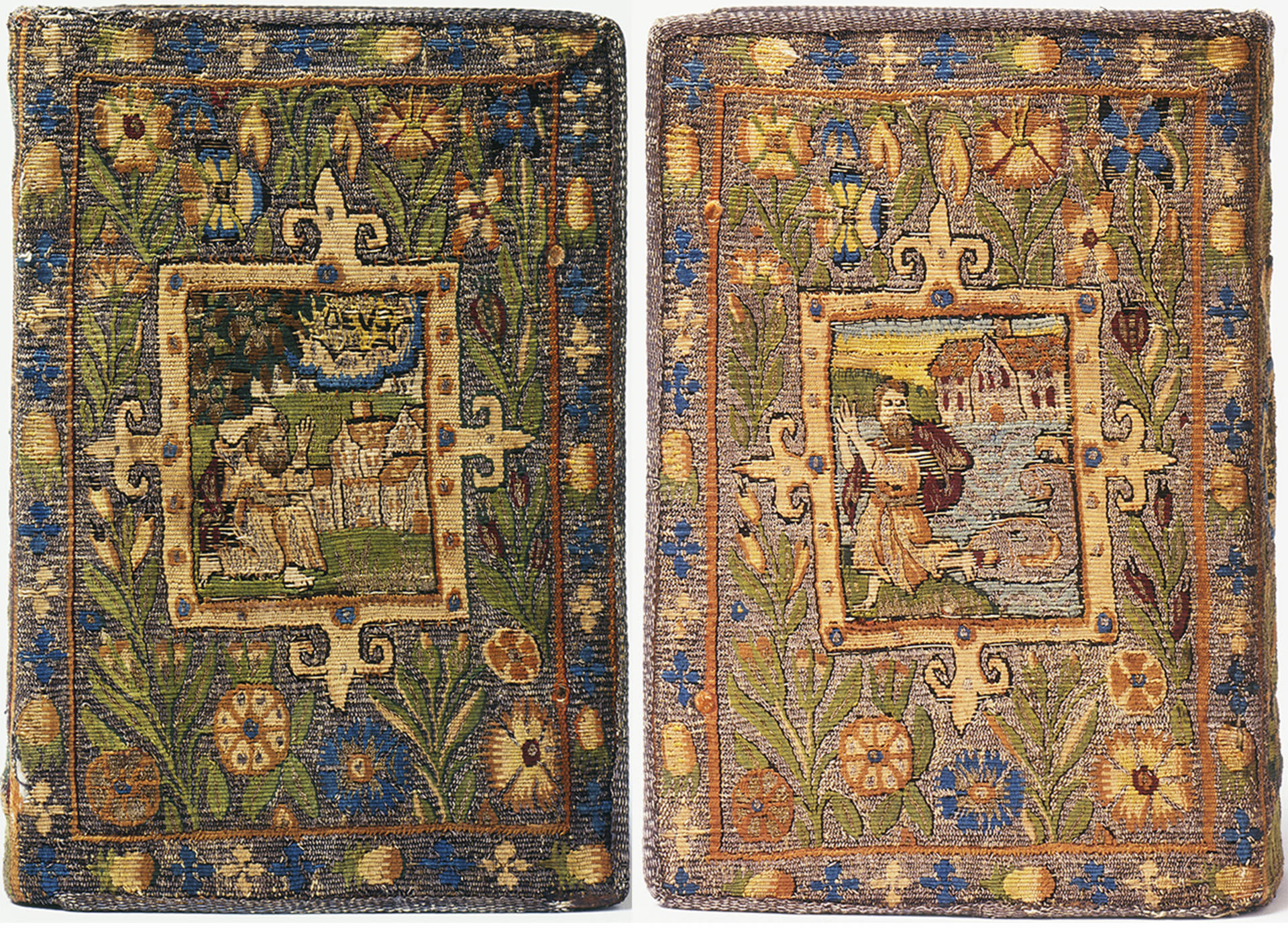
The close-up images below give a good idea of the “feel” of traditional tapestry imagery…
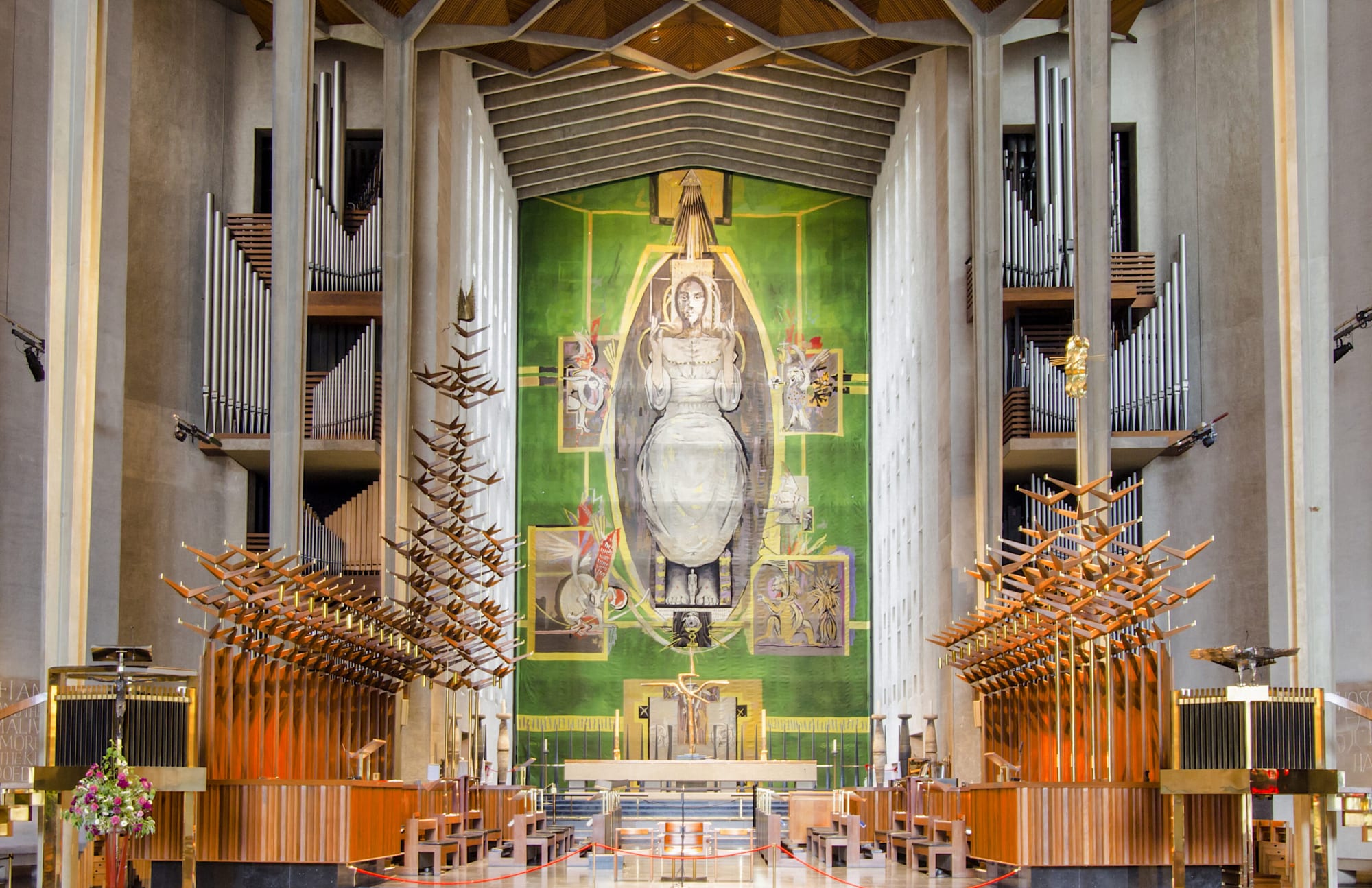
A modern, large-scale tapestry (below) is by artist Graham Sutherland for the new Coventry Cathedral – the old cathedral having been destroyed during WW2. You can read the story of Sutherland’s tapestry here.
There has been a revival of interest in tapestry on a domestic scale which was no doubt given a boost by covid lockdown, but many practitioners, still on quite large looms, have been part of a tradition throughout the 20th Century, perhaps as a reaction to the industrialisation of fabric making in the 19th Century.
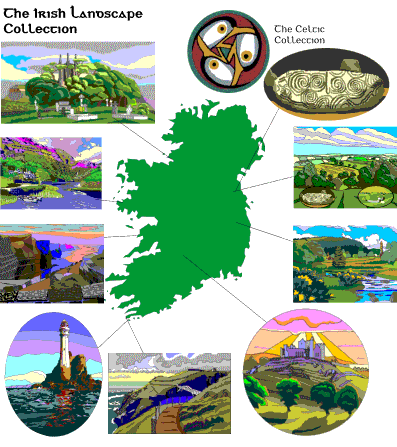
On a smaller scale still, Needlepoint Tapestry kits have been popular for a long time, consisting of a screen-printed canvas which the crafter stitches over in wool or cotton yarns to produce the picture. Screen-printing means producing the whole run of canvasses at one go, because a different screen is required for each colour and to store the screens would be prohibitive in terms of both cost and space. A new possibilty came along with heat-transfer printing, where a design is printed onto special paper and then heat-pressed onto the canvas. I started a business in the early ’90’s whilst living in Ireland, offering iconic Irish landscapes.
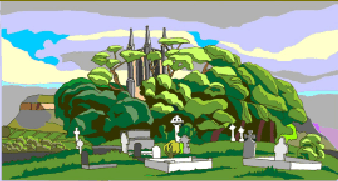
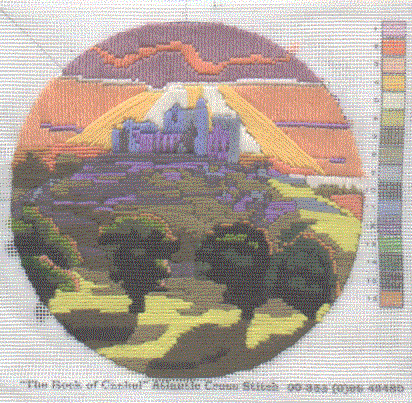
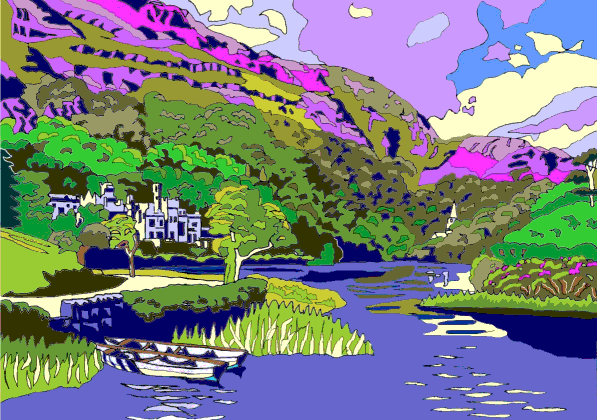
Below is a video explaining the pros and cons of silk-screening versus heat-transfer printing and demonstrating how they are done.
If you are interested in trying tapestry on a loom, here is a site to point you in the right direction…
“T” Fabrics
Taffeta – Plain weave fabric; it is a smooth, structured, papery fabric that can be made with many different fibres…
Tais – is a form of traditional weaving created by the women of East Timor. An essential part of the nation’s cultural heritage, tais weavings are used for ceremonial adornment, a sign of respect, and appreciation towards guests, friends, relatives, home decor, and personal apparel. Dyes are used to create bright colours in the tais; these are mixed from plants like taun, kinur, and teka.[1] Other dyes are derived from mango skin, potato leaf, cactus flowers, and turmeric
Terrycloth – This is a type of fabric used in clothing. Ranging from items such as hoodies, pants and even shirts. The inside of the fabric is crossed with loops, while the outer part is smooth and flat. It can be 100% cotton or be made from a variety of fibers, sometimes with spandex (also known as elastane or lycra). It is often warp-knitted, and the term French terry is colloquially used for all warp-knitted terry. Terrycloth, terry cloth, terry cotton, terry towelling, terry, terry towel, or simply towelling is a fabric woven with many protruding loops of thread which can absorb large amounts of water. It can be manufactured by weaving or knitting. Terrycloth is woven on special looms that have two beams of longitudinal warp through which the filler or weft is fired laterally.
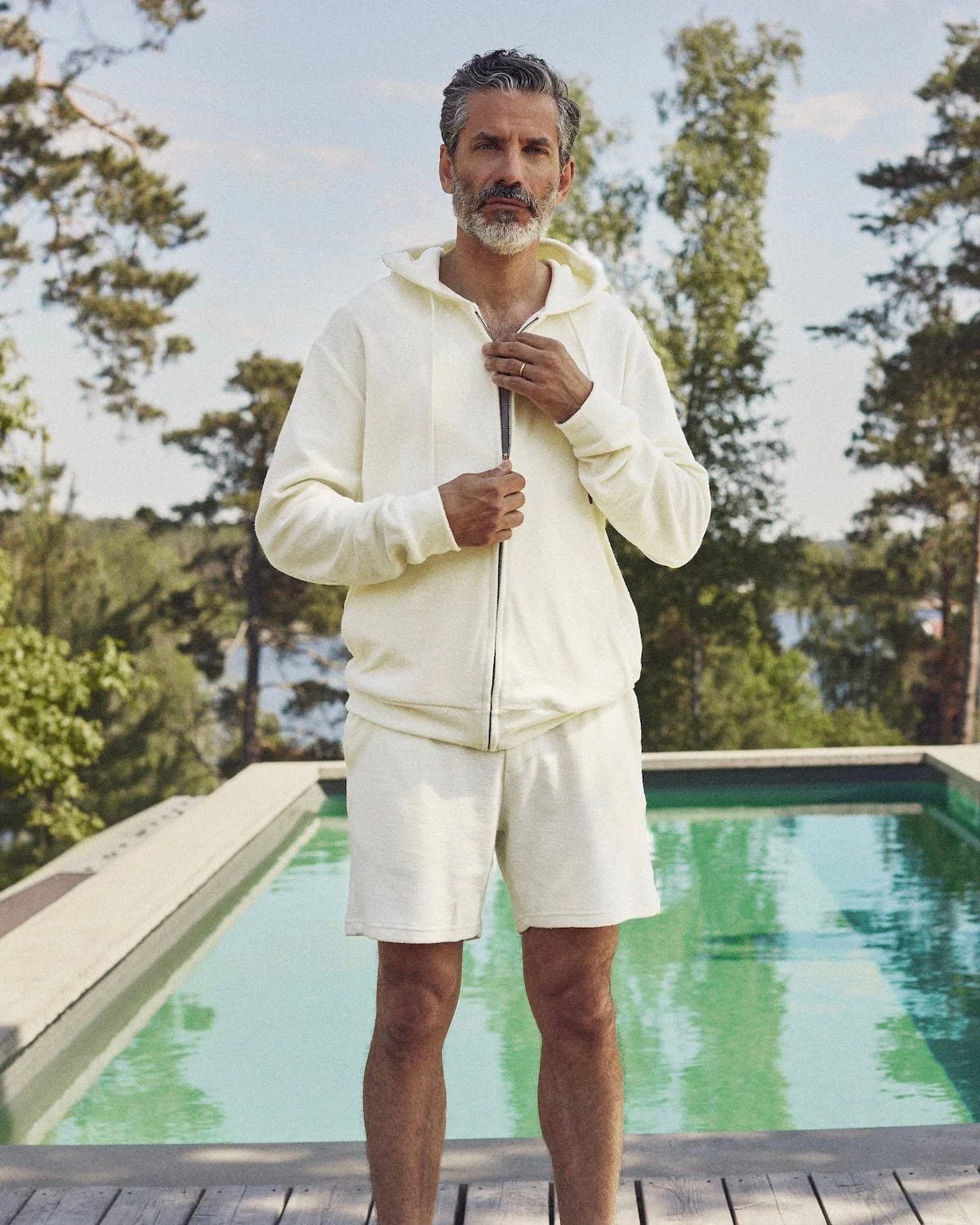
Ticklenburgs – A coarse linen or hemp fabric, typically used for work clothes and sailcloth. Possibly german manufacture originally, possibly made for West Indies use?
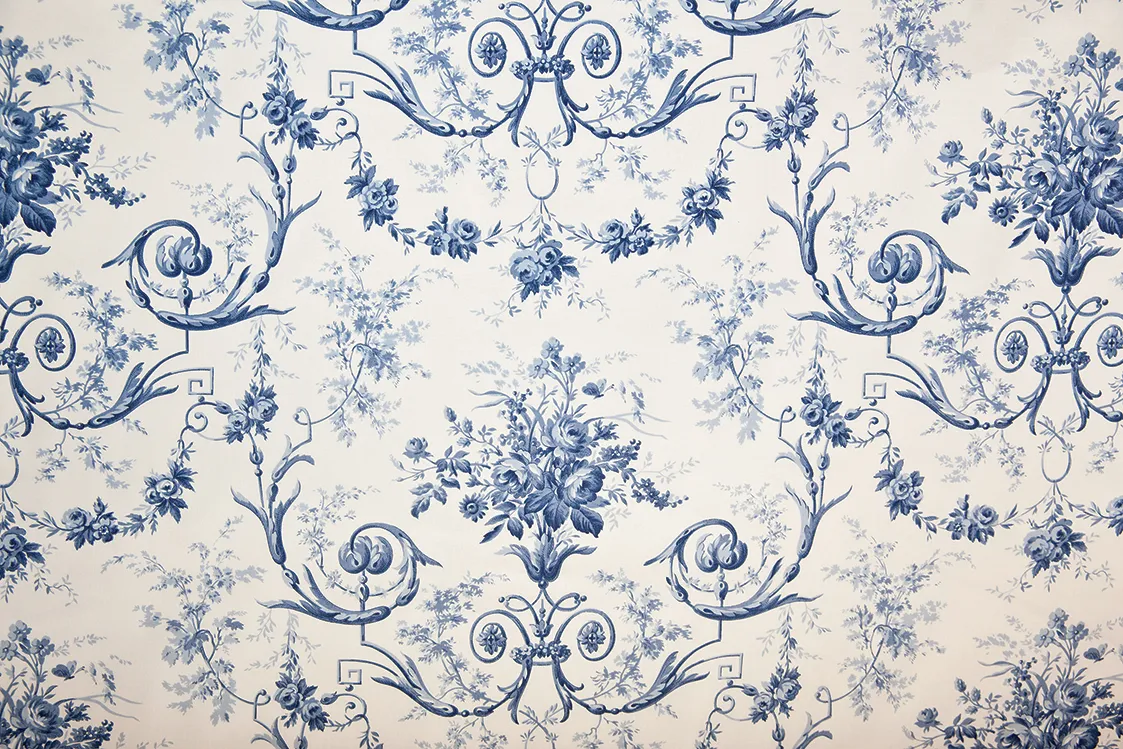
Toile de Jouy – “Toile de Jouy” simply means “cloth from Jouy” in English and describes a type of fabric printing. “Toile de Jouy”, sometimes abbreviated to simply “toile”, is a type of decorating pattern consisting of a white or off-white background on which is a repeated pattern depicting a fairly complex scene, generally of a pastoral theme. Toile is most associated with fabrics (curtains and upholstery in particular, especially chintz), though toile wallpaper is also popular. Although it has been continuously produced since then, it experienced a marked upsurge in popularity around the year 2000.
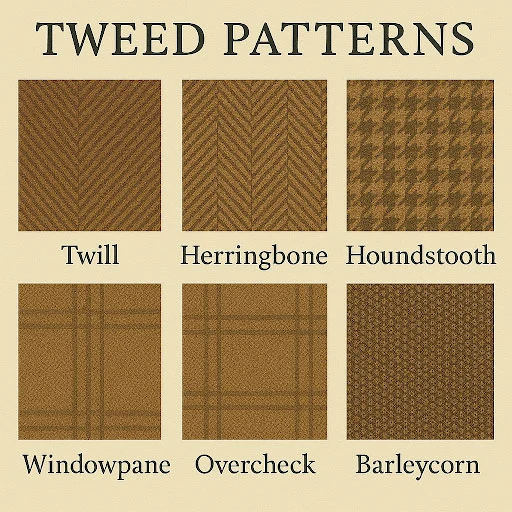
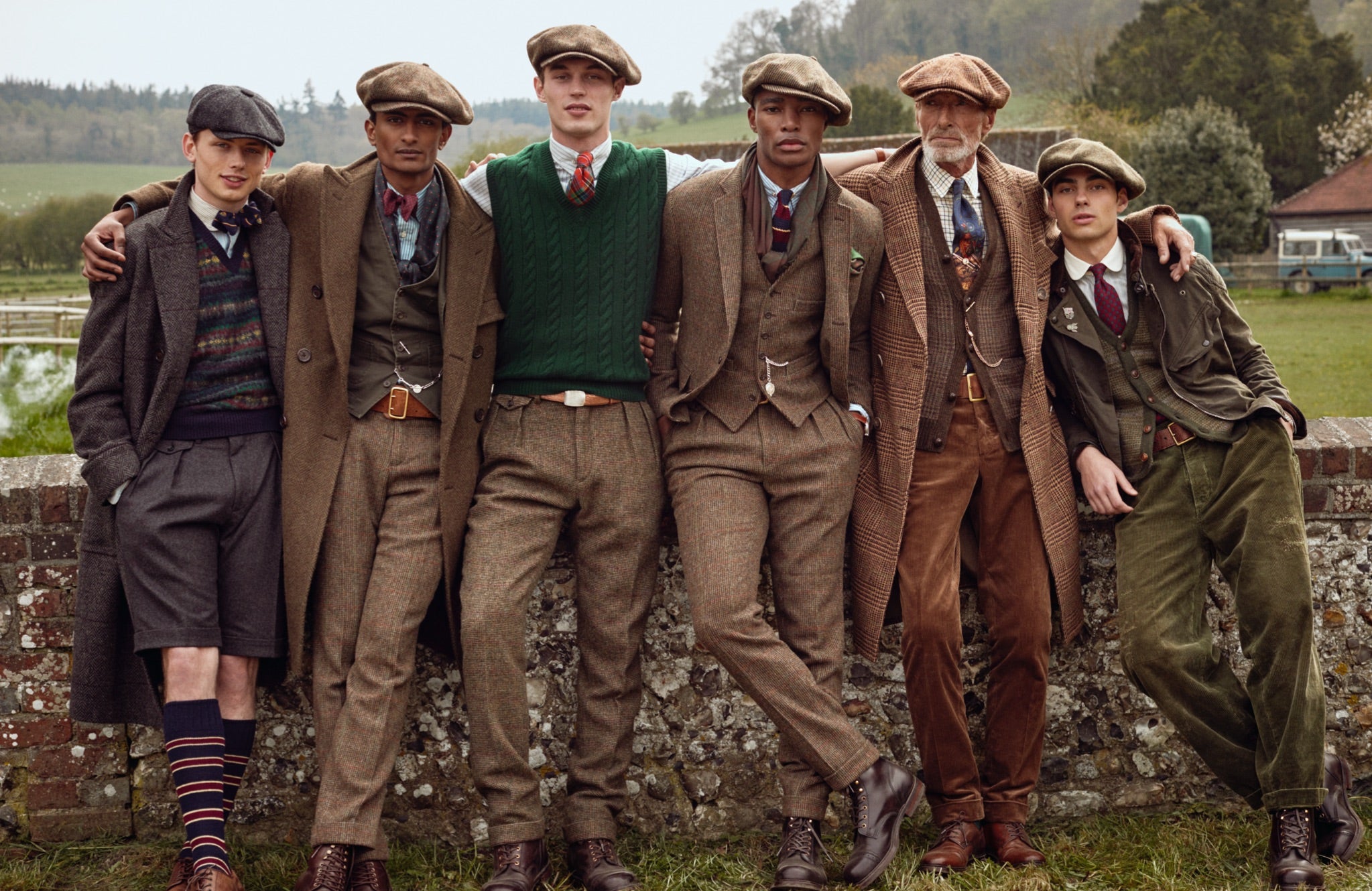
Tweed – Tweed is a rough, woollen fabric, of a soft, open, flexible texture, resembling cheviot or homespun, but more closely woven. It is usually woven with a plain weave, twill or herringbone structure. Colour effects in the yarn may be obtained by mixing dyed wool before it is spun.
I compiled a list of as many fabrics, fibres and related items as possible (278 items), from several sources, the most comprehensive of which was Wikipedia. Since there are only 26 letters in the alphabet, I could not write in detail about every instance so I have taken snippets of text for the brief descriptions and linked to the source in the name of the item. I am indebted to all the contributors to those Wikipedia pages and the depth of knowledge to be found there…
Just really enjoyed looking at the Barleycorn fabric.
The tweed-y distinctions are real!
Especially “Windowpane” and “overcheck”.
I had never seen Toile under its full name or its appellation.
The pattern that you made reminded me of the 16-colour Windows {DOS} palette of a certain programming and colour display era. [especially the magentas and the purples].
[and the light yellows and the mid-tempo blues].
I also got impressions of the Sierra games – especially KNIGHT’S QUEST and its series.
The pixel thing: that would be 330,000 mega-pixels? [or a magnitude away – 3 megapixels or 30 megapixels].
[there were probably such things as kilopixels back then and 1 or 2 megapixels were still current in cameras of the very late 1990s – early 2000s]
[and 1994-me thought the first Kodak digital cameras were aspirational and Very Expensive. I wanted to get onto the Internet and try out all the things that CDROMS were promising me].
So cool to read about Timor Leste fabrics and the women who make them.
It was a compendious post for sure, Adelaide…
I received a needlepoint kit like the ones you describe, way back eons ago when I was 9 or 10, and (in a funny coincidence) it was in Ireland and depicted a “typical Irish scene” of a donkey!
https://nydamprintsblackandwhite.blogspot.com/2026/04/t-is-for-trickster.html
I like to think my scenes went a bit beyond cultural stereotypes lol
video A+
Which video, Lisa?
The Raphael one?
or the how to screenprint one?
Victoria and Albert are legendary!
Baav Prouctions I don’t know quite as much about…
Yes! Which one, Li?
Tapestries are amazing.
Indeed they are, Liz, I;ve never been to see the Coventry Cathedral tapestry but I became aware of it as a teenager when Sutherland’s work appeared in the Sunday Times colour supplement…
Hand woven tapestry is very tedious. I watched that video. Kudos to the artists who worked at them to complete a whole series of pictures.
I am afraid that if I had a loom, the projects would have my signature of being unfinished – I am amazes that I mange to get through the A to Z each year though I am pantsing it now – I only just finished V which goes out tomorrow…
How could you possibly mention Terrycloth without including the infamous outfit that Sean Connery wore in Goldfinger ??!! And these are available to buy, but not for the fainthearted……
https://members.asicentral.com/media/17785/2-sean-connery-romper.jpeg