“Choose any subject you would like to write about…” that is the object of the A to Z Challenge, and thinking of things that interest me is not a problem for me, but choosing a subject not only to write about, but to write in a way that other people will catch my interest – that is the real challenge! This year I turn to a subject, close to our skin if not our hearts, and yet, again, I wonder if this subject will get some people past the title on the list – dismissed as niche? For this year, my theme is What We Wear – Fabrics and Fibres
Beta Cloth
- Beta cloth is a type of fireproof silica fiber cloth that was used in the production of Apollo/Skylab A7L space suits, the Apollo Thermal Micrometeoroid Garment, the McDivitt Purse, and in a variety of other specialized applications.
- It is a material similar to fiberglass that is woven into a very tiny mesh, resulting in a cloth that does not catch fire and will only melt at temperatures higher than 650 degrees Celsius.
- Teflon is used to coat the fibers so that they have less of a propensity to break or fold while they are being handled and so that they last longer.
from Fabriclore

Lest you think that Wikipedia is my only source of knowledge, both Btea Cloth and Buckram (below), are described in another great resource Fabriclore, which although a commercial site, has great articles and tools for fashion designers…
Buckram
Despite its long history, Buckram did not fall into “historical” fabrics because it is still being made today.
- The cotton or hemp that is woven into buckram cloth results in a coarse, heavy, and open plain weave fabric.
- Because the fabric is soaked in starch and other sizing agents before being dried, the cloth had the characteristics of being stiff and coarse.
- Buckram is mostly used in the clothing industry to give clothes shape and structure.
from Fabriclore

Also, our old friend The Dreamstress weighs in with her advice on how to make Buckram yourself and her “experiments in making buckram from both historically accurate gum tragacanth, and modern xanthan gum.”
Change -breathable
You may remember the raincoat materials in “B” for Brands – it seems that nothing has stimulated the development of new technology in the field of Fabrics, like protection from rain, cold, heat and sweating. C_CHANGE® MEMBRANE, by Swiss experts Schoeller-Textilles, contains a membrane layer which is set to a predetermined temperature range. Once the climate inside the garment warms (due to physical exertion or higher ambient temperatures), the polymer membrane structure opens up to allow water vapour to escape through the membrane. As the temperature falls, the membrane closes to its original structure, preserving body heat. This is inspired by pine cones which open and close in response to changes in ambient temperature, and can be regarded as an example of biomimicry …
Char Cloth
We are talking Tinder! No not the kind you swipe for hot action but a fabric that has a low ignition temperature, used as tinder when lighting a fire. It is the main component in a tinderbox. It is a small swatch of fabric made from a natural fibre (such as linen, cotton, jute etc.) that has been converted through pyrolysis. Pyrolysis is defined as “a thermochemical decomposition of organic material at elevated temperatures in the absence of oxygen”.[1] Essentially, pyrolysis is turning organic matter into charcoal, a low weight, high energy content, very easily ignited matter. (Wikipedia)

“O” Fabrics:-
Organdie/Organdy/Organza
Organdy/Organdie, is a starched plain weave cotton which is transparent and very structured. Organda is a very similar fabric made originally from silk, but now woven with synthetic filament fibres such as polyester or nylon. I first encountered Organdy when learning Silk-screen printing, and I guess Organza gave the name to that art form. Its sheer appearance and crisp finish make it a popular choice for creating voluminous garments such as evening gowns, bridal dresses, and decorative elements like curtains or tablecloths. (What is Organdy Fabric?)


Ottoman
Historically silk but today, cotton, wool, synthetics like polyester, rayon, Ottoman fabric is defined by its large rib effect using different thicknesses or amounts of weft (crosswise) yarn compared to the warp (lengthwise) yarn in a plain weave.
Ottoman fabric has a lifted surface and is densely woven. It feels firm and looks neat. You’ll see tiny, flat lines running across the fabric. These lines come from a special way of weaving, where more threads are added sideways than up and down.
Because of this weave, the fabric looks structured and feels strong. It doesn’t stretch out or wrinkle easily. That’s why it’s often used for sofas, chairs, jackets, and other things that need to hold their shape well.
(What Is Ottoman Fabric Made Of?)

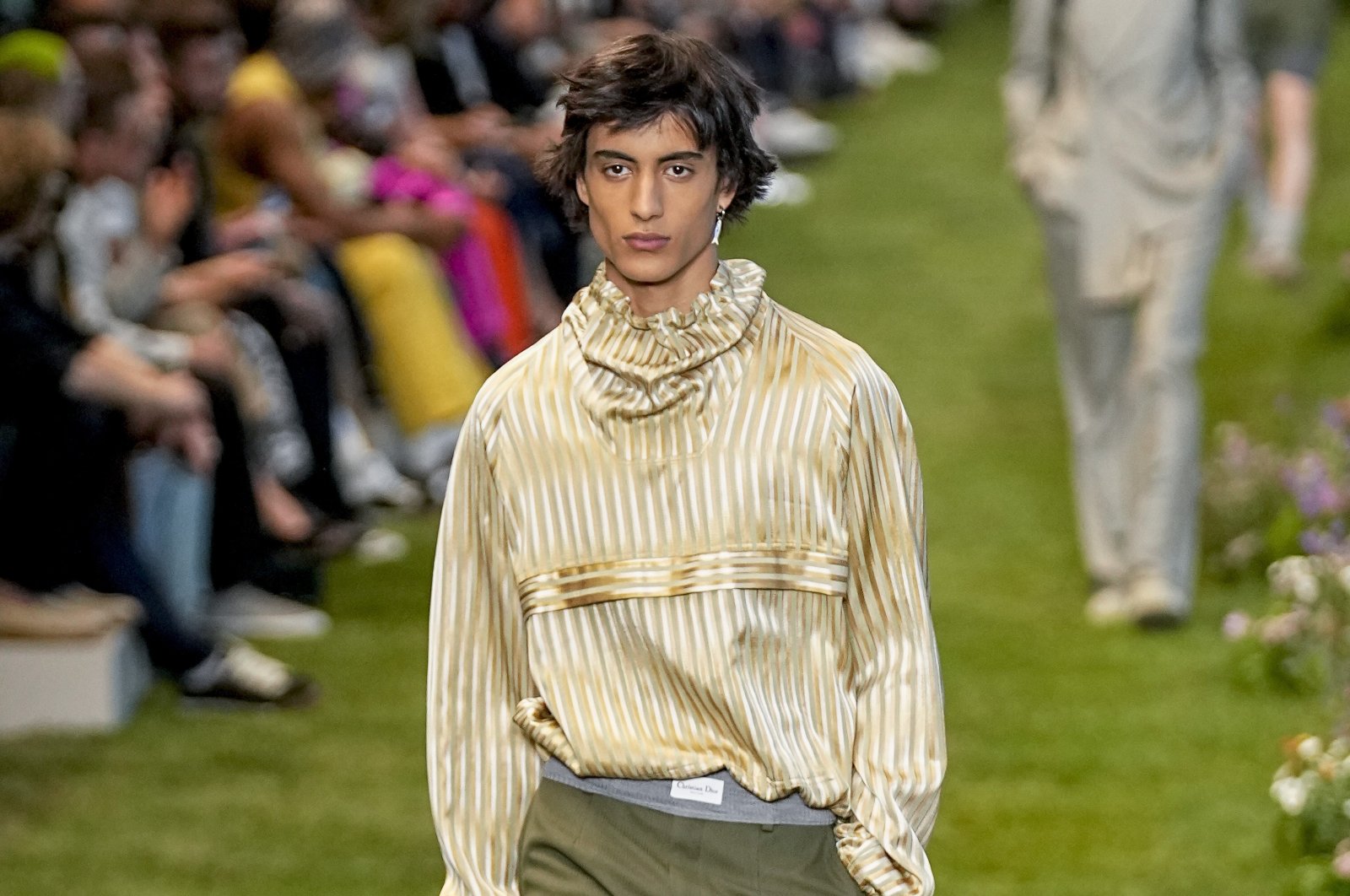
rench fashion giant Dior displayed the precious fabric used by the Ottoman sultans in the 2022 Paris Fashion Week.
I compiled a list of as many fabrics, fibres and related items as possible (278 items which I will make available at the end of the A to Z), from several sources, the most comprehensive of which was Wikipedia. Since there are only 26 letters in the alphabet, I could not write in detail about every instance so I have taken snippets of text for the brief descriptions and linked to the source in the name of the item. I am indebted to all the contributors to those Wikipedia pages and the depth of knowledge to be found there…