“Choose any subject you would like to write about…” that is the object of the A to Z Challenge, and thinking of things that interest me is not a problem for me, but choosing a subject not only to write about, but to write in a way that other people will catch my interest – that is the real challenge! This year I turn to a subject, close to our skin if not our hearts, and yet, again, I wonder if this subject will get some people past the title on the list – dismissed as niche? For this year, my theme is What We Wear – Fabrics and Fibres
The choice of fabric for military clothing is a good illustration of the balancing act required in all fabric choices, but military clothing is subject to more extreme uses and thus requirements – warmth for cold climates, breathability and sweat wicking for hot climates, durability, resistance to tearing, ability to assert power on the one hand, or camouflage the wearer on the other.
We already encountered the fabric that dominated military clothing in the 18th and 19th centuries – Broadcloth, under H for Historical Fabrics – from the assertive red uniforms of the British army, to the uniforms of the British Royal Navy, broadcloth reigned supreme. Britain excelled in wool production and broadcloth – first woven, oversize and then hammered to felt and shrink it, made it tough, warm and water-resistant and still warm enough when fully wet. One might pity the soldiers forced to wear red which presumably made them easy targets for the sake of projecting power…
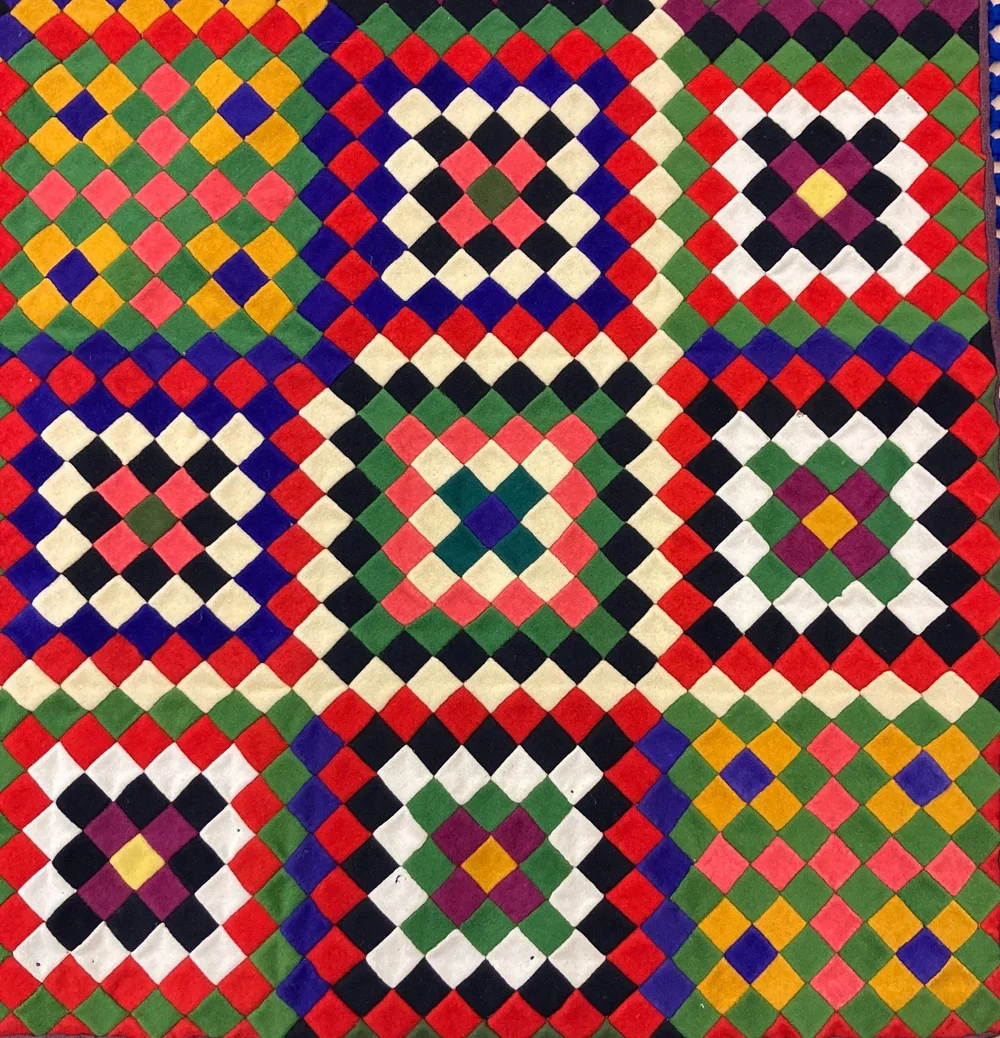
Because of the dense nature of broadcloth, very small seam allowances will suffice and this webpage examines quilts made by soldiers and sailors using scraps of uniform fabric and these tiny seams are shown below – a photograph which also shows the nature of broadcloth.
From YorkStitcher – Textile Artist
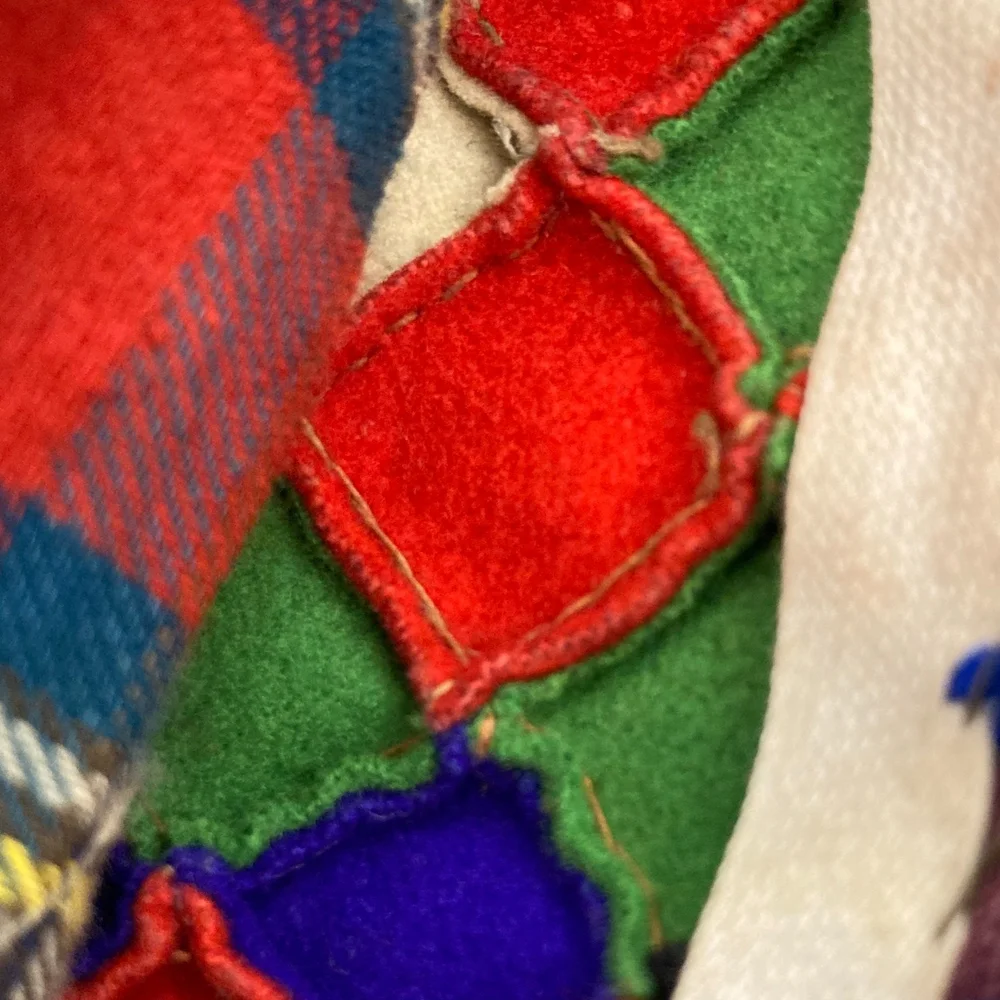
Detail of the reverse showing stitching and seams
From YorkStitcher – Textile Artist
Kersey, or Kerseymere – was a thinner, cheaper imitator of broadcloth and clothed the lower ranks – originating in East Anglia around the village of Kersey in Suffolk by the 18th Century the largest production was in West Yorkshire, particularly in the Keighley area (where I live).
The properties of Kersey made it popular for coats and cloaks for the lower orders. Frequently used during the Civil War as a cloth for soldiers’ coals and breeches, by the latter half of the 18th Century these items were made from Broadcloth. However, Double-Milled Kersey was used for sailors’ jackets by the Admiralty and for Army greatcoats, Cavalry cloaks (in red or blue for heavy and light) and fatigue jackets (in natural or buff for buff faced Regiments). – https://louisebyford.blogspot.com/2013/06/historical-fabric.html
Serge – Like Bay, Serge is a cloth with a worsted warp and woollen weft, although in this case twill woven. The twill helps to maintain the stability whilst retaining enough flexibility to be used as a lining material. Sturdy, but itchy, and absorbing huge amounts of water, which made it difficult to dry out.
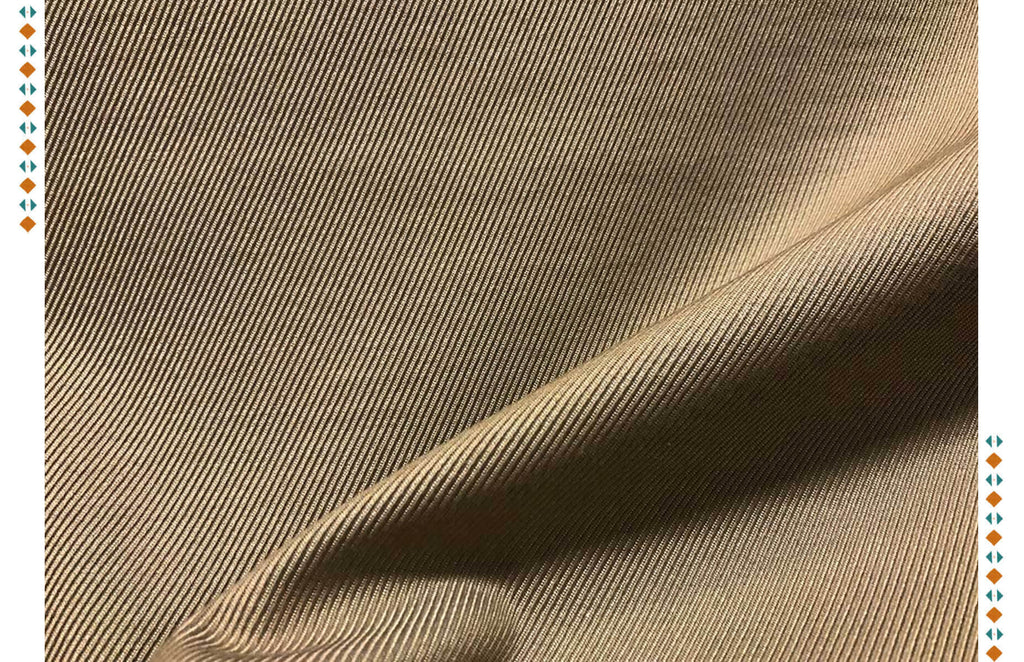
Khaki – By the late 18th century, the industrial weaving of cloth and the changing sensibilities around the idea of camouflaging soldiers led to the introduction of Khaki a cotton fabric dyed in earthy shades to blend with the natural environment. This early version of camouflage had a profound impact on future military clothing.
By the First World War, the uniforms in the trenches were a combination of wool and cotton offering warmth, durability, and comfort in trench warfare conditions and just as red uniforms had, in the past, meant that blood did not show up (increasing the idea of invulnerability), the khaki uniforms did not show up the mud of the trenches so badly thus preserving the idea of a uniformed army…
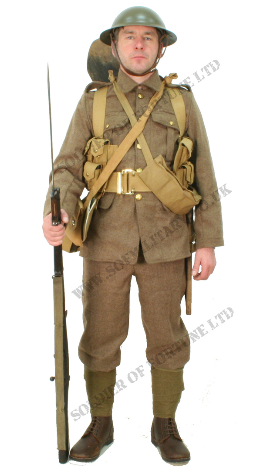
The coming of Synthetics – the Second World War saw the advent of synthetic fabrics like nylon and polyester, which offered lightweight, durable, and weather-resistant properties. I received a pair of “indestructible” socks for Christmas one year made from pure nylon and soon discovered, that whilst they were indeed tough, they made for very smelly feet! This page looks at the pros and cons of nylon! However, as a blend with other fibers such as cotton, nylon can lend strength to fabrics and the right balance was soon found.
Postwar fabrics and the uniforms made from them continued to evolve and the uniforms tended towards evermore specialist kit for different theatres of war, different requrements, different camouflage and the incorporation of new synthetics like Gore-Tex – both waterproof and yet breathable, Kevlar the miracle bullet-proofing fabric, but more of that when I get to Synthetics.
Mills
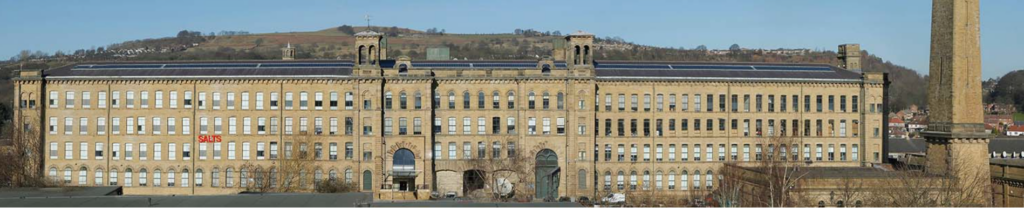
Almost every town or village in the area in which I live in West Yorkshire has a mill – or more precisely, if they lie along the Leeds-Liverpool Canal. The canal brought coal to power the steam engines that drove the mill machines, cotton from America via Liverpool, and the finished goods were shipped to Leeds for distribution to all points South or to Liverpool for export from the docks to the rest of the world.
Above is Salts Mill, which, when built, had the largest room in the world, stretching the entire length of the building! Sir Titus Salt, the mill owner, built it to new specifications regarding fire, following lethal fires in previous mills, where aerialised lint and wooden floors caused rapid upward spread of fires killing many workers. Sir Titus created brick arch ceilings with a foot of ash on top and the next floor on top of that. He built the neighbouring Saltaire to house his workers (no pubs though as he was teetotal) and lived in nearby Bradford. Bradford had more millionaires in the 19th century than any other city in the world. There was no shortage of ash since every mill produced tons of the stuff and so every mill site has a great mountain of the toxic stuff somewhere nearby. In our village of Silsden, a steep little stream valley was culverted and the valley filled for some 300 yards with ash…
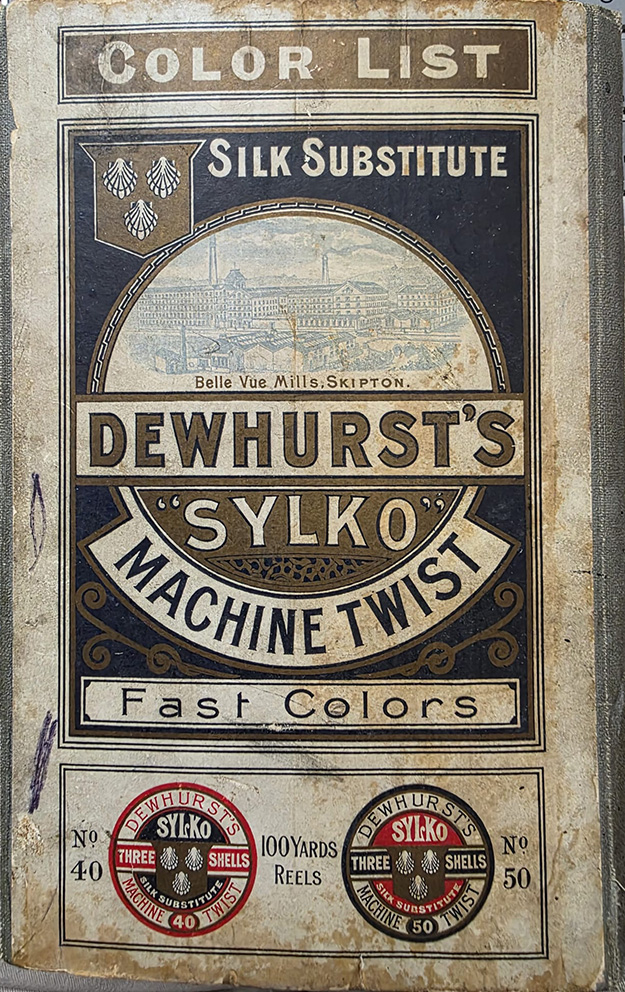
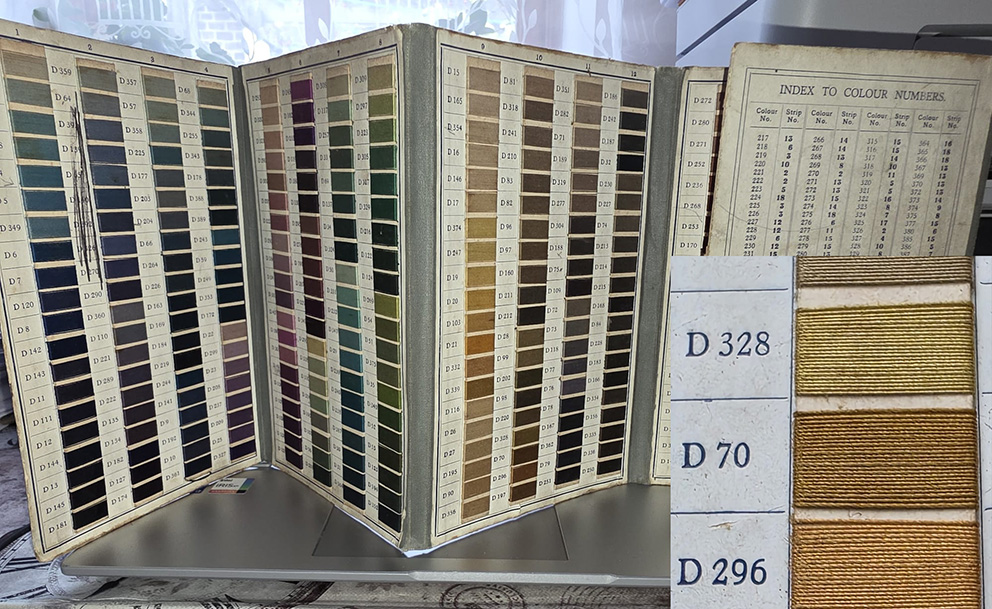
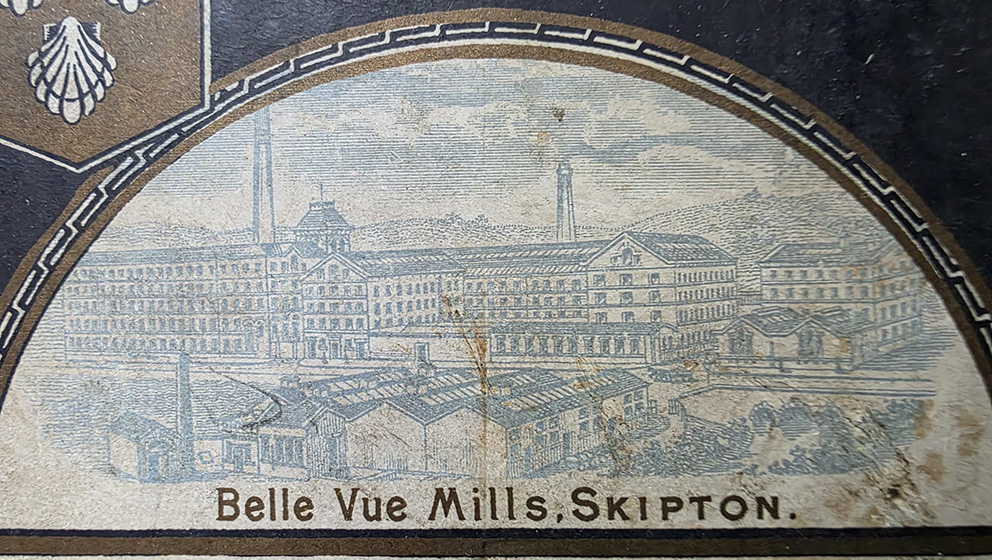
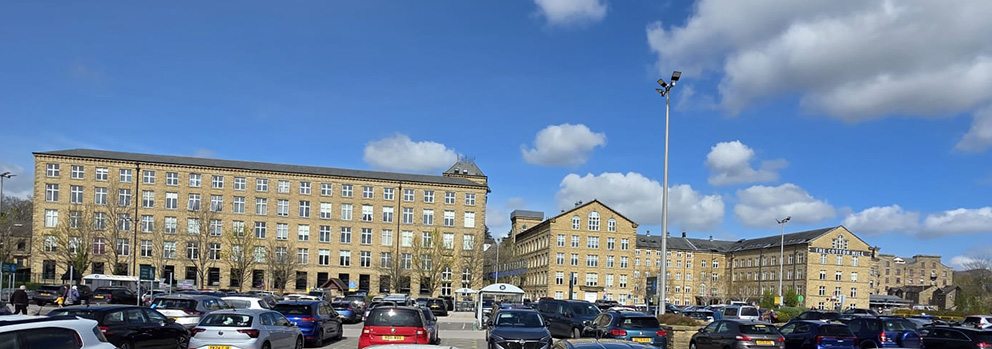
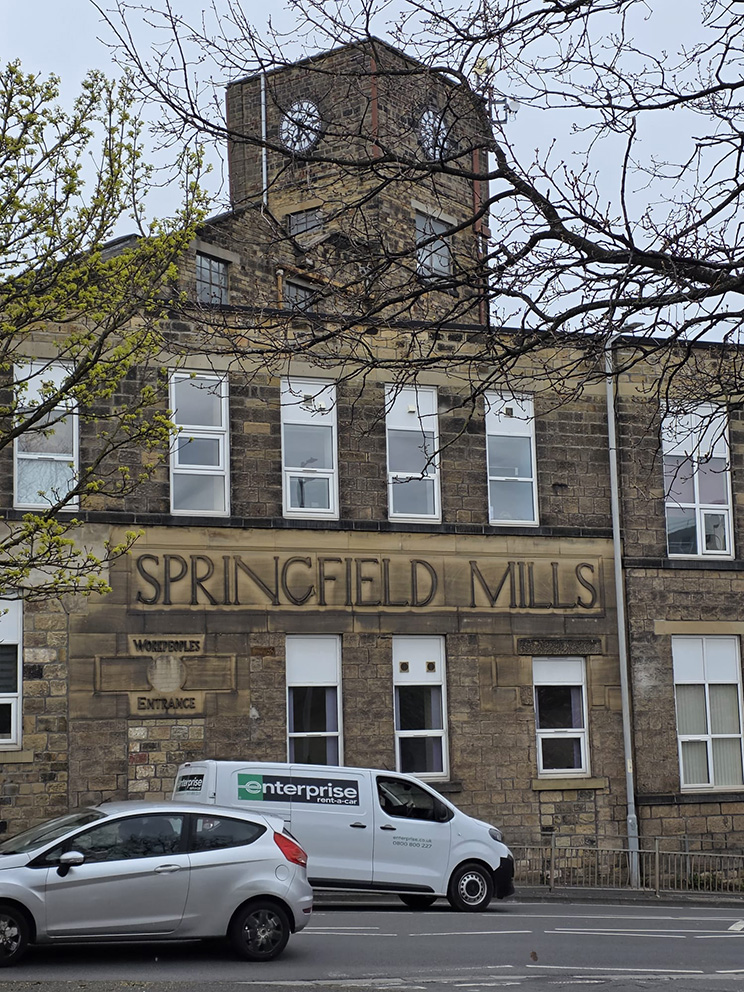
Amongst other things, Salt’s Mill houses a permanent David Hockney Gallery – another Bradfordian made good and there is a small museum about the history of the mill – however, there is not a single piece of fabric known to have been made in the great mill – all that is mere ephemera… So imagine my pleasure in finding a Dewhurst “Sylko” Machine Twist colour sample chart from the Belle Vue Mill in Skipton – the other direction from our house from Saltaire. Grubby on the outside, the threads still look great inside. I took a photo of the mill – now converted to apartments just this week…
“M” Fabrics
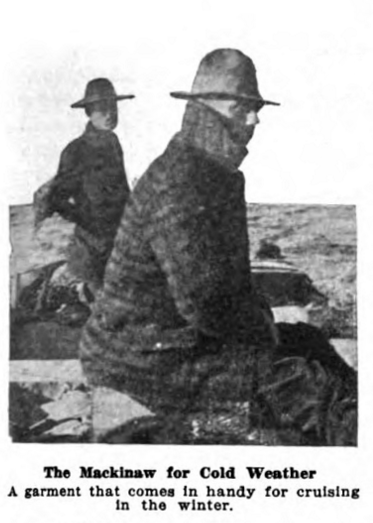
Mackinaw -The story of Mackinaw is fascinating and varied encompassing a smuggled contraband item concealed in the covers of Prairie wagons, an iconic lumberjack shirt and the sometime “uniform” of the Beach Boys – I refer you to the Wikipedia account...

Madapollam – is a soft cotton fabric manufactured from fine yarns with a dense pick laid out in linen weave. Madapollam is used as an embroidery and handkerchief fabric and as a base for fabric printing.[1][2] The equal warp and weft mean that the tensile strength and shrinkage is the same in any two directions at right angles and that the fabric absorbs liquids such as ink, paint and aircraft dope equally along its X and Y axes.

Madras – a lightweight cotton fabric with typically patterned texture and tartan design, used primarily for summer clothing such as pants, shorts, lungi, dresses, and jackets. The fabric takes its name from the former name of the city of Chennai in India.
Both sides of the cloth must bear the same pattern, and it must be handwoven (evidenced by the small flaws in the fabric).[2] Madras was most popular in the 1960s.
Cotton madras is woven from a fragile, short-staple cotton fiber that cannot be combed, only carded.[2] This results in bumps known as slubs which are thick spots in the yarn that give madras its unique texture. The cotton is hand-dyed after being spun into yarn, woven, and finished in some 200 small villages in the Madras area. – Wikipedia

AMC/Everett Collection – from How a humble Indian fabric became a symbol of luxury in 1960s America
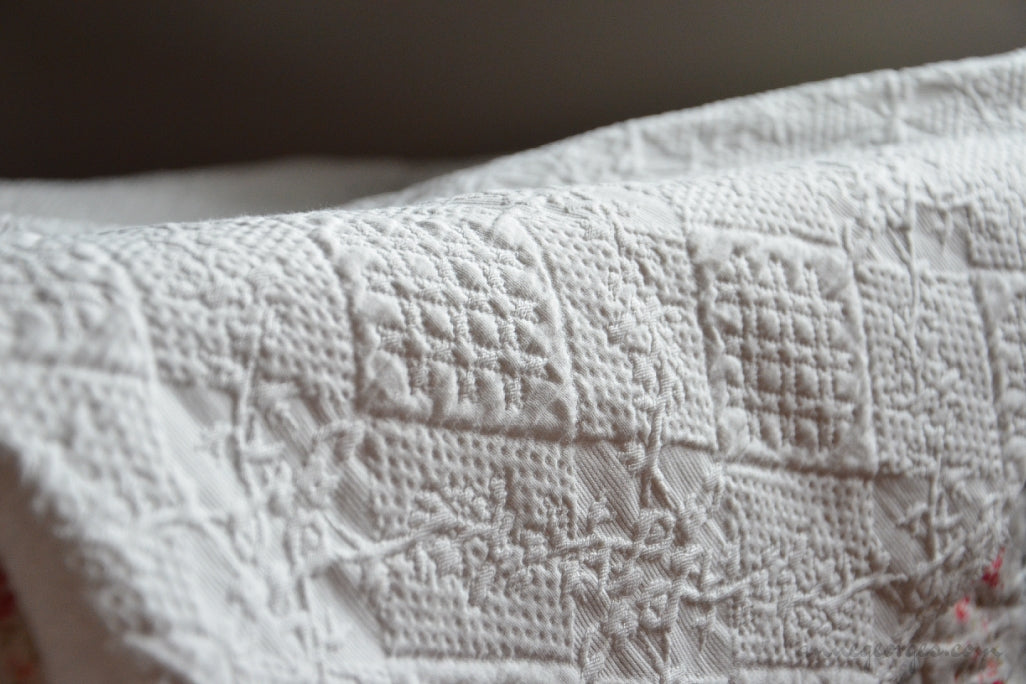
Matelassé – (French: [matlase]) is a weaving or stitching technique yielding a pattern that appears quilted or padded. Matelassé may be achieved by hand, on a jacquard loom, or using a quilting machine. It is meant to mimic the style of hand-stitched quilts made in Marseille, France. It is a heavy, thick textile that appears to be padded but actually has no padding within the fabric.
Matka – is made from silk moth coccoons where the insect has already emerged and, in the process, has broken the silk threads so that the cocoon cannot be unwound (spooled). However, the fibres can be spun like any other short fibres and this made work for poorer, less skilled workers and the resulting cloth is coarser than regular silk. People who object to the killing of the insects (as required to unwind regular silk) such as Buddhists and Jains, prefer Matka.
Melton – is a fabric made from very tightly woven wool, which the surface is then manipulated to hide the weave structure, making it look like it is bonded.
Milliskin – a knit fabric, specifically a type of tricot. It is characterized by its stretchiness and is made from a blend of nylon and spandex, which gives it its durability and ability to be form-fitting. Milliskin fabric is made by blending nylon and 4-way stretch spandex (or Lycra). That’s why it is fairly thinner and tauter than heavy-set types of spandex like moleskin. The basic milliskin fabric is usually plain white and can be dyed to reflect virtually any color.

Moire -although moire is an effect achieved by looking through two meshes, as a fabric, a facsimilie of this effect is produced by passing silk, but also wool, cotton, and rayon, through heated rollers.

Moleskin – a heavy cotton fabric, woven and then shorn to create a short, soft pile on one side. The feel and appearance of its nap is suede-like, less plush than velour and more like felt or chamois.
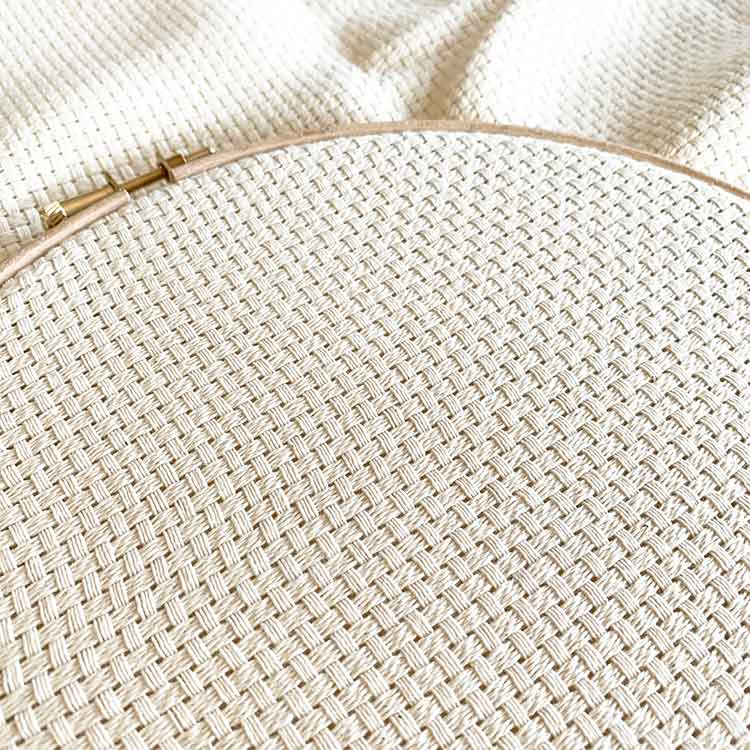
Monk’s Cloth – is the base for embroidery or for Tufting work. The Monk’s cloth was woven with basketweave, usually with 2×2 or 4×4. Basketweave is a plain weave, with the difference that it allows two or more filling yarn to pass over and under two or more warp yarns and forms a check pattern.
Muslin – is a cotton fabric of plain weave. It is made in a wide range of weights from delicate sheers to coarse sheeting. It is commonly believed that it gets its name from the city of Mosul, Iraq. There were about 28 varieties of muslin, of which jamdani is still widely used. During the 17th and 18th centuries, Mughal Bengal emerged as the foremost muslin exporter in the world, with Dhaka as capital of the worldwide muslin trade.] In the latter half of the 18th century, muslin weaving ceased in Bengal due to cheap fabrics from England. In India in the latter half of the 20th century and in Bangladesh in the second decade of the 21st century, initiatives were taken to revive muslin weaving, and the industry was revived.
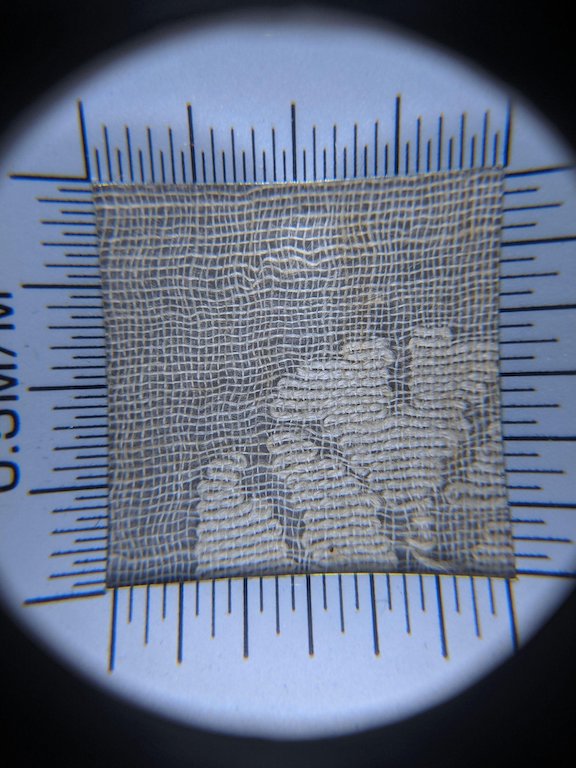
The term ‘muslin’ was not used in the seventeenth- and eighteenth-century documents that are the sources for the project, instead a variety of cloths which early modern European consumers, as well as us today, would categorize as muslins were referred to by names that indicated different origins, qualities, and varying local naming conventions. In this project’s data, the following terms are all types of muslins: adathaies, alliballies, bethilles, caffa, camcanys, dimity, douriasten, guldars, hammans, jamdanies, mallemolens, sanen, tanjeebs, and therindains (in alphabetical order). Other types of muslin known to Europeans that don’t appear in this data include: cummuns, dosooties, humhums, khasas, nainsooks, rehings, sallowes, seerbands, seerbettees, seerhaudconnaes, serribaffs, shalbadts, shash—either the Dutch did not trade these types or they used different terminology. – Dutch Textile Trade
I compiled a list of as fabrics, fibres and related items as possible (278 items which I will make available at the end of the A to Z), from several sources, the most comprehensive of which was Wikipedia. Since there are only 26 letters in the alphabet, I could not write in detail about every instance so I have taken snippets of text for the brief descriptions and linked to the source in the name of the item. I am indebted to all the contributors to those Wikipedia pages and the depth of knowledge to be found there…