“Choose any subject you would like to write about…” that is the object of the A to Z Challenge, and thinking of things that interest me is not a problem for me, but choosing a subject not only to write about, but to write in a way that other people will catch my interest – that is the real challenge! This year I turn to a subject, close to our skin if not our hearts, and yet, again, I wonder if this subject will get some people past the title on the list – dismissed as niche? For this year, my theme is What We Wear – Fabrics and Fibres
In the course of researching this A to Z, I unearthed 233 different kinds of fabric, some historical, some staples of haberdashery to this day, and some the product of the latest technology – but some names jumped out because they are brand names that have become synonymous with particular fabrics, even though others have copied them (think the way all vacuum cleaners were, for a long time Hoovers) and so here are a few…
Brands
In 1888, Lewis Haslam, a Lancashire mill owner and politician, together with a couple of doctor partners, experimented with creating a fabric that trapped cells of air within the warp and weft of cotton fabric – a fabric that would help keep you warm in Winter and equally, insulate you against excessive heat in Summer. The company grew steadily, with the Women’s Land Army wearing Aertex shirts during World War 2 and British Army forces wearing them in North Africa and the Far East. Soon after the war, Princesses Elizabeth and Margaret were reportedly wearing Aertex and by the 1960’s, Aertex were making a whole range of School Uniforms and Sportswear across the board. The England Football Squad wore Aertex in the 1970 Olympic Games.
The world’s first ever shirt shop, Charvet was founded in 1838. Since the 19th century, it has supplied bespoke shirts and haberdashery to kings, princes, and heads of state. Thanks to the renown of its ties, charvet has become a generic name for a certain type of silk fabric used for ties.
Duffel, Loden cloth, Melton
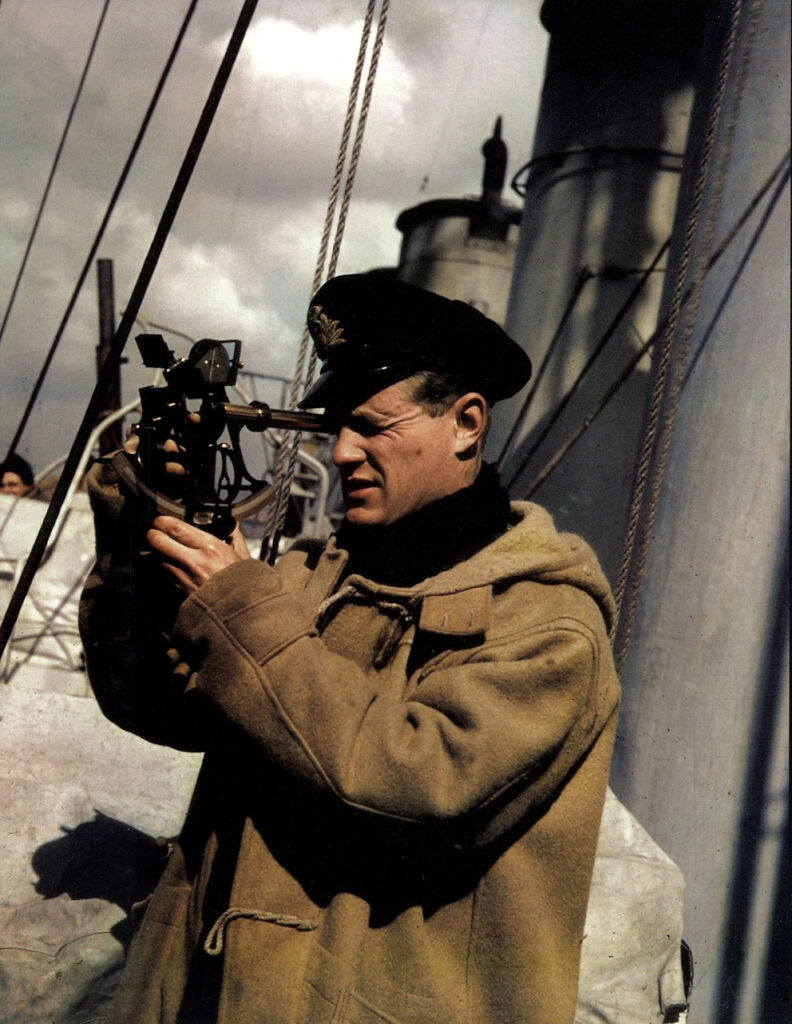
Duffel, Loden cloth and Melton are all durable, heavyweight wool fabrics primarily used for cold-weather outerwear like coats and capes, but the Duffel Coat in particular – named for the town of Duffel in Belgium, where the original duffel fabric was made from a coarse, black wool – became famous when the British Royal Navy adopted the duffel coat, known for its toggle closures and roomy design. It is worth noting that wool retains excellent insulation properties even when wet.
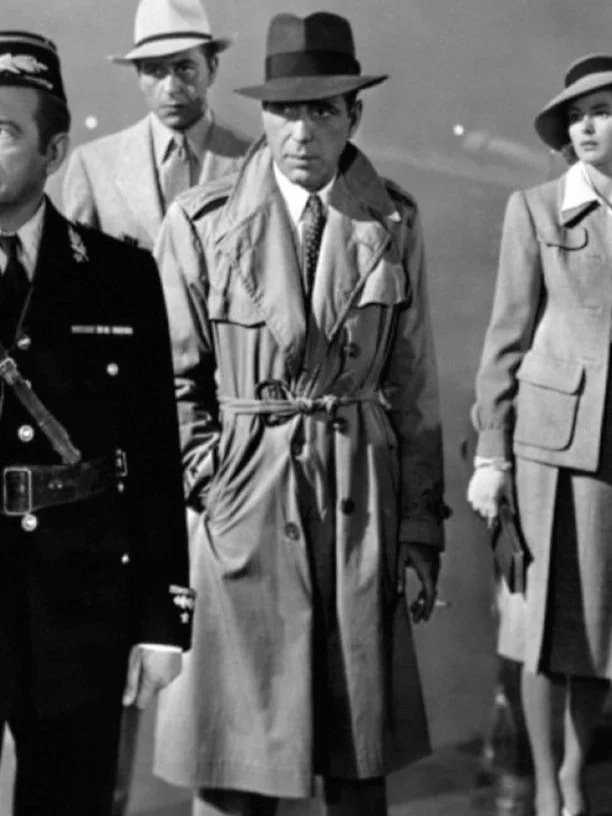
The “Mac” or Mackintosh, was invented in 1824 by Scottish inventor Charles Macintosh and was a rubberised fabric, but the Gabardine Mac was developed by Thomas Burberry using his patented gabardine fabric in 1886, which was durable, water-resistant, and breathable. Gabardine is characterized by a strong, warp-faced twill weave, which creates a prominent diagonal rib on one side and a smooth surface on the other andtThough not fully waterproof, the very tight weave makes it shower proof. Another Englishman whose brand, like Burberry, is still going strong, was John Emary patented a water-repellent fabric in 1853, founding Aquascutum and gaining success with his “Aquascutum Wrapper.”
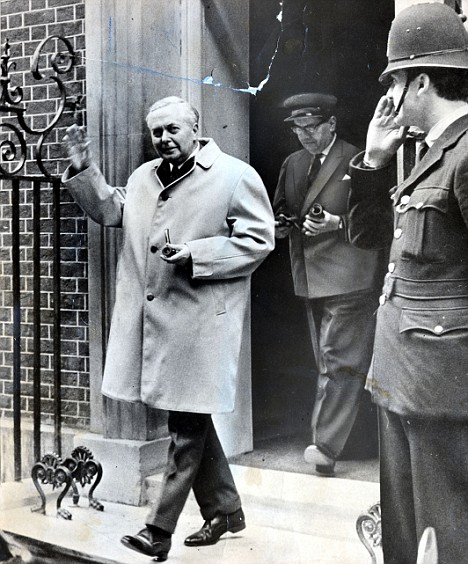
Gannex Another iconic waterproof coat made famous by Prime Minister Harold Wilson, was the Gannex, made here in West Yorkshire bonding a nylon waterproof outer coating to a woollen lining.
Other well known “brand” names of fabrics include
Blends
Viyella claimed to be “first branded fabric in the world” and it was a blend of 55% merino wool and 45% cotton in a twill weave, which segues us nicely from brands to blends. When you blend two different fibres, in this case wool and cotton, you get a combination of the properties of each – much like alloys in the world of metal, and like alloys, sometimes a small amount of one constituent can make a big difference to the overall behaviour of the mixture. In the case of Viyella, wool is soft and stretchy, prone to shrinking if washed too hot but with good insulating properties whilst cotton is stronger and stiffer, so the resulting mix is a soft dress-weight fabric that was more resistant to shrinkage than any comparable pure wool alternative. Viyella also made clothing using their new blended fabric, firstly as a separate company but then combined and offering a franchise operation, allowing other companies the right to produce under the Viyella trademark. This was also something of a first and Viyella became one of the largest fabric companies in Britain with 40 factories.
The original blend is no longer made and Viyella, in financial difficulties in 2009, was eventually bought by Austin-Reed.1
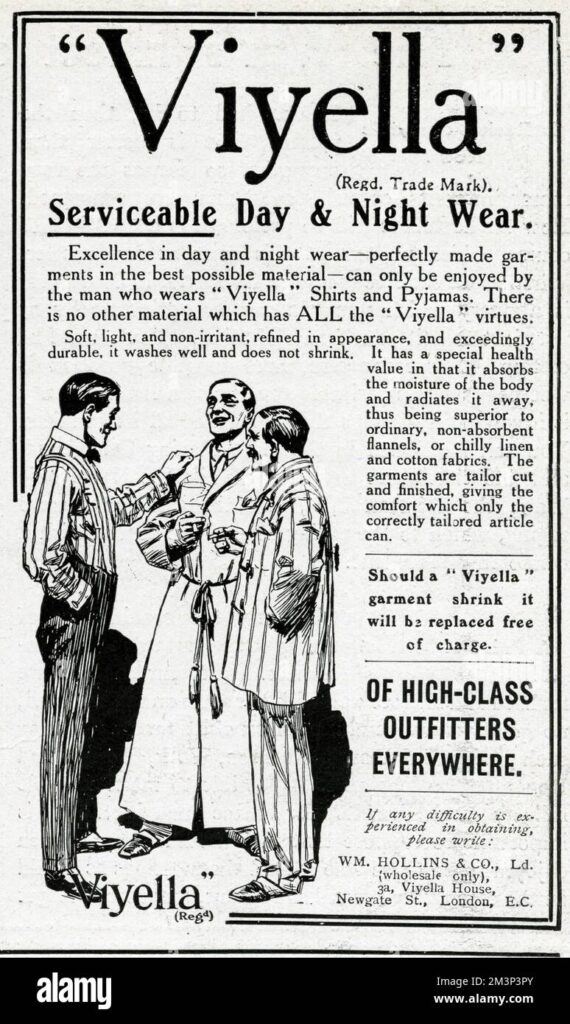
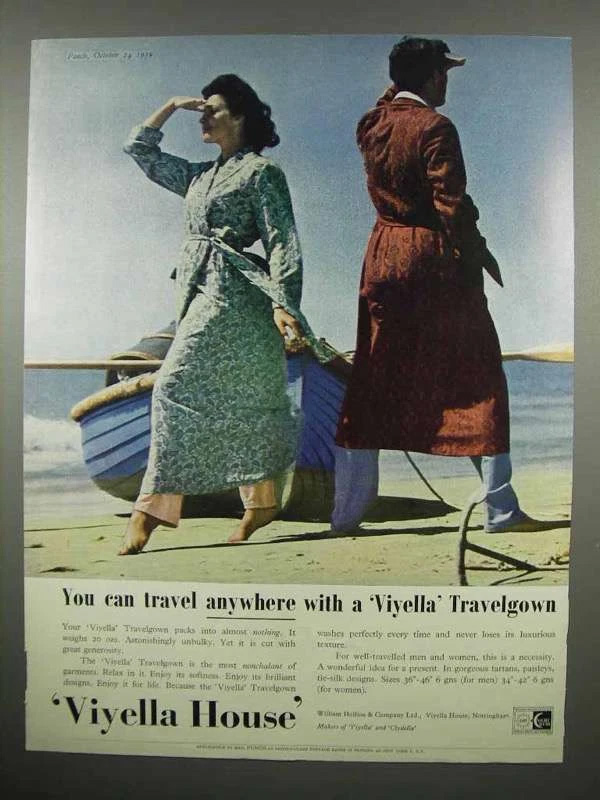
The term “blended fabric” is not new, in antiquity, fibres were combined to enhance the suitability of textiles for daily use; for instance, silk was blended with cotton or linen to improve durability and of course, cost is also a consideration since silk is much more expensive than either cotton or linen. Large-scale production of blended fabrics, however, commenced only with the Industrial Revolution.
Here are some common blends, Polyester-Cotton (Polycotton), Wool-Synthetic Blends, Cotton-Spandex. Silk-Synthetic Blends and Rayon Blends and we shall examine these later on.
Below is a table of straightforward fibre properties:
| Property | Cotton | Wool | Silk | Polyester | Nylon | Acrylic | Elastane |
| Origin | Natural (Plant) | Natural (Animal) | Natural (Animal) | Synthetic | Synthetic | Synthetic | Synthetic |
| Strength | Medium | Low | High | High | Very High | Medium | High |
| Elasticity | Low | High | Medium | High | High | High | Excellent |
| Moisture Absorb. | High | High | Medium | Very Low | Low | Low | Poor |
| Warmth | Fair | Excellent | Good | Fair | Fair | Good | Good |
| Breathability | Good | Good | Fair | Poor | Poor | Poor | Poor |
| Durability | Good | Medium | Good | Excellent | Excellent | Good | Excellent |
| Crease Resistance | Poor | Good | Fair | Excellent | Excellent | Good | Excellent |
| Biodegradability | Yes | Yes | Yes | No | No | No | No |
| Cost | Low | Medium-High | High | Low | Low | Low | High |
Today, many more factors go into designing a fabric blend, sustainability (environmental concerns), enhanced breathability, cost-effectiveness, versatility, aesthetic and textural properties, skin-friendliness, geo-political issues and trade concerns, and lastly, recyclability. As we go through the many fabrics we will encounter various blends and under “F” we will be considering the constituent Fibres but for now we have defined the principle of blending.
“B” Fabrics
Bobbinet or “True Tulle”, is important as a ground for making lace. This long sought mechanical method of making tulle, was previously carried out very laboriously by hand as part of lacemaking, which we shall come to with “L”…
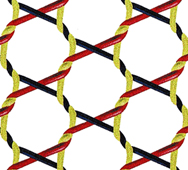
The structure of Bobbinet, which is made by looping the weft thread around the vertical warp thread2.
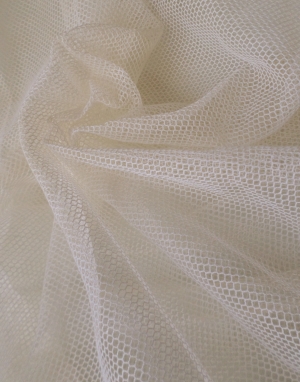
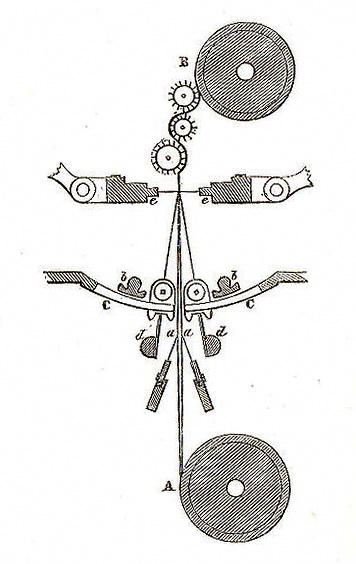
- Bobbinet (métier bobin) schematic. The bobbinet framework consists of:
- A – Warp beam
- B – Lace take up roller
- C – Represents the combs or guides, with two brass-bobbins in their carriers.3
Bombazine is also a blend of fibres, silk and wool, though more recently (and cheaply) cotton and wool. Quality bombazine has a silk warp and a worsted weft – t is a twill weave which gives it a very fine corded appearance. Made ever since, the 16th century, black bombazine has traditionally been used for mourning wear, right through to Victorian times – perhaps because, whilst subdued in colour, the silk nevertheless gave the fabric a subtle shine so not without a little glamour…
It is possible that Bombazine is still being made but I couldn’t definitively track it down.
Bouclé refers to both a yarn and the material woven, or knitted with it. To make the yarn, two stands of fibres are combined by spinning, with one strand (the Anchor) being kept taut and the other loose (the Effect strand) so that the effect one wraps around the anchor in a series of loops.
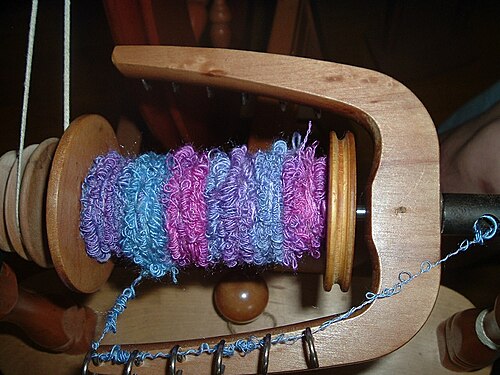
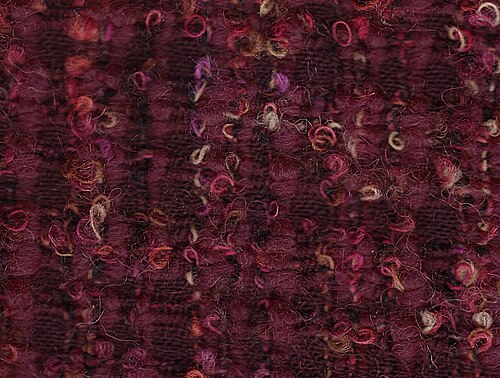
Above, Bouclé yarn being made and on the below is woven Bouclé fabric. (Wikipedia)
1. Viyella – https://en.wikipedia.org/wiki/Viyella
2. Bobbinet – The Textile Research Centre
I compiled a list of as fabrics, fibres and related items as possible (278 items which I will make available at the end of the A to Z), from several sources, the most comprehensive of which was Wikipedia. Since there are only 26 letters in the alphabet, I could not write in detail about every instance so I have taken snippets of text for the brief descriptions and linked to the source in the name of the item. I am indebted to all the contributors to those Wikipedia pages and the depth of knowledge to be found there…of the item. I am indebted to all the contributors to those Wikipedia pages and the depth of knowledge to be found there…
This is a mine of information, good luck for the challenge
Thanks – each year i seem to give myself more work and this one’s a doozy…
Fascinating. Unlike you, I’ve chosen themes involving less work recently. https://suestrifles.wordpress.com/2026/04/02/homophones-beginning-with-b-atozchallenge/