“Choose any subject you would like to write about…” that is the object of the A to Z Challenge, and thinking of things that interest me is not a problem for me, but choosing a subject not only to write about, but to write in a way that other people will catch my interest – that is the real challenge! This year I turn to a subject, close to our skin if not our hearts, and yet, again, I wonder if this subject will get some people past the title on the list – dismissed as niche? For this year, my theme is What We Wear – Fabrics and Fibres
Gauze
Gauze – The transparency of gauze, lends it, on the one hand to wedding veils and on the other, to wound dressings where a fabric that allows breathing without the fibres shifting. This is achieved by twisting the Weft threads after each timr they cross the Warps (as shown below) this locks the position of warp and weft in place and keeps the fabric stable but with very open structure.


Gazar
Gazar – If gauze is an old and functional fabric, even in the fashion sense, then Gazar is the polar opposite – a 20th Century fabric brought into being to suit the very particular needs of an haute Couture fashion designer in order to create some iconic but hardly practical designs.
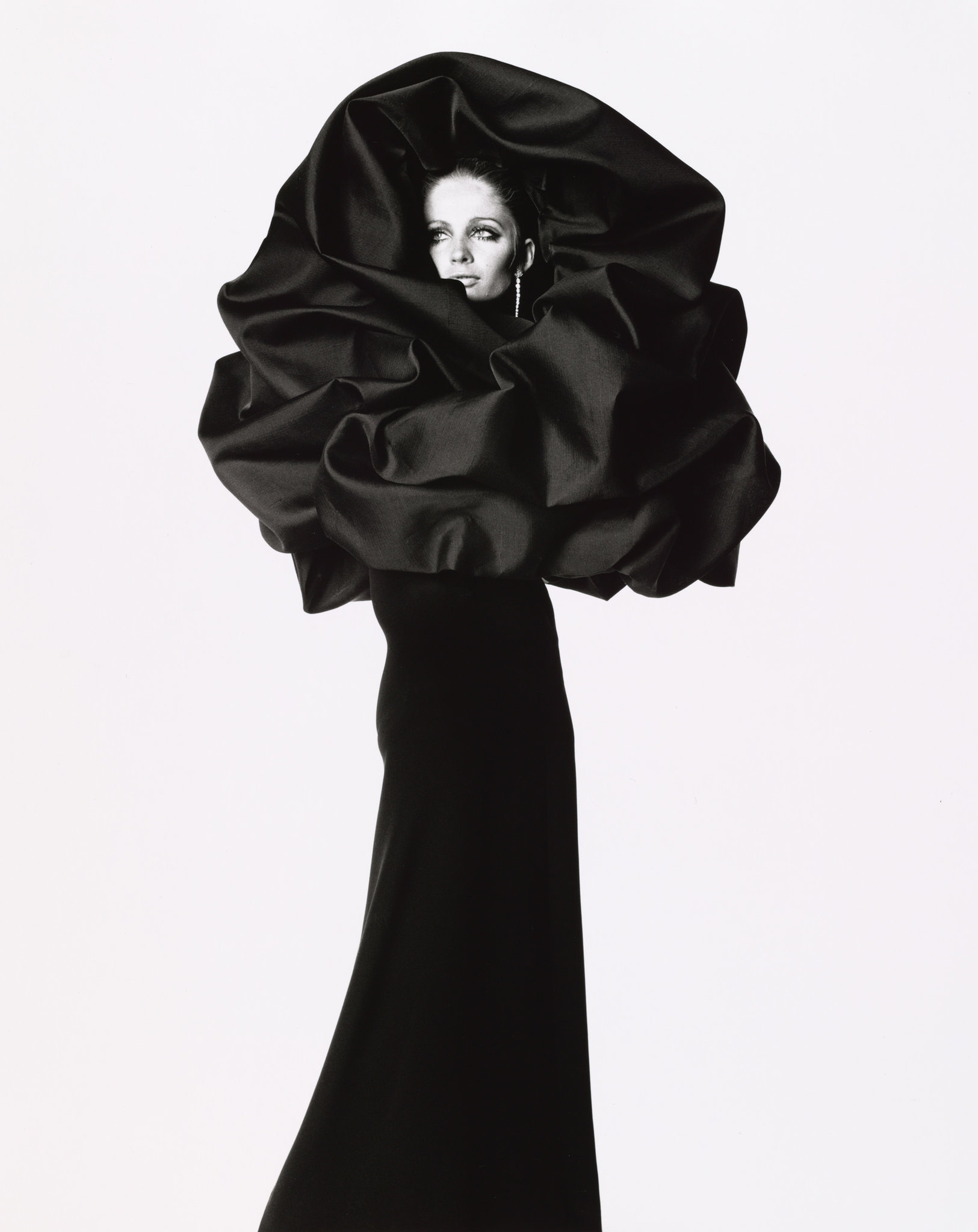
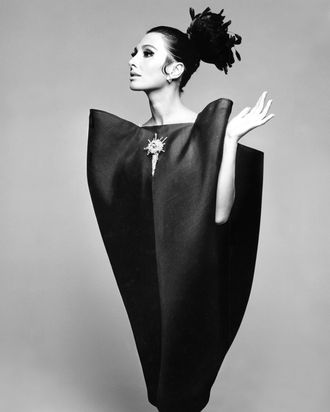
Gazar is a silk or wool plain weave fabric made with high-twist double yarns woven as one. Gazar has a crisp hand and a smooth texture. Balenciaga wanted a fabric he could sculpt and so he turned to Mr. Zumsteg, director of the Abraham company and a great collector of paintings, rightly thinking that he would understand the subtlety of his request. Together, they came up with an organza like fabric (another member of the guaxe family), stiff, unruly except in the hands of skilled seamstresses and it formed the basis of Balenciaga’s collections from 1960-68.


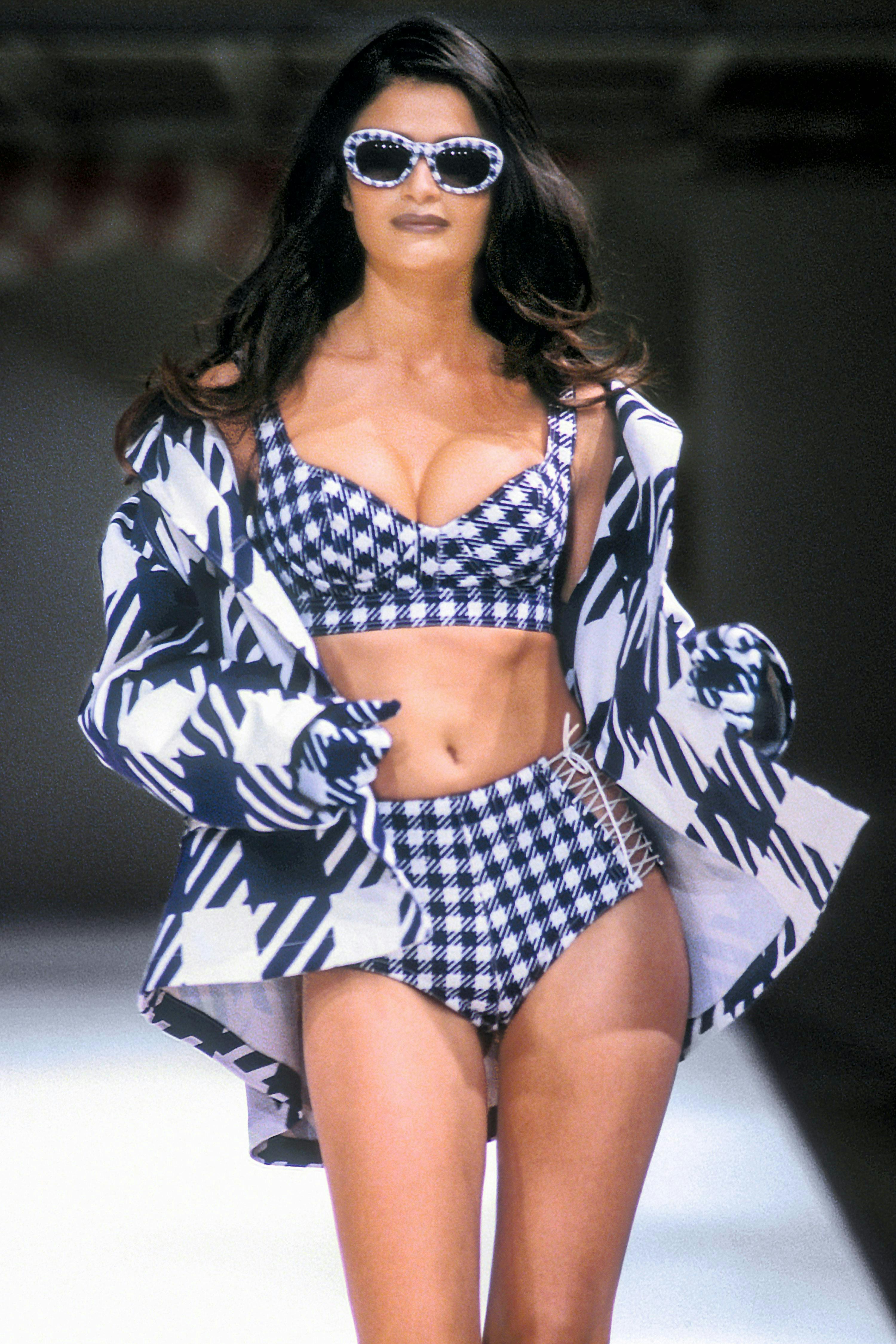
Of course, the often impractical, immodest, exorbitantly expensive, wonderful creations of haute couture are said to filter downwards to influence High Street design and occasionally, fabrics from the world of popular fashion, are taken up by Haute Couture and one such staple, is Gingham…
Gingham
Around since the 17th century, and possibly named for the French town of Guingamp, gingham was originally striped but evolved into the ubiquitous checked or tartan (plaid) pattern which is simple to achieve on an industrial loom. Indeed, by the 19th century, gingham was a staple product of Lancashire cotton mills.

In fact, Gingham was introduced to France from Malaysia, where it started being produced in Vichy, France, under the reign of Napoleon Bonaparte. In Spain the pattern is known as estampado vichy or cuadro vichy. With the industrial production of gingham, it became popular around the world and retained a special affection in the USA – so much so that on the one hand, the gingham shirt invited mockery, whilst on the other, haute couture rediscovers it periodically.


Other “G” fabrics:
Georgette – (from crêpe Georgette) is a sheer, lightweight, dull-finished crêpe fabric named after the early 20th century French dressmaker Georgette de la Plante. Originally made from silk, Georgette is made with highly twisted yarns. Its characteristic crinkly surface is created by alternating S- and Z-twist yarns in both warp and weft.
Grenadine – is a weave characterised by its light, open, gauze-like feel, and is produced on jacquard looms. Originally produced in Italy and worn as a black silk lace in France in the eighteenth century, it is now woven with silk for use in ties.
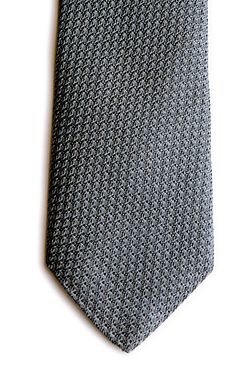
For the most part, ties made from grenadine silk are solid in color with the visual interest being the unique weave.
Grosgrain – a type of fabric or ribbon defined by the fact that its weft is heavier than its warp, creating prominent transverse ribs.
I compiled a list of as fabrics, fibres and related items as possible (278 items), from several sources, the most comprehensive of which was Wikipedia. Since there are only 26 letters in the alphabet, I could not write in detail about every instance so I have taken snippets of text for the brief descriptions and linked to the source in the name of the item. I am indebted to all the contributors to those Wikipedia pages and the depth of knowledge to be found there…
Fascinating how gauze is put together.
I like gingham; squares are useful for embroidery and smocking.
I put my A – Z post links in my theme reveal post because otherwise, they are difficult to find.