“Choose any subject you would like to write about…” that is the object of the A to Z Challenge, and thinking of things that interest me is not a problem for me, but choosing a subject not only to write about, but to write in a way that other people will catch my interest – that is the real challenge! This year I turn to a subject, close to our skin if not our hearts, and yet, again, I wonder if this subject will get some people past the title on the list – dismissed as niche? For this year, my theme is What We Wear – Fabrics and Fibres
This A to Z is about both “fabrics” and the “fibres” that make them, but there are some fabrics where the fibre is synonymous with the fabric – silk, wool, and perhaps most of all Cotton. Different species of cotton were present and utilised to make fabric in both New and Old Worlds – the earliest being in Peru, but also in the Middle East and wild species of cotton grew in South Asia and beyond – but the archaeological record is mainly limited to hot, dry countries where the cotton fibres did not rot away and were preserved for the record.
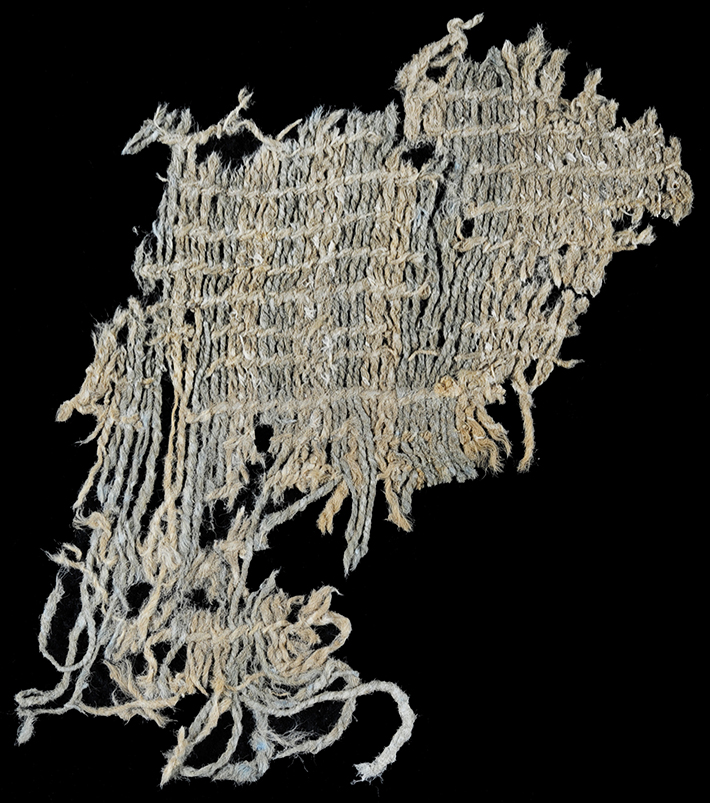
European countries came to know cotton fabric comparatively late and through trade with Arab countries where it had been woven for thousands of years, and yet, geopolitically, cotton, through slavery and the industrial revolution, would change the world. “King Cotton” 1 was a term coined by by Southern US politicians and authors to describe the economic, political, and social dominance of cotton production in the American South. It signified the crop’s supremacy as a cash crop and its vital role in the global economy, particularly in supporting slavery and driving Southern confidence in secession. The cotton produced in America was shipped to England, in particular, where it powered the Industrial Revolution and turned out cheaper cotton fabric that in turn, fuelled the British Empire.
Previous to the 19th Century, the largest producer of cotton, the fibre and the fabric, was India2. From the late 17th century to the early 18th century, Mughal India accounted for 95% of British imports from Asia, and the Bengal Subah province alone accounted for 40% of Dutch imports from Asia2. Calicos and Chintzes (see below) from India became so popular that in the 18th century, the government tried to outlaw their use for clothing or domestic purposes – not least because, the trade, facilitated by the East India Company, was one way – India had no use for many British goods and so vast quantities of gold and silver were heading to India.
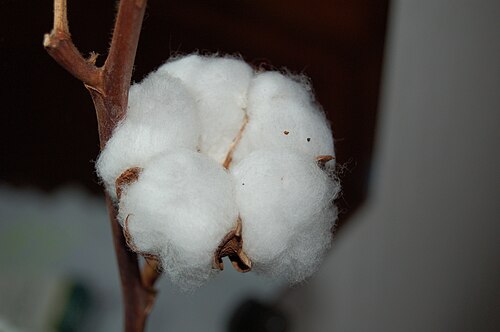
Meanwhile, in newly independent America, the machine that transformed cotton production by mechanising the preparation of the fibres and replacing a labour intensive process, was the Cotton Gin3. Many attempts to create such a machine had been made, but the modern mechanical cotton gin was created by American inventor Eli Whitney in 1793 and patented in 1794. Cotton grows in “bolls” where some dozen seeds are tightly enclosed amongst the cotton fibres and must be removed before the fibres can be spun into a yarn.
So great was the export flow of cotton from America to France and Britain, that Southern slave owners were convinced they had the leverage to guarantee those countries support in the forthcoming Civil War, largely fought around the issue of slavery.(Cotton Diplomacy) They were incorrect, as European mills turned to importing cotton from India and Egypt, and although slavery came to an end, the trade in cotton did not and America resumed supplying Europe with the raw material and the trade with Egypt was dropped leading to a financial crisis there which led, in part, to it’s absorption into the British Empire.
However, by the 19th century, the East India Company imposed protectionist policies combined with the Industrial Revolution in Britain, turned India from the main supplier of manufactured cotton goods, into a supplier of raw cotton and a massive market for the now cheaper British goods of all kinds – though not so much fabrics where local industry held it’s own.4
In the 20th century, the arrival in America of the Boll Weevil from Mexico, caused a Cotton Famine before it was brought under control and this issue, together with the advent of mechanised picking methods finally eradicated the need for human picking, the former slaves, now turned share-croppers, were no longer needed and many moved to urban industrial centres like Chicago.
So when you think of Cotton, think not only of the versatile fabric that it undoubtedly is, with an ancient lineage to boot, but as a game changing, empire building and crushing geopolitical force…
“C” Fabrics:-
Calico – cheap cotton fabrics from Kozhikode, then known as Calicut, in India, found a mass market among the poor in Europe. A heavy plain woven textile, it is made from unbleached, and often not fully processed, cotton and may also contain unseparated husk parts. The fabric is coarser than Muslin, but less coarse and thick than Canvas or Denim. It’s cheapness comes from its unfinished and undyed appearance. When glazed, calico becomes Chintz which can then readily take decorative printing.
Chintz – The import of cheap calicos and chintz from India, was an enormous threat to the manufacturers of Woolen and Worsted fabrics for which 18th century England was famous. In 1700, the first attempt to suppress these imports, lobbied for by the wool industry in towns like Norwich, was the Calico Act which banned the import of Calico prints5 (Chintz). So the East India Company simply switched to unprinted calico – Greige or “grey” fabric. Greige cloth was already being produced in the newly mechanised mills of Lancashire so they received a boost from the Calico Act and sent their cloth to London to be finished. Griege or grey fabric can refer to any unfinished woven or knitted fabric, cotton, wool silk or any other kind. The Lancashire mills often used grey cloth with linen warp and cotton weft, known as fustian.
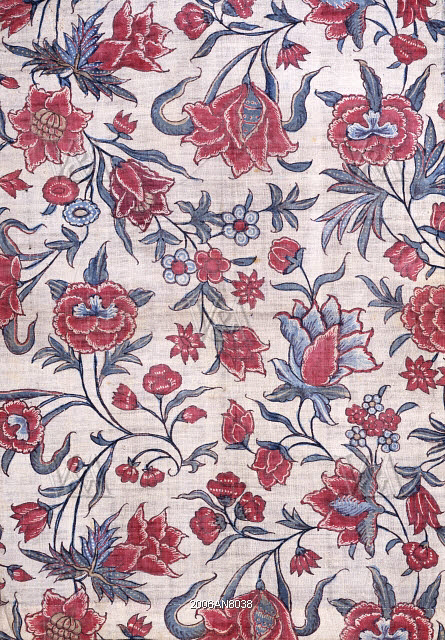
Early Indian Chintzes were hand painted which graduated to wood-block printing – a technique that spread to England but was eventually relaced by a printing technique in 1783 that used copper rollers invented by Thomas Bell. Production in Lancashire shot up from an estimated 50,000 pieces of 27 metres (30 yards) to 20,000,000 pieces in 1850!5
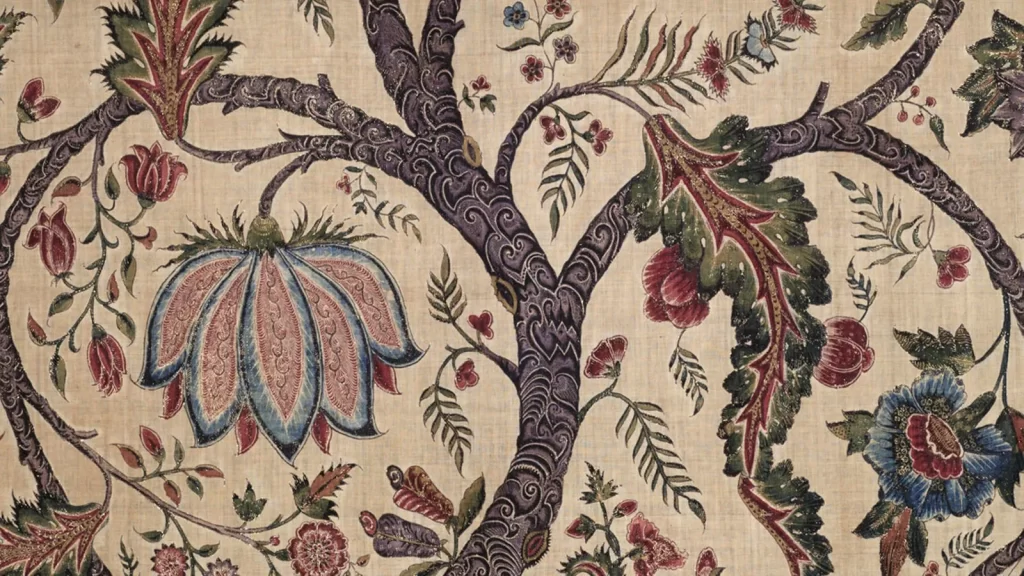
Chintz fabric is still popular today and is often associated with furnishing and curtain fabrics in which context it has given rise to the word “chintzy”, meaning fussily floral décor.

There are a great number of other “C” fabrics including:-
Camberwick – or Candlewick is made from a traditional weaving technique called candlewick. This technique involves using a soft, thick yarn that is woven into a loose, looped pattern to create a raised, textured surface. Typically used for bedspreads.
Camel Hair – specifically refers to the fur from the body of a camel, but more generally refers to the fibre (and cloth) that may be made from either pure camel hair or a blend of camel hair and another fibre. Camel hair coats were considered a status symbol…
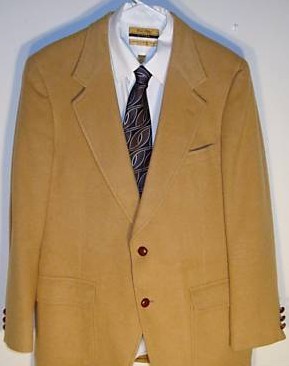
Camlet, Cannequin, Chine and Crash will be covered in H for Historic Fabrics
Canvas and Cheesecloth will be covered in W for Working Fabrics
Cavalry Twill, Clocqué, Cordura will be covered in M for Military Fabrics
Challis (Challie, Chally) – a soft and lightweight, woven fabric originally made from a silk/wool blend but can also be made from a single fibre, natural or synthetic.
Chambray and Cambric – Chambray, though the same type of fabric as Cambric, has a coloured warp and a white weft, though it may be “made from any colour as you may wish, in the warp, and also in the filling; only have them differ from each other.”6 Originally made from linen but later cotton too.
Change will be covered in O for Other fabrics
Charmeuse, Crepe Back Satin – Similar in nature, Charmeuse satin fabric is known for its lightweight, silky-smooth surface and high-gloss sheen. It feels incredibly soft against the skin, making it a popular choice for lingerie, slinky gowns, and blouses. The front side shines with a brilliant luster while the back is matte and slightly dull.
Crepe back satin is generally heavier than charmeuse. It offers better structure and slightly less fluid drape, making it easier to sew for tailored designs that need a bit of body without being stiff.
The name is given both to the fabric and the yarn fromwhich it is made – a fuzzy, soft pile yarn which gets its name from the French word Chenille meaning caterpillar refers to the furry look of the yarn.
Plain weave fabric. It can be made of any fibre and is a very soft, drapey and transparent fabric.
Twill fabric originally made from pure cotton. The most common items made from it, trousers, are widely called chinos. Today it is also found in cotton-synthetic blend
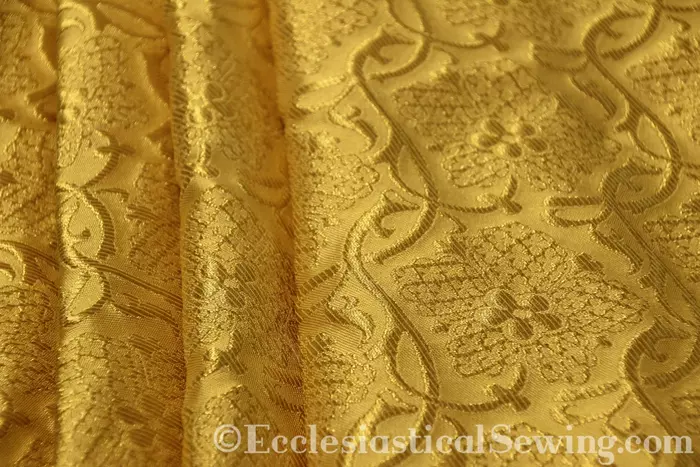
Cloth of gold or gold cloth (Latin: Tela aurea) is a fabric woven with a gold-wrapped or spun weft—referred to as “a spirally spun gold strip”. In most cases, the core yarn is silk, wrapped (filé) with a band or strip of high content gold. In rarer instances, fine linen and wool have been used as the core.
Whilst a Twill weave produces fine ridges, in Corduroy, a special loom introduces a weft pile that make ridges called wales thus creating a very strong and durable fabric. Many are the corduroy trousers I have worn until the pile ridges have worn away and still the underlying fabric is sustained… However, I shall speak more about corduroy under F, for Fustian.

A fabric with a crisp appearance and particularly associated with mourning clothes. It is woven of hard-spun yarn, originally silk “in the gum” (silk from which the sericin had not been removed).
The Wikipedia entry for Crêpe (textile), details an enormous number of variants of Crêpe whilst the Silk Society list of fabrics has this to say: a weave defined by its uneven surface, it is the twisted yarns that create the texture. It is usually made from fibres such as silk and wool and comes in many different weights.
Originally a strong, white fabric with a hempen warp and linen weft. The word is now applied to a strong, printed cotton cloth, which is stouter than chintz but used for very much the same purposes. It is usually unglazed and may be printed on both sides and even with different patterns.
Crochet and Tunisian Crochet I shall deal with these under K for Knitting and Crochet.
- David Christy’s – Cotton Is King (1855)
- https://en.wikipedia.org/wiki/History_of_cotton
- https://en.wikipedia.org/wiki/Cotton_gin
- “Cotton – a history”. New Internationalist. Vol. 399. 1 April 2007.
- Turnbull, A History of Calico Printing in Great Britain, 1951.
- Bronson, J. and R. (1977) [First published in 1817]. Early American Weaving and Dyeing: The Domestic Manufacturer’s Assistant and Family Directory in the Arts of Weaving and Dyeing. New York: Dover Publications. P 21.
I compiled a list of as fabrics, fibres and related items as possible (278 items), from several sources, the most comprehensive of which was Wikipedia. Since there are only 26 letters in the alphabet, I could not write in detail about every instance so I have taken snippets of text for the brief descriptions and linked to the source in the name of the item. I am indebted to all the contributors to those Wikipedia pages and the depth of knowledge to be found there…