27th July: Ten Things of Thankful

Things for which I give thanks this week…

1.- We have had some rain after days of strong sun or strong wind – which equally dry out the garden – even more critical when everything is in containers…

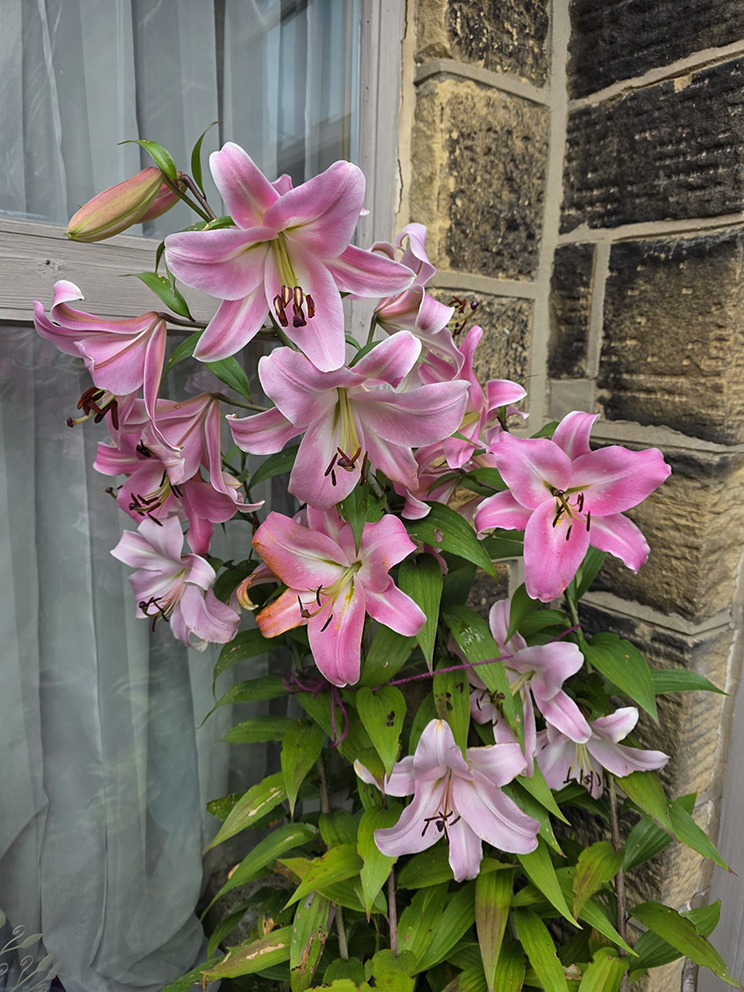
2.- The Stargazers are all open bar one and it is an annual marvel – especially for a flower that we more often see as a cut flower…
3.- I continue to be fascinated by this last Allium – by its slow development and by its morphology – it has now developed more pronounced florets on the underside whilst the to looks much the same as two weeks ago…
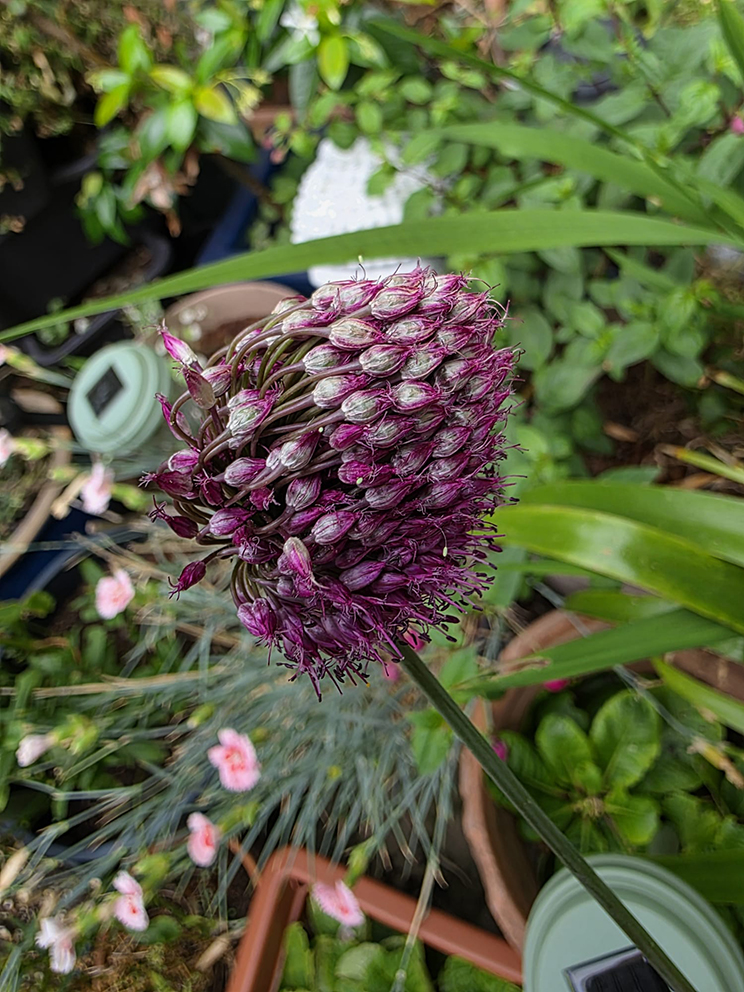
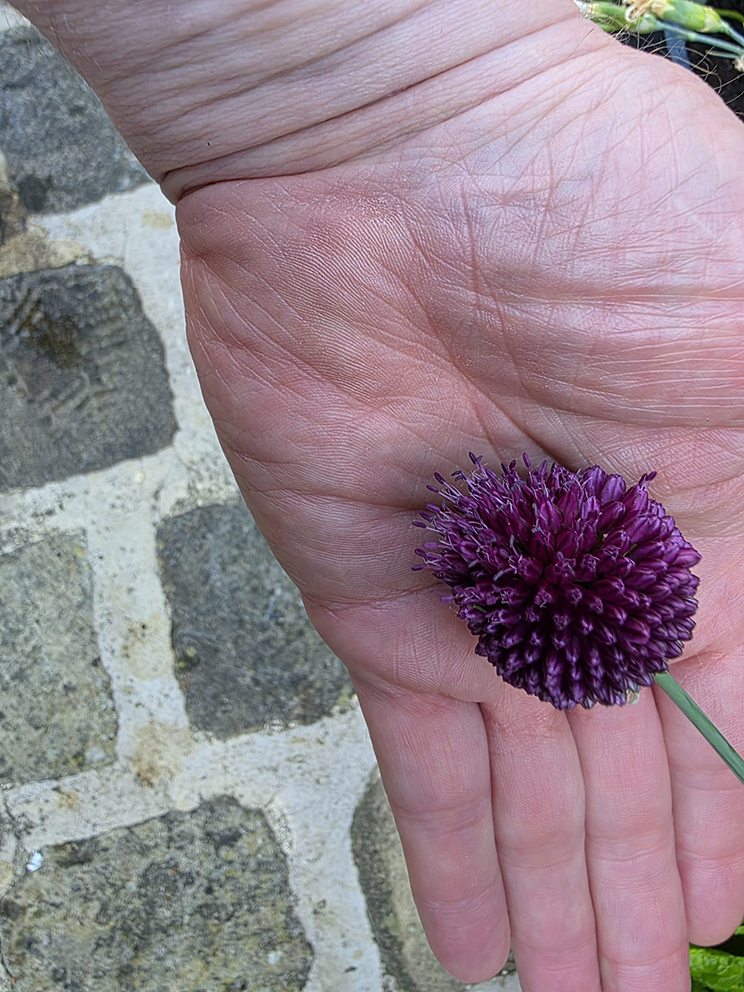
Two weeks ago

4.- I have, today, completed 32 out of 62 Poetry Postcards – the rest to be completed by the end of August…
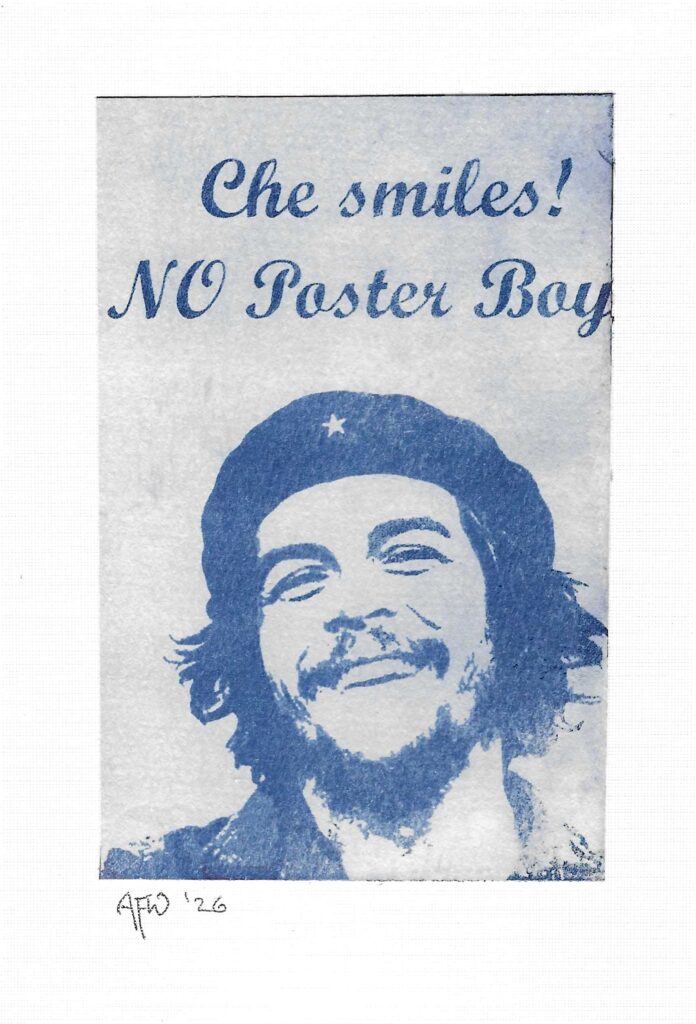
I cannot show you the poem that was on the back of this card yet, but it was about the fact that all the posters on the many student walls, of Che Guevara, show him looking very serious as befits a revolutionary – so this smiling picture would not, I think, make the grade…

5. I am in the middle of another Speculative Poetry Mini-book and it is taking some work for such a tiny thing – watch this space…

6.- I talked to my Writing Critique partner yesterday – he and his wife have arrived in Eureka California for a few months before moving to L.A. for a few years from their home in Minnesota. Their cabin in the woods, runs in the Redwoods, sound divine, with deer at the window and other wildlife. The other evening, whilst watching a police drama on TV, the characters were smoking marijuana and suddenly they could distinctly smell skunk. At first they thought someone was smoking whilst passing nearby, but on opening the front door, they found three skunks gambolling outside lol…

7.- Barbara is no better but no worse…

8.- When I speak to my sister in Nova Scotia, every other week, she likes to hear me read one of my poems, so I typed up this one, and since it won’t appear anywhere else on the blog in the foreseeable future, i thought you might enjoy it… It was written in my Writing Group (on holiday break at present) and the prompt was to include a line from a favourite song…

Cause the Trees Don’t Need To Know

Trees, it turns out
are no slouches
when it comes to communicating
co-opting networks of fungi
intertwined with their subterranean
roots to talk to their fellows
“Salmon season is nearly upon us
Gaia bless those little bears for
dragging their food deep into the woods.”
“Yes, bless them indeed
they don’t even know
what they do for us trees!”
“I’m being attacked by those damned
Leafcutter ants—anybody got
anything bitter to make my leaves
unpalatable to the little blighters –
most obliged, dear neighbours.”
“There’s a sapling here who’s struggling
– let’s feed him up a little so he can make it
till one of us old guys pegs it, and
he gets his shot at the light…”
Slow, thoughtful communications
as befits elder statesman
of the forest—unknowable, ineffable
but now the threats come too thick, too fast
drought, unseasonal snow,
floods and forest fires
there is little we can do now
too late to intervene so
let us whisper these perils quietly
when we walk in the woods
‘Cause the trees don’t need to know…

© Andrew Wilson, 2026

9.- The Inkspots…

10.- This supportive community…

Have a great week everybody and may you get whatever weather you need or desire…

You are invited to the Inlinkz link party!

Click here to enter

Friendship

What is the pot of truth to which we cleave?
Friendship is the balm that gets us through life
Soothes us when injured by all means of strife.

Whatever injury makes us now grieve
– For upsets and perils are always rife
What is the pot of truth to which we cleave?
Friendship is the balm that gets us through life

So turn to your friends and never you grieve
Be you troubled by husband, children, wife
True friends cut through troubles like a sharp knife
What is the pot of truth to which we cleave?
Friendship is the balm that gets us through life
Soothes us when injured by all means of strife.

© Andrew Wilson, 2025

Over at dVerse Poets Pub,  Laura Bloomsbury in Meeting the Bar: Critique and Craft invites us to write a Chaucerian Roundel with the following form:-

  • 13 lines
  • 3 stanzas divided into 3 lines (tercet); 4 lines (quatrain) 6 lines (sestet)
  • rhyme scheme: A B1 B2/a b A B1/a b b A B1 B2
  • usually 10 syllables per line as iambic pentameter

Postscript! – I wondered if there was a translator app. for Chaucerian (Middle) English and there is at https://openl.io/translate/middle-english
Here is Friendship translated…

What is the pot of soth to which we cleven?
Frendshipe is the baume that bringeth us thurgh lyf,
It soothen us whan we ben hurt by alle manere of stryf.

What so ever harm maketh us now to grieven
– For distresses and perils ben ever ryf,
What is the pot of soth to which we cleven?
Frendshipe is the baume that bringeth us thurgh lyf.

Therfore turn thee to thy frendes and never thee grieven,
Be thou troubled by husbonde, children, or wyf,
Trewe frendes sheren through wo as with sharp knyf.
What is the pot of soth to which we cleven?
Frendshipe is the baume that bringeth us thurgh lyf,
It soothen us whan we ben hurt by alle manere of stryf.

What if Chess were about Love?

What if Chess, instead of being a metaphorical game of war and strategy, were instead, the pursuit of love? Instead of trying to get with the King in order to kill him, moving to the same square by the opposite Queen – or King was the attainment of bliss. Queens may rush about the board whilst hubby is stuck at the office, out bringing home the bacon and should it prove that they swing the other way, then they may be cloaked in the invisibility that Queen Victoria’s disbelief in sapphic love affords them and the game may be quickly concluded if both parties are willing. Kings, on the other hand, are slow movers when it comes to finding lasting love, for all their possible willingness to philander and play the field, whether hetero- or homosexual, a lasting love is hard to find…

What of the other pieces on the Chessboard – who might they represent and how might they come into play? The pawns are clearly children – they are small and can only take correspondingly small steps – unless they reach the other side of the board, by which time they are suddenly all grown up and can be whoever they want to be! They may be the children of the King and Queen or perhaps nephews and nieces yet despite their diminutive stature they may have important roles in the game – how many friendships have begun over the heads of children at the school gate? Children’s parties, babysitting, children as go-betweens – many are the opportunities afforded by children to adults in the pursuit of love…

who is to say that a King or Queen cannot use their partner’s bestie to further their cause

Then there are the other adults divided, according to whose shoulder they stand at, King or Queen, into his or her friends and relations. Bishops are the moralists – always ready to jump in and pour cold water on one whose fires have been lit by lust for another but even they, with their decisive, diagonal strikes, can be manipulated into furthering their besties, nephew or nieces, son’ or daughter’s cause. Rooks are those stalwart friends whose loyalty can always be relied on, even if their movement is limited to left and right and who is to say that a King or Queen cannot use their partner’s bestie to further their cause – after all, they are on the same side, aren’t they? The Knight though, is the real best friend, for even though their moves are complicated, they offer great utility and are the ones to watch out for once sent forth to do the King or Queen’s bidding.

Whether you frame the game in terms of High School trysts ( a whole cast of friends, besties and teachers), singletons struggling to find The One, extramarital hanky-panky or the ongoing search for love and companionship in widowhood, Chess could be re-imagined as the Game of Love not War – you may never look at a Chess piece the same way ever again…

Some Grand Master games worth studying:-
Shakespeare – Romeo and Juliet, The Taming of the Shrew
Scott Fitzgerald – The Great Gatsby
Jane Austen – Pride and Prejudice
Boris Pasternak – Dr Zhivago
John Steinbeck – Of Mice and Men
Charlotte Bronte – Jane Eyre
Nicola Griffith – Ammonite