“Choose any subject you would like to write about…” that is the object of the A to Z Challenge, and thinking of things that interest me is not a problem for me, but choosing a subject not only to write about, but to write in a way that other people will catch my interest – that is the real challenge! This year I turn to a subject, close to our skin if not our hearts, and yet, again, I wonder if this subject will get some people past the title on the list – dismissed as niche? For this year, my theme is What We Wear – Fabrics and Fibres
Seeing as there are no “X” fabrics, I decided to give more space to wool – yarns in particular. Knitting is such a popular hobby and there are so many vendors offering helpful guides, I’m not sure I can add anything original, but hopefully some quirky fact will emerge…
Ply
If you look back to yesterday’ post on Wool – Origins, you will find the lovely picture of wools of some British breeds, spun in their natural colours and if you look closely, you can see that each yarn is comprised of more than one spun strand or “ply” which have been spun together. Back in the “A” post, I icluded a quote “that Stone Age tooolmakers grasped the significance of twisting, which increases strength by diverting part of any tensile strength into lateral pressure” and if you twist two ply or more, together, then the strength becomes even greater and the resistance to a garment being holed, likewise (except nobody told the moths that…). So wool yarns commonly come in Single, 2-Ply and 3-Ply and even up to 8-Ply.
Weight and Length
‘Weight’ in this case refers to the thickness, or gauge of a knitting yarn (otherwise known as ‘wraps per inch’). Typically, there are only a few ‘weights’ of yarn you will choose for most projects, but it is worth discovering all of your options. Different weights of yarn have different lengths, for example there will be a much longer length of finer yarn in a laceweight than in a 4ply yarn.
LACE WEIGHT
Great for lighter garments, usually shawls, lace weight is the finest yarn you can buy. It is usually knit on 2.00mm – 2.50mm needles or hooks.
4PLY
Great as an all round yarn, you can make anything from socks, hats and shawls to lightweight garments. It is usually knit on 2.50mm – 3.5mm needles or hooks.
SPORT WEIGHT
Originally an American weight, sport weight yarn sits somewhere between a 4ply and a double knit (in the UK we might call it 5ply) and depending on the fibres it can be a great all rounder yarn. It is usually knit on 3mm – 3.50mm needles or hooks.
DOUBLE KNITTING
This is probably one of the most commonly used yarn weights for garment knitting and is usually knit on 4mm needles or hooks. This yarn weight is also known as DK.
ARAN WEIGHT
We are getting into those heavier winter knits now with Aran weight yarns. These are usually worked on 5mm needles or hooks.
CHUNKY
Chunky (and superchunky) is a term of a weight of yarn thicker than Aran weight and can vary widely from yarn used on needle size 6mm and above, to finger knitting yarn.
It is generally used for accessories, purely because the length of yarn per skein would require a much bigger expense for larger garments.
From Knitting Yarn Guide: Types, Weights, and How to Choose the Right One
Wool or Yarn?
A yarn can be spun from any fibre from natural, like silk, cotton or wool, but wool refers only to a yarn spun from wool. Some people are irritated by wool (and some other natural fibres) and so must stick to synthetic or semi-synthetic yarns. I will look at non-wool Yarns under “Y”.

Terminology
Here are some useful terms you may encounter in wool descriptions from British Wool’s Wool Types and how they are used
Grease wool: Wool as it is shorn from the sheep, before any processing.
Staple: Refers to the length of a lock of shorn wool; in the wool trade “staple” refers to the longer length wools within a grade.
Staple length: The average length of fibre in a fleece measured from the skin to the tips of the individual fibres.
Crimp: The natural waviness of the wool fibre; it varies with the diameter of the fibre.
Micron: A measure of fineness used in the fibre industry. One micron is one millionth of a meter; when fibre is tested for fineness it is expressed in microns and usually is accompanied with “Standard deviation and co-efficient of variation” of micron.
Kemp: Brittle, chalky white, weak fibre found as an impurity in the fleece.
Lanolin: Wool grease; this substance, sometimes called “yolk” is a secretion from the sebaceous glands of the sheep skin.
Scouring: The actual separation of dirt, grease and foreign matter from grease wool; this is usually done in a lukewarm, mildly alkaline solution followed by a rinse.
Types of Wool
The list of links below is from Types of Wool Yarn: A Complete Guide for Crafters which is a commercial site but also a very good guide. Amongst the products they sell, are laundry Dryer Balls (They speed drying and help to conditiong clothes in the dryer), Felt Shoes, and Felt Rugs…
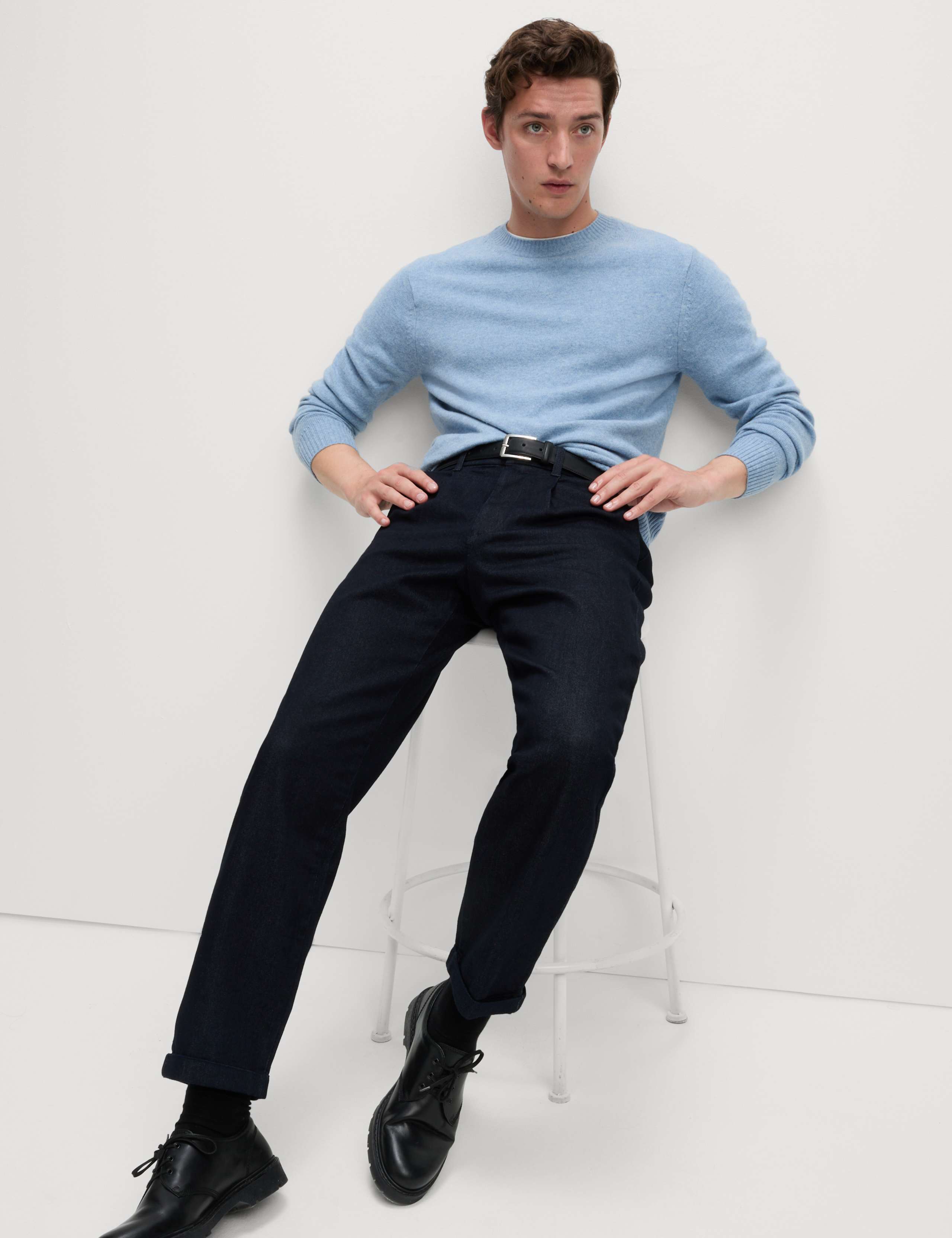
British Wool have this classification of wool types.
Fine wool, often associated with breeds like the Suffolk and Portland, these down-land sheep breed have generally short and springy staples. The diameter of the wool fibre very much influences the end use of the wool and, with a micron count of between 29 and 35, and therefore wool in this category can be used for many end products, including; fabric, tweed, bedding and knitwear.
Medium wool, from breeds such as the Romney, strikes a balance between softness and durability. Not quite as fine as down-land breeds, the micron count is usually between 31-35 and represent some of the most versatile wools in the British clip. Mostly white wools which will dye well, with some springiness. The finer qualities are suitable for apparel yarns for cloth and knitwear. The rest is selected for harder wearing tweeds and, sometimes, carpets.
Crossbred wool, such as that of the Mule and Masham, influenced by the sire, usually the Bluefaced Leicester. Because of this, this wool type has a huge variety depending on which parental traits are more prevalent in the fleece. The wool can be fairly fine, with a micron count of 29-35. With the fine qualities used in blends for knitwear and cloth. With the courser wool being used in carpets, underlay, insulation and packaging. This wool type currently represents approximately 25% of the the UK’s annual clip.
Lustre wool, these wools have a sheen which dye effectively. They are long-stapled, usually curly or crimped, and have a soft, almost ‘soapy’ handle. The variation in the thickness of the fibre is considerable with the Bluefaced Leicester the finest in the British clip, approximately 26 micron, while the Devon and Cornwall Longwool is coarser. Finer types are used in fine tailoring, knitwear and hand knitting yarn, coarser wool is generally used in upholstery and tweeds.
Hill wool, including Kerry Hill and Cheviot. Wool from native hill breeds varies from fine, fairly soft handling fleeces which are used in yarns, bedding and fabric, to a coarser, crisp fibre which has some resilience and ‘body’. It is usually within the 30-33 micron range. Kemp, brittle white fibre, that will not easily dye, occurs in some of the coarser wools. If not excessive, this can be used for effect in tweeds and carpets.
Mountain wool, typified by breeds like the Blackface and Swaledale. These sheep are native to the harsh environment and weather of the fells and mountains. Necessarily producing a bulky fleece of coarser quality, which protects the animals. Measuring 35 micron and above. This type of wool is particularly resilient, contains brittle white kemp and is very hard wearing. Mainly used in carpets, underlay, insulation and packaging.
Naturally coloured wool, like Jacob, Herdwick and Zwartbles, showcases a spectrum of hues from creamy whites to rich browns and blacks, adding depth and character to artisanal textiles and handcrafted goods. With a micron range of 30 – 35+, the thickness of the fibre can vary enormously, depending both on the breed and where it is farmed. Shetland is one of the finer, Herdwick, with considerable brittle, white kemp, is usually coarser. Finest qualities of these wools are used in cloth and hand knitting yarns. Coarser grades are used for carpets and insulation.
To find out more about how the different wool types are used in different products, why not purchase British Wool’s Sheep Breed and Wool book


Tension and Yarn Choice
Choosing the right yarn is not just a matter of the yarn, but also your personal knitting style – how tighly (Tension) do you knit. You should always knit a sample firrst to guage the tension, especially if you are working to a pattern – experienced knitters can vary the tension of their work to suit but they still need to mae a sample first…
So tomorrow I will continue with non-wool yarns…
I compiled a list of as many fabrics, fibres and related items as possible (278 items), from several sources, the most comprehensive of which was Wikipedia. Since there are only 26 letters in the alphabet, I could not write in detail about every instance so I have taken snippets of text for the brief descriptions and linked to the source in the name of the item. I am indebted to all the contributors to those Wikipedia pages and the depth of knowledge to be found there…