A to Z Challenge 2026 – Reflections Post

I started writing and preparing for my chosen subject of “Fabrics and Fibres We Wear” months in advance of the Theme Reveal, so by the time of the launch, i had done a lot of work and I also knew that I had bitten off more than I had ever done before for the A to Z!

The choice of subject came from my own curiosity about fabrics – especially those with strange names you only come across in historical novels and as well, I dabble in fibre crafts such as knitting and Tunisian crochet. In this respect, I more than satisfied my itch, uncovering all sorts of nuggets of knowledge that gratified me, but the question is, as always, will it hold the interest of readers of the A to Z? Well the pages received 300 views over the course of April, a good few regulars came, read and commented and showed as much delight as I did at the various topics – which is all that one can hope for! I expect that the posts may gather an organic growth of readers in the future as I feel it is quite the resource in the end – anyway, i shall keep an eye on the stats…

I didn’t finish all the posts ahead of time so there was a good week of pantsing it at the end and once that starts, there is no time to anything other than answer comments, so I did not achieve as much visiting as I would have liked but heigh ho – the posts are still there to be visited! Blogs I did manage to read and enjoy up to the point of pantsing, include The Multicoloured Diary, with her wonderful collection of Hungarian Folktales, Uniquely maladjusted but fun, where Jamie ran a scavenger/crossword hunt, Li gave us Artwork and Poetry Forms at The Versesmith, whilst Tamara of Part-time Working Hockey Mom transported us back to the 80’s! The A to Z would not be the same without Anne M Bray’s Pattern Recognition in which she celebrates the shoe designs of the Canadian firm Fluevog by first sketching one of the shoes and then turning it into a fabric repeat print. Another printmaker is Anne E.G. Nydam – a lino/rubber print maker who this year gave us extracts of her new self-illustrated book of reworked fairytales over at Black and White (Words and Pictures) and lastly Josna Rege of Tell Me Another.

In answer to the team’s questions

  • 1. I am in favour of the Theme Reveal – it gets the ball rolling…
  • 2. Its good to focus on the experience for a moment and review the other people who have contributed to your experience
  • 3. The graphics this year have been great as always!
  • 4. I did largely meet my goals but I am definitely going to choose something a little more modest next year so I can spend more time bloghopping…
  • 5. See above for favourites…
  • 6. I did have comments from co-hosts thank you
  • 7. Favourite comment:- “So much great information! It makes me want to return to sewing – Ronel at Ronel the Mythmaker” (My job is done!)
  • 8. Cai crossed over from my Ten Things of Thankful postings and visited regularly and obviously enjoyed the whole challenge even though she was not participating.
  • 9. I participate in Ten Things of Thankful
  • 10. I loved Zalka’s Hungarian folk tales and Anne E.G. Nydam’s reworked fairy tales.
  • 11. I will take part in A to Z 2027 but I will pick a less challenging subject (quantitatively!)
  • 12. I suggested my R for Recycling post as it has the greatest message in need of more publicity…
  • 13. I will be visiting a lot of posts I missed over the next year and perhaps the A to Z blog itself…

Good Luck and Good Blogging y’all, for another year!

27th May: Ten Things of Thankful

Things for which I give thanks this week…

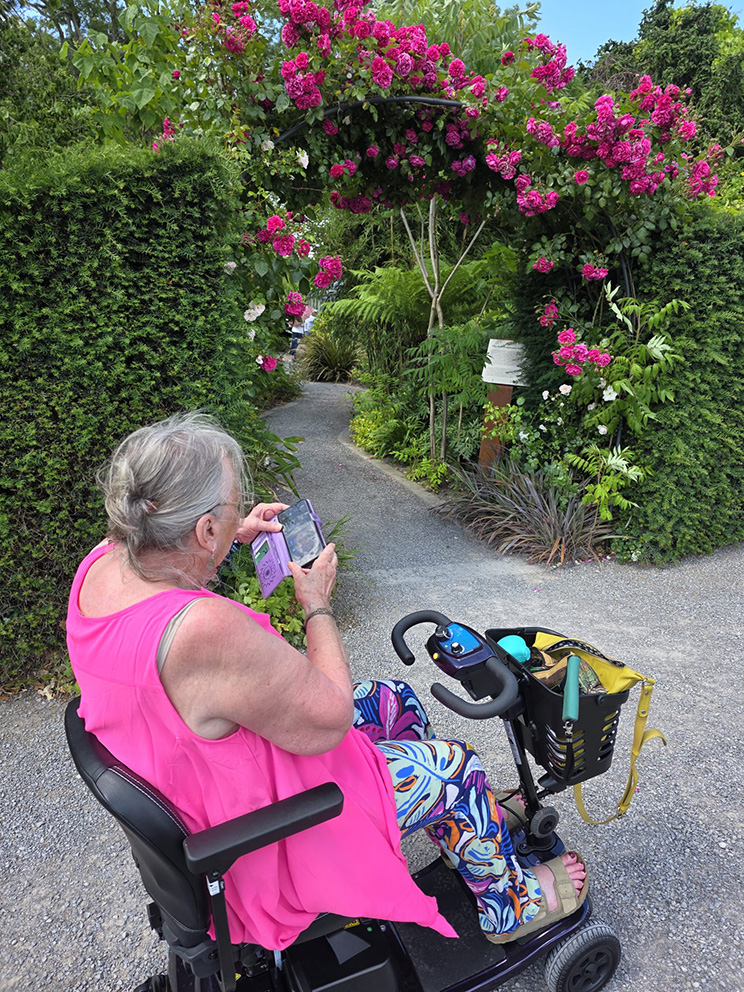
We managed to get out on two of my non-working days this last week! Barbara’s COPD caused us to buy a “boot-scooter” before our holiday in Holland as without it, she would be too breathless to go anywhere and we were determined to keep up the momentum of days out. So on Friday, we went to Knaresborough, about 45 minutes’ drive and I duly unloaded the scooter (it separates into a number of components without which it would take two people to lift it out) and we set off for the round of favourite spots. After the Crystal shop, we went to the square for a coffee (see below). all was well until we were ready to move on whereupon we simply could not find the ignition key to the scooter – searched high and low – gone – complete mystery! I had to push the scooter back to the car… Where’s the grat in that you may ask? Well, it turns out that for this make of scooter, all units have the same key, so I was able to purchase a new one the next day, from the local supplier. I said to Gavin – “Doesn’t that mean that anyone could take it easily?”, “Well,” he said, “the incidence of crime amongst the disability scooter community is very low -in the 20 years I have been dealing with them, I have known of only two thefts – one of our forecourt and one in which the purchaser of the stolen scooter came in to buy a charger and we were able to reunite the scooter with the owner!”

In Knaresborough with the scooter…

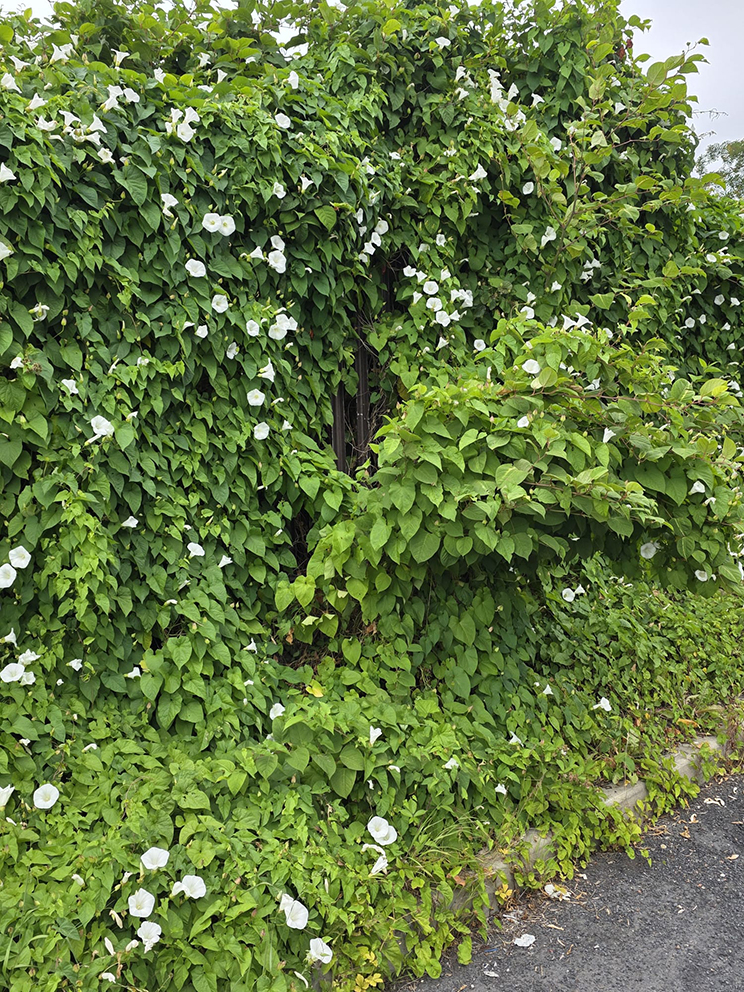
On my way to purchase the spare key, I drove the scenic route over the top as it was a lovely day and stopped to take this picture of our village, Silsden, more or less in its entirety… As you can see, we are in Buttercup season!

Then on Sunday, we went to Hebden Bridge, which I have shown you something of before, but there is always something new to notice there…

These bands bearing spheres slowly rotate on a vertical axis, rather like electrons in an atom so that the clock never looks quite the same…
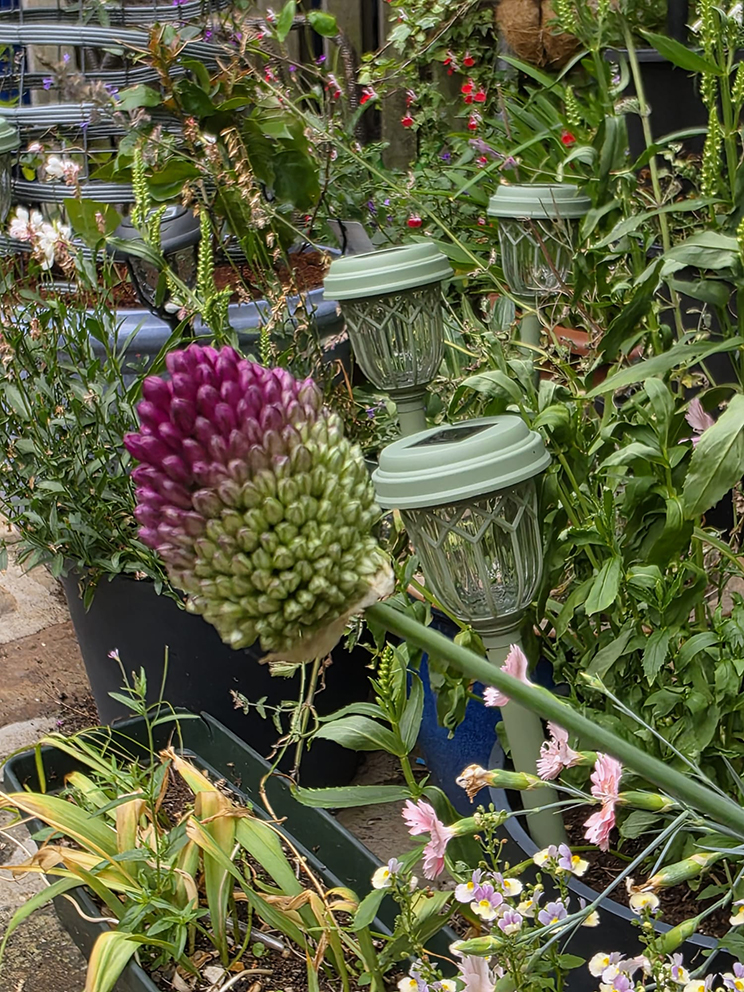
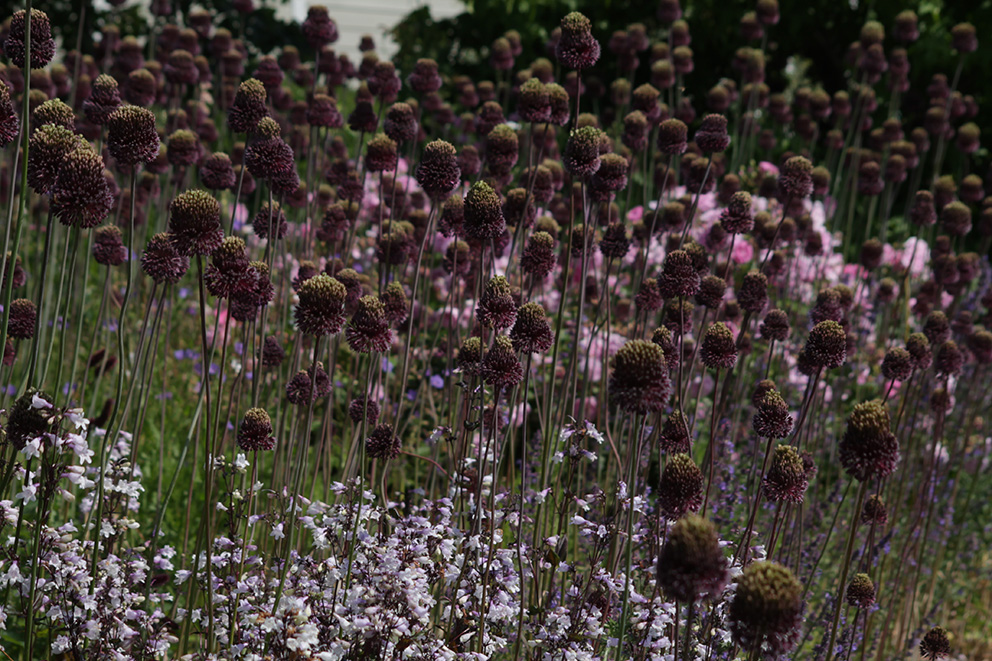
These Alliums are a favourite in municipal gardens and they look so good in a massed display at this time of year…

This lady is always in the square in Hebden Bridge – all weekend! She has advocated for the Palestinian cause for many years prior to the current genocide and given the current Labour government’s disgusting attempt to repress support for Palestinians in favour of the zionist occupiers, this lady risks arrest for waving the flag. Mind you, if the police tried to arrest her, they would instigate a flash-protest-mob and so probably know to leave well alone…

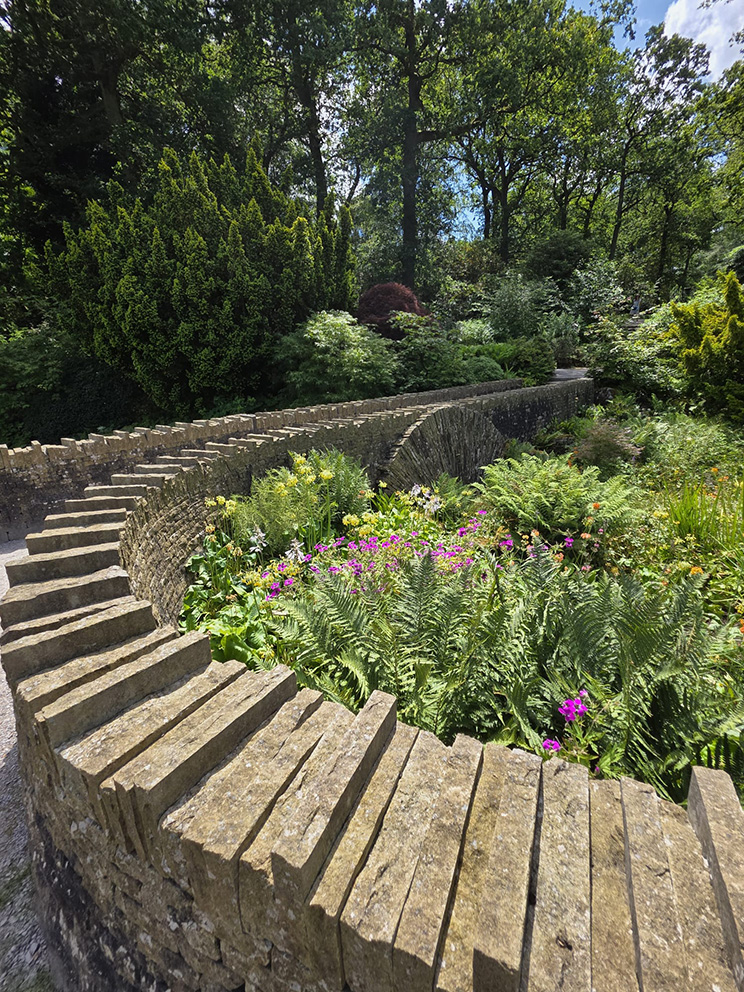
Hebden Bridge is nestled into a valley so steep that it is fit only for trees and you wouldn’t want to live there if you couldn’t master the steep streets…

Before the industrial revolution and the advent of large mills, weaving was a cottage industry and weavers’ workshops were on the first floors with long rows of windows to give the maximum light to work by. This one is now a café but you can see the rough-hewn stone work of the windows…

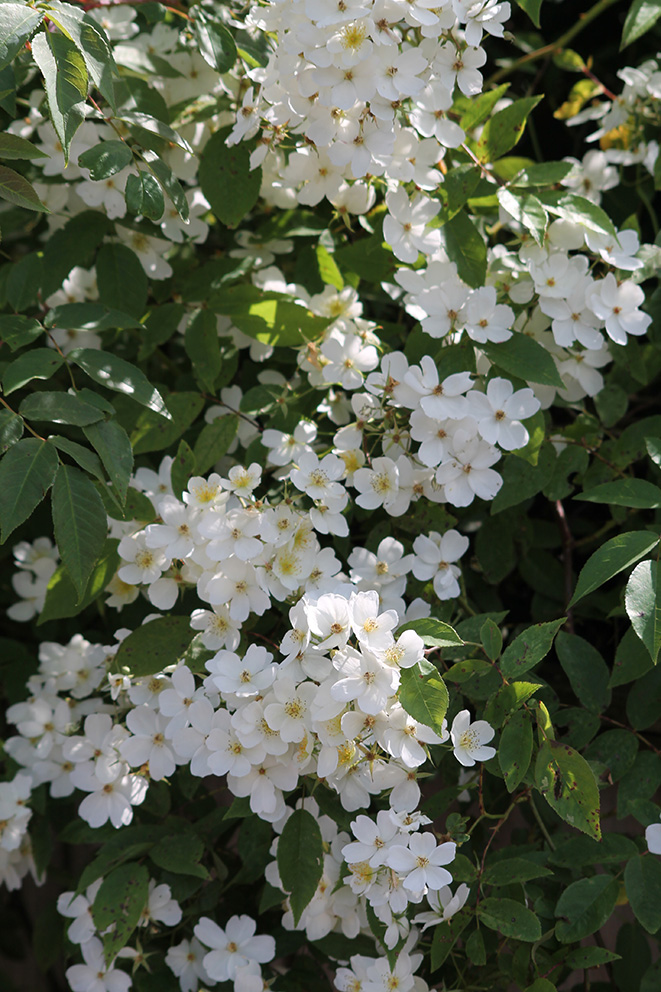
A magnificent climbing rose on the Hebden Bridge Arts Centre…

Lastly, we are having a heatwave and I took the redundant heating controller outside to record this temperature in the shade! The grat is that we don’t have a hosepipe ban as yet, this year…

I hope you are all having whatever weather it is that you need or desire and that you are all having your most gratifying week possible…

You are invited to the Inlinkz link party!

Click here to enter

15th May: Ten Things of Thankful

Things for which I give thanks this week…

It has been almost two weeks since my last gratitudes – for the first half of this week, I had a dreadful cold which kept me in bed for a couple of days – colds never used to be like this but I was knocked out, however I am recovering now and went to work yesterday morning.

I had to go into work early for a Teams meeting between my boss, an energy company and myself. My boss and his brother were in Guangzhou, China where, amongst other things, they were making a deal with a Chinese “whole house customising manufactuer” the multi-millionaire 82 year-old CEO of which was right beside my boss who not only introduced us, but showed us around the vast showroom of everything you could want to kit out a house or apartment fron cladding to furniture to accessories. We then began our meeting with a company which is nearly operational with a building-sized air pump heat exchanger which will supply district-heating all over Bradford, including, we hope, some of my bosses’ apartment developments. They will also take the cooling heat from a Data Centre which is being built next door and add it into the mix. I am glad to see that joined-up planning is finally coming of age…

Every year I am pleasantly surprised by the fruiting berries of the Winter Jasmine (remember I showed it in flower) – I always expect the flowers and always forget about the berries…

On the Saturday before going down with the cold, we drove south to Barbara’s ex’s 80th birthday party – a round trip of 8 hours motorway driving and saw some people we haven’t seen for many years. On the way back, I suggested we listen to an audio-book and chose John Steinbeck’s “Sweet Thursday”. It is a sequel to “Cannery Row” and like that book, paints a picture of the extraordinary warmth of community in the real suburb of Cannery Row, site of redundant canning plants after all the sardines were fished out during the war. (An early lesson in environmental abuse consequences) I don’t know how many of the characters are based on real people, but for sure, ‘Doc’ – the central character, was a real friend of Steinbeck’s with whom he later wrote “The Log from the Sea of Cortez”. The affectionate portrait of this marginal community is a tonic in these times of divisive politics and I urge anyone who is not familiar with them, to read these two books. I think many children may have been put off by having to study “Of Mice and Men”, and “The Grapes of Wrath” is a heavy book to read, even though there are many equally or more inequitable things happening in the world today, so it is that these two slim volumes of pure delight have been overlooked…

Two things I read in tabloid pop-psychology articles. Firstly, that women, when asked what they have read, will quote recent reads, whilst men will cite books they read as teenagers, even if they have continued to read novels since. I confess I worked my way through Steinbeck as a teenager… Secondly, research apparently suggested that (back in the days when young people read rather than watched screen dramas) everyone would have unconsciously picked a character on which they subsequently modelled themselves – intrigued, I searched my soul and eventually it clicked – it was ‘Doc’ from Cannery Row, for me! A man of science and phiolosophical questioning, at home talking with anyone from a hobo to a President, who everybody in his community loved and respected – whether I have fulfilled this role-model it is not for me to say… What about y’all – do you think you embody unconscious role models from your early reading?

I am glad that the tulips I planted in the Autumn have bloomed at different times and show such different forms…

And in the office, the three container gardens I took in are not only thriving (we don’t have enough windowsill space here at home) but in one of them, a succulent which I did not even know to be flowering has sent forth pretty little pink flowers…

The tequila bottle came from a plant setting from my late sister – it is genuine tequila and I created a suitable desert setting for it…

I am not sure how many grats there are here but that’s what I got for this week and have your best week everybody…

You are invited to the Inlinkz link party!

Click here to enter

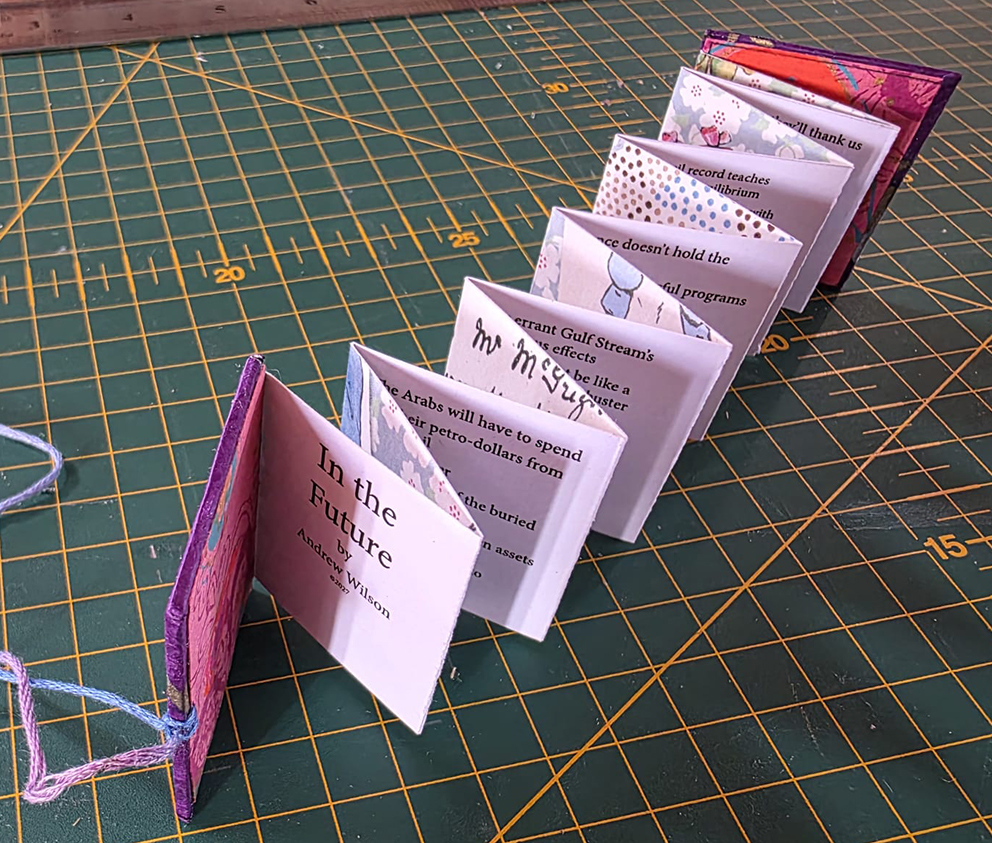
The Rousseau Exchange – a Collaborature project

Merril D. Smith – a dVerse Poets Pub aficionado and I have made a collaborative project over on Collaborature, run by another dVerse luminary and friend, Melissa Lemay!

Rousseau Exchange #1

by Merril D. Smith and Andrew Wilson

Dear Merril,

I confess I am quite envious of your recent visit to the Henri Rousseau Exhibition since I have never seen his work in the flesh and I suspect it is even more vibrant than the many reproductions suggest. I wonder if the painting The Representatives of Foreign Powers Coming to Greet the Republic as a Sign of Peace was one of the paintings you saw?

For a celebration symbolic of Peace
why are there so many military uniforms in evidence?

Why is the celebration of the Republic by citizens dancing
more convincing than Rousseau’s imaginary “photo-op”?

How did the delegates who only merited small flags
wave their Olive branches with greater vigour to compensate?

Did the French people, whose fields hosted the First World War
appreciate the true irony of this painting…?

Best – Andrew

Dear Andrew,

Thank you for your letter. I send you good wishes on
the autumn winds blowing here, but who knows what destruction
they will bring.

I did not see The Representatives of the Foreign Powers Coming to Salute the Republic as a Gesture of Peace at the exhibition.
Did you know Picasso once owned it? And that he threw a party for the artist,
nicknamed “douanier,” the customs officer—though he called Rousseau a joke.

Perhaps, it’s not irony, but innocence,
a painting painted before either world wars,

perhaps it’s optimism or hope. Mostly, I wonder
about the lion. Rousseau seemed very fond of lions.

I think about his earlier work, La Guerre painted in 1894,
with its avenging-revenging goddess, an otherworldly horse,
a nightmare scene of broken bodies and devouring crows,
no attempt to make it heroic, this is visceral, brutal–

yet when I look at it again,
the white torsos of the fallen men
seem almost angelic.

What do you think, Andrew?

Rousseau Exchange #2

by Merril D. Smith and Andrew Wilson

Dear Merril

Thank you for your good wishes, borne on the wind,
sooner or later, every breath of America wends Eastward
you may have to wait a little longer for mine to reach you West-about…

I agree that the lion is fascinating, not just because, it is suggested, it represents French power, and as such, looks remarkably docile; but also, the lion is very strange looking. Rousseau was considered a Naïve or Primitive artist, but that doesn’t mean he can’t draw well but he had never been outside France, his animals are taken from illustrations in children’s books, and tableaux of taxidermy wild animals.

why did Rousseau choose to make the figure of War female
why is the French word for war, La Guerre feminine

dressed in blinding, angelic white as she leaps from her jet black horse
brandishing a sword and Death’s scythe to alight on the field of the fallen

is it for modesty that the one fallen person on the battlefield
whose front we see is fully-dressed – all others naked…

even before the big guns of the First World War
cannons could lay waste to trees as well as people

Here is another Rousseau painting of a lion “The repast of the Lion” – this time its head is quite lion-like…

if artists only painted what they had seen with their own eyes
and writers wrote only what they had experienced
though passed by the sensitivity readers
would we survive the dullness of reading or looking…

if the jungle was so plentifully provident of bananas
would we have ever left the trees and evolved

did the lion get indigestion from wolfing down the crocodile headfirst
and how well hidden are the elephants in Rousseau’s hothouse jungle

What are your thoughts, Merril?

Dear Andrew,

Thank you once again for your letter and good wishes. With climate change, who knows when and where the winds might blow? Or where they might blow us.

As for war and lions—it’s impossible
to know what Rousseau was thinking.

Perhaps the lion was symbolic—
lying down with peace?

Perhaps it was merely fantasy
or exoticism.

War, “la guerre,” must be female,
I suppose. But this one is striking,
a savage, feral child.

Not that era’s ideal image of childhood
or womanhood, for that matter.
No sugar and spice there. Only blood.

Nightmarish.

A curator said Rousseau was a story-giver,
not a storyteller—the pieces there,
for us to weave together.

Perhaps it’s better then, not to wonder
what he intended, but simply
to see where the images take us.

Did you know his lawyer got him acquitted—
in a trial for passing bad checks—

he told the judge Rousseau was too naïve
to commit the crime, just look at this painting,
he said,
where an American Indian wrestles
with a gorilla.

Rousseau probably knew
what the lawyer was going to say,

maybe even wrapped that persona
around himself, wearing It proudly,
the naif, the self-taught genius,
he was extremely self-confident, it seems.

I can see how his work with its
dream-like quality

appealed to the surrealists,

But in fact, I’m still not certain
if I like it.

No, I take that back,
I like some of it,

I do have a fondness for dreams.

You mentioned the odd-looking lion,
but Andrew have you seen the children
Rousseau painted?

Look at the daughter in the carriage here—
how tiny she is! How large the father driving!
And the dogs.
I think Rousseau must have liked dogs.

There is a third and final post to come and I will append it here when it “drops”!

What’s in a name?

Afternoon Delight

A rose called Afternoon Delight
Recalls love, perhaps a person
But the good Baroness Rothschild
And her erstwhile husband, Baron
With roses, we commemorate
Their wealth and rank of State
With both hybrid and heritage
Bush Rose’s names and image
But who was the Beautiful Girl
Who Floribunda Betty Cuthbert
Perhaps a very Blushing Knockout
Or a Brilliant Pink Iceberg
Be we infamous or famous
Will a rose one day recall us

Baroness Rothschild

© Andrew Wilson, 2026

Beautiful Girl

Over at dVerse Poets Pub, merrildsmith in Poetics invites us to celebrate the names of roses, a long list of which you can find here (from which the photos are taken).

Betty Cuthbert

Blushing Knockout

Brilliant Pink Iceberg

3rd May: Ten Things of Thankful

Ten things for which I give thanks this week…

I am glad to have finally finished the A to Z 2026 Challenge at last, for whilst I enjoyed learning everything I hoped and more, and have had comments of similar enlightenment from readers, I did set myself a mighty task this year, and if I do it again, I will give myself someting simpler which will also allow me more time to keep up with other participants…

Normally, I shower, but on Sunday mornings, I have breakfast in the bath, with a book! I am grateful for having allowed myself this small decadence and I sometimes read non-fiction long-form which I otherwise have little space for, however, I have been reading Chimamanda Ngozi Adichie’s Half of a Yellow Sun and even if I manage 20 pages, at 433 pages in total, it has taken a long time. The title, is eventually revealed as the flag of the short-lived Biafran republic and the novel is, in the author’s own words, about Love and War. For who would want to read a novel purely about war without being fleshed out with real characters. I have been writing a similar novel in a desultory way for about the last 20 years. Similar in that the Rwandan genocide lies at the heart of the story and similar in that it concerns fictional characters caught up in a history which is ultimately the result of colonialism and equally awful post-colonialism. Writing and reading such books is hard, because the material is dark, however it is not all dark and there is a sub-plot (with a little humour) which is finished and can be read alone if anyone is interested… I hope that now the A to Z is over, I might return to the novel and nudge it toward completion…

Barbara and I have made an agreement to go out somewhere each weekend, use her boot scooter to get around and so far we have stuck to it…

Filey, last weekend…

The weather has been sunny all week, saving the rain for the Bank Holiday Weekend – still, it saves me watering the garden – since everything is in containers, that needs keeping an eye on all the time in Summer…

Finishing the A to Z has let me get back to writing poetry and the first offering at dVerse Poets Pub, was a Golden Shovel for which I chose a quotation from Dylan Thomas’ Under Milk Wood. This is my favourite piece of poetry (even if it was a radio play) and if you have never heard the Richard Burton original version you can find it here.

We had some awful news last weekend, Barbara’s niece went outside to find her husband dead having stuck hi head on a stone wall – at under fifty, the only gratitude is that it seems to have been instantaneous. His widow and two almost-grown-up children live in Geneva – a long way from the support of her sisters and parents… Our hearts go out to them…

The big early flowers – daffodils and most of the Tulips are gone over and this week has been about small flowers (and Dandelions)…

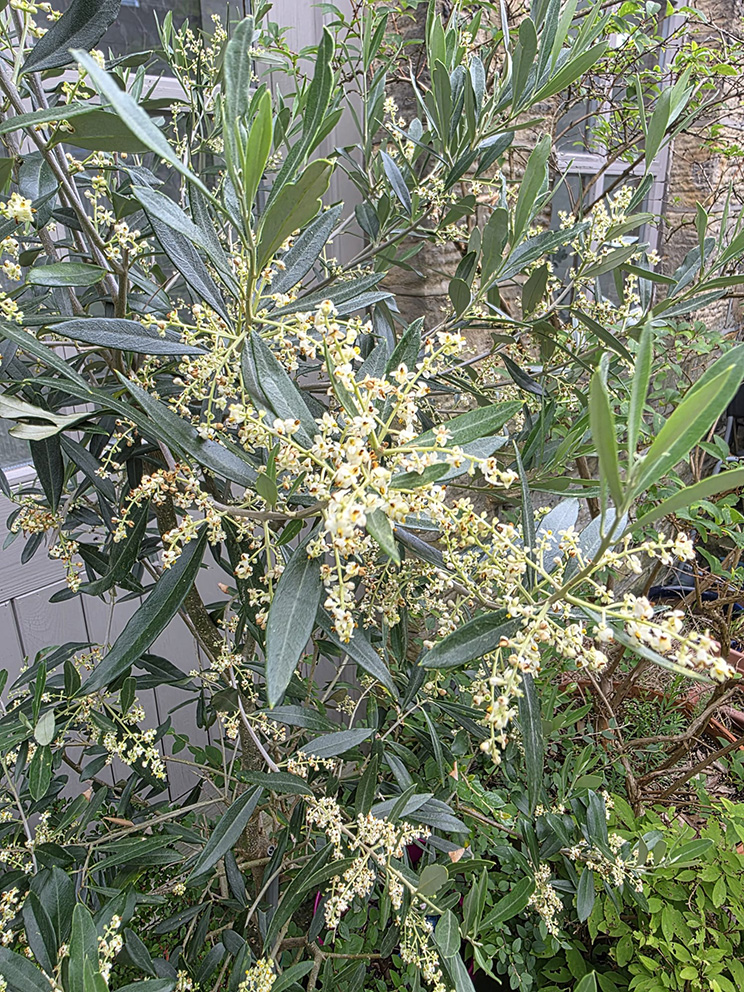
I found this shrub growing in a pot and brought it on – I have no idea what it is but enjoy its small white flower having their moment…
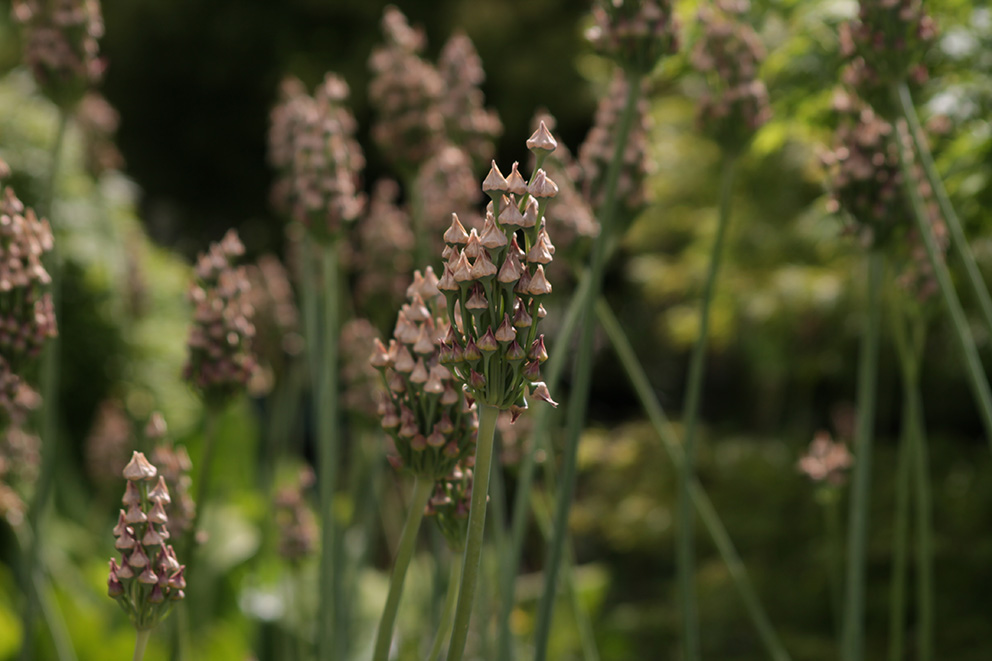
The first Alliums have flowered…
And here is the next one starting to open…
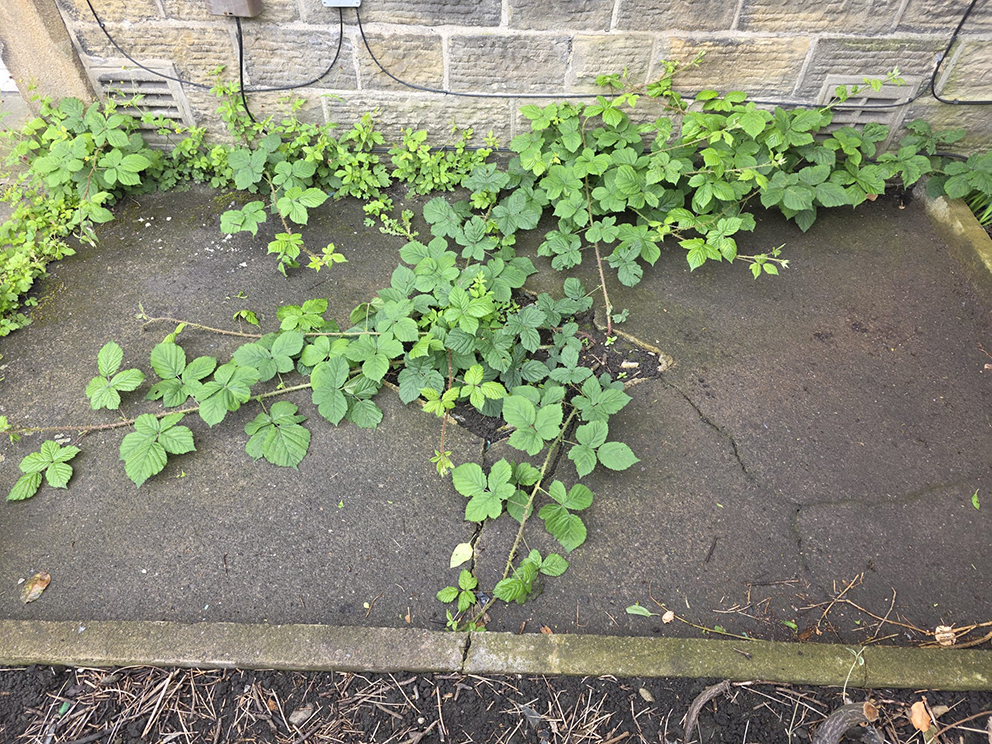
Future Blackberries…
The clematis Montana also coming into flower – they are smaller than this picture makes them look…

I saw an article about “Rebel Botanists”. Inspired by French botanist Sophie Leguil, they label wildflowers at the edge of pavements – I could o with that as I often wonder what the plants are called…

And in the lane, this little wildflower is enchanting…
This one too…

Wishing you all your very best week, wherever you are…

You are invited to the Inlinkz link party!

Click here to enter

Grown in Milk Wood

In retirement hush
the noise of the babies
whom in the long ago years are
soundly sleeping,
grown by the farmers,
brought up on shore by the fishers,
might become the tradesmen,
– themselves the future and
one day pensioners,
could apprentice to a cobbler,
learn to garden children as a schoolteacher,
tread the rounds of streets as a postman,
feed the masses as a restaurateur and
 pull pints as a publican,
evade as long as possible the undertaker
sire their own babies with a wife and
perhaps even tangle with the fancy woman,
lose their way as a drunkard,
stitch dreams as a dressmaker,
espouse piety as a preacher,
guard the peace as a policeman
vainly trying to contain the webfoot
raucously vibrant, cocklewomen
in glorious opposition and
contrast to the tidy wives…

© Andrew Wilson, 2026

After the second paragraph of Dylan Thomas’s Under Milk Wood – A Play for Voices, 1954.

Over at dVerse Poets Pub, Grace in FormForAllPoetry Forms, invites us to write a Golden Shovel in which you:
Choose a line from a poem that resonates with you.
*Build your poem so each line ends with a word from that line.
*Keep the words in order, forming the original line down the right margin.
*Let your poem move in its own direction.  Surprise us!
*Include attribution (after [poet])

Strictly speaking, the Golden Shovel should use just one word from the original poem at the end of each line, but since both the original text and the new poem are lists, it didn’t seem right to separate Thomas’s original adjectives in some instances, or have a surfeit of definite articles…

25th April: Ten Things of Thankful

Ten things for which I give thanks this week…

1 – We are having a run of good weather here in the UK, so yesterday, after collecting Barbara’s new glasses, we headed over to Hebden Bridge for the afternoon. Barbara needed to get on her boot-scooter again to prove to herself that it was not unique to the holiday in Holland…

The central square of Hebden Bridge showing the Bridge Mill – a watermill that dates back to 1314. In the foreground is a sculpture in the form of a giant weaver’s shuttle.

2 – A visit to Hebden Bridge is a chance to appreciate trees – this Copper Beech, its new leaves backlit by the sun, cried out to be photographed…

Another view out of the square showing the slopes to steep for fields, covered with trees and steep streets growing outwards around the town centre.

3 – Good weather means turning off the heating and putting the washing out on the line…

4 – Another of the tulips I bought and planted last Autumn – a double pink…

The first of the Dutch bulbs has flowered – on the small size this first year and I am not sure which one it is, not the fringed but it could be either the Parrot or the “Black”…

5 – And talking of black flowers, the Variegated Pittisporum is in flower with its strange, tiny black flowers…

6 – The end of the A to Z 2026 is in sight and it has been a marathon effort and I am grateful for the support of our very own Cai who has faithfully visited and commented throughout and although I can see the number of visitors who come but don’t comment, it makes a difference to know that a friend has read and appreciated… This is the latest https://how-would-you-know.com/a-to-z-challenge-2026-v-fabrics/ and just four more to go (and to get written by Monday evening).

7 – I had a day and a half of graphic design at work making a Powerpoint presentation for one of the bosses Moldovan Waterpark – we don’t have an inhouse graphic designer at present so it fell to me, which makes a change. The slide had to be in Romanian and repeated in English and Russian and I used AI to do the translation which with a few minor changes were approved by the bosses’ friends in Moldova.

7 – Also on the tech side, I learnt how to post the 278 item list in the form of an Excel table on my WordPress site as I have been promising to do… Still trying to figure out how to create a spreadsheet that will automatically send an email reminder to the relevant member of staff for tasks that need doing at work using “Power Automation”…

That’s all I have this week but I wish you all your best week with fair winds and blue skies (unless you are craving rain, of course)…

You are invited to the Inlinkz link party!

Click here to enter

A to Z Challenge 2026 – “V” Fabrics

“Choose any subject you would like to write about…” that is the object of the A to Z Challenge, and thinking of things that interest me is not a problem for me, but choosing a subject not only to write about, but to write in a way that other people will catch my interest – that is the real challenge! This year I turn to a subject, close to our skin if not our hearts, and yet, again, I wonder if this subject will get some people past the title on the list – dismissed as niche? For this year, my theme is What We Wear – Fabrics and Fibres

So we are getting to som e difficult letters V, X and Y – X I am going to steal to give Wool a whole post to itself, Y there was one fabric Youghal Lace but I lumped that in with Lace under “L” so for V I am just going to elaborate on the V fabrics and eschew a topic…

Velvet, Velveteen and Velour…

I have felt a bit nerdy making the deep dive into Fabrics and Fibres that this A to Z subject has turned out to be, but there are other bloggers who have made textiles the entire and permanent subject of their blogs and for Velvet, I discovered a video that answers everything I was going to write on the subject – Textile with Alberto is a YouTube channel of videos made by Alberto – an Italian textile technician, so, take it away, Alberto…

Honestly, the video left me nothing to say, but let me summarise: once made from silk, by a complex and labour-intensive weaving process, Velvet became more affordable once mechanical looms could do the job and also with the use of cheaper yarns ranging from cotton to synthetics. The essence of the process is that two layers of cloth are woven at the same time – linked by an extra warp (or in the case of Velveteen, weft) and then a knife cuts the linked threads and separates the two layers of velvet. Velvet is soft, shiny and will take all sorts of finishing, printing, polishing or creating areas where the pile is selectively dissolved away (devoré).
Velour is a velvety-looking fabric but is produced by knitting rather than weaving. Right there, we can see how velvet has become an adjective to describe luxuriance – try finding an ad for drinking chocolate that doesn’t use the word velvety…

This shows the way two layers of fabric (the grey threads) are linked by extra threads (the dark blue) which are then cut apart to create the pile on the two separated fabrics – Wikipedia
Eat your heart out Little Lord Fauntleroy! from Tissura’s guide to velvet fabrics.

Devoré – Thanks to my sister for pointing out this fabric. Devore velvet is a textile created using the devoré (burnout) technique, where a chemical paste selectively dissolves cellulose-based fibres in a mixed-fibre velvet, leaving behind a semi-transparent pattern against the remaining protein-based fibres such as silk. This process produces a visually striking contrast of sheer and opaque areas, giving the fabric a textured, elegant appearance. It is often made from blends like silk and viscose, which allow the chemical process to work effectively. (Wikipedia)

A dress from Shein UK showing patterned Devoré fabric – note how the fabric is transparent where the pile has been removed, necessitating an underslip.

Velour – Velour is a knitted fabric, which makes it stretchy (unlike velvet and velveteen, which are woven). Velour is soft, allows freedom of movement, and is used for activewear and loungewear.

Searching for an image to illustrate Velour, how could I resist this one, lol… A velour onezie!
Velours de Kasaï – Not to be confused with Velour in any way – Velours du Kasaï (Kasaï velvet) is a kind of textile fabric made in Kasai, a province in the Democratic Republic of the Congo (Zaïre). Traditionally, the weaving is done by men of the Shoowa from the Kuba ethnic group, while the embroidery is reserved to women. Ideally, the embroiderers should be pregnant. The technique is still practised. is formed of many triangles of bark, alternately black and white. These are cut out of the raw bark either natural, or dyed black and sewn together. 

Velvet Panné – a long and flattened pile velvet, creating a shiny and luxurious look.

Ventile – Ventile, is a registered trademark used to brand a special high-quality woven cotton fabric first developed by scientists at the Shirley Institute in Manchester, England. Originally created to overcome a shortage of flax used for fire hoses and water buckets, its properties were also useful for pilots’ immersion suits, but expensive and leaky if exposed to sweat or oils. Extra-long-staple (ELS) cotton fibres are used to form a low-twist yarn, which is then woven into a tight high-density textile to create a 100% cotton fabric, capable of providing an effective barrier against inclement weather. In wet weather the softly spun yarns – within the tight weave – dynamically expand to form an effective barrier against the elements. (Wikipedia)

Vinyl Coated Polyester – is made up of a polyester scrim, a bonding or adhesive agent, and an exterior PVC coating. The scrim supports the coating (which is initially applied in liquid form) and provides the tensile strength, elongation, tear strength, and dimensional stability of the resulting fabric. Depending on its formula, the PVC coating makes the material waterproof and resistant to dirt, mildew, oil, salt, chemicals and UV rays and gives the material added strength and durability. It can be sewn or heat sealed by way of RF(Radio Frequency) welding or hot-air welding. (Wikipedia)

Voile – a soft, sheer fabric, usually made of 99% cotton or cotton blended with linen or polyester. Named for its light weight, the fabric is mostly used in soft furnishing. In tropical climates, voile is used for window treatments and mosquito nets. When used as curtain material, voile is similar to net curtains.

I compiled a list of as many fabrics, fibres and related items as possible (278 items which I will make available at the end of the A to Z), from several sources, the most comprehensive of which was Wikipedia. Since there are only 26 letters in the alphabet, I could not write in detail about every instance so I have taken snippets of text for the brief descriptions and linked to the source in the name of the item. I am indebted to all the contributors to those Wikipedia pages and the depth of knowledge to be found there…

A to Z Challenge 2026 – Recycling and “R” Fabrics…

“Choose any subject you would like to write about…” that is the object of the A to Z Challenge, and thinking of things that interest me is not a problem for me, but choosing a subject not only to write about, but to write in a way that other people will catch my interest – that is the real challenge! This year I turn to a subject, close to our skin if not our hearts, and yet, again, I wonder if this subject will get some people past the title on the list – dismissed as niche? For this year, my theme is What We Wear – Fabrics and Fibres

We are all used to the concept of recycling items such as paper and cardboard, glass bottles, plastic packaging and more recently, supermarkets here in the UK have started accepting “soft plastics” carrier bags, polythene and acetate, but there is one area of waste which is really underutilised and that is textiles. I say underutilised because the point of recycling anything, is that you have substances that are already concentrated, refined and purified compared to the original source of those goods. Those materials may have originally come from another part of the world with all the trade and transport costs involved, and yet in recycling, that refined product can be turned back into a raw material right there in your own country.

The excellent video below tells the whole story, but let me summarise some of the main points first. In Europe alone, approximately 6 million tons of textile waste is produced and yet only 1% of that is recycled. Some comes from hospitals and hotels, things like sheets and curtains but 85% comes from consumers like you and me. Some more of the waste will be turned into insulation or rag but the small amount of recycling and the colossal amount that goes to landfill is a shocking waste of resources. Women’s clothes are often made with a short lifespan expectation driven by the needs of the fashion industry to persuade us to constantly buy and dress in the next new look and so many items of clothing are discarded after only a few wears – others like the T-shirt in the video, are worn many times and I have to say that I have some t-shirts handed down from my late father which I still wear regularly, not just for sentimental reasons, but because they were quality makes in the first place – I wrote about them in last year’s A to Z.

These two t-shirts belonged to my Dad and were bought on one of several trips to Australia made by my parents after all of us children had left home, and that makes them at least 35 years old – I wear them each, once a week or so in Winter…

The video below shows how the recycling process works, and key to it is the automatic sorting machines that can detect what sort of fabric an item is and literally blows them into the right bin. Next, any hard items like buttons or zips must be removed before the next stage. We will get to Synthetics and Semi-Synthetic fabrics in the next post, but suffice it to say that natural fabrics such as cotton and synthetics like acrylic, will go down separate recycling paths – cotton can be shredded and broken down into constituent fibres and incorporated into new yarns and made into new fabrics – pure cotton or blended with other fibres. Synthetics may be broken down by physical and chemical means before being respun into new fibres.

There are two things the video does not say, but I met a man in my nearby town who now runs a wool shop, or should I say a yarn shop, since not all the yarns are wool, but he used to make a living from recycling and he made these two points. On being made redundant in the ’80’s, he realised that he had seen a lot of waste material coming out of the textile mills in this area – cardboard, polythene but also, once he started his business – textile waste – offcuts, ends of rolls, damaged sections. He discovered there were companies who could recycle this waste and he made a good living doing it. Firstly, he pointed out, that by incorporating a proportion of recycled fibre into new yarns, manufacturers saved money on buying the raw material from abroad and they could either use the same material – cotton say – or they could use other fibres to create blends – remember blends from my “B” post? Blends that are not just about saving money by incorporating the recycled material, but improving the qualities of the material – making it stronger, more elastic, wear better – all depending on what the blend is – poly-cotton is a prime example. But ironically, and this is the second point the video doesn’t mention, it is more difficult to recycle blended fabrics rather than mono fabrics. There are new chemical processes that are coming into play but there is such a weight of waste material available to recycle that it is not essential to do do this yet.

The key point made at the end of the video, is that it is the sorting machines that are key to the process of recycling textiles and upscaling the recyling is what is needed to stop the colossal waste of material and money that goes to landfill at present. One illustration of the waste that needs addressing, especially now so many clothes are bought online, is that manufacturers, especially from different countries – and so much clothing is imported from elsewhere – are inconsistent with their sizing and so customers will buy two or three items at different sizes to ensure they get a fit, knowing they can pay a small price to return the unwanted items. Now the margins on comparatively cheap clothing are so small, that it may not pay the supplier to refold, rebag and resell the returned items and so they mostly go to landfill. Legislation and international standardisation are needed to reduce this criminal and unnecessary waste…
So good peeps, if you turn out clothes, send them to a charity/thrift shop – because if they cannot sell them, then they should be connected to a textile recycling centre – something you may have difficulty doing on your own – though if you are lucky, there may be a collection point near you – consult the internet…

Here are acouple more links if you want to know more about textile recycling…
https://londonrecycles.co.uk/recycling-101/what-happens-to-your-recycling/how-textiles-are-recycled/
https://www.shredstation.co.uk/blog/textile-recycling-in-the-uk/#:~:text=Textile%20recycling%20processes%20typically%20involve:%20%20Sorting,%20Linen%20%20Hemp%20%20Cellulose%20fibers

“R” Fabrics

Radzimir – a heavy, structured silk, sometimes found with a twill weave. It has a matte but lustrous finish and is similar in handle to a silk duchess or taffeta.

Raffia – fibre is made from the palm, it is a natural string that is woven into baskets, shoes and clothing

Rakematiz – this should have gone in the “historic” post but heigh ho – a thick silk fabric embroidered with strands of gold. It was extremely rare and valuable in earlier eras. Apparel that incorporated rakematiz was popular in Europe in the Middle Ages.

Raw Silk – Term used to describe silk that has a less-refined, raw look to it. Also called Dupion, Thai Silk or Matka.

Rayadillo – a blue-and-white striped cotton or flannel material that was used to make the military uniforms worn by Spanish colonial soldiers from the later 19th century until the early 20th century. In more recent times, rayadillo patterns have made a reappearance in the world of clothing and tailoring in general, and have been popularised in everyday garments, specially in trousers, also known as mil rayas.

Rep – a cloth woven in fine cords or ribs across the width of a piece, usually made of silk, wool, or cotton. The name is said to have been adapted from the French reps, a word of unknown origin; it has also been suggested that it is a corruption of rib. In silk it is used for dresses, neckties, and to some extent, for ecclesiastical vestments. In wool and cotton it is used for various upholstery purposes.

The weaving process behind repp fabric is what gives it its unique look and feel:

  • Warp-Rib Structure – The fabric is woven on a plain weave base, but with dominant warp threads that form the ribs.
  • Yarn Selection – Thicker and finer warp yarns are alternated, creating visible ridges across the fabric’s width.
  • Weft Role – The weft threads are finer and less visible, allowing the ribs to stand out clearly.

The result is a fabric with distinctive horizontal ribs, ranging from subtle to pronounced, depending on the yarns and finishing used.

Rinzu – another historic fabric –  a Japanese silk satin damask. It was the preferred fabric for kimono in the Edo period.

Russel Cord – a finely corded fabric, generally constructed with a cotton warp and worsted weft (filling). Two or more warp threads are woven together to form the cord, thus the cord lines run warp-wise.Russell cord is visually similar to a very narrow-waled corduroy called pincord, but it is heavier and more sturdy. It is usually woven using 40% cotton and 60% wool (or similar compositions depending on the weaver). It is mainly used in the making of high quality black academical dress, as well as clerical dress and legal dress in the United Kingdom. It is woven using thicker strands so is heavier than princetta.

I compiled a list of as many fabrics, fibres and related items as possible (278 items), from several sources, the most comprehensive of which was Wikipedia. Since there are only 26 letters in the alphabet, I could not write in detail about every instance so I have taken snippets of text for the brief descriptions and linked to the source in the name of the item. I am indebted to all the contributors to those Wikipedia pages and the depth of knowledge to be found there…