A to Z 2025 – Signwriting and Squidgy Things…

I confess I am not a great fan of autobiographies that begin at the beginning and follow a temporal path up to the present day – not that the person might not have some interesting stories, facts and opinions strung on their necklace, but it just doesn’t appeal as a structure. On the other hand, in my last, extra year at school in Oxford, retaking an A-level and adding a couple more, I was allowed out of school on my recognisance and saw a fascinating Exhibition at the Modern Art Gallery. The Artist had laid out and photographed every single possession of a single person – for example, all the cutlery was laid out in one shot, all the shoes in another. This more thematic approach appeals more and although I am not arranging the objects which I have chosen to tell my story in chronological order, I hope that my writing will be sufficiently interesting to keep your interest Dear Reader, and that on the journey from A to Z, you will assemble an impression of my life and who I am…

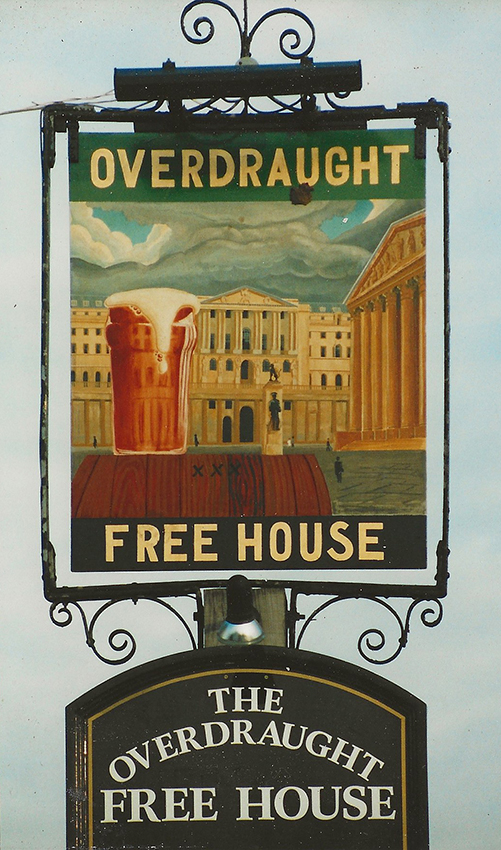
This sign remains one of my favourites from my pre-Ireland signwriting days. It was the first pub sign that I ever got to do because most pubs were tied to breweries who employed their own in-house signwriters. But in the year before I moved to Ireland, the government broke the monopoly of breweries and forced them to sell off some as “Free Houses”. “The Overdraught ” was a pun on the new owner’s means of financing his purchase so I followed suit by showing an overflowing pint of beer in front of the Bank of England! Pictorial pub signs hark back to the days when many people couldn’t read and relied on the pictures…
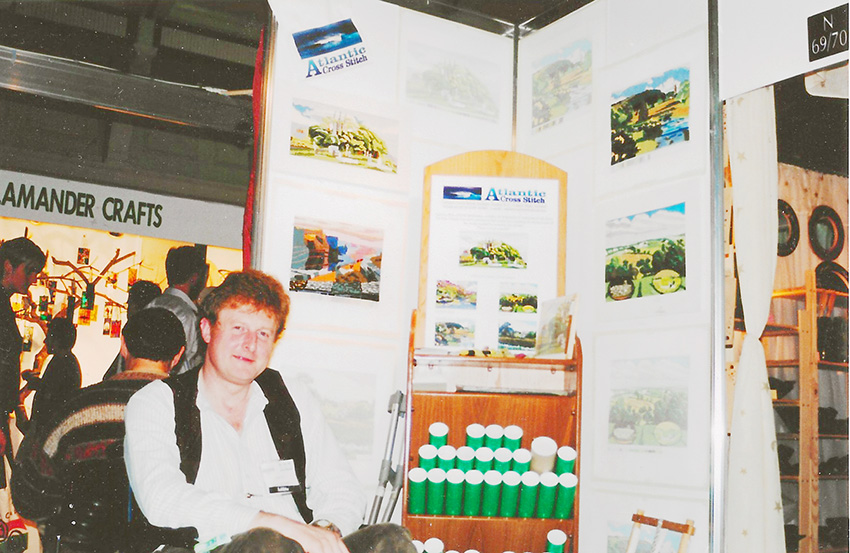
Signwriting was not a considered choice – the first piece of sign-like lettering I did was to paint my late sister Carol’s,name on a steamer trunk left over from our voyage to Australia in 1968. Carol was mad into all things canal, so I painted a shadow block lettering such as you see on English narrow-boats. Then I asked, on the spur of the moment, whether an antique shop opening just around the corner from me would like a sign – English readers may laugh when I tell them it was called Acorn Antiques (a comedy sketch in Victoria Wood’s iconic comedy show). A wholefood shop in Brixton followed and when I moved to St. Albans to live with Barbara, it became my living as a jobbing signwriter.

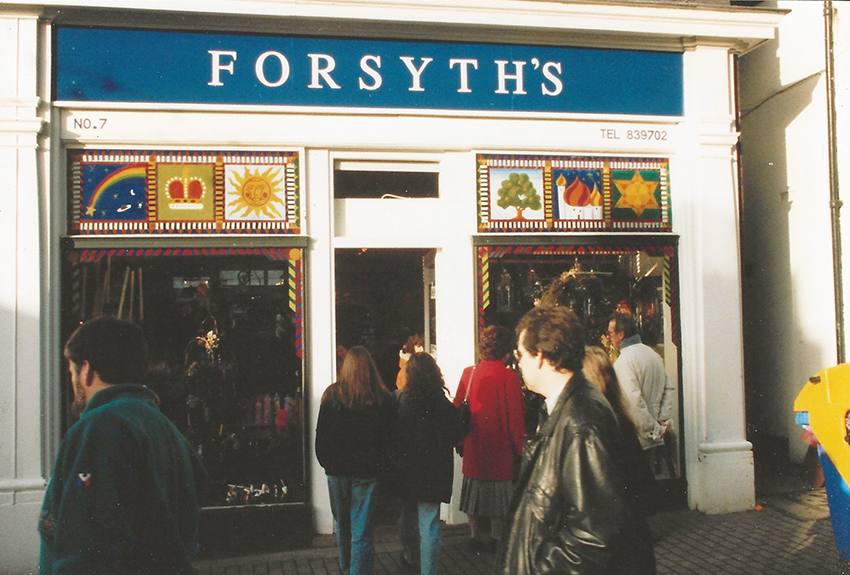
A St. Albans shop, if my memory serves me correctly, where I painted both the fascia board sign, and the window panels…

Signwriters or Signpainters can be separated from ordinary painters because they hold their long-bristled brushes perpendicular to their work. Halfway through their apprenticeships, they would divide into signwriters and poster writers – those indian ink on fluorescent paper, posters, typically seen outside churches back in the day… An old signwriter told me that when he was apprenticed, he spent a year before even touching a paying customer’s work. Each day they would practise writing letters on a gloss board, only to clean them off after the end of day’s inspection – he said they spent a whole month just practising “S’s”. Perhaps I was destined to become a signwriter for my only memory of a unique interaction with my Grandad (the one who was unable to become a teacher after WW1), was that he looked over some lines of “S’s” I was practising and said ” The halves should be equal top and bottom!” to which I replied, challengingly “No! You can have them differently if you want to!”

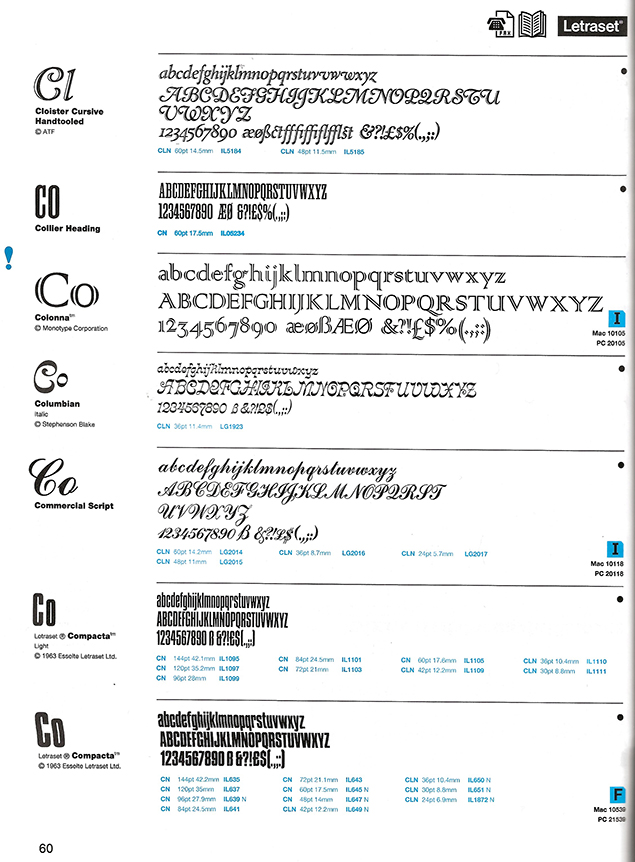
I became a signwriter at a crucial time for the profession, computer-cut vinyl and pespex lettering were on the rise and signwriters had been challenged by the rise too, of the graphic designer. When I worked at the Greater London Council as the office junior in the Graphic design section, if we wanted a fancy headline font, we could use Letraset. For those too young to remember Letraset, you took a sheet of lettering mounted/printed on the back of a sheet of plastic, placed the lettering where you wanted it on your artwork and then burnished the sheet, until, when lifted, the letter was left behind – transferred to the artwork. But here’s the rub – in the days of lead letterpress printing, the minimum spacing of letters was governed by the solid block of lead – you could increase the space (kerning) by inserting spacers but the minimum was a given. Now, with Letraset, and later, graphic programmes which anyone could use on a PC, you could, if you wanted, even overlap letters and Letraset blossomed into a myriad of exotic letters, many of which were a nightmare for signwriters to paint if instructed to by a client who had previously gone to a graphic designer for a “design”. Now signwriters, for the most part, used to have tree basic styles, Serif, Sans-serif and Script – everything else was just the use of different bolding, spacing and arranging of letters in straight lines, diagonal lines of even curved lines. Of course there was the fancy stuff you see at fairgrounds, on canal boats and on high end shops, but for the workaday sign, the options were limited for time and cost reasons, so these new demands on their skill were a nightmare which was only really resolved as computerised sign making took over from hand painting.

A page from a late Letraset Catalogue, 1995/96, far after the heyday in the 70’s when I started in graphic design but illustrating the diverse styles which signwriters wer now, routinely expected to use.

So signwriting meant drawing the sign out on a fullsize piece of paper, poincing (with a toothed wheel similar to that used by pattern-cutters in tailoring , but much finer) taping the design to the painted board (tricky on a shop fascia on a windy day) and then rubbing a bag (old sock) full of powder across the pounced letters so that when the paper was removed, the outline of the letters was left in faint dotted lines of powder. As yo used your brushes to paint the letters, the powder would disappear into the paint or be able to wiped off when the paint was dry. That same old signwriter said the only real difference in practice from his early days, was the use of masking tape – not the whit tape used by painters and decorators, but red, transparent “Litho Tape” a crossover from the print industry – it could make neat edges top and bottom or even follow a curved line. Previous to tape, signwriters had to rely on the squareness of their “Chisel” brushes to get neat corners. The oter, pointed type brush used by signwriters is known as a pencil.

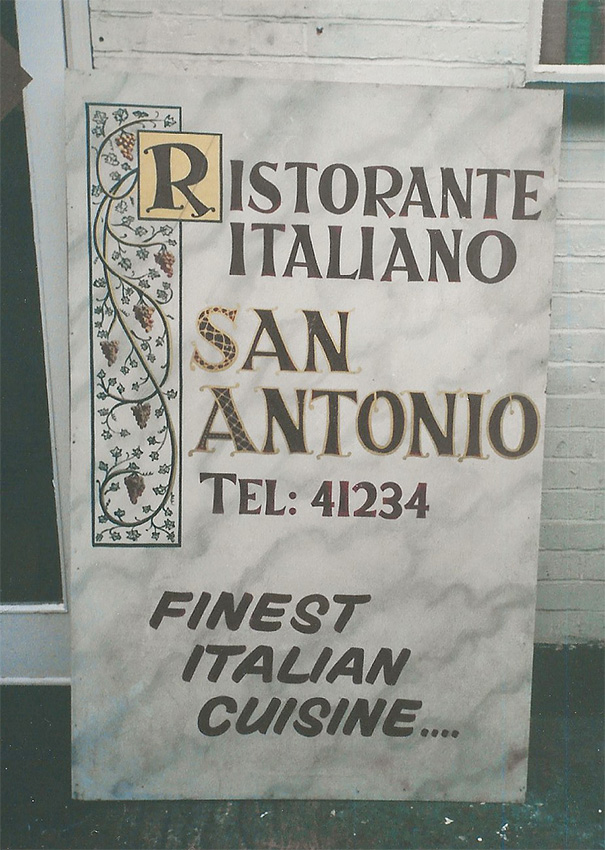
As well as shop fascia boards, pavement A-signboards are a staple for the jobbing signwriter. In this one, I had marbled the background before painting the lettering…
In the 80’s, there was a resurgence of “special paint effects” – woodgraining, marbling, sponging or as above, rag-rolling. These finishes had last come to prominence in the 1930’s when the advent of plywood panels in doors made it necessary to paint rather than varnish doors. For me, this meant a mission creep from signwriting to specialist decorating as in this Chinese Restaurant.
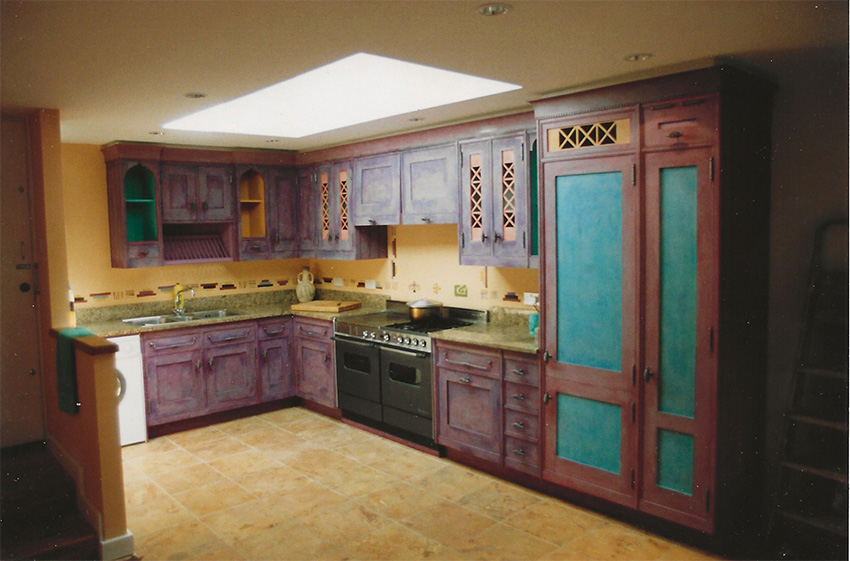
Smallbones, a famous fitted kitchen company in the ’80s, left it up to the clients to find a painter, and I enjoyed painting this one in a modernist listed building – a 1960’s house in North London (a detail, including stencilling, is shown below).
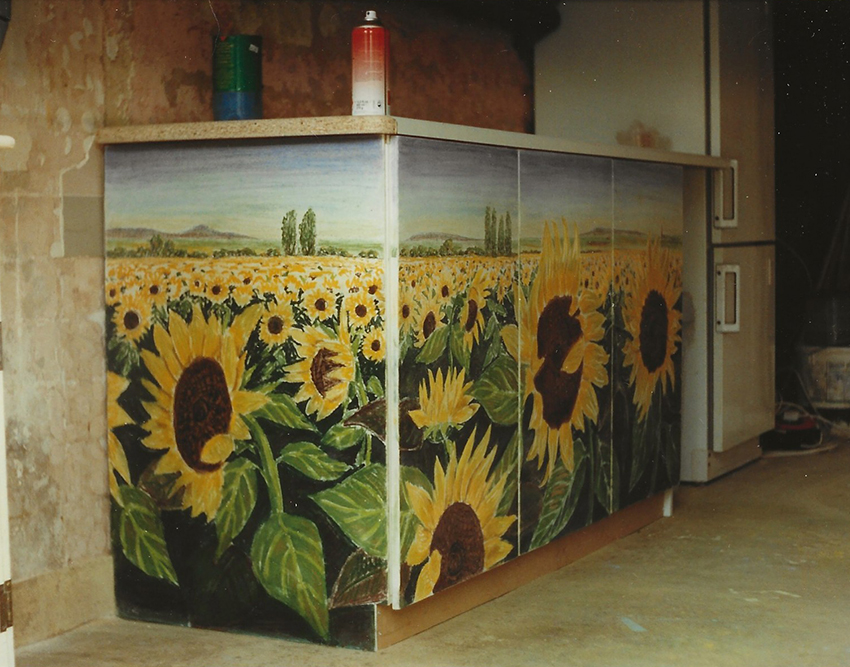
A kitchen I constructed from scratch – what can I say my daughter loved sunflowers…
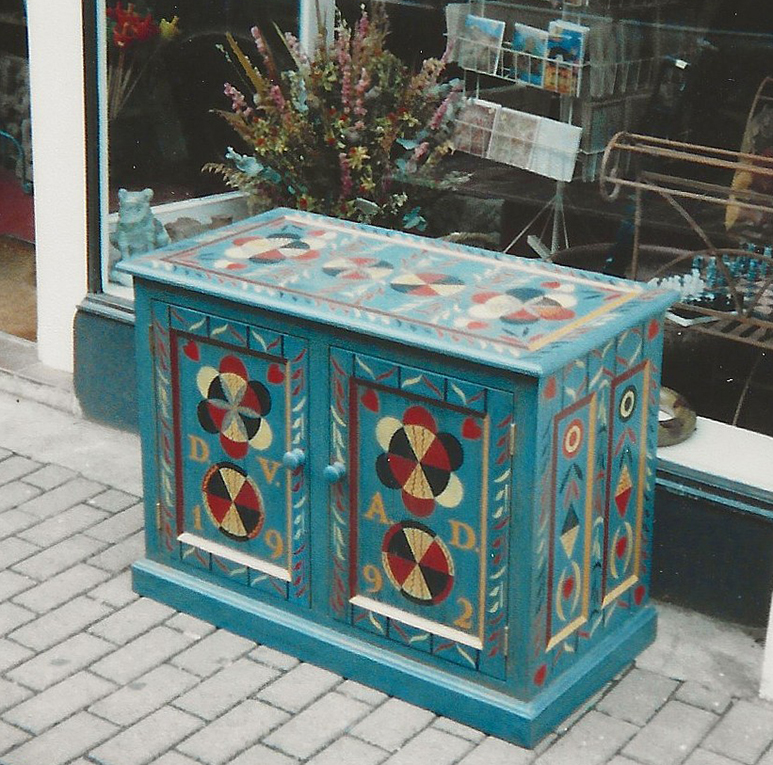
A stencilled piece of furniture intended to be the start of a collection bur which didn’t get realised and which we still have in our home today. Guess the date I painted this…
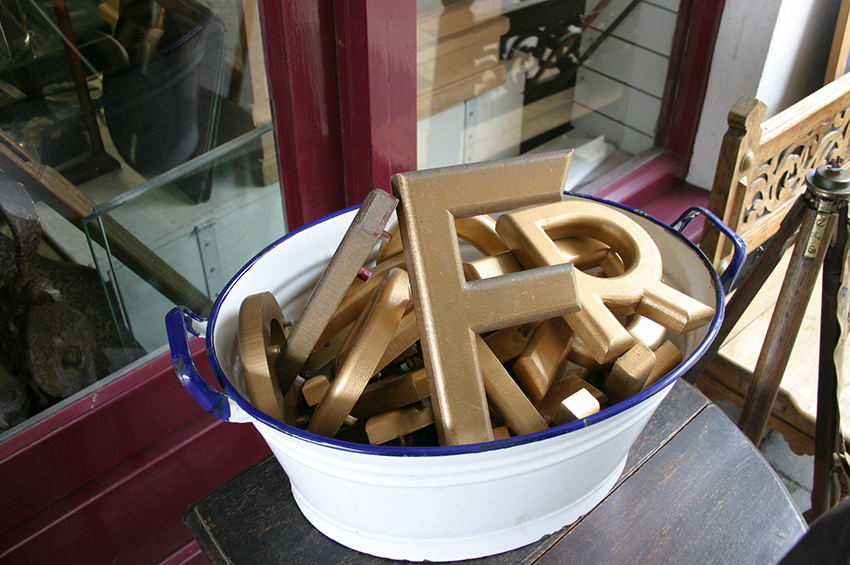
Like Letterpress wooden type before it, the fate of old 3-D sign lettering was to end up in antique shops…

Squidgy Things

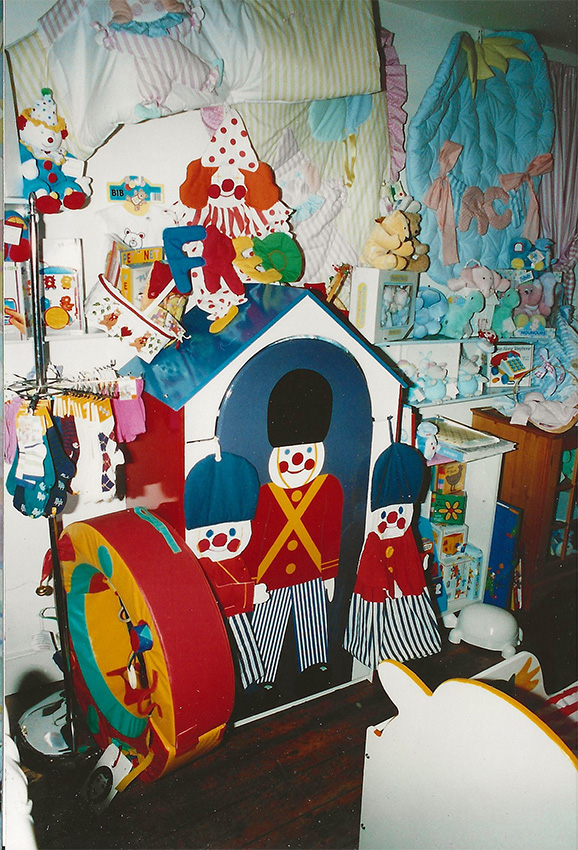
Eventually, I fell in with a lady called Anna Ryder-Richardson, a nursery, soft-furnishing maker who had a shop called Squidgy Things and for a year, I made furniture to compliment her soft-furnishings. Unfortumately, developing a business such as this requires finance and my own finances suffered and it eventually became part of the reason I ended up moving to Ireland, where I returned to amore steady diet of signwriting. I fond myself the only signwriter in Sligo who could work with gold-leaf which gave me an immediate advantage.

A Postman Pat children’s bed and below, a sentry bow wardrobe…

During the time I worked with Squidgy Things, we received an unexpected boost due to the scandalous revelation of intimate phone calls between Princess Diana and her lover which became known as the “Squidgy Tapes” – you couldn’t make it up… Shortly after I moved to Ireland, Anna Ryder-Richardson herself, made a move into TV where she had a programme known as “House Invaders” in which she did house makeovers often using paints and fabrics that the owners already possessed…

P.S. I was originally going to include Spreadsheets in this post but I mentioned them elsewhere, so although I removed it from the tentative title, WordPress has incorporated it into the link – apologies to any spreadsheet fans…

A to Z 2025 – Qualifications

I confess I am not a great fan of autobiographies that begin at the beginning and follow a temporal path up to the present day – not that the person might not have some interesting stories, facts and opinions strung on their necklace, but it just doesn’t appeal as a structure. On the other hand, in my last, extra year at school in Oxford, retaking an A-level and adding a couple more, I was allowed out of school on my recognisance and saw a fascinating Exhibition at the Modern Art Gallery. The Artist had laid out and photographed every single possession of a single person – for example, all the cutlery was laid out in one shot, all the shoes in another. This more thematic approach appeals more and although I am not arranging the objects which I have chosen to tell my story in chronological order, I hope that my writing will be sufficiently interesting to keep your interest Dear Reader, and that on the journey from A to Z, you will assemble an impression of my life and who I am…

Qualifications

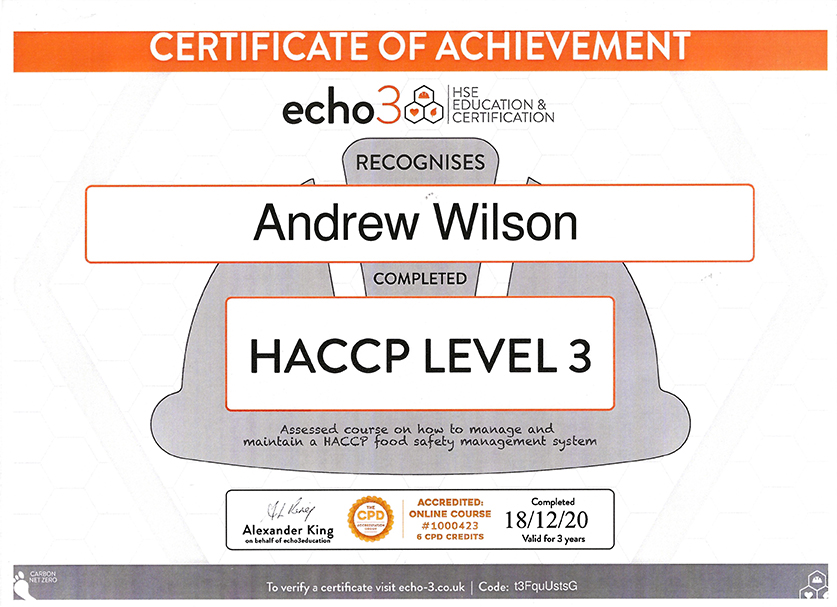
There are qualifications that are requirements for certain jobs and part of my part-time job is as HACCP Officer for the company – HACCP is Hazard Analysis and Critical Control Points, a food safety management system. My initial HACCP study for our company ran to some 35,000 words – mostly written during lockdown on Crete for six months…

A great deal of emphasis is placed on Qualifications – usually obtained by taking an exam of some kind, but certainly in Britain, the push, at a certain time in the past, to get students to University, may be seen, cynical as it may be, to have postponed the entrance of people into the ranks of the unemployed and as a result, many students took courses of dubious value in getting a job and in any case, at the present time, even a “useful” degree is no guarantee of employment. Of course obtaining a qualification at university or even at a lower college, is not just about getting the qualification but getting an “education” which is different thing altogether! Education does not come from the academic facts that can be subject to examination, it is often invisible, perhaps even to the person who has received it – maybe apparent only after some subsequent life experiences. It was this principle that led the universities of Oxford, Cambridge and Dublin to promote a BA to an MA upon application after three or four years out in the world following graduation. Whilst many employers might discount the value of such a qualification, it reflects that academic work is enhanced by being subject to a period of application in the real world.

This idea was only one of those I imbibed from my father (a senior Lecturer in Mechanical Engineering at Oxford see here) – often whilst he washed up and I dried up! Another of his ideas led me to choose a strange (in my school’s view) selection of A-Levels – I studied Geography, Physics, and English and although the school allowed this, under protest, I had to take an additional Maths qualification. It was of course, tricky doing a single science subject instead of the usual Physics, Chemistry and Biology, but as a result of my father’s thinking, I did not want to be pigeon-holed as either an Arts or Science type. I did pass all three A-Levels albeit with too low a grade in Geography to obtain the place I wanted to read Geography at university. Even that choice of Geography was because I saw it as a sort of modern equivalent to “the Classics” – but with greater relevance, encompassing the real world, physical, economic and social. So I stayed on at school for another year, to retake Geography but I also added Art and Geology A-Levels and completed them in the year. Most of my cohort had left and I only had 11 hours of timetable lessons – hence my freedom to roam to Oxford’s many museums and art galleries, or even go sketching. Physics gave me enough grounding in science to be able to comprehend the world of science, English gave me a love of poetry in particular, (see my Murals on the “M” post where I put my knowledge of WB Yeats to use!), I still consider my view of the world to be that of a geographer (and geologist) and as I have described in my “A” post, I am something of an artist.

If asked whether I would like to live at any other time in history, I would say perhaps somewhere between the 17th and 19th centuries – providing I could be an aristocratic polymath such as Sir Joseph Banks. There was so much to be discovered about the world and polymaths were free to make links (and advances) between many branches of science – astronomy, zoology, chemistry and biology – so exciting. I still believe that schools and universities force students to specialise too early and that we should perhaps have Departments of Poltmathmatics designed to foster connection between different disciplines.

I have never once been asked to provide my qualifications in the form of exam certificates, wich is partly because I have rarely applied for the sort of jobs where that might be required but also because employers are mostly inclined to take your CV at face value My current employers didn’t even ask to see my CV but took my having set up and run a Frozen Yoghurt Shop on my own, as evidence enough that I was suitable for the job. I continue to take the odd test to prove I have studied something, like the certificate at the top of the page but I also find, ever more as time goes on, that the things in which I excel are the result of the accretion of life experience rather than academic study. I find myself fluent on the computer, writing, spreadsheets, presentation, graphic work, and drafting skills, with hardly any formal study (although I did once do an Advanced European Computer Driving Licence lol) but rather continuous learning across many jobs. I like to say that I have forgotten more jobs than many people have had – that I was an early adopter of the idea that we will all have to retrain every five or so years for new job opportunities. Has there been a downside? Well, I haven’t made a lot of money, but I have got by, I don’t have much of a pension, but I get by although I csn’t see myself fully retiring anytime soon, however, I have, with very few exceptions, had enormous enjoyment and job satisfaction! I am happy, on the whole, to still keep a foot in the working world, to apply my skills to new challenges and to meet new people through work…

A to Z 2025 Challenge, Dad, Draughtsman/Designer

I confess I am not a great fan of autobiographies that begin at the beginning and follow a temporal path up to the present day – not that the person might not have some interesting stories, facts and opinions strung on their necklace. It just doesn’t appeal as a structure. On the other hand, in my last, extra year at school in Oxford, retaking an A-level and adding a couple more, I was allowed out of school on my recognisance and saw a fascinating Exhibition at the Modern Art Gallery. The Artist had laid out and photographed every single possession of a single person – for example, all the cutlery was laid out in one shot, all the shoes in another. This more thematic approach appeals more and although I am not arranging the objects which I have chosen to tell my story in chronological order, I hope that my writing will be sufficiently interesting to keep your interest Dear Reader, and that on the journey from A to Z, you will assemble an impression of my life and who I am…

Dad

In the ever-ongoing debate over Nature v. Nurture, at least with Nature we can now examine DNA to see what assortment of benefits and disbenefits we have inherited from our parents – trying to assess what our legacy is from parental Nurture is more difficult, often abstract and can take years to become apparent either to ourselves or to others but if there is a single physical artefact that points to what I received from my father, it could well be this scale ruler.

My dad was a lecturer in Mechanical Engineering at the University of Oxford, what some people would call “an Academic” but as he was wont to point out – to most of the world, the word “academic” means irrelevant and he tried always to be relevant. Eschewing the flashy temptations of much new technology, my father, Stuart Swinford Wilson, moved increasingly towards Intermediate or Appropriate Technology which is based on the idea that if you give a tractor to a village in the developing world, you may put half the village out of work but if you give them an improved spade, say, the village will flourish. Of course a spade is hard to improve on, though when I lived in Ireland for ten years, I learned that the long-handled, lozenge-shaped shovel in use there, is far superior to the short-handled, square shovel used in England. Further back in time, Brunel, on being asked to introduce his railways to France, discovered that labourers still used wooden shovels which were so hard to use that Brunel promptly brought in his army os Irish “navvies” to show them how it should be d0ne…

Back to the Scale Ruler – although the 1:1 scale on it is in millimetres, all the other scales – 1:100, 1:20, 1:200 etc. are used by Designers, Architects and Map-makers to measure things on drawings at different scales. Influenced by my father’s work, I took the option of Technical Drawing at school and once I attained sufficient skill, my father invited me to produce illustrations for his various projects and in doing so, switched on my designer “gene” (not to be confused with “designer jeans”!).

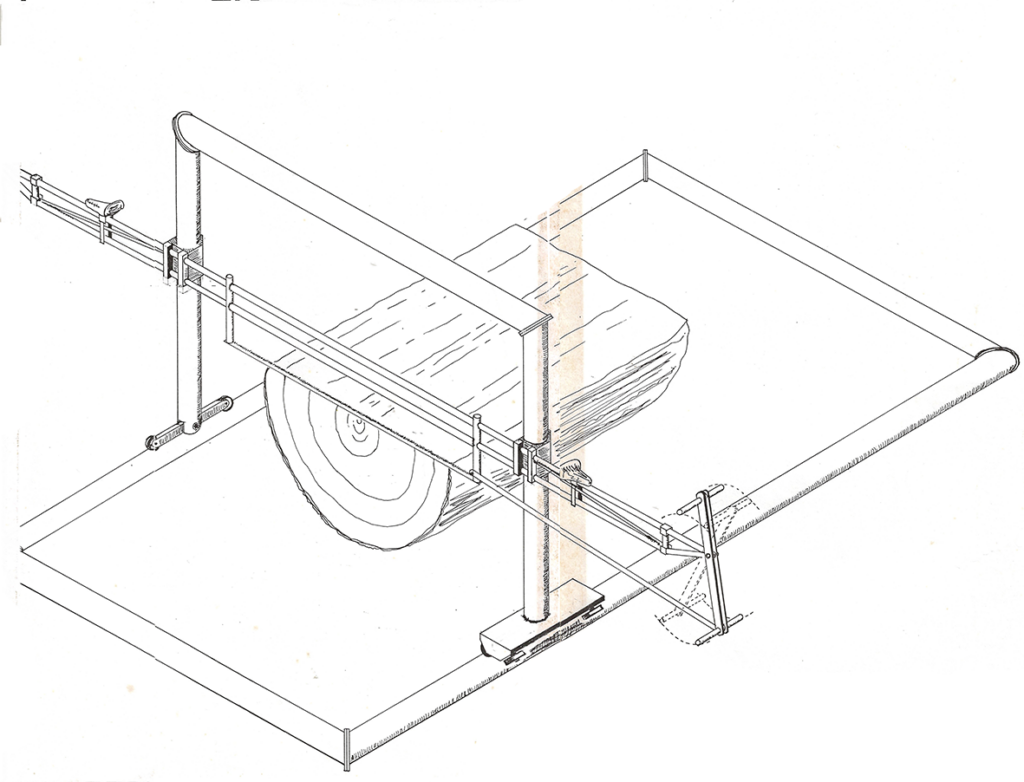
A sketch idea of a manual (and bipedal) sawmill – typical of the Intermediate Technology projects I illustrated for my father as I grew up in the late 60’s and early 70’s.

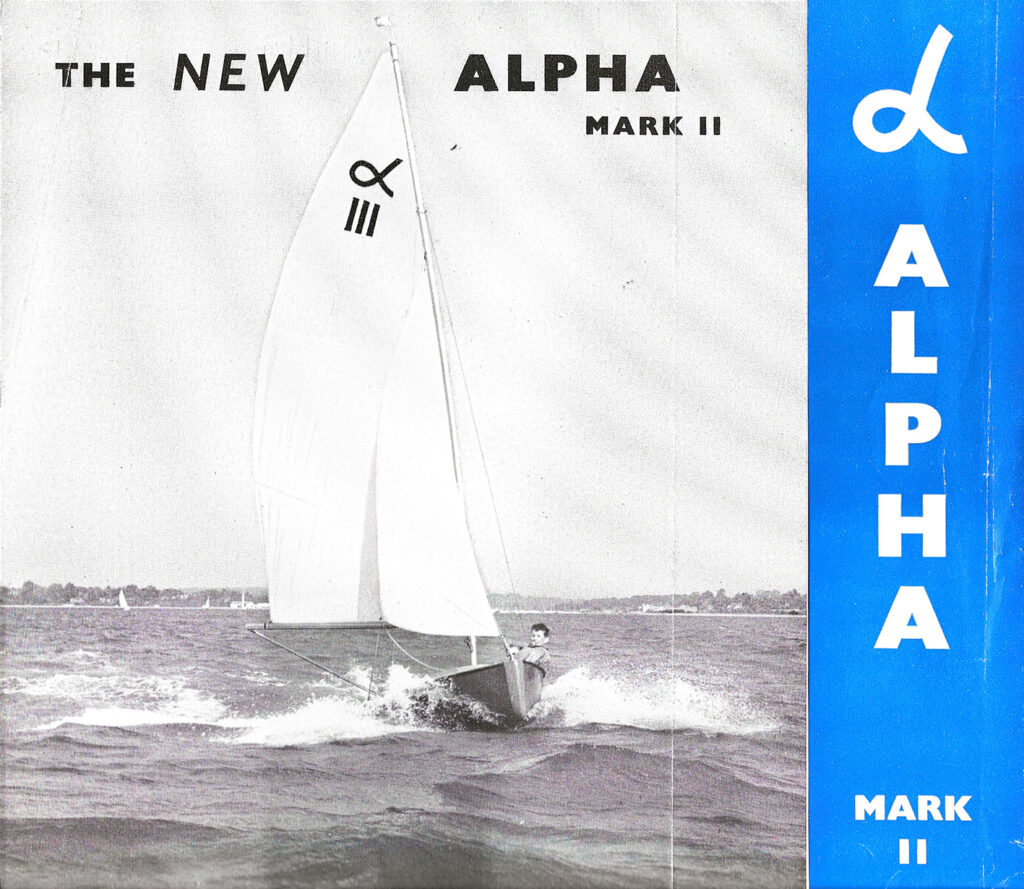
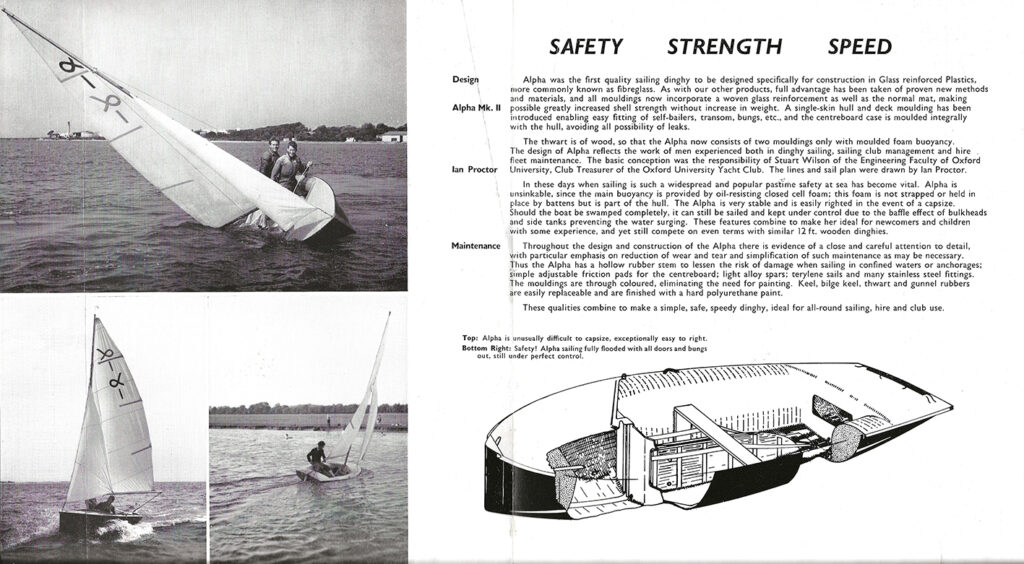
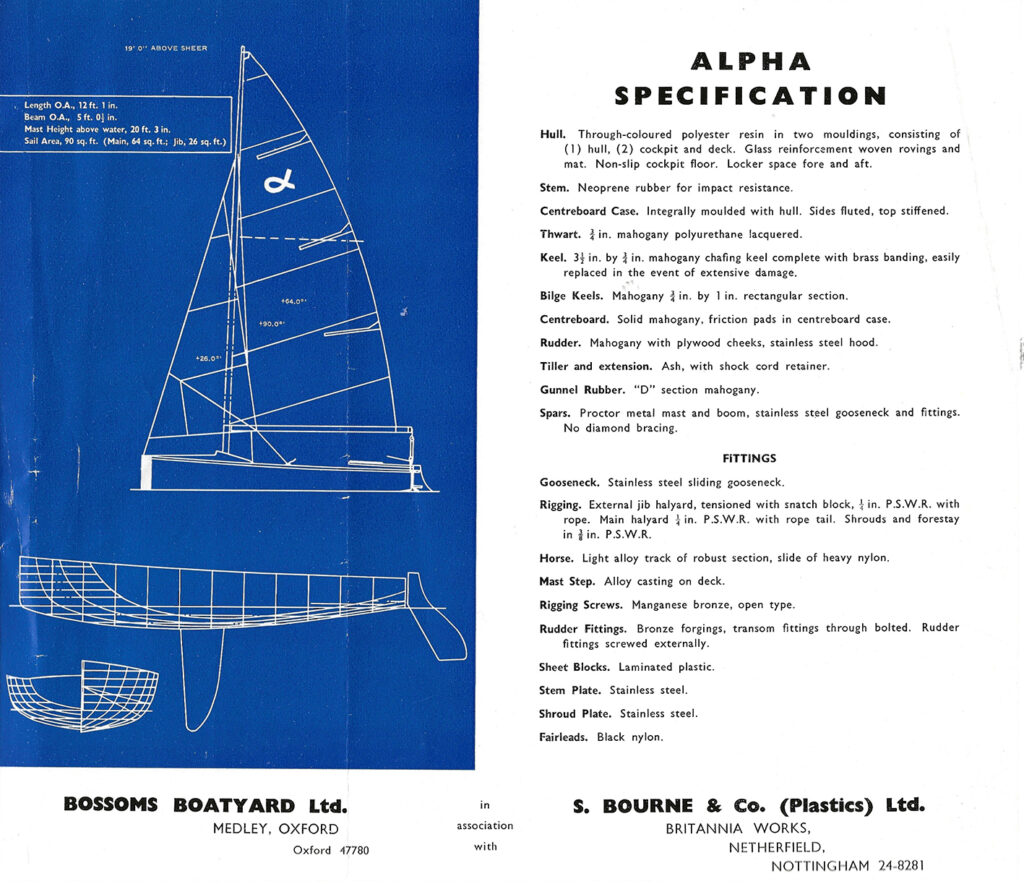
My father’s first contribution to design, and arguably the most far-reaching, was to design the first commercially produced GRP (fibreglass) sailing dinghy. A keen member of the Oxford Univesity Yaught Club, their sailing venue was the oxbow snaking, large tree-banked Thames at Port Meadow where shallows on the inside of every bend and flukey winds due to the trees, made for challenging sailing and though it produced good sailors who could turn on a sixpence at close quarters, it was hard on the Firefly dinghies which disintegrated after a few years punishment. Reading about the new material, GRP, my father, working with Bossoms boatbuilders, designed the Alpha sailing dinghy setting the precedent for the way most subsequent GRP boats would be made with a moulded top and bottom joined together to seal in the flotation. There were no departments to assist University staff to develop, patent and profit from their inventions back in those days, so others took the Alpha forward, learning from the experience to produce the more widely known Bosun, which I believe served as a sailing trainer in the Royal Navy amongst others.

The original brochure for the Alpha.
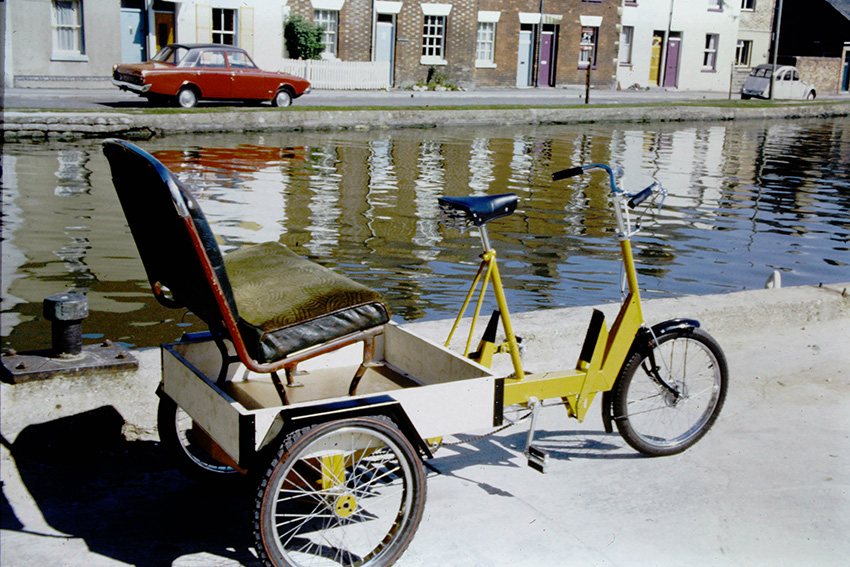
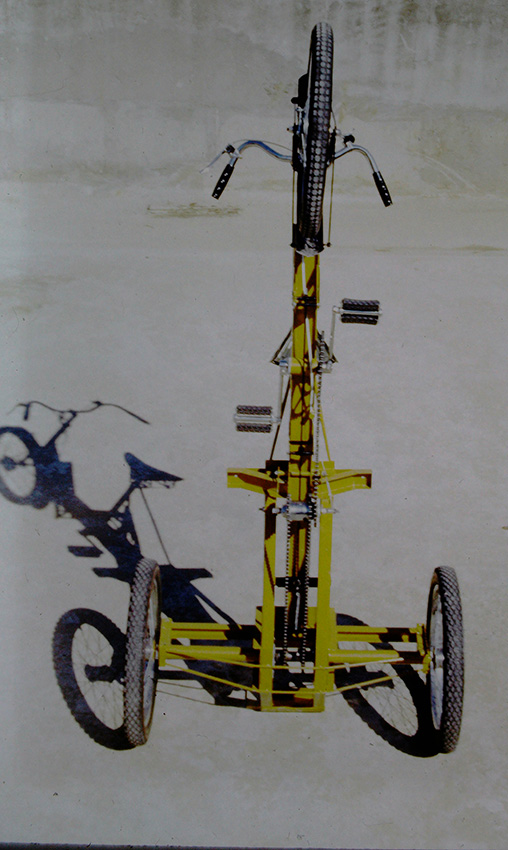
The OxTrike was the ultimate Intermediate design my father pursued. Cycle rickshaws are often just a bicycle welded to a rickshaw but this engineer designed version has many advantages but requires little more skill to put together…
The pedals send a single chain back to a modified Sturmey Archer gear box with a pair of chains going back to two half axles, each with it’s own free-wheel sprocket meaning there is a limited differential action. Sturmey Archer refused to take up the idea and most cycle-rickshaws that are factory made today, have DeRailleur gears with all their attendant problems… Talk to me in the comments if you want more information.

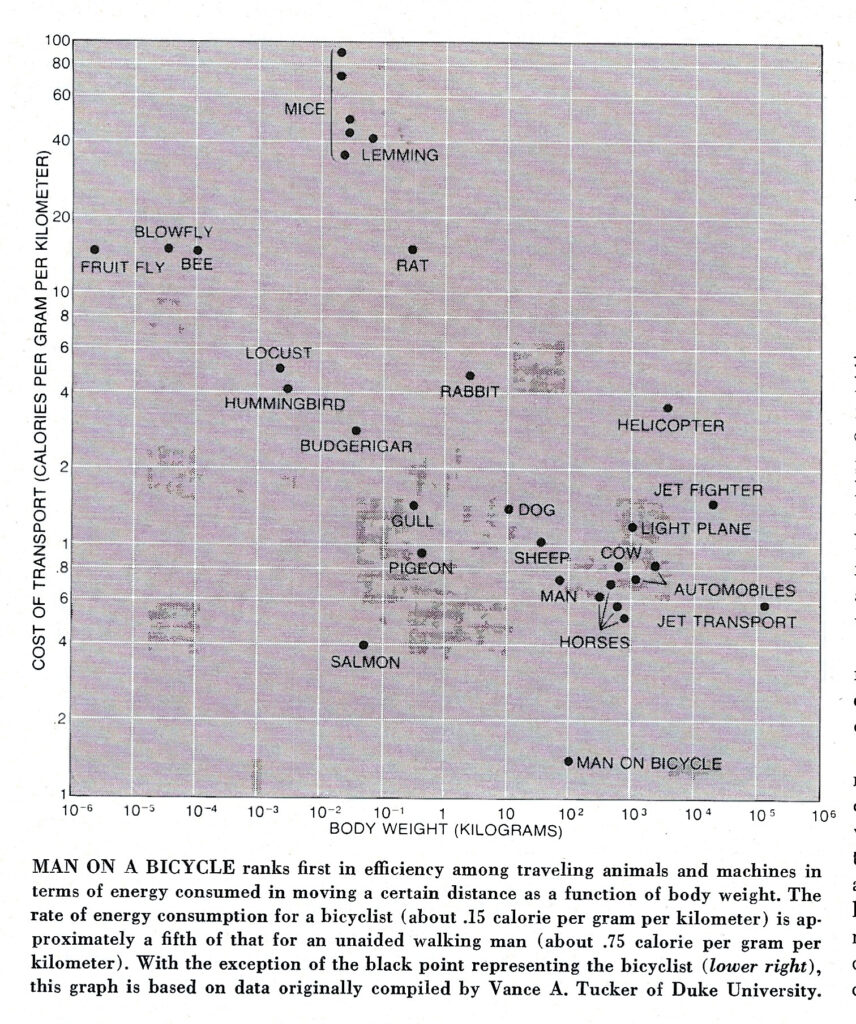
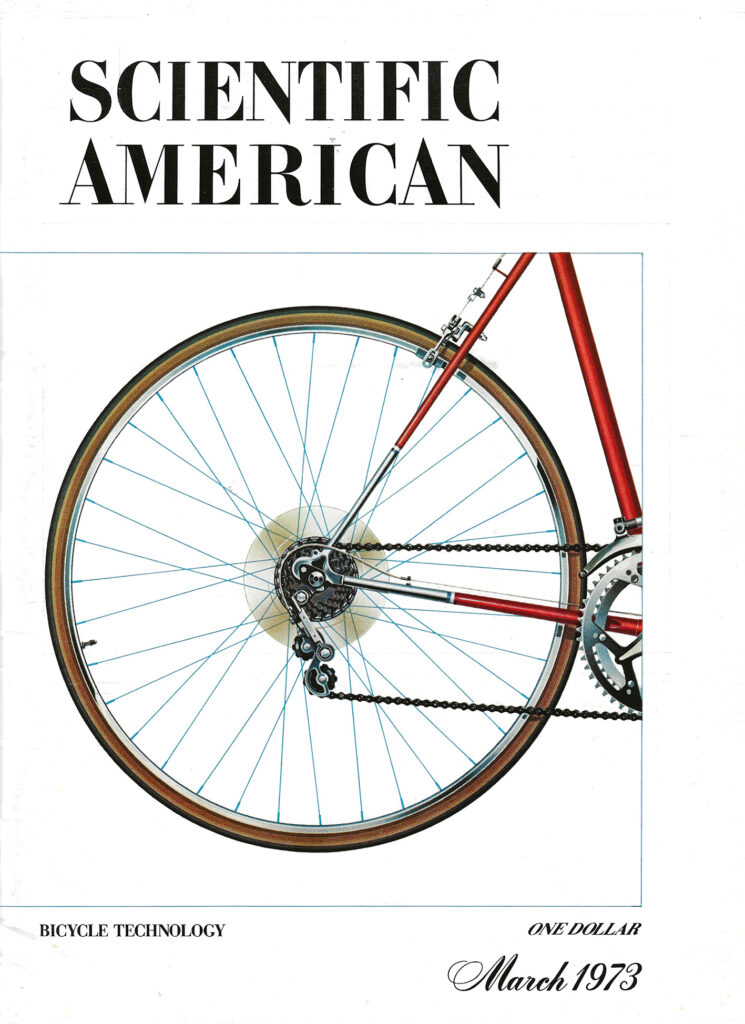
So as my father moved towards a more ethical view of design, he and I would talk, often whilst sharing the washing and drying-up and from these talks, my own humanist philosophy grew into being as well as a critical view of the direction of travel of the modern world – see here for a critique of the cult of the car and our approach to the electric vehicle “Time to Divorce the Car”. One thing that happened that my father didn’t know the impact of, followed his being invited to write an article on Bicycle Technology for Scientific American. A chance introduction at his college – St. Cross, where he was a founder member, led to the invitation and it’s fair to say that my father was unaware of the prestigious nature of this publication. In those pre-internet days, the publishers sent a box (1500) reprints of the article, to the author and directed all enquiries to them to deal with – none of the immediacy of commenting that we now enjoy, and one person in particular, had a strong reaction to the article that never reached my father. A few years ago, watching the film “Steve Jobs” – there was a scene where Jobs was talking to the Apple Chairman about an article he had just read about bicycles. My ears pricked up!. In the article, my father included a graph by Vance A. Tucker of Duke University in which he ranked the energy efficiency among man and other animals of their travelling, per gram, per kilometer. It showed that the energy consumption of a man on a bicycle was one fifth that of an unaided man walking – all of which led Steve Jobs to formulate what would become one of his favourite sayings – as he explained to his Chairman “The computer is like a bicycle for the mind!”

The graph that so inspired Steve Jobs.
The cover of Scientific American highlighting my father’s article – note the price!

There is much that I could say about my father, but there is one thing that reflects on the more personal aspect of him and of his relationship with my mother – she never really liked his beard although when you see how prominent it was when they met (below left) – it was obviously not sufficient obstacle to their engagement, however, she pressed him to gradually whittle it down and on the way back from Australia after an absence from oxford and friends, of some eight months, she finally triumphed and the beard was gone…

Left, my father (with my beaming mother) throwing a shape aboard a yacht in about 1954. Centre, on the SS Northern Star shortly before shaving off his beard altogether. Right, finally clean shaven…

Draughtsman/Designer

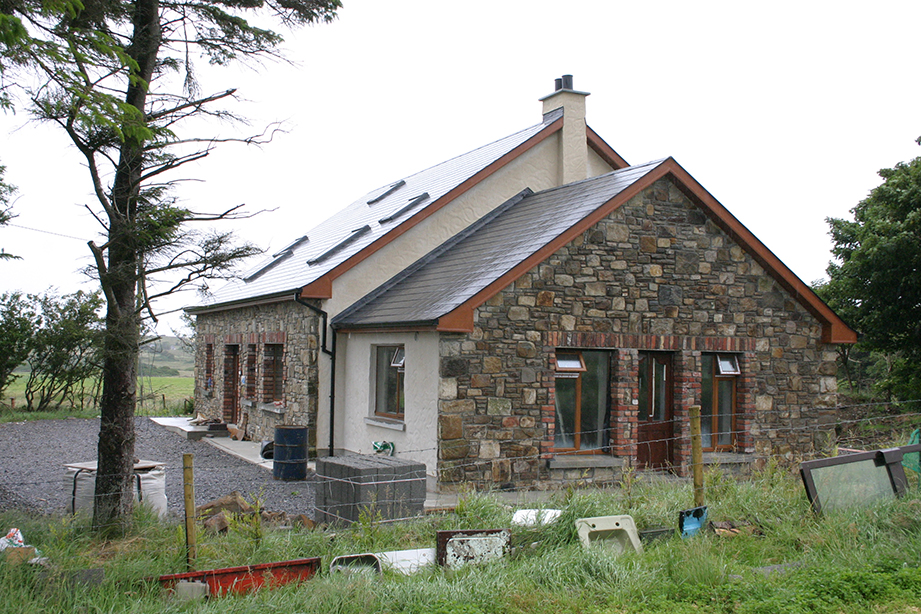
My technical drawing skills came in handy once I finally found my way into Signwriting which I practised for some 17 years. Computer-cut signs were in their ascendancy but I was strictly a hand-painted signwriter and this involves a lot of drawing out on paper before transferring the design to the sign board, but more of that under “S”. Then in 1999, I had a car crash and broke my hip and thereafter I couldn’t work up a ladder as I had been doing. I painted a few large scale murals using a scissor-lift platform but a change of direction was necessary. An architect friend who lectured at Sligo Institute of Technology, got me taken on as a part-time lecturer in Modelmaking on the Interior Design School. This course came under the auspices of the Engineering Department and so I found myself following in my father’s footsteps… Whilst there, I first learned and then immediately taught (as teachers do), AutoCAD – Computer Aided Design a programme used to design anything from the intricacies of a Silicon Chip to the layout of an entire city but mostly engineering and architectural drawings. Teaching an evening class, one of the students, realising the task would be too great for him, asked me to design and get planning for a house he wanted to build. Since there is no qualification needed to do such a thing – I agreed and completed the task. He and his wife decided not to move after all and sold the design and land on to someone who did build the house, albeit having butchered the design somewhat (a common fate of architect-designed houses). The house was not completed until after I left Ireland to return to England to be nearer our growing grandchildren, but on a subsequent visit, I caught the house having its final interior decorating being done…

The house I designed at Grange, Co. Sligo, Ireland.

On returning to England in 2007, I had AutoCAD as another string to my bow and did my first professional drafting work at the age of 50! I have worked in an Architectural Metalwork department and as an office junior (albeit the oldest in the firm) in an architectural practice and I use my AutoCAD skills in my current role as a factory manager and also as the designated draughtsman for a mosque which project I have been involved with for the last eight years…

So for most of my career(s) if asked what I do, I have replied “Designer” because that is not only a job I have done in various guises, but I feel it is central to who I am and how I see the world, always looking to see how things work and how to make them work better if possible, and I owe this direction to my father, even though I did not see the road ahead mapped out that way at all, back when I was considering which direction to go in…

In the Offing…

Stormy Sea, Emil Nolde, watercolor, paper

Two yachts and a pleasure steamer
Caught in the offing amidst a squall

The squall blew in suddenly
Catching the sailors off guard

Standing off to avoid wrecking
on a lee shore, they battle big waves

The waves are ultramarine blue
Starved of light by the red-tinged clouds

And yellow sunset light beyond the clouds
Trumpets the coming of nightfall danger

They weren’t expecting danger on this Sunday sail
Sailors struggle, passengers huddle on the steamer

Pray for those in peril on the sea
Two yachts and a pleasure steamer…

© Andrew Wilson, 2024

Over at dVerse Poets Pub, Melissa Lemay in Poetics invites us to write an Ekphrastic poem selecting from a number of paintings (unidentified as yet) before revealing who the artist was and something about his career. Emil Nolde, it turns out, was an ardent Nazi who attempted to climb the ladder of art success at a time when the tide was turning against his expressionist style in favour of the insipid efforts to which all propaganda are likely to produce.

Melissa asks us whether, upon learning about Emil Nolde’s unpleasant politics, we feel differently about his art.
I think a man’s politics are separate from his art unless he is using his art as propaganda and then as I say above, the quality will suffer because it doesn’t come from the heart.
Nevertheless, I can think of people, still alive today, whose work and life I don’t want to support because their politics are abhorrent. Emil Nolde no longer needs our support and I feel no different about the work – only the man…

Bronze Reveries

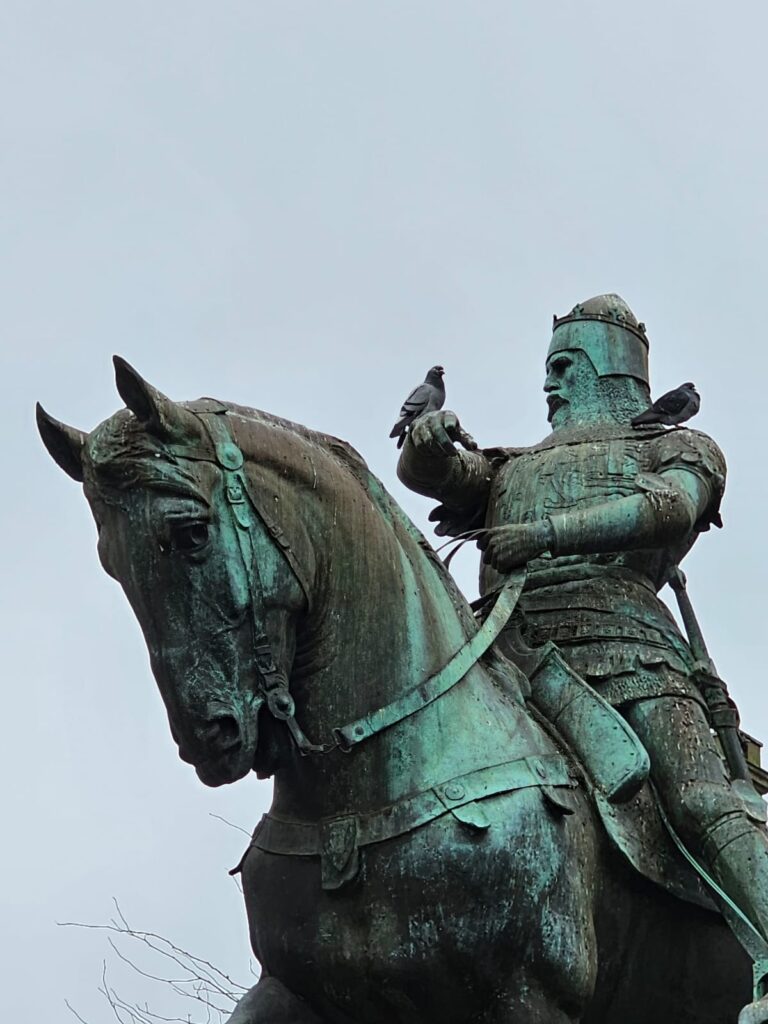
Photo by Andrew Wilson

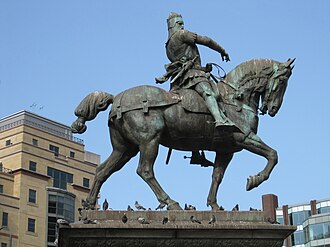
There should clearly be a falcon
on my outstretched gauntleted arm
but alas I am just a convenient
perch for pigeons.

I don’t even know why I am here
They call me the Black Prince
but my titles, Edward of Woodstock
Prince of Wales and Duke of Cornwall
give the City of Leeds no claim to my fame
and famous I was in the Fourteenth Century
A fierce and feared warrior on behalf of
my father King Edward the Third
though I died of dysentery before
my king and father
so never inherited the mantle…

Larger than life as a soldier
I will say this representation
In bronze doth suit me
too large for any British foundry
I was cast in Belgium
brought by sea to Hull and
sailed stately by barge
up the river air to Leeds.

I have been joined in City Square
by other statues, some with
genuine claim to local fame
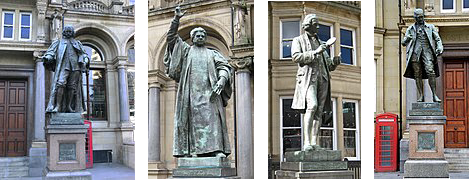
John Harrison – cloth merchant and school founder
Doctor Hook – a vicar of Leeds
Joseph Priestley – chemist and theologian late of Leeds
and James Watt though not of Leeds
he did his fair share to increase its wealth
with his steam engines
I never saw one myself
though the railway station is right before me
but I saw the smoke and steam
smelt the stink of the things
and my plinth has to be navigated
by commuters rushing to catch theirs

Statues of John Harrison, Doctor Hook, Joseph Priestly and James Watt – see Wikipedia article on Leeds City Square statuary.

I cannot see those good gentlemen
ranged as they are behind me
but I do look with some affection
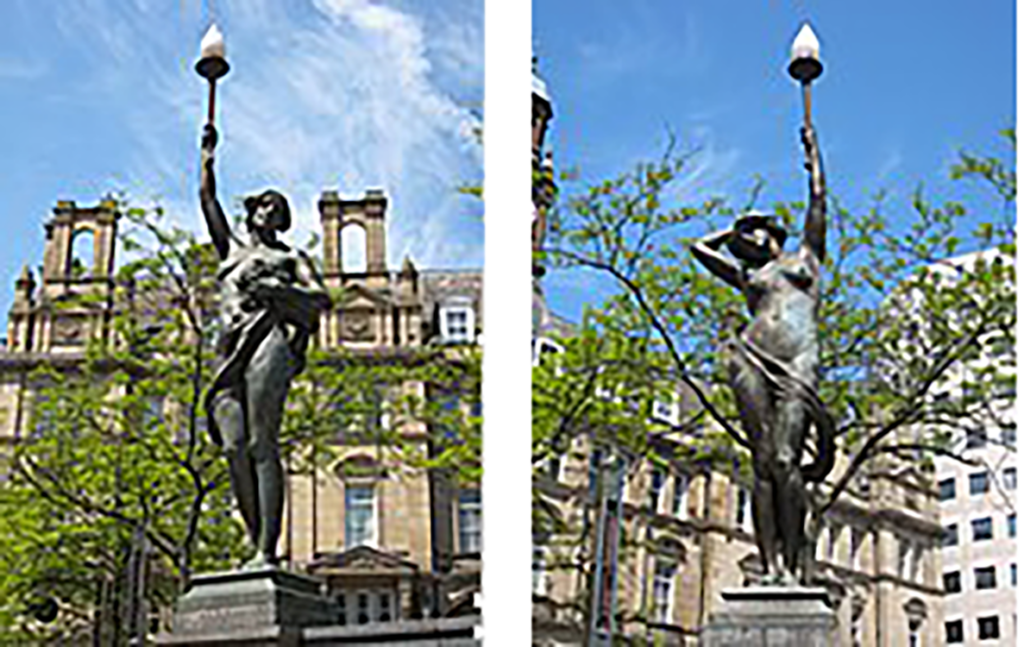
on the comely rears of eight naked nymphs
I have sadly never had the pleasure
of seeing their faces and the rest
of their scarcely concealed modesty
they are two lots of quadruplets
named “Morn” – carrying a bunch of flowers
And “Even” whose head droops
And, I hear from passersby
has her eyes closed in anticipation
of the coming night

“Morn” and “Even” in City Square, Leeds – see Wikipedia article on Leeds City Square statuary.

It is a bleak existence in this civic space
myself fully clad and armoured
if not against the foes of England
at least against the Northern cold
but many’s the time I’ve seen
poor Morn and Even and their six sisters
shivering in the rain, the frost, the snow.
One night a group of “knitting guerillas”
as they mysteriously styled themselves
surreptitiously reconnoitred the
eight Art Nouveau sisters
with a view to knitting dresses more
becoming than their wisps of cloth
for those benighted maids  
– they measured them up
found them to be some two-thirds scale
(I always thought them a little picayune)
but never returned with the promised gowns
and so the sisters shiver on in winter
or garner both sly and envious glances
from males and females respectively
the former admiring the petite but fulsome figures
the latter wishing they could be as unencumbered
come the sweltering heat of a city summer
– whilst I still suffer the indignity of pigeons…

The Black Prince – City Square Leeds – see Wikipedia article on Leeds City Square statuary.

© Andrew Wilson, 2024

Over at dVerse Poets Pub, Dora in Poetics invites us to Reimagine the Familiar with a wealth of prompt poems to inspire…

As I explainbelow in reply to the comment from Dora, I fictionalised the Guerilla Knitting Group but searching for them, I find that Knit a Bear Face did in fact yarn-bomb some of the above statues in an action called “Wating For Winter” – photos below… The group seems to be defuct – perhaps another casualty of the great Covid pause…

Waiting for the winter
https://www.flickr.com/groups/1651938@N20/members/
Waiting for the winter
https://www.flickr.com/groups/1651938@N20/members/
Waiting for the winter
https://www.flickr.com/groups/1651938@N20/members/

If you are stirred to action and wish to become a Yarn Bomber or even just a group with whom to knit – search the internet for a group near you… The Truth Yarn Is Out There…

Exploring and Evaluating Generative AI Number Six – Kickback and Compromise…

It is 18 months since my last essay exploring AI back in 2023 and there have been many developments since then – certainly more and more people, from poets of my acquaintance to businesses, have explored and made use of AI in one form or another and the industry is full of startups offering AI solutions in all sorts of areas such as creating training videos in which you prime the AI with the content you want delivered and the AI concocts slides with a voiceover or even a fully imagined video trainer to articulate your training needs.

Public awareness has continued to grow, the alarm over AI taking away jobs, or taking over the world and eradicating humans is perhaps less hysterical and the debate more focused. One way in which this is happening is that writers and artists have challenged the AI companies for the currently unregulated and voracious use of their (the creatives) material in training the AI’s LLM’s or Large Language Models. These are the vast bodies of existing work, written and visual, that are fed to AI’s and from which they both learn and plagiarise when prompted to generate an image or a piece of writing “in the style of”. When I first started exploring Generative AI, these ethical battlelines were not so apparent. Still, now we must seriously consider the ethical questions raised by how we choose to use AI – especially when we reference existing artwork or literature. You may feel that the damage is already done, the genie already out of the bottle and that there is no point in bolting the stable door after the horse has bolted, but the laws need changing to protect the copywriter issues advanced by creatives and perhaps there will emerge a statute of limitations so that older work, out of copywrite is usable whilst currently, copyrighted material is either out of bounds or attracts a fee for the use of… Below is an illustration I tried and purely for experiment, I asked for it to be “in the style of” Studio Ghibli – a Japanese animation studio based in Koganei, Tokyo. The exact prompt was “Alice in Wonderland at the Court of the Red Queen in the style of studio ghibli directed by Hayao Miyazaki

As you can see, Alice is there, in a dining room sumptuous enough to be that of the Red Queen but there are no other characters present and the AI (Midjourney) has become fixated on the Fly Agaric toadstools that Alice found the hookah-smoking Caterpillar sitting on. Does this image owe much to Studi Ghibli and Director Hayao Miyazaki – it certainly could be an animation style – I don’t know his work well enough – I just saw the style in a list of things you could prompt AI with and decided to experiment – but the fact that the AI recognised the name of Studio Ghibli means that it was trained, at some point, by looking at the studio’s work…

So I have decided, for three reasons, to be more circumspect about my use of “in the style of”. Firstly out of fairness to current creatives, secondly because it remains as difficult as ever to get AI to produce the image exactly as you have in your mind’s eye, and lastly I have made less use of AI images to accompany poems – in part because the brilliance of them, not only illustrates the poem but threatens to eclipse or distract from it. However, whilst I am a competent artist in some respects, I am not an illustrator with a wide range of drawing skills and so below, I am going to show you the blend of AI-generated image elements and their combination in PhotoShop to arrive at an image I had in mind for a commissioned illustration. My friend Melissa Lemay, is launching an online journal called Collaborature to showcase collaborative poems and works of literature as well as interviews with authors – she sent me her mission statement and gave me carte blanche to produce an illustration for the launch…

My idea is to have a woman absorbed in reading a book with a “thought bubble” rising up into a night sky showing the moon, and a rocket on it’s way to the moon – all inspired by her reading…

To begin with, I decided on a black-and-white illustration with “drawn” elements combined, which made it slightly easier to achieve consistency. Firstly I wanted a young woman but drawn “in the style of” the E.H.Shepard illustration from “Now We Are Six” by A.A. Milne. – or rather, I wanted her in the pose below, which is not quite the same thing…

The results below, despite what I thought to be a very detailed prompt describing the young woman, her clothes and her pose, was not right…

Black and white line drawing of a young woman wearing a sleeveless dress with hemline just above the knee lying on her stomach elbows stretched out and head supported by hands reading a book propped up in front of her legs bent at the knee and bent upwards in the style of E.H.Shepard

Cetainly I think the style has little to do with E.H.Shepard and in the lower left picture, the young woman, far from being excited, her imagination fired by reading, has fallen asleep! I tried making variations but nothing worked any better so I then decided to try for a picture of a young girl instead and got the result below.

Black and white line drawing of a young girl wearing a sleeveless mini-dress with hemline just above the knee lying flat on her stomach head supported by hands reading a book propped up in front of her legs bent back and over her knees in the style of E.H.Shepard

Once again we have a sleeping beauty, but I decided I could accept the top left image. Next I wanted to have a thought bubble form the girl, featuring a rocket to the moon inspired in the girl’s imagination, by her reading. I was remembering the Moon face in the 1902 film A Trip to the Moon (French: Le voyage dans la lune) by pioneer film director Georges Méliès.

And so I used the prompt “Black and white line drawing of moon against a black background in the style of Georges Melies” to obtain this:-

Nothing like George Melies’ image so no qualms about using the quite straight forward “drawing-style” moon. Next to a rocket, and I have always loved the rocket (was it inspired by the German V2 rockets?) from The Adventures of Tintin, the comics series by Belgian cartoonist Hergé.

And so using this prompt “Black and white rocket against a dark grey background in the style of Tintin Explorers on the Moon” I obtained these images from Midjourney.

Once again, I don’t think the similarity of the rockets warrants the term plagiarism so much as “inspired by…” and I was happy to go with the bottom right image.

Now that I had all the elements, it was time to start assembling them in Adobe PhotoShop – this process is essentially like building a collage except that you can go back and work on each layer ad infinitum, resizing, adjusting the tones, cropping etc. even rearranging the order of the layers – so what hides what…

Having decided on the size and proportion of the Background, I placed the girl before adding a Gradient layer for the night sky. Then, having pasted multiple copies of the Mission Statement text, I placed a text layer in white text so that it fades out at the bottom of the picture but is readable against the black of the sky. I then brought the girl to the front again as the white letters were going over her.

The white letters looked too strong so I increased their transparency to tone them down. Next I added the thought bubbles giving them white edges to stand out and then placed the moon into the large bubble.

I could have added the rocket within the thought bubble, like the moon, but I thought it added to the portrayal of the act of imagination if it came from outside the thought bubble – as if it had come from a different bubble perhaps… Lastly, the rocket looked too static and so I added some “motion streaks” to complete the picture.

So there you have it – each element of the picture was produced by Midjourney generative AI, yet I could never have got an AI to see and conform to the design I had in mind and so I had to assemble them in the way I wanted, after the event and this is one way in which I think AI can be used to aid the graphic designer – after all, collage of existing print material is a very old tradition…

Yule Log

The
shepherd
Attis who
killed himself
for shame because the
Goddess Cybelle forbade
him to look at anyone
other than her – but he was weak
– lay with a nymph – died beneath a pine
Cybelle brought him back to life, now faithful
– pine log
now holy…

Andrew Wilson, 2024

Attis died by castrating himself beneath a pine tree following the awful wrath of Cybelle, a Roman Goddess of Fertility whereupon she had a change of heart and brought him back to life – needless to say he did not stray again… But this myth was celebrated by Romans (strange but true) by the bearing of a Pine log through the streets – Pines now being sacred to Attis. Christianity often subsumed old festivals into itself and this is one possible origin of the Yule Log…
I wrote more about it here.

Over at dVerse Poets Pub,  Laura Bloomsbury in Meeting the Bar: Critique and Craft asks us to write an  Etheree poem about

Christmas tree(s) imagery, meanings, memories etc

or Conifer/Fir tree(s) imagery, mythology, memories etc

  • must be an unrhymed poem
  • no specific meter
  • one stanza only
  • 10 lines with no paragraphs
  • graduating from 1 to 10 syllables
  • [add lines 11 & 12 with just 2 syllables per line – my optional extra]

Thus the first line is monosyllabic; the second line has two syllables, and so on, until there’s ten syllables on the tenth line (then reverts to 2 syllables for lines 11 & 12 if you want this optional extra). The outline of your poem takes the concrete shape of a fir tree. Centre it on the page else left or right aligned it’s only half a tree! (X=syllables not words)

Does Magic Believe in Us?

If a man dies never having described
the magical experience he once had
does it mean the magic never happened

Magic is not the same as conjuring
which is a trick, usually sleight of hand
though a trick of the light may be magical…

“There is a crack, a crack in everything
That’s where the light gets in”
sang Leonard Cohen with a voice so low it may count as magic

Counting off the things on your bucket list
you may miss the magic
you never thought to list

Thinking about magic you have experienced
you may be in danger of dissecting
it to death and why would you not just accept

Accepting the existence of magic
is a personal prerogative
one person’s magic is another’s commonplace

Magic can happen any place
any time
to anyone

I believe in magic
but not magicians
or ghosts

I defend the rights of others
to believe in ghosts, and
to share what magic means to them

Magic, like love – just is
it cannot be reasoned or conjured up
though you may set the scene for it to manifest

The manifestation of magic
cannot be forced
but only prepared for in receptivity

The reception of magic is easy for children
but what they achieve easily
we struggle to hold onto with age

A life may well be weighed
by the amount of magic
we have observed to be…

Perhaps the real question to be asked
is not whether you believe in magic
but whether magic believes in you…

© Andrew Wilson, 2024

An image created using Midjourney, of a certain magician…

https://w.soundcloud.com/player/?url=https%3A//api.soundcloud.com/tracks/1942511719&color=%23ff5500&auto_play=false&hide_related=false&show_comments=true&show_user=true&show_reposts=false&show_teaser=true&visual=true

Over at dVerse Poets Pub, msjadeli in OpenLinkNight, invites us to submit a poem and since we are, in Lisa’s words “just a week away from the spookiness of All Hallow’s Eve”, I have chosen one that references magic and ghosts…

I wrote this in my writing group in the shadow of “Belief in Magic” by Dean Young.

Hell’s Bells…

Hell’s bells and buckets of bloody blood!
My mother used to say
and after Australia
she said it every day

It used to be
just Hell’s bells and buckets of blood
but bloody was a word oft heard
in the land of Oz you see

Hell’s bells—an apt description
for news now from everywhere
it would have given her conniptions
were she still here

Hell, I’d even use the cuss she bequeathed me
except I don’t accept religious geography
and know that Hell is here on Earth
and not some seven circled place beneath

Hell’s bells – the cuss abbreviated
hardly reflects the place we’ve come to
climate change, genocidal wars
from decency and democracy we’ve deviated

Hell’s bells and buckets of blood
for greater impact
our world is in the toilet
and that’s a fact

So still I hear my mother’s voice
raised in exasperation
uttering her curse of choice
Hell’s bells and buckets of bloody blood!

© Andrew Wilson, 2024

Over at dVerse Poets Pub, dorahak in Poetics inspires us with a very fulsome prompt, to write using repetition as a poetic tool…

Autumn Colours – not just for show…

Is there anyone who does not love the display of Autumn colours that nature puts on each year if you live in the latitudes where deciduous trees flourish? A love that is, tempered by the knowledge of the meaning which this colourful transformation signals – the end of Summer and the advent of Winter – only young children are blissfully unaware of the message and thoughtlessly kick their way through the ever-deepening piles of fallen leaves.
The change begins on the edge of some leaves on a certain side of some trees and gradually creeps across the entire tree, to be joined at differing rates and with subtly different palettes by other species until whole stands of woodland are ablaze save for the odd patch of evergreens. But this extravagant show, which has us humans travelling to see its most spectacular examples, is not some random quirk of nature, but a necessary part of the plant’s process – one without which the trees would not survive the coming cold of Winter. The green, chlorophyll-filled engine of energy conversion which is a leaf, exchanging liquid food from the tree and using sunlight to power the tree, now switches its production to producing a kind of anti-freeze which the tree reabsorbs into its twigs, branches and trunk to protect itself against frost damage. Once each leaf has done its job, sucked dry by its parent, it shrivels and falls to the ground where it will rot down and feed the tree through its roots and complete the cycle of its life but the byproduct of its transformation in Autumn is a breathtaking, spectacular, partial rainbow from yellow to rich reds…

Autumn colours show

as leaves transform their sap to

save the tree from frost

© Andrew Wilson, 2024

Over at dVerse Poets Pub, Frank J. Tassone in Haibun Monday invites us to celebrate Autumn colours and the passage of the seasons…