I confess I am not a great fan of autobiographies that begin at the beginning and follow a temporal path up to the present day – not that the person might not have some interesting stories, facts and opinions strung on their necklace, but it just doesn’t appeal as a structure. On the other hand, in my last, extra year at school in Oxford, retaking an A-level and adding a couple more, I was allowed out of school on my recognisance and saw a fascinating Exhibition at the Modern Art Gallery. The Artist had laid out and photographed every single possession of a single person – for example, all the cutlery was laid out in one shot, all the shoes in another. This more thematic approach appeals more and although I am not arranging the objects which I have chosen to tell my story in chronological order, I hope that my writing will be sufficiently interesting to keep your interest Dear Reader, and that on the journey from A to Z, you will assemble an impression of my life and who I am…
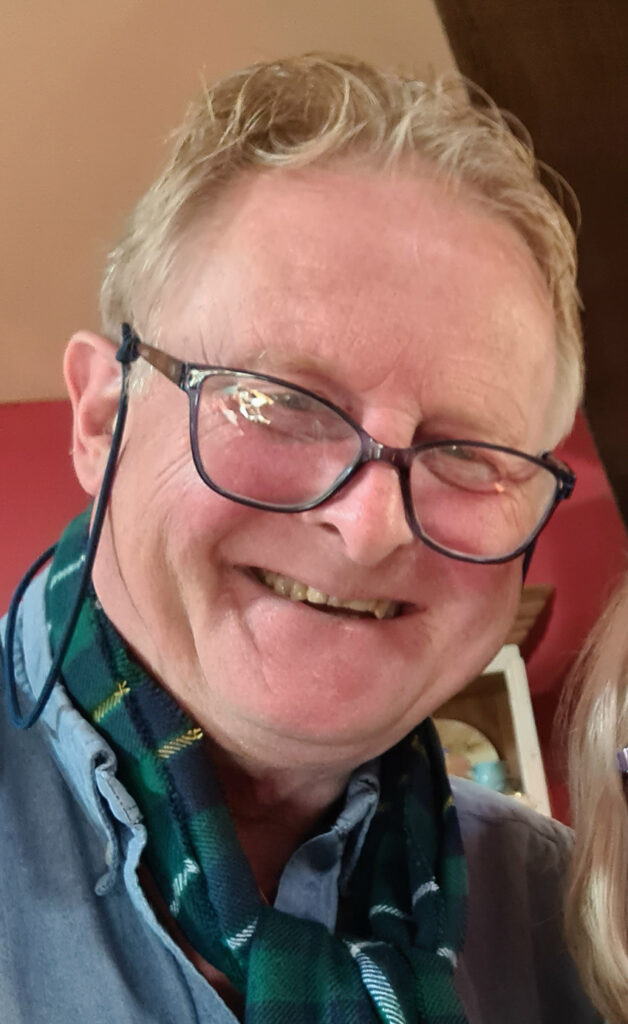
A look of grim concentration in this Zoom selfie…
Zoom…
How many are the ways we communicate apart from face to face that is… Phone calls, texts, WhatsApp, messages, Messenger DM’s, Skype and Zoom (not an exhaustive list lol). Zoom and its brothers and sisters from Microsoft et al, came to the front duringthe Covid Lockdown when you could use it to keep in contact with friends or work from home or even have a remote consultation with your doctor. Skype – a Microsoft product was the go-to product for a long time but it is now being pulled because Zoom and it’s compadres do much more – multiple participants, recording and transcribing those recordings etc. One of my favourite things done with Skpe, was a guy who corresponded with lots of people all over the world and then edited themed conversations for the BBC on topics like work or marriage or migration. So adios Skype and welcome Zoom on which I attend a Writing Group, read poetry for the dVerse Poets Pub open mike night, not to mention work meetings, and speaking to my sister in Nova Scotia…
Which is all I have to say about Zoom, which seems a whimper rather than a bang for the ending of what has been as in depth an A to Z as any of the five before it – but at least I have written a memoir of sorts, if I do no other! At the outset, I expressed the hope that you would “assemble an impression of my life and who I am” and I hope indeed, that you have – only you know…
Adios, Amigos – see you on the road…
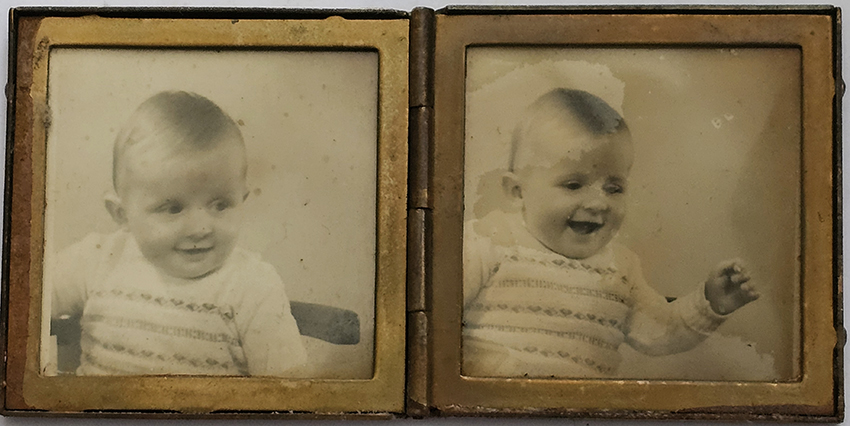
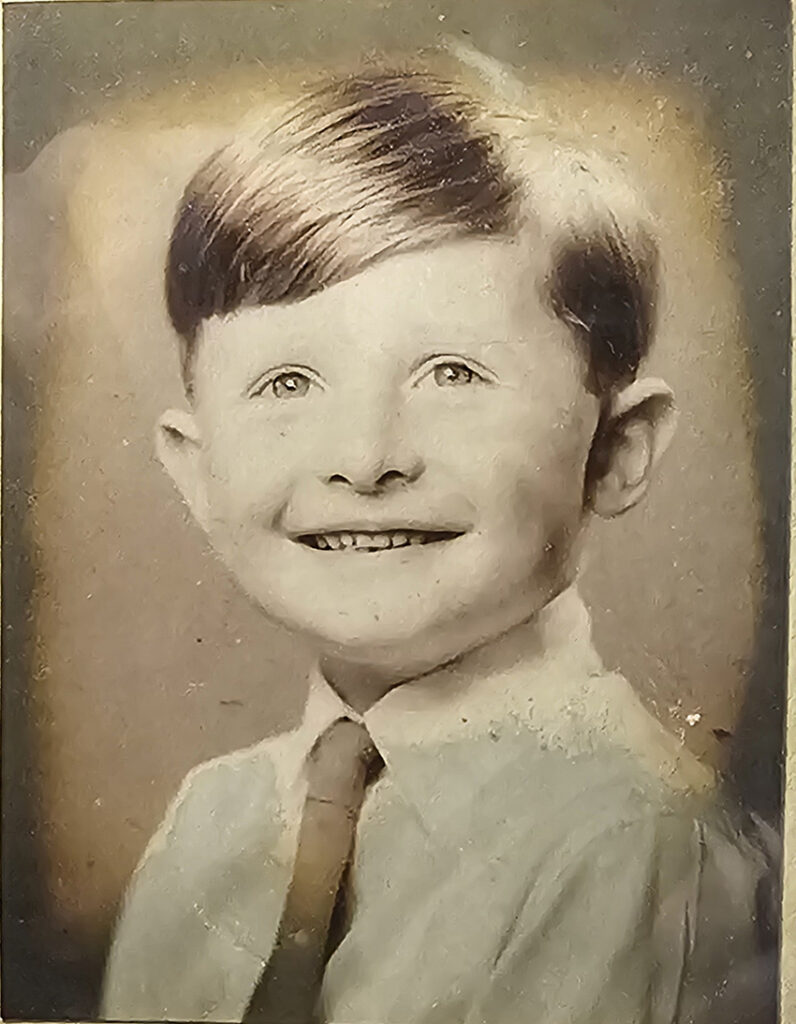
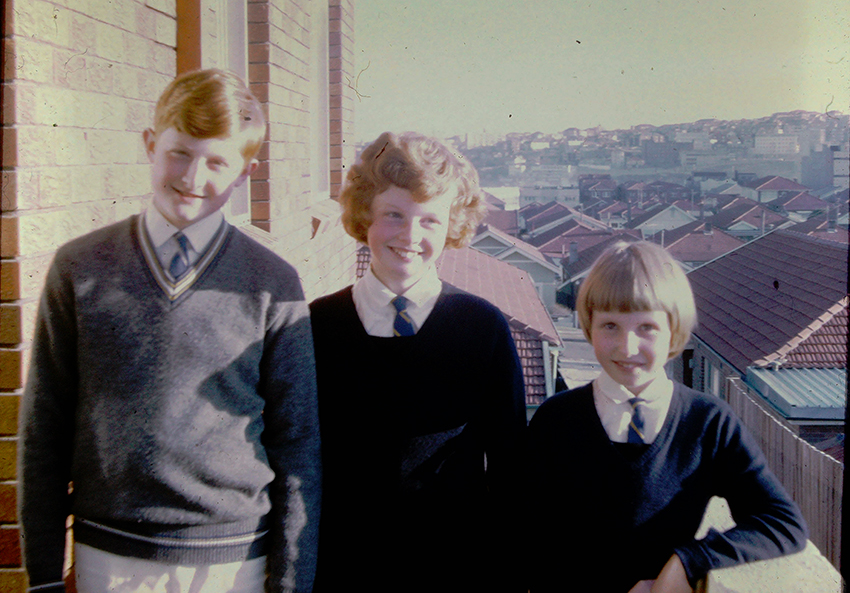
I leave you with a few photos of myself over the years…
Carol, Helen and I on our balcony in Bondi in 1968
I confess I am not a great fan of autobiographiesthat begin at the beginning and follow a temporal path up to the present day – not that the person might not have some interesting stories, facts and opinions strung on their necklace, but it just doesn’t appeal as a structure. On the other hand, in my last, extra year at school in Oxford, retaking an A-level and adding a couple more, I was allowed out of school on my recognisance and saw a fascinating Exhibition at the Modern Art Gallery. The Artist had laid out and photographed every single possession of a single person – for example, all the cutlery was laid out in one shot, all the shoes in another. This more thematic approach appeals more and although I am not arranging the objects which I have chosen to tell my story in chronological order, I hope that my writing will be sufficiently interesting to keep your interest Dear Reader, and that on the journey from A to Z, you will assemble an impression of my life and who I am…
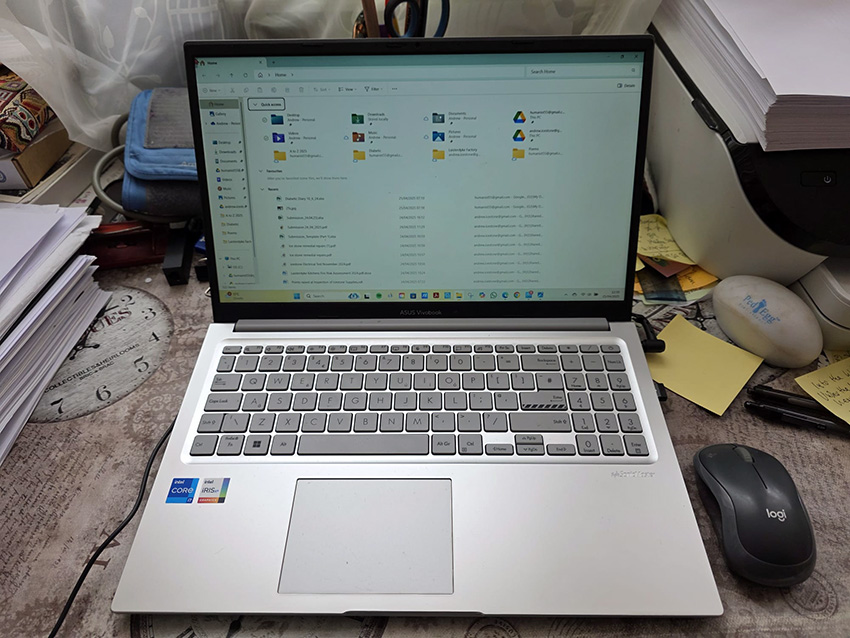
All my work is done on this computer, be it work work or writing work…
Work
If you have been following my A to Z this year, you will know that I have covered a fair few of the jobs I have done (I like to say that I have forgotten more jobs than most people have had), but what of the nature of work and working? I suppose that most of my jobs have fallen either into physical work like signwriting and cheffing, or else desk jobs such as administration/management and writing, but there are a few other classifications like teaching, call-centre work and cinema projectionist. Nowadays, as most people have caught up to me in the retrain every decade mode, at interview, it’s all about transferrable skills and the dreaded “describe a situation where you…”. For example, mixing paint and indeed painting a wall with a brush, require much the same sensitive touch as making a roux-based sauce and a fluency with spreadsheets is required in running a restaurant, calculating quantities of steel required in a building project or keeping track of one’s poetry output – who it was written for and where it has been published. As I have got older, my work has revolved more and more around the computer above – and just to think that when I was at school, there were only 3 (Mainframe)computers in the whole of Oxford and PC’s and Laptops were not even a twinkle in somebody’s eye – who knew where it would end up – not me!
War
As a teenager, with history lessons at school, and my mother’s war stories, whilst she still told them, I gradually became aware of the Second World War which finished just 10 years before I was born, of the First world War which my Grandad had been in and of various far distant conflicts going on around the world, the Suez Crisis, the Cuban Missile Crisis, Vietnam. And yet, there was a sense that World Wars at least were safely in the past, as Dylan said – we were friends with the Germans now, the world order was dedicated to peace and stability, the Rule of Law and the fruit of that stability was the Global Village. The current crop of authoritarian dictators, some, like Putin, desperately trying to turn the clock back to the grim days (as others see them) of the Cold War when Russia was Great, and the man he helped to power who also wants to Make America Great Again, despite the fact that it already was great my most measures and considered so by many people – those men and other dictators of their ilk, have succeeded in shattering the stability and raised the threat level in ways we can hardly comprehend. Neither, many would say, does Trump, and whilst his name will likely be a byword for infamy, one day, things are likely to get worse before they get better. So far from the cosy certainties that I grow up with, what sort of future is being handed to my grandchildren, I cannot say…
Words
At 70, I feel I am a little too old and slightly broken, to become an activist carrying banners on the street, but if you have a computer and access to the internet, you have a voice and you can research and learn, search for truths, write – essays, emails, op-eds, and poems, then deploy them for the things that matter to you – wage war 0r at least counter-insurgency with words, for democracy, the environment, the downtrodden – and lest you think your voice won’t be heard or matter, an ocean is made up of drops of water and every drop counts towards the main…
Here are two of my poems, they are about America, the first written before Trump’s second election, the second afterwards, and in part, responding to the first…
America (I Would Like to Visit You)
America I would like to visit you but I have a fear of repeatedly feeling déjà vu having seen your treasures and tragedies over and over on big screens and small I have come to absorb through books and films and blogs – those love-children of Letter From America some understanding of your ways.
It is only my personal view others see you quite differently from The Land of Opportunity to The Great Satan. I also, of course, know real Americans both in the flesh and in the virtual world and even have relatives a whole branch of the family. Since my grandfather’s brother emigrated before the First World War he and his descendants have demonstrated the positives the opportunity to make good – it might have been less opportune if he had not been white.
Now I understand the wealth of America could not have been so great without the dispossession of the previous occupants or the relocation of millions of slaves who even after emancipation worked a different kind of bondage in the factories of Chicago.
I cannot preach us British have no right… just this week I read a supplement of The [Manchester] Guardian on how Manchester’s cotton wealth was the fruit of slavery just at one remove and the Guardian famously liberal did little to recognise even its own failure to comment until now.
America so much is squeezed into your great cities each pressure-cooking a distinct language which is so much more than mere accent but in between the vast wildernesses still exist free of graffiti the poor of the cities not banned but excluded from access nevertheless by lacking the means to get there
And so America you are a land of opposites of natural beauty and urban ugliness of obscene wealth and unforgivable poverty of liberal tolerance and extreme hatred. Maybe this is true of all countries but America – You proclaimed yourself to be the Great and the Good to be the World’s Policeman but all your policemen carry guns and so therefore do the bad guys and the poor and the rich by inalienable right.
America Dorothy has pulled back the curtain and the little man revealed does not match up to the rhetoric or the dream.
But still I would like to visit you America…
Written in response to “America [superstorm]” by Kathleen Graber from her collection – The River Twice
America (Krisis*: at the Crossroads)
America I would still like to visit you perhaps even more urgently – the rough beast slouched towards Bethlehem now born – a second coming the world thought impossible now come to pass mere anarchy is loosed upon the world.
How long before those Great Lakes are poisoned by polluters set free to do their dirty work and national parks still safe from the graffiti of the poor but not from the mineral mining gutting of once again empowered rich cost corner-cutting pipelines fracture and spill their black gold on sacred reservations and beyond.
To appease his base your President has pulled your role as policeman to the world citing the cost but alongside military might your soft power saved lives now already doomed as vaccinations, retro-virals and simply food are withdrawn allies against oppression abandoned in favour of the oppressors and that is without the chaos of world markets disarrayed the world order disrupted by a thoughtless human hand grenade.
We British cannot talk – we also had a Prime Minister unelected, full of hubris, who made leader by her party with no electoral mandate fancied herself a disruptor and lasted less time than a lettuce but whose damage lives on
– small fry compared to POTUS whose power, mandated, he claims has already hurt the whole world in ways no magic reset can reverse and in truth, his mandate was less than half of “We the people…” his vandals slashing government to smash the laws that hold them back from moving money – poor to rich once more…
The “Land of Opportunity” that favoured my grandfather’s brother and many another immigrant now demonises the souls who would make their way too to share the possibilities of a bright future for their families even as the undocumented labour that oils the wheels of the American economy – fentanyl and the war on drugs a fig leaf to the injustice of forced repatriation of those already embedded in America their dreams and families shattered by the spurious scourge of anti-immigrant sentiment pitting the poor against the poorer still.
So America I would still like to visit you but I am not sure you would let me in with my opinions here on record – sewn into the worldwide web where creepy billionaires now rule the roost and spread the lies that fooled America’s poor into electing their nemesis by inflaming the emotion of their abandoned sensibilities with false promises wrapped up in fake news – how long before you see the truth and can Americans, as they have before revolt against the white minority who would install Gilead the billionaires bent on plunder the bigoted descendants of the slave-owning South.
And if you, the people of America find your voice and strength again quell the krisis reassert the values that had America support the world order the rule of law, the equality of man then perhaps I will yet get to visit America…
I confess I am not a great fan of autobiographiesthat begin at the beginning and follow a temporal path up to the present day – not that the person might not have some interesting stories, facts and opinions strung on their necklace, but it just doesn’t appeal as a structure. On the other hand, in my last, extra year at school in Oxford, retaking an A-level and adding a couple more, I was allowed out of school on my recognisance and saw a fascinating Exhibition at the Modern Art Gallery. The Artist had laid out and photographed every single possession of a single person – for example, all the cutlery was laid out in one shot, all the shoes in another. This more thematic approach appeals more and although I am not arranging the objects which I have chosen to tell my story in chronological order, I hope that my writing will be sufficiently interesting to keep your interest Dear Reader, and that on the journey from A to Z, you will assemble an impression of my life and who I am…
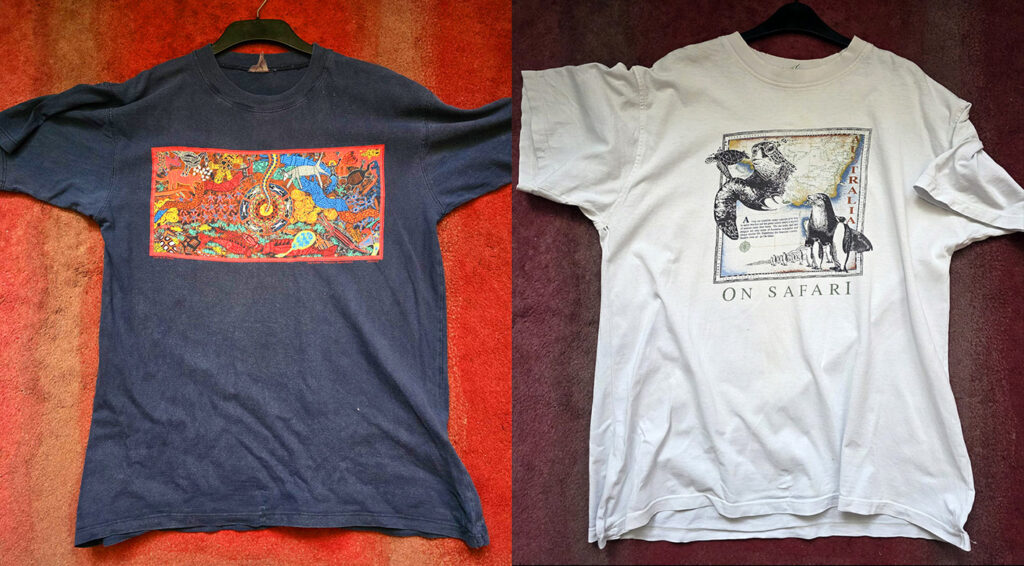
These two t-shirts belonged to my Dad and were bought on one of several trips to Australia made by my parents after all of us children had left home, and that makes them at least 35 years old – I wear them each, once a week or so in Winter…
I am a keeper! No, not that sort of keeper! I keep things I like – for a long time! Its not that I’m miserly about buying new clothes, if I was rich, ! would certainly indulge in buying new clothes, though not fashionable clothes per se, but distinctive, unique clothes – but I am not, so I don’t! When I was at school, my mother bought me sturdy, sensible clothes that would last and unable to dress as fashionably as my contemporaries, I made a virtue of being unfashionable. Besides, fashionable clothes are made less well in the rush to get them out at a tempting price – even more so for ladies’ clothes. Men’s clothes are generally slightly better made and last longer accordingly… I am jealous of the flamboyance of women’s clothes vis-à-vis mens’, are we not one of the few species where men are dowdy and do not have to win our mates with a display of finery?
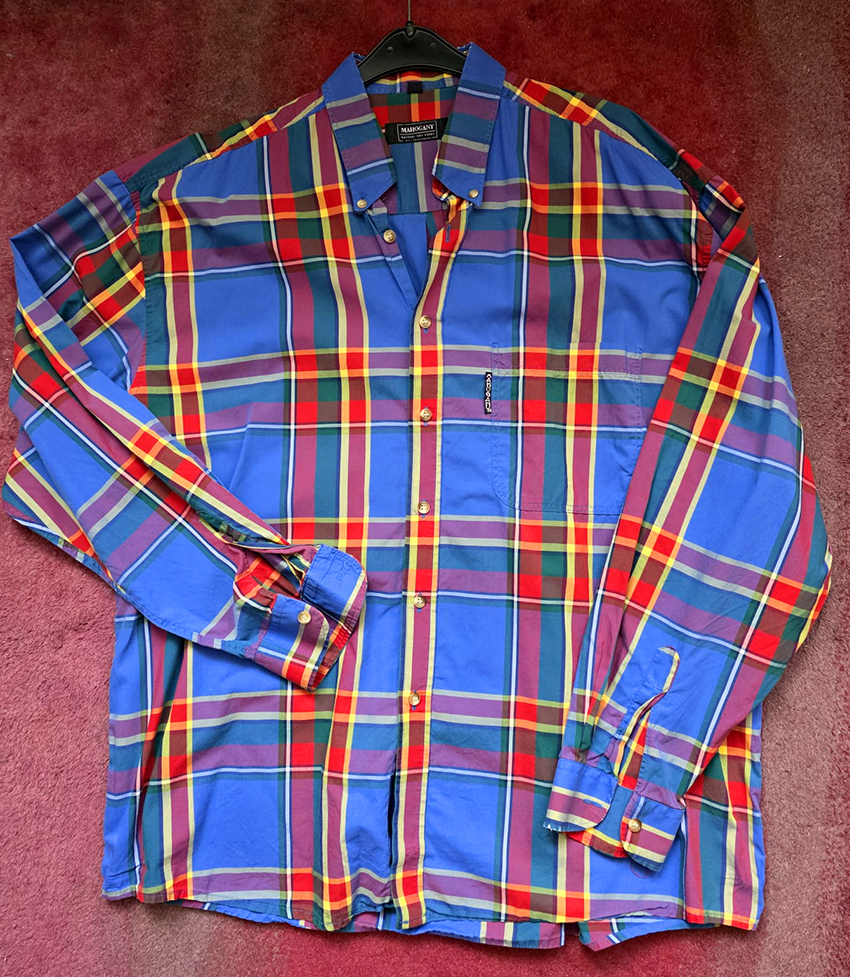
I do like something colourful and this shirt is a souvenir of my early years as a signwriter in Sligo, Ireland, when, in the runup to opening a new men’s boutique, a client agreed to a part payment in kind. The cuffs and collar are beginning to show wear but I think this fabric is not a candidate for turning – too fine and fragile… 29 years old!
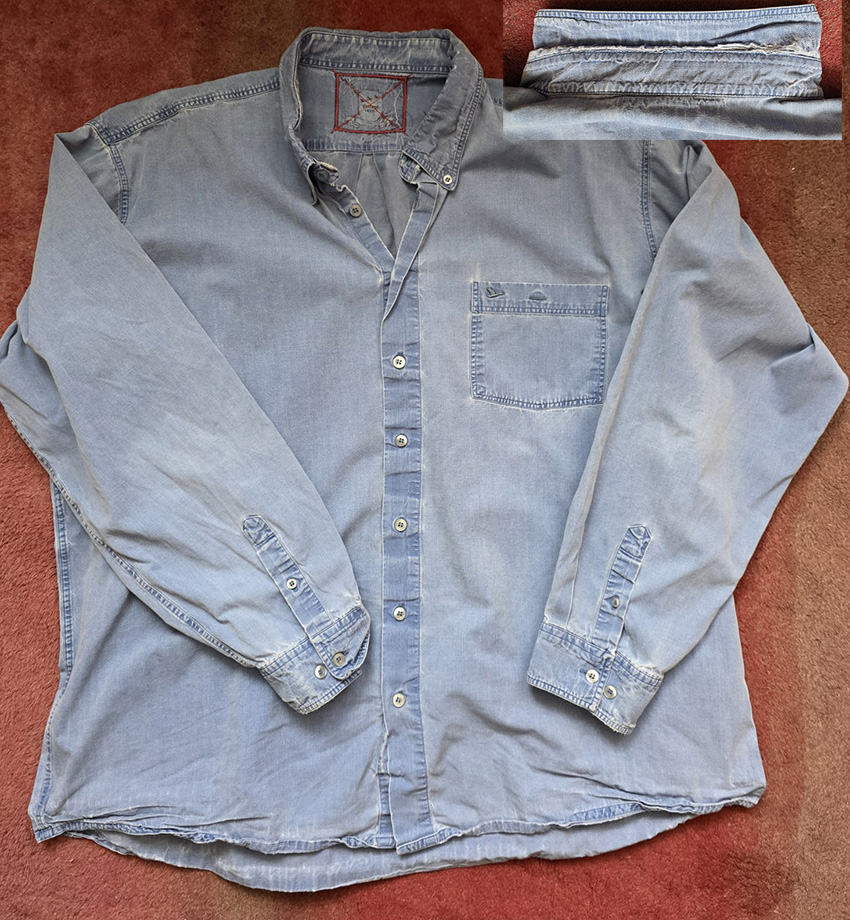
This shirt, thick cotton, was such a favourite that when the collar and cuffs frayed (see inset) I took them off and turned them – there is a fine line between looking weathered and ruined… 30 years old!
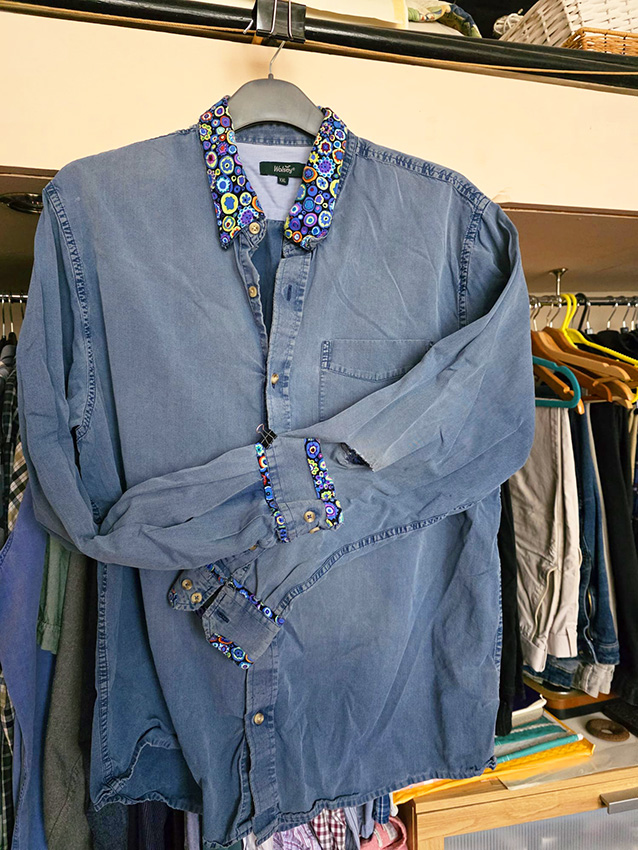
This is a late addition to the post (it had slipped off the mending pile and fallen behind the chest of drawers!). This beloved shirt had frayed at the collar and cuffs – too much for mere turning, so I embellished it with some Kaffe Fassett-designed fabric. Now, though, as you can see, one of the sleeves has ripped, it’s old and fragile so another repair is overdue…
I read some tips on preserving your clothes, the most useful of which was not to wash more frequently than needed and to close all zips and main buttons when washing…
Vintage clothes have become big business, and several of my grandsons helped pay their way through university by buying individual clothes from charity shops or buying secondhand in bulk online and then reselling them online. When my partner worked in a local charity shop, she regularly used her staff discount to buy shirts for me so that it is only in recent years that I have bought the occasional brand new shirt. I also look out for shirts I could embellish with brighter fabrics – I did do an evening class in dressmaking.
I confess I am not a great fan of autobiographiesthat begin at the beginning and follow a temporal path up to the present day – not that the person might not have some interesting stories, facts and opinions strung on their necklace, but it just doesn’t appeal as a structure. On the other hand, in my last, extra year at school in Oxford, retaking an A-level and adding a couple more, I was allowed out of school on my recognisance and saw a fascinating Exhibition at the Modern Art Gallery. The Artist had laid out and photographed every single possession of a single person – for example, all the cutlery was laid out in one shot, all the shoes in another. This more thematic approach appeals more and although I am not arranging the objects which I have chosen to tell my story in chronological order, I hope that my writing will be sufficiently interesting to keep your interest Dear Reader, and that on the journey from A to Z, you will assemble an impression of my life and who I am…
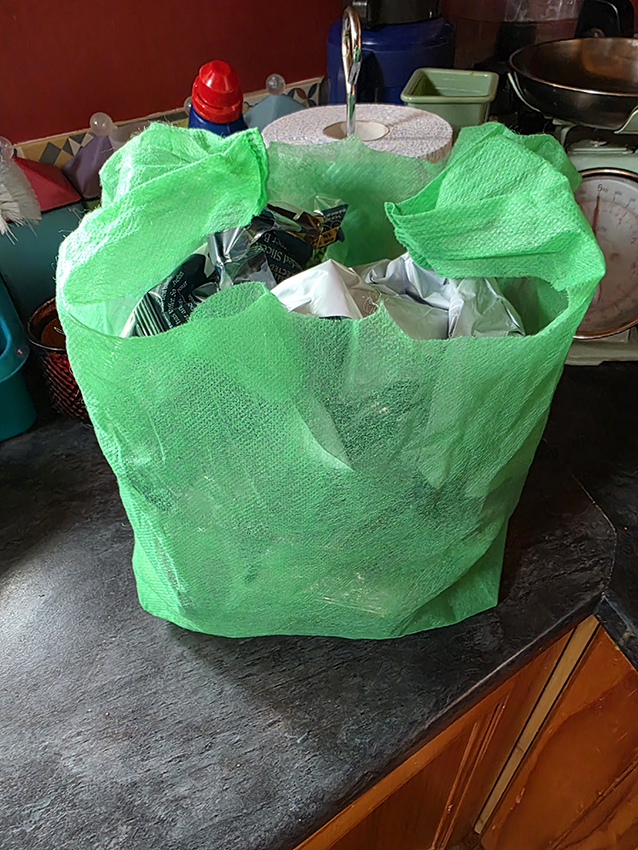
I like to visit food shops when abroad and this is a shopping bag from Morocco. I particularly like to see which local soups are available as packet soups – weird I know but they are lightweight souvenirs that bring back the country at a later date…
The shopping bag shown above may seem like an unlikely object to choose to symbolise Travel, but it is often the small differences you notice when travelling abroad and this bag is just such an one. In the UK, the attempt to reduce the amount of single-use soft plastic bags was effected by making a 5 pence mandatory in supermarkets who then realised the marketing possibilities of selling bags for life with their logo on them. This bio-degradable cloth bag is Morocco’s answer to the problem that had their towns littered with plastic carrier bags. America, has always(?) had brown paper grocery bags which have to be carried underarm which always seemed a precarious thing to do but was definitely more environmentally friendly – advanced thinking, especially when you see the environmental loutishness of Trump and his ilk… Further to the theme of environmental care, the bag is shown full of soft-plastic for recycling although I emptied it into anoter container subsequently so that I could retain this modest souvenir of a holiday in Morrocco that Barbara and I took a few years back.
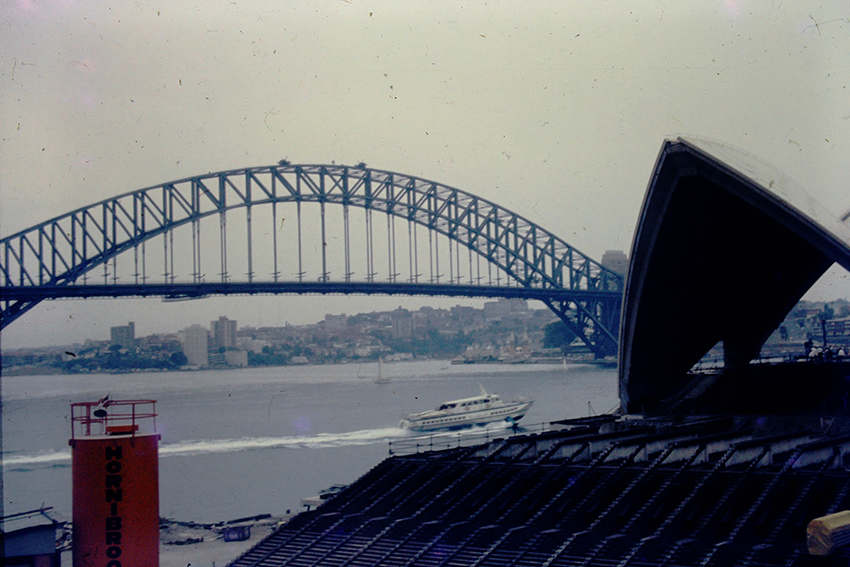
I searched for an iconic moment from our trip to Australia in 1968 and this image of the Sydney Harbour Bridge along with the partially built Sydney Opera House in the foreground places the year as 1968.
It seems to me that there are two ways to travel, you can go on an extended holiday that takes in many countries, as a succession of my grandchildren have been doing, but it seems to me, that you barely graze the surface of any particular place, and take the risk that everywhere might end up seeming like an airport, train or bus station. The other way, which I would prefer to embrace, would be to go to one place, as foreign as possible and to spend at least a year there, seeing all the seasons that it had to offer and with enough time to get to know the place and the people a little better. The only places I have lived for six months or more are Australia, six months in 1968 when I was 14, Crete for six months (cutrailed by Brexit regulations) during the 2020 lockdown, and Ireland for 10 years, which I think is long enough to say you have lived somewhere and not merely visited…
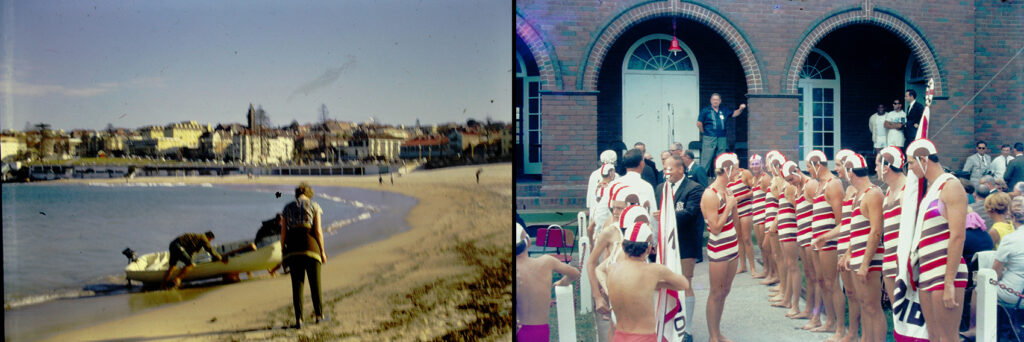
We were in Australia during their Winter and we lived in a new apartment block in Bondi but as this photograph of Bondi Beach shows, though as warm and bright as an English Summer, the beach was deserted until the day “the season” began, and then it was packed! My mother is the figure searching the tide line for treasures,,, Scanning my father’s slides,I found this picture of the occasion of the Prime Minister to North Bondi Lifesavers – its not quite Baywatch, but almost…
It was cheaper to go by ship to Australia in 1968 than to fly – long-haul flying was in its expensive infancy whilst travel as opposed to cruise ships were on their last legs. We sailed P & O’s SS Orcades on the way out and because the Suez Canal was closed due to the Six Day War, we had to go via South Africa, calling in at Rotterdam, Lisbon, Dakar, Capetown, Durban before arriving at Pert in Western Australia. After staying with relatives in Bunbury, W. A., ws travelled by train across the continent to leave my Granny with my Uncle in Caslemaine, Victoria and then on by train to Sydney where my Dad taught at the University of New South wales and we children went to school. We bought a Holden car – a car based on American cars of the time, and in the holidays we made a 4000 mile round trip up to Gladstone, where the Great Barrier Reef begins (though we did not get to see it) then right back down to Castlemaine and finally back to Sydney.
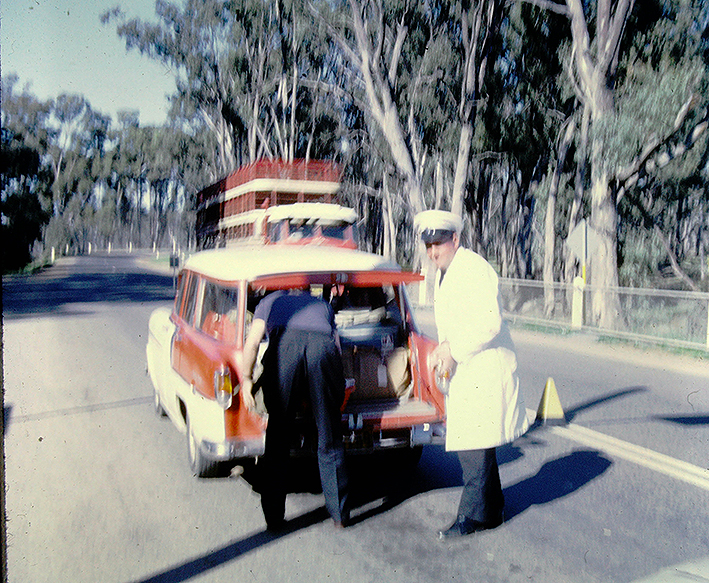
Our Holden car on its 4,000-mile trip stopped at a Tick Control Point…
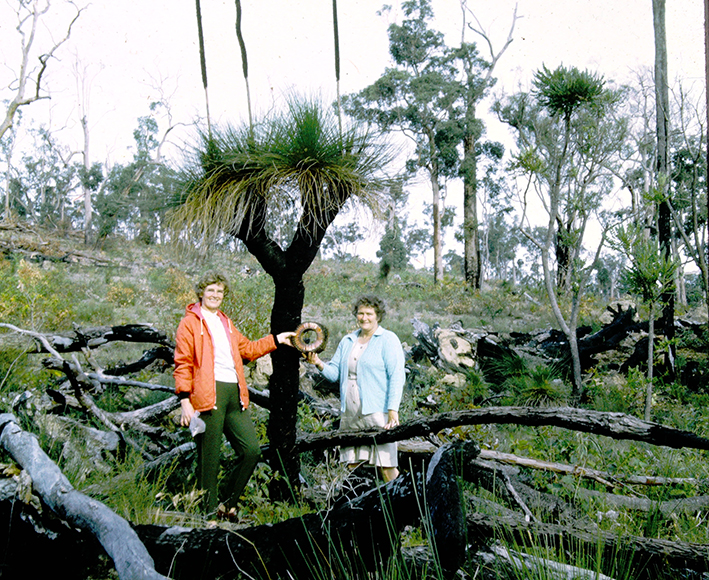
The not very PC named “Blackboy Tree (because early visitors thought they were spear wielding natives) – my mother with one of our relatives in Western Australia. They are holding up a section of the trunk from which seep, large drops of deep red resin. I bought some back with me and dissolved in meths, it is used as a furniture stain….
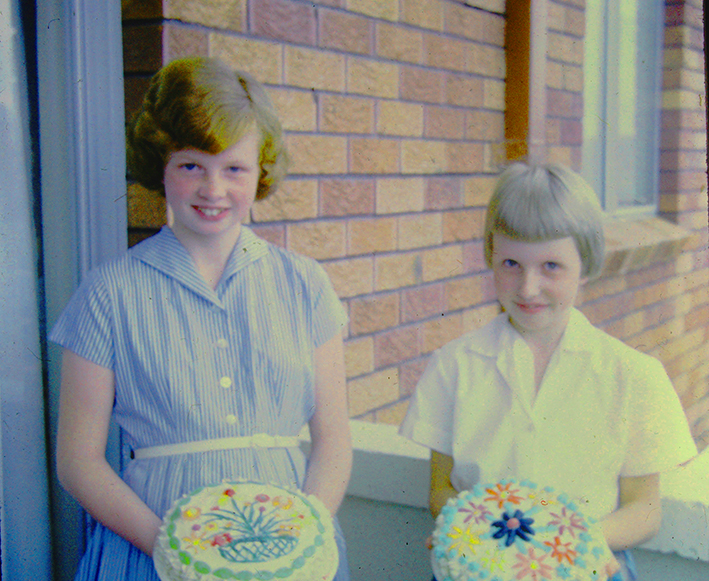
My sisters, Carol and Helen, are holding their entries for a cake decorating competition at school.
Barbara and I lived two doors away from her sister in Crete over the Winter of 2020 and there was almost no covid there and so although it was officially locked down, we did sneak to a few deserted beaches and drove around the part of the island near to Elounda. You can find a poem about this under “B”. Below is small selection of favourite photos from other holidays in various destinations…
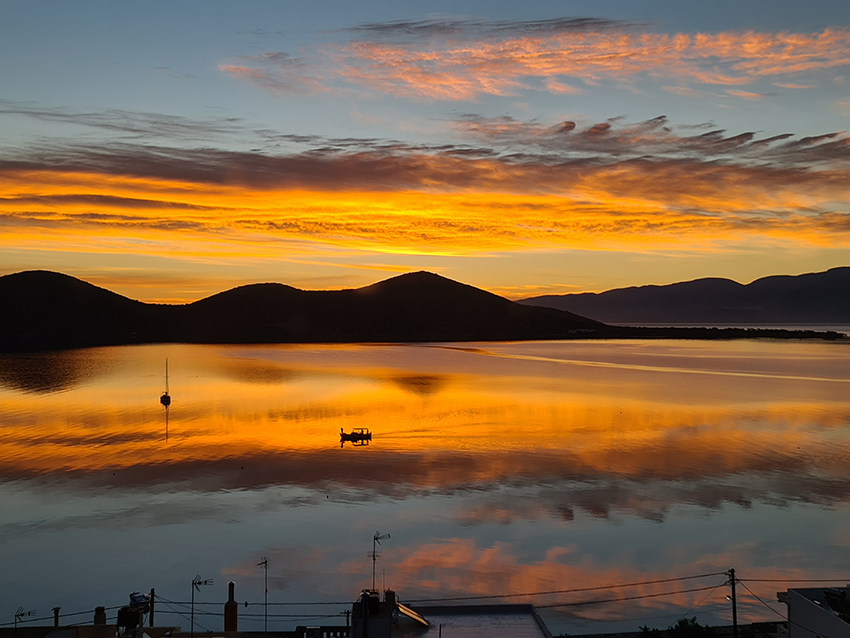
The view from our apartment in Crete from where we saw some spectacular sunrises this may have been taken by my sister-in-law…
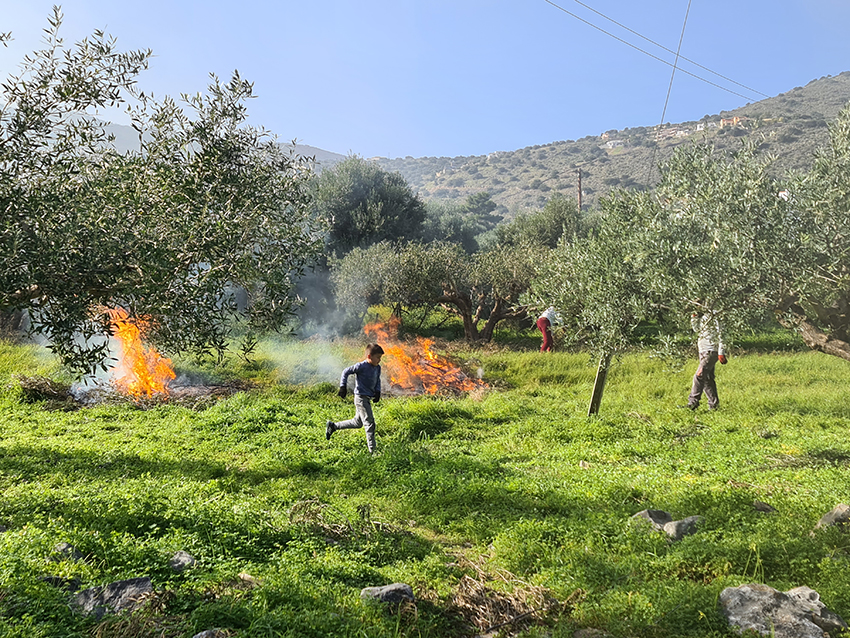
Walking back from shopping in town (Elounda), I snapped this boy running with giddy glee as his family pruned and burnt the prunings of their olive grove – one of my favourite…
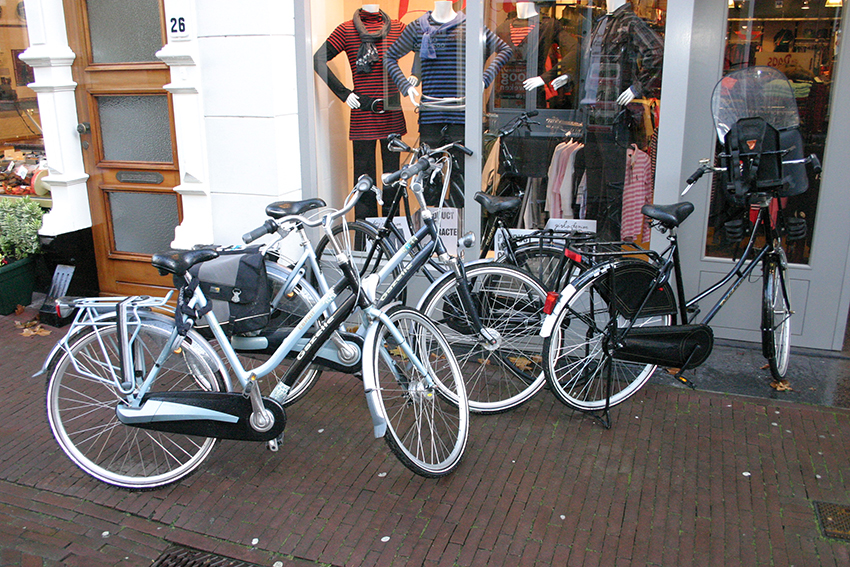
A peloton of bicycles outside a boutique in Gouda which, like a miniature Amsterdam is all about canals, pedestrians and bicycles…
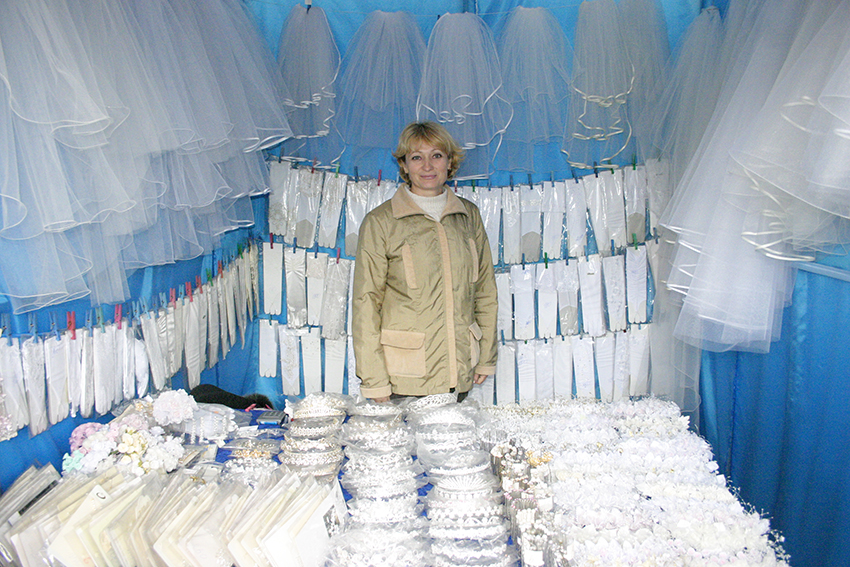
Shopping is a universal pleasure when travelling and if you live in Chisinau, capital of Moldova, you could go to the expensive, international shops but most people go to the most enormous outdoor market. The avenues between the stalls are rainproof and there is a whole street devoted to wedding dresses and all the accoutrements. I wanted to photograph the repeated ranks of wedding posies whilst the stallholder was away but she came rushing back and insisted I record her for posterity and I am so glad she did…
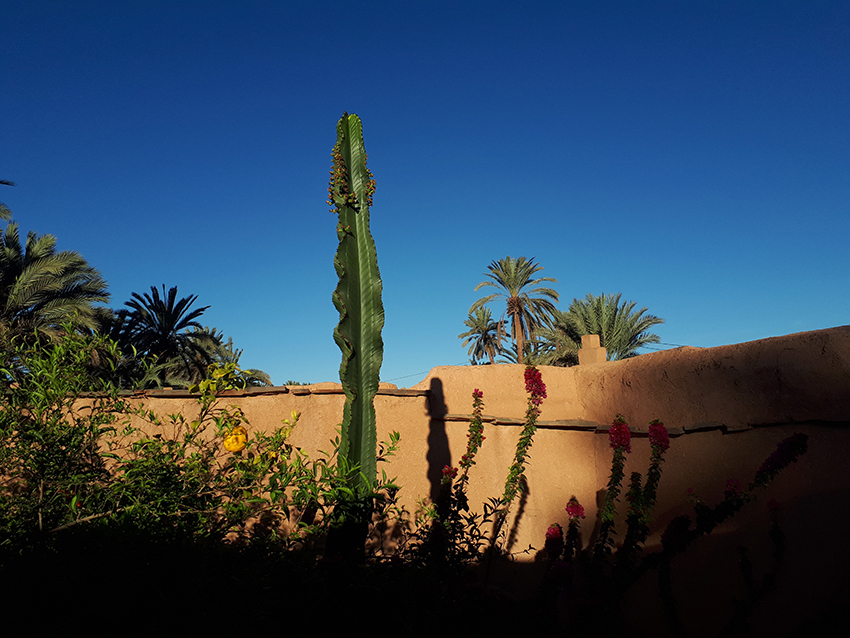
The garden of La Maison de l’Homme Bleu at the oasis near Guelmin was the closest we got to the Sahara on holiday in Morocco, and this shot captures the moment just before sunset, which falls suddenly near the Equator…
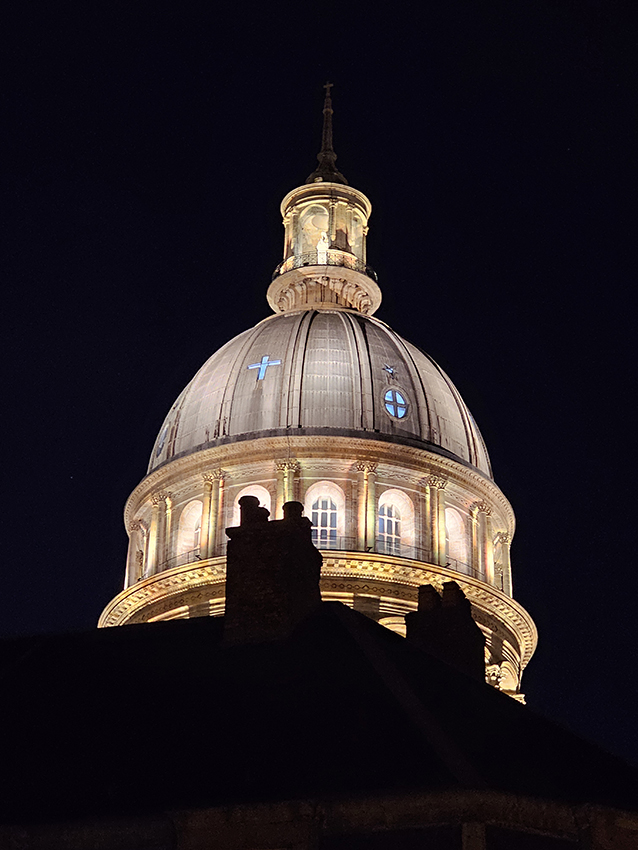
The view, literally from my pillow on the top floor of a house in the old, walled city of Boulogne on our roadtrip of Normandy, last year…
Tapestry, Needlepoint
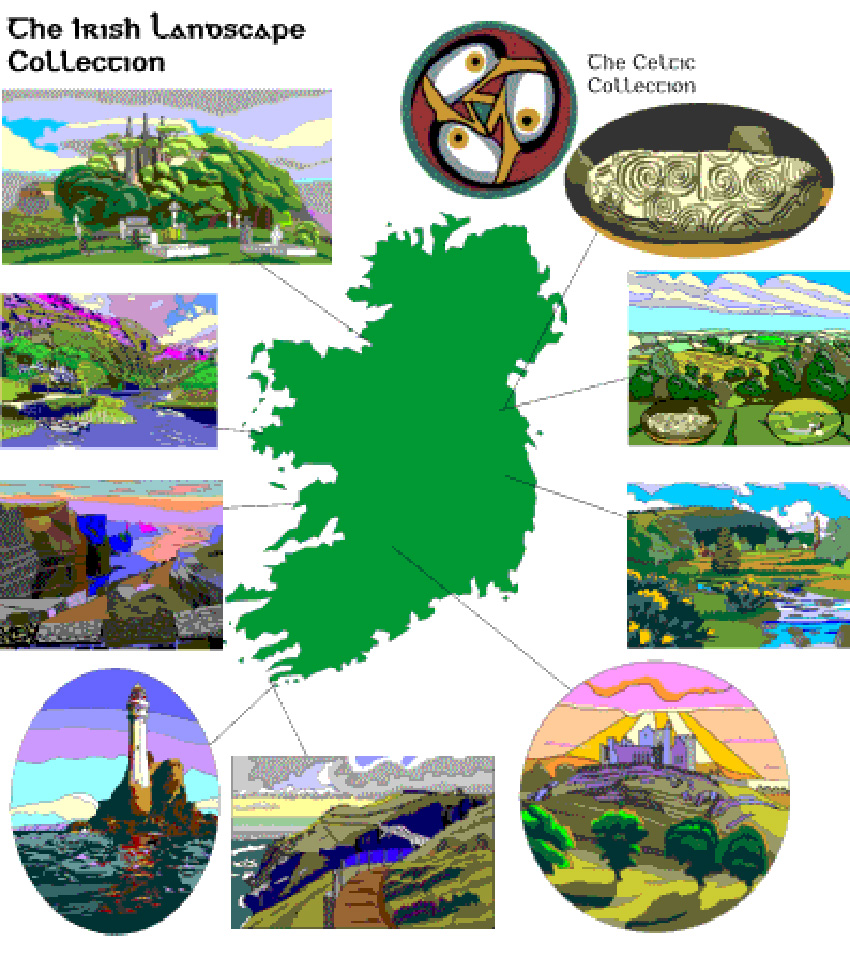
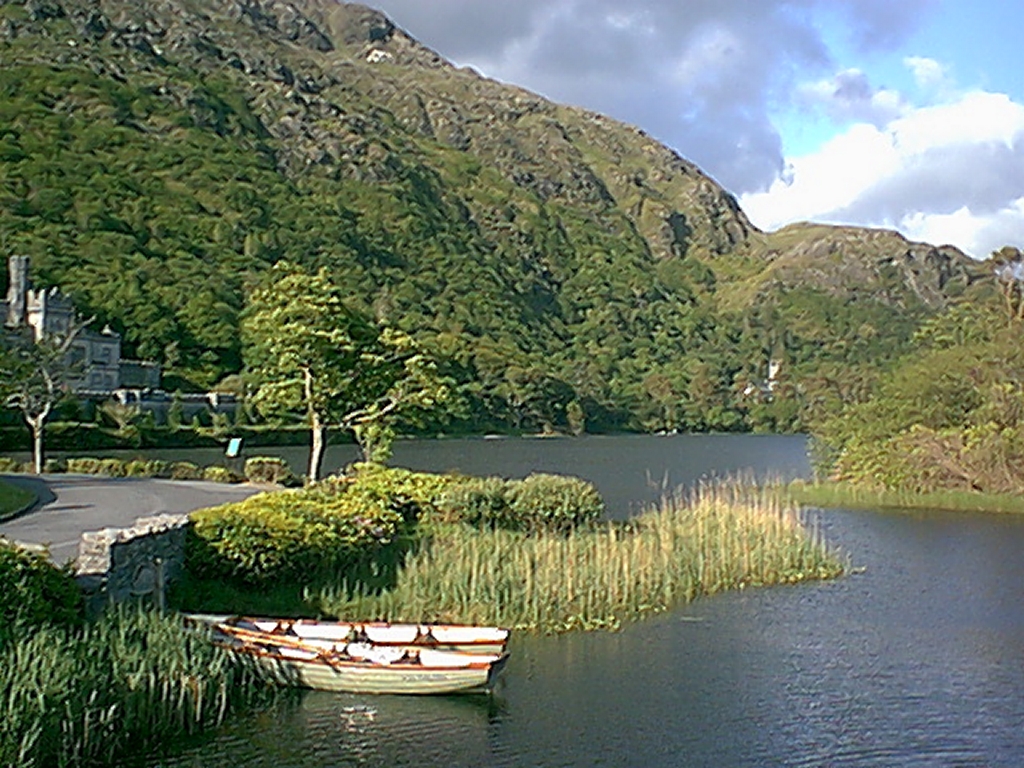
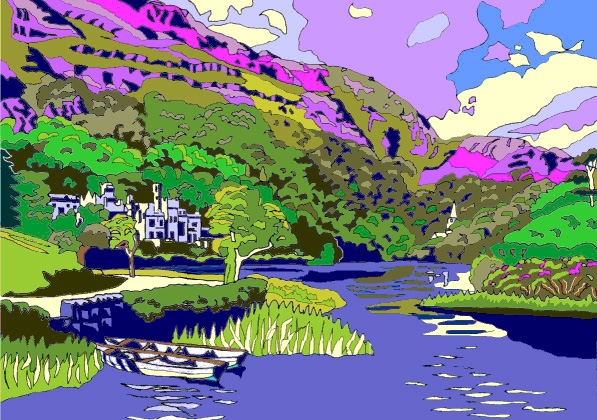
In 1999, whilst living in Ireland and shortly before breaking my hip and spending a year on crutches, I had obtained a grant to start a business making needlepoint tapestry kits. Back in St.Albans, i had encountered a company supplying everything you need to heat-transfer pictures on T-shirts, and I realised that if you could do the same on tapestry canvas, you could do print-to-order Needlepoint Tapestry kits. These are normally screen-printed, which means that the entire run of canvases needs to be printed at one time, and stored (sometimes for years) so that although the heat transfer method is more expensive per print, ultimately its more economical. The broken hip gave me a lot of time to develop the business and later I travelled all over Ireland by train and bus to take photos and make sketches for the designs, which you can see below.
If you go to the website, which remarkably is still up (although there are some flaws in rendering and links), you can click on the individual landscapes to go to that design – this was my first ever website design…
Each design started out as photo or sketch.
This is the image which was printed onto the canvas and wools matching the colours were supplied in the kit.
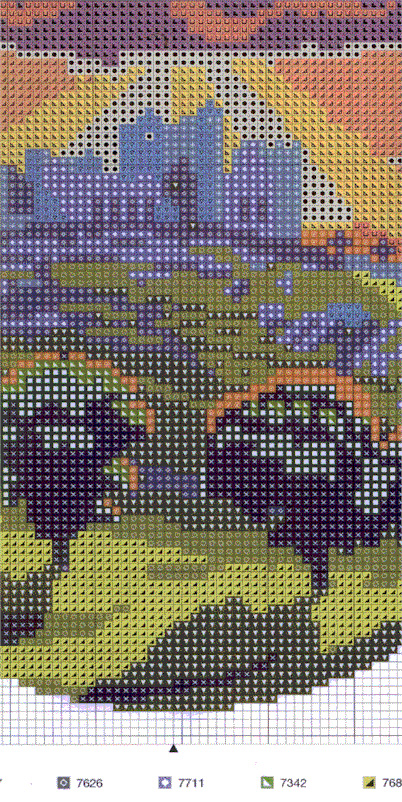
The designs were also available as counted cross-stitch charts. This one is a section of The Rock of Cashel.
The business was not a great success due to distribution issues and because I then had a teaching job, couldn’t yet drive again and ultimately because we moved back to England, but it was fun and there are scattered stitchers all over the world who have them…
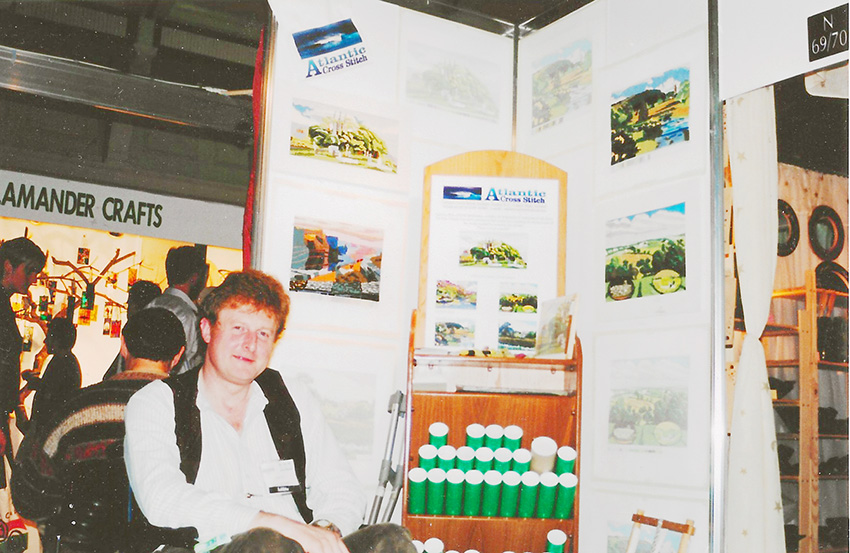
Still on crutches and sensibly sitting down, promoting Atlantic Stitches at a craft exhibition c. 2000…
Tear-ing Up…
Several people of the same venerable age as myself have confessed that they tear up at the drop of a hat – I guess its inevitable as a mixture of memories, observations of the world, nostalgia and knowledge that one’s end is nearer and realer day-by-day… I tried to keep a record of the things that made me tear up in just one week but couldn’t keep it up, so here is a small selection.
Listening to the BBC programme “Add to Playlist” the BBC radio programme in which they were talking about how Doo-Wop was an artform developed by poor African-American teenagers who couldn’t afford instruments and therefore sang a capella.
Florence and the Machine singing “Try a Little Tenderness” which she does very slowly and with feeling…
Joni Mitchell singing “River” surely the saddest Christmas song ever sung…
Hearing any song sung by Linda Ronstadt, but particularly Cansons di Mi Padre and knowing that she can no longer sing well enough to perform due to Parkinson’s disease.
These are all music, but of course films and TV dramas trigger tears all the time and here is a short drama of my own…
Ten Second Theatre
Driving up the hill through the village a ten-second drama plays out to my right – a baby boy comfortable in the crook of his grandmother’s arm receives a hurried kiss from his mother as she turns to walk down the hill to the bus stop the baby stretches out his arm towards his departing mother once more going to work more bewildered than upset but his grandmother steps back indoors before possible tears leaving the pavement empty…
I confess I am not a great fan of autobiographiesthat begin at the beginning and follow a temporal path up to the present day – not that the person might not have some interesting stories, facts and opinions strung on their necklace, but it just doesn’t appeal as a structure. On the other hand, in my last, extra year at school in Oxford, retaking an A-level and adding a couple more, I was allowed out of school on my recognisance and saw a fascinating Exhibition at the Modern Art Gallery. The Artist had laid out and photographed every single possession of a single person – for example, all the cutlery was laid out in one shot, all the shoes in another. This more thematic approach appeals more and although I am not arranging the objects which I have chosen to tell my story in chronological order, I hope that my writing will be sufficiently interesting to keep your interest Dear Reader, and that on the journey from A to Z, you will assemble an impression of my life and who I am…
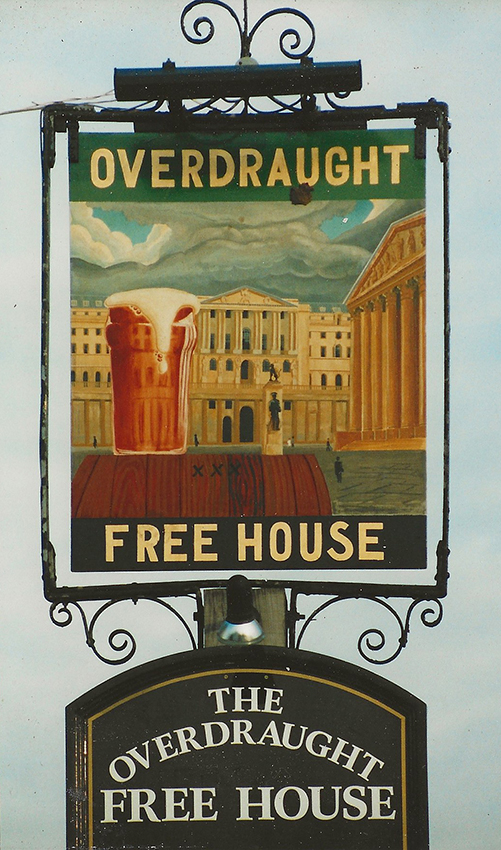
This sign remains one of my favourites from my pre-Ireland signwriting days. It was the first pub sign that I ever got to do because most pubs were tied to breweries who employed their own in-house signwriters. But in the year before I moved to Ireland, the government broke the monopoly of breweries and forced them to sell off some as “Free Houses”. “The Overdraught ” was a pun on the new owner’s means of financing his purchase so I followed suit by showing an overflowing pint of beer in front of the Bank of England! Pictorial pub signs hark back to the days when many people couldn’t read and relied on the pictures…
Signwriting was not a considered choice – the first piece of sign-like lettering I did was to paint my late sister Carol’s,name on a steamer trunk left over from our voyage to Australia in 1968. Carol was mad into all things canal, so I painted a shadow block lettering such as you see on English narrow-boats. Then I asked, on the spur of the moment, whether an antique shop opening just around the corner from me would like a sign – English readers may laugh when I tell them it was called Acorn Antiques (a comedy sketch in Victoria Wood’s iconic comedy show). A wholefood shop in Brixton followed and when I moved to St. Albans to live with Barbara, it became my living as a jobbing signwriter.
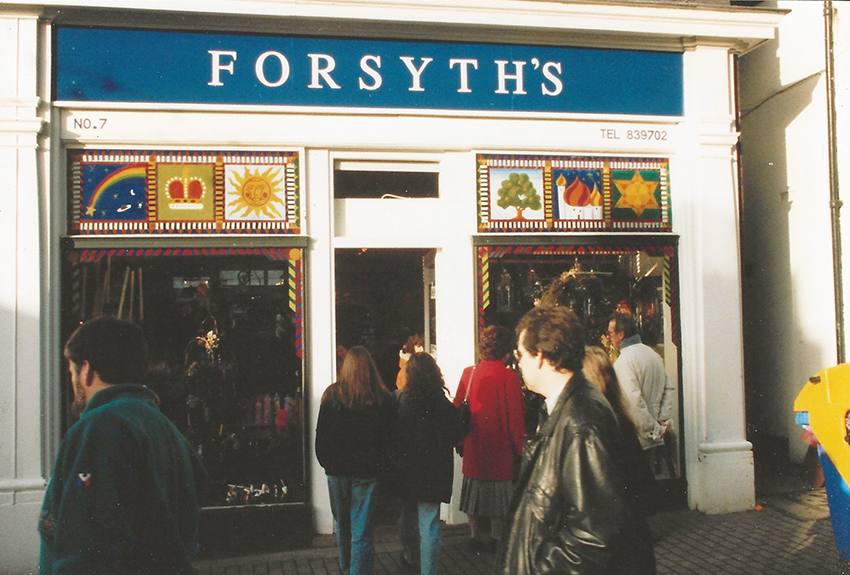
A St. Albans shop, if my memory serves me correctly, where I painted both the fascia board sign, and the window panels…
Signwriters or Signpainters can be separated from ordinary painters because they hold their long-bristled brushes perpendicular to their work. Halfway through their apprenticeships, they would divide into signwriters and poster writers – those indian ink on fluorescent paper, posters, typically seen outside churches back in the day… An old signwriter told me that when he was apprenticed, he spent a year before even touching a paying customer’s work. Each day they would practise writing letters on a gloss board, only to clean them off after the end of day’s inspection – he said they spent a whole month just practising “S’s”. Perhaps I was destined to become a signwriter for my only memory of a unique interaction with my Grandad (the one who was unable to become a teacher after WW1), was that he looked over some lines of “S’s” I was practising and said ” The halves should be equal top and bottom!” to which I replied, challengingly “No! You can have them differently if you want to!”
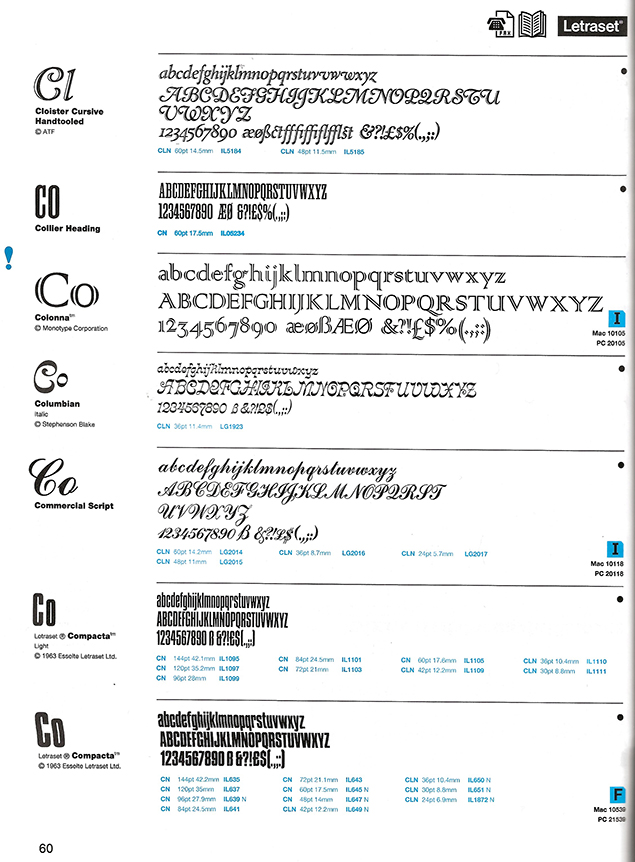
I became a signwriter at a crucial time for the profession, computer-cut vinyl and pespex lettering were on the rise and signwriters had been challenged by the rise too, of the graphic designer. When I worked at the Greater London Council as the office junior in the Graphic design section, if we wanted a fancy headline font, we could use Letraset. For those too young to remember Letraset, you took a sheet of lettering mounted/printed on the back of a sheet of plastic, placed the lettering where you wanted it on your artwork and then burnished the sheet, until, when lifted, the letter was left behind – transferred to the artwork. But here’s the rub – in the days of lead letterpress printing, the minimum spacing of letters was governed by the solid block of lead – you could increase the space (kerning) by inserting spacers but the minimum was a given. Now, with Letraset, and later, graphic programmes which anyone could use on a PC, you could, if you wanted, even overlap letters and Letraset blossomed into a myriad of exotic letters, many of which were a nightmare for signwriters to paint if instructed to by a client who had previously gone to a graphic designer for a “design”. Now signwriters, for the most part, used to have tree basic styles, Serif, Sans-serif and Script – everything else was just the use of different bolding, spacing and arranging of letters in straight lines, diagonal lines of even curved lines. Of course there was the fancy stuff you see at fairgrounds, on canal boats and on high end shops, but for the workaday sign, the options were limited for time and cost reasons, so these new demands on their skill were a nightmare which was only really resolved as computerised sign making took over from hand painting.
A page from a late Letraset Catalogue, 1995/96, far after the heyday in the 70’s when I started in graphic design but illustrating the diverse styles which signwriters wer now, routinely expected to use.
So signwriting meant drawing the sign out on a fullsize piece of paper, poincing (with a toothed wheel similar to that used by pattern-cutters in tailoring , but much finer) taping the design to the painted board (tricky on a shop fascia on a windy day) and then rubbing a bag (old sock) full of powder across the pounced letters so that when the paper was removed, the outline of the letters was left in faint dotted lines of powder. As yo used your brushes to paint the letters, the powder would disappear into the paint or be able to wiped off when the paint was dry. That same old signwriter said the only real difference in practice from his early days, was the use of masking tape – not the whit tape used by painters and decorators, but red, transparent “Litho Tape” a crossover from the print industry – it could make neat edges top and bottom or even follow a curved line. Previous to tape, signwriters had to rely on the squareness of their “Chisel” brushes to get neat corners. The oter, pointed type brush used by signwriters is known as a pencil.
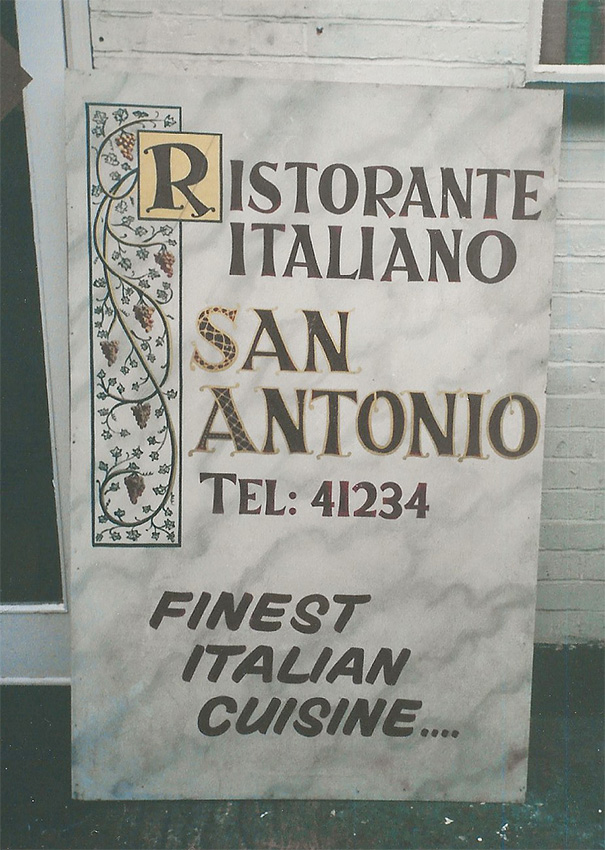
As well as shop fascia boards, pavement A-signboards are a staple for the jobbing signwriter. In this one, I had marbled the background before painting the lettering…
In the 80’s, there was a resurgence of “special paint effects” – woodgraining, marbling, sponging or as above, rag-rolling. These finishes had last come to prominence in the 1930’s when the advent of plywood panels in doors made it necessary to paint rather than varnish doors. For me, this meant a mission creep from signwriting to specialist decorating as in this Chinese Restaurant.
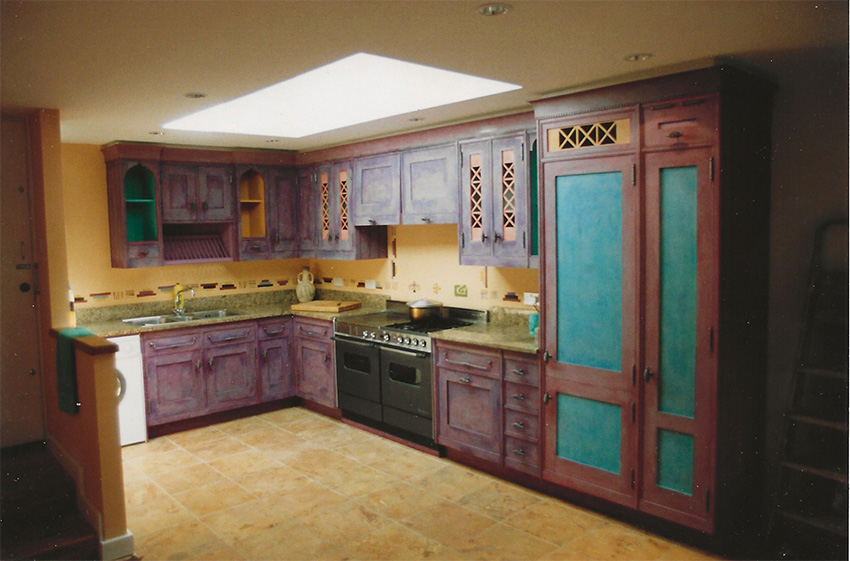
Smallbones, a famous fitted kitchen company in the ’80s, left it up to the clients to find a painter, and I enjoyed painting this one in a modernist listed building – a 1960’s house in North London (a detail, including stencilling, is shown below).
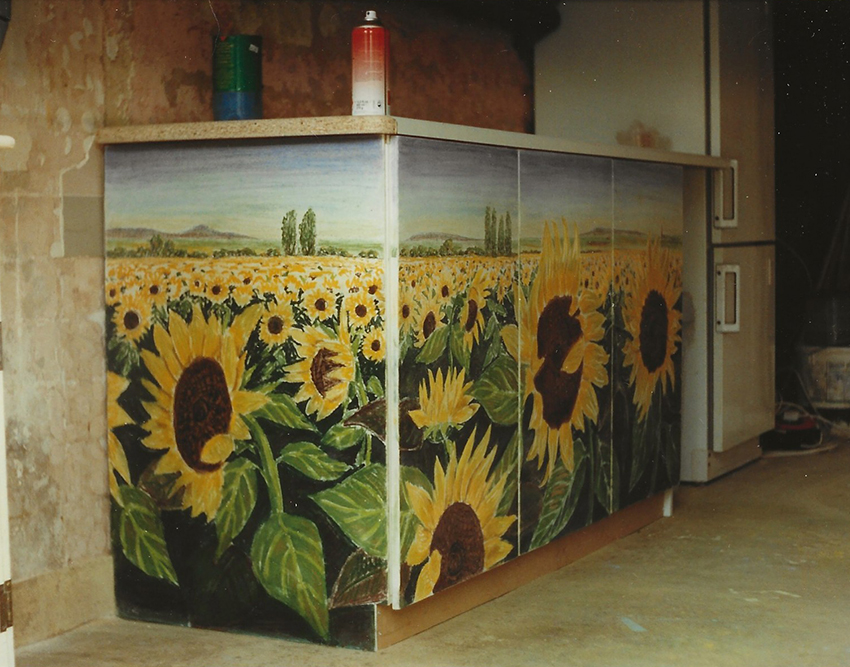
A kitchen I constructed from scratch – what can I say my daughter loved sunflowers…
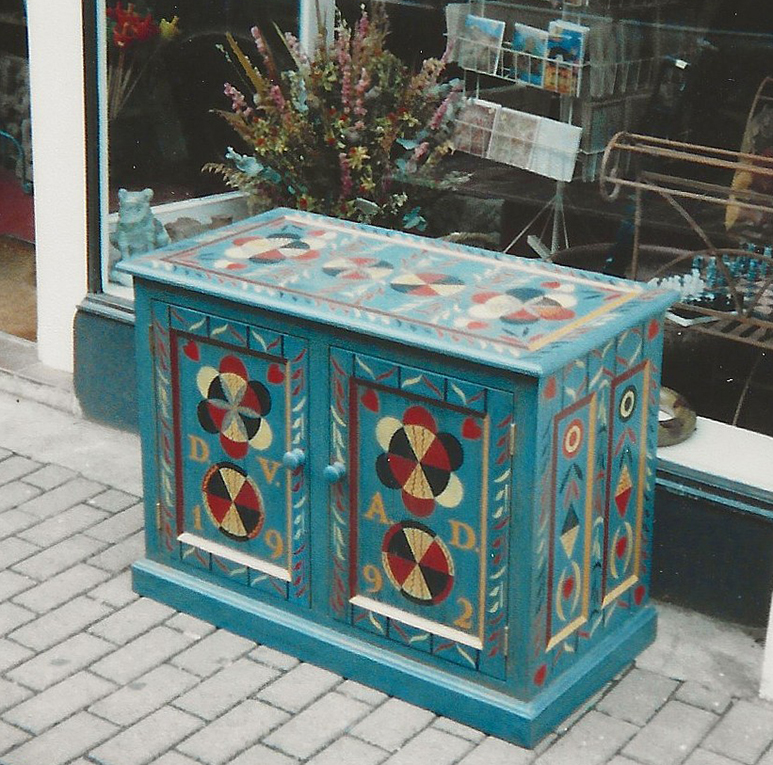
A stencilled piece of furniture intended to be the start of a collection bur which didn’t get realised and which we still have in our home today. Guess the date I painted this…
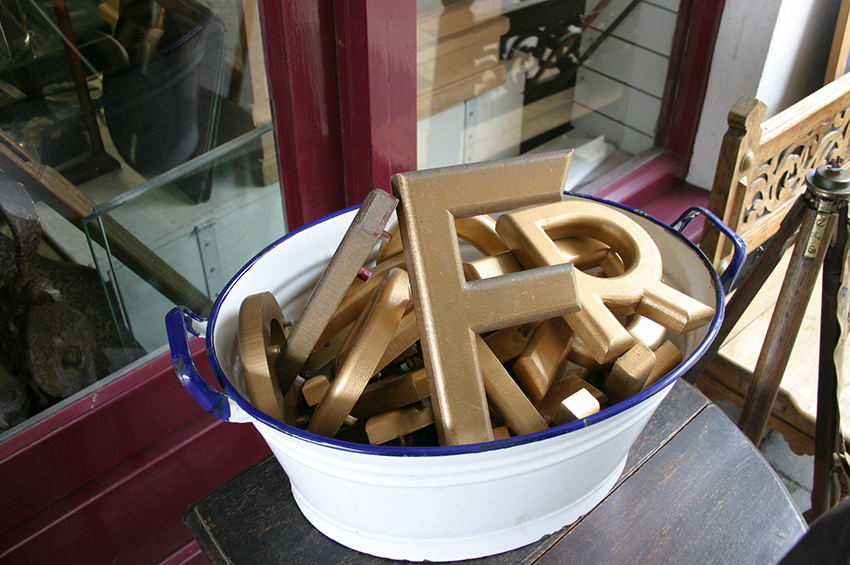
Like Letterpress wooden type before it, the fate of old 3-D sign lettering was to end up in antique shops…
Squidgy Things
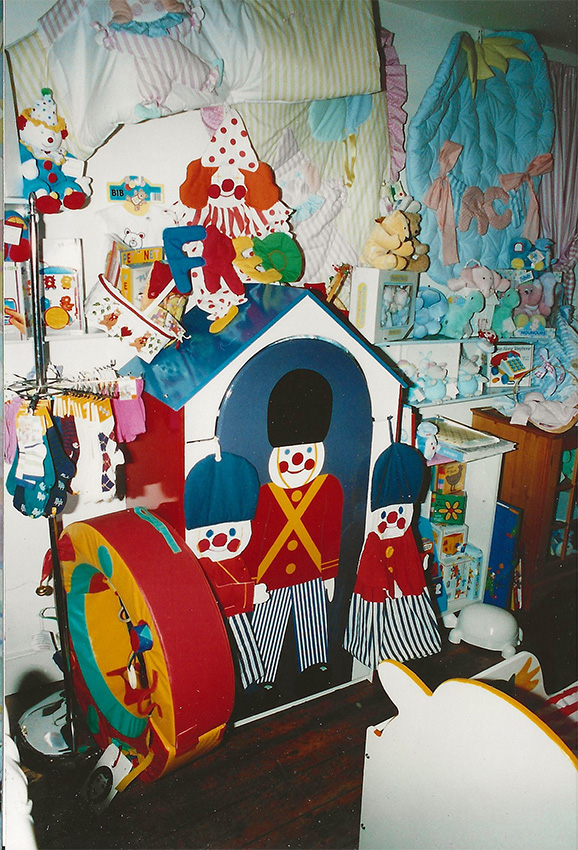
Eventually, I fell in with a lady called Anna Ryder-Richardson, a nursery, soft-furnishing maker who had a shop called Squidgy Things and for a year, I made furniture to compliment her soft-furnishings. Unfortumately, developing a business such as this requires finance and my own finances suffered and it eventually became part of the reason I ended up moving to Ireland, where I returned to amore steady diet of signwriting. I fond myself the only signwriter in Sligo who could work with gold-leaf which gave me an immediate advantage.
A Postman Pat children’s bed and below, a sentry bow wardrobe…
During the time I worked with Squidgy Things, we received an unexpected boost due to the scandalous revelation of intimate phone calls between Princess Diana and her lover which became known as the “Squidgy Tapes” – you couldn’t make it up… Shortly after I moved to Ireland, Anna Ryder-Richardson herself, made a move into TV where she had a programme known as “House Invaders” in which she did house makeovers often using paints and fabrics that the owners already possessed…
P.S. I was originally going to include Spreadsheets in this post but I mentioned them elsewhere, so although I removed it from the tentative title, WordPress has incorporated it into the link – apologies to any spreadsheet fans…
I confess I am not a great fan of autobiographiesthat begin at the beginning and follow a temporal path up to the present day – not that the person might not have some interesting stories, facts and opinions strung on their necklace, but it just doesn’t appeal as a structure. On the other hand, in my last, extra year at school in Oxford, retaking an A-level and adding a couple more, I was allowed out of school on my recognisance and saw a fascinating Exhibition at the Modern Art Gallery. The Artist had laid out and photographed every single possession of a single person – for example, all the cutlery was laid out in one shot, all the shoes in another. This more thematic approach appeals more and although I am not arranging the objects which I have chosen to tell my story in chronological order, I hope that my writing will be sufficiently interesting to keep your interest Dear Reader, and that on the journey from A to Z, you will assemble an impression of my life and who I am…
Restaurateur
My good self from The Telegraph & Argus article on the opening of Frewins in January 2012…
I used to have trouble remembering the correct spelling of the word Restaurant – knowing where to put the au vovels, middle or last until I started to think of how it sounded Restore-ant a place to rest and be restored which solved that problem – the au is in the middle. But recently, a poet, older even than I, who also attends the Keighley Library Poetry Group, monthly, – gently pointed out that on the short bio on the back of my self-published chapbook, I have misspelt Restauranteur – it should be Reastaurateur and upon checking, I found that indeed it should! By my sounding system the owner of a Restaurant is therefore a Restore-ateur – one who restores you in body and hopefully in mind…
There is of course, nothing restful about running a restaurant, especially if you are one of the chefs! There is perhaps, something that restores the spirit on a daily basis else why would so many people do it – it is truly a lifestyle choice that consumes every waking hour with menu-planning, shopping, food-prep, cooking, supervising staff, talking to customers, clearing up and cleaning and somewhere in there, paying bills, staff and doing accounts… Well it is all of those things if you are a small restaurant! During the first two weeks of opening, between all the running around and working in the heat and pressure of the kitchen, I lost a pound (0.4Kg) each day…
When my mother died, I was between jobs which was lucky in terms of spending time with my sisters, sorting out her flat, and when, afterward, I returned to Yorkshire with a little immediate cash from my mother’s estate, I spotted a Restaurant premises up for rent in the next village of Addingham. Following a building collapse (nobody was hurt) and the rebuilding of the front of house area, the previous owners, who had moved into a different area of catering, decided to let it out, fully equipped and ready to go. I paid too much for it, didn’t know that a large gastro-pub was also about to reopen, and the year proved dire in terms of weather – it rained all Summer, non-stop. I operated a Café menu during the day, so daily baking of scones and gateaux, whilst in the evening, there was a Bistro menu – so a double challenge there! The weather meant that the walkers, tourists, cyclists and villagers either didn’t materialise or went to the gastro-pub which also had the advantage of it’s own car park and so I never got out from under the shadow of their honeymoon phase. I did, of course, have customers – just not enough, and so after eight months, with debts rising to meet the rest of my inheritance, I had to admit defeat and close. Losing your inheritance is no small thing and yet, part of me can say that I had no regrets, or rather, that I enjoyed (almost) all of it! I had one of my grandsons who lived in Addingham, working as a waiter in the evening, I assembled a great bunch of staff, some of them on an apprenticeship scheme and I cooked a lot of good food, and those customers who came, were I think, happy and a few became regulars!
People often want to know what kind of food I cooked and I have to say it was homely, eclectic and a little fusion. My signature dish was Venison marinated in Strawberries and Stilton, and Brioch Bread-and-Butter was always on the menu. I had a curry night every few weeks. What I don’t have is menus – they were hand drawn – no digital ghosts, and no pictures – I was too busy to be taking photos – but I have a lot of happy memories…
You can read a bit more about dishes I sometimes served at Frewins here:-
If you want to know what it is like to work as a chef, you could do worse than read “Kitchen Confidential” by the bad boy chef, Anthony Bourdain who ended up with a TV series on food around the world. I reviewed the book as part of a “Six Degrees of Separation” post – a fun challenge in itself, if you haven’t encountered it – you can read my post below.
I confess I am not a great fan of autobiographiesthat begin at the beginning and follow a temporal path up to the present day – not that the person might not have some interesting stories, facts and opinions strung on their necklace, but it just doesn’t appeal as a structure. On the other hand, in my last, extra year at school in Oxford, retaking an A-level and adding a couple more, I was allowed out of school on my recognisance and saw a fascinating Exhibition at the Modern Art Gallery. The Artist had laid out and photographed every single possession of a single person – for example, all the cutlery was laid out in one shot, all the shoes in another. This more thematic approach appeals more and although I am not arranging the objects which I have chosen to tell my story in chronological order, I hope that my writing will be sufficiently interesting to keep your interest Dear Reader, and that on the journey from A to Z, you will assemble an impression of my life and who I am…
Qualifications
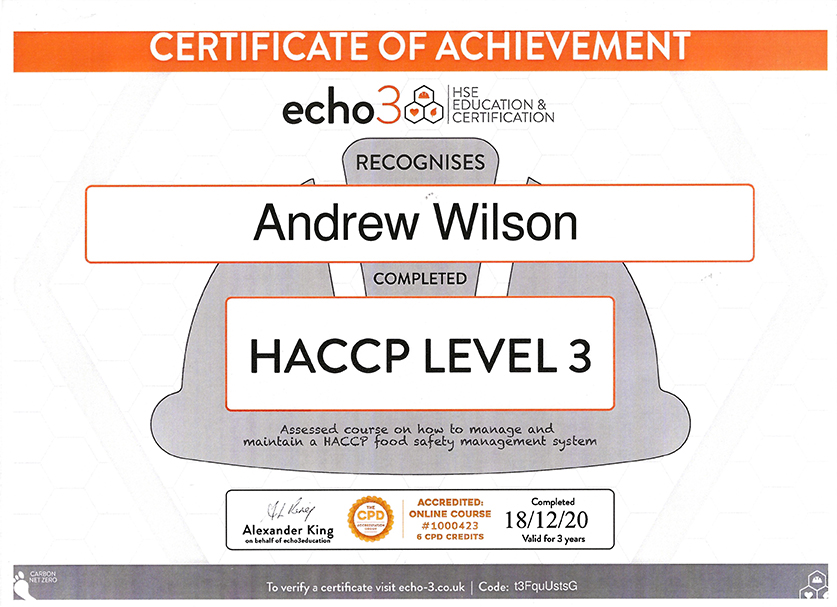
There are qualifications that are requirements for certain jobs and part of my part-time job is as HACCP Officer for the company – HACCP is Hazard Analysis and Critical Control Points, a food safety management system. My initial HACCP study for our company ran to some 35,000 words – mostly written during lockdown on Crete for six months…
A great deal of emphasis is placed on Qualifications – usually obtained by taking an exam of some kind, but certainly in Britain, the push, at a certain time in the past, to get students to University, may be seen, cynical as it may be, to have postponed the entrance of people into the ranks of the unemployed and as a result, many students took courses of dubious value in getting a job and in any case, at the present time, even a “useful” degree is no guarantee of employment. Of course obtaining a qualification at university or even at a lower college, is not just about getting the qualification but getting an “education” which is different thing altogether! Education does not come from the academic facts that can be subject to examination, it is often invisible, perhaps even to the person who has received it – maybe apparent only after some subsequent life experiences. It was this principle that led the universities of Oxford, Cambridge and Dublin to promote a BA to an MA upon application after three or four years out in the world following graduation. Whilst many employers might discount the value of such a qualification, it reflects that academic work is enhanced by being subject to a period of application in the real world.
This idea was only one of those I imbibed from my father (a senior Lecturer in Mechanical Engineering at Oxford see here) – often whilst he washed up and I dried up! Another of his ideas led me to choose a strange (in my school’s view) selection of A-Levels – I studied Geography, Physics, and English and although the school allowed this, under protest, I had to take an additional Maths qualification. It was of course, tricky doing a single science subject instead of the usual Physics, Chemistry and Biology, but as a result of my father’s thinking, I did not want to be pigeon-holed as either an Arts or Science type. I did pass all three A-Levels albeit with too low a grade in Geography to obtain the place I wanted to read Geography at university. Even that choice of Geography was because I saw it as a sort of modern equivalent to “the Classics” – but with greater relevance, encompassing the real world, physical, economic and social. So I stayed on at school for another year, to retake Geography but I also added Art and Geology A-Levels and completed them in the year. Most of my cohort had left and I only had 11 hours of timetable lessons – hence my freedom to roam to Oxford’s many museums and art galleries, or even go sketching. Physics gave me enough grounding in science to be able to comprehend the world of science, English gave me a love of poetry in particular, (see my Murals on the “M” post where I put my knowledge of WB Yeats to use!), I still consider my view of the world to be that of a geographer (and geologist) and as I have described in my “A” post, I am something of an artist.
If asked whether I would like to live at any other time in history, I would say perhaps somewhere between the 17th and 19th centuries – providing I could be an aristocratic polymath such as Sir Joseph Banks. There was so much to be discovered about the world and polymaths were free to make links (and advances) between many branches of science – astronomy, zoology, chemistry and biology – so exciting. I still believe that schools and universities force students to specialise too early and that we should perhaps have Departments of Poltmathmatics designed to foster connection between different disciplines.
I have never once been asked to provide my qualifications in the form of exam certificates, wich is partly because I have rarely applied for the sort of jobs where that might be required but also because employers are mostly inclined to take your CV at face value My current employers didn’t even ask to see my CV but took my having set up and run a Frozen Yoghurt Shop on my own, as evidence enough that I was suitable for the job. I continue to take the odd test to prove I have studied something, like the certificate at the top of the page but I also find, ever more as time goes on, that the things in which I excel are the result of the accretion of life experience rather than academic study. I find myself fluent on the computer, writing, spreadsheets, presentation, graphic work, and drafting skills, with hardly any formal study (although I did once do an Advanced European Computer Driving Licence lol) but rather continuous learning across many jobs. I like to say that I have forgotten more jobs than many people have had – that I was an early adopter of the idea that we will all have to retrain every five or so years for new job opportunities. Has there been a downside? Well, I haven’t made a lot of money, but I have got by, I don’t have much of a pension, but I get by although I csn’t see myself fully retiring anytime soon, however, I have, with very few exceptions, had enormous enjoyment and job satisfaction! I am happy, on the whole, to still keep a foot in the working world, to apply my skills to new challenges and to meet new people through work…
I confess I am not a great fan of autobiographiesthat begin at the beginning and follow a temporal path up to the present day – not that the person might not have some interesting stories, facts and opinions strung on their necklace, but it just doesn’t appeal as a structure. On the other hand, in my last, extra year at school in Oxford, retaking an A-level and adding a couple more, I was allowed out of school on my recognisance and saw a fascinating Exhibition at the Modern Art Gallery. The Artist had laid out and photographed every single possession of a single person – for example, all the cutlery was laid out in one shot, all the shoes in another. This more thematic approach appeals more and although I am not arranging the objects which I have chosen to tell my story in chronological order, I hope that my writing will be sufficiently interesting to keep your interest Dear Reader, and that on the journey from A to Z, you will assemble an impression of my life and who I am…
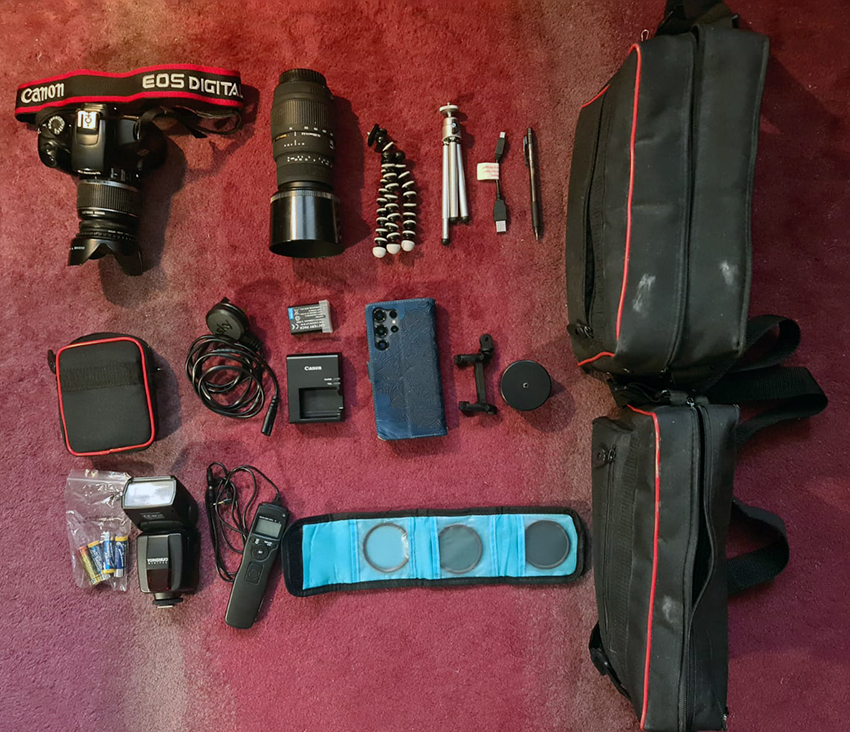
My camera setup – my Canon SLR, telephoto/macro lens, mini tripods, cable to connect to computer, a pen to record details and my camera bag which has three sections that can be joined together, middle row:- charger, my Samsung phone whose camera I now use far more than all the rest you see here, a phone to tripod mount, a clockwork camera turner (never yet used in anger. Bootom row:- Flash, with batteries, flash/camera controller, lens filter set.
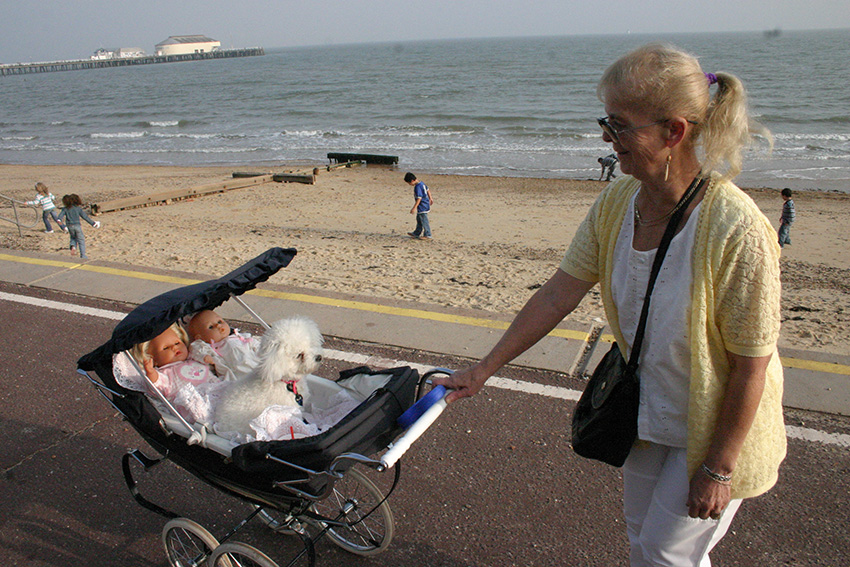
One area of photography I don’t often do is Street Photography, mainly because I don’t want to intrude on people’s privacy – even if, as some photographers assert, if it is in the public domain, it’s fair game. This lady agreed to be photographed on Clacton promenade, and the result is what I think of as my Diane Arbus moment… As a teenager, I kept articles from the Sunday Times colour supplement on art and photography and an article on Diane Arbus obviously had a great effect on me…
Photography and Poetry
If you like either poetry or pictures, then this might be a feast day! I suppose there was no avoiding the fact that the two most frequent creative acts I practice would fall in the same post of this A to Z memoir – there will be photos aplenty, and poems and poems which are illustrated with my own photos – not ekphrastic poems – poems based on a photo, though I do write those from prompts by dVerse Poets Pub. There are also a couple of poems illustrated by Genrative AI – but more of that later.
It is so easy to take photographs these days compared to my first efforts with an 828 film (35mm wide with no sprocket holes so big negative/slide images) and it was cheaper to take slides than colour prints back then, so my pocket money for several weeks (I got 1 penny for each year of my age per week) went to send a film of 12 slides off for development.
Nowadays most children’s first photos are taken on a mobile phone and cost nothing to take and often little to print if they have access to an ink-jet printer but it is not the same as the thrill of getting a carton of slides or an envelope of prints and negatives back from the pharmacy/ photo company. When I got those 12 slides or, later, prints, back, there were rarely wasted shots (though accidents could happen) because each shot had been carefully considered and framed before pressing the shutter. Digital pictures, and even professional photographers on a shoot, will acknowledge this, you can, and must, take hundreds of shots to get “just the right one”, and even then, it’s not guaranteed…
People are rediscovering the joy of real film photography and here are two girls so excited to see the results that they literally sat on the kerb outside the only shop in Bradford, Yorkshire, that develops film – ironically snapped by me on my mobile phone.
I have another blog on which I occasionally post where I explore my relation to photography – Photography & Me – A History, if you want to read more but for now here are just some of my favourites and the reasons why – because one of the problems with the plethora of pictures I now have, is what to do with them, how to exhibit them – even for oneself. For my recent 70th birthday, my daughter bought me a digital picture frame – so a growing number of treasures (more of sentimental than aesthetic value) are now on rotation…
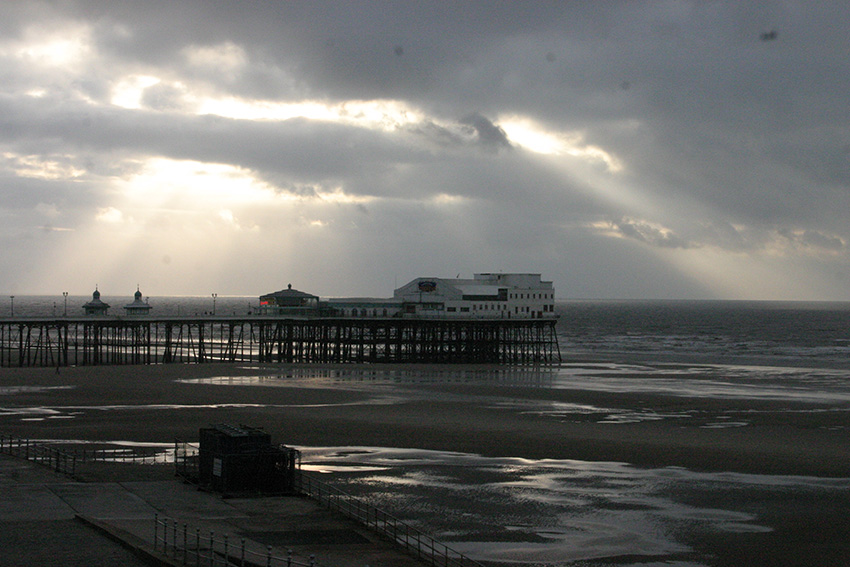
With a background in painting landscapes, landscape photography remains key to me – this was taken on a day trip to Blackpool where taking into the sun (a thing you are told not to do) has washed out much of the colour around the iconic pier.
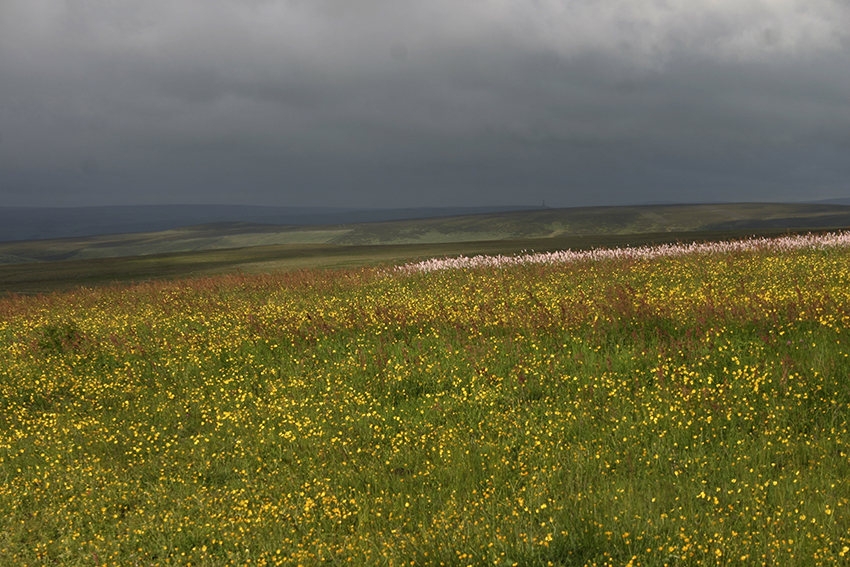
I used to travel to work across the moors, taking backroads to avoid being stuck in traffic. At the top of the moors, you can see for miles without seeing a single human habitation – empty or, as in this early Summer shot, filled with Buttercups and Bog Cotton…
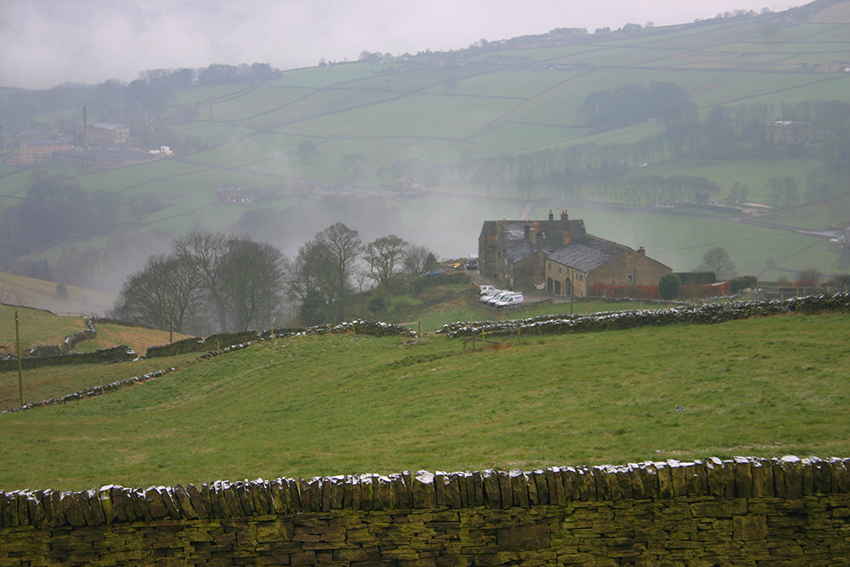
Just a little further along the road, descending once more into civilisation, a large old farmhouse on a misty morning…
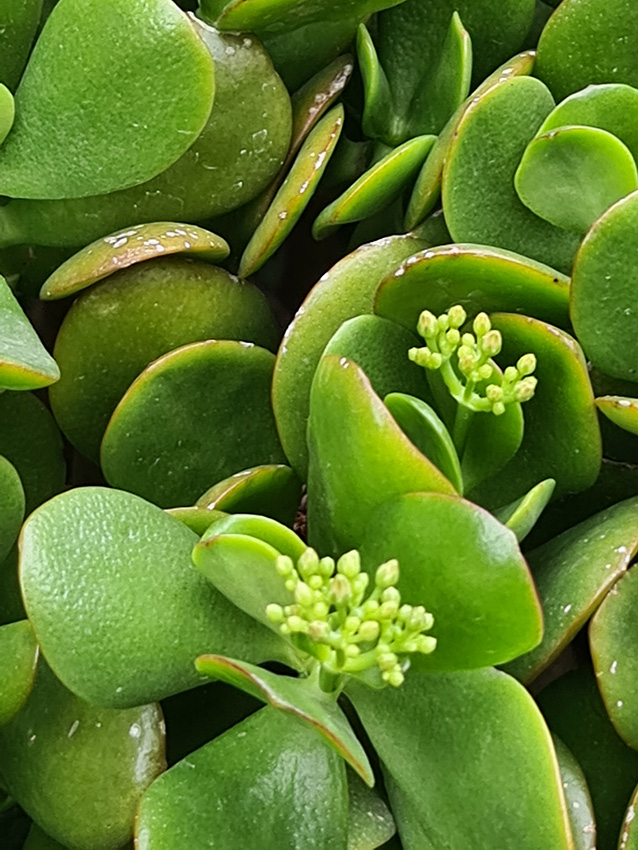
Modern camera phones excel at what I like to call Plant Portraits, especially close ups and the camera is always in your pocket – I did not know that the jade tree (see also my “C” post) had flowers as I never saw them in England but over the Winter of 2020, locked down in Crete, I watched these flower buds open into tiny flower on big bushes of Jade Tree…
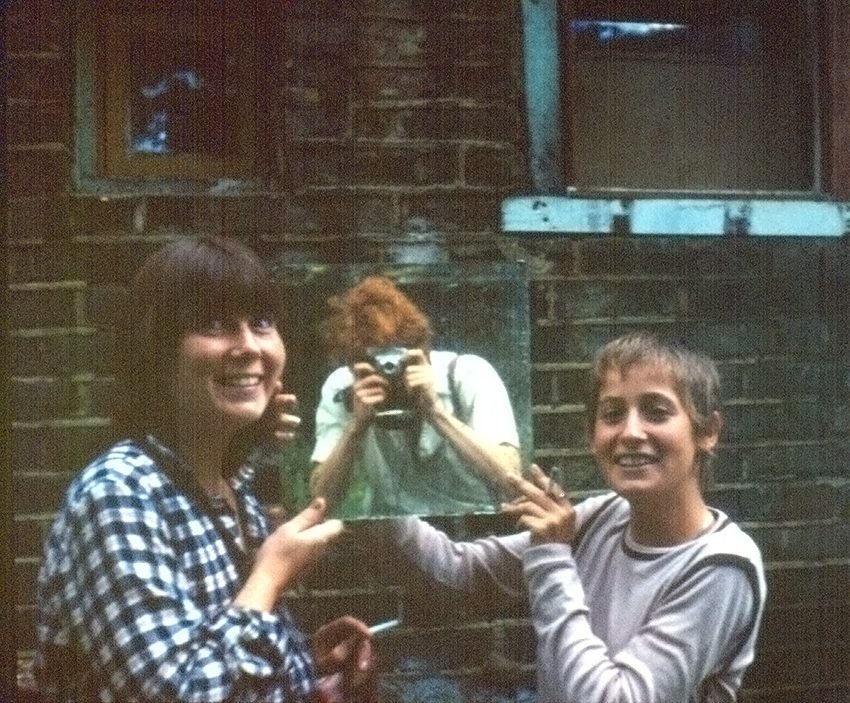
I don’t have many photos of me because I am usually the one taking the photos at family events but here, in one of the last of my era of slide taking, I am simultaneously the joint subject and the photographer with two lovely friends with whom I shared a squat in Brixton, London and who have sadly disappeared from my life… BTW – check out my full head of 70’s hair!
Often photography is about being in the right place at the right time and seizing the moment – this picture was taken from a lorry/car ferry to Ireland as it set sail from the docks in Liverpool, next to the container port and no other vantage point would have captured it. The colour is slightly abnormal because it was taken with an HDR setting…
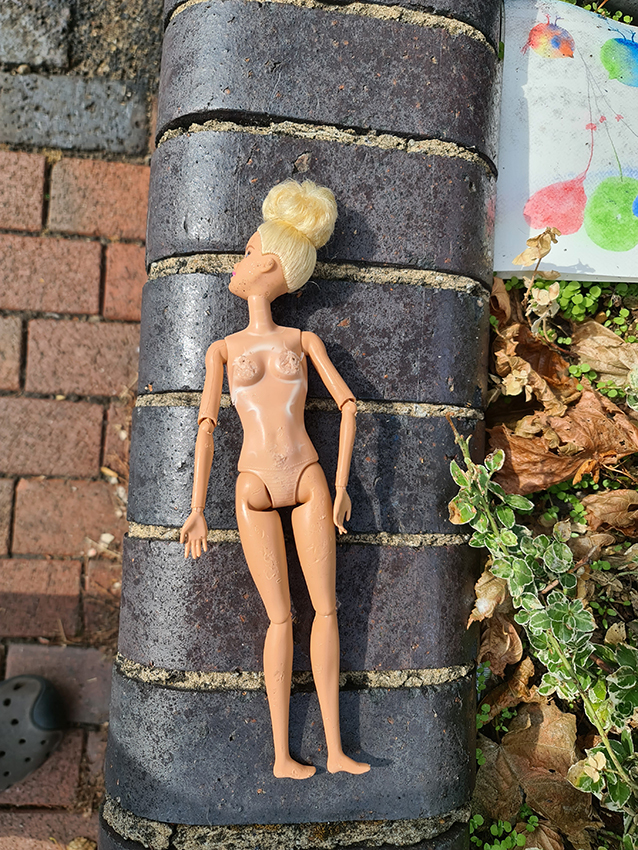
Sometimes the bizarre just has to be captured – I found this mutilated Barbie on a pavement in Blackheath, London and placed it on a wall, partly as a setting but also in the vain hope that somebody might reclaim her…
Another right place, right time, and this one, which looks like it might have been HDR, is not…
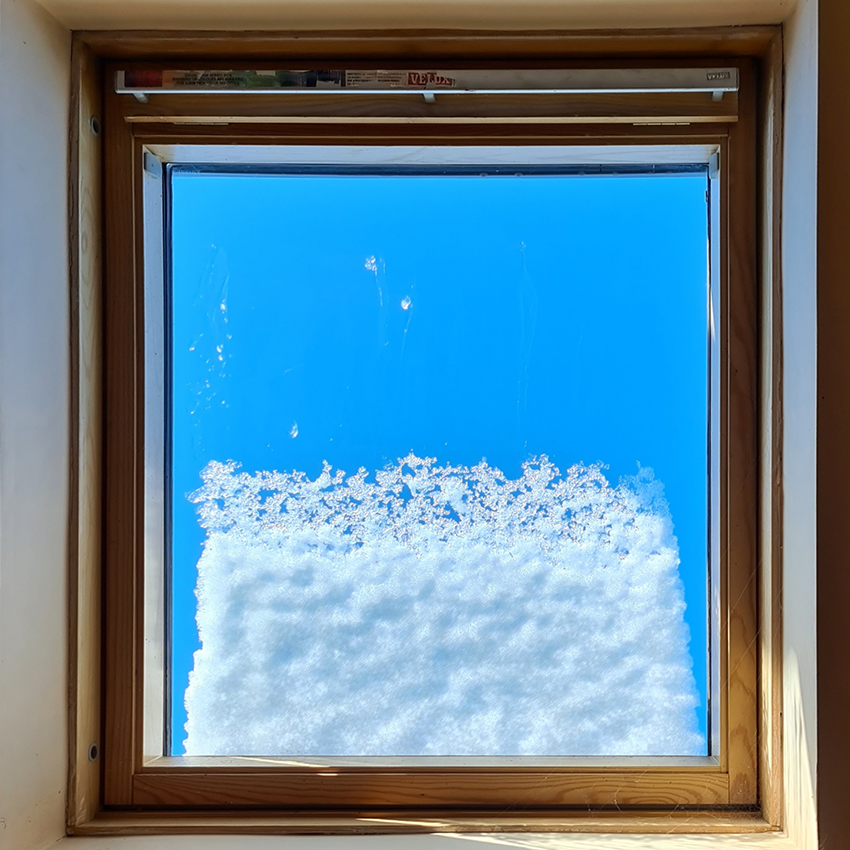
An abstract shot – snow on our Velux skylight…
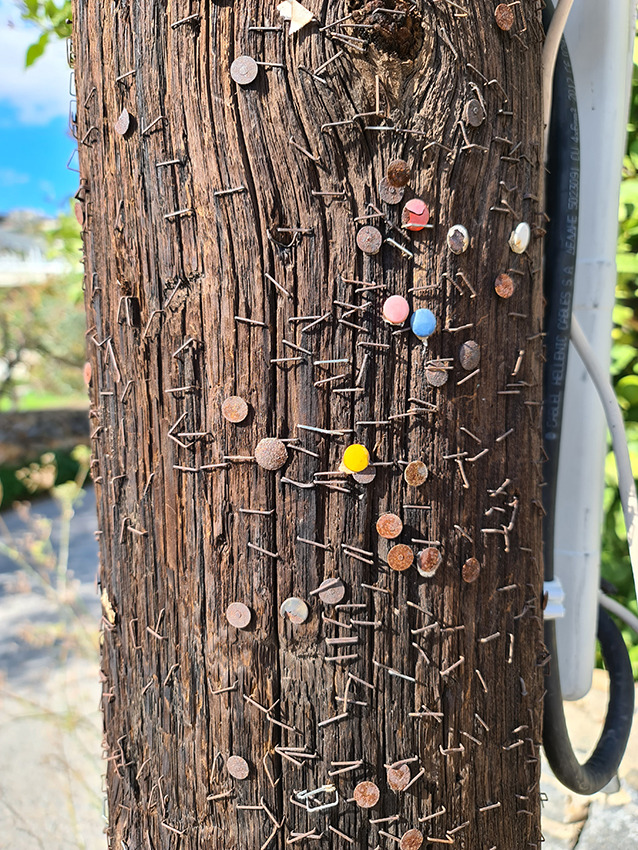
A simple abstract snap until you know that these staples and thumbtacks mark the place where death notices are posted announcing the funeral details on the walk into Elounda, Crete, to do shopping in lockdown – ghosts of the community…
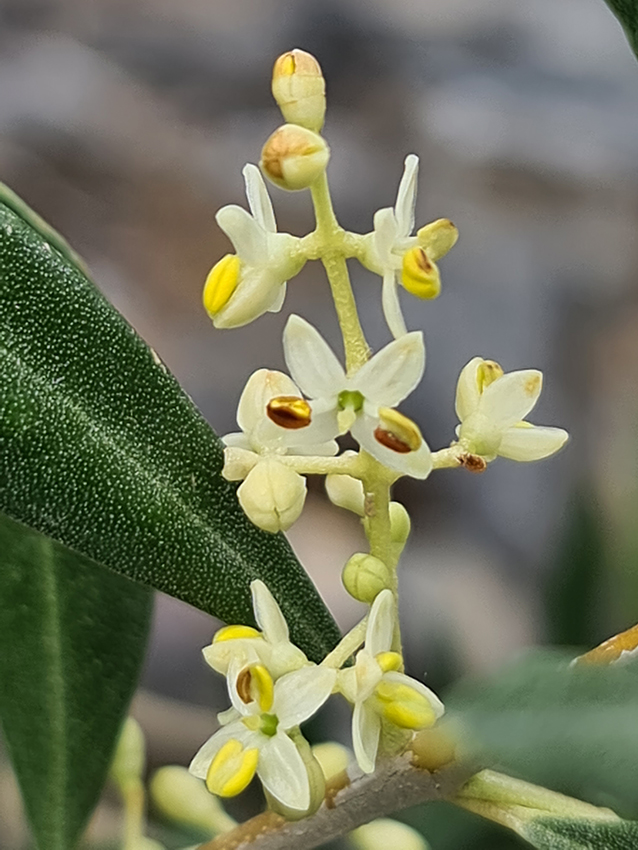
On the same walk as the previous shot. tiny Olive flowers…
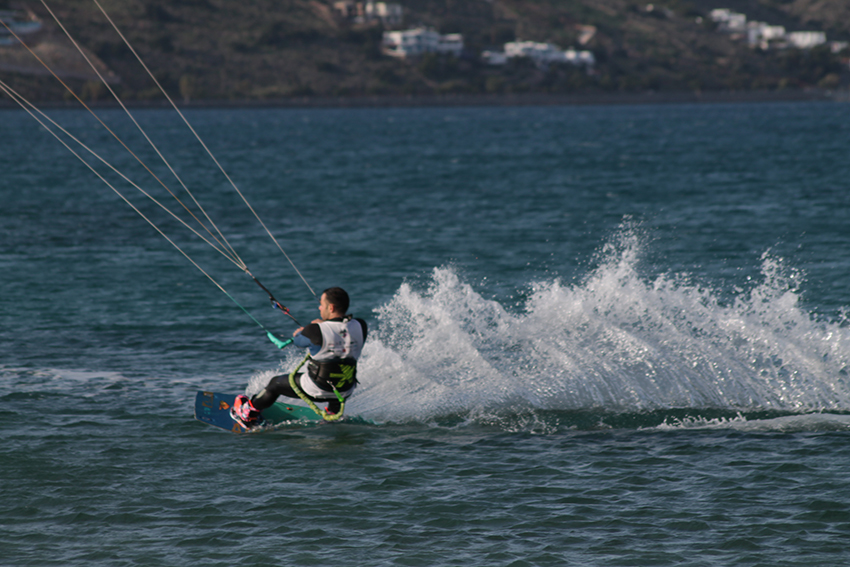
Although I lugged my camera bag to Crete, where we spent 6 months during covid, I hardly used my SLR camera, taking so many photographs on my excellent phone camera, but this was one subject that the phone camera couldn’t cope with – panning and zooming simultaneously to follow the kite-boarders. They came from all over Crete despite lockdown to the bay at Elounda where at the southern end of the bay, a causeway blocks waves whilst allowing strong winds to provide perfect conditions for the sport – the SLR triumphs!
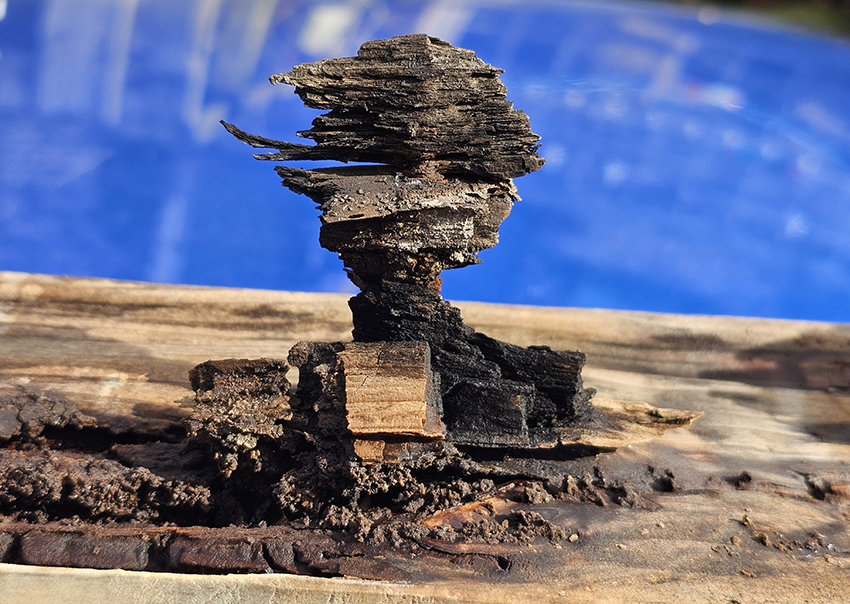
A wind sculpted rock formation from the Sahara? No! All that’s left of a rotted piece of wood from our bathroom which I had to replace. The wood around the screws had survived and I photographed it on top of our blue car…
Poetry
It was the A to Z that connected me to a couple of poets who are also attendees at dVerse Poets Pub, which drew me into writing more poetry – 208 poems in two years at the last count. dVerse post prompts 3-4 times a week, which can be subject or poetry method-based. – I highly recommend it… I also belong to an Amherst Writers writing group where we start by looking at a poem and then write in the shadow of it. The group facilitator, a retired doctor, Deborah Bayer, combines Amherst methodology with Healing Journey concepts so the poems that come from the group are often introspective or memoir in content.
Today I am going to give links to poems that I published here on the blog and illustrated with photos of my own plus a couple which I used Midjourney to illustrate. First however, this poem. It is written in the Duplex form, which I particularly like because each couplet passes on the baton of theme to the next couplet, giving a fast-moving, eclectic exploration of an idea that almost seems to write itself…
An Ode to Food Moments
Food was always the focus of family always sitting down to eat all meals together
We did not go about separate lives or help ourselves to leftovers from the fridge
Our mother refused to let my father cook though he well could, and would have enjoyed to
Christmas morning was the exception – proved the rule carving the ham, drop scones, grapefruit halves
Picnics were a chance for creative sandwiches grated apple and chopped date, cream cheese and grape
Dinner parties brought forth beef olives from a magazine my first beer next day – awful dregs at the bottom of a bottle
My Granny’s seventieth cake – a Dresden firestorm with seventy candle power of heat melting inward
A picnic by Victoria’s Murray River whilst fishing for who knows what with yabbies…
University evoked family meals where we JCR sat down together for evening meals
Then, food on film – The Discreet Charm of the Bourgeoisie always about to eat but coitus interruptus
And the winner for Best Conflict Resolution Through Food – Babbette dissolves all community feuds with a Christmas feast!
Are not all remembered meals filmic moments salted away in the memory and aged to perfection
To be brought out on special occasions of family reminiscence or encountered in the random, channel-hopping of life…
Though it looks like a photograph, the image illustrating this poem is in fact the result of a period of experimenting with Generative AI (see the button at the top of the page) and I include it here because arriving at a good prompt turns out to be an art all of its own…
This poem is in the same vein, and I include it for the sheer beauty of the image which when it emerged from Midjourney – took my breath away… I have stopped using Midjourney to illustrate poems, partly because I feel they can overshadow the poem and partly because of the debate over the fairness to artists whose work may have been used to train LLM’s (Large Language Models).
I confess I am not a great fan of autobiographies that begin at the beginning and follow a temporal path up to the present day – not that the person might not have some interesting stories, facts and opinions strung on their necklace, but it just doesn’t appeal as a structure. On the other hand, in my last, extra year at school in Oxford, retaking an A-level and adding a couple more, I was allowed out of school on my recognisance and saw a fascinating Exhibition at the Modern Art Gallery. The Artist had laid out and photographed every single possession of a single person – for example, all the cutlery was laid out in one shot, all the shoes in another. This more thematic approach appeals more and although I am not arranging the objects which I have chosen to tell my story in chronological order, I hope that my writing will be sufficiently interesting to keep your interest Dear Reader, and that on the journey from A to Z, you will assemble an impression of my life and who I am…
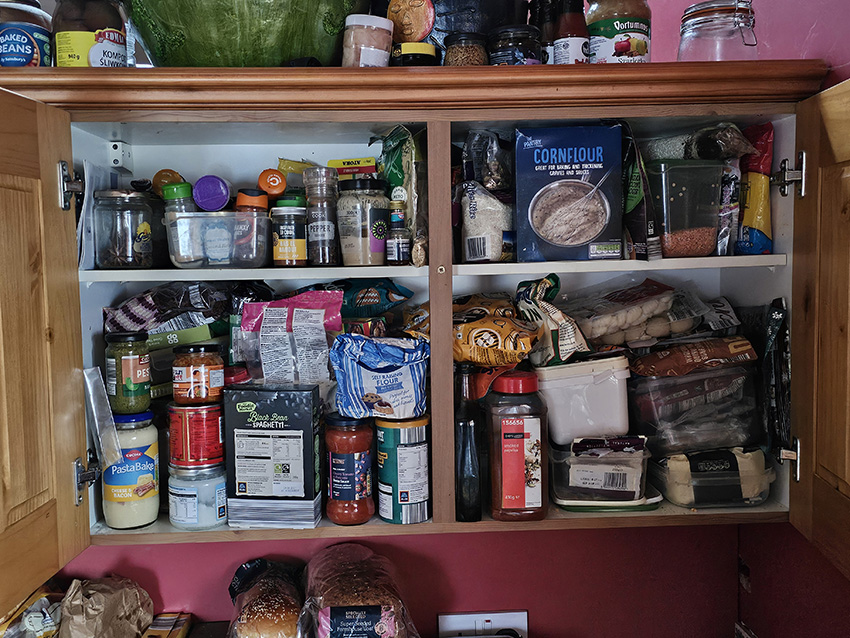
Cooking ingredients – what can I say – the cupboard is bursting at the seams…
When I was populating the list together for this A to Z 2025, the phrase “Objects of Desire” just popped into my head – it seemed a good idea at the time but I find I have no “bon mots” to offer. I have already confessed to a very unPC desire for certain Citroen cars (see “C”post) but here are a few other things I covet…
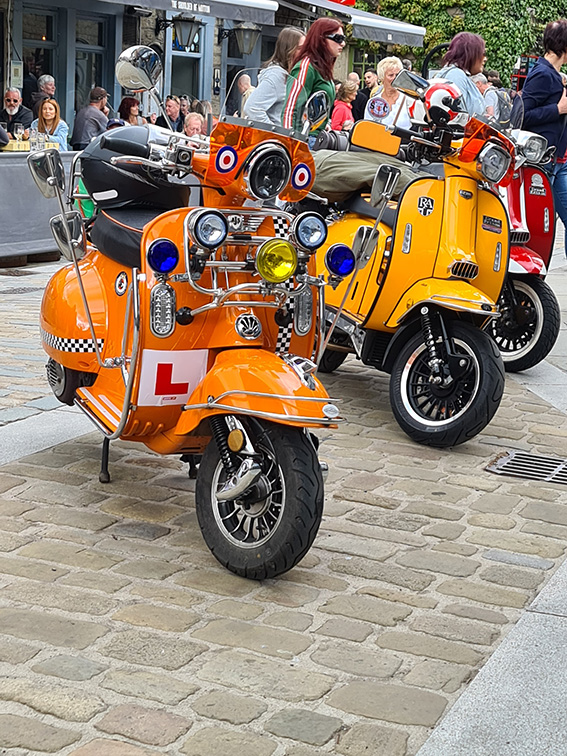
What fun it would be to have one of these bright scooters to ride out on a sunny day and better still to belong to a friendly scooter group for the companionship of the road… These beauties were photographed in Hebden Bridge, West Yorkshire, a place we like to go for a mooch around.
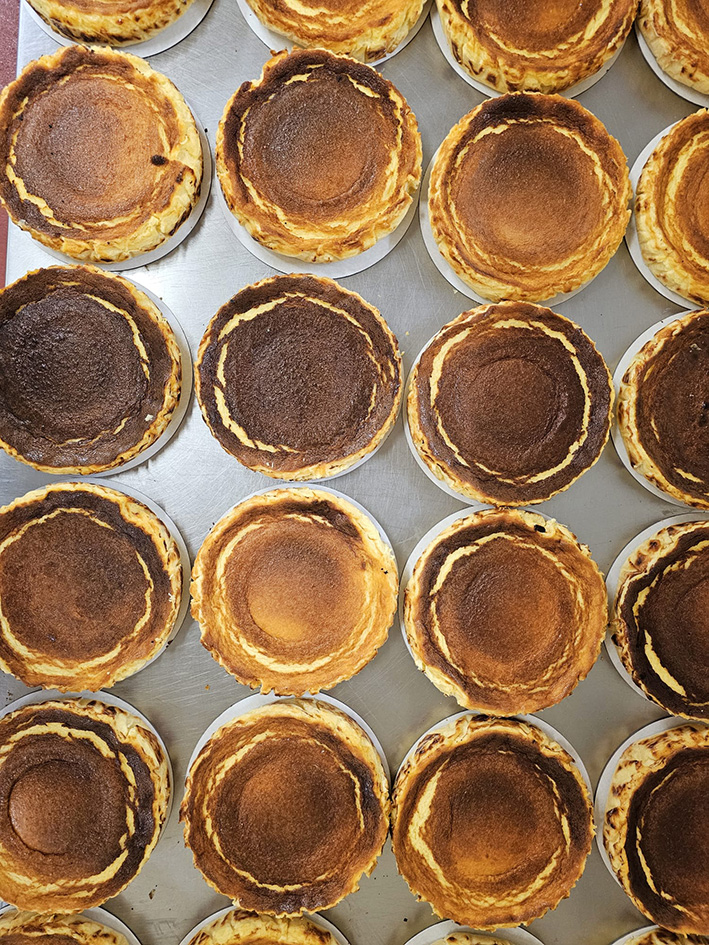
I love to photograph repeated objects and this was a table of “Burned Basque Cheesecakes” at my factory (although we call them San Sebastian Cheesecakes) and which are absolutely delicious but totally forbidden to a Type 2 Diabetic like myself – so aesthetic satisfaction only…
And from Burnt Basque to Books ( who can resist alliteration) and this is the reason I stay out of bookshops where I could probably spend £100 in one sitting if money was no object…
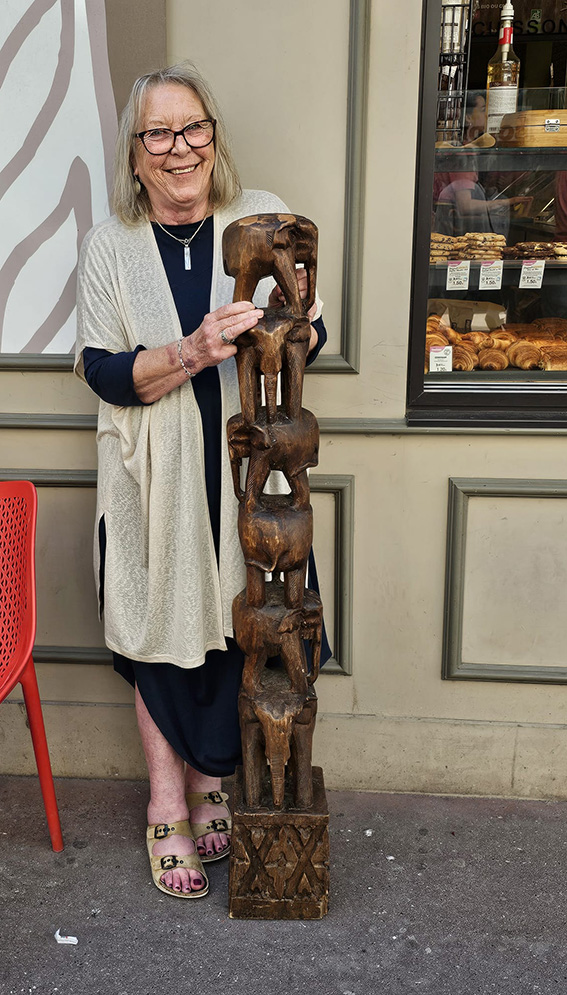
Sometimes, though, you have to give in to temptation and buy! These carved elephants presumably African), were on an antique stall in Dieppe which we visited last summer on a road trip holiday of Northern France. Actually you get two objects of desire as it is my partner Barbara who is holding the purchase with an indefinable expression of pride and bemusement…
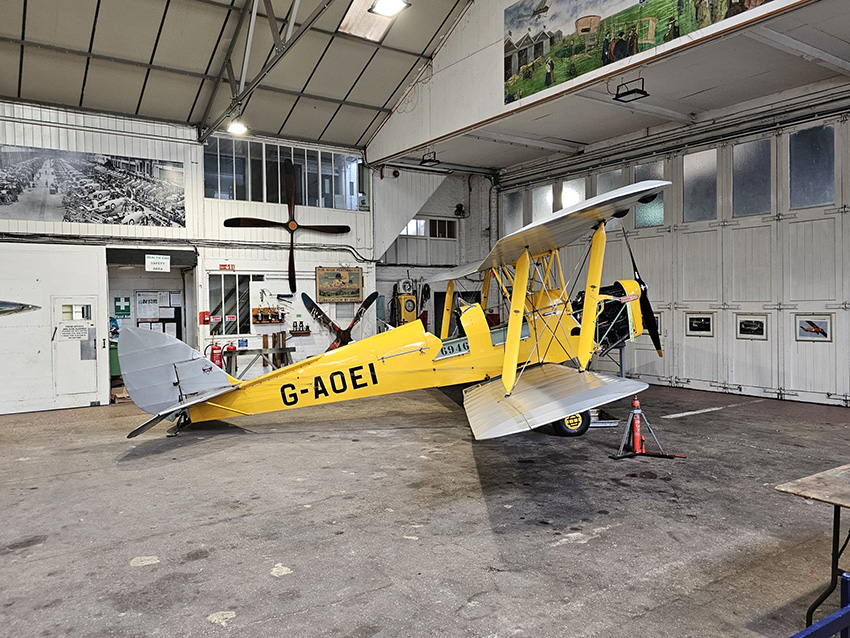
I shot this picture of a De Havilland Tiger Moth at the Shuttleworth collection on a visit last year with my school friends of over 50 years ago. When I was in the Air Cadets at school, I was lucky enough to get a flight in one of these, including aerobatics, at RAF Cranwell. The Shuttleworth Collection differs from most aircraft collections in that every plane either is, or will be a fully flying plane…
There is a film, which I saw during my time at The Ritzy Cinema, called “That Obscure Object of Desire” by Luis Buñuel, in which a late middle-aged man falls in love with an exploitative younger woman. I am now 70, but still one’s heart can be gripped and squeezed by the sight of beauty – it never goes away, seemingly…
On safer ground, though, boats, who are always female, here is poem about an unrequited (as yet) love…
Grant me a Boat
For goodness sake grant me the bucket-list wish of a boat any boat will do a picayune pram to potter on a large pond better still a proper rowboat on a large lake to drift down the wind lanes a dry fly bobbing alluringly on the ripple, gently retrieving with the dream of a trout rising
A day sailer – better still ducking the boom on a dinghy is dodgy at my age so day trips on a Summer suitable sea would fit the bill delightfully sailing out and back with the sea breeze sometimes sleeping in the cabin after stargazing at anchor in some sheltering bay
And in the Winter I would cherish my little vessel drawn up on the shore cleaning and caulking and laying on varnish let me leave alliteration behind and voyage forth on real wavy waters – so for goodness sake one day grant me a boat
I confess I am not a great fan of autobiographiesthat begin at the beginning and follow a temporal path up to the present day – not that the person might not have some interesting stories, facts and opinions strung on their necklace, but it just doesn’t appeal as a structure. On the other hand, in my last, extra year at school in Oxford, retaking an A-level and adding a couple more, I was allowed out of school on my recognisance and saw a fascinating Exhibition at the Modern Art Gallery. The Artist had laid out and photographed every single possession of a single person – for example, all the cutlery was laid out in one shot, all the shoes in another. This more thematic approach appeals more and although I am not arranging the objects which I have chosen to tell my story in chronological order, I hope that my writing will be sufficiently interesting to keep your interest Dear Reader, and that on the journey from A to Z, you will assemble an impression of my life and who I am…
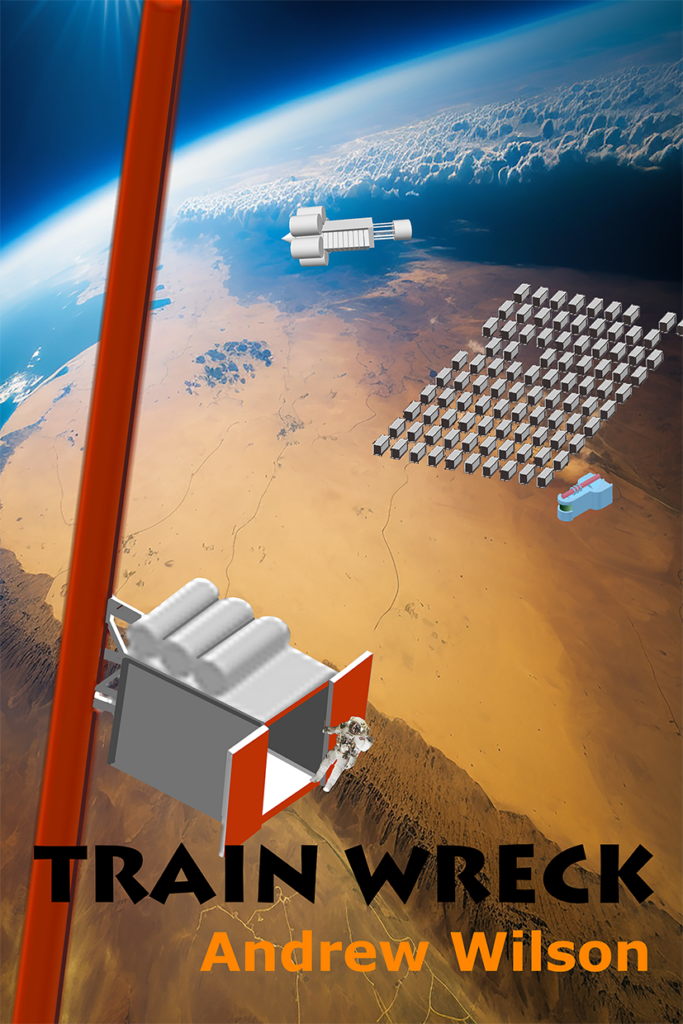
This cover used all my graphic skills- firstly I tried to get Midjourney AI to generate the whole thing but didn’t get anywhere near my visualisation but I really liked the background view of the planet and so I prompted the AI just to generate that and the astronaut. The space-elevator, spacecraft and field of containers floating in space were done in AutoCAD 3D, and everything put together in PhotoShop including the lettering.
When I was living in Ireland, my late sister Carol, invited me to go along to a writing group (yes! face-to-face!) and I realised that I had once enjoyed writing creatively but that as you rise in age, free-writing is one of the first things to go in order to make room for more academic subjects. I remembered one of the few unprompted stories I wrote outside school – it was a ghost tale in which a sorrowing father whose little daughter had accidentally walked into the big saw blade in her father’s saw mill and now, on the one year anniversary, the father, eyes blurred with tears and beside himself with grief and guilt, does the same… This short and sorry tale, though of a genre I don’t enjoy, is evidence that all my mother’s storytelling had left its mark and after the short writing challenges in the writing group, I started a novel which I still haven’t finished (although I have picked it up again recently). The novel deals with themes of post-colonialism and looks at the abuses that happen between countries as if they were intra-familial abuse and weaves several threads around it’s central characters taking in Rwanda, India and Ireland. With such weighty themes, the novel has taken a lot of research and gestation as you can imagine. On the other hand, my second novel – the opening anyway – came to me in a dream when I was recuperating from a hip replacement – I awoke and reached for my phone to record as much as possible before, as dreams are wont to do, it vanished. I started writing and it proceeded in a very linear manner – I even tired to use the A to Z 2021 (see the tab at the top of this page), to push myself to finish it. I didn’t quite make it, but it did get done in the following six months. I felt that finishing a novel (since as I have remarked before, I am not good at finishing things) would, however different a book it was from the first effort (a utopian science fiction novel), be an effort worth making and so it has proved to be. I now have a Critique Partner and he is also writing a science fiction novel though now that I have moved back to the first book, he has taken the change in good faith. Although there is a twenty-year difference in age between us, we never lack things to talk about on our two-weekly chats.
An extract from “The Book” (it has no title yet) There is a sub-plot in the book involving a young Indian Rhodes scholar at Oxford who has finally plucked up the courage to ask a young Irish barmaid out on a date and being Oxford – it has to be punting…
As she lay back against the cushions of the punt, like Cleopatra propelled down the Nile, Margaret’s only regret was that she was compelled to face backwards. Watching Satajayit’s somewhat erratic and obviously unpracticed use of the punt pole to propel them downstream made Margaret nervous. Besides, although this branch of the Cherwell could not really bear comparison with Africa’s greatest river, nevertheless, Margaret would have preferred to watch it’s charms unfold facing forward. She did not feel she knew Satajayit well enough to face forward in silence or to lie bottom up in the sloping bow of the punt and offering possible distraction to Satajayit. So, resigned to watching the river recede from her, Margaret decided to risk a lesser distraction from his efforts by resuming conversation with Satajayit. “You never finished telling me who Cecil Rhodes was”, she said. “No indeed”, said Satajayit as he ducked to avoid the branch of a tree he had managed to steer beneath. Out in the open, he managed a long, powerful glide in the right direction along an open stretch of water with no other boats or obstacles to negotiate and took advantage of the respite to reply more fully. “You must have heard of De Beers Diamond Mines?” she nodded ”Well, Cecil Rhodes founded the company and made millions when he was still a young man. He went out to South Africa to join his brother in farming because he had poor health and the warm climate helped. After they were rich, he came back to England, to Oxford in fact, to complete his education.” “They must have been delighted to have such a rich young man come here. From what I hear these colleges are always on the lookout for benefactors.” “I am sure you are right. So too were the Freemasons because they invited him to join.” “Really!” said Margaret, sitting up a little. “My father was a Freemason too. It’s big with the Protestants in Ireland. Bloody men’s clubs! All sticking together to scratch each other’s backs is what it’s all about!” This sudden vehemence surprised Satajayit and caused his next thrust of the pole to wobble the boat precariously. “Ach, I’m sorry but I’ve no time for all that carry on!” she said, flopping back onto the cushions. “No, no, you are right!” said Satajayit animatedly, “and Rhodes thought so too. Even the night he joined, with the usual secret initiation, he wrote they were an organisation ‘with ridiculous and absurd rites without an object and without an end.’ The next night, he had a brainwave – to create a secret society to further the interests of the British Empire and indeed all the Anglo-Saxon people. He wrote down his plan and called it ‘Confession of Faith’.” “So that’s what you meant about his relationship to the mother country. Well, if you ask me, England was never any ‘mother’ to her empire – more like a thoroughly bad father. Look what they’re still doing in Northern Ireland!” “Oh yes, I have been reading about that – most unfair on the Catholics. So, although you are Protestant, you are not in agreement with the British policy in Northern Ireland?” “No! I am not! And the funny thing is, it wasn’t till I came to England that I started to see what was really going on. At home people don’t talk that much about Northern Ireland and ‘the troubles’. You know, when partition took place, we had a civil war that was almost worse than the war to get Britain out of Ireland. Both wars were bloody, but this was worse not because it was us against them. No, this was father against son, brother against brother. So that’s why I think we don’t want to hear about it all starting up again in the north. But then when I came here people were so ignorant about Ireland, like those eejits in the pub today but when I did get talking to the odd one, I realised there was a lot I didn’t know either and I started to take home the papers people left in the bar and to read them. It’s all a terrible mess, Ireland, it’s all ignorance and stupidity on the part of the British. Half the politicians don’t know any more than those students and they don’t care as long as the Unionists continue to vote with them!” “It is strange to hear you use the word ‘partition’ as my country too has had partition when the British left and likewise it was divided along religious grounds. India is mainly Hindu and Pakistan is mainly Muslim, although there are a few people in each country who didn’t move at the time of partition, so there are still some troubles from time to time. Personally I don’t have any time for all that religious nonsense. India is stuffed full of religions for all the good it does. If there is a God or Gods, I am sure he wouldn’t want people squabbling the way they do!” “Well isn’t that what the British always did with their bloody Empire? They conquer a country and exploit it as long as they can, and when they leave, they leave it all upside down like a house after a burglary with everybody fighting amongst themselves?” This was more a statement than a question – Margaret sitting bolt upright with indignation again. “Oh, but in India they left behind great civilisation, railways, a legal system, schools and of course a parliamentary system!” Satajayit said, adding proudly “To which I for one hope to belong someday!” He beamed and completely forgot to pole, nearly running into another punt coming the other way. Only hasty action by the other punt avoided a mishap, but Margaret scarcely noticed with, as her Grandmother would have said, ‘her dander up’. “Do you so?” she said “Well I bet when you are in the know, you’ll find the British robbed the place blind before they left, I mean if they were so great for India, how come there are so many starving people there?” “Oh my golly! You do ask some difficult questions. I have never met a woman so fierce in her opinions before. Why, you ask better questions than some of the students in the seminars I go to!” Margaret fell back laughing but sat up again suddenly and with a serious look said, “Well, do you know, I’ve never said anything like that to anyone before! They may not talk much about the north where I come from, but I can tell you, they wouldn’t like to hear me say what I’ve been saying. Oh, Jeany Mac no!” and she burst out laughing again. “Jeany Mac? Who is this Jeany Mac?” asked Satajayit once more poling the punt downstream and beginning to look more comfortable with the process. “Ach, it’s only a saying we have, I don’t know where it comes from or who she was.” “Are you perhaps one of these feminists?” Satajayit asked cautiously. “Well I haven’t burnt my bra if that’s what you mean!” Margaret replied with mock indignation and burst out laughing at the look of embarrassed horror that overtook her companion’s features and nearly caused him to fall off the punt. ”I’m sorry,” she said, “I was only joking. I never thought of myself that way, but I suppose I do agree with a lot of what they are saying, even though I’ve only read about it in the papers, I mean I don’t actually know any. Come to that I don’t know many people at all. This is the first time I’ve been out with anyone.” She said, suddenly shy, her eyes dropping to her lap as she wondered at her candidness with this comparative stranger. “You don’t have any family here in England?” he asked quietly. “No. I left home under a bit of a cloud, and when I came here, I had to do something I didn’t feel very good about and I just kept myself to myself for a long time.” Satajayit had little experience of women, and although he could not guess what she might be referring to, instinct told him it was better not to probe, so he punted on steadily, the two of them silent for a few minutes. Margaret realised she felt better for having spoken to someone about the loneliness of the last while and it occurred to her that maybe it was because Satajayit was also alone in a strange country that had liberated her. “Tell me about your family.” She said and noticed a cloud pass momentarily across Satajayit’s normally sunny features. “There is not much to tell.” He said diffidently. “My parents are not very well off. They are farmers, and I have an older brother who will take over the farm.” “Really! Me too!” “What a coincidence! It is truly a strange world. I myself won scholarships, first to school and then to the University of Bombay and finally to here, to Oxford University.” He beamed. “Your family must be very proud of you so!” “You would think so, wouldn’t you?” Deflating visibly Satajayit suddenly headed the punt alongside a stretch of open bank and pushed the pole firmly into the mud to hold them fast and sat down facing Margaret. The sudden seriousness made Margaret sit up and draw her legs in to face Satajayit eye to eye. “You must understand, my father is a very old-fashioned man. He believes everyone has their place and they should stick to it. He thinks I have no business getting ideas above my station and that no good will come of it!” That sounds only too familiar, thought Margaret but said nothing – just looked sympathetic. “It is most fortunate that I do have an older brother who wants to farm, otherwise I would have had no choice about going to school. I would have had to stay on the farm to look after my parents when they got old.” “And do you have any other brothers and sisters?” “No. That is quite unusual you know, for an Indian family. It makes my mother sad and maybe a bit ashamed. I think perhaps she is proud of me, but she would not contradict my father. It is only because the other people in the village were so pleased for me that my father allowed me to go away to the school in town, and that is where I met Mr Horatio Singh!” Satajayit said, his serious face breaking into a smile of happy reminiscence. The serious moment seemingly passed, Margaret burst out laughing at the strange combination of names. “What is so funny, please?” said Satajayit with a frown. “Horatio! It just seems a strange name for an Indian man!” “Ah well, you see Mr Singh’s parents were very keen on history and wanting to give their son a truly auspicious start in life, they named him for the great Englishman Horatio Nelson!” “I see. And what did he do, this Horatio Singh?” “He was my school teacher, and because it was not a boarding school, but I lived too far away, I used to live in Mr Singh’s house. He was like a second father to me and I can say with the utmost certainty that without Mr Singh, I would not be here today”, and he looked around as if to take in the full reality of the exact spot in which they had come to rest. The effect of this look was so comical that it was all Margaret could do to keep a straight face, but not wishing to offer any further offense she managed. “Yes indeed, he it was who set me on the path to learning and gave me encouragement, he is truly my mentor.” By now, it was late in the afternoon and the light was starting to fade. Satajayit punted them slowly back to the boat station. For the first time since they had met that day, they fell silent, but companionably so. Margaret felt relaxed and lay back contemplating this gauche but passionate thinker who was propelling her along like the Queen of Sheba whilst Satajayit glowed inwardly at having negotiated the novel experience of dating a member of the opposite sex without any mishaps. They made their way up the High Street again both knowing that sooner or later they would have to go their separate ways, though neither voicing the question of where that might be or what might follow on from this first encounter. Satajayit lived in Rhodes House whilst Margaret lived out along the Cowley Road and so was walking in the opposite direction to home. Half way up the High Street, Satajayit wordlessly took Margaret’s hand. They turned together to look in some of the shop windows, both noticing the novel reflection of their conjoined forms more than the contents of the shop display and yet without comment, savouring their silent companionship. Finally, they reached Carfax, the crossroads at the top of High Street, and Margaret turned to face Satajayit, reached up to plant a firm kiss on his cheek. “I’ll be seeing you at the Turf then”, she said, and with a squeeze of his hand, she turned and walked back the way they had come.