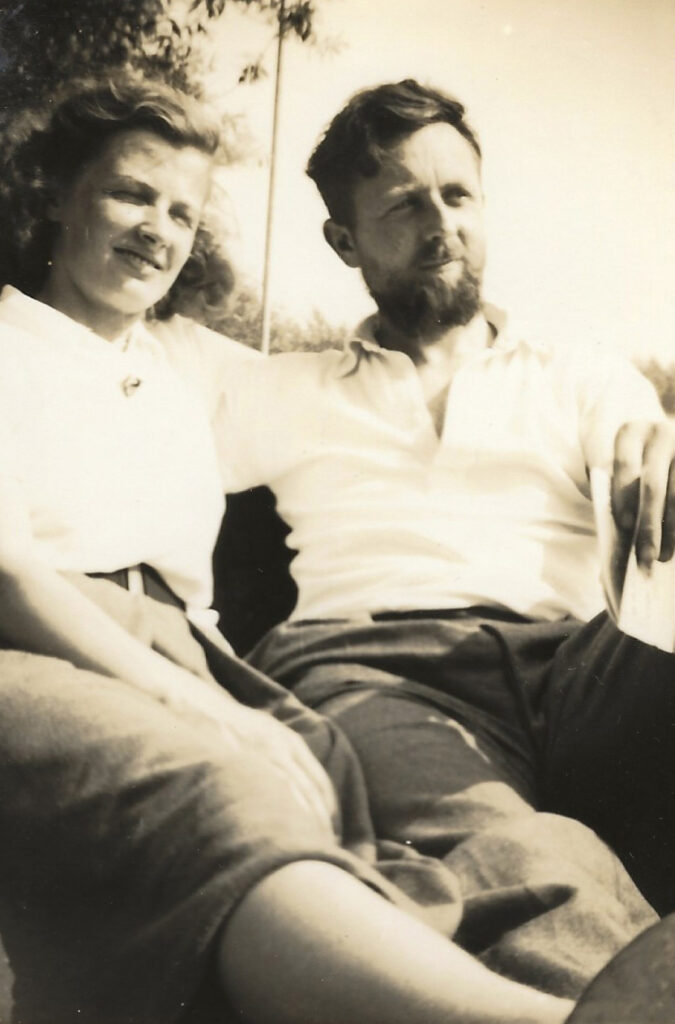
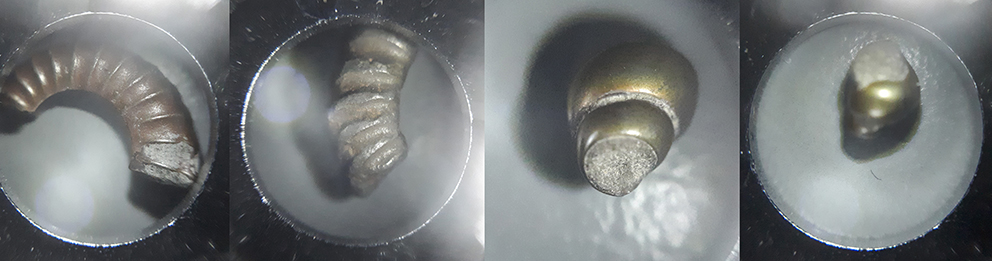
A rose called Afternoon Delight Recalls love, perhaps a person But the good Baroness Rothschild And her erstwhile husband, Baron With roses, we commemorate Their wealth and rank of State With both hybrid and heritage Bush Rose’s names and image But who was the Beautiful Girl Who FloribundaBetty Cuthbert Perhaps a veryBlushing Knockout Or a Brilliant Pink Iceberg Be we infamous or famous Will a rose one day recall us…
Over at dVerse Poets Pub, merrildsmith in Poetics invites us to celebrate the names of roses, a long list of which you can find here (from which the photos are taken).
In retirement hush the noise of the babies whom in the long ago years are soundly sleeping, grown by the farmers, brought up on shore by the fishers, might become the tradesmen, – themselves the future and one day pensioners, could apprentice to a cobbler, learn to garden children as a schoolteacher, tread the rounds of streets as a postman, feed the masses as a restaurateur and pull pints as a publican, evade as long as possible the undertaker sire their own babies with a wife and perhaps even tangle with the fancy woman, lose their way as a drunkard, stitch dreams as a dressmaker, espouse piety as a preacher, guard the peace as a policeman vainly trying to contain the webfoot raucously vibrant, cocklewomen in glorious opposition and contrast to the tidy wives…
Over at dVerse Poets Pub, Grace in FormForAll, Poetry Forms, invites us to write a Golden Shovel in which you: Choose a line from a poem that resonates with you. *Build your poem so each line ends with a word from that line. *Keep the words in order, forming the original line down the right margin. *Let your poem move in its own direction. Surprise us! *Include attribution (after [poet])
Strictly speaking, the Golden Shovel should use just one word from the original poem at the end of each line, but since both the original text and the new poem are lists, it didn’t seem right to separate Thomas’s original adjectives in some instances, or have a surfeit of definite articles…
Dear Mum and Dad I carry you in my heart and head for I neither believe and most certainly hope that you not looking down from some heavenly crows-nest
for most of your lives you did not believe either and your latter-day church going was, I think, more social – a way to integrate in the many places you moved to
but your taking us to church not only gave us the choice but sharpened my scepticism into a personal humanist credo according to which I carry you in my heart and head
I thank you, Mum for refusing to teach me to cook reserving that for my sisters and for launching my student cuisine with the gift of a Sabbatier knife and the condescending choice
of “Cooking in a Bedsit” which made me seek out the racier author Elizabeth David sailing round the Med with her married man garnering recipes to change the cooking of a nation
and Dad, though you never took me sailing, you taught me to whip finish a rope and splice an eye to coil a cable neatly and I took pride in your designing a dinghy and slipped into design too
I carry you in my heart and head but I wanted to make concrete these, amongst many things I am grateful you gave me – to put them out into the world just as you birthed and shaped me…
Immediately after the accident the woman in the car behind me came up to my driver’s door and asked if I was alright I wound down the window answered that I was and so it seemed to me… I couldn’t move my right leg and I couldn’t see why not but I was still sitting upright in my seat belt there was no blood but this woman knew differently she saw I was in shock and before I had even properly registered her face she opened the van door behind me climbed in, and kneeling reached her arm around my headrest to cradle my head with her arm holding it upright.
The farmer had backed off his tractor stood a little way away phoning the emergency services.
It seemed the most natural thing in the world to feel the soft bare arm of this woman, now invisible to me her disembodied voice near to my ear reassuring me that it would be alright and I should relax, keep still – she was a nurse she said. Could there have been a more fortuitous person to be following me, I thought as I gave myself up to her gentle, minimal ministration of simply holding me – talking to me showing me how to put myself in others’ hands, as I was now to do for the next few months then fire brigade and ambulance arrived and she slipped away passing me on as it were and I think of her kindness which though professionally practised ambushed us both on a remote road outside of work, and created a moment of intimacy that took away the trauma…
Over at dVerse Poets Pub, sanaarizvi in OpenLinkNight, invites us to the live meeting on Saturday and to post a poem to read (if we successfully navigate the temporarily out-of-sync time zones – we Brits don’t put the clocks forward till 29th March!). This is a recent poem from my writers group and was written ITSO The Kindness by Jan Beatty
Did I foresee or was it anticipation I liked to imagine the worst that could happen – perhaps to disarm the future remove the sting inoculate
When it began mercifully slowly I was not taken by surprise I had a plan to cope wasted no time learning how to navigate blindness
Routes I had taken for granted were walked with mindfulness recording all the sensual input paying least attention to fading sight except as an index of impressions mentally mapped
I decluttered my domicile of all I wouldn’t need or couldn’t trust myself to do safely any more books and tools both were a wrench
I kept what I thought I might manage – basic tools just in case I found I could and books someone might read out loud to me if such an one might be found to share my treasured
And my most treasured – music well listening would not be a problem but I wanted to make music, to sing songs so set about learning favourites by heart, words and chords which laziness had always mitigated against before
Did memory which is not a sense nevertheless swell in compensation or was it always in me to perform differently and without seeing my audience, stage fright diminished so it was not a total loss – blindness…
Second-hand is restyled pre-loved Second-hand gives way to Charity Shops Pre-loved is the new height of fashion Pre-loved is pre-valued…
To the ardent de-clutterer The professional house-clearer Disposer of parents’ schmutter Second-hand is reborn pre-loved
Where once such clearance Activities gleaned a pittance High Street donation is now the way Second-hand gives way to Charity Shops
But for those prepared to make the effort The internet offers a third commercial vision And Charity Shops are mined for Vintage Pre-loved is the new height of fashion
Is a lover to be devalued Because they have been In previous relationships? Pre-loved is pre-valued…
Over at dVerse Poets Pub, merrildsmith in Meeting the Bar: Critique and Craft, invites us to write a Cascade poem – You will use each line from your first stanza in subsequent stanzas. For example, if your first stanza is three lines, your will have four stanzas. The first line of your first stanza becomes the last line of the second stanza. The second line of the first stanza becomes the last line of your second stanza, and so on.
This poem is also written for the Keighley Library [IRL] Group whose prompt for this month is Pre-loved…
You write a novel lickety-split the words pour out upon the page the word count rising like a fountain scenes fill chapters – chapters parts That’s when the fun starts
What you have is just a first draft send it to an agent, they would just laugh assuming you even made it off the slush pile rejection letters bring you down for a while but you must pick yourself up dust off your writing tool of choice and launch your second, third and even fourth draft polishing your bon mots, refine your voice, flesh out your characters, channel your craft That’s when the fun starts
Recruit a critique buddy bully your friends and family into reading confess to your partner you fear it needs a professional count your pennies into tottering piles it’s unlikely they will reach an editor ceiling What the Dickens! Release your Kraken in blog-size bites fret not at savage comments don’t get into fights enough opinions to make your head spin That’s when the fun begins
At last your manuscript is done but you must face one last and monumental question to publish yourself or on great houses wait or look for small and independent publishers but are you sufficiently niche, do you fit a genre and if you forge heroically through this labyrinth That’s where the fun starts
Editors and graphic artists are but a few wait till the sensitivity readers get their hooks in you blurbs written by the great and good all these hurdles you should reckon to jump and clear if write you would and getting published… That’s when the fun starts
Interviews and promotional tours signing your book so much it bores and after many hotels bland your royalties pay for holiday sands but just as you lie back sipping a drink your editor ringtone and phone start to blink No rest for the weary – up and at ‘em dearie Success means your public seek for seconds strike while the iron is hot she reckons You face a blank screen… That’s when the fun starts
Over at dVerse Poets Pub,Grace in OpenLinkNight invtes us to submit a poem of our choice! This poem, tongue in cheek, is not from personal experience but pure wishful thinking, and were it to come true, it would be, as somebody once said “A lovely problem to have…”
Happy the man who dreams his purpose plots his course to achieve that very goal marches to the beat of his own drum and pity one forced to follow roads laid down by parents’ aspirations but I drifted into adulthood with no pressure and no direction and took many turns along the way slowly grew into the man I am Though I am old with wandering
Love life is the companion to work the superficial couplings of youth conducted with more vigour than sense reaching the sunny uplands mid-life settling into a career I thought would last a lifetime, a love to match but people carry pasts within them like hidden rocks in a calm ocean and accidents deflect one’s passage Through hollow lands and hilly lands
To know another is a life’s work the unity of coupledom is illusion, we travel parallel at best, learning the geography of roads built across bogs of trauma always ready to gently subside and mire a person in buried past and paths are hard to find in a slough of despond and she has lost her way I will find out where she has gone
Looking back at the path I followed there is more coherence than I thought skills grown and transferred in work and life and love too, so much surer than in youth and all the scars and breaks accreted are the medals of experience and trying not to look toward the end but focus on the roadside flowers the next generations we began And kiss her lips and take her hands…
Over at dVerse Poets Pub, Björn Rudberg (brudberg) in FormForAll, Meeting the Bar: Critique and Craft, invites us to writa a Glosa, a Spanish poetry form in which four lines borrowed from a poem by another – the cabreza, are expanded upon over 4 ten-line stanzas… I chose lines from WB Yeats, who I have loved since studying him at school, and whose poems still resonate with me today. In 1995, I went to live in Sligo, Ireland, where Yeats is from, and is buried beneath nearby Ben Bulben mountain. I was a signwriter and painted a sign and mural of Yeats and his work, for The Winding Stair bookshop there – you can see me working on it in this news clip…
The light filtering through the shutters picks up a little of their blue on its predawn passage into the white-walled beige, marbled floor bedroom sun rises swifter than at home not quite the tropics but tantalisingly close to Africa
The sun rises scarlet and all-consuming of the sky – silhouetting the island dark purple across the bay Red sky in the morning doesn’t translate to Crete where most days in this lockdown Winter that is not like our Winter begin with a red curtain raiser. Soon blinding light floods the sky, the Bay the mountains delicately bluing their shadows and highlighting their tops before the rising heat filters everything with glimmering heat haze.
We sit in the shade of the terrace beneath the deep green leaves of the carob tree and count the millipedes that have climbed the delicately off-white walls in the night dash, reaching for who knows what insectile heaven… A fallen comrade dark brown in desiccation is moving sideways in unlikely reanimation until we see that his body is being carried back to the nest by a tiny black ant a tenth his size we sit astounded by this feat but don’t forget to film it for posterity or a rainy day reminder when we are one day returned to England.
I walk down to town for market day mixing with brightly dressed younger women and black wrapped older ones in widows weeds with only an occasional male to keep me company. The azure sea is only feet away
The couple who live on the yacht just out in the bay are here, and we chat in the shade of a vegetable stall loaded with piles of black glossy aubergines and ripe red tomatoes next to bunches of wild greens, picked from among the hundred or so Crete proffers – if you know what you are looking for. Cyrille’s once blonde hair is salt and pepper tied back in a ponytail their clothes too, faded with exposure to sun and saltwater.
I spend some time chatting with the banana man who sells nothing else and whose English is good enough for a conversation. I am English and so not averse to discuss the weather – he talks of the recent thunderstorms whose hailstones devastated his neighbours’ crops but divinely spared his while Barbara and I had been enjoying the night of sturm und drang from the safety of our covered balcony the crackle and crash of it ricocheting and rambling around the mountains and – the ultraviolet flashes turned into dark sound.
Walking back up the long hill to the village, I pass the white and ochre, black and grey patchwork trunks of the group of gum trees foreigners too – all the way from Australia these strangers who fit in so well people believe them to be native.
Home again in the cool of the flat and after a siesta I pick a bright yellow lemon from the tree within reach of our balcony and squeeze it into dark green olive oil to dress the salad of tomatoes and cucumbers I hauled up from the market – dot it with tiny Cretan olives – mostly grown for oil and look out on the bonfires ranged around in the olive groves as farmers burn the prunings of their trees.