“Choose any subject you would like to write about…” that is the object of the A to Z Challenge, and thinking of things that interest me is not a problem for me, but choosing a subject not only to write about, but to write in a way that other people will catch my interest – that is the real challenge! This year I turn to a subject, close to our skin if not our hearts, and yet, again, I wonder if this subject will get some people past the title on the list – dismissed as niche? For this year, my theme is What We Wear – Fabrics and Fibres
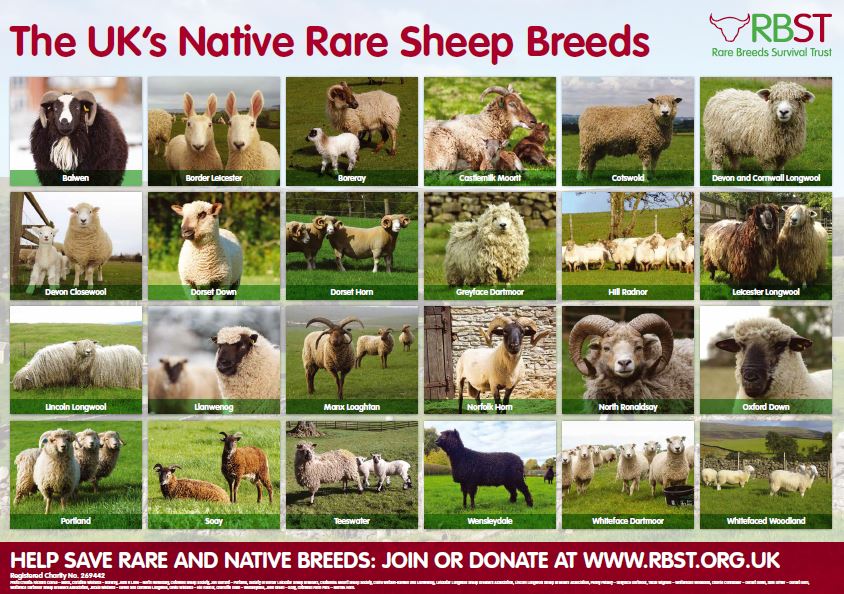
The British economy, in the Middle Ages, was founded on wool, the Speaker of the House of Lords (the upper chamber of Parliament) sits on a Woolsack to this day and the landscape of Britain, once extensively forested, even in the highlands, has been shaped by sheep. Beginning with the introduction of a breed similar to the Soay by settlers around 4,000 BC, boosted by the development of spinning and weaving techniques from around 1900BC and furthered by improved breeding techniques introduced by the Romans circa 55 BC–400 AD, the roots of Britain’s relationship with wool run deep.
By the 12th century, wool was England’s most important export and a massive source of national wealth with Cistercian monasteries, such as Fountains Abbey, being major producers, controlling vast flocks and exporting high-quality wool to Flanders and as far as Italy.
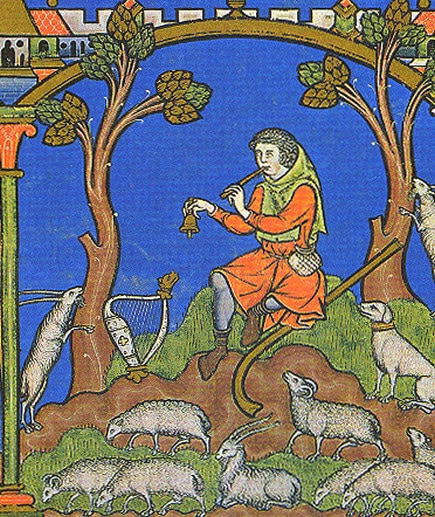
By the 15th and 16th centuries, England shifted from exporting raw wool to exporting finished cloth and with the coming of the Industrial Revolution, beginning in the 18th century and growing through the 19th, the industry shifted from a cottage industry to factory-based production, particularly in Yorkshire, which became a global hub for worsted wool manufacturing.
The 20th century has seen a decline in the importance of wool in Britain. Post-World War II, the rise of synthetic fibres and a shift in sheep farming towards meat production caused a decline in the British wool textile industry.
The splendid, Gothic Bradford Wool Exchange- a veritable cathedral for wool sales in the 19th century now a Waterstones bookshop…

I live in West Yorkshire – long a major wool-producing region, and when I drive to work in Bradford, a city which once had more millionaires than any city in the world, due in no small part to woolen mills, I pass several remnants of the wool industry. There is a dyeing mill still operating in nearby Keighley, Haworth Scourers near my factory workplace, but first and foremost, British Wool – where every day, I see bales of wool being loaded to go all over the world. So I knocked on the door one day and conducted an informal interview with Richard Smith, who although being the accountant, knew enough to answer all my questions and then gave me a tour of the factory. British Wools is the best place to consider what the wool industry in Britain is today.
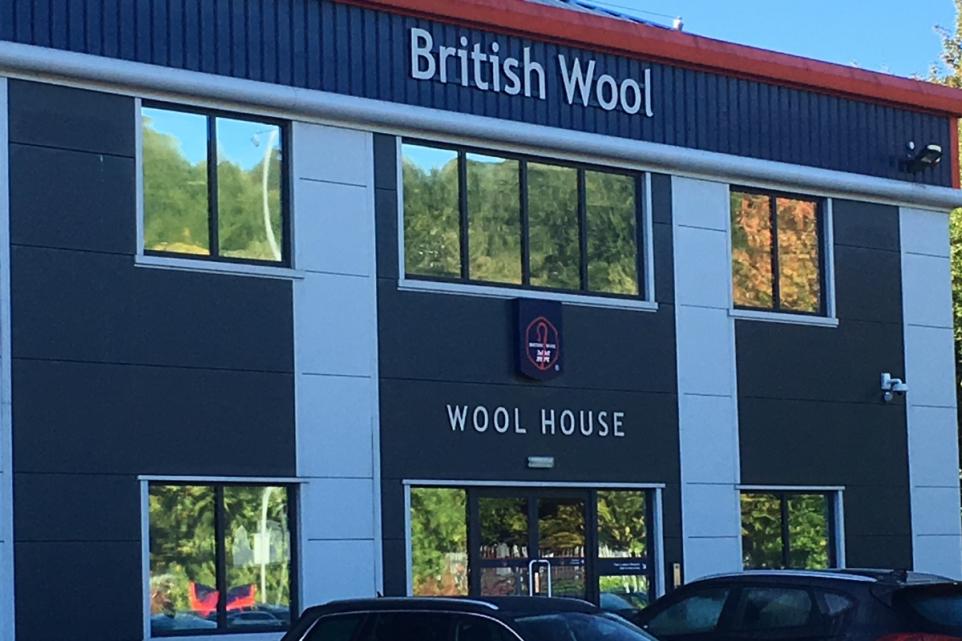
British Wool is a cooperative run for the benefit of all its farmer members. Britain’s 33.3 million sheep produce around 30 million kilos of fleece wool per year and this is a secondary adjunct to the meat trade and although the value of the wool is relatively low compared to the meat, British Wool is there to maximise the profit for farmers. Clipping in the Lake District, takes place between July and September – in warmer parts of Britain, shearing begins in May and then the British Wool warehouse in Bradford and seven other locations around the country begin to fill up, to be sorted over the rest of the year. When I saw it, the warehouse was relatively empty.
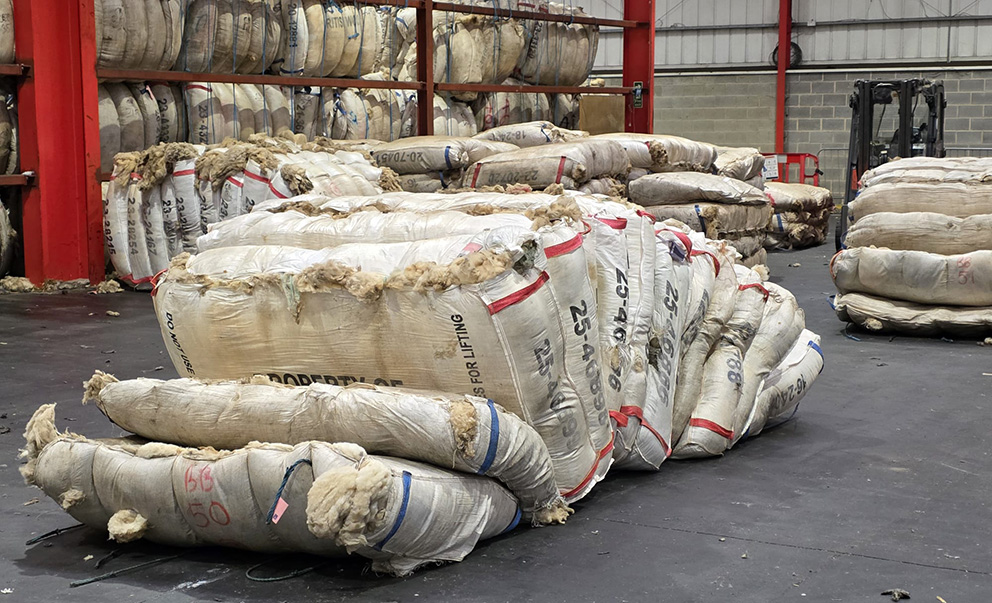
There are some 66 breeds of sheep and there are more than 100 categories into which British wool sort and grade the wool. They don’t sort by breed but by colour, quality, cleanliness and fibre type. Cleanliness does not just include the amount of dirt on the wool (which can be considerable), but also the amount of grease – mostly lanolin – in the fleece and this can be analysed and taken into account when valuing the wool, but in the first instance, it is down to the skill and experience of the men sorting the opened “sheets” of shorn fleeces. Grease can account for up to 40% of the fleece weight!
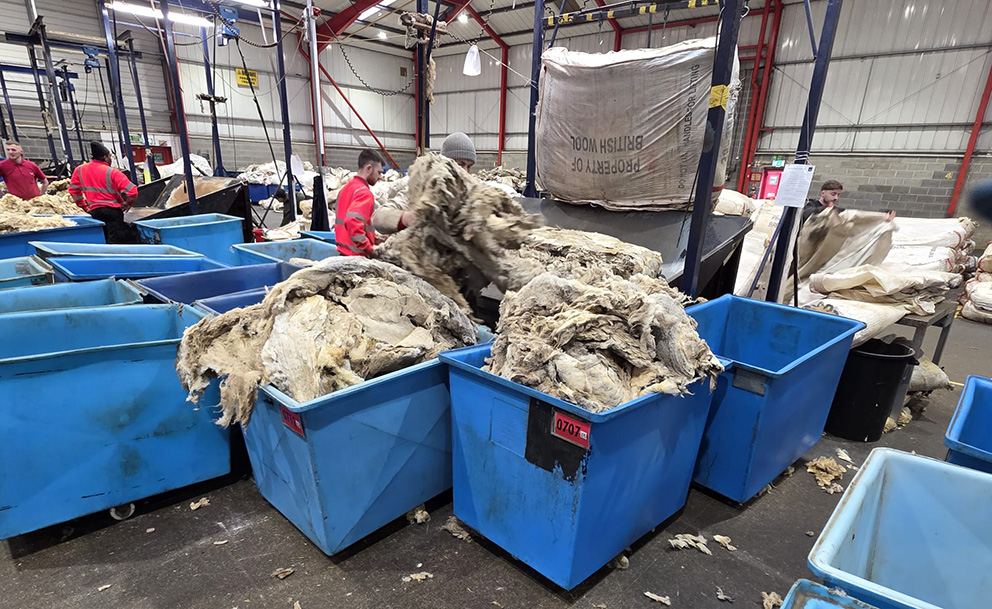
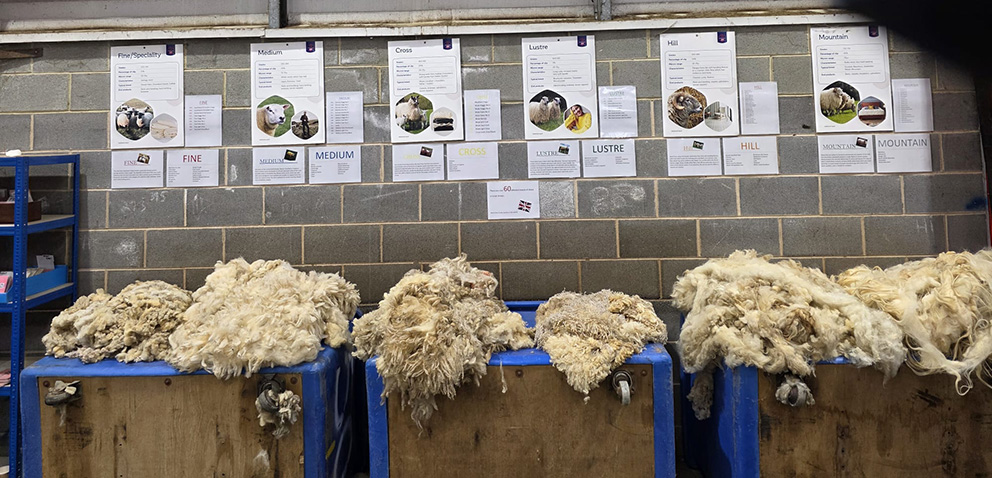
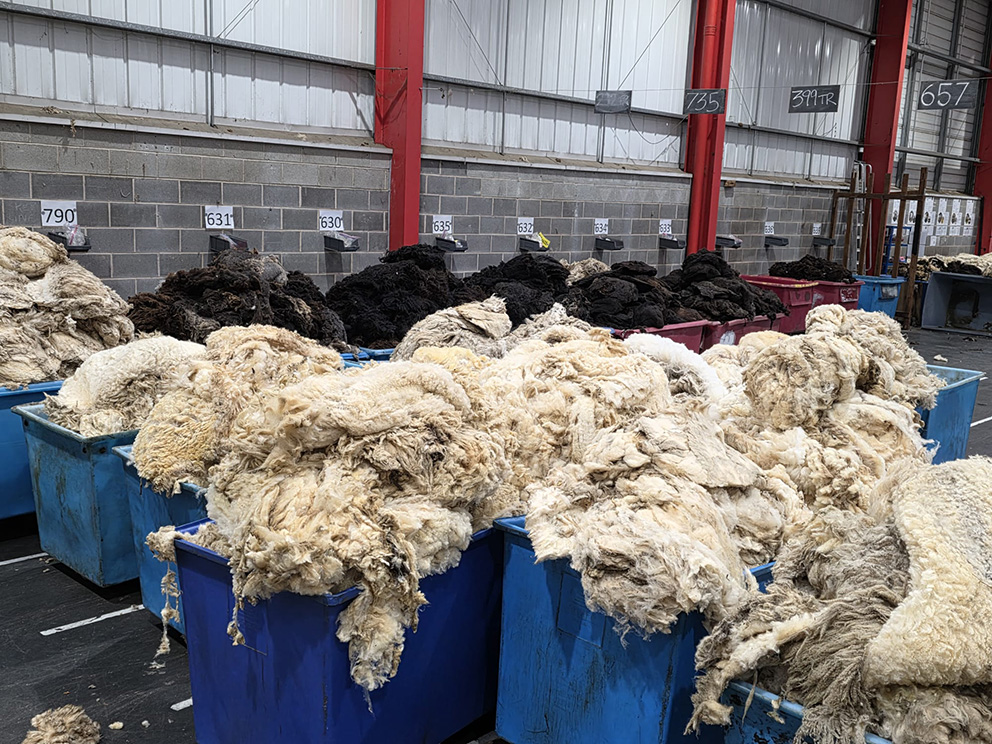
The wool accumulates until British Wool can put it into a bale which is between 3000-400 kg. 24 of these make up an 8 tonne lot ready for auction with members being paid according to the average price across the year, since it can fluctuate considerably.
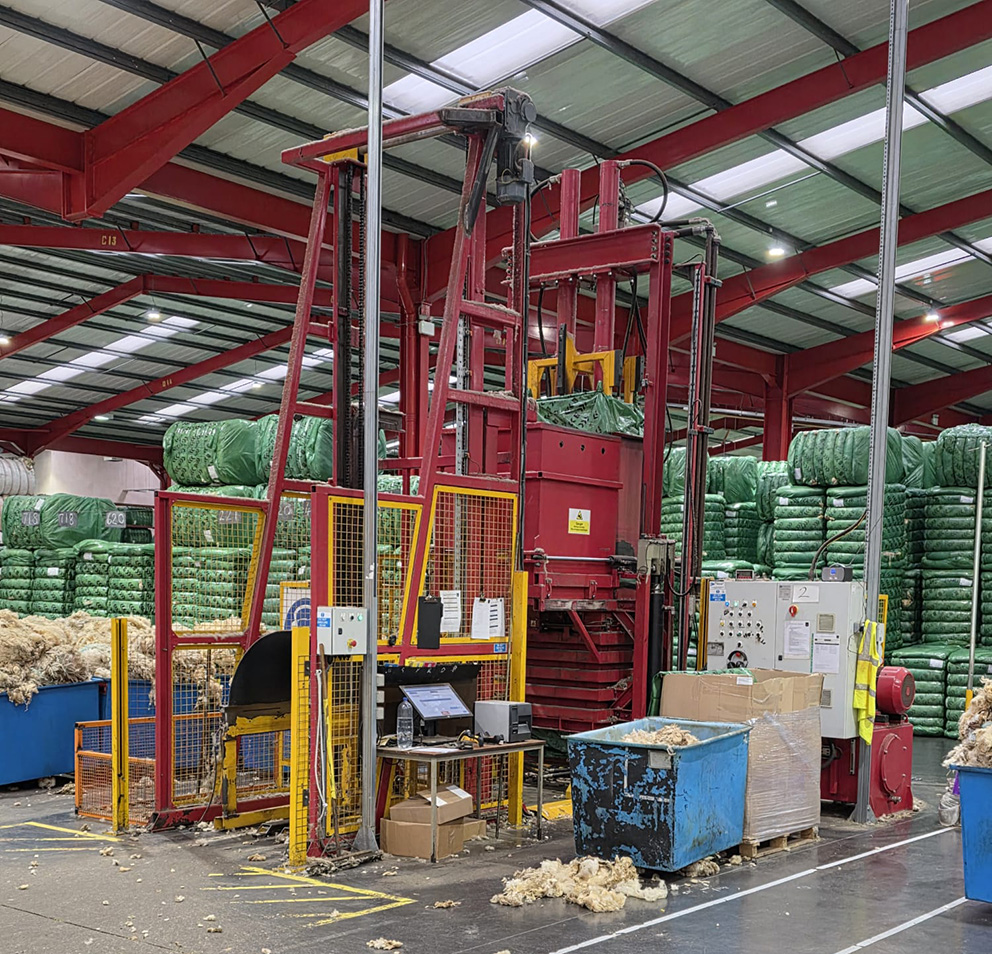
So British Wool don’t deal with end users – they sell to wholesalers and in some cases the bales go directly overseas to places like China whilst others go to local firms like Haworth Scourers who both clean (scour) it and are also wholesalers as well. So the photograph below, is nothing to do with British Wool per se being several steps further down the chain, but it is interesting to see the wools spun, unbleached and in their natural colours, as I saw in British Wool’s warehouse, and demonstrating some of those different breeds.

Some other sites worth visiting:-
BBC Countryfile
Best Sheep Breeds for Wool Production by Bivatec
The Evolution of the British Wool Industry by Ossian
“W” Fabrics
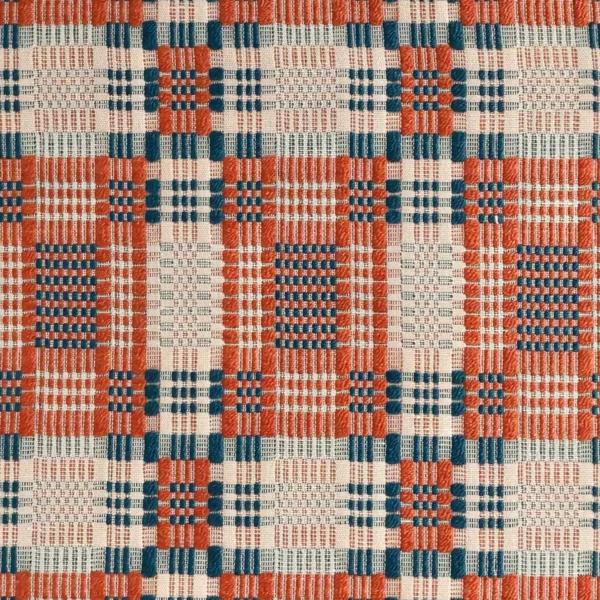
Wadmal – I mentioned the name in “H” for Historical Fabrics, but with this post being about Wool – Origins, it deserves a bit more detail… Wadmal a coarse, dense, usually undyed wool fabric woven in Iceland , Norway, Sweden, Denmark, (Wadmal was used as currency in Scandinavia), Greenland, and the Orkney, Faroe and Shetland Islands from the Middle Ages into the 18th century. Wadmal was woven on the warp-weighted loom used throughout these areas of Norwegian influence, and was usually a 2/2 twill weave, although some medieval sources outside Iceland describe wadmal as tabby or plain-woven. In remote regions, wadmal remained the primary fabric for working people’s clothing into the 18th century. It is very similar to Broadcloth inasmuch as it is “felted” following weaving whereby it becomes even denser and like Broadcloth, it has been used for military and naval uniforms. Wadmal is still produced today.
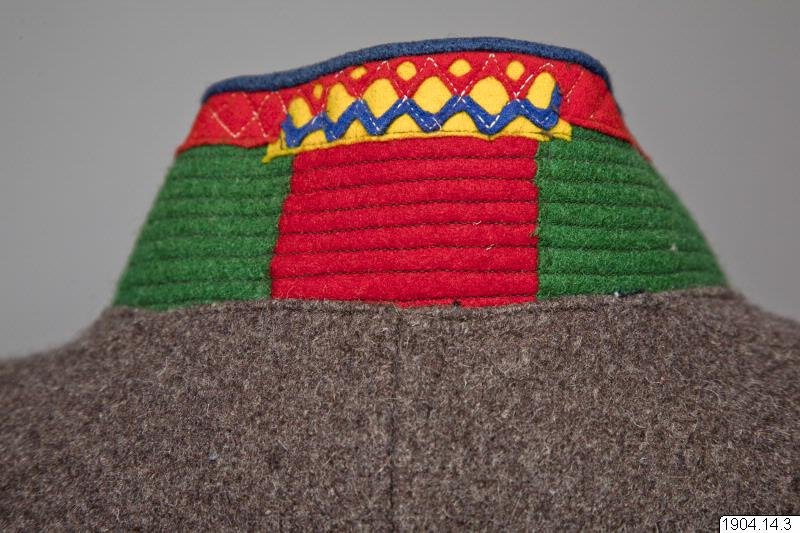
Waffle Cloth – also known as honeycomb fabric, has a surface texture that looks like a waffle with raised threads that form small rectangles, hence the name. It is woven partly on tabby (plain) areas surrounded by ridges of long floats. The weave consists of warp and weft floats arranged around a plain weave center. The warp and weft threads are interlaced and floating in a way that creates small square ridges and hollows in the fabric in a regular pattern. The three-dimensional face/texture of waffle make it more absorbent, useful for absorbing liquids, typically as a towel. Waffle fabric is usually made of cotton or microfibre, sometimes of linen, and is woven in a way that makes it very absorbent. The waffle weave allows air to flow through the fabric so that it dries quickly. I thank my friend Akua Lezli Hope for a list of fabrics that included this one.
Whipcord – Whipcord fabric is a strong worsted or cotton fabric made of hard-twisted yarns with a diagonal cord or rib. The weave used for whipcord is a steep-angled twill, essentially the same weave as a cavalry twill or a steep gabardine. However, the ribs of whipcord are usually more pronounced than in either of those fabrics, and the weft (filling) may be visible between the ribs on the right side, which is usually not the case for gabardines. In practice, marketing considerations, rather than technical details, determine when the specific term whipcord is used.
Wigan – Wigan is a stiff cotton material sometimes coated with latex rubber. It is typically sold in bias-cut strips and used as an interfacing or interlining in tailoring to stabilize seams and hemlines. Its name has been derived from Wigan, the name of a former mill town in Greater Manchester (historically Lancashire), England.
Wincey, Linsey-woolsey – (in Scotland Wincey) a coarse twill or plain-woven fabric woven with a linen warp and a woollen weft. Similar fabrics woven with a cotton warp and woollen weft in Colonial America were also called linsey-woolsey or wincey. The name derives from a combination of lin (an archaic word for flax, whence “linen”) and wool. Linsey-woolsey was an important fabric in the Colonial America due to the relative scarcity of wool in the colonies./
Worsted – this term,confusingly, has several meanings – a yarn size, a yarn type, a woven fabric, and fine knitted socks that even royalty wanted to wear… not to mention the name of a town. See here. Worsted yarn is made from longer fibred wool which have been combed to lie parallel and any shorter fibres removed. When spun, this then creates a thinner, smoother yarn than wool which comprises shorter fibres in a fluffier yarn. Worsted yarn is more expensive because of the source fibres and the extra processing, but it can be used to make finer fabrics such as for men’s summjer weight suits which because of their lightness and loose weave, are breathable. While less insulating than woollen items (which trap more air), worsted is better at blocking wind and rain due to its tight structure. “Worset” or worsted stockings were once considered a sign of wealth and worn by folks as a fashion statement including, it is recorded, Mary Queen of Scots on the scaffold…

- Allen, Larry (2009). The Encyclopedia of Money (2 ed.). ABC-CLIO. p. 73. ISBN 978-1-59884-251-7. Retrieved 22 April 2010.
I compiled a list of as many fabrics, fibres and related items as possible (278 items), from several sources, the most comprehensive of which was Wikipedia. Since there are only 26 letters in the alphabet, I could not write in detail about every instance so I have taken snippets of text for the brief descriptions and linked to the source in the name of the item. I am indebted to all the contributors to those Wikipedia pages and the depth of knowledge to be found there…