Cocoa and a Cento Poem


The dual theme of my A to Z Challenge this year is the world of Commodities and Poetry Forms so the juxtaposition of these two themes may throw up some strange poems – could be a Heroic Ode to Heating Oil or will it merit a Haiku or a Haibun – whichever, I will be endeavouring to bring you interesting facts about commodities that may change the way you think about the stuff we variously depend on…

By commodity I mean certain items that are of both sufficient value/volume to be traded in special markets and are generally volatile enough to attract traders in “Futures” which are a way of hedging bets in the trading world of stocks, shares and commodities.

The A to Z Challenge runs throughout April and will consist of 26 posts – there are only a couple of letters for which I couldn’t find commodities but plenty of poetry forms to carry the day!

Worldwide Trade in Cocoa 2022 $46.4 Billion

Cocoa perhaps above all others, exemplifies the aspect of commodities whereby they are the raw materials for other things that we consume and in the case of cocoa, from which we get chocolate – literally consume! And yet, how many of us know where our chocolate comes from, how it’s raw ingredient is grown or by whom and how it turns into our favourite sweet treat?

If you want the full facts I suggest you go to the Fair Trade Organisation commodity briefing because they are tireless campaigners for better prices for cocoa producers since of the 4 million tonnes of Cocoa produced each year around the equatorial globe, worth 20.3 billion dollars, 90% of it is grown by 5-6 million small farmers whereby close to 50 million people depend on cocoa production for a living. From them, the product is mainly concentrated into the hands of just 9 companies. But I am going to take a more personal look at the world of Cocoa.

The world of Cocoa production is in crisis at present

  • Processing plants cannot afford to buy beans
  • Consumers around the world will have to pay more for chocolate
  • The market could be heading for a fourth year of deficit

You can read more about it here, but here is the essence – and you might want to stock your cupboards with the sweet stuff…

In normal times, the market is heavily regulated – traders and processors purchase beans from local dealers up to a year in advance at pre-agreed prices. Local regulators then set lower farmgate prices that farmers can charge for beans.
However, in times of shortage like this year, the system breaks down – local dealers often pay farmers a premium to the farmgate price to secure beans.
The dealers then sell the beans on the spot market at higher prices instead of delivering them at pre-agreed prices.
As global traders rush to purchase those beans at any price to meet their obligations with the chocolate firms, local processors are often left short of beans.
Ivorian and Ghanian authorities normally try to protect local plants by issuing them with cheap loans or by limiting volumes of beans that global traders can purchase.
This year, however, plants are not getting the cocoa they pre-ordered and cannot afford to buy at higher spot prices.
Already, chocolate-makers have raised prices. U.S. retail stores charged 11.6% more for chocolate products last year compared with 2022, data from market research firm Circana shows.
The International Cocoa Organisation (ICCO) expects global cocoa production will fall by 10.9% to 4.45 million metric tons this season.

Reuters

Talk about ignorance – I can’t remember how old I was before I finally pinned down the relationship between cocoa and chocolate – and it was drinking cocoa and drinking chocolate that forced me to look it up – drinking cocoa is just powdered cocoa and you can make it into a drink or use it as an ingredient in cakes, savoury and other dishes. Drinking chocolate might variously contain. sugar and milk powder to make a sweet chocolate drink.

As a child, in a Western, first-world country, my sisters and I had plenty of chocolate – especially at Easter with Easter eggs. We had white chocolate courtesy of The Milky Bar Kid and we gradually became aware not only of Milk and Dark Chocolate – gradually acquiring a preference for the latter with its more bitter taste – or not. We also started to notice the difference between cheap chocolate that melts in your hand, and the crisper snap of better quality chocolate such as Lindt cast chocolate Easter Bunnies. But it is only in recent years that I have come to understand the whys and wherefores of these different aspects of chocolate.

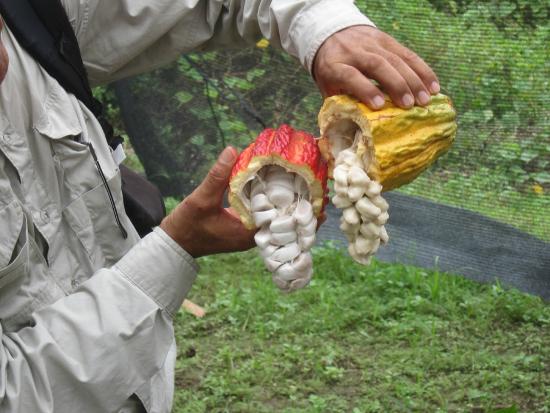
In 1968, en route back home to England from Australia by ship, we called into Trinidad where a taxi driver took us to a tropical beach with picture postcard palm trees leaning down across the sands and he also stopped at a roadside stall to buy a Cocoa pod. Breaking open the pointy-ended yellow oval pod, he revealed the cocoa beans inside coated in a white flesh which he broke out and gave us to suck. The white flesh was pleasant and slightly like lychee if I recall correctly but bite into the beans and it was a bitter disappointment! Could this be where chocolate came from? The answer is yes but only after considerable processing.

Cocoa pods broken open to show white flesh covered cocoa beans

Jump ahead some 50 years when I worked and still work for a factory that makes a lot of sweet chocolatey cakes and puddings, and I was lucky enough to spend a day at the UK plant of Barry Callebaut AG – the top processer in the world of cocoa yet like all the big processors, with the exception of Nestlé who also make finished chocolate goods, most people in Britain and probably any of the countries where they have plants, will say Barry who? In the UK, the best-known chocolate sweet manufacturer is Cadbury (Bourneville) and in America, the names Hershey, Nestlé and Mars dominate the chocolate market, but I discovered on my day at Barry Callebaut’s that it is they who provide the chocolate to Cadbury – BY THE TANKERFULL!!!!!

Ruby, Dark and White chocolate

Huge 1-ton blocks of cocoa have already been processed by taking the farmer-dried beans, crushing them and melting them slightly into giant blocks. Callebaut then refine the cocoa further into chocolate solids (the principal ingredient of dark chocolate) and cocoa-butter (the principal ingredient of white chocolate) and by mixing in milk solids and sugar, they produce milk chocolate. Most of Callebaut’s output is in the form of tiny pellets of chocolate or the aforementioned tankers of liquid chocolate. They also sell a small amount of “cocoa nibs” – a health supplement and occasional food ingredient and they sell pink chocolate – the product of years of selective breeding.

I also learned why cheap chocolate melts in your hands and expensive doesn’t – it’s all down to the tempering – something I knew of in relation to metals but not chocolate. It costs money to repeatedly heat and cool chocolate until it is tempered hence the greater cost of tempered chocolate, but if you want to cast fine detail and not have it melt in your hand and get a snap when you break it – then temper it you must…

I left Barry Callebaut with a secret yen to become a Chocolatier but I fear that sampling the goods would not be good for my diabetes!

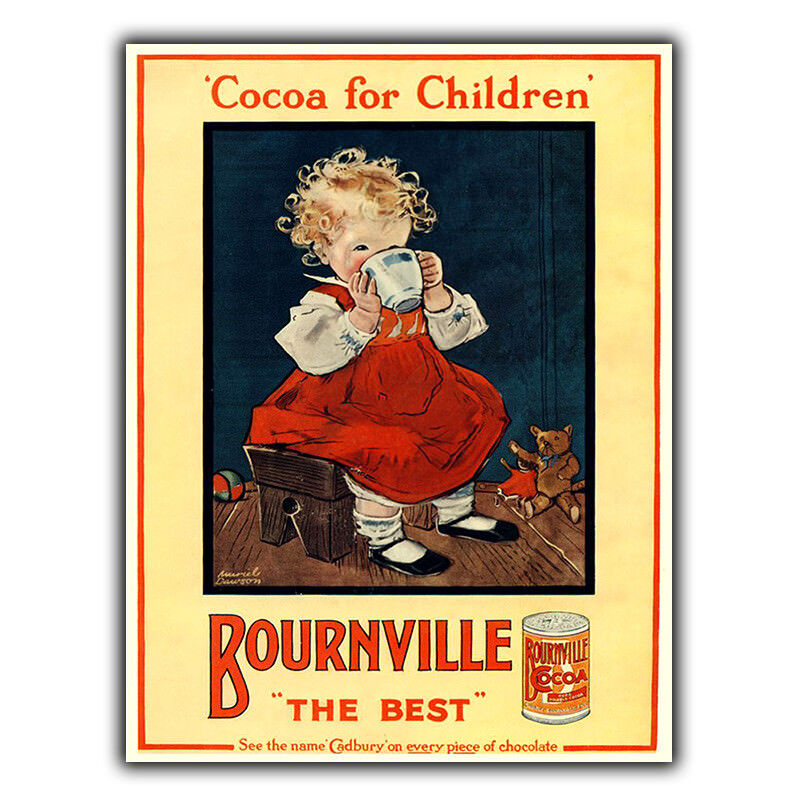
One more personal connection with chocolate – as a student I lived in Birmingham – not far from Bournville the model village set up for its workers by its Quaker founders. Bournville sells chocolate products under the name Cadbury…

Part of Bournville Village showing the Cadbury factory in the background.

And so to the poem which is a kind of “found” poem where I searched for lots of poems referencing cocoa and took lines from them to make a new poem known as a Cento.

Cocoa Poems

To attract you to the front of the store
Chocolate candies abound
In a cocoa river
palate tales abound
What a rich flavour
with hints of cocoa

Make hot cocoa
Black confection triple thick
triple chocolate
I was a Christmas drink almost to sweet to sup
A chocolate star lay at my helm, scrumptiously tasty

Or when it’s cold enjoy warm cocoa
Our fireside chat
to hot cocoa
With one thought in mind…
We enjoy winter, the more
we enjoy cocoa!

In this mug, memories steep
hot chocolate whispers, soft and deep
Carnation instant hot cocoa… my Mom’s treat with a kick of nutrition.
Each morning for one mug, I visit with Mom.
Like a little fur in my Mexican cocoa said my old grandma…
Saw a furry creature sitting in her cocoa cup!

He ordered a cocoa, not expecting anything extra
the smiley face at the top almost changed his mood
Tentative brush of a cheek in a cocoa crush
Knocking back the sepia potion,
Cocoa coursing through their veins.
I miss my cocoa butter kisses,
hope you smile when you listen

© Andrew Wilson, 2024
This Cento poem incorporates lines from poems by Ilene Bauer, M.L. Kiser, Anne-Lise Andresen, Caren Krutsinger, Heidi Sands, Albert, C. J. Krieger, Billy Ros III, Sara Etgen-Baker, Gwendolyn.Queenofself, Lucia Heffernan, John Betjeman, Stanley J. Sharpless, Keke Davis.

Barley and a Bop Poem

The dual theme of my A to Z Challenge this year is the world of Commodities and Poetry Forms so the juxtaposition of these two themes may throw up some strange poems – could there be a Heroic Ode to Heating Oil or will it merit a Haiku or a Haibun – whichever, I will be endeavouring to bring you interesting facts about commodities that may change the way you think about the stuff we variously depend on…

By commodity I mean certain items that are of both sufficient value/volume to be traded in special markets and are generally volatile enough to attract traders in “Futures” which are a way of hedging bets in the trading world of stocks, shares and commodities.

The A to Z Challenge runs throughout April and will consist of 26 posts – there are only a couple of letters for which I couldn’t find commodities but plenty of poetry forms to carry the day!

Worldwide Trade in Barley 2022 $10.4 Billion

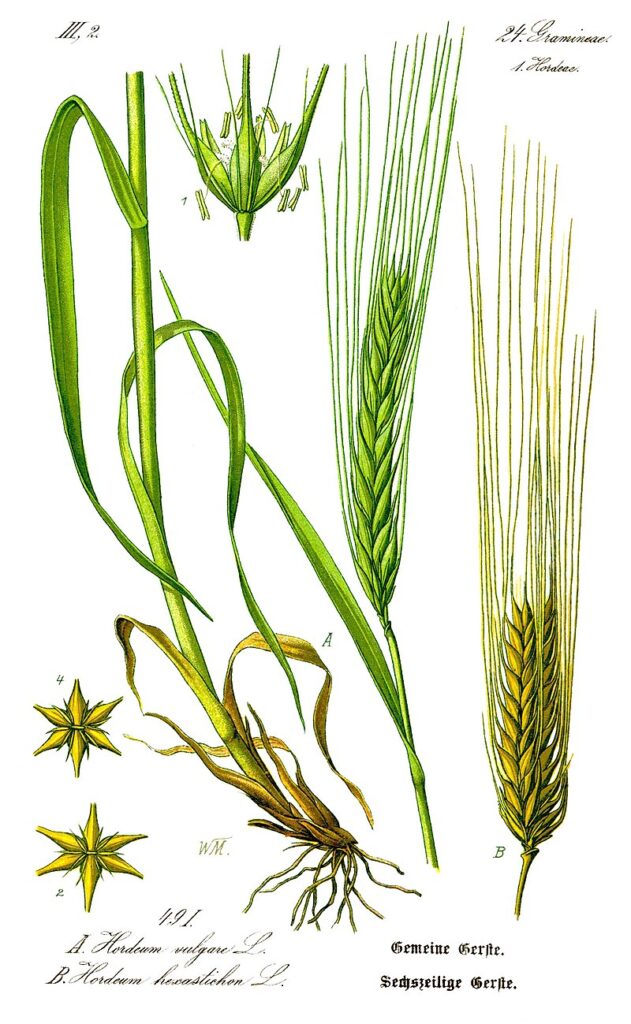
Barley is the oldest cultivated grain and still the forth most cultivated after maize, wheat, and rice. Bere was the Old English word for Barley and the word Barley comes from the Old English bærlic. The Old English bere-aern meaning “barley-store” gives us the modern word barn and showing the importance of this ancient grain. Grinding stones near the Sea of Galilee reveal traces of barley starch from 23,000years ago and by 9,000 years ago, domesticated barley (unable to reproduce without human assistance) is found throughout the Fertile Crescent including Mesopotamia, sometimes thought to be the original Garden of Eden.

Botanical illustration of leafy stem with roots, flowers, and 2- and 6-row ears

In 2022, 155 million tonnes of barley were grown worldwide with Russia in the lead at 15% followed by France Germany and Canada. You can read more details about all aspects of Barley here. However, the thing to be concerned about over barley as a commodity is that it is threatened by Climate Change. Modern barley ideally likes a cool climate without too much rain which is perhaps why it enjoys northern continental interiors but even these areas are threatened by the rising temperatures of global warming and the unpredictable extremes of weather events that bring heavy rain to unaccustomed areas…

Barley production – 2022
CountryMillions of tonnes
 Russia23.4
 France11.3
 Germany11.2
 Canada10.0
 Turkey8.5
 Spain7.0
World154.9[44]

Seventy percent of barley goes to animal feed which vegetarians would answer is a wasteful way for humans to raise protein, but the other thirty percent is eaten (or drunk) by humans but if climate change disrupts the crop, will animal feed be the first to succumb to unpredictability with humans feeding directly on whatever has managed to be grown?

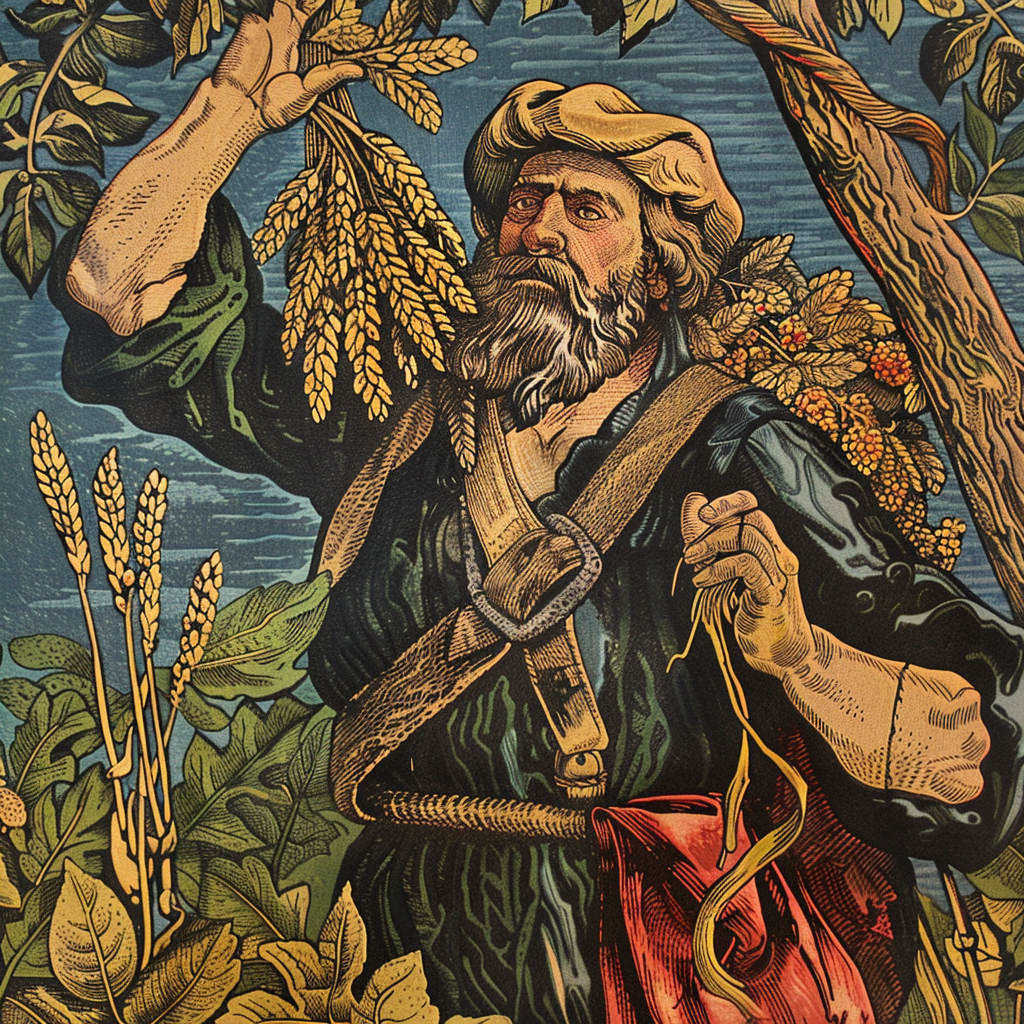
With barley being eaten in such a wide range of countries, there are many varieties of soups, stews, gruels and porridges not to mention bread made from barley flour. But barley is also fermented to produce malt which is the sugar basis of both many beers and of whisky and these liquids are ascribed as the gifts to mankind of John Barleycorn who was the subject of many ballads variously personifying the harvest and transformation of barley into booze…

John Barleycorn (image by Midjourney)

Healthwise, a 100-gram portion of barley can provide 10% of the required Daily value of some essential nutrients – fibre, the B vitamin niacin, and dietary minerals, including iron and manganese. It does however contain gluten so it is not suitable for those who are gluten-intolerant. It can aid in the regulation of both blood sugar and blood pressure.

Barley is not the only crop which is and will increasingly suffer from climate change, but it illustrates clearly the coming doom scenario if we fail to act to halt the slide into global warming.

And so to today’s poem – a recently coined form – a Bop poem! The Bop was created by Afaa Michael Weaver during a summer retreat of the African American poetry organization, Cave Canem. The Poets.org defines the Bop as “The first stanza (six lines long) states the problem, and the second stanza (eight lines long) explores or expands upon the problem. If there is a resolution to the problem, the third stanza (six lines long) finds it. If a substantive resolution cannot be made, then this final stanza documents the attempt and failure to succeed.”  So here goes…

Barley

Barley enjoys a cool climate but not too much rain
but global warming also means increased precipitation,
we may have to eschew John Barleycorn’s barley malt
but losing liquor is the least of it if climate change can’t halt.
this oldest of grains is still the fourth most cultivated crop
so food for animals and people around the world might stop.

Animals eat seventy percent of the barley.
Some know only soup with Pearl Barley
but bred to lose its hull is Hull-less Barley
which pre-cooked and dried is Quick Cooking Barley,
longer to cook is only lightly polished Pot Barley,
similar to steel-cut oats are Barley Grits,
and like rolled oats, Barley Flakes are flattened bits
of a grain that’s eaten in so many places
its crop loss with hunger will over-face us.

The third stanza of a Bop poem seeks resolution
but I see no solution to this sad situation,
those traders in stocks and shares
who seek to hedge their bets with grown wares
will find Soft Commodities have and make bad Futures
if we’ve tipped the climate past the point of rupture…

© Andrew Wilson, 2024

Other Commodities beginning with B include Beef and Bitumen. Beef, as is discussed with Barley above, is the least efficient way of producing protein of all animals since you have to put masses of other protein in to get there and as well, cattle are accused of contributing to greenhouse gasses and thus global warming with all their farting and burping methane. There are some minor measures which are beginning to alleviate those things but more significant is that the demand for beef continues to grow and that means bringing more land into agriculture including forestry. Just because people in developed countries want to eat more meat and don’t directly see the Amazon rainforest being cut down to make way for ranching, does not mean it is not affecting them through climate change. You can read a good article by the World Resources Institute weighing up the factors around beef and the environment here.

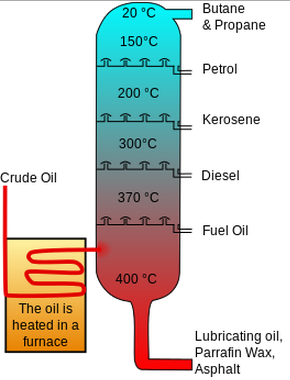
Bitumen is a byproduct of refining crude oil – the very last item to come out of fractional distillation and it is of course, the binder in tarmac or asphalt which makes the roads that the petrol-driven motor cars drive on. If bitumen was not used up in this way then it would be a horrendous waste product to be disposed of. So the growth of the motor car and the spreading of roads were pretty much synchronised and conversely, if – and it is a big if – we transition fully to electric vehicles, then the cessation of oil refining will mean a cessation of bitumen availability and considering that electric vehicles will still need roads… As a commodity, bitumen is pretty closely allied to the cost of crude oil and the price of that is a whole other can of worms!

Other poetry forms I might have chosen beginning with B include the Ballad, the Blazon (though it might be difficult to frame Barley as the beloved), Blank Verse, and the Ballat.

Aluminium and an Acrostic Poem

The dual theme of my A to Z Challenge this year is the world of Commodities and Poetry Forms so the juxtaposition of these two themes may throw up some strange poems – will there be a Heroic Ode to Heating Oil or will it merit a Haiku or a Haibun – whichever, I will be endeavouring to bring you interesting facts about commodities that may change the way you think about the stuff we variously depend on…
By commodity I mean certain items that are of both sufficient value/volume to be traded in special markets and are generally volatile enough to attract traders in “Futures” which are a way of hedging bets in the trading world of stocks, shares and commodities.
The A to Z Challenge runs throughout April and will consist of 26 posts – there are only a couple of letters for which I couldn’t find commodities but plenty of poetry forms to carry the day!

Worldwide Trade in Aluminium 2022 $280Billion

Happy Bi-Centenary Aluminium!

Yes, Aluminium, or Aluminum as the Americans choose to call it, was first discovered as a metal and element, in 1824, which for the element third most abundant in the earth’s crust after Silicon and Oxygen, is remarkable! Today Aluminium is ubiquitous in industry and domestically, wiring, aeroplane construction, building construction and tin cans are just a few of the obvious uses and because it can be recycled perfectly, it is estimated that so it is estimated that 75% of all the aluminium ever produced is still in use today.

Aluminium is mainly produced from the ore Bauxite which comes primarily from Australia, China and Guinea and China accounts for nearly 60 percent of global aluminium output. On average 4-5 tons of bauxite are needed to produce 1 ton of aluminium. It takes a lot of electricity to separate out the metal – about 15 MWH per tonne of output. That’s approximately as much as a 100-apartment block consumes in a month. This is why recycling is very desirable – 1 kg of recycled aluminium cans can save up to 8 kg of bauxite, 4 kg of various fluorides and up to 15 KWH of electricity.

Newly refined, Aluminium is a highly reflective silvery metal but one of its useful properties is that it quickly reacts with oxygen to produce a greyish layer of oxide which then protects the metal from further oxidation.

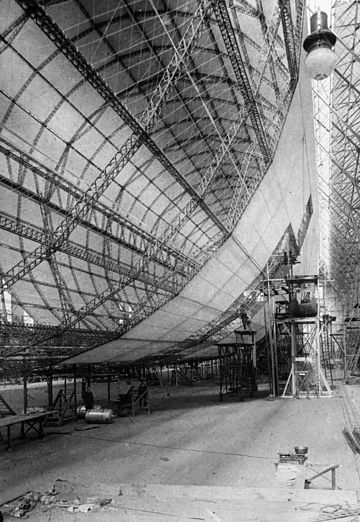
Graf Zeppelin under construction – Wikipedia

Aluminium is light – one-third the density of steel and so it is ideal for building flying machines – the first great example being the great airships of the 1920s but continuing to this day with most aircraft containing large amounts of aluminium – so as one ad for recycling points out, your drink can today may be your holiday jet tomorrow…

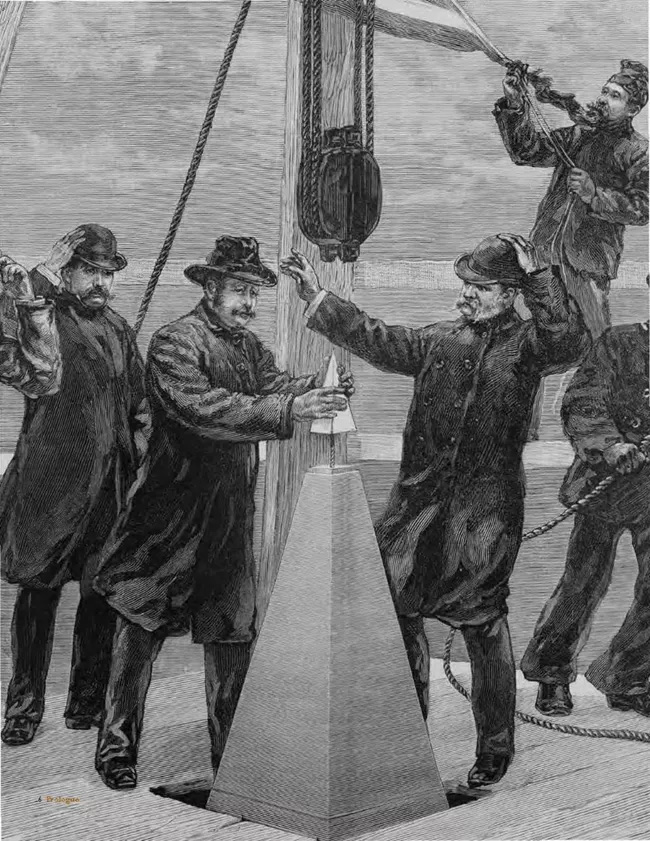
In the first years following its discovery, aluminium was hard to produce and so an expensive commodity, two examples of its use are as the cap of The Washington Monument completed in 1895 (due to its electrical conductivity it makes a great lightning conductor) and the statue in London’s Piccadilly Circus is the first to be cast in aluminium – often misnamed as Eros, it is in fact the Greek god of Requited Love – Anteros.

The placing of an aluminium pyramid atop the Washington Monument back when Aluminium was considered a “precious” metal.

On a commercial trading note, the price of Aluminium has been affected by President Biden’s announcement of further sanctions against Russia including trading in metals such as aluminium some of which is produced there, following the death of opposition leader Alexey Navalny so even hard commodities can be affected by unexpected events.

Aluminium Alloy car wheels

Aluminium readily combines with other metals to produce alloys – if your car has alloy wheels for example they are principally aluminium with a small amount of property-altering magnesium. Only one isotope of aluminium is stable – the one we mostly find on Earth, but all other isotopes are radioactive and it is thought that heat from decaying aluminium isotopes helped melt comets in the outer solar system. Aluminium compounds result in the jewels ruby, sapphire, aquamarine and emerald as well as the very hard mineral corundum used for abrasion.

And so to the poem – there are a plethora of poetic forms beginning with A to choose from, Acatalectic, Abecadarian, Aisling, and Aubade, to name but a few. I have chosen an Acrostic where the first letter of each line spells out a word – from the Greek for ‘at the tip of the verse’.

Aluminium

Aluminium your shining
Light was hiding
Under a bushel of chemistry
Mixed so thoroughly
In precious jewels and common sulphates
Never a native metal, but wait
In 1824 your secret was
Unlocked and ever since has
Made our world a lighter brighter place…

© Andrew Wilson, 2024

I could not leave the letter A without mentioning Amber, once called “the gold of the North” and traded from its main source The Baltic, all the way to the Mediterranean. So one of the earliest forms of international commodity trading!

A to Z 2024 Theme Reveal

Consider this – you go to your local supermarket to buy, among other things, some orange juice. You find the right section where there are several brands to choose from, fresh in the chiller and long-life too – perhaps a hundred-litre packets all told. That’s just your local shop, imagine how many shops there are in your town or city each with a hundred litres of orange juice on sale at any particular time – and remember, this stock is turning over all the time – being bought and then replaced with stock from the store room. Multiply by the number of cities in your country and then by the number of orange juice-drinking countries in the world and you have imagined an ocean of orange juice! Where does it all come from – especially considering it takes eight oranges to make a litre of juice? Are there enough orange trees in the world to account for all this juice?

Of course, if you believe in Solipsism – then you will think that the world only exists because you imagine it into being and of course, you want to have plenty of orange juice wherever you go, so you imagine it into being present in all those thousands of shops worldwide. I am more of a realist and so I know that there must be enough orange trees to provide the juice – I just have no idea where!

Most people have no idea where all that orange juice comes from either and what about dried mint in all those expensive little jars – you may have holidayed in some sunny spot and seen oranges growing, but when did you ever see a mint farm? These things are Commodities – Soft Commodities in fact – which means they are commodities which are grown as opposed to Hard Commodities like metals which are mined. So this year, I am going to explore the world of Commodities!

Of course, to some people, Commodities as a term, means a form of investment and apparently, if you belong to the stocks and share-owning class, you should, apparently, diversify your share portfolio with commodities for greater stability – though this is well above my pay grade so don’t be expecting any tips! But the essential difference between gambling on stocks and shares and gambling on commodities is that they are subject to different forces of fluctuation – a company might invent a new product and its share value rocket or it might have a product superseded by a rival and plummet. Commodities also go up and down – soft commodities are susceptible to the weather, even shellac – the product of the Lac Fly has good and bad years whilst hard commodities are more predictable.

In case you think that commodities sound rather dry, I am going to include a poem – also with an A to Z progression about each commodity as the last nine months, I have taken to writing poetry in a big way – so a double whammy! A few commodities are missing in the Abercadarian and I will double up on one of the letters and poetry forms.

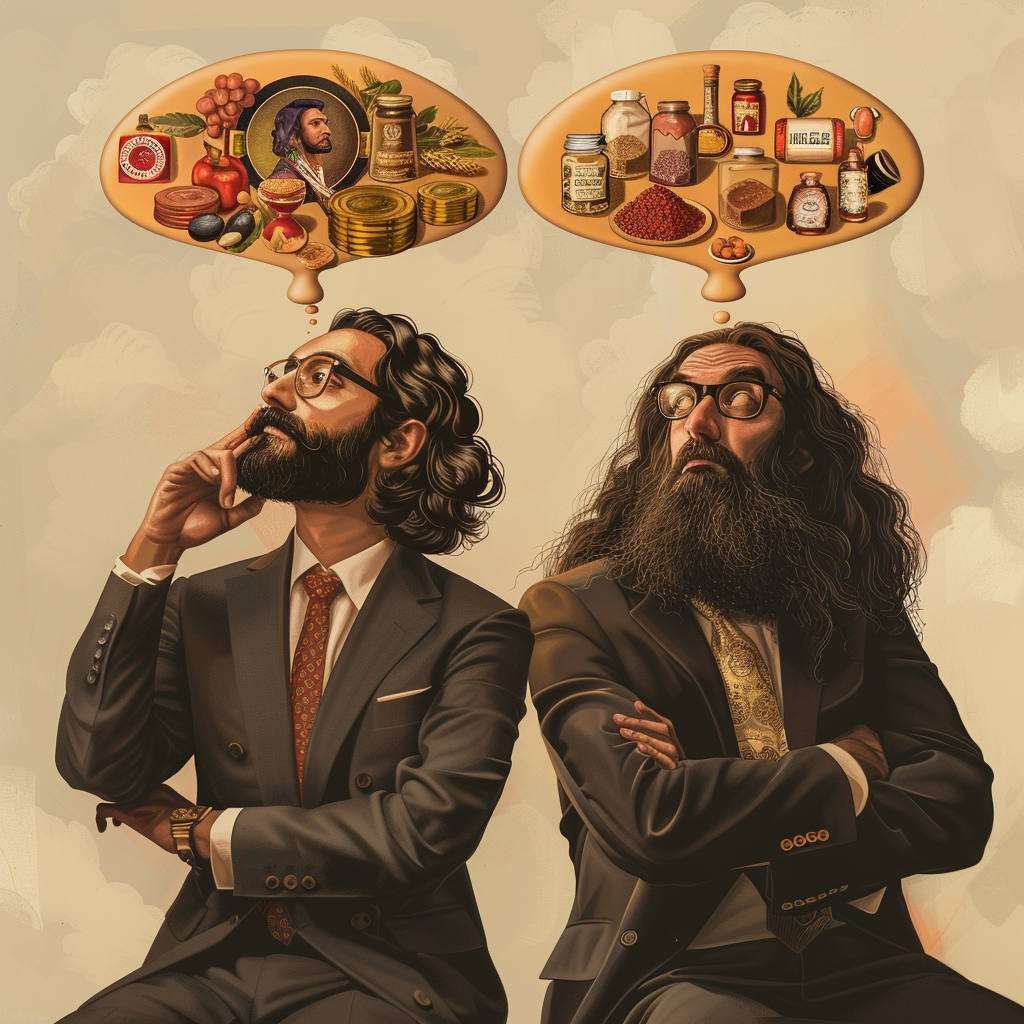
A Commodity Trader and a Poet contemplating commodities in their own ways…

Whether you come for the poems or the commodities, trust me, there will be amazing facts about gold, amber, pork bellies and yes shellac…

This is my 5th A -Z Challenge and you can find the previous years via the Menu at the top of the page – starting in the fateful year of Covid 2020…
2020 – personal and societal responses to the Covid 19 crisis
2021 – I was trying to complete a sci-fi novel and it advanced me greatly and I finished it shortly afterwards
2022 – I wrote about foods which can be used as an ingredient
2023 – I wrote about phrases we know the meaning of but often, not the origin of – and a s a bonus Cant languages

Six Questions (from Pablo Neruda)

Over at dVerse Poets Pub  Laura Bloomsbury in Meeting the Bar: Critique and Craft is our host and has asked us to write Ghazal using at least one of the lines by Pablo Neruda from his book of poetry – “The Book of Questions” in which he poses 320 questions and answers in couplet form, and she has asked us to use at least one of the six question lines she has selected. I found all six questions stimulating and linked them in this poem.

Why was I not born mysterious? – Sorrowful
Then nations would smite down my enemy furious – angry

Why did I grow up without companions – lonely
compadres and friends in this world so curious? – and unloved

And do unshed tears wait in little lakes – weeping
lurking to ambush we unwary and drown us? – vulnerable

And Why does Spring once again offer its green clothes – landless
springing up in the rubble of our homes mocking us? – homeless

How long do others speak if we have already spoken – quashed
one hundred years, pleading, crying and dying in the dust? – and denied

Even hope itself may eventually die – we should be hopeless
Isn’t it better never than too late for us? – flattened too.

How long do others speak if we have already spoken? – We still
As long as it takes for you to hear us – cry out

And Why does Spring once again offer its green clothes? – bear children
Because life must triumph, improbable, delirious – all we can

And do unshed tears wait in little lakes? – don’t hold back
Yes but cry them, use them, water the dust – start again

Why did I grow up without companions? – seek new friends
Because the world heard only another victim’s fuss – in a world of oppressed

Why was I not born mysterious? – we find other victims in common
See the wonderful in the ordinary which is us – our voices raised together

There are no especially deserving winners – give us all our due
no one deserves our land over us – “Equality now!”

Equal status and our own statehood – “Never Again!
with nobody ruling over us – “Give us Our Due!”

Borrowing these six Neruda questions – “Now!”
the poet, Andrew, seeks to give voice to us…

© Andrew Wilson, 2024
Once on a plane…

Dublin to Manchester
Once on a plane
I found a pair of sunglasses
a polarising pair
with circular lenses
of Matrix cool
left by the last occupant
missed between flights by the
cabin clean up crew
I have those glasses still
more than twenty years later
I’m a keeper.

Teneriffe to Gatwick
Once on a plane
I had the last moments
with my first great love
then she asked me to
hang back at the checkout
because her husband
was meeting her
and thought she was
holidaying alone.

Stanstead to Dublin
Once on a plane
I contemplated
flying to meet a woman
I had known only for
one chaste night
of intimations
who then sent me a ticket
for a weekend in County Leitrim

Manchester to Heraklion
Once on a plane
fleeing the pandemic
one step ahead of lockdown
I looked down on the Alps
a wilderness of mountains
as far as the eye could see
from thirty-five thousand feet
and saw not a trace of
human life, no villages
no roads, no smoke
as if already
we never existed

A Flight to Anywhere
More than once on a plane
I wonder about the lives
of Air Hostesses
or Hosts
or Stewards
as they are now called
whether they joined to
see the world
and whether they did
whether it’s true about
the crew parties
the god-like officers
marriage material
or just better advantaged
the ordinariness of
Ryanair crew
the haughty select of Air Aegean
each one as from the pages
of a 50’s fashion magazine
do the ordinary despise the haughty
meeting en passant
in some airport corridor
or do they share a common bond
of brother and sisterhood
is it just another flight
from one take off
to another landing
once on a plane…

© Andrew Wilson, 2024

Posted for Open Link Night at dVerse the Poets Pub

6 Degrees of Separation – Kitchen Confidential

Six Degrees of Separation is an excuse to peruse six favourite books linked to an initial offering by our host KateW and eventually link them back to the beginning. Kate W offers us big themes in her choices and since I have been participating, these have included – being adrift in TimeFriendshipMemory, and Romance. This month we have the autobiographical exposé of the world of chefs, restaurants and bad boys generally – Anthony Bourdin’s Kitchen Confidential…

Full disclosure – I once, briefly but gloriously, ran my own restaurant so this month’s 6 Degrees starter book was one I could really get my teeth into! (There will be lots of food metaphors!) Anthony Bourdain’s “Kitchen Confidential” is a Chef’s story from a writer who self evidently writes, but counts himself first, foremost, and still practising – as a Chef. As he puts it – “If I need a favour at four o’clock in the morning, whether it’s a quick loan, a shoulder to cry on, a sleeping pill, bail money, or just someone to pick me up in a car in a bad neighbourhood in the driving rain, I’m definitely not calling up a fellow writer. I’m calling my sous-chef, or my saucier, someone I have worked with over the last twenty-plus years…” He writes about how a fairly obnoxious youth found his way into a profession where eccentricity, excess and general misdemeaning is mixed with skill, sweat and long hours in kitchens that come in many varieties, much like the seven circles of hell. He has a chapter in which he asks what possesses a man in mid-life to want to open a restaurant and whilst I was not quite as ignorant, inexperienced and deluded as the dentist Bourdin gives as an example, there were things I could identify with, although I enjoyed every minute of it and I now know, as Bourdin puts it “what it feels like to attain a childhood dream of running one’s own pirate crew…”. Anthony Bourdin writes clearly and entertainingly and for once I would agree with the blurb on the cover which states “More gripping than a Stephen King novel”

So in this month’s 6 Degrees, I am linking the books that made me a cook, a foodie and eventually, however briefly, a chef… When I left home to go to university, my parents bought me a Sabatier, high carbon-steel, flexible boning knife- something which Bourdin talks about in his chapter on essential equipment. They also bought me two paperback cookery books “The Pauper’s Cookbook” by Jocasta Innes, and “Cooking in a Bedsit” by the journalist Katherine Whitehorn.

Not one of my six but I had to sneak it in…

I should say, that heretofore, my mother had always refused to teach me to cook – unlike my sisters, who “would one day be married and therefore need to cook for their husbands” from which you may deduce that I grew up in the pre-liberation 1970’s – or at least Women’s Lib had not then reached our house! Not that I hadn’t kept my eyes and ears open and picked up some culinary skills just from watching my mother – and not just cooking meals, but bottling fruit, freezing vegetables and making jam. Nevertheless – the two books of recipes (or for any Americans – receipts) were intended to fill the gap in my education and fit the kind of cooking which my parents imagined would be the limit of what my student lifestyle would require. Incidentally, of myself and my two sisters, I was the only one who cooked professionally… What I chiefly remember about “Cooking in a Bedsit”, was not the recipes themselves which were sensible culinary cheats for the impecunious, but the structure of the book whose first section was entitled “Cooking on One Ring” followed by two rings and lastly, for those lucky enough to have access to one – cooking on a stove. There were also, entertainingly, short pieces on “For him Asking Her Round to Eat” and vice versa – the latter including the sage advice to make sure and remove all your drying knickers from the radiators before he gets there… This gave a hint as to the fact that food is not merely fuel, but a part of life and culture and this is also strongly themed in Kitchen Confidential. Jocasta Innes would return in a completely different field, later in my life, with her book Paint Magic which diverted me slightly from my career as a Signwriter to specialist paint finishes such as wood graining and marbling. And as for the Sabatier, well I have used it almost every day of my life since, including at least four food businesses and it has been worn down accordingly…

The thing is, I was slightly insulted by my parent’s offerings, implying that my culinary horizons would rise no higher than pauperdom and that once I had left bedsitter land, I would find a nice wife to do the cooking for me! So I set about building my now extensive collection of cookery and food books (three shelves in the bookcase now) by adding first Elizabeth David’s seminal “Mediterranean Food” closely followed by “The Joy of Chinese Cooking” by Doreen Yen Hung Feng and for international variety – the Penguin book of “Indian Cookery” by Dharamjit Singh. I did practise recipes from all these books, but I soon realised that on my cookery journey, reading recipe books and imbibing the essence of their method, ingredients and presentation, is more important than becoming an Indian, Chinese or Mediterranean cook per se – I was an early adopter of Fusion!

The beautiful Elizabeth David…

Elizabeth David was credited with revitalising British cuisine after the Second World War by both drawing attention to foreign food traditions but also, then researching and drawing out the best of British food traditions, subjects which had been, respectively, ignored and forgotten. She was also, a bit of a gal – as Wikipedia informs us “Born to an upper-class family, David rebelled against social norms of the day. In the 1930s she studied art in Paris, became an actress, and ran off with a married man with whom she sailed in a small boat to Italy, where their boat was confiscated.” I can only urge you to delve into Elizabeth David, both her books and her life story. Below is an example of her recipe for Tapenade and you will see that this is grownup recipe writing – she gives quantities for the main ingredients – capers and anchovies, but there is no spoon-feeding by detailing everything precisely – if you are a cook, you will understand and use your judgement. Also on these pages, is the recipe for Skordaliá which has remained my go-to dish when catering for mixed vegetarian and carnivores where I want to demonstrate that vegetarian food is far tastier and more interesting than a piece of meat and two veg…

“The Joy of Chinese Cooking” taught me how to think about putting dishes together in a considered way – the uninitiated way many groups at a Chinese restaurant assemble their order by each picking a favourite dish, whilst familiar to Chinese chefs and waiters the world over, must nevertheless fill them with horror every time. A Chinese meal should contain some whole elements such as a fish perhaps, some chopped and stir-fried and some dishes which are “assembled” – meaning elements cooked by different methods and then brought together in one dish. There should be a balance in red and white meat, fish and vegetable dishes – the whole meal being a balanced and considered effort. This book, first published I think, in 1950 (I am writing away from home so I can’t check my copy) has taught many people to cook Chinese home-style food and whilst some might find the recipes a little heavy by today’s standards and health consciousness, that is perhaps the nature of home cooking everywhere… Below is an example of the cultural differences expounded in the book.

If Elizabeth David paints evocative word pictures of the dishes she encountered on her travels, Doreen Yen Hung Feng gives us a description of a whole food culture, sometimes anecdotally, as above, but also with some simple line drawings. Compared to today’s full-page colour photographs which present the recipes in impossible-to-equal perfection (no doubt with the aid of a food stylist and expert food photographer) Doreen’s illustrations are sparse, but her descriptions more than compensate and you will never be left feeling a failure when comparing your attempt with that in the photograph. The Penguin book of “Indian Cookery” is much the same – no pictures but a solid recipe book which has lasted through many editions as you would expect from Penguin the publisher

With “Indian Cookery” by Dharamjit Singh, I entered the pungent world of spices with their complex history and usage. Despite going to university in Birmingham (the city that gave us the diaspora invented Balti – a dish as unknown in India as Chop suey is unknown in China), I did not really go out for Indian meals until I lived in London, post-university and now I live and work in Bradford – Curry Capital of England! However, I did begin to dip my wooden spoon into yet another food culture and my ingredient shelf blossomed with yet more exotic substances. This is a source of friction between my partner and myself, as she is over-faced by the multiplicity of items she has no idea about in our kitchen and it is also a problem because unless you constantly use up your spices, they will stale.

My love affair with ingredients was developed by my next book choice – Tom Stobart’s “Herbs, Spices and Flavourings” which graced my bedside table for many years after university and many’s the time I read a few items of this splendid encyclopaedia of flavour before going to sleep. What I admired was that the author did not merely list the spices and herbs themselves, but delved into the nature of taste itself, the basic areas of taste detected by the tongue before the high notes which are detected in the nose (which is why food tastes of nothing much when our nose is blocked by a cold).

Tom Stobart also includes flavoursome items such as Marmite – that British food item which people famously “love or hate” – and in doing so, he legitimises the use of anything which has flavour for use as an ingredient which for a fusion foodie, encouraged cross-fertilisation of flavours from the different food cultures represented on my compendious ingredient shelf… In the extract above, you can see that below Marmite, Mastic the original chewing gum, is given its botanical name as well as the names by which it is known in various languages – what more could you ask for from an encyclopaedia?

I was torn about my final choice of book because one of the weightiest tomes on my culinary bookshelves is also an encyclopaedia of enormous import which my partner bought for me one Christmas “McGee on Food and Cooking”. It is the bible of the scientific approach to cookery and is credited with inspiring so-called “molecular” chefs such as Heston Blumenthal. For me though, it is simply the go-to book when you need to understand why something works the way it does in cooking, such as how “No Knead” bread works when everyone knows that kneading bread is what develops the gluten that traps bubbles of carbon dioxide (given off by the yeast) and causes bread to rise. Cookery may be an Art or as the Greeks would have it, a Craft but understanding the Science does not destroy the Art anymore than understanding the science of why a sunset is red should take away our appreciation of the beauty of a sunset – quite the opposite! However, if this has not counted as sneaking in a seventh book, I eventually chose Nigel Slater’s “Toast” as my sixth link since it better closes the circle back to “Kitchen Confidential”.

Nigel Slater recounts in a manner so entertaining that the book was dramatized for TV and the stage, how he became a chef – hence the link back to Anthony Bourdin. His mother was (now) famously, a terrible cook – so terrible that her long-suffering husband and only son, had, often, to ditch her burnt offerings in the bin and resort to the titular toast… After his mother died early, Nigel’s father remarried his cleaning lady, played, fruitily, in the TV drama by Helena Bonham-Carter who was at school in a class between my two sisters – how’s that for degrees of separation! The stepmother was a most excellent cook – in fact, that was part of the attraction for Nigel’s father and it meant that in Nigel’s perception, he found himself in a battle to win his father’s love and attention. The site of the battle was the kitchen as Nigel forced his way into domestic science (cookery) classes which in those days were usually reserved for girls and battle commenced – eventually equipping Nigel Slater to become not only a chef, but a celebrity chef, and like Anthony Bourdin, a chef who writes – both recipe books and his autobiography… So there you have my six (and a bit) choices all of which made me the reasonable cook/ sometime chef/ failed restauranteur I am today. My restaurant was not the first restaurant in which I cooked (I will not say Chef-ed) – that would be The Good Food Shop formerly of Lambs Conduit Street, London, where I blagged my way into cooking at weekends, became a manager/cook and learned a great deal about cooking, business and life – so I was not completely inexperienced when many years later, I opened my own restaurant “Frewin’s” (my middle name). Why did it fail? The obvious answer – not enough customers – was it the food, or the concept ( Café in the daytime, Bistro at night) – I like to think not. That summer it rained non-stop, so no walkers, no tourists and the people of the village went to the big newly revamped gastro pub (with café and massive umbrellas outside) and with copious car parking (of which I had none) and these things cannot always be seen in advance and so I lost my inheritance but as I said before, I enjoyed every moment of it. I hope you can also see why I enjoyed “Kitchen Confidential” so much…

What We Write in the Shadows…

Writing is more popular than ever – on computers, on phones and still some of us do at least some of our writing on paper! Emails and letters, books, blogs, op-eds, texts and the opinions formerly known as Tweets, replies, comments and critiques – many are the forms of the things we write.

I remember when I got my first PC back in 1999 when the internet was young, how my first impression was of wonder and joy at the democracy of it all – thousands of people all over the world were posting stuff about their passions populating the web with information in a thousand silos. Businesses had not yet learned the importance of having a website or how to do that in a really useful and appealing way – but never fear – an army of people was developing to create and fill jobs that had not existed before – coders, web designers, SEO experts, and writing on the web was the same. Writing groups – formerly exclusively in-person, moved online, breaking the limitations of time and geography – I live in Yorkshire, England, but I belong to a writing group on the East Coast of America, five hours difference and an ocean apart and as for cultural differences – well that is an added spice… The army that services writers now includes editors, writing coaches, publishing gurus, writing groups, critique groups and even silent writing groups who write in collective silence in Zoom meetings for the shared and mutual support of conducting an otherwise solitary activity – together!

The stars of “What We Do in the Shadows
(Russ Martin/FX)

You may recognise the title of this piece as a reference to the TV series “What We Do in the Shadows” based on a New Zealand film – a mocumentary, comedy-horror drama about vampires living in Staten Island and attempting to match the nature of their lives to the lifestyle of modern America. This seems an apt metaphor for the life of a writer. Recently I have been reading “On Writers and Writing” by Margaret Atwood and one of the early chapters riffs on the dualistic idea of “the writer who writes and the writer who lives”. The difference between the writer in the act or process of writing, and the person who lives, eats, breathes and is seen about town. Atwood then goes on to consider the need to actually make a living if one wants to be a full-time writer, for although the truism is that “A writer is someone who writes!”, many of us are therefore writers but few make a living by writing. Many of us do other jobs – lead other lives and writing is only a part of that life – how big a part depends on our circumstances and our choices, how much time we are prepared to “sacrifice” to the words…

Margaret Atwood, author of “On Writers and Writing

If you aspire to write a book, fiction or non-fiction, then it can take years as a part-timer to pass through the process of, research, writing a first draft, finding critique readers or partners, re-writing second or third drafts and all that before you decide on whatever monumentally difficult path you will select to attempt to get your book published. For a vampire, this might be the equivalent of feasting once in a blue moon, assuming you can even find a suitable victim when the appetite is upon you. Meantime, many people select to write more bite-sized portions – poems or blog posts. Substack is one of the latest forums for trying to make these smaller bites feed the writer sustainably. Launched with great fanfare about how it will make writers, if not rich, then at least not starving, and accompanied by helpful articles aplenty on how to drive readers to your site and convert them to Subscribers – Substack is really just a monetised blog with a subscription rather than an advertising models. And why not – how annoying is it when reading a poem on someone’s blog, to have the flow of poesy interrupted by an ad. for “Unsold Holiday Packages Selling Cheap”! And how much do those bloggers who have succumbed to the temptation in fact make from such monetisation – not much I am guessing?

But to return to the writer – whatever he or she might be writing – what drives them if it is not the elusive pot of gold at the ever-shifting rainbow’s end? Is it as George Mallory, on being asked why he wanted to climb Mount Everest, replied “Because it is there!” and, in the event, it was to be the death of him… However, climbing Everest and succeeding as a writer, two things that may feel the same, is not just about attaining the summit, it surely has to be about the travelling hopefully, the moment-by-moment achievement of each stage, step by step, word by word. Summiting might be the dream, but there are rewards along the way and one of those, for all writers other than book authors, one of the rewards is feedback – the comment! Indeed, even aspiring writers of books nowadays reveal their journeys online, one chapter at a time, and like Dickens, who admittedly was getting paid to publish his books in serial form, the feedback obtained from fans, friends and followers of one’s blog, can help to shape and steer the course of one’s writing, or for the strictly amateur, merely be the source of gratification that means one is not writing alone and unheard in the shadows but enjoyed and appreciated – hopefully…

The art of getting more comments does not depend solely on the quality of a person’s writing but on how much work they spend publicising it, in the main by visiting other people’s writing and leaving comments with links back to their own sites and this fosters a sense of community in the wilderness that can be the World Wide Web. On the downside, reading lots of other people’s work can be disheartening as well as inspirational, informative and misleading – you need to have a strong sense of self and direction to find and tune your own voice and little wonder that there is a site called The Insecure Writers Support Group! Sometimes, a blog site itself can be small enough to grow a fellowship of friends – the first site I blogged on with a site called “Ripple”, was called Mo’time – a testbed for the ideas of a man who ran a larger Italian blog site and although thousands were signed up, as people do, like gym memberships, the number who followed through and kept up their writing, was much smaller and so a core of connected writers developed online friendship and appreciation in the comments section. Eventually, tragically, Mo’time, and its parent blog, were sold, and the new owners soon terminated the affair. Some of us tried to create and stay connected with new homes but the magic was gone although I still see some of the Mo’timers on Facebook to this day.

Image by Midjourney from a prompt by Andrew Wilson

A few years ago, just as the pandemic was getting into its stride, I discovered, on April 1st, the A to Z Challenge in which bloggers post 26 alphabetically named post on whatever subject they care to choose for the month of April. Not having had time to prepare anything in advance, as old hands do, I wrote about aspects of the unfolding Covid crisis and I have now completed the challenge four times on my latest blog incarnation How Would You Know – that is if you disagree with my characterisation of Substack as a Blog… I revived a name that I had briefly tried on Blogger – Of Cabbages and Kings – a line from the Walrus and the Carpenter in Lewis Carrol’s Alice and Wonderland “The time has come” the Walrus said “ to talk of many things – Of cabbages and Kings…” I have to admit, that so far, I have not put the work in to draw readers to this new venture and I am still posting in the parallel world of WordPress and How Would You Know in part because I have hit a certain wall – to borrow a running metaphor. What I like about the A to Z Challenge, is the enormous breadth of writers and subject matter that coalesces each year and to jump into that pool is like an annual swim and sauna from which I emerge refreshed, invigorated and inspired.

If you are writing a novel, you can sit in your garret writing away, the time for reaching out to readers, way off on the horizon, but once you sit down at the Table of Feedback in the Dining Room of Blogs, then your daily output is reduced by the amount of time you spend promoting your posts by reading and commenting on others, just as the published author’s hours are eaten into by promotional tours and there comes a point, which I feel I have reached, where you must pick and choose carefully, which challenges you are going to respond to or else fall into a bubbling vat of writing for comments and commenting for followers and feedback at the cost of your writing enough of your own, of writing spontaneously, prompt-less and fancy-free…

If a person writes something and does not put it out into the world – does that mean that it has no meaning? That it wasn’t worth doing? Is it only when posthumously discovered that it suddenly acquires worth and meaning? Because at the end of the day, a writer must ask themselves “Why do I write?” is it for art’s sake, for the glory of publishing and acclaim and the money that may follow? Be it as humble as a blog post or as grand as a novel, is it to entertain, inform, to fight injustice, to philosophize through non-fiction or fiction – but I say that if you feel the compulsion to write, if you enjoy doing it, you are on the right track wherever it leads…

So if you are reading this on WordPress, you may visit me at Substack here, and if you are on Substack then How Would You Know is here and you can see the edifice I have constructed over the last years – a mind palace with many rooms if you will, and if you like what you find, write a comment in either place and I promise I will respond to it…

© Andrew Wilson, 2023

Six Degrees of Separation – Wifedom…

Six Degrees of Separation is an excuse to peruse six favourite books linked to an initial offering by our host KateW and eventually link them back to the beginning. Kate W offers us big themes in her choices and since I have been participating, these have included – being adrift in Time, Friendship, Memory, and Romance. This month we have the biographical Wifedom and the theme for me will be that of wives albeit mainly fictional examples – also, three of the books have been adapted for screen…

I have not read Wifedom (as is usually the case with Kate W’s suggestions) but I would like to after reading what Amazon has to say about the book. – At the end of summer 2017, Anna Funder found herself at a moment of peak overload. Family obligations and household responsibilities were crushing her soul and taking her away from her writing deadlines. She needed help, and George Orwell came to her rescue.

“I’ve always loved Orwell,” Funder writes, “his self-deprecating humour, his laser vision about how power works, and who it works on.” So after rereading and savoring books Orwell had written, she devoured six major biographies tracing his life and work. But then she read about his forgotten wife, and it was a revelation.

Eileen O’Shaughnessy married Orwell in 1936. O’Shaughnessy was a writer herself, and her literary brilliance not only shaped Orwell’s work, but her practical common sense saved his life. But why and how, Funder wondered, was she written out of their story? Using newly discovered letters from Eileen to her best friend, Funder re-creates the Orwells’ marriage, through the Spanish Civil War and the Second World War in London. As she peeks behind the curtain of Orwell’s private life she is led to question what it takes to be a writer—and what it is to be a wife.

A breathtakingly intimate view of one of the most important literary marriages of the twentieth century, Wifedom speaks to our present moment as much as it illuminates the past. Genre-bending and utterly original, it is an ode to the unsung work of women everywhere.

The Aubrey–Maturin series of novels by Patrick O’Brian have been compared to the works of Jane Austen – exhaustively researched plots drawn from the annals of the British Royal Navy and transplanted into Patrick O’Brian’s fictional Master and Commander series, these books are as equally character-driven as they are portrayals of the events of life in the navy during the years of the Napoleonic wars and I urge anyone who fears such books to be too technical or militaristic, to try them. No better example – beyond the two main protagonists Aubrey and Maturin, than the portrait of the eventual wife of Captain Aubrey – Sophie. The life of any sailor’s wife would be hard and full of fear of her husband never returning, long periods of absence, varying financial fortune and many other forms of uncertainty, but in Sophie we have a wife of heroic qualities to match the vicissitudes heaped upon her – a wife who takes charge of Aubrey’s home life every bit as much as he is captain of his ship at sea! The rather battered cover below depicts Sophie’s first appearance in the series of books alongside her future husband…

Another wife heaped with vicissitudes along with her husband, is Raynor Winn in her autobiographical account of how she and her husband, having lost their house and business due to a treacherous friend and having simultaneous with their homelessness, receive a diagnosis of her husband’s terminal illness. They decide that with nowhere else to go and nothing to be done, they will spend the summer walking the coastal path from Somerset to Dorset around Devon and Cornwall. No spoilers but their endurance trial brings unexpected rewards and Raynors’s support of her husband is exemplary… Below is the very beautiful cover designed by Angela Harding.

If the three wives portrayed so far have been long-suffering, among other things, Cathy in East of Eden, by John Steinbeck, is the one dishing out the suffering, beginning by running away after burning her parents to death – she is a character of pure evil – described as having a “malformed soul”. Steinbeck regarded East of Eden as his magnum opus even though other books are more famous, Cannery Row (previously covered by me), The Grapes of Wrath and that much studied in school – Of Mice and Men. Despite being made into an iconic film featuring James Dean, I venture to suggest that not so many people have read the epic family saga East of Eden. Indeed the film only deals with part of the story and I wonder if Steinbeck would be disappointed that his magnum opus is not the one that time has accorded that accolade to.

The title East of Eden comes from the fourth chapter of Genesis, verses one through sixteen, which recounts the story of Cain and Abel and the whole book – accused by some of being “moralistic” certainly deals with big themes – good and evil, brotherly rivalry, love and depravity and as always with Steinbeck we are treated to a portrait of the life and times in the Salinas Valley, California. There is a saying about writing that “big themes are dead weights” and whilst this is undoubtedly a weighty novel, it is still a great read from a master, even if not his master work…
The cover below makes as sensational a view as it can of the central drama of two brothers torn apart by the inexplicably evil Cathy.

Another painful marriage is depicted in On Chesil Beach by Ian McEwan – an author not renowned for being the most cheerful in his writings, the unfolding of this depiction of a virginal couple on honeymoon in an as yet sexually unliberated 1962, is excruciating in the extreme and yet, such is the quality of the writing – you cannot look away… on Chesil Beach has been turned into a film.

Many of the writers I have covered in my 6 Degrees are writers I read long ago but Nicola Griffiths is a new favourite whose canon I am working through in order, from Ammonite (Lesbian science fiction) to her current amazing historical novels featuring Hild, a powerful woman from Britain’s pre-medieval history. Between these wildly divergent books linked only by their themes of strong women and excellent writing, comes the Aud Torvingen series of which Stay is the second book. Aud is not exactly your typical P.I. as she is a woman of independent wealth but in each of the three books she conducts investigations, willingly or unwillingly and (spoiler alert) – she also falls in love in book one and in book two has to deal with the loss and the grief over her lover. Although Aud does not find the happiness of marriage until book three, Stay is a portrait of a wife thwarted and her response by throwing herself into “a series of physical, moral, and emotional challenges that she has been dodging for weeks, months, and yearsnone of her choices are easy.” What more can we ask from a book…

My last link, slightly tenuously back to Wifedom, is The Fourth Hand by John Irving. It is a tale of a wife who is so dedicated to her husband that – well here is what the Penguin blurb says:- While reporting a story from India, a New York television journalist has his left hand eaten by a lion; millions of TV viewers witness the accident. In Boston, a renowned hand surgeon awaits the opportunity to perform the nation’s first hand transplant. A married woman in Wisconsin wants to give the one-handed reporter her husband’s left hand, that is, after her husband dies. But the husband is alive, relatively young, and healthy…
The widow supplies permission for the transplant but then demands visitation rights with the hand – a typical thought experiment of a plot from the masterful John Irving. This is the first of John Irving’s books that I have included in 6 Degeees but once discovered, I devoured his early books such as The World According to Garp and several of his books have been turned into films. I recommend some of his later books too, such as Till I Find You about tattoos and tattoo artists. Irving has repeated elements that crop up in many of his books – bears, hotels, wrestling but however far-fetched some of the things Irving writes about may seem to be, they make you think about life in a clever and enjoyable way – no wonder he occupies half a bookshelf of mine!
The link back to Wifedom – the extraordinary connection between and support/dedication of a wife…

Time Shelter

I try to ration myself for prompts, perturbed by the idea that I will be swallowed in an endless cycle of call and response, but one that I will not miss each month, is 6 Degrees of Separation. Starting from a given title, each reader of books – no matter when they read them, summons six links to form a chain that finally links from and back to the beginning book.

I confess I do not make enough time for reading books, words bound between covers on paper as opposed to screens, though I always have one novel and at least one non-fiction on the go – however slow. I confess that the Poets Pub is often the guilty party in keeping me from the books though I do not blame or object because beautiful, moving or informative as books are, the pleasure of company and connection are better still.

I’m afraid my To Be Read list rarely coincides with the 6 Degrees prompt and only sometimes am I moved to purchase the recommendation, but recently I fell hook line and sinker for Time Shelter. The book is a metaphorical creation of memory clinics where sufferers from certain kinds of memory loss may steep themselves – full-immersion – in a room recreating an era from their past and get the backroads to their lost memories cleared of debris. A few weeks or months in which a loved one comes to life again is worth so much to relatives grieving the loss of someone who is still alive…

Dear Readers – I bought the book! I have no regrets and I recommend it even to poets – no! especially to poets so they may dive into a novel length metaphorical fiction that explores memory and loss, health and sickness and if that sounds depressing, I assure you that Time Shelter, by Georgi Gospodinov is most entertainingly told – and now your turn to confess – when is the last time you read a fiction by a Bulgarian?

This Prose Poem was written for Laura Bloomsbury‘s prompt for  National Buy a Book day over at dVerse Poets Pub

© Andrew Wilson, 2023