Milk and a Martian Poem

The dual theme of my A to Z Challenge this year is the world of Commodities and Poetry Forms so the juxtaposition of these two themes may throw up some strange poems – could be a Heroic Ode to Heating Oil or will it merit a Haiku or a Haibun – whichever, I will be endeavouring to bring you interesting facts about commodities that may change the way you think about the stuff we variously depend on…

By commodity I mean certain items that are of both sufficient value/volume to be traded in special markets and are generally volatile enough to attract traders in “Futures” which are a way of hedging bets in the trading world of stocks, shares and commodities.

The A to Z Challenge runs throughout April and will consist of 26 posts – there are only a couple of letters for which I couldn’t find commodities but plenty of poetry forms to carry the day!

Worldwide Trade – 893 billion U.S. dollars in 2021

Life begins with ‘mother’s milk’ – if you are lucky – if you lost your mother in childbirth or your mother is unable breast feed or is driven by outdated mores not to breastfeed – then you will likely depend on ‘formula’ milk which has been sourced from other animals – most frequently cows. If your country does not produce sufficient milk for the production of dried milk, then your formula will contain milk-powder that has been imported from some other part of the world. Powdered because it is easier and cheaper to transport than the fresh liquid. Some parts of the world are unfamiliar with fresh milk and all their milk has been processed into UHT (Utra High Temperature treatment), or else they re-constitute milk from dried powder but both this and UHT milk are not the same in terms of quality – powdered milk often lacking the fat element of fresh and UHT having an aftertaste…

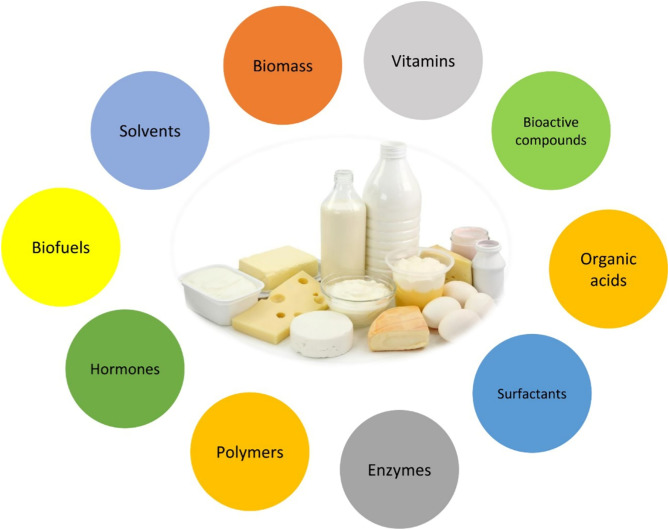
If you think of milk only of a dewy glass of fresh milk straight from the fridge (and already you have made a choice between Full-fat, Semi-skimmed and Skimmed), then you are forgetting all the ‘Preserved Milk’ products – for that is what all the various yoghurts, butters and cheeses in the world are – forms of preserved milk. Preservation means treating something so that it will last longer without spoiling. For example, in rural Ireland in the 18th-19th centuries, a reasonably prosperous family might keep a milk-cow as well as grow potatoes, and in the Summer, they would churn the higher yield of milk into butter. The byproduct – buttermilk, was dunk fresh or allowed to ferment slightly and consumed with last seasons potatoes. The butter was wrapped in the leaves of the Butterbur plant which are suitably large, and then buried in the peat bog where the anaerobic and acid conditions perfectly preserved the butter. Come Winter and the family consumed new season potatoes with butter dug up from the bog. This was a surprisingly heathy diet since potatoes are very rich in vitamin C whilst milk products have a good balance of protein , fat and carbohydrate and are a very important source of essential nutrients, including calcium, riboflavin, phosphorous, vitamins A and B12, potassium, magnesium, zinc, and iodine. So the preservation of milk, by freeze drying it to a powder or turning it into a secondary product like yoghurt or cheese is a huge part of the journey of milk on the international market.
I work in a Gelato (Ice Cream) factory and as we soon upscale to much bigger capacity equipment – we face the choice of whether to stick with fresh whole-milk (meaning a tanker sized refrigerated tank on the outside of the factory) or go with powdered milk (a vast reserve of palleted powder, reconstituted with water and probably coconut oil added). Our Italian gelato consultant tells us that in taste tests, most no-one can tell the difference but that people (the ones who read the ingredients) like to see Whole Milk (in bold because it is a notifiable allergen!) Previously I had a small frozen yoghurt shop and I made my own mix of plain yoghurt, milk and sugar and I also sold Boba Tea. Boba Tea was not big in Britain back then and so it survived the 2008 Chinese dried milk scandal and is now slowly gaining traction. The real scandal was that some 54,000 babies got sick and four died due to formula made with Chinese dried milk powder contaminated with Melamine (read the full story here) but the damage to the reputation of Chinese agricultural products was enormous and the Boba Tea mixes which were largely powdered milk in particular, causing the collapse of Boba Tea shops across much of Europe though not in the UK where Boba Tea was in its infancy. This is not the sort of thing tat is supposed to happen in the world of soft commodities – as I write, it has just been announced that following the latest safety scandal regarding Boeing aircraft, in which a door plug came off one whilst in flight, the senior management have been axed because they suppressed any whistleblowing over safety concerns by workers and middle management. When the episode occurred, Boeing shares took a nosedive and the change of management will not immediately restore the value of those shares. These things happen in the world of stocks and shares and the nearest equivalent in soft commodities is a bad harvest which as we saw with Frost Futures, can even be hedged against – but a crisis of confidence due to criminality at worst, negligence at best as happened with Chinese milk – is not supposed to happen – commodities are supposed to be what those in the heady world of high finance buy to ameliorate the vicissitudes of their portfolios…

Who are the exporters of Milk and who are the great importers?
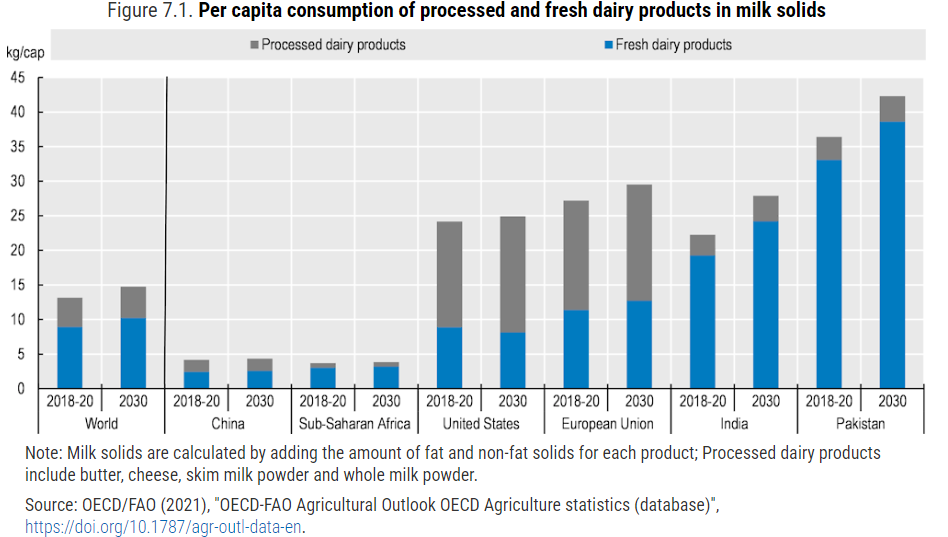
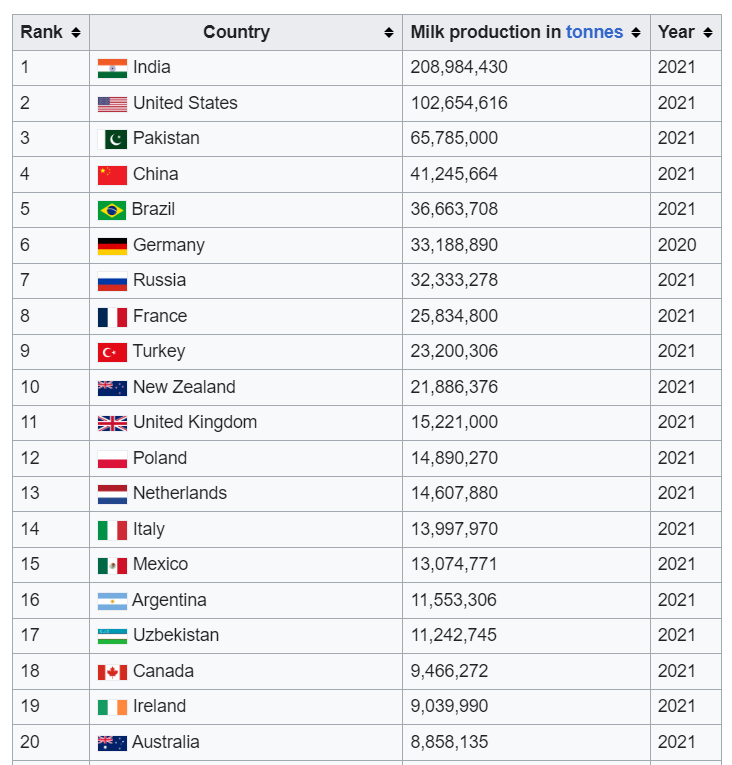
And here are the places that produce milk…
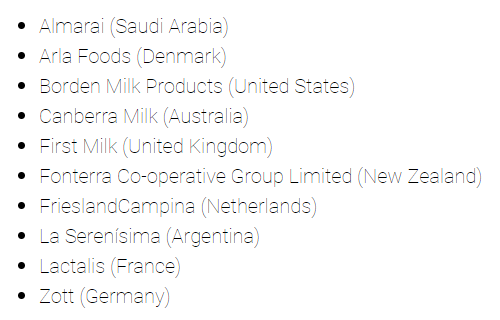
And lastly – here are the top milk processing companies in the world – see if you can spot one you know…
And so to today’s poetry form and the poetry form I have chosen is Martian Poetry. The Martian Poets were a small group of poets who were reacting against the somewhat dour and sometimes pessimistic poetry of the post-war group known as The Movement which included Philip Larkin, Kingsley Amis, Donald Davie, D. J. Enright, John Wain, Elizabeth Jennings, Thom Gunn and Robert Conquest. The Martian Poets were named for a poem by Craig Raine (whom I met once) called A Martian Writes a Postcard Home. Other Martian Poets included Christopher Reid, Oliver Reynolds and John Hall Wheelock and the nature of the poetry “drew inspiration from surrealism, metaphysical poetry of John Donne, Andrew Marvell, etc., nonsense poetry of Lewis Carroll and Edward Lear, and Anglo-Saxon riddles.” My poem below is a homage to Craig Raine’s original Martian poem…

Martian Report 11011/101 Milk

Where does milk come from?
I asked my host’s sprout No.2
Zoe identifying as she/her
100¹ solar rotations
Tesco! She replied
No silly! Cows!
Mark – sprout No.1
identifying as he/him
110² solar rotations
supplementary identity brother
Dad! What’s a cow?
Asked Zoe
We will take our Martian friend
to a farm this weekend
and you shall see cows!
Host and pod senior
11100³ solar rotations
identifying as he/him
supplemental identity – Father

Cows – it turns out
are breast-feeders
on four legs
unlike the host identifying
as she/her
supplementary identity – Mother
who walks on two legs
– cows are enslaved
and farms are prisons
enclosures of grass
which is a brush
for brushing up sunlight
and converting the energy
so cows can make milk
and – as it turns out – meat

Zoe imbibes a lot of milk
she made that weird expression
I cannot fathom the meaning of
when the cow breast
was pointed out
It’s dirty! She said
she ran off to look at
some cow progeny
that were being loaded
into a transporter
– diesel class/lorry
Why haven’t they got breasts
Zoe asked the prison superintendent
They identify as he/him
she was told
and we don’t need them
so we are selling them…
Why make the cows
have them then?
asked Mark
If the cows don’t have babies
they won’t make milk
for you to drink!
What happens to
those boys? Asked Mark
They will be fattened up
and go to market
said the superintendent
Go to market for what?
asked Mark
Why to be eaten!
Zoe made a high-pitched noise
and ran away shouting
I’m never going to drink milk again
or eat meat!
Now look what you’ve done!
Said Mother…

¹ 4 Years old
² 6 Years old
³ 28 Years old

© Andrew Wilson, 2024
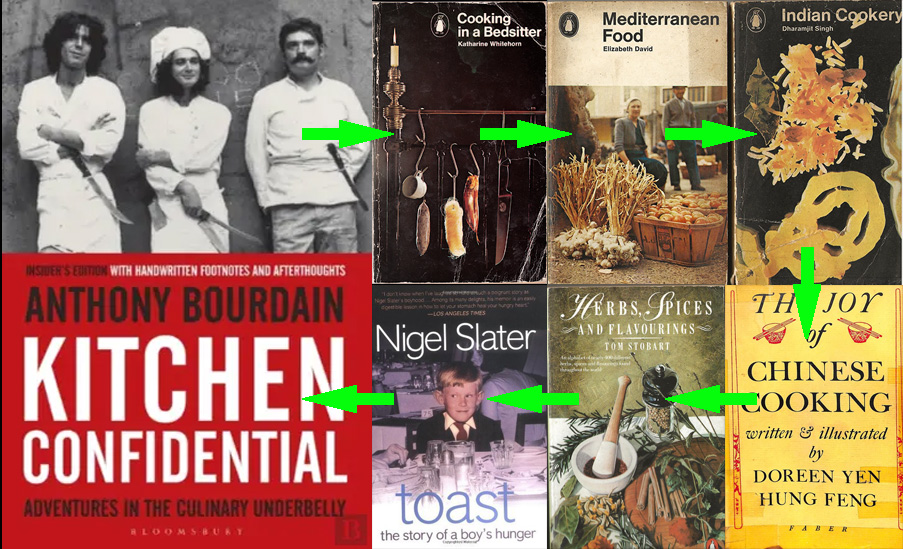
6 Degrees of Separation – Kitchen Confidential

Six Degrees of Separation is an excuse to peruse six favourite books linked to an initial offering by our host KateW and eventually link them back to the beginning. Kate W offers us big themes in her choices and since I have been participating, these have included – being adrift in TimeFriendshipMemory, and Romance. This month we have the autobiographical exposé of the world of chefs, restaurants and bad boys generally – Anthony Bourdin’s Kitchen Confidential…

Full disclosure – I once, briefly but gloriously, ran my own restaurant so this month’s 6 Degrees starter book was one I could really get my teeth into! (There will be lots of food metaphors!) Anthony Bourdain’s “Kitchen Confidential” is a Chef’s story from a writer who self evidently writes, but counts himself first, foremost, and still practising – as a Chef. As he puts it – “If I need a favour at four o’clock in the morning, whether it’s a quick loan, a shoulder to cry on, a sleeping pill, bail money, or just someone to pick me up in a car in a bad neighbourhood in the driving rain, I’m definitely not calling up a fellow writer. I’m calling my sous-chef, or my saucier, someone I have worked with over the last twenty-plus years…” He writes about how a fairly obnoxious youth found his way into a profession where eccentricity, excess and general misdemeaning is mixed with skill, sweat and long hours in kitchens that come in many varieties, much like the seven circles of hell. He has a chapter in which he asks what possesses a man in mid-life to want to open a restaurant and whilst I was not quite as ignorant, inexperienced and deluded as the dentist Bourdin gives as an example, there were things I could identify with, although I enjoyed every minute of it and I now know, as Bourdin puts it “what it feels like to attain a childhood dream of running one’s own pirate crew…”. Anthony Bourdin writes clearly and entertainingly and for once I would agree with the blurb on the cover which states “More gripping than a Stephen King novel”

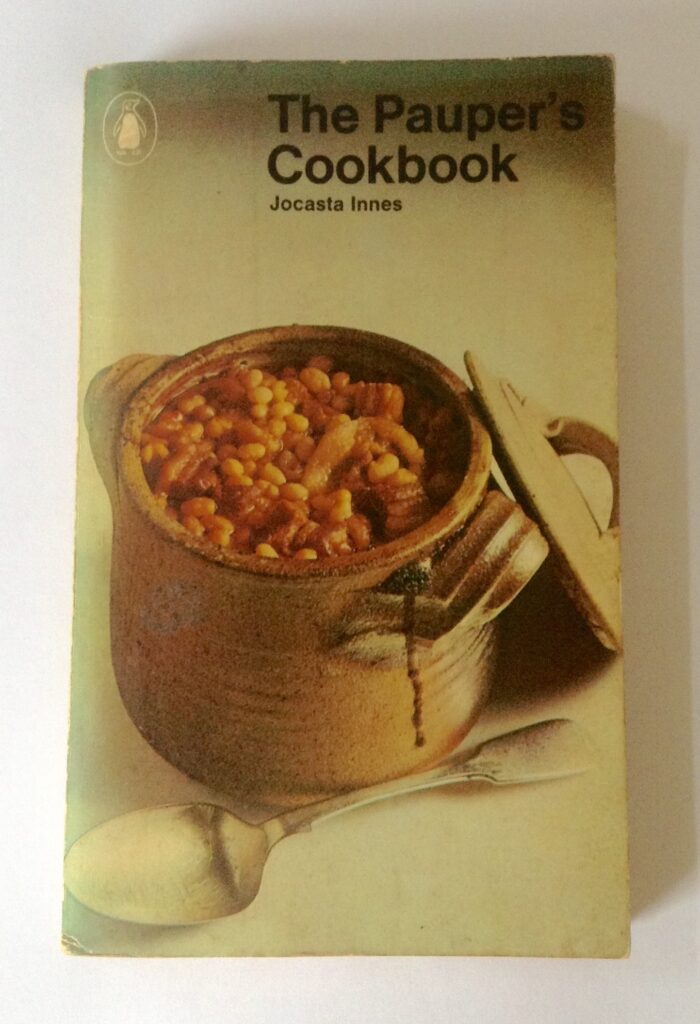
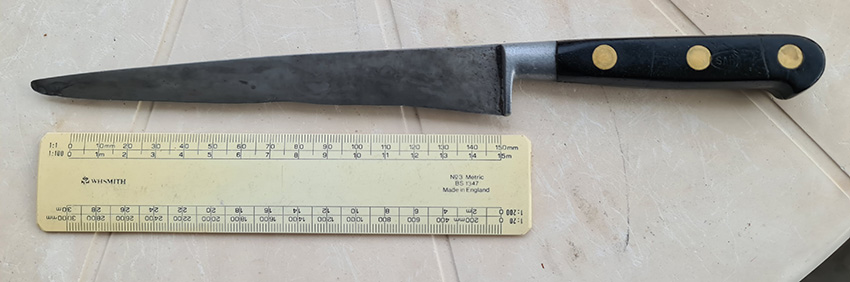
So in this month’s 6 Degrees, I am linking the books that made me a cook, a foodie and eventually, however briefly, a chef… When I left home to go to university, my parents bought me a Sabatier, high carbon-steel, flexible boning knife- something which Bourdin talks about in his chapter on essential equipment. They also bought me two paperback cookery books “The Pauper’s Cookbook” by Jocasta Innes, and “Cooking in a Bedsit” by the journalist Katherine Whitehorn.

Not one of my six but I had to sneak it in…

I should say, that heretofore, my mother had always refused to teach me to cook – unlike my sisters, who “would one day be married and therefore need to cook for their husbands” from which you may deduce that I grew up in the pre-liberation 1970’s – or at least Women’s Lib had not then reached our house! Not that I hadn’t kept my eyes and ears open and picked up some culinary skills just from watching my mother – and not just cooking meals, but bottling fruit, freezing vegetables and making jam. Nevertheless – the two books of recipes (or for any Americans – receipts) were intended to fill the gap in my education and fit the kind of cooking which my parents imagined would be the limit of what my student lifestyle would require. Incidentally, of myself and my two sisters, I was the only one who cooked professionally… What I chiefly remember about “Cooking in a Bedsit”, was not the recipes themselves which were sensible culinary cheats for the impecunious, but the structure of the book whose first section was entitled “Cooking on One Ring” followed by two rings and lastly, for those lucky enough to have access to one – cooking on a stove. There were also, entertainingly, short pieces on “For him Asking Her Round to Eat” and vice versa – the latter including the sage advice to make sure and remove all your drying knickers from the radiators before he gets there… This gave a hint as to the fact that food is not merely fuel, but a part of life and culture and this is also strongly themed in Kitchen Confidential. Jocasta Innes would return in a completely different field, later in my life, with her book Paint Magic which diverted me slightly from my career as a Signwriter to specialist paint finishes such as wood graining and marbling. And as for the Sabatier, well I have used it almost every day of my life since, including at least four food businesses and it has been worn down accordingly…

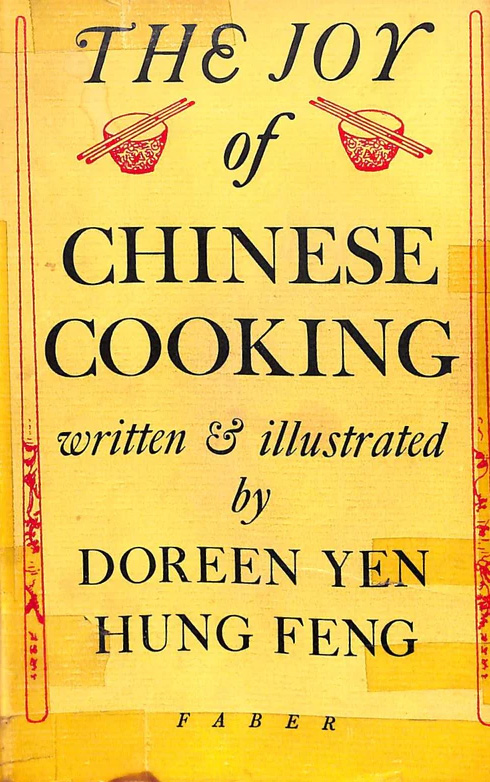
The thing is, I was slightly insulted by my parent’s offerings, implying that my culinary horizons would rise no higher than pauperdom and that once I had left bedsitter land, I would find a nice wife to do the cooking for me! So I set about building my now extensive collection of cookery and food books (three shelves in the bookcase now) by adding first Elizabeth David’s seminal “Mediterranean Food” closely followed by “The Joy of Chinese Cooking” by Doreen Yen Hung Feng and for international variety – the Penguin book of “Indian Cookery” by Dharamjit Singh. I did practise recipes from all these books, but I soon realised that on my cookery journey, reading recipe books and imbibing the essence of their method, ingredients and presentation, is more important than becoming an Indian, Chinese or Mediterranean cook per se – I was an early adopter of Fusion!

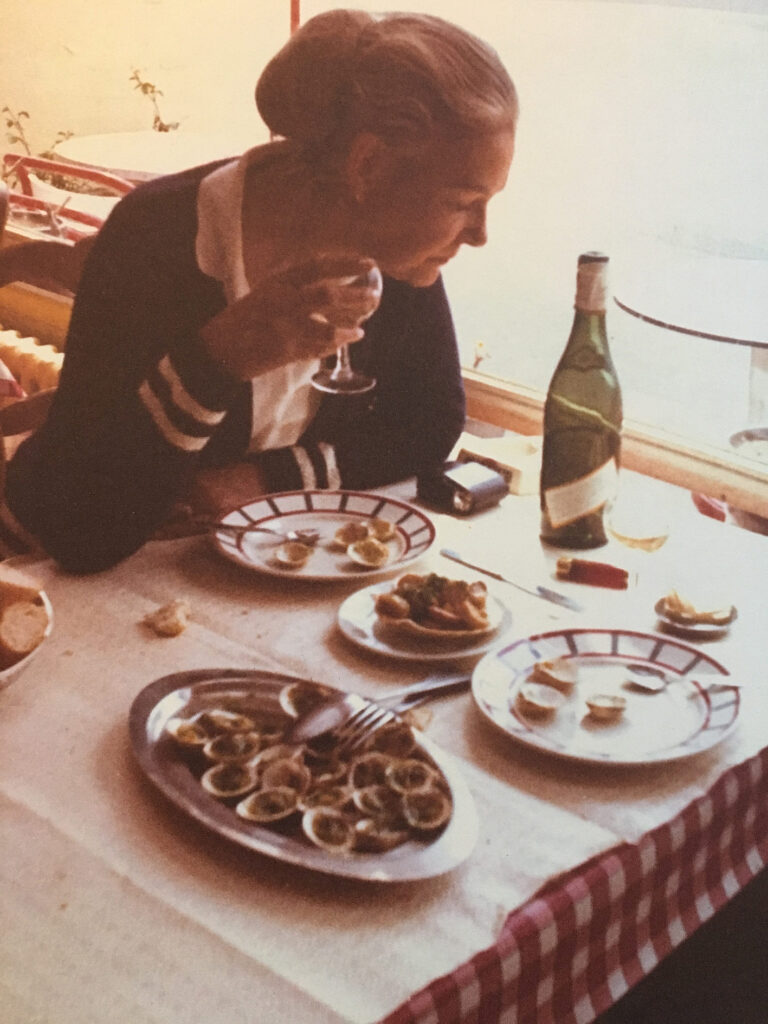
The beautiful Elizabeth David…

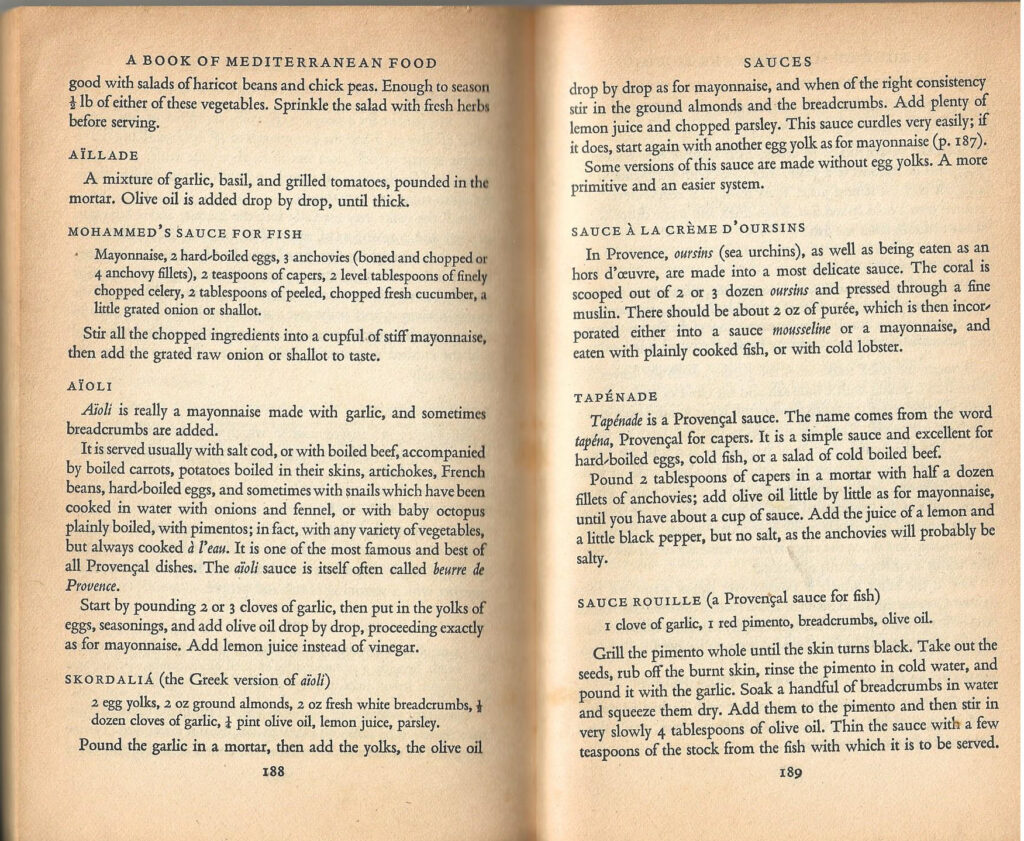
Elizabeth David was credited with revitalising British cuisine after the Second World War by both drawing attention to foreign food traditions but also, then researching and drawing out the best of British food traditions, subjects which had been, respectively, ignored and forgotten. She was also, a bit of a gal – as Wikipedia informs us “Born to an upper-class family, David rebelled against social norms of the day. In the 1930s she studied art in Paris, became an actress, and ran off with a married man with whom she sailed in a small boat to Italy, where their boat was confiscated.” I can only urge you to delve into Elizabeth David, both her books and her life story. Below is an example of her recipe for Tapenade and you will see that this is grownup recipe writing – she gives quantities for the main ingredients – capers and anchovies, but there is no spoon-feeding by detailing everything precisely – if you are a cook, you will understand and use your judgement. Also on these pages, is the recipe for Skordaliá which has remained my go-to dish when catering for mixed vegetarian and carnivores where I want to demonstrate that vegetarian food is far tastier and more interesting than a piece of meat and two veg…

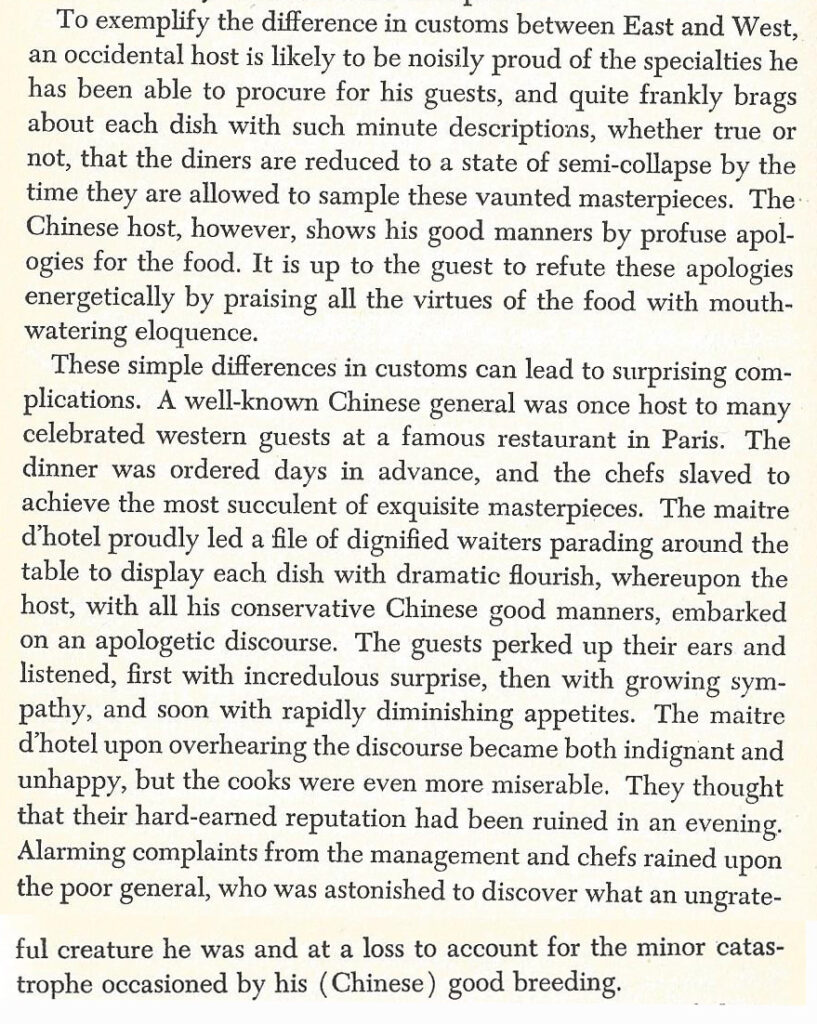
“The Joy of Chinese Cooking” taught me how to think about putting dishes together in a considered way – the uninitiated way many groups at a Chinese restaurant assemble their order by each picking a favourite dish, whilst familiar to Chinese chefs and waiters the world over, must nevertheless fill them with horror every time. A Chinese meal should contain some whole elements such as a fish perhaps, some chopped and stir-fried and some dishes which are “assembled” – meaning elements cooked by different methods and then brought together in one dish. There should be a balance in red and white meat, fish and vegetable dishes – the whole meal being a balanced and considered effort. This book, first published I think, in 1950 (I am writing away from home so I can’t check my copy) has taught many people to cook Chinese home-style food and whilst some might find the recipes a little heavy by today’s standards and health consciousness, that is perhaps the nature of home cooking everywhere… Below is an example of the cultural differences expounded in the book.

If Elizabeth David paints evocative word pictures of the dishes she encountered on her travels, Doreen Yen Hung Feng gives us a description of a whole food culture, sometimes anecdotally, as above, but also with some simple line drawings. Compared to today’s full-page colour photographs which present the recipes in impossible-to-equal perfection (no doubt with the aid of a food stylist and expert food photographer) Doreen’s illustrations are sparse, but her descriptions more than compensate and you will never be left feeling a failure when comparing your attempt with that in the photograph. The Penguin book of “Indian Cookery” is much the same – no pictures but a solid recipe book which has lasted through many editions as you would expect from Penguin the publisher

With “Indian Cookery” by Dharamjit Singh, I entered the pungent world of spices with their complex history and usage. Despite going to university in Birmingham (the city that gave us the diaspora invented Balti – a dish as unknown in India as Chop suey is unknown in China), I did not really go out for Indian meals until I lived in London, post-university and now I live and work in Bradford – Curry Capital of England! However, I did begin to dip my wooden spoon into yet another food culture and my ingredient shelf blossomed with yet more exotic substances. This is a source of friction between my partner and myself, as she is over-faced by the multiplicity of items she has no idea about in our kitchen and it is also a problem because unless you constantly use up your spices, they will stale.

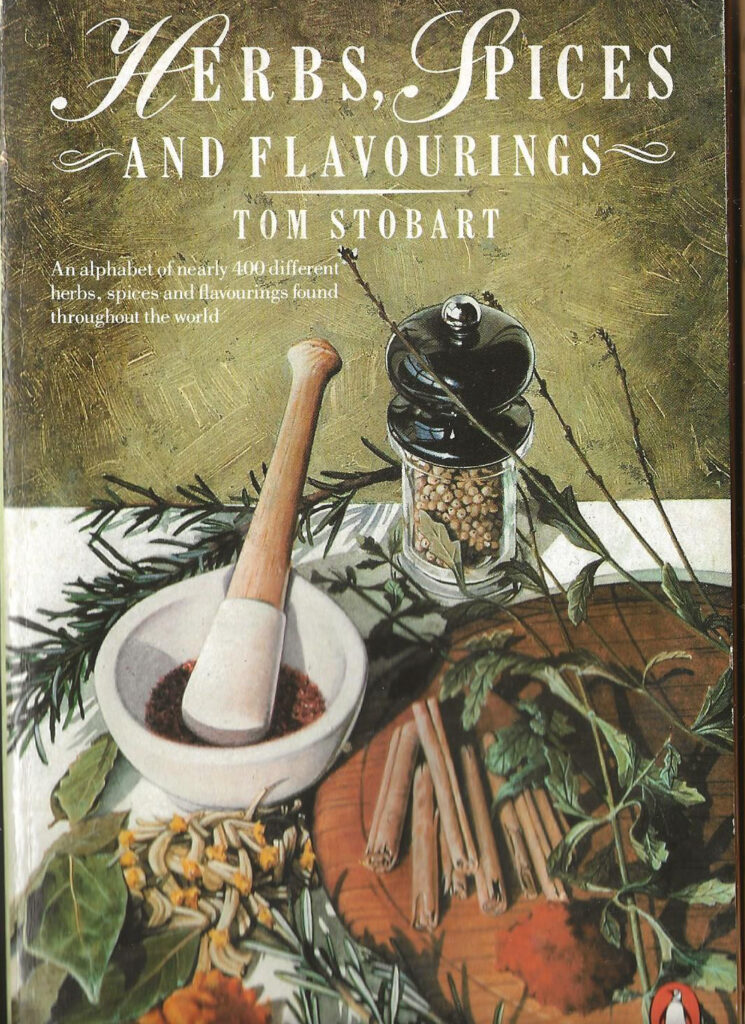
My love affair with ingredients was developed by my next book choice – Tom Stobart’s “Herbs, Spices and Flavourings” which graced my bedside table for many years after university and many’s the time I read a few items of this splendid encyclopaedia of flavour before going to sleep. What I admired was that the author did not merely list the spices and herbs themselves, but delved into the nature of taste itself, the basic areas of taste detected by the tongue before the high notes which are detected in the nose (which is why food tastes of nothing much when our nose is blocked by a cold).

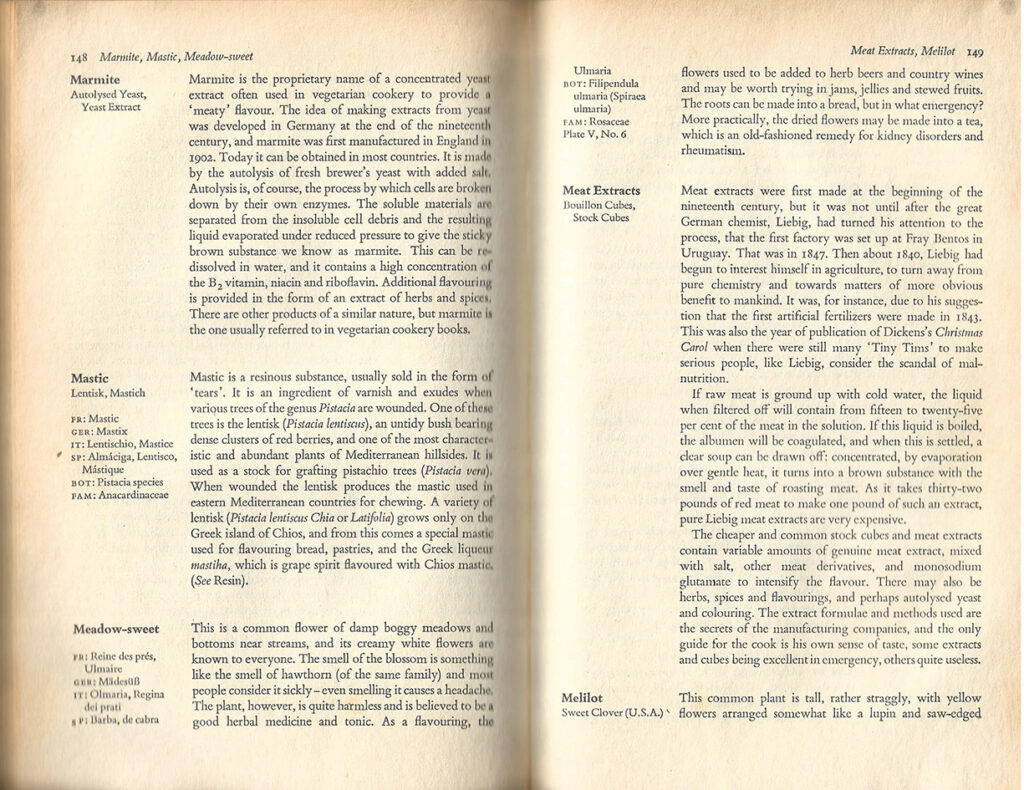
Tom Stobart also includes flavoursome items such as Marmite – that British food item which people famously “love or hate” – and in doing so, he legitimises the use of anything which has flavour for use as an ingredient which for a fusion foodie, encouraged cross-fertilisation of flavours from the different food cultures represented on my compendious ingredient shelf… In the extract above, you can see that below Marmite, Mastic the original chewing gum, is given its botanical name as well as the names by which it is known in various languages – what more could you ask for from an encyclopaedia?

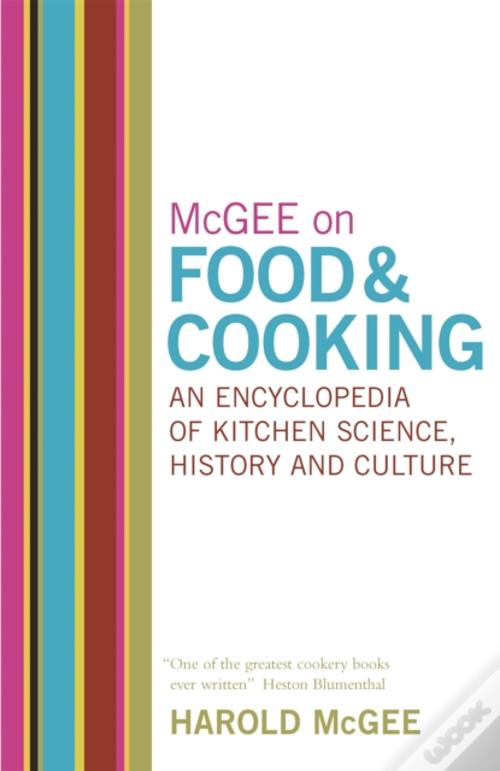
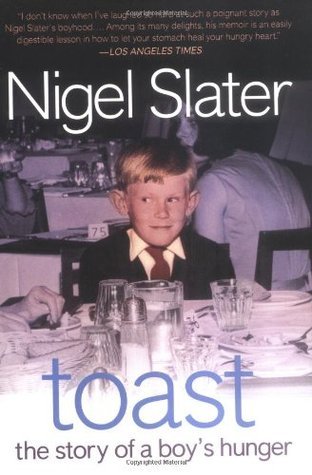
I was torn about my final choice of book because one of the weightiest tomes on my culinary bookshelves is also an encyclopaedia of enormous import which my partner bought for me one Christmas “McGee on Food and Cooking”. It is the bible of the scientific approach to cookery and is credited with inspiring so-called “molecular” chefs such as Heston Blumenthal. For me though, it is simply the go-to book when you need to understand why something works the way it does in cooking, such as how “No Knead” bread works when everyone knows that kneading bread is what develops the gluten that traps bubbles of carbon dioxide (given off by the yeast) and causes bread to rise. Cookery may be an Art or as the Greeks would have it, a Craft but understanding the Science does not destroy the Art anymore than understanding the science of why a sunset is red should take away our appreciation of the beauty of a sunset – quite the opposite! However, if this has not counted as sneaking in a seventh book, I eventually chose Nigel Slater’s “Toast” as my sixth link since it better closes the circle back to “Kitchen Confidential”.

Nigel Slater recounts in a manner so entertaining that the book was dramatized for TV and the stage, how he became a chef – hence the link back to Anthony Bourdin. His mother was (now) famously, a terrible cook – so terrible that her long-suffering husband and only son, had, often, to ditch her burnt offerings in the bin and resort to the titular toast… After his mother died early, Nigel’s father remarried his cleaning lady, played, fruitily, in the TV drama by Helena Bonham-Carter who was at school in a class between my two sisters – how’s that for degrees of separation! The stepmother was a most excellent cook – in fact, that was part of the attraction for Nigel’s father and it meant that in Nigel’s perception, he found himself in a battle to win his father’s love and attention. The site of the battle was the kitchen as Nigel forced his way into domestic science (cookery) classes which in those days were usually reserved for girls and battle commenced – eventually equipping Nigel Slater to become not only a chef, but a celebrity chef, and like Anthony Bourdin, a chef who writes – both recipe books and his autobiography… So there you have my six (and a bit) choices all of which made me the reasonable cook/ sometime chef/ failed restauranteur I am today. My restaurant was not the first restaurant in which I cooked (I will not say Chef-ed) – that would be The Good Food Shop formerly of Lambs Conduit Street, London, where I blagged my way into cooking at weekends, became a manager/cook and learned a great deal about cooking, business and life – so I was not completely inexperienced when many years later, I opened my own restaurant “Frewin’s” (my middle name). Why did it fail? The obvious answer – not enough customers – was it the food, or the concept ( Café in the daytime, Bistro at night) – I like to think not. That summer it rained non-stop, so no walkers, no tourists and the people of the village went to the big newly revamped gastro pub (with café and massive umbrellas outside) and with copious car parking (of which I had none) and these things cannot always be seen in advance and so I lost my inheritance but as I said before, I enjoyed every moment of it. I hope you can also see why I enjoyed “Kitchen Confidential” so much…

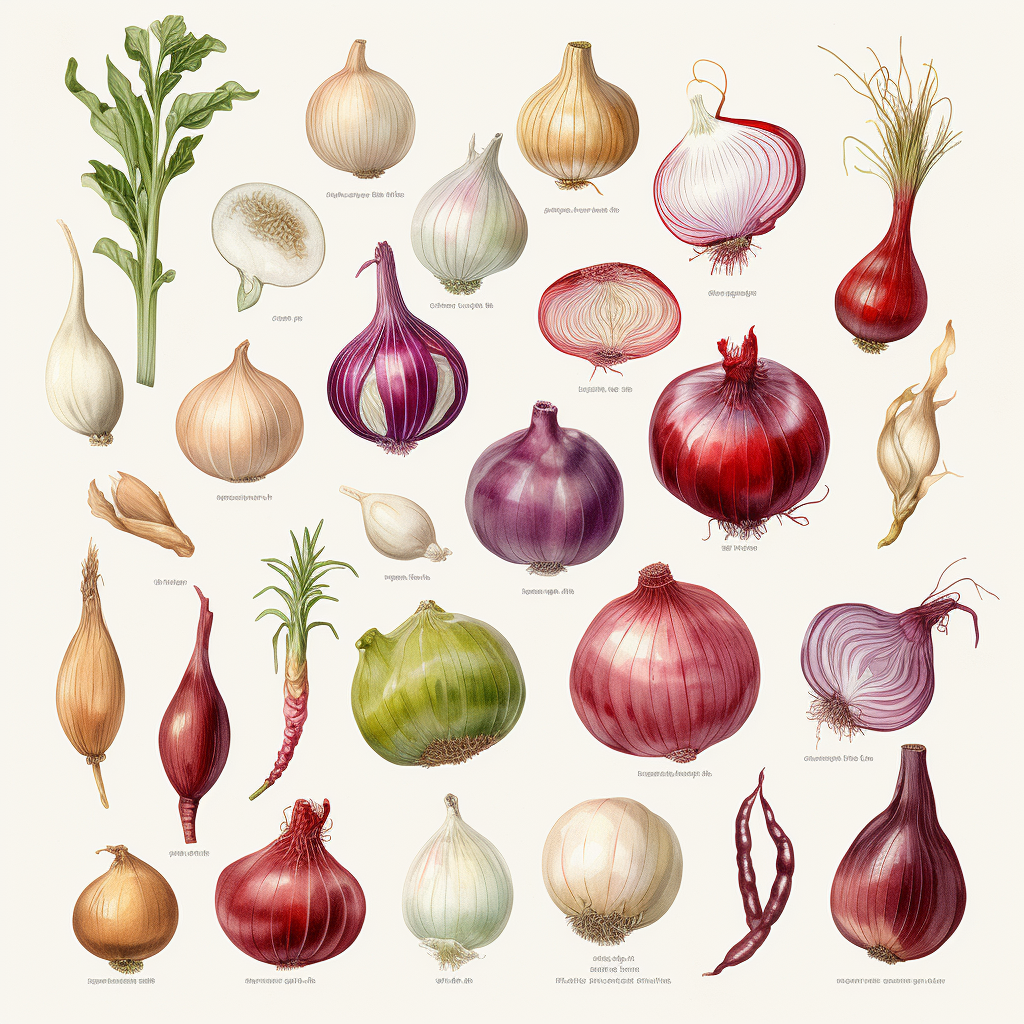
Know Your Onions…

“Know your onions” is what they say
how can you know something with so many layers.

Pauper’s Hotpot layers sliced onions, potatoes and bits of bacon
My parents gave me The Pauper’s Cookbook when I went to University

University does not teach you to cook onions but you may learn whilst there
recipes always say sweat onions until translucent but not the long care that takes.

Sweating it is the secret to life and the search for transparency
it takes what it takes to get there – a lifetime even…

Many unexpected things come to you in a lifetime
I found an album of Booker T including Green Onions in the middle of Brixton at 3a.m. and loved it ever since

Spring Onions are green and tender – it’s like eating onion babies
other colours are available – purple, white, brown – on the outside.

We grow new outside layers with each new age we reach
To “Know your onions” peel a person to the heart, layer by layer…

This poem was written in response to Melissa LeMay as guest over at the dVerse Poets Pub last night. I was very taken with the previous Poets Pub Challenge to write a Duplex poem – seven couplets where the baton of an idea, a sudden twist in each second line, is passed to the first line of the next couplet and although I have written in similar form here, I have relaxed the strictures of line length and I still can’t shape the form as being bluesy as it’s inventor talks about
© Andrew Wilson, 2023

A2Z 2022 Challenge – The Roadtrip…

If you saw my Theme Reveal for the A2Z Challenge 2022, then you will know that I wrote about becoming Vegetarian gradually as a response to the crisis in food supply chains sparked by the pandemic and made worse by the WAR in Ukraine. As well, I kept to the theme I originally planned of food which can be eaten in its own right as well as becoming an ingredient in other dishes…

Another Road Trip – I have chosen one post for the sign-up list and posted my first Road Trip Review! There were a couple of posts that didn’t get much attention – the post that garnered no comments and perhaps no visitors, was Sesame, Steamers and Supply Chains… – granted it was quite short, but at least it made me, make a new batch of Gomasio… Chorizo – as an ingredient – Not Going the Whole Hog… was also one that didn’t get much love despite the splendid pun in the title if I do say so myself…But when I came to try and choose a favourite that I would like people to go to, I found it really hard, I felt that they all succeeded equally in the goals I set myself and they all received a similar level of interest – perhaps Rhubarb and the Return of Mercantilism… for building a story of economic theory around a delicious fruit and with some beautiful photos garnered from the web, or perhaps Olives, and Overeating… because I was able to use some of my own photos (What are we to do with the gigabytes of pictures we take?) – In the end I decided on Rhubarb, but if you missed any or want to revisit, here is a list of all the 26 posts – and as Julia Child famously said at the end of each show – “Bon appetit!”

Apples – as an ingredient, and Analogues of Meat…

Bread – in Geopolitics, in Vegetarianism and – as an ingredient…

Chorizo – as an ingredient – Not Going the Whole Hog…

Dates, Dehydrators and the Death of Globalism…

Eggs, Aquafaba and Equipment

Fish and Freezers on the road to less meat…

Ginger and Grow Your Own…

Hominy and other processed grains habituating Healthfood Shops…

Idaho Potatoes, Ice Cream and Inventiveness…

Jerusalem Artichokes, Juicing and Hide the Vegetables…

Kimchi, Kefir, Kombucha and Killing it in the Kitchen…

Lemons and Land Use…

Mangos, Miso and Mirowaves…

Nuts and “Nature” Naming…

Olives, and Overeating…

Persimmons, Pulses and Pressure Cookers…

Quinces and Questioning …

Rhubarb and the Return of Mercantilism…

Sesame, Steamers and Supply Chains…

Tofu, Tomatoes and Type 2 Diabetes…

Urid Dal, Umeboshi and You (pronounced U)…

Vegetarians to Carnivores – the whole spectrum…

Water – the Vital Ingredient…

Xigua and Xouba…

Yoghurt and Self-Preservation…

Zucchini, Spiralising, and Eating Flowers…

The A2Z Challenge 2022 Reflections Post…

P.S. I will be posting my own form of Road Trip – reviews of sites I will be visiting over the coming months – if you are reviewed, I will let you know in a comment on your site… The first of these is up now:- A2Z 2022 Challenge – Road Trip Reviews 1…

Zucchini, Spiralising, and Eating Flowers…

f you have seen my Theme Reveal for the A2Z Challenge 2022, then you will know that I am writing about becoming Vegetarian gradually as a response to the crisis in food supply chains sparked by the pandemic and made worse by the WAR in Ukraine. As well, I am keeping to the theme I originally planned of food which can be eaten in its own right as well as becoming an ingredient in other dishes…

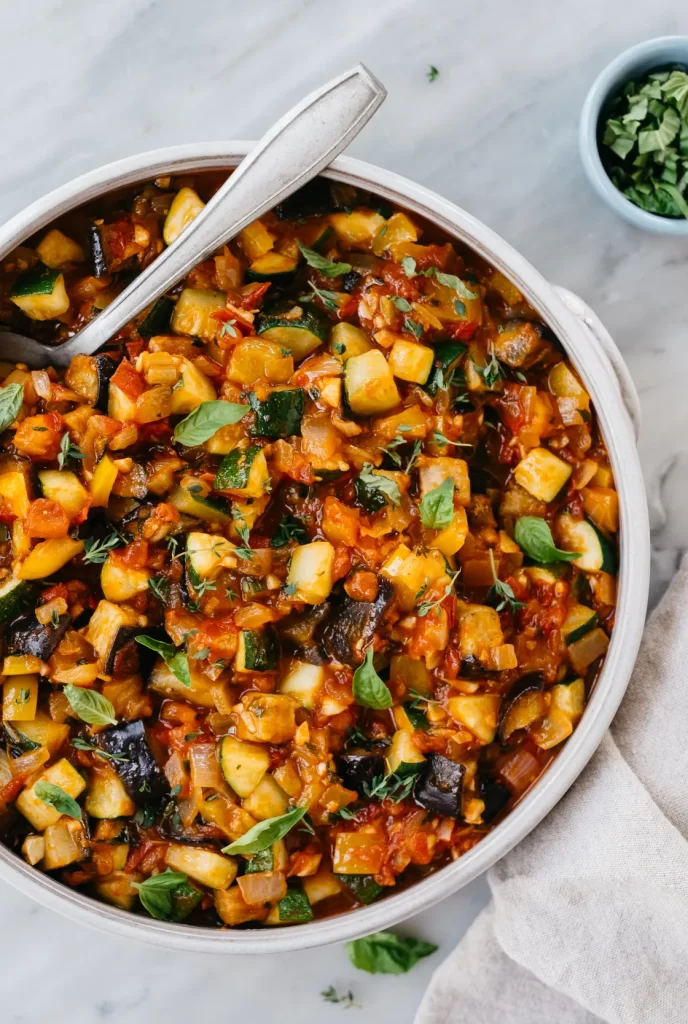
https://www.onceuponachef.com/recipes/ratatouille.html

Although Ratatouille was in my beloved copy of Elizabeth David’s “Mediterranean Food“, I really learned to make this dish in my first restaurant job. I blagged my way into working at “The Good Food Shop” in London to assist the chef by cooking at weekends and taking some of the load off her, and ratatouille was one of the dishes I had to prepare in commercial size saucepans… Elizabeth David stresses that this Provençale ragout of onions, aubergine (eggplant), Zucchini, peppers (pimento) and tomatoes, should be stewed very slowly in oil. She doesn’t say how much oil (much like some of my own recipes here, I think you have to figure out quantities by experience) but the author of the recipe pictured above is more explicit and uses a total of six tablespoons of olive oil. If you want stage by stage with pictures check his out. Elizabeth Davids recipe does not include Zucchini, but she says of her list of ingredients “usually” and most recipes seem to include them routinely, however, it shows that cooking is never set in stone and once you have a principal under your belt, then adapt, make a fusion with your own favourite ingredients – go forth boldly! Here though is Elizabeth David’s recipe with the addition of Zucchini, garlic, and herbs – my additions [like so]..

Ratatouille

  1. 2 large onions, 2 aubergines, 3 zucchini, 3 or 4 tomatoes, 2 red or green pimentos, garlic, fresh basil and thyme, oil, salt and pepper.
  2. Peeel the tomatoes and cut the unpeeled aubergines [and Zucchini) into squares
  3. Slice the onions and pimentos
  4. Put the onions [and sliced garlic] garlic into a frying pan with plenty of oil, not too hot.
  5. When they are getting soft, add first the pimentos, aubergines and lastly zucchini, and ten minutes later, the tomatoes.The vegetables should not be fried, but stewed in the oil, so simmer in a closed pan for the first 30 minutes, uncovered for the last 10. By this time they should have absorbed most of the oil.
  6. [Sprinkle with fresh herbs to serve.]
Photo by May Lawrence on Unsplash

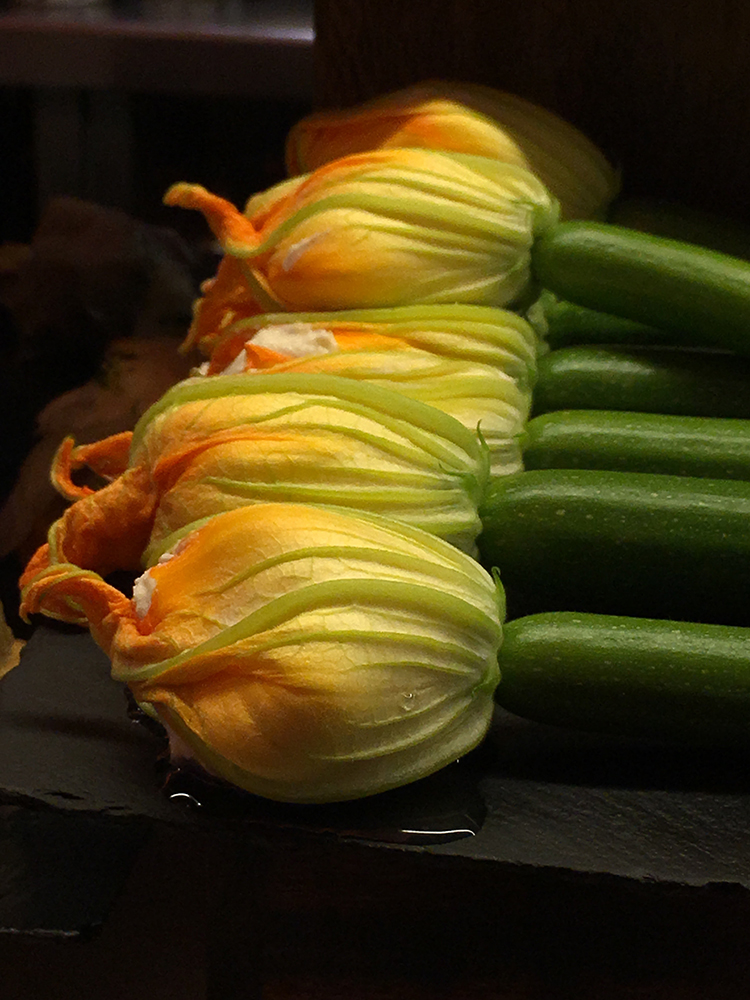
The flowers of Zucchini can be stuffed with a mixture of Ricotta Cheese and Parmigiano Regianno and deep fried see here – an Italian recipe. You can also make a stuffing out of Zucchini which I remember from a 1970’s magasine article where it was put under the skin of a chicken to roast. You grate the Zucchini and sprinkle with plenty of salt and leave till the water is drawn out, squeeze them dry, mix with ricotta cheese, an egg, and herbs and seasoning – you could just bake this in ramekins as a vegetarian dish…

Photo by Kara Peak on Unsplash

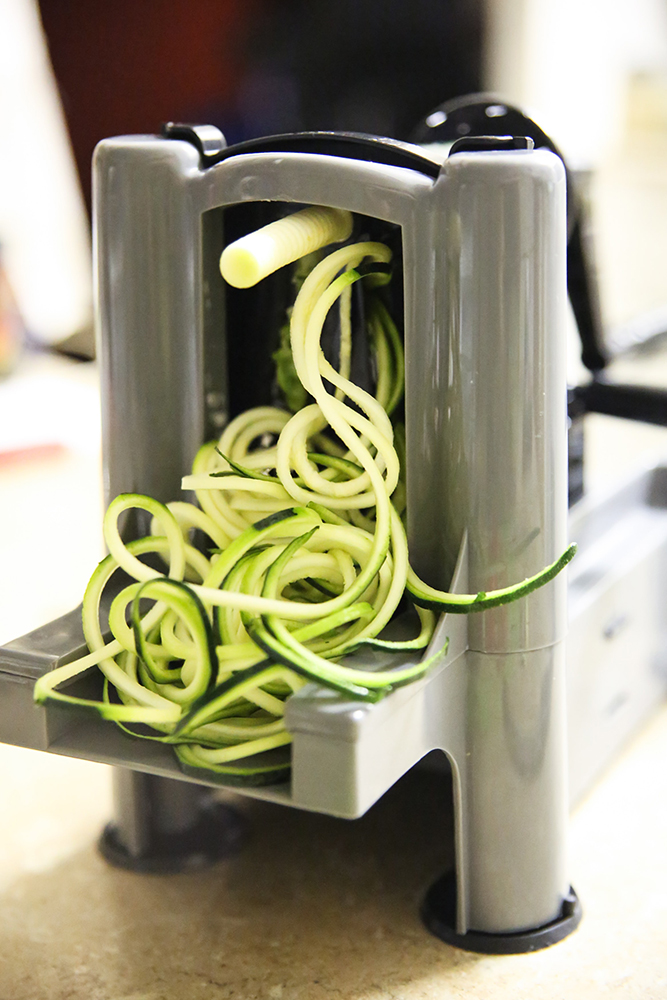
Lastly, you can use a spiraliser or such like, to make zucchini sphagetti for a gluten-free, carb-free alternative to normal sphagetti.

With Z, we have come to the last of this year’s A2Z Challenge – whther a reader or another participant, I hope you have enjoyed the ride or maybe it should be – the feast. As well as the food, I hope I have helped along the road to eating less less meat – a choice we may all be faced with in the coming year. I will be doing a Reflections post and participating in the Roadtrip in which I will visit and review some of the sites I haven’t had time to this month – hope to see you then…

Yoghurt and Self-Preservation…

If you have seen my Theme Reveal for the A2Z Challenge 2022, then you will know that I am writing about becoming Vegetarian gradually as a response to the crisis in food supply chains sparked by the pandemic and made worse by the WAR in Ukraine. As well, I am keeping to the theme I originally planned of food which can be eaten in its own right as well as becoming an ingredient in other dishes…

Photo by Irina Grigoraş on Unsplash

I think we forget, in our world of refrigerators (if you live in the “First” World), that yoghurt, along with cheese, was originally a way of preserving milk – milk does not last long if not refrigerated, so once you have allowed “good” bacteria to work their magic, then the resultant yoghurt can’t be attacked by “bad” bacteria and even moulds will take a lot longer to attack. I covered Kefir in Kimchi, Kefir, Kombucha and Killing it in the Kitchen… and that is a form of drinkable yoghurt which is much easier to make than regular yoghurt. For other forms of yoghurt, you must

1. Bring milk almost to the boil and then cool it to around blood temperature – you will know what this is by dipping a very clean finger in…
2. Mix some live yoghurt which you have bought or saved from a previous batch (or dried yoghurt culture) – how much depends on how much milk you are using – too much is less of a problem than too little.
3. Keep at blood temperature 24 hours, in a cloth-covered bowl – a warm airing cupboard will do, but if you don’t have that luxury, then you can buy yoghurt makers with little pots sitting in a gently heated base. My new pressure cooker has a setting for making yoghurt but I haven’t tried it yet…

Yoghurt completely fits my A2Z criteria of food you can eat in it’s own right, plain or flavoured, but it also has a multitude of uses as an ingredient in other dishes. Dahi Curry or Dahi Khadi is an Indian dish where yoghurt is the main ingredient but you can also oven cook other items like Pakoras in a yoghurt curry sauce. As I have had a lot of visitors from India, this year, perhaps they might comment…

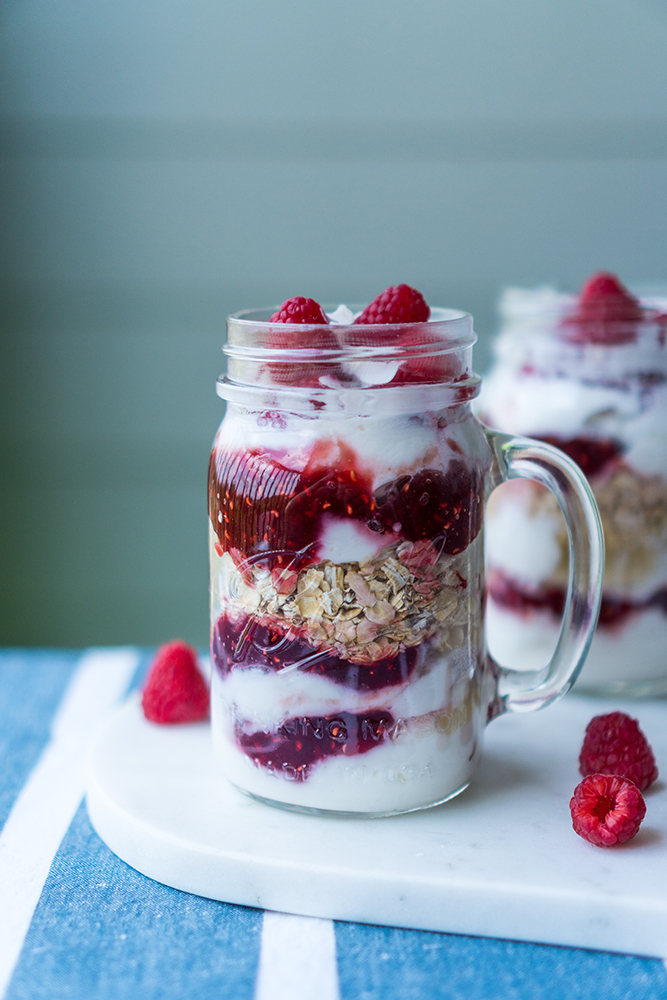
Another favourite is Overnight Oats which some people make with say, Almond Milk, Rolled Oats and fresh fruit such as Banana and Raspberry, mixed together and left to soak overnight – I like to use a runny yoghurt. It comes out rather like a porridge which has been cooked, and in a sense, it is – it has benefits over and above porridge though, including being better for avoiding diabetic peaks that you can get after porridge. This article explains in-depth and their recipe is here.

My partner is not good at eating fruit and I finally found this recipe which uses yoghurt as the base for the dressing –

Frewin’s Morrocan Waldorf Salad
1. Chop up Celery, Apple, Grapes, black or green, and add Walnuts. I add chopped Dates and or dried Apricots- hence the Morrocan soubriquet
2. The dressing is ideally made with Greek Yoghurt – this is thicker because it has been strained. Mix in well, some mayonnaise in the rough proportion 6:1 Yoghurt to Mayonnaise. This stops the yoghurt from absorbing water from the salad and breaking down.
3. Mix the dressing in well, it is a good keeper if kept covered in the fridge.

Self-Preservation

This is a bit of a pun on the fact that as well as the pleasure of eating food, you must, as you get older, consider your food in relation to your health – eating healthy… But self-preservation also means preserving food yourself and since as we have seen, Yoghurt is a form of preserved milk, it is a good thing to add to the range of preserves you can make yourself. I have covered Jam, Dehydrators, touched on Freezing and Bottling, and if you combine this with Growing your Own, you can have more control over your food, reduced sugar jam, for example, organic produce and save money by cashing in on the seasonal gluts from shops or your allotment…

Do you have an allotment, do you preserve your food yourself and what is your favourite way of eating yoghurt?

Xigua and Xouba…

If you have seen my Theme Reveal for the A2Z Challenge 2022, then you will know that I am writing about becoming Vegetarian gradually as a response to the crisis in food supply chains sparked by the pandemic and made worse by the WAR in Ukraine. As well, I am keeping to the theme I originally planned of food which can be eaten in its own right as well as becoming an ingredient in other dishes…

https://thekitchencommunity.org/26-foods-that-start-with-x/

Well I bet there has been a lot of head-scratching all over the A”Z Challenge as to what words to come up with for the last three days, and for X in particular – fortunately, there are always foreign names for familiar things even if I did have to resort once again to “foods beginning with X” to find them!

Xouba

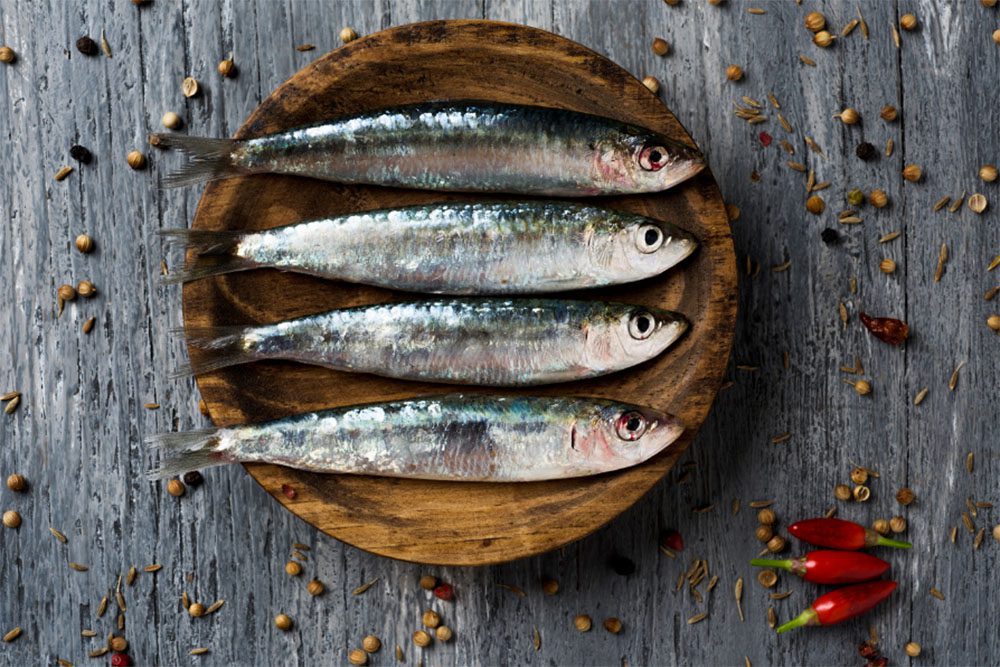
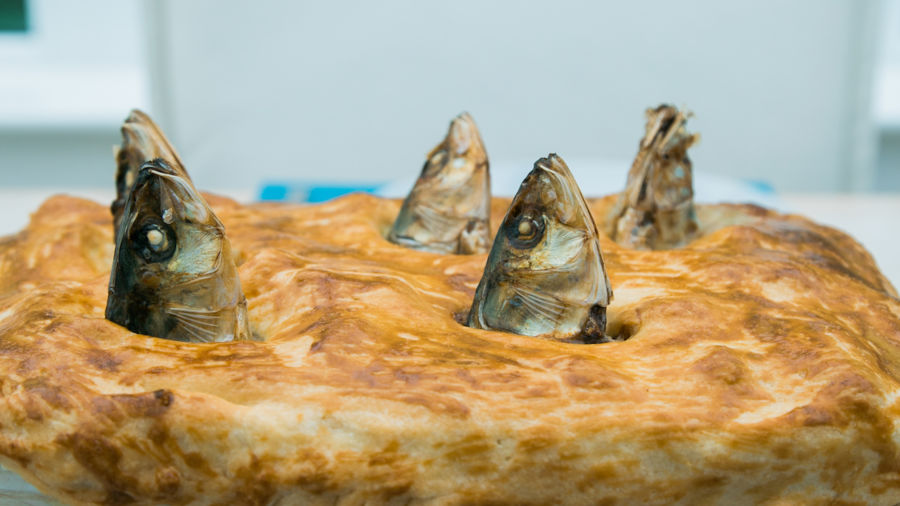
Xouba, or Sardines, are eaten in many countries and are delicious eaten simply grilled or pan-fried so they meet my criteria of foods that can be eaten on their own, but although I have never made it, I will one day try the magically named, Stargazey Pie. Since I haven’t made it, I am going to direct you to this BBC Food recipe by Tristan Welch for a version of this famous Cornish recipe. Stargazey pie is famous because it is made with the fish heads poking through the pastry topping as if gazing up at the starry sky… A romantic notion and although many might find the fish heads disturbing, but I think that we are so often divorced from the reality of the animals we eat, by dint of pre-packaged, filleted pieces from the supermarket, that there is an honesty about Stargazey Pie.

https://matadornetwork.com/read/christmas-mousehole-fish-head-pie/

Xigua

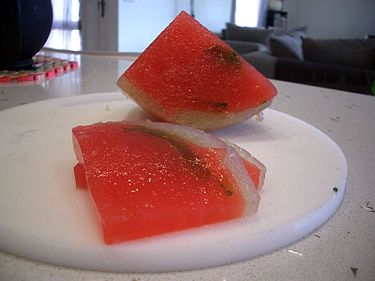
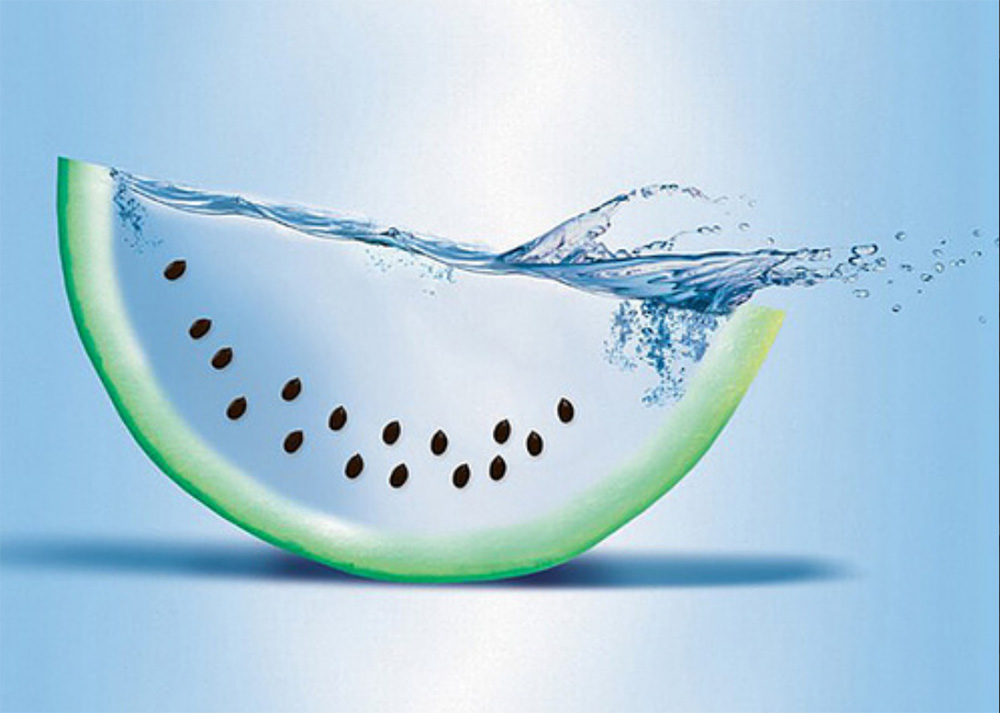
After ruling out Watermelon in yesterday’s post in favour of Water as an ingredient, it pops up again as the Chinese name for it, the name translates as “Western Fruit” meaning it is not native to China but like so many foods, has been spread around by globalisation. Watermelon, especially chilled is a most refreshing fruit in Summer and can be eaten on its own or served in salads or as an accompaniment to savoury dishes since it is not so sweet as other melons like Cantaloupe or Honeydew. Not that sweetness is a barrier to mixing foods which are sweet and savoury – far from it! However the recipe I am going to link to (since again, it is not one I have made), is for Xi Gua Lao and although it is mentioned on several sites and the yummy looking photo also appears in several places on the www, the same rather thin description appears, suggesting that everyone is referencing the same source. At least this site gives some quantities and basic directions. The idea is to extract the juice of the watermelon, and thicken it with agar (A vegan substitute for gelatine made from seaweed) and sugar to form a jelly in which cherries suggest the watermelon pips (that have been removed) and the jelly is set to resemble slices of watermelon. The result is shown in this much-travelled image below and very pretty it is!

An image from who knows where?

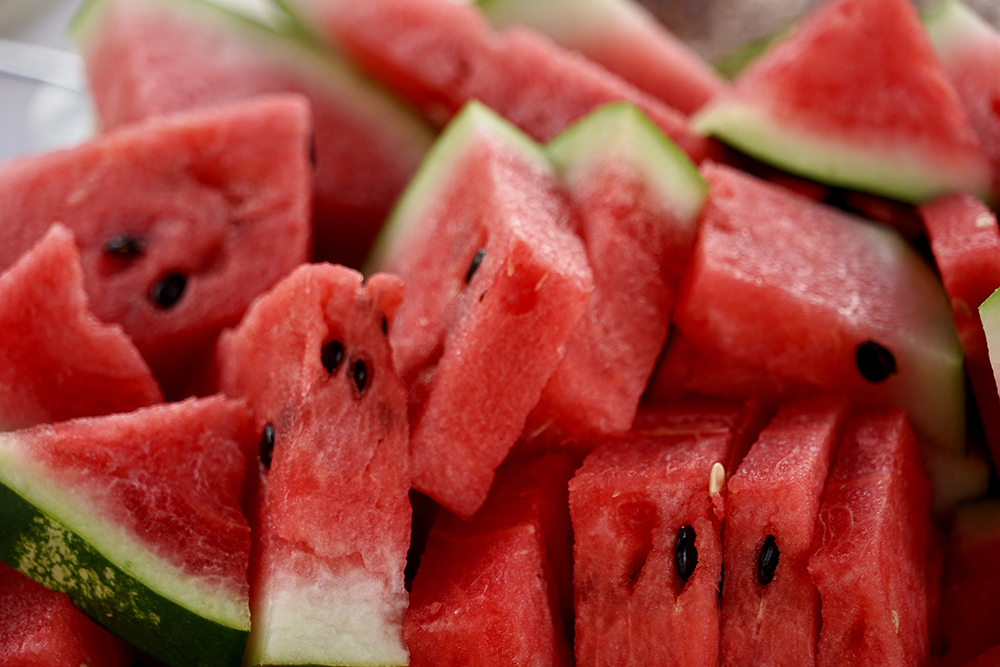
And here is the real thing…

Photo by Floh Maier on Unsplash

And that’s X done – phew!

Water – the Vital Ingredient…

If you have seen my Theme Reveal for the A2Z Challenge 2022, then you will know that I am writing about becoming Vegetarian gradually as a response to the crisis in food supply chains sparked by the pandemic and made worse by the WAR in Ukraine. As well, I am keeping to the theme I originally planned of food which can be eaten in its own right as well as becoming an ingredient in other dishes…

https://thewaternetwork.com/article-FfV/food-security-impossible-without-water-security-aiWmpPPiaCeDNrFfv1bhlA

When I made my first tentative list of posts for this year’s A2Z, I put down watermelon, wine and watercress and whilst I could have covered watercress (so-called because it is grown in gin-clear streams of water) since it makes an excellent soup, I wasn’t really inspired- something niggled at my brain – and then it came to me – Water – how could we cook without it? Aside from the fact that it is a constituent of many foods and of course drinks, it is also used as a solvent to dissolve other ingredients, to extract flavours, and it’s physical properties are vital to the cooking process. Water has three states – solid, liquid and gas, and all of these can be used in cooking, after slowly raising the temperature of greens in water to near boiling, the sudden cooling with ice cubes (blanching), preserves and enhances the greenness (and nutritional qualities) of the vegetables. Boiling foods in water is one of the commonest forms of cooking and, given that ability to dissolve and extract taste, steaming vegetables is even better if you want them really tasty. Water, or rather it’s removal, is involved in preserving many foods, from pulses to the powdered, dehydrated ingredients of packet soups – and to reconstitute? Just add back the water!

The name of Whisky is derived from the Celtic word isca, meaning “water” and some people call it “the water of life” and to make Scottish whisky, you must have a source of richly stained peaty water which contributes both to the taste and colour of the whisky. In fact, most liquids we know in the kitchen will have some water in them – even whisky, since we don’t drink 100% proof, nor is vinegar 100% acetic acid. One of the common instructions in recipes is to reduce a stock (made from simmering meat or vegetables in water) in order to lose some of the water and concentrate the flavour.

Water is vital to growing food, meat or vegetable, and with climate change producing either too much or too little water, flood or drought, often, but not exclusively, in the poorer parts of the world, then water is a major geopolitical issue. The photograph at the top is from a site which can keep you informed about such issues…

The water we drink and use to cook with, varies in taste and purity, depending on it’s source and in simple terms, this is likely to be tap water (with various additives to keep it clean), and bottled water – still or sparkling – also with a variety of different minerals, depending on it’s source. This is particularly the case with sparkling water where the dissolved carbon dioxide that makes it bubbly, may come from a naturally carbonated source or may have been added at the bottling plant. Vichy and San Pellegrino are well-known examples and as well as the bubbles, they have distinct flavours due to their mineral ingredients.

Adding sparkling water to batters such as Tempura batter produces a lighter, fluffier batter…

Tempura Batter
85g of plain flour
1/2 tsp salt
1/2 tsp sugar
200ml of sparkling water, chilled
1. Add the dry ingredients to a mixing bowl
2. Gently whisk/fold in the sparkling water – over whisking will cause gluten to form and the bubbles to be lost making the batter heavy
3. don’t leave the batter standing. Coat the things you are going to fry with flour before dipping them.
4. Quickly fry in hot oil till golden brown!

Water is the thing that makes our planet so unique and hospitable to life, it makes up a large proportion of our bodies and the more we investigate it, the stranger it becomes -as always, the Wikipedia elves have lots of info

Urid Dal, Umeboshi and You (pronounced U)…

If you have seen my Theme Reveal for the A2Z Challenge 2022, then you will know that I am writing about becoming Vegetarian gradually as a response to the crisis in food supply chains sparked by the pandemic and made worse by the WAR in Ukraine. As well, I am keeping to the theme I originally planned of food which can be eaten in its own right as well as becoming an ingredient in other dishes…

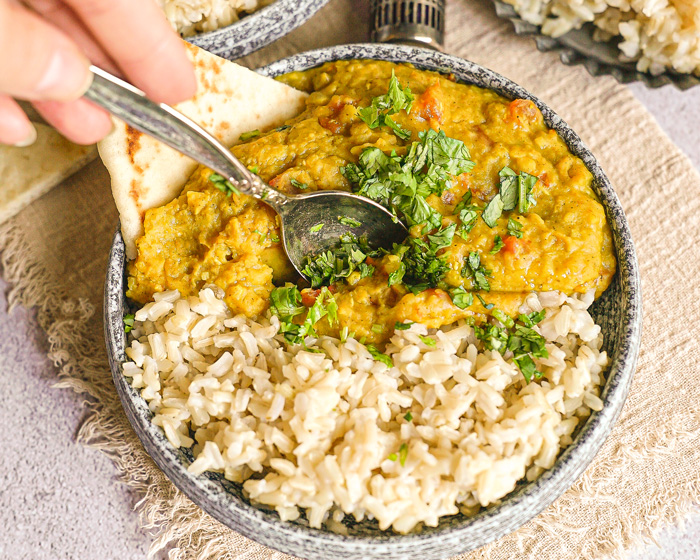
www.theedgyveg.com/2018/01/08/instant-pot-dal-indian-dal-recipe/

It turns out, that to meet my criteria of foods that can be eaten on their own or used as an ingredient, “U” is the most difficult yet! I had to resort to searches for food beginning with “U” and Urid Dal and Umeboshi were the only two. Now Umeboshi is a Japanese salty pickled plum which, though eaten on its own as well as a central ingredient in Japanese cuisine, and which I have tasted, I cannot claim any knowledge of recipes, so your google search is as good as mine! What I can say, is that of the five basic tastes, Sweet, Sour, Salty, Bitter, and Umami, it hits Sour and Salty spot on! Although Umeboshi is often described as a salted Plum, it is more nearly related to an Apricot. If you are a super-taster and enjoy new flavours, I urge you to try it – it grew on me and I really ought to try finding and trying some recipes.

Urid Dal is one of the many varieties of lentils so popular in Indian cooking, it is a white lentil and I decided to give it a try in my new pressure cooker. I found a recipe (pictured above) by the lovely Candice aka The Edgy Veg! It was an InstantPot recipe and since my Ambiano pressure cooker is not, and cannot achieve the same pressure, I had to adapt the recipe by adding 1/3 extra minutes according to instructions from this site – intriguingly called The Aisle of Shame – those of you who frequent Aldi or Lidl supermarkets will know what this alludes to…. It is in fact a site which promotes Aldi goods despite the name!

So using sixteen minutes and substituting a can of tomatoes for fresh, I can report that the lentils were absolutely, perfectly cooked! Not so my next attempt with the pressure cooker – to cook butter beans – always a good test because they are a large bean and prone to losing their skins aka turning to mush… There is a slow cooking setting on the Ambiano pressure cooker which runs for two hours, I soaked the beans first with a teaspoon of bicarbonate of soda – it helps to soften pulses – and after rinsing them well, covered them liberally with water, chose the high pressure option and crossed my fingers. The Butter Beans were al dente and I foolishly decided to try another short period of cooking at full pressure – mushed! Ah well, a pressure cooker of any description has a bit of a learning curve…

You! Pronounced “U”

I know – it’s a stretch but, as Archy, the cockroach, reincarnated from a free-verse poet used to say “wot the hell – wot the hell” (Archy and Mehitabel by Don Marquis)

Tomorrow I am going to summarise all the diets from full-on Carnivore to payed-up Vegan and I would please like to know YOUR story and where you are both in reality and aspirational on the spectrum if you care to share in the comments and I will feature tomorrow… Why do you eat what you eat, are there health reasons or other necessitations or do you roam freely through foodstuffs purely on taste…

Tofu, Tomatoes and Type 2 Diabetes…

If you have seen my Theme Reveal for the A2Z Challenge 2022, then you will know that I am writing about becoming Vegetarian gradually as a response to the crisis in food supply chains sparked by the pandemic and made worse by the WAR in Ukraine. As well, I am keeping to the theme I originally planned of food which can be eaten in its own right as well as becoming an ingredient in other dishes…

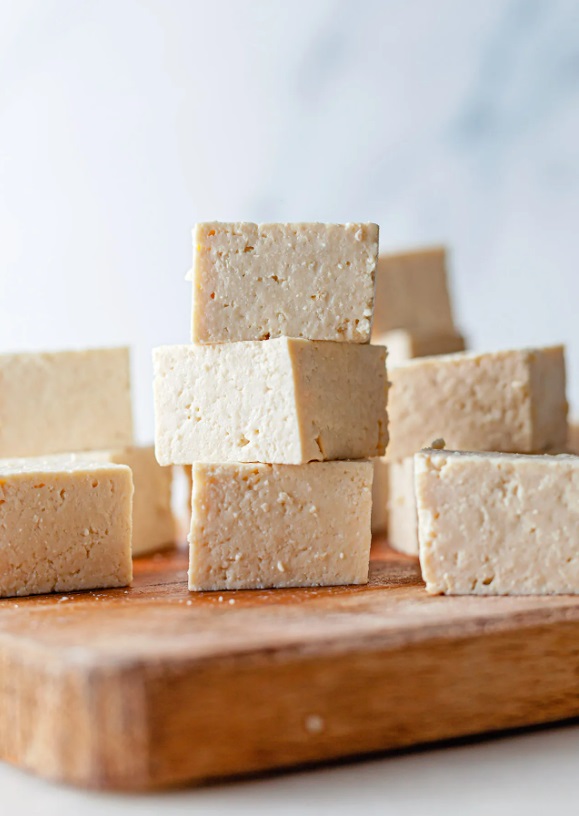
https://www.wearesovegan.com/how-to-make-homemade-tofu/

I have touched on Tofu before in the M post Mangos, Miso and Mirowaves… where I described how to use Miso to add flavour to Tofu – because here’s the thing – many people consider Tofu to be a tasteless waste of time. Tofu is what we in Britain, call a Marmite substance – (Marmite or yeast extract is something that divides people completely – you either love or hate it – I am a Marmite lover…) but since Tofu is a source of protein and vegetarians and vegans need as many sources of protein as possible, then Tofu cannot be ignored. Both Tofu and Miso are Japanese inventions along with Tempeh, a block of the leftover pulp from making Soya Milk (the source of Tofu) which has been welded together by a cultured fungus and in case you think that sounds icky, it does have a slight resemblance to chicken, so another good vegetarian source of protein – and let’s not forget that mushrooms are fungi too!

I’m sorry if I have not made Tofu sound attractive so far so let’s start again, Tofu is cheese made from Soya Milk, it has a delicate taste but which can be enhanced in a number of ways, infusing with miso, serving in strongly flavoured dishes where it’s blandness is a nice contrast and the following freezing technique. Like dairy cheese when it is first turned into curd, tofu is full of whey to a greater or lesser extent depending on how much it has been pressed. If you freeze Tofu, the whey will turn into ice crystals that compress the curd surrounding them so that when you defrost the tofu, even more whey will drain out to it and the Tofu will be like a sponge and tougher – less prone to disintegrate when stirred into a sauce, plus the sponge soaks up the sauce so that each mouthful is tastier.

I have not made Tofu myself, though I once worked for a man who did make it commercially and who gave me that last tip – my job was to come up with dishes made from tofu since he was only making a burger and a peanut burger. I added custard tarts, quiches and pasties (all vegan) to his range – the pasties used the freezing technique. However, I wondered how easy it is to make Tofu at home and found this article which seems to be pretty simple to follow. Since Tempeh is a much more complicated thing to do – Roxy and Ben freeze their leftover soya pulp, which is known as Okara, and use it as a supplement to flour in baking. The photo at the top is from their site. They point out that you can press the Tofu to different degrees according to your taste or intended use and when you buy it from a shop, you can either buy Silken or soft Tofu in little cartons, or Hard Tofu – swimming in it’s own whey. Silken tofu is good for making say, a custard tart whilst hard tofu goes into stirfry and other savoury dishes. In Japan, there are several other types of Tofu – for example one that can be deep-fried and then slit open to form a pocket which can be stuffed with other things – pretty neat!

Tomatoes

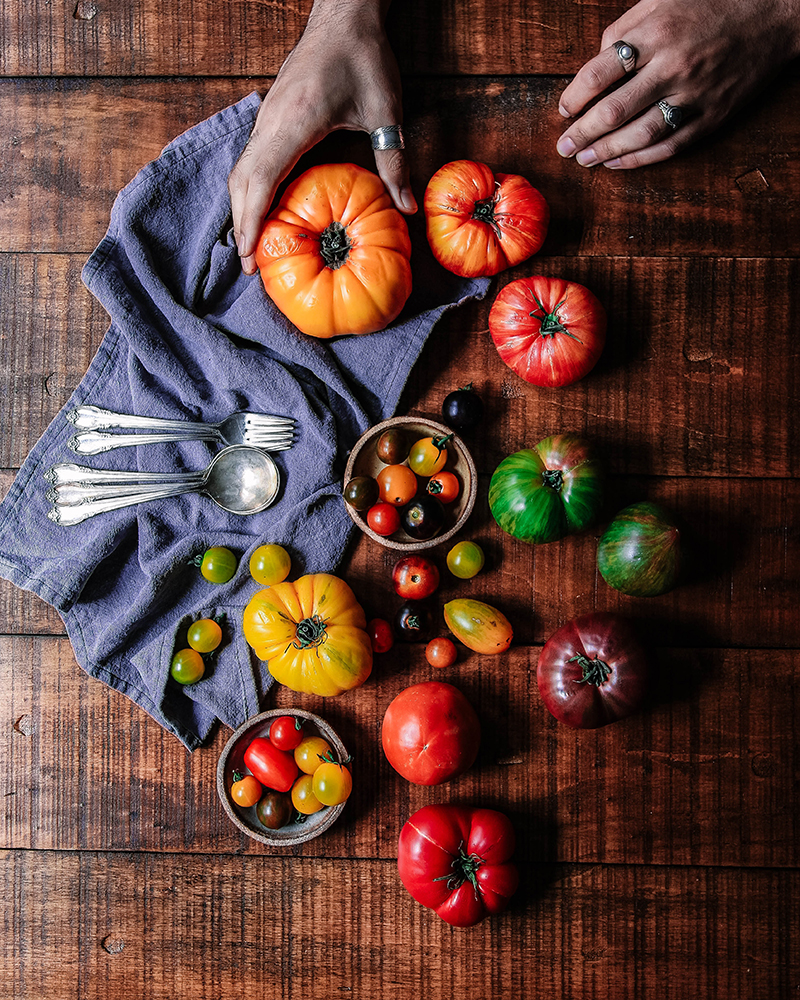
Photo by Edgar Castrejon on Unsplash

Tomatoes, like potatoes, which are part of the same family of plants, were brought back to Europe by the Spanish where they had been refined from their wild cousins (and who doesn’t like a wild cousin) by the Aztecs. Both plants suffered some resistance towards eating, partly because they belong to a family of poisonous plants that include Deadly Nightshade and Mandrake, and certainly, in the case of the potato, they were regarded as the food of the conquered – the Spanish didn’t even bother to bring potaoes back for twenty years having failed to notice that the whole Aztec economy was based on controlling the staple crop of dried potato pucks. The people grated the potatoes, squeezed out as much juice as possible, placed them outside to freeze at night (they lived in the mountains so frost every night), squeezes out more liquid the next day and after repeating the process several times, they had freeze-dried potato!

As you can see above, there are many varieties of tomato (as with potatoes) and although they are in fact fruit (Love Apples is one popular name) they are regarded as vegetables because their sugar level is quite low and they have more umami than sweetness. The Wikpedia article on tomatoes is scathing about the way modern tomatoes have lost much of their sweetness by breeding for uniform ripening and longer shelflife – no surprises there then…

Where would we be without tomatoes in our culinary lives – they are the basis of so many sauces from classic Italian pasta dishes to Heinz baked beans – although the latter have only traces of tomatoes which are amplified with sugar, salt and acidity. There are so many that I will give you just two examples.


Oven-Dried Cherry Tomatoes
1. In a roasting tin, roll cherry tomatoes in a dessert spoon of olive oil and distribute them evenly. Sprinkle with slat and pepper
2. Bake in the bottom of a very low oven – less than 100°C for four or five hours or until shrunken and wrinkled
3. Eat hot or cold

Cauliflower Romagna
1. Break cauliflower florets into tiny pieces and fry in oil with as much garlic as you like until they are browning – don’t worry about burning – cauliflower is very strong and the taste benefits from caramelisation
2. Add tinned tomatoes and a little stock to cover the cauliflower, also herbs, fresh or dry, of your choice – thyme, basil, marjoram etc.
3. Cook until the cauliflower is soft, although a little al dente is good, and the sauce will have reduced somewhat – serve!

This is a dish which, if you are on a gradual journey towards more vegetarian eating, you can add small amounts of
chopped up chorizo or prawns to…

Type 2 Diabetes and Vegetarianism

Type 2 diabetes runs in families and if you have the genes for it, you have it all your life – even if it only manifests later in life, so don’t feel guilty as people used to be made to feel, because the onset, whilst caused by too much sugar in the diet, is inevitable if you have those genes even though those without won’t develop it from eating too much sugar – they may also get overweight but not get diabetes.

The good news is that Type 2 is reversible – eating a less sugary diet and eating foods that release their carbohydrates slowly, can prevent or even reverse the onset of Type 2 Diabetes. Eating a vegetarian diet of low-glycemic foods that keep blood sugar levels steady, such as whole grains, legumes, and nuts is the way to go. So, on top of ethical, environmental and financial reasons to eat a more vegetarian diet – you can add health grounds. If you go completely vegetarian, and even more so – vegan, then there is the risk of deficiency of vitamin B12 and Omega fatty acids but there are foods (such as Marmite) which can help as well as supplements but it is for this reason that some people prefer to be Flexitarian or Pescatarian rather than go the “whole hog” if you will pardon the expression…

Special Shout Out!

Yesterday was Earth Day, but because I am now pantsing my A2Z posts, I didn’t read until this morning, the S post from one of my favourite bloggers ever since I started with the Challenge in 2020. This year on Part-Time Working Hockey Mom Tara,who used to work for Starbucks, has been guiding us through the finer points of coffee in which Starbucks train all their management. Yesterday, for S, Tara told us about Sun V’s Shade Grown Coffee – something I and I think, most people, have no idea about. I will let you read Tara’s words to learn why this was an especially pertinent subject for Earth Day. Tara is a prolific blogger all year round, unlike me who grinds into gear for April and collapses in exhaustion in May – please check her blog out! Despite the title of her blog containing the word “Mom”, and her having worked for Starbucks, Tara is Swiss, though she is an Americanophile!