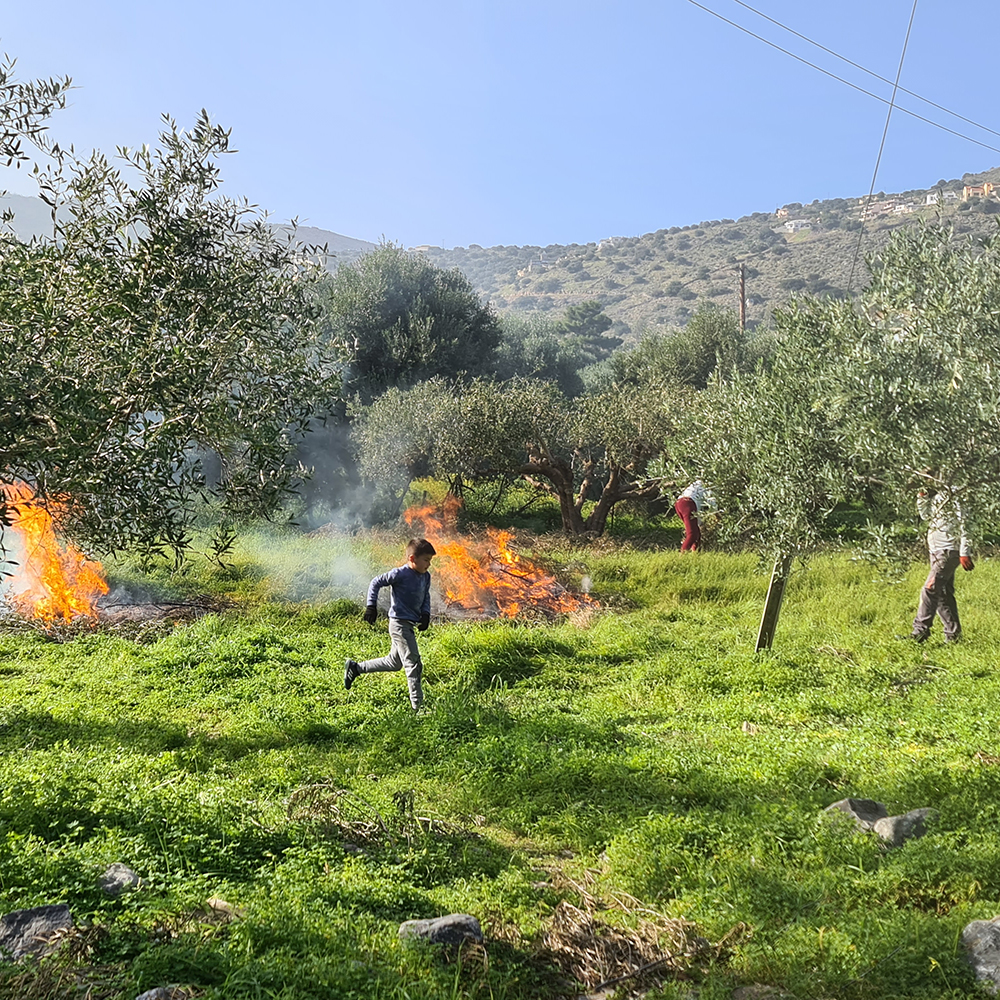
Spring Draws Her Veil of Greening…

As Spring draws her veil of greening…

As Spring draws her veil of greening
Across the winter bare landscape
Hiding the naked trees as her
Veil cloaks her virginal body

Buds waiting for the gentle touch
As spring draws her veil of greening
The trees turning to subtle mauve
In eager anticipation

April showers have quickened the
Rising sap that swells the tree pulse
As Spring draws her veil of greening
And May sunshine smiles down on her

In a scant week the tints of mauves
Are lost to each tree’s special shade.
Confetti of blossom sprinkled
As Spring draws her veil of greening.

© Andrew Wilson, 2023

This Quatern poem is written in response to dVerse ~ Poets Pub, 25th May 2023, posted by Grace, Poetry Form: Quatern
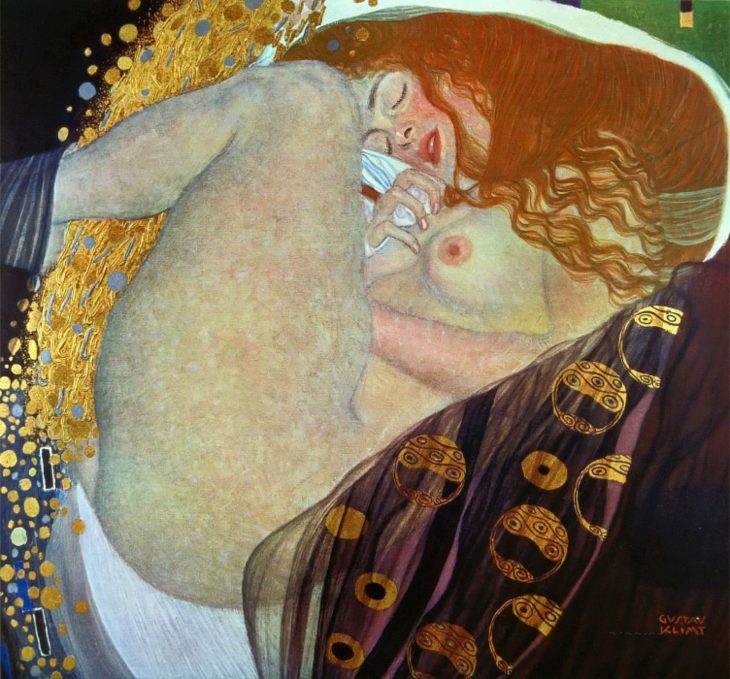
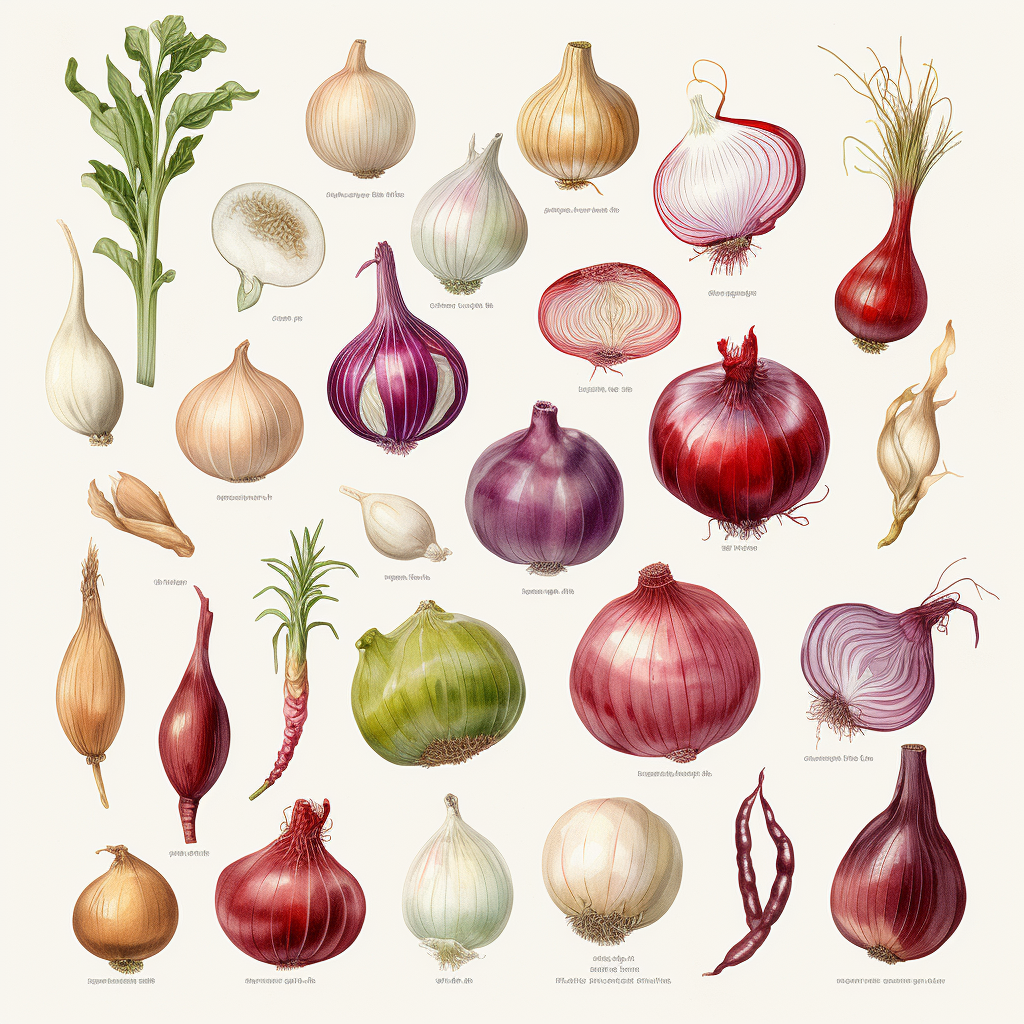
Image derived using Midjourney AI

Roadtrip Review No. 5

Lady in Read – such a great pun – and it truly reflects Vidya’s approach to her blog – it might be described as Fusion – “Lady in Red” is a western song by Chris de Burgh and it has featured in several films and both Vidya’s avatar and blog banner show her in a red dress but in the content she goes further. For example, in this year’s A to Z (she is a veteran participant), she wrote poems about people and places from India and particularly Karnatka where she grew up. However, Vidya writes prompted by many blogging challenges including NaPoWriMo which was also running in April and rather than do two separate posts, Vidya gives us a mash-up or fusion. so in My Heart Beats for Harihar, her H post, Vidya writes a poem celebrating the town she grew up in as a Sea Shanty – the NaPoWriMo prompt! To have followed Vidya’s A to Z is to take a deep dive into Indian/Karnatka culture but served up with a fusion twist seasoned with a great deal of humour…

Vidya also explored using AI for both images to illustrate some posts and also to generate ideas for post titles and you can read about her assessment of her experiments in her Reflections Post.

Roadtrip Review No. 2

Shilpa Gupta chose to write Flash Fiction for her A to Z and here’s the thing about flash fiction, either you enjoy a writer’s offerings or you don’t, you find consistency rather than having to search for the rare nugget, and you keep coming back because, even though the pieces may be personal to the author, the pieces resonate for you… Shilpa delivered on all these things for me. A good example was M for Arithmetic in which a father posters the narrator to practice maths homework but is completely scathing about her exam failures. If you want to see what resonated for me you will have to read the post and find my comment…

Hannelore was interrupted in the middle of April by the sad death of her grandmother who, together with her late grandfather, was the subject of her A to Z and so she bravely presented the last letters in a compendium as part of the process of moving through grieving. The early posts, together with the rest of the month’s journey, deserve our attention.

Anne Nydam is a print artist who specialises in mostly one-colour block prints and for this year’s theme she chose to show us letters from many illustrated Abercadariums to which she brought a wealth of research and commentary. I can only repeat my comment on her Reflections post “Your posts were unique amongst the A to Z Challenge this year and I not only enjoyed them whenever I visited but have bookmarked your site to return to whenever. as I have said before, having been a signwriter and a graphic artist going back to letterpress printing at school – this was right up my street…”

So there you go – a few more of my frequent commenters reviewed – eventually I will get to some of the blogs I didn’t get too in April…

Roadtrip Review No.1

This is a review of blogs who participated in the A to Z Challenge 2023 starting with those who were frequent flyers in my Comments…

Misky over on IT’S STILL LIFE, has been posting poems accompanied by AI-generated images for the A to Z. Not only has she inspired me in my return to poetry writing, but since AI is a hot topic now, the incredible images in her posts have caused me to begin my own evaluative exploration of AI – and may I say how generous Misky has been in giving me pointers as to where to begin! Having tried creating some pictures myself, using the Midjourney bot on Discord, I still cannot begin to imagine how the AI creates the pictures. I can however, imagine the processes of Misky, the poet and I urge you to go and read and look… I should add that Misky is a multiple poster, she offers a Twiglet Writing Prompt as well as participating in many other peoples’ prompt series.

An image generated by Midjourney to the prompt “a community of bloggers around the world sharing their post

D B McNichol is a seriously productive writer of at least 32 novels on Goodreads alone and whose perspicacity was demonstrated by the fact that she gave up the whole of April to the A to Z Challenge! Having pre-prepared all of her posts in advance, she was then free to spend at least four hours a day reading other people’s blogs 35-40 0f them, and commenting on them! Her own posts were lists of Small Delights, Simple Pleasures and Significant Pleasures which challenged the reader to consider and add their own favourites. Donna had retired from a career in IT before she even started writing books and if the effort she has demonstrated on the A to Z is anything to go by, it’s no wonder she has become a successful author – Kudos!

Deborah Weber is an old friend from the A to Z Challenge and each year she has written compelling Abercadariums of great subjects – and this year she wrote from a list of obscure colour names. Not only were the posts fascinating in themselves, but Deborah wrote in a free-association way (which she talks about in her Reflections post) rather than the more usual linear delivery. To my mind, this is not only the most preferable way of writing or talking (see my post on Alastair Cooke) but the essence of why we read blogs. A blog is not a textbook and Deborah with her free association gets my vote every time! I should say that as a sometime signwriter, specialist decorator and artist, Colours are right up my street anyway…

Sadje in her Keep it Alive blog, is another multiple-strand post-er of ideas and challenges, and although her domain name says “life after 50 for women” – her challenges and advice as well as her readers, are for and of both sexes. You only have to look at her use of Categories in the banner at the top of her site to see the variety of subjects tackled by Sadje… For her theme this year, Sadje posed a series of (challenging) questions designed to stimulate her readers to do more with mind, body and spirit – use it or lose it might be her motto…

Josna in Tell me Another (story) does just that – she shares stories about a recent visit home to India from the States where she now lives. Visits home are always a poignant mix of reminiscence and comparison with the person we are now and the place where we now reside and Josna does not disappoint. You will be transported to the sights, sounds, tastes and smells of Josna’s India as well as her more personal thoughts…

Lady Lee Manilla has been someone who once followed, has been the most prodigious presence in my Jetpack (WordPress) feed! Another multiple post-er, every day, Lady Lee has shared her poems, her photos and her life with her 1,438 followers of whom I am obviously just a recent addition! Her enthusiasm for poetry – her own and others – and the warmth of her sharing, have endeared Lady Lee to me…

I will be continuing these reviews because there are many left to describe but I have been working for three hours now and my stomach is demanding breakfast…

Another iteration (you always get four) from Midjourney to the prompt “a community of bloggers around the world sharing their post” – weird and wonderful…

Yoke

This poem is in response to the # What do you see photo prompt on Keep it alive by Sadje – chosen for May 1st International Labour Day…

Image credit; Dobrinoiu Denis @ Unsplash

Yoke

Her yoke is just a branch
no carved wood
save for the notches
anchoring the buckets
but a curved branch

A branch selected
for its curve
when loaded
with full buckets
to fit her shoulders

She shoulders
the load
every day
sometimes
more than once

Once
her shoulders were
not so curved
her yoke too
straighter

She cannot straighten
now, even when she
un-shoulders
her load
of water

Water every day
but no tears
a faint smile even
as she picks her way
homewards

Home where the
tree grows
that yielded
her curved branch
yoke.

H – He hath eaten me out of house and home – Shakespeare

Not a hard one to figure out – if a guest is rapacious enough in their appetite and consumes everything in the pantry, then one is eaten out of the house and home and forced to go out for more supplies – hopefully having evicted the house-guest. H proved a difficult letter to find suitable phrases for, but with this one, we get the chance to consider the many phrases whose origins are ascribed to the great William Shakespeare – this particular phrase comes from Henry IV, Part 2, Act 2 Scene 1. As I said under apple of my eye, another phrase ascribed to the Bard, I cannot but help wondering, sacrilegious as it may be, whether Shakespeare originated all these phrases or was simply the first to commit them to paper. The Shakespeare’s Birthplace Trust have no doubts though and have a webpage called Shakespeare’s Phrases which cites the phrase and the play in which it appears  – make up your own minds…

Here are a few:-

“The clothes make the man” Hamlet, Act 1, Scene 3

“The be all and end all” Macbeth, Act 1, Scene 7

“Wild goose chase” Romeo and Juliet, Act 2, Scene 4

“Brave New World” The Tempest Act 5, Scene 1.

The last one gives an example of how one phrase has been propagated – Aldous Huxley, surely a man well-educated in the Classics and Shakespeare, used “Brave New World” as the title of one of his own masterpieces which has in turn become a shortcut in any article describing utopian/dystopian paradigms but for all our familiarity with the phrase now, was it in common usage since Shakespeare and before Huxley or only a quote known to the cognoscenti, the literate class? Just as we have already encountered phrases which have multiple theories as to their origins, theories which multiply faster than rabbits in the warren of the World Wide Web (how’s that for a mixed metaphor!) – so with Shakespearean phrases, only by searching all written material and all recorded word, and counting all the occurrences could we truly know the answer…

The Clothes Make the Man – Photo by Taha on Unsplash

Lastly, we have only one “H” Cant language example from Wikipedia‘s excellent article on the subject… Hijra Farsi, from South Asia, used by the hijra and kothi subcultures (traditional indigenous approximate analogues to LGBT subcultures)

E – Early Hours – flowers, Early Doors, and The Elephant in the Room…

Though similar sounding, Early Hours and Early Doors, are quite different in origin. The first is another example of Cockney rhyming slang whilst the other, though now associated with football commentary, has an earlier origin.

Although theatres no longer practice the Early Doors system, the phrase was popularised in football commentary and much like Back to Square One, has achieved a universality in the wider world. From this excellent blog on word origins – “Why footballers, commentators and fans say ‘early doors’, when ’early’ or ‘early on’ would work just as well is probably due to Big Ron, otherwise Ron Atkinson, a well-known television football commentator, a former player and manager now regarded as one of the characters of the sport.” However, in the wider world, Early Doors has indeed become a favourite elaboration on ‘early on’.

Early Hours is rhyming slang for flowers and is a clever reference to the fact that the flower markets in London opened very early in the morning to allow the fragile blooms to reach the shops in peak conditions. Early Doors, on the other hand, goes back to the Nineteenth Century theatres and music halls in London who came up with the idea of charging a premium for patrons to go into the theatre and select their own best positions in the unreserved areas. This is seen in modern days in paying a premium fare to board a plane at the front of the queue rather than experiencing the general scrimmage.

So now we come to “The Elephant in the Room”

We all come to know the meaning of this expression at some point in our lives because it is a frequently used simile for people ignoring refusing to acknowledge the most obvious thing in a given situation, just as an elephant in the room would be hard to ignore. The origin of the expression is less well known but is from an 1814 short story by Ivan Krylov – a poet and fabulist ( a composer or teller of fables), called “The Inquisitive Man”. A man who has just visited a museum runs into a friend and is effusive about the wonders of nature he has just seen, and he enumerates them. His friend, who is obviously familiar with the museum, says to him “but did you see the elephant? (…) I’ll be bound you felt as if you were looking at a mountain.” But the first man has failed to notice the elephant – absorbed as he was with the smaller exhibits – embarrassed, he begs his friend not to tell anyone that he had failed to notice the elephant in the room.

A fable, as opposed to a mere story, consciously tries to tell us something with a special or enlightening meaning and I am sure that Ivan Krylov would be proud to know that his short story has given us a phrase which has no equivalent for its simplicity and memorability. We may talk of Occam’s Razor, or that which is Staring Us in the Face, but the Elephant in the Room wins hands down!

Lastly, today’s example of Cant (see the letter C post for an explanation or go to Wikipedia) is Engsh, from Kenya.

D – In Deep Water (Out of your Depth), Dead in the water, Doozy!

There are many phrases used by sailors to describe the position of ships that also, often denote relative degrees of safety or jeopardy and In Deep Water is one of them. Given that the most dangerous things that can happen to a ship are those that happen close to the shore (land) you might imagine that In Deep Water might be a safe place to be but this expression means that, in the event of the ship sinking, there is no possibility of salvaging anything. After all, in extremis, one option to save the ship, or at least its crew and perhaps cargo, would be to run the ship aground or “beach” it, but if you are in deep water off, say, a rocky cliff, then beaching is not an option…. Other positional terms include In Deep Water has changed its meaning to be almost synonymous with Out of Your Depth,(when you are swimming and can no longer touch the bottom and thus stand)but “in deep water” still somehow retains the menace of destruction eg. “The boss wants to see you – you’re in deep water!”

Which segues nicely into “Dead in the Water” – a phrase that refers not to dead people but dead ships. Certainly, in a naval ship was dead in the water it would mean that it’s masts and spars and very likely it’s steering had been shot to pieces by cannon fire and that the ship cannot move with the wind and thus cannot manoeuvre – it is a sitting duck and any crew still standing are likewise vulnerable. However dead in the water could be applied to a ship which is completely becalmed but we shall return to that with the letter “I”.

A word I used in a reply to somebody made the post today because I had no idea where it originates – Doozy. I first encountered it in a short story by Kurt Vonnegut Junior, one of my favourite writers and it seems that Doozy is an American term. In the story, the government has determined that intelligence must be equal amongst all men – and since the lowest levels cannot be raised easily, those with high IQs must be brought down a peg or two (another one I will have to look up!) and so the husband of an unremarkable wife, intelligence wise, receives regular electric shocks to the brain, eliciting the sympathetic response from his wife “You poor love – I can tell that one was a doozy!” The word stuck in my brain and I began to use it, however, because of the context of the story, I assumed it to refer to very bad things. In fact, it means “The very best of its kind” whether that thing is good or bad. This site suggests the meaning is a corruption of Daisy which was used especially in the late 1800s as a slang term for someone or something considered the best. I’ll buy that…

There are no Cant languages beginning with “D” “in the Wikipedia article.

B – The Bitter End, Between a Rock and a Hard Place, Brass monkeys, Butcher’s Bill, – Sailors’ terms

Today we come, for the first but by no means the only time, to sailors’ jargon – in particular, sailors from the days of the great wooden sailing ships of both the (English) Royal Navy and what we would now term the Merchant Navy. Sailors’ lives are still lived apart from their families, from “landsmen” even from sailors from other ships, most of the time – so as a profession and even as individual ship’s crews, sailors develop their own special lexicon of words and phrases. This is not, I think, to keep their communications secret as is the case with say, Cockney rhyming slang – rather it is just a collection of job-related jargon  – yet some of these phrases have gained wider parlance although their original meaning may have been lost or obscured in the process. Some sailor’s phrases are obvious enough in meaning “washed up” for example, but others need a bit of explanation such as the following…

“The Bitter End” – this has assumed the meaning “when you get to the very end of a situation – the “end of the road” but it is in fact, a misquotation of the seaman’s phrase “having reached the biter end”. We are familiar with the sight of the capstan – a massive winch radiating spokes pushed on by sweating sailors and used to haul up the ship’s anchor. However, the thickness of the anchor rope (hawse) and its wet and even slimy condition, would not have made it possible to wrap it around a capstan, Instead, a thinner rope went around the capstan and was attached to the anchor rope where it came aboard by a sharp hook called a ”biter”, that dug into the anchor rope and pulled it aboard. This thinner rope was only as long as the distance from the capstan to the “hawse hole” and so when the “biter” got near to the capstan, the hawse had to be secured momentarily, and the “biter” repositioned at the hawse hole again, ready to pull in the next section of the hawse. This moment was known as “reaching the biter end”, and whilst the sense of the expression was understood very appropriately by non-sailors, the real meaning together with the biter (as opposed to bitter) was lost.

That the expression should have gained such wide traction, is a testament to the evocative idea of reaching, with bitterness, the end. Another expression which has travelled far beyond its (non-naval) origins, is:-

Back to Square One” which expression I have heard even in non-English parlance – though quoted in English, which is a surefire sign that no better expression exists in that language*. Its origin dates back to the early days of Sports coverage on the BBC Home Service (now BBC Radio 4). Commentators could not figure out how to describe the movement and position of the ball action on the football field and so the Radio Times (a magazine of programme listings) published a diagram of a football pitch with all the lines and markings and numbering the important areas of the pitch. The commentators soon abandoned this cumbersome descriptive system and realised that describing the action, the possession, the player names, the direction of travel and the kicks and tackles, was all that was required for listeners who could fill the rest in with their imagination. Brief as the usage of “Back to Square One” was, historically, it gained widespread and even international usage to mean “Back to the Beginning”. We will discover I coming posts that many phrases have disputed origins and an alternative suggestion for “back to square one” is the game of Snakes and Ladders, but only one snake can take you back to square one and so it is not a universal occurrence during the game and I for one side with the football commentary explanation!

The French, whose language was once the official language of International Diplomacy, have never forgiven the English language for having usurped its place and one expression of this anger, is the attempt to root out “Franglais” words – English words that have been adopted by the French for want of a better native word, or vice versa. I would suggest that this rigidity is the very reason for the success of the English language because despite its occasionally quirky pronunciation issues, it is easy to learn since you can string words together in any order (no waiting for the verbs at the end of the sentence) and without having to gender them and yet be understood. As well, English happily admits Franglais or any other foreign words for which it has no equivalent –  such as Picnic (from the French – Pique-nique) to enlarge its diversity! Examples of English to French Franglais include blazer, brunch, burger, blog and brainstorming – and that’s just the B’s! Ironically, the attempt by the Académie Française, to restrict the entry of English words, is the very reason why they enter common usage in French-speaking countries (Quebec is equally disdainful of Franglais) – if a language is set in aspic, not allowed to grow and meet the challenges of new objects and ideas, what are people to do?

By Item is held by John Oxley Library, State Library of Queensland., Public Domain, https://commons.wikimedia.org/w/index.php?curid=14511438

Between a Rock and a Hard Place…” – this is not hard to understand once you realise that it is a sailor’s term – a rock is a rock and the “hard place” means the “shore”, a “lee shore” is a shore that a ship is being blown towards, and since it is impossible for a sailing ship to sail directly into the wind but only diagonally towards it – so if your ability to sail diagonally towards the wind and away from a lee shore, is compromised by a rock to windward and you are in a very dangerous position…

Cold Enough to Freeze the Balls Off a Brass Monkey!” – you may be beginning to see the “lost in translation” aspect of sayings overheard from sailors by landsmen in which case, you will not be surprised to learn that this expression has nothing to do with statues of simians cast in brass losing their genitalia!

A “monkey” on a wooden ship, especially a warship, was a (usually) wooden tray with rounded depressions in which cannon balls were stacked in preparation for the battle – the last thing you wanted was heavy cannon balls rolling around the deck of a pitching deck – let alone a “loose cannon” – so cannons were secured (against recoil on firing) by strong ropes and cannon balls were kept on a monkey. I said that monkeys were usually made of wood, but admirals or very lucky captains, who had made a lot of money from their share of “prizes” (captured ships, evaluated and paid for by the Navy) – were allowed to prettify their ships with gold leaf, dress their crews in custom, fancy uniforms, and purchase brass monkeys rather than the standard issue wooden ones. Now here’s the thing, a monkey was carefully designed so that you could pile the cannon balls up in a pyramid to maximise your supply of cannon balls in as small a space as possible but the thermal coefficient of expansion of brass (the monkey) and iron (the cannon balls) is different – the brass monkey shrinks more than iron in very cold conditions. Now, the carefully spaced second and subsequent layers of the pyramid are too big for their positions and can roll off the monkey hence “Cold Enough to Freeze the Balls Off a Brass Monkey!” – Simples! Not!

Lastly, we come to a term probably used by Soldiers as well as military Sailors – “The Butcher’s Bill” – which sad term represents the reckoning of dead and wounded following a battle.

I hope you have enjoyed the elucidation of these sailor’s terms and rest assured there will be more to come – but for now, that’s the B’s done!

A – The Apple of my Eye, Academic – Contranyms…

“You are the apple of my eye!” – If ever there was an expression that we all use and know the meaning of but which – when you really think about it – does not quite make sense – this is it! The indefatigable Wikipedia has this to say “The phrase “apple of my eye” refers in English to something or someone that one cherishes above all others.” So much for the usage, it then goes on to say “Originally, the phrase was simply an idiom referring to the pupil of the eye.” Wikipedia continues that the earliest recorded usage is from the 9th Century in a publication attributed to Alfred the Great (he of the burnt cakes and the persistent spider) but then refers to Shakespeare and finally to the King James edition of The Bible. Shakespeare is credited with originating so many words and phrases that one has to wonder whether it is merely that he was such a prolific playwright and thus he is the first to write down certain things – after all, who goes around inventing words and phrases – especially a man who played to the hoi polio and to the gentry within the same play – jokes for the former and subtle machinations for the latter. Would it not be confusing to be inventing things? Likewise with the bible – surely the translator from the Hebrew text, used common parlance or idiom to make the Bible understandable. However, both Shakespeare (in Midsummer Night’s Dream) and instances in the bible seem to be using the Apple of Your Eye to refer to the dark pupil at the centre of the eye, or possibly to the entire eye. Personally, as a lover of apples, I always took the phrase to conflate the seeing of and comparison to a beloved object such as an apple…

Photo by Perchek Industrie on Unsplash

My father, who was an academic at the University of Oxford, was fond of pointing out, that “To most of the world, the word Academic, means irrelevant!” That makes the word Academic a contranym – a word which has two opposite meanings – high brow and irrelevant. Other examples are:-
To cleave

Definition 1: to join or adhere closely; cling.

Example 1: The shy baby rabbit cleaved to his mother’s body.

Definition 2: to split or divide, especially by cutting.

Example 2: The hunter uses a Swiss Army knife to cleave the rabbit’s meat from the bone.
To sanction

Definition 1: to permit or grant approval.

Example 1: In some countries, the government sanctions the ownership of guns by private citizens.

Definition 2: to condemn or penalize.

Example 2: In some states, the government imposes sanctions on the ownership of guns by private citizens.

Where does the word academic come from? Plato’s Academy was taught by the great philosopher in the public gardens known as “the grove of Akadēmos,” a legendary Athenian of the Trojan War tales (his name, Latinized as Academus, apparently means “of a silent district”), who was original estate-holder of the site”, see here for more.

Photo by Ray Harrington on Unsplash

Do contranyms make the learning of the English language more difficult than other languages (do other languages also have contranyms? Do please tell…) Not as hard as the verbs at the end of the sentence putting (German) or having to know the gender of objects (many languages) and not always either guessable or logical either! There are not such an onerous number of contranyms to be learned and to dumb down the language by avoiding their use would, I think, be a loss –  so I cleave to contranyms…*