Ask a baker for a dozen rolls and he may give you out of the kindness of his heart thirteen a baker’s dozen so with the Poets Pub you go there not merely to read and listen to poems but for that bit extra…
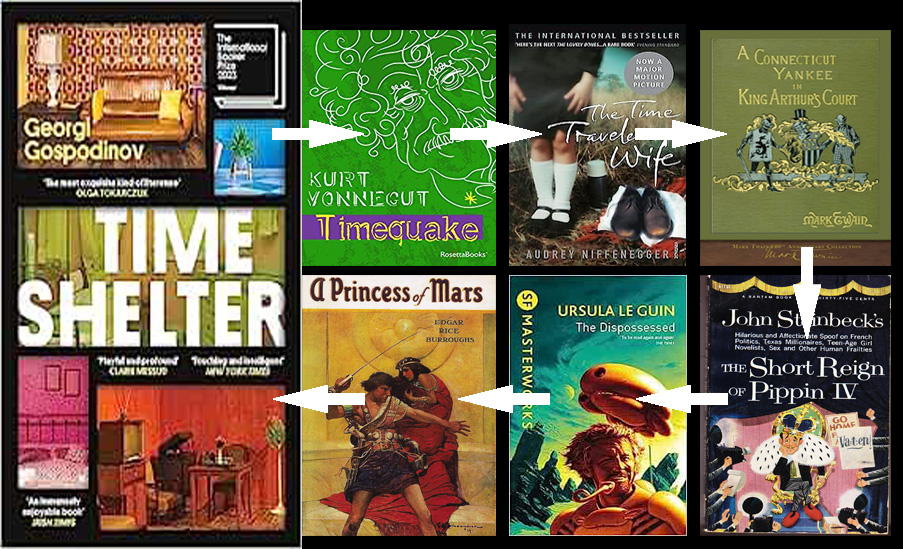
This is a post in the 6 Degrees of Separation run by Kate W. over at books are my favourite and best in which she gives the starting point of a particular book and invites you to take a journey through 6 other books of your choice, all connecting in some way and perhaps ending up back at the beginning – why not have a go yourself? Challenges are to writing, what scales and arpeggios are to those learning musical instruments, they exercise the faculties, but unlike scales, this challenge is most enjoyable, teasing out as it does, the connections, at a thinking level, between books…
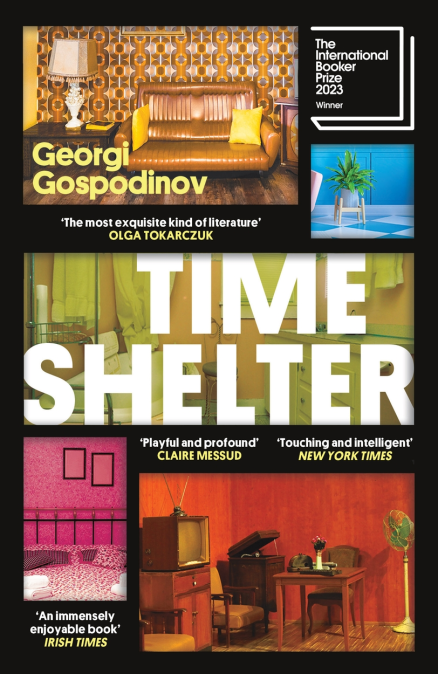
In Time Sheltera 2020 novel by Bulgarian author Georgi Gospodinov, Gaustine, a psychiatrist, creates a clinic for people with Alzheimer’s disease in Zürich which works by immersing patients into rooms containing articles from past decades and stimulating their memories of that period. The narrator is tasked with collecting the artefacts with which the rooms are stocked and travels throughout Europe to complete his mission. But soon the clinic is attracting healthy people who also want to escape a mundane present reality and return, nostalgically to other decades.
This rang a massive bell with me because some thirty-five years ago, I came into contact with a charity called Age Exchange in London, propelled by Pam Schweitzer MBE who pursued funds with the indomitable spirit that is ideal for such a role. They did exactly what the fictional clinic did – trained reminiscence workers to assist suitable dementia patients in recovering memories from the past using a library of artefacts gathered by the charity in Blackheath. The Exchange part of the charity’s name arose because they gathered reminiscences on various themes such as “Can we afford the Doctor?” and turned them into plays (that one was about Britain before the National Health Service) and performed them in schools thus recycling memories through the generations!
Time Shelter is a satire on nostalgia, populism, irony and melancholy and though I had not read it, I have ordered a copy…
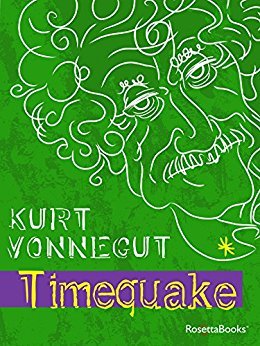
Timequake is a 1997 novel by Kurt Vonnegut Junior (yes – him again!) in which he makes the world relive a decade of their lives with no possibility of change – a study of determinism in which he asserts that people have no free will. As so often with Vonnegut, he weaves personal and family history into the tale with the wry humour which is his hallmark. I think I read this book so long ago that it was back when I still used libraries to source my reading material…
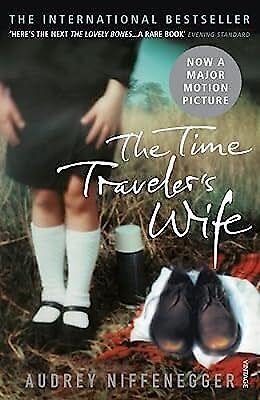
The Time Traveller’s Wife by Audrey Niffenegger (such a Wagnerian-sounding name!) is a book that I had read before watching the film adaptation and although it was a faithful adaptation of it, I still prefer to imagine a story as told in its original form. This book takes further the idea of not being able to be in control of one’s destiny. The eponymous wife is powerless to know when or for how long her husband will disappear into the past or future including her own any more than her husband who is at the mercy of a genetic mutation that plucks him in and out of his timeline at random, each know things about the other’s past and future at different times, often uncomfortably so. This book is a thought experiment, a “what if” but like much speculative fiction, it ultimately reveals more about how we as human beings are than how we might be in the unlikely event that time travel is possible…
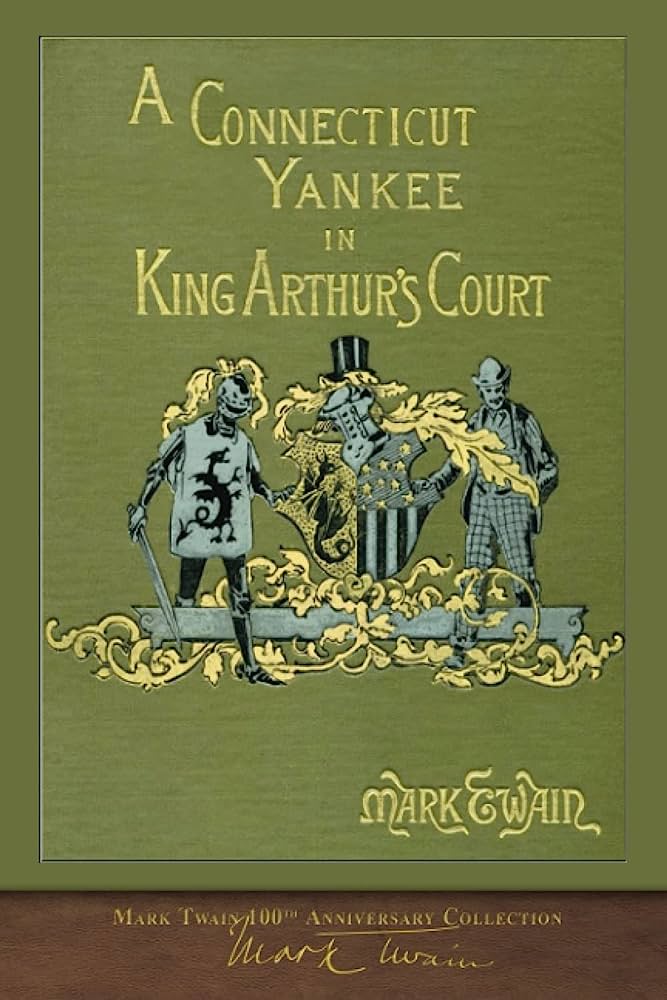
A Connecticut Yankeee at the Court of King Arthur by Mark Twain is a satire about monarchy and feudalism. We meet another hapless time-traveller – a Yankee engineer called Hank Morgan who awakes after a bump on the head, to discover that he is in the past at the court of King Arthur. He decides to use his skill to improve the world with his modern knowledge so the book also celebrates Hank’s homespun ingenuity and his sense of the rightness of democracy. Although he ultimately fails (darn that determinism), the book marked a move by Twain from portraying the America of the Gilded Age, to more progressive values.
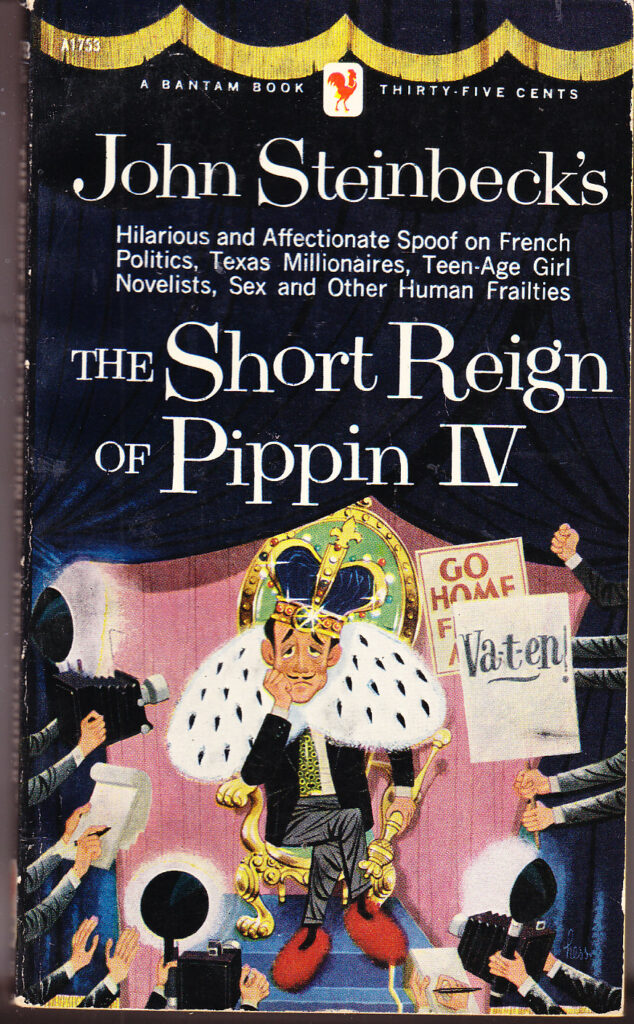
If Hank’s time travel left him in the service of King Arthur, then our next hapless hero is forced to become a king having descended, albeit distantly, from Charlemagne. The Short Reign of Pippin IV by John Steinbeck sits on my bookshelf in a very battered state having belonged first to my father as a young man – it was published when I was just two years old. In a kind of false flag operation by the French communist party, Pippin Héristal, an amateur astronomer is proclaimed King of France (in order that the French people may have something to rebel against – which they eventually do!). Like Hank Morgan, Pippin Héristal tries to make the best of what has been thrust upon him by doing what he thinks might make a difference but fate is already against both of them…
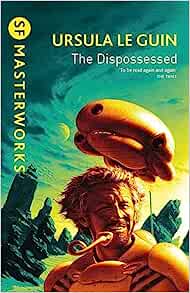
In the next link, another man is tested, this time by two different and opposing societies – in The Dispossessed by Ursula Le Guin, the world of Urras is a capitalist society divided into two competing superpowers – so much like our own world. The habitable, but resource-poor moon of Urras, is Annares and 200 years before, the rebellious factions of Urras have been sent or volunteered to go there where they have formed a society based on anarcho-syndicalism. Given the lack of resources and the inefficiency of the societal model, Annares is not exactly a thriving place to live. The leading character is Shevek, who Le Gin identified as being based on J. Robert Oppenheimer – often referred to as “the father of the atomic bomb” and who regarded his involvement in the Manhattan Project as that of a physicist and on seeing the first test of the Trinity bomb, said he thought to himself “Now I am become Death, the destroyer of worlds.”. Of the subsequent use of nuclear bombs on Hiroshima and Nagasaki, he told President Truman he felt he had “blood on my hands”, which did not go down well. In The Dispossessed. Shevek has a similar quandary when he tries to develop a General Temporal Theory and is blocked by a jealous superior and frustrated by his obligation to contribute manual work to society. He decides to go to Annares where he is welcomed because the capitalists see in his work, the opportunity to develop a spacecraft that will make crossing to the stars possible. But while capitalism thrives on his work, Shevek becomes involved with a new revolutionary underclass… Once again, Ursula Le Guin gives the lie to the writing maxim that “big issues are dead weights” – you just need to be a brilliant writer to incorporate them into the right story!
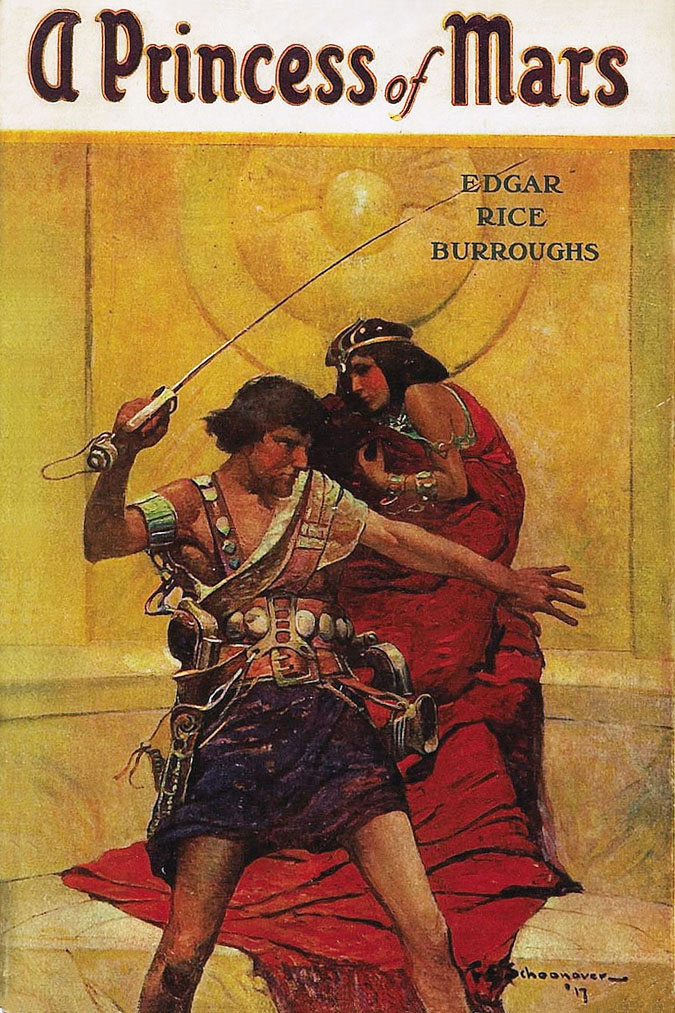
After such erudite stuff, the last book of my six may seem a little frivolous in style, but it contains all the elements we have seen on this journey, a man thrust out of his own time and/or place, into a different world in which he must try to do his best to survive, thrive and even contribute what he knows to the betterment of the society he finds himself in. A Princess of Mars (Barsoom) – is a genre-busting novel by Edgar Rice Burroughs, he of Tarzan fame, and in his Barsoom series, he gives us – planetary-romance, fantasy, sword and planet, and post-apocalyptic speculative fiction from before those terms were even minted! This is not a science fiction book that depends on technology such as spacecraft since the hero – John Carter – transitions to Mars without explanation when in a tight spot on Earth and later returns, again without any control on his part. Edgar Rice Burroughs’ works are full of violent action and derring-do, but the breadth and depth of his imagination made him a huge influence on many later writers – Robert A. Heinlein, Arthur C. Clarke, and Ray Bradbury, H. P. Lovecraft, James Cameron, and George Lucas to name a few.
Finally, what links A Princess of Mars back to Time Shelter, is nostalgia – just as the “healthy” people in Time Shelter, are drawn to use the retro rooms of the clinic because they are fed up with their contemporary lives, so A Princess of Mars harks back to a rose-tinted view of American past – the frontier life when the good were good, you knew who was bad, and men were men and women swooned –” “the good old days”…?
A life together does not begin with a clean slate There is baggage.
The amount of baggage is not measured by how many pieces of furniture or the number of bags and boxes you each bring on moving in together day.
The amount of baggage is not a direct correlation to how old either of you are a short life can contain as much trauma as a longer one not that trauma is the only kind of baggage Past loves and joys form a special category of baggage and never forget that guiding light “Comparisons are Odious”
If you have not gone through the dating phase of looking deep into each other’s eyes swapping life stories comparing notes whilst spilling the beans rest assured it will happen and unpacking baggage the literal kind will turn up who knows what…
A negotiation will take place as to what goes where what is precious too precious to risk being out in in the breakage zone what is distasteful to the other and which they would rather you hid away if indeed in extremis it must not actually be thrown away.
Getting rid of the literal baggage does not even begin to alter The inner baggage which may or may not be lying around like still unpacked boxes and bags more or less waiting to be tripped over not even labelled with their contents sometimes it will be years before this baggage gives up its secrets
Framed photos will be hung and you may recognise your new partner at a younger age and with a cast of other players yet to be introduced but don’t mistake recognition for comprehension – that will be a long time coming however much you think you already know
If you are just a couple you are lucky to bring only your own set of baggage just imagine when children are to be blended into a household hopefully a family More baggage external and internal a metaphorical minefield of boxes and their contents to trip over many of them marked fragile for all the good that does
And so at the end of the first day with the most important most obvious and bulky baggage provisionally assigned a place in the scheme of things to bed
It will take weeks more to finally unpack that literal baggage but then the real work and the fun begins to know the other inside out if possible and to learn what it means to share a life…
What is a spy if not a cursed liar Who for love puts hand in fiercest fire But not the love given to a sweet woman The love of country is inhuman.
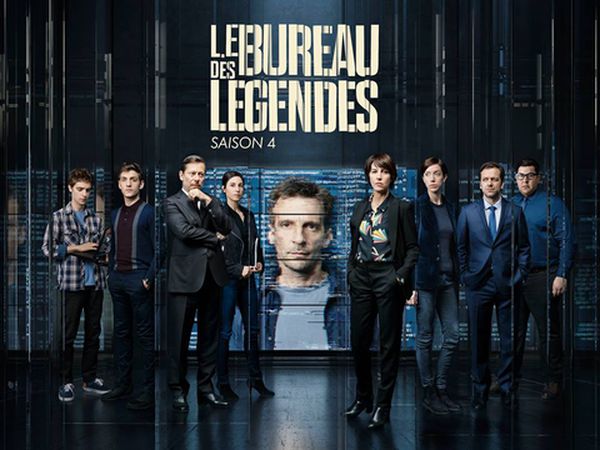
We watched a French, great tragedy conclude Where agents of The Bureau were deluded Believing they could steer their star-crossed fate Clinging to the happy ending till too late.
For once your life is built on falsehood complex The web you weave the fates will always vex And you must pay for secrets stolen, finally No matter how handlers and bosses rally
The cause of saving hapless agents’ lives Is hard on lovers, colleagues, friends and wives All pawns in what is known as the Great Game The spy is destined for a life without fame
And if their life of infamy be revealed Be sure the fates no happiness will deal.
This poem was written in response to a challenge from Posted by Björn Rudberg (brudberg) in Poetry Forms on dVerse – The Poet’s Pub, to write a Heroic Sonnet in iambic pentameter – you can read about it here.
My partner and I have been binge-watching a five-series drama made by the French company Canal called The Bureau. Since the French are famed for their interest in love, this drama, whilst being a cracking, edge-of-your-seat tale of the life of spies, also examines the philosophical implications for the loves of those who make their living by living a lie – can they find happiness? Since the poem might be spoiler enough, I will say no more…
This is the first time I have attempted a Sonnet in Iambic Pentameter – something I vaguely remember being taught in school but had to resort to Wikpedia for the finer points, including all the exceptions to the rules which make lines memorable – I hope I have done it justice. I guess that we many of us have this poetry form flowing through our veins with so many great poets and playwrights having embraced the form.
When successful singer and writer of songs Harry Nilsson schmoosed his foray into the Great American Songbook he little knew it would ruin his career.
A Little Touch of Schmilsson in the Night was a decade before such sentimental standards would slip down easily sumptuously with the richness of a cocktail knowingly too sweet but too delicious to pass up.
The ninth album following a trail of hit songs embedded in each one nothing prepared his fans for this shift in pace and orchestrations that out Hollywooded Hollywood.
Frank Sinatra’s arranger sewed the songs together slipping seamlessly from track to track in a welter of schmaltz that should make us sick but succeeds In pulling at our heartstrings.
All the emotional tricks of film scores with swooping glissandos of silvery strings dramatic pauses and sudden quietening that make way for heart-rending lyrics.
I can’t recall When or where Nilson whispered pure emotion in my ears or the joy of rediscovering this iced gem decades after Nilsson bombed his career.
Wikipedia told me the sorry tale but I was too awash with the joy of rediscovery to truly sympathise and if there is a heaven then he is surely there and I hope he hears my tribute and my sincere judgement that this beauty was simply ahead of its time…
Intro Lazy Moon For Me and My Gal It Had to be You Always Makin’ Whoopee You Made Me Love You Lullaby in Ragtime I Wonder Who’s Kissing Her Now What’ll I Do Nevertheless (I’m in Love With You) This is All I Ask As Time Goes By I’m Always Chasing Rainbows Make Believe Trust in Me It’s Only a Paper Moon Thanks for the Memory Over the Rainbow Outro
Written for a musical evening over at dVerse – Poetics – The Poet’s Pub where tonight the theme is Musical Muses, hosted this evening by msjadeli…
Today I am Wearing denim and a cotton shirt both are faded naturally by sun and age and wear
The jeans are now for DIY the front of the thighs covered with finger wipe marks not as many colours as when I was a signwriter and other substances too grittily mixed in
The rips are fashionable but not fashioned to be so nevertheless my grandsons have dibs on their genuine distress!
The grandfather shirt collarless also faded with age to a soft, pale blue is frayed at the cuffs and relegated to work rather than repair too late to turn these cuffs
I will walk to the supermarket and I hope someone will appreciate my look like women who dress their best though not looking to pull.
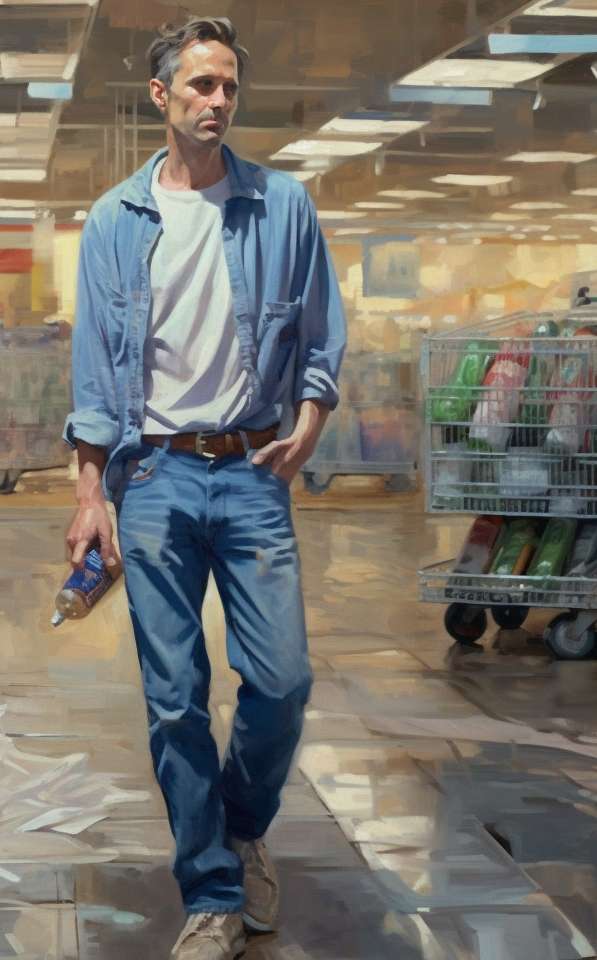
This poem was not done to any prompt or challenge – I know – unbelievable! However, since I have been exploring AI (see previous posts), I decided to see whether I could produce a suitable image and below is the nearest to what I imagined. The prompt was “a gently smiling late middle age man seen full-length wearing a faded blue collarless shirt with frayed cuffs and faded denim jeans with paint marks and rips down the front shopping in a supermarket –ar 4:6” and I then cropped the image in Photoshop. As you can see, the AI bot didn’t understand collarless, and in this iteration did not make much of the distressing of the jeans. I guess it shows that in this case, a picture is unnecessary since the poem says it all and allows the reader to imagine their own image but I decided to include it as part of my AI exploration. And by the way, it doesn’t look anything like me – far more handsome…
During the month of April this year, whilst participating in the A to Z Challenge, I was privileged to encounter the work of Misky whose blog It’s Still Life, showcases two distinct things, poetry written by Misky and illustrated using Generative Artwork created by Misky using the Midjourney AI app. So amazing were these images to someone who is in part, a visual artist, that it inspired me to make an exploration of Generative AI for myself. At the same time, AI has been hitting the headlines big time and mainly for its use in text generation and the impact it might have on jobs and since writing is another thing that I do in my day job, I was also intrigued to see whether AI might be of any use in a company such as I work for. (I am the gradually retiring General Manager of a food manufacturing company). It has been a fascinating voyage of discovery and to cap it all, lying awake at 4 o’clock this morning, I found myself listening to “The Conversation” on the BBC World Service and what should be the topic, but AI with special reference to the involvement of women. So – mind on fire, I am going to draw this series together, although I freely acknowledge I have but dipped my toe in the waters of AI and I may return to the topic in the future…
To recap the three articles I have already written:- In the first one, I tried out ChatGPT to see what it research and write about one of the topics from my A to Z and immediately encountered the phenomena of AI hallucination – the ability, in fact tendency of AI to make things up. I also “showcased” my first attempts at visual collaboration with the Midjourney bot . In the second report, I compared ChatGPT to Writesonic which produces more lengthy articles – testing them against a typical (for me) work assignment. In the third report, I looked at the most controversial assertion about AI – that AI might in the future, eliminate human beings – Terminator-style and referenced articles that thoroughly refute the need to worry about that particular outcome – go re-assure yourselves! However, there are many things about our present and future use of AI that do bear looking at and these were raised in the episode of “The Conversation” that woke me up this morning. The programme, presented by a woman, featured two women working in the field of AI, one a philosopher and one an expert in data analysis and as well as the general concerns that need addressing about AI, they highlighted the general lack of representation of women in the field of AI – only one CEO, qualifying women failing to get jobs in the industry and so on. They did however point out that one of the changes to AI itself in recent times, has been the accessibility of use – no longer do you need to have a degree in computer programming – you could make your first interaction with ChatGPT in the same time it would take you to query something on Google. Which brings me back to Misky…
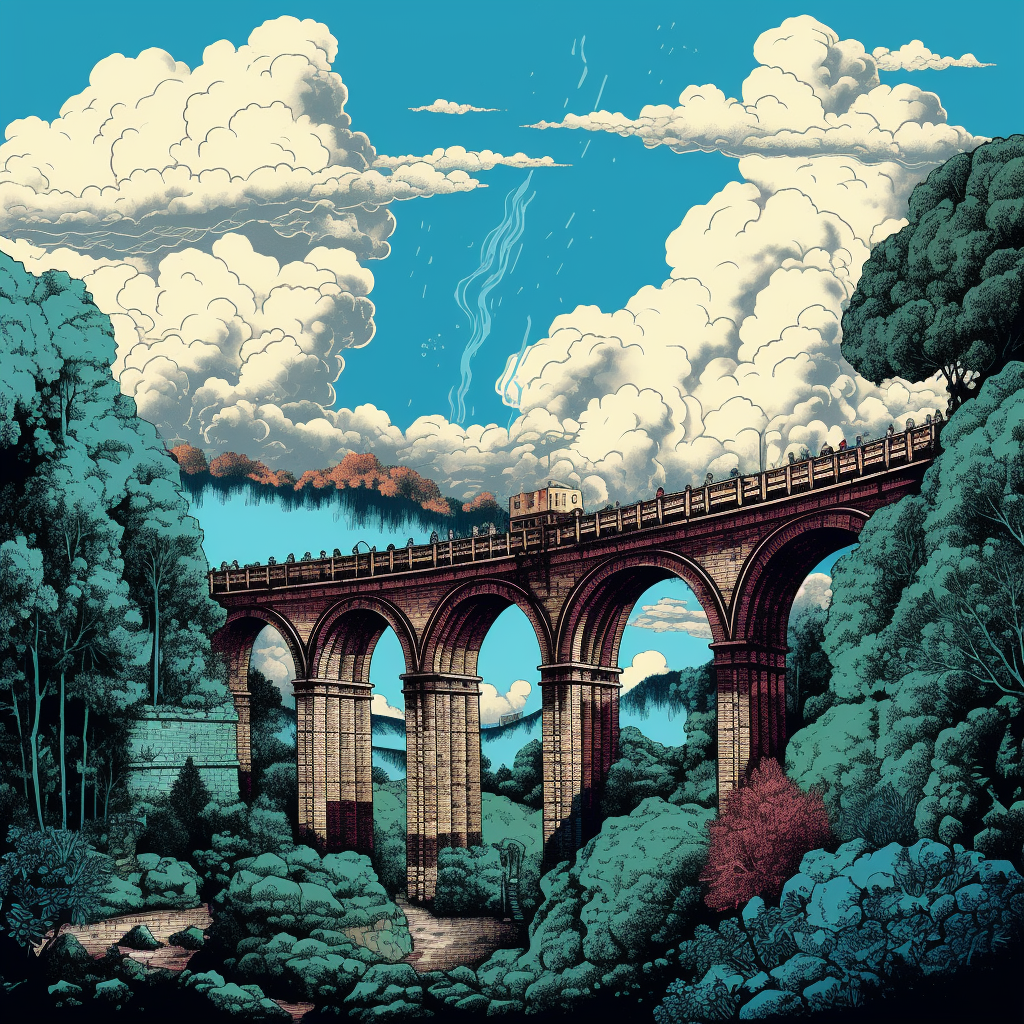
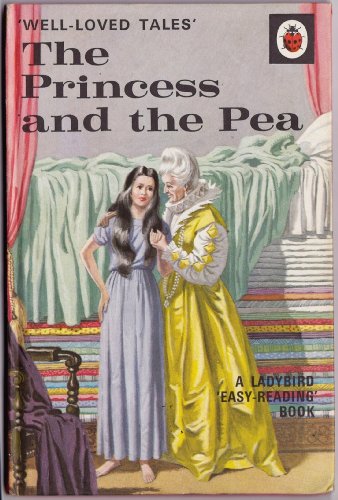
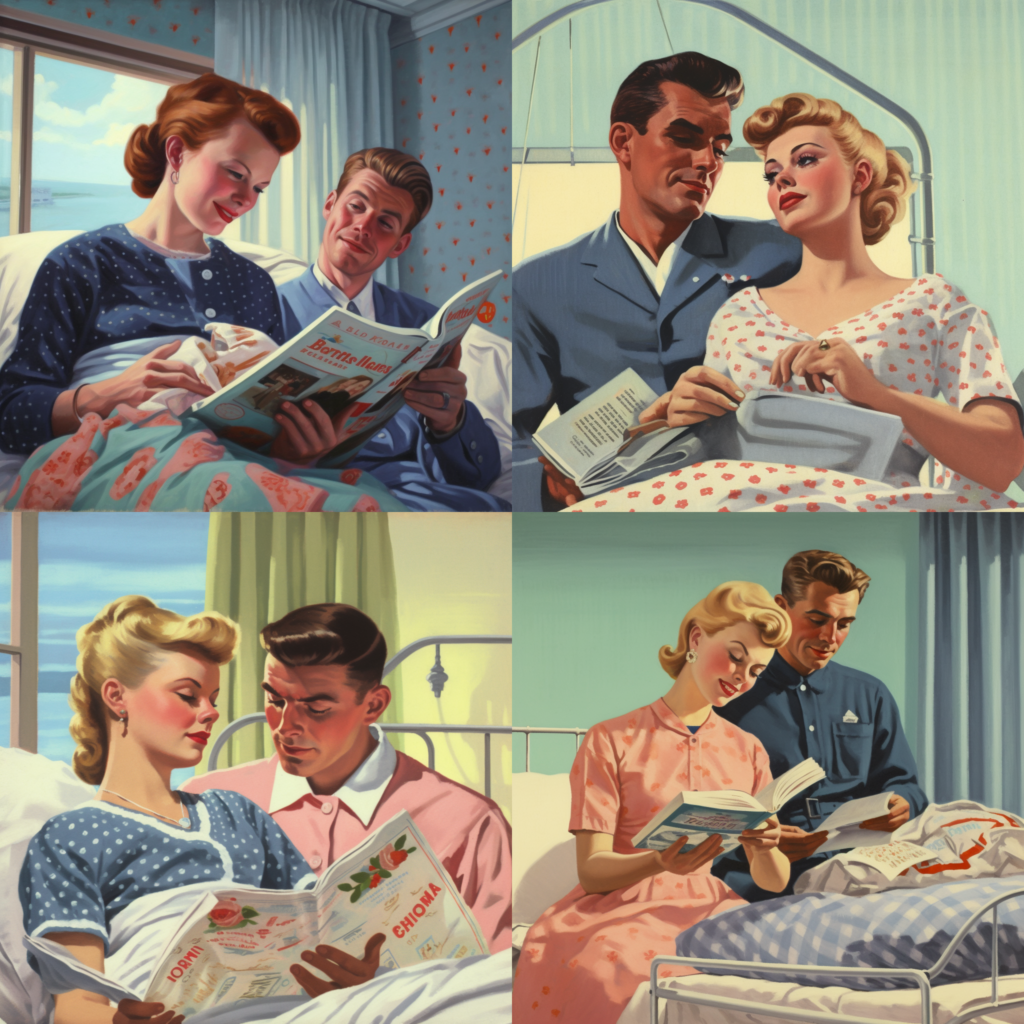
Misky was not only the inspiration for my (deepish?) dive into AI, but was extremely helpful and encouraging to me at the outset, itself a reflection of how women tend to be more collaborative, good team players – a fact which the contributors to “The Conversation” suggested is a good reason for women to me more involved in AI companies, in reviewing the implications and in forming the regulation which is undoubtedly necessary around AI. A few days ago, I was delighted to meet Misky face-to-face on a Zoom call after many text interactions online and one of the things that she shared in our too-brief call, was that she had had some push-back from certain readers of her blog, about the use of AI images. I would like to talk to her more about these issues, but the participants in “The Conversation” raised the issue of how artists, whose work has been studied by AI to create new images “in the style of”, are being short-changed. You may have been wondering about the image at the top of this post – I created in Midjourney by prompting it to “imagine” Knaresborough railway viaduct “in the style of Hokusai” – a master of Japanese woodblock prints. I have used this subject as my test piece for exploring what Midjourney can do as you will see in the previous post. Now Hokusai is long dead and so the issue of compensation is hardly an issue, but another group of more recent artists might object. I am working on a spoof post – “How to Make a Body” a tale of human reproduction in the style of an Internet recipe ad although, like Misky, the writing is all my own, I wanted an illustration to fit with the tone of the piece and prompted Midjourney to “imagine” a woman in a hospital bed, holding her newborn baby and with her husband leaning in “in the style of a Ladybird book cover”. For those of you who may not be familiar with Ladybird books, they were written for children starting in the 1940’s and running until the 1980’s and they feature a distinct style of illustration.
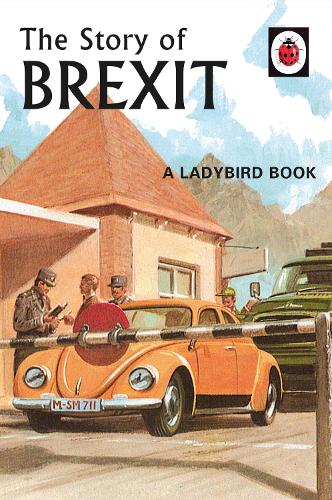
In recent years, a series of spoof books in the Ladybird style and aimed at those who had grown up with the original series, have been vert successful, for example…
I had no idea whether Midjourney would be able to fulfil my prompt, there are lists of artists’ styles you can use with Midjourney but I hadn’t seen this one – I was not disappointed!
I am keeping my powder dry as to the final image I chose but this first set of four (Midjourney shows off by producing not one, but four attempts in under sixty seconds) – which was done to the prompt of “A new mother in a hospital bed with her husband leaning in as she holds their new baby in the style of a Ladybird Book Cover” has misunderstood my intention and the mother is holding a magazine rather than a baby – though the graphic style is very Ladybird book-like. I acknowledge that I am still only a beginner in my use of prompts with all the forms of AI I have tried so far and there is undoubtedly an “art” to getting it right which is why I said “I created in Midjourney”. Although I am a competent watercolourist, screen-printer and other forms of illustrative art, I could not produce images such as the above and certainly not in sixty seconds. So, how much of this creation is my prompt, how much is the brilliant programming behind Midjourney and how much is owed to the various artists who could produce the illustrations of the Ladybird books? I cannot begin to answer that question but it does raise an issue which needs considering in formulating regulation around the use of AI. Meanwhile, like Misky and I, jump in and have a go and get a feel for yourself of the answer to the god-like feeling of creating with an AI tool…
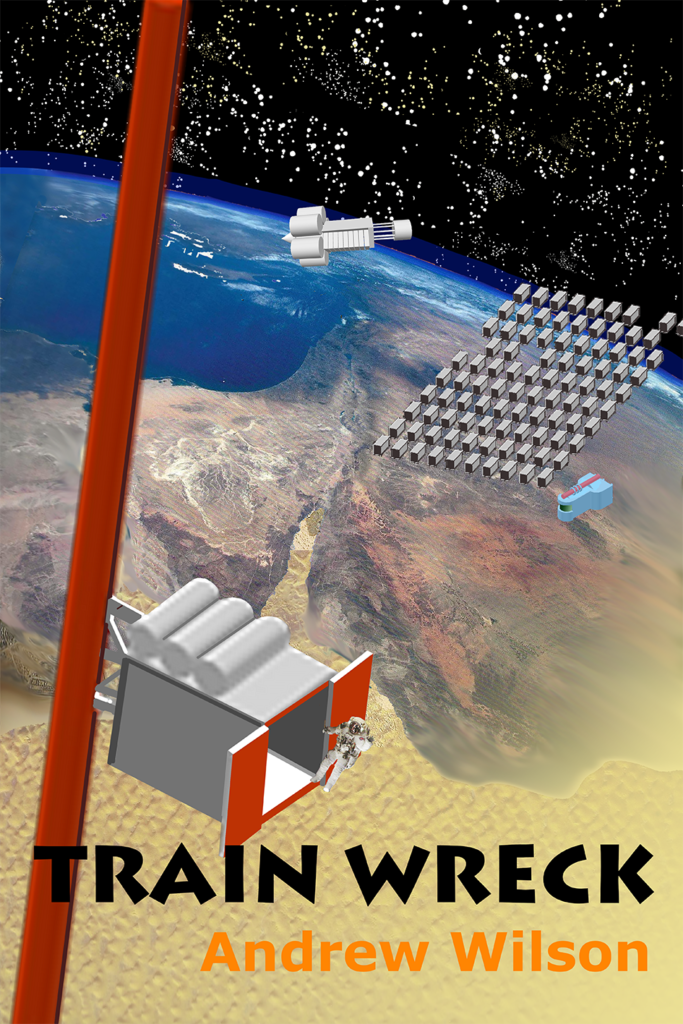
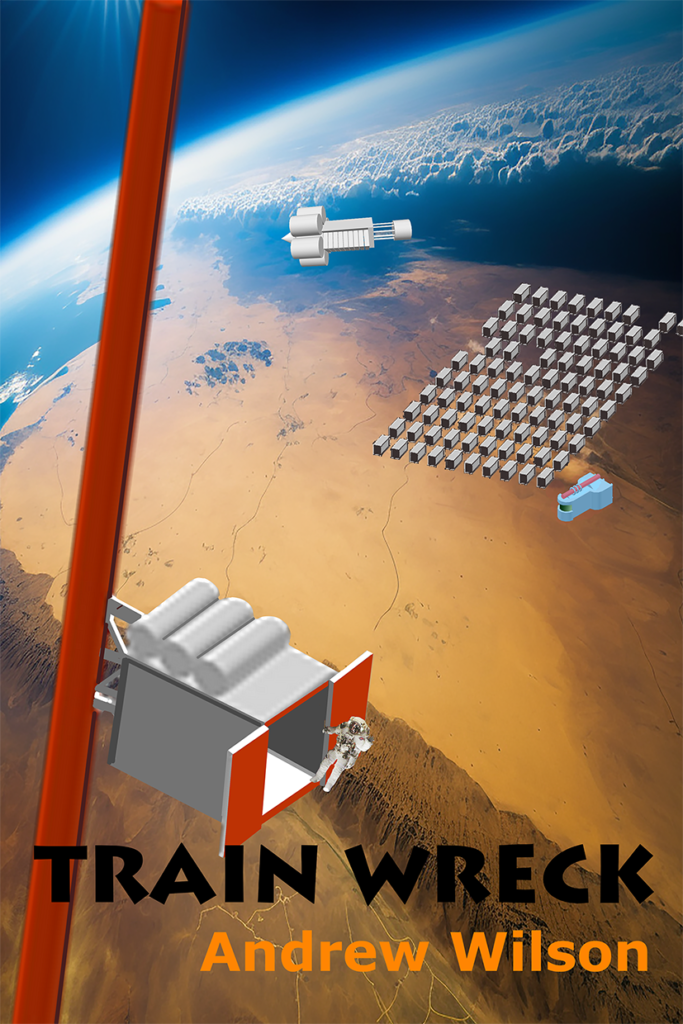
Much of the debate around the consequences of the rise of AI, is around its impact on jobs and the potential losses and gains. As I described in my first report, the development of computer spreadsheets swept away the lowly positions in Accountancy but opened up many more jobs at the high end of the profession and although this might be the hope for AI, that it liberates us from the menial and allows us to create new roles – roles which might be beyond the capability of AI to imagine, at present, it is not just the menial tasks that are being threatened by bots like ChatGPT, but some roles higher up in various industries. Having said that, given the tendency of AI’s to hallucinate, I wouldn’t trust an AI’s writing without an experienced human checking the output of any writing before sending it out! Also, when you are a creative individual yourself, then trying to get AIs to produce exactly what you have in mind is tricky. In my 2021 A to Z challenge, I was trying to complete a science-fiction novel and the exercise gave me enough momentum to indeed finish it a few months later. Then I set about creating a book cover for it – to feature the final denouement – a tense scene set in a space-elevator on the edge of space. I prepared the background view by Photoshopping some NASA photographs looking the length of the Red Sea towards Palestine, painted in a great river estuary as per my planet, and then superimposed some 3D elements which I drew up in AutoCAD and finally added the title and my name. You can see this below, however, I felt that the result was not quite up to the standard of artwork commissioned by big sci-fi publishers and imagined that in the unlikely event of the novel being published, an improved version of the cover would be substituted for my “sketch”.
Back to today, and naturally, I thought it would be a good test of Midjourney to see whether it could be used to produce a better version of my cover. Well, the first attempts were brilliant style-wise, but nothing like the image I wanted and many attempts followed to no avail…
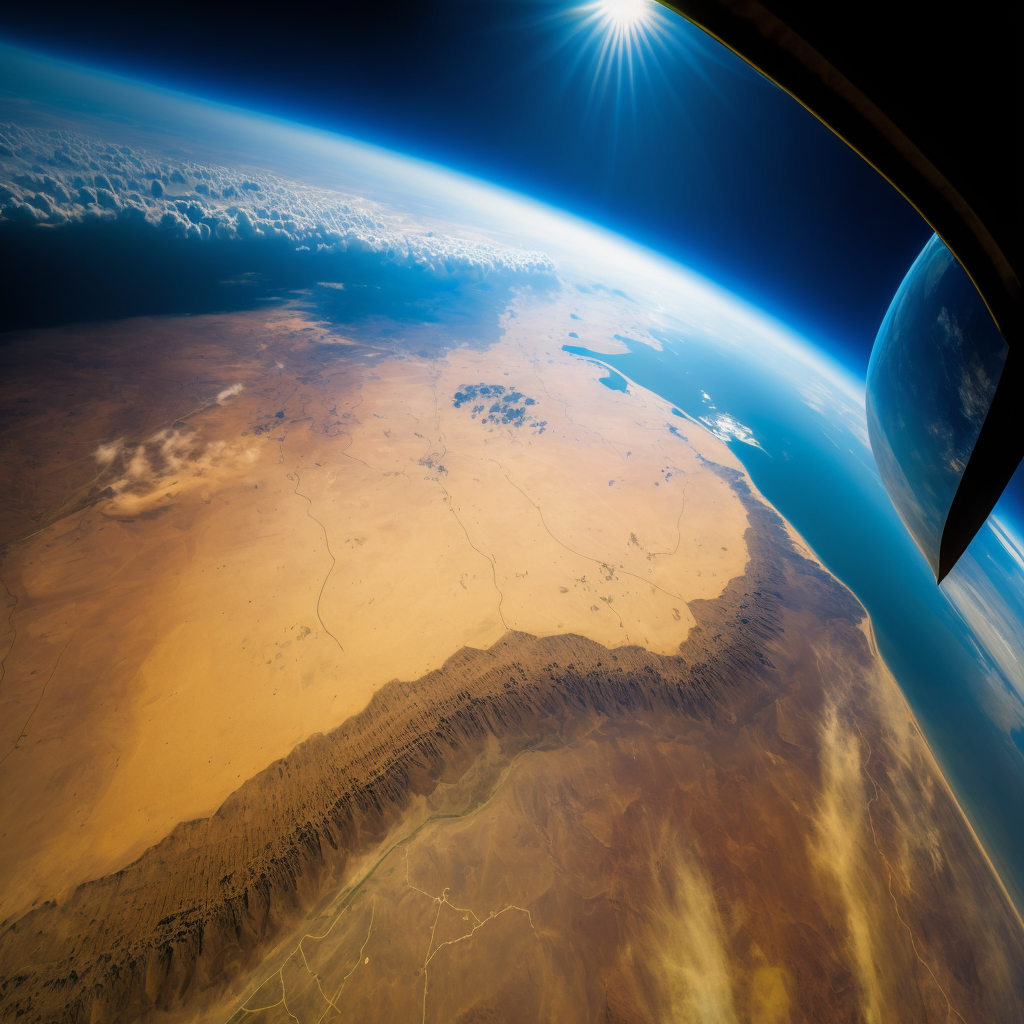
My prompt read “space lift arriving at 300 miles above Earth like planet over Sahara like region array of cargo containers spread out in one layer small spaceship approaching“Midjourney couldn’t understand Space lift and I had to change lift to elevator, it couldn’t understand “array of cargo containers” but it did have all the sci-fi style I wanted. So then I decided to create a space view background without the lift and substitute it into my own cover illustration. Bingo!
Still I hanker for the crisply detailed images of the elevator that Midjourney is capable of if only I could prompt it correctly – so a work in progress… What this exercise does show, is that it is possible to use AI for the things it can do better in combination with human talent.
In Conclusion…
This exploration of AI has felt like a marathon and it is just one person’s experience and I am really only at the beginning of my exploration, I’m sure I will find both text and image-generative bots to be of use in my future work and play. I urge you all to experiment for yourselves, form your own judgements (and please share your results by linking in the comments), join the debate over the regulation of AI, and explore other artists, in particular, Misky, who began this journey…
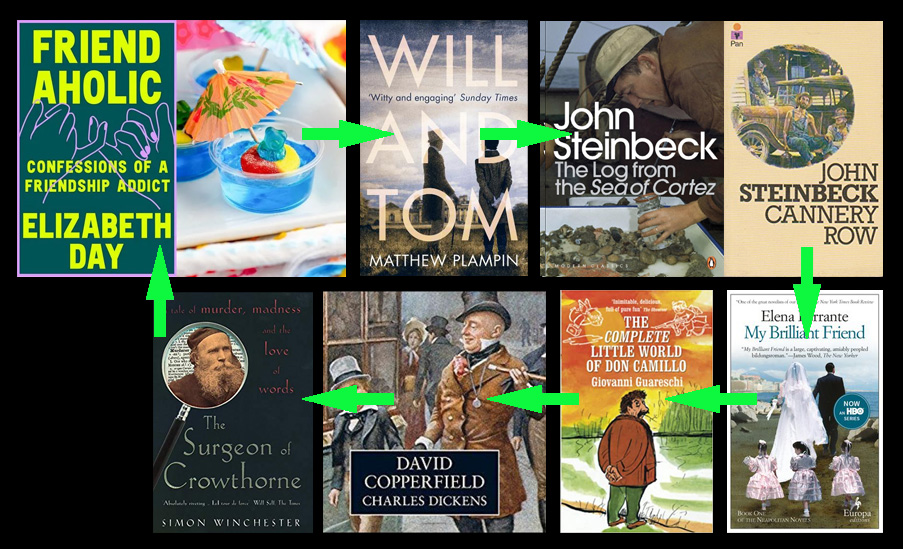
This is a post in the 6 Degrees of Separation run by Kate W. over at books are my favourite and best in which she gives the starting point of a particular book and invites you to take a journey through 6 other books of your choice, all connecting in some way and perhaps ending up back at the beginning…
As will often be the case in this challenge, I have not read this book, a non-fiction exploration of just what it is that makes friendship so important to Elizabeth Day. Ubiquitous as Amazon is, other booksellers are available so here is part of what the Waterstones’ blurb says about Friendaholic. “Friendaholic: Confessions of a Friendship Addict tells the story of one woman’s journey to understand why she’s addicted to friendship. […] In Friendaholic, Elizabeth unpacks the significance and evolution of friendship. From exploring her own personal friendships and the distinct importance of each of them in her life, to the unique and powerful insights of others across the globe, Elizabeth asks why there isn’t a language that can express its crucial influence on our world. From ghosting to frenemies, to social media and communication styles, to the impact of seismic life events, Elizabeth leaves no stone untouched. Friendaholic is the book you buy for the people you love but it’s also the book you read to become a better friend to yourself.”
So everything you wanted to know about friendship but never dared to ask – well hardly because there are as many types of friendship as there are fish in the sea and as a prodigious reader of books growing up in a rather claustrophobic childhood, I suspect that the friendships depicted in books have been a great influence on me so all these books have personal significance for me beyond the mere reading…
Will and Tom by Mathew Plamplin – my first choice- was a recent read but what drew me to it, was that it concerns two painters well known to me and is set in one of England’s great country house not far from where I now reside – Harewood House. My last year at school was an extra year to resit Geography which I had ambitiously paired with Physics and English A-levels in an attempt to straddle education from Art to Science and Geography, which I wanted to study at university got squeezed in the middle. So now I added Geology and Atr A-levels, and, since my friends had all left and I only had 11 hours timetabled lessons, I was allowed to roam the streets of Oxford, sketching and visiting art galleries and museums. At the Ashmolean Museum, I was allowed to handle and peruse, FIVE boxes of Turner watercolours and for good measure, the staff suggested I compare his work with that of his contemporary and friend – Thomas Girtin. Girtin is as unknown to most people as Turner is famous, and that is in part because he died tragically young, but this book brings their life and friendship not to mention the times and the place. Below is one of Thomas’ paintings.
If I hadn’t used it in last months 6 Degrees, I could now have gone to This Thing of Darkness telling the tale of the Friendship between Charles Darwin and Fitzroy the Captain of the Beagle but instead I choose another voyage of biological discovery and friendship – The Log from the Sea of Cortes by John Steinbeck. I am going to cheat here and give you a Two-fer since this book is inextricably linked to Cannery Row also by Steinbeck in which we meet Doc – in real life – Ed Ricketts a marine biologist who became a great friend and influence on Steinbeck. Steinbeck was fascinated by marine biology and having achieved initial success with The Grapes of Wrath, as Ricketts had done with his seminal Between Pacific Tides, the pair were looking for new inspiration and eventually settled on a specimen collecting trip up the Gulf of California, or Sea of Cortez as it is more poetically titled. The co-authored book as well as the fictionalised Doc in Cannery Row, paint a portrait of close friendship between two men and Steinbeck was devastated when Ricketts was killed on the railway crossing at Monterey… A recurring comedic theme throughout the log, is the fractious relationship with the outboard motor of their tender “Our Hansen Sea-Cow was not only a living thing but a mean, irritable, contemptible, vengeful, mischievous, hateful living thing…. [it] loved to ride on the back of a boat, trailing its propeller daintily in the water while we rowed… when attacked with a screwdriver [it] fell apart in simulated death… It loved no one, trusted no one, it had no friends.”
On a journey of my own in the 70’s, by Transalpino, I would have passed through Naples, the seaside location of my third linked book the first in Elena Ferrante’s autobiographical trilogy detailing her growing up in a Naples suburb “My Brilliant Friend”. The picture of Lila and Elena and Naples includes memorable characters from their own families to the more sinister family of the Cosa Nostra and we see the roots of later series such as Gommorah. I first watched My Brilliant Friend as a TV drama but I have since acquired the books to read ( since the read experience is so different) and they are on my Tsundoku (TBR) list…
With no more link than that they are also set in Italy and I vastly enjoyed them as a teenager, I now choose the The Little World of Don Camillo by Giovannino Guareschi. A collection of eight books of short stories, only three of which were published in his lifetime,, Guareschi tells of the amusing but touching conflict between A parish priest in a small town in northern Italy’s Po Valley, and the Communist Mayor. You might be forgiven for thinking that the constant strife between these two protagonists (with many conversations with God on the side) describe enemies rather than friends, but what they share and recognise in each other, even if they wouldn’t openly admit it, is that they both strive ceaselessly in their own ways, for the good of the town and if that doesn’t qualify as friendship…
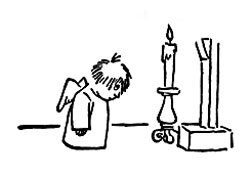
Guareschi was also a cartoonist and illustrated the books with these charming cartoons – Don Camillo talking to God…
I read in some pre-internet article, that a survey had discovered that men, asked about their favourite books, will often quote titles they read as teenagers whilst women will cite their most recent reads. The question was posed, tongue in cheek, as to whether this is because men stop reading after puberty whilst women don’t stop… I will acknowledge that half the books mentioned so far were read in my teenage years and with David Copperfield – read in a wrist wearying hardback (particularly when reading on the pillow) by Charles Dickens. I read a few Dickens books from my parents hardback set and formed an early critical notion of his work as being like a tapestry, all the threads are presented near the beginning, a few are lost along the way and a few new ones introduced, but most make it to the last chapter in which things a re resolved with satisfaction for the good and justice for the bad. David Copperfield is a partly autobiographical account of Dickens life and it is notable for the friends that save young Copperfield from the worst vicissitudes to which he is subject, Peggotty, Steerforth (initially at school) and Barkis, not to mention the unusual friendship between Aunty Betsy Trotwood and Mr Dick. The thing about these books read as a teenager, is that they have formative influence on the developing mind and I sometimes wonder whether how much of these characters, especially Steinbeck’s Doc, are not in me…
The Surgeon of Crowthorne by Simon Winchester, is the story not only of the monumental task of creating The Oxford English Dictionary, but of the friendship that developed between the chief editor of the dictionary and it’s most prolific, volunteer contributor. Started seven years after Dickens published David Copperfield, the OED took a new approach to dictionary entries by seeking for examples of usage to accompany definitions of meaning and this required an army of volunteers. James Murray, the Chief Editor appointed by The Philological Society, received tens of thousands of examples from one – William Chester Minor – so many that when the first volume was finally published after eight years gruelling work, Murray invited his volunteers to a party. Surprised not to hear from or see his most prolific volunteer, Murray eventually went to Crowthorne Hospital where he assumed Minor worked, only to discover that he was an inmate in what is now the secure psychiatric hospital Broadmoor. Minor, who had had a colourful life, was suffering from what we would now diagnose as Schizophrenia and had stabbed a man. Murray and Minor became firm friends and eventually, Murray petitioned for Minor’s release since his troubled mind had eventually relaxed.
This true tale of friendship brings us back to Elizabeth Day’s exploration of the nature of friendship and why it is so vital! I hope you have enjoyed the journey through books which feel like old friends to me and which have almost certainly styled my notion of friendship…
There’s a skylight right over my head But the darkness pools, here in my bed And I’m diving deep – searching for pearls But I just keep on coming up empty.
I lay and wait for your key in the lock For your ship to come into my dock But the hours drift away and I’m down in the depths Fruitlessly searching for pearls
Next I’m down on my knees And I’m begging him, please! Don’t go, just don’t sail away! But my lifeline is cut, and I sink to the depths – Chasing my scattering pearls…
Yet it should be him who is down on his knees Thanking God for the moments with me For a pearl diver comes only once in your life So I turn and I swim for the light.
There are people who live Up there in the light But I’ve gradually lost my connections – They stretched and they broke As the pearl diver sank ever deeper.
Then he comes and the sunlight bursts inwards And my world is complete for a while And I thread one more pearl on my necklace One more notch on the bedpost of life…
It’s Open Link night over at dVerse Poets Pub but as it is late here in England, I have dug out a previously unshown piece. Written about a friend who was in an abusive relationship some years ago…