The Rational and the Belief of a Spiritual Humanist…

Terms

Humanist

Despite the fact that the word Humanism is applied to many different movements such as Christian Humanism, Atheist Humanism, and Ethical Humanism – I still chose to describe myself as a Humanist because I can find no better word to express what I am. 

I am not merely an Atheist because although I don’t believe in God or gods because that would be to define myself by what I don’t believe in instead of those positive things which I do believe in.

I am a rationalist, I believe that the scientific method is the only way of approaching the world in order to understand it. Science cannot know everything about the universe and what it knows now may be subject to change later, but whilst you cannot prove anything to be absolutely true, you can more easily prove what is not true by conducting experiments and each time you disprove something, you move, by elimination, nearer to the truth. Whatever status quo science has brought us to is acceptable until there are discovered to be too many flaws in it and someone new can suggest a new view that, for the time being, cannot be disproved.

I am a materialist in the sense that I believe there is only a material world, not a dualistic world in which there are spirits waiting to pop into newborn babies and return to the other realm at the death of a human being, no heaven or hell, no reincarnation. Whenever I use the word “believe”, that means I can’t prove it to be the case, but like the scientific status quo, I find it acceptable for now – so I am atheist (don’t believe in gods) rather than agnostic (don’t know the answer about gods) but I accept that this is a matter of choice as to what I believe.

In the 19th century, many humanist groups were set up as an alternative to the religious. They might have been called Atheist, Humane or Ethical Societies and often they were as dedicated to “doing good work in the world” as any religious group. In humanism, what you do and how you live mater in exactly the same way as they do to people of religion, you have just arrived at motive differently, not because God told you to live in a particular way, but because it is obviously right to do so for and by, the good of humanity.

I believe (choose to believe) that human beings can be better rather than worse in the long run. I most certainly can’t prove or disprove this assertion and the Covid 19 crisis is a very good example of why not. On the one hand, there are right-wing politicians who are seeking to increase their power and its longevity under cover of the response to the crisis and on the other, millions of people have donated in excess of 30 million pounds to Captain Tom Moore’s charity fundraising event to support the National Health Service workers during the crisis. The former RAF pilot who served in WW2 and who turned 100 last week, crystallized the generosity of people who were already grateful to the NHS workers for their heroism and altruism in the face of personal danger from the virus. How could you possibly devise a way of weighing up the efforts of right-wing dictators against the efforts of Captain Tom and the NHS workers and those who have donated to them – you can’t and so my belief that people can be better rather worse, must remain an untestable belief – so once again, that is what I choose to believe.

Because the values of humanism are so great, so obviously right, that is why the term can be appropriated even by Christianity in it’s depiction of the values of Jesus as sent into the world by God, the son of God made human to bring God’s love to humanity – this does make the term humanism confusing given all the things I have already said about it…

If I don’t believe in a dualism of material and spiritual realms, then why Spiritual Humanist?

Spiritual

The word spirit is often conflated with the word soul and although they both come from an ancient word for breath, they are quite different. The soul is a word for the dualistic idea of an immutable essence that passes into the body at birth and returns to some spiritual realm at death. Breath is most certainly the first thing that enters the body at birth and the last thing to leave it at death bur the what are we to call the memories and personality of a person, which as a humanist, I believe must cease with death – what are we to call all that?
We often refer to a person’s spirit without meaning their soul in the religious sense as in “they have a kindly spirit” or we stay someone is “very spirited” – so I refer to that bundle of memories and personality, contained in the mind of a person, perhaps reflected in the appearance of their body as they develop, so easily damaged or destroyed by a blow to the head, and which makes the difference between a living person and a corpse, as their spirit. Just as the term humanism carries baggage and ambiguity, so too does the word spirit, but once again, I can’t find a better word – so here I am – choosing to call myself a Spiritual Humanist…

Spiritual Humanism – the Ripple effect

At this time of existential crisis, brought on by the Covid 19 pandemic, many people who have not previously thought about their own mortality, are doing so, in lockdown, without their normal support networks or the distractions of normal life. Very often, when say, a parent dies, the next generation find themselves contemplating their own mortality, and if their parents were in any way religious, they may find themselves in a church service for the burial or remembrance of their parent. Very often, I believe, this may strengthen either their own religious roots, however dormant they might have been, or else prompt a search for some other meaning, beyond the daily grind. my version of Spiritual Humanism is a way of seeing meaning in life and beyond the death of the individual which does not depend on a dualistic belief, and as such, this might be a good time to give it another push out into the world.

When a person dies, it is not as if they had never lived, not ever!

I remember there was a tramp, a homeless person who spent their life walking between my town and the next village – you would often pass him if you were going that way. Every time I saw him, he made me thankful for the home and the life I had, and I would wonder how he came to his point in life and what would become of him. If one day, as would inevitably happen, one way or another, he were not to  be seen again by people driving that road, I suggest that the memory of him would linger on, they would wonder if he had died or been taken into some sort of care –  either way, the memory of him would probably continue to make people glad for what they had in their own lives.

A child is stillborn and though they had no life beyond the womb, they have already filled their parent’s life with anticipation – good or even fearful – it is not as if they had never existed, their life, such as it was, has changed the world.

Everybody changes the world to a greater or lesser degree. Think of Florence Nightingale whose story got another boost by the temporary hospitals created in Britain to help fight the pandemic, they were called Nightingale Hospitals. Florence was white, Victorian and a woman. You might be black, born in Africa in the 21st century, and a male, but the first thing you will learn about if you choose to go into nursing might be the history of Florence Nightingale. So the work of Florence Nightingale, the energy, insight and impact of her spirit, not only affected her Victorian world, it continues to resonate to this day – like a ripple through the minds and institutions of humanity.

Not everybody is as famous as Florence Nightingale, but they can have as great an effect even without anybody being fully aware of it. Imagine village baker – he is a good kind man – everybody recognizes that but nobody knows the full extent of it. He gives a job to a man who has been in prison and helps him to turn his life around. He lends some money to a person when they have nowhere else to turn. He always slips, wordlessly, an extra bun into the single mother’s bag. He is very modest and none of these people ever share the story of how they were helped by the baker, not even after he dies, not because they are not grateful, but because they know he would have wanted it that way. Yet that baker changed the course of the whole village, the ex-con became a fine member of the community, the lender developed a business that employed many villagers and the children of the single mum grew up healthy and strong and one of them found a cure for one type of cancer.
The Ripple effect from that baker was strong!

If you believe in God or gods, then I will never try to dissuade you of your beliefs, but if in this time of crisis, you are seeking a way to reconcile yourself with your mortality and you can’t believe in a supernatural being, then think of your life in terms of the Ripple effect. How have you changed the world, have you left it a better place and who will remember you? Maybe you feel you have not contributed much, or even been a negative presence in the world. It is not too late, the story of the baker shows that you cannot tell which of your actions will have the greatest effect. Maybe you are mourning someone who has died, if so then you are demonstrating the Ripple effect, for you are carrying the memory and the particular energy of that person’s spirit with you already, now and for as long as you live. If you build whatever memorial is appropriate to that person’s life, you will pass their story on to others…

If contemplating life in the world as illuminated by these strange times leads to re-assessment and change for individuals or institutions, if it brings changes to their spirit, then that can only be for the good…

Please leave a comment so that I know you have been here, and stay safe…
Bread and Circuses – Metonymic, Akashic Records and Materialism

A morning adventure…

Lying in bed this Saturday morning, I started checking my emails on the phone. There was an alert to a post by Deborah Weber over at Garden of Delights for the letter Y (part of the A to Z 2020 Challenge) – Yeppsen – the amount that can be held in two hands – an obsolete word as many of Deborah’s words have been, unusual, interesting words.

Then it was over to an email chain from my school friends of 47 years ago and one of them mentioned panem et circenses (yes we were posh enough to study Latin) or in English – bread and circuses. Just to check I had translated it right and to see what it originally meant, I checked it out on Wikipedia which as well as attributing it to Juvenal’s “Satire X”, told me that the phrase is an example of a metonym. Well despite the posh-ish education, I had never heard of this so it was another link on Wikipedia to find out what that means! To explain, Wikipedia (last updated on 30th April 2020 so hot stuff!) had to examine and contrast Metonyms and Metaphors as well as touching on Synecdoches and Toponyms and even Metalepsis. You see how this internet surfing goes…
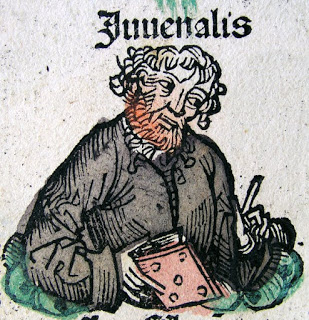
Back to the meaning of Bread and Circuses – Juvenal was expressing disappointment that the mass of Roman citizens had ditched their republican ideals of taking their politics seriously and electing their, politicians, generals and officials – instead they fell for cheap bribes of grain (for bread) and circuses (entertainment). How little things have changed, we in the UK have a Prime Minister who made up the story about the European Union bureaucrats requiring straight bananas in future. He was working as journalist in Brussels and was too lazy to research real stories about the EU and later took us out of the EU – whilst in the US – well let me go no further down the critique of the political technique of distraction – you all know who I am talking about…

A depiction of Juvenal in the Nuremberg Chronicle, late 1400s. Wiki Commons


So what is a Metonym? Well, an example would be talking about The White House meaning, not the building itself, but the President and all his men and women in the West Wing who constitute that part of the US government. Now that is only part of this in-depth article in Wikipedia and if you are interested in linguistics and philosophy, then head over there pronto! I did read it all, and it was interesting to me even though I realized that I use metonymic phrases all the time without realizing it, but what I thought about it was a) you can use things without needing to understand the deep philosophical/linguistic issues and b) that this is the sort of stuff I bet Deborah Weber would love!

So I decided to go and read Deborah’s About page where I learned that Deborah is a Spiritual Guide and Alternative Health practitioner. I find myself very torn by this because – as my stepdaughter has told me – I am a materialist. I prefer rationalist, but that does not mean I do not have a spiritual view of life either. My first blog, Ripple, from which I quoted on bread, yesterday, was named for my belief that we all emanate energy and effect into the world, and even after we die, that energy and effect carries on spreading out into the world. What you do in life, for better or worse, goes on and on so that even though I don’t believe in an afterlife, I do think that how you live your life is very important not just in a karmic sense within your lifetime, but in terms of what you leave behind, how you change the world. So I really like to describe myself as a Spiritual Humanist. I think I will do a whole post on this but for now I just want to say that there is much about Deborah as a blogger and health practitioner that I love and much that I find difficult such as Akashic Records. But hey! That’s okay, things don’t have to be binary, we can handle grey areas rather than mere black and white…

So all this happened before I even got out of bed…

Give us our daily bread..

I managed to get all the way through a month of the A to Z 2020 Challenge without once posting about food and one of my two favourite foods – bread in particular. (The other is Apples!)

Today I am going to redress that with two things, the first reprising a piece I posted on my first blog “Ripple” on Mo’time. This brilliant collection of bloggers were on a small Italian blog run as a testbed for new bloggery for a larger Italian blog. Unfortunately, the company was sold and after a few months, Mo’time was no more and all the posts disappeared, albeit, not before the chance to download them. Firstly I am doing the reprise and then for something new…

When I first started Ripple, we had been living in a cottage on the west coast of Ireland with no felt in the roof so freezing in the winter and no place, not even an airing cupboard, to rise bread. So, with foreboding, I bought a bread machine that would do its own rising. However, whilst it did exactly what it was supposed to do and made nice tasty bread, it didn’t offer the possibility of more creative experiments so I worked out how to do it and the following is a verbatim quote from Ripple which I have come to think of as 

How to Break All the Rules with Your Bread Maker!

“1. The first rule I broke was the inclusion of dried milk powder. It didn’t seem logical to put water and milk powder when you could just put milk. So I did, and then, since I make a kind of drinkable yoghurt called kefir (another story but ask away), I used that too and found that it worked even better. After all, Ireland where I was living at the time, has long used buttermilk in its soda bread.
If you mess around with the liquids though, you will have to abandon the total convenience of putting all the ingredients in, setting the timer and walking away. It is vital that the dough be not too dry and not too sloppy and so if you havent measured ingredients precisely as per machine instructions, you need to keep the lid open and maybe make adjustments to the mix during the first five minutes. How will you know what is right? Ultimately, an experienced eye coupled with a gentle finger prod. Before that though, its the same instruction as for hand-making bread – when the dough pulls away from the side and providing it isn’t thudding round like a burnt Christmas pudding, then its probably right.
Now if you want the bread to be freshly baked when you get up in the morning, you can at this point switch the machine off, set the timer and it will wake up and knead the dough again at the appropriate hour and be so much the better for it! More kneading means more bubble trapping gluten develops which means a lighter loaf.

2. Yeasts and sourdoughs.
Bread machine manufacturers advise against using fresh yeast and offer no recipe for sourdough starters. In the former case, it is because the fresh yeast may rise too much, spillover and fall on the heater elements, form big bubbles in the top of the loaf which may collapse and generally not form the perfect loaf which a machine is duty-bound to turn out! Even the salt which all recipes include is not there for seasoning but to keep those puffed up yeasts in order! You can break these rules and use either the hyperactive fresh yeast or the slow off the mark sourdough starter. The latter is after all yeast, just naturally occurring and variable rather than the mono-cultural brewers leftover yeast which may be the source of your fresh stuff.
You just need two different tricks. Horses for courses.

For sourdough, run the cycle twice, stopping the machine as near to the baking time (usually the last 60 minutes) as possible and starting it over again. This way the yeasts get twice the time to grow and develop, feeding on the flour itself as well as any sugar you have added. This is what makes sourdough bread so tasty and factory steamed bread so tasteless (near-instant yeast that puffs up the bread in minutes). I won’t go into making sourdough starters here but ask if you want.

3. Become a Slasher
For fresh yeast bread, it is a case of another intervention that rules out leaving the bread to do overnight, you must slash the bread at pretty much the exact right time. Slashing bread, as well as making it look pretty, does two things, it makes sure there are not lots of big bubbles hiding near the top of your loaf ready to mess up your slices in that annoying way. Slashing at the right time. about 30-20 minutes before the actual baking, pricks the bubbles and lets the loaf rise to fill any collapse occasioned. In the case of a denser bread which might be struggling to rise, such as sourdough or a bread using a less gluten-developing flour like rye, the slashing opens up the crust which may have dried a little forming a restrictive skin, and the bread is free to expand again. With these breads slashing can occur earlier, as long as the last kneading cycle has taken place.

Once I managed a restaurant with a wholefood shop on the side and our baker up the road supplied the bread. Not so knowledgeable in those days I described the kind of brick-like dense loaf which I knew would be expected by wholefooders. He couldn’t quite grasp it and so we arranged to visit The Neals Yard bakery in Covent Garden. So little was my interest in the technicalities I regret I stayed outside, but afterward, I asked him if he understood now, having seen their product. He said he did, and that it was on account of they didn’t use their proving racks properly. They didn’t put water in the tray in the bottom that moistens the warm air in which the loaves in their tins do their final rising. Accordingly, a crust formed and restricted the bread from rising. the baker supplied us with his normal offering – big and squeezable and, made from exactly the same dough but stunted by drier proving, a denser “wholefood” loaf. Each loaf had its adherents and both camps, if let in on the secret (in the event say, that one type had run out), refused to believe that the bread was made from the same batch of dough!

A last word on yeast, I also make a drink of fermented tea called Kombucha and I save the yeast at the bottom to add to my bread simply observing the same precaution as for fresh yeast.

To conclude, you can experiment in many ways not even hinted at in your bread-machines manual providing you are prepared to make the odd intervention during the process, get the initial dough mix just right and get slashing near the end, before the baking starts.

There are those who throw up their hands in horror at the idea of a machine making bread, not at all Zen! But I feel that the machine offers a consistent environment, even in the coldest house, in which the variations you experiment with are more easily judged. So far there is no type of bread I have not been able to produce.”

Ripple – 22nd May 2006

Now if that hasn’t been too much bread and you are not feeling bloated:-

No-Knead Bread

During the Covid 19 Crisis, it has been impossible to buy flour, let alone strong bread flour – I surmise that the Great British Bake Off has made aspirant bakers of us all – or perhaps people thought it would be good to do with the kids…( just picturing kid bombed kitchens…)
Anyway, recently I saw something about No-Knead Bread and was immediately intrigued since the central process of making bread is alternating a number of rising or proving sessions of the dough, with vigorous kneading and this kneading is what develops the gluten. Gluten is the protein part of the flour and the leading gets it to develop and form a stickiness that traps the carbon dioxide which is produced by the yeast (feeding on the sugar) and that is what puffs up the bread. Looking on the internet, I found numerous recipes (and I will let you do the same) but none of them explained how bread could rise without kneading being involved! 
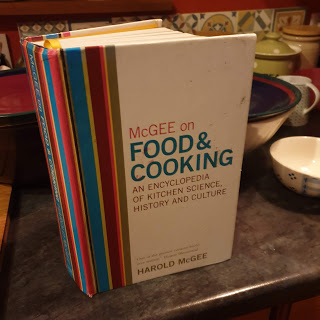
I turned to the goto book when a scientific question about food arises – “McGee on Food and Cooking” – it’s the bible!


Mr. McGee didn’t disappoint! It turns out, that if you use a very wet dough – which all the recipes did – then the protein chains which are the gluten, instead of having to be forced together by kneading, join up of their own accord – magic! (Or rather, science!)
So that was the secret of no-knead bread and by all means, give it a go! It comes out of the oven with a very dry crust because it is baked even hotter than normal bread but there is so much moisture within that it softens and gives you a ciabatta like loaf.

Well, I hope I have presented my credentials as a serious foodie and I have made up for the dearth of food during the challenge.

Please comment – especially if you try any of these ideas so I know you have been here…

Z – Is it the End?

This post is part of the A to Z 2020 Challenge. I have decided to theme the posts around personal and societal responses to the Covid 19 crisis, including my resumption of Blogging!


A to Z – the last letter, the last day…

We sometimes use the expression A to Z to convey the idea of “everything” – all-encompassing. But is Z the last letter in the alphabet, it comes from the Greek letter zeta,  copied from the Phoenecian zayin and given new name to sequence and rhyme with eta and theta which placed it as the 6th letter in the Greek alphabet. We came to Z via Latin where it was initially placed at the end of the alphabet before being ditched altogether and then later restored. all of which goes to show that not only are we humans very fickle about our use and abuse of letters but also that whether you want to encompass everything with first/ last alphabet references – well it depends where you are and when you are… If you want to know more then Wikipedia is here for you!

However, the thing which is occupying those of us bloggers who have made it to the last day of the A to Z 2020 Challenge with 25 posts already under our belts and about to qualify for the Survivors Badge, is that it is all over for this year. Well, yes, and no! It has been hard work, especially if, like me, you only discovered the challenge on day one and therefore had done no preparation, no pre-writing, and then too, I had no readers at that point, having picked up a dormant blog and nursed it back to life. So building readership (956 page views for the month, as I write) has been hard work too but I have had help and encouragement (see my vlog post) and I am very happy with how it has gone. Before I found those helpful friends, I started promoting by doing reviews of the sites I liked from the Master List of participants and got as far as 120 or so out of 500 and so I still have 380 left to look at and dip into their offerings over the past month – so no it ain’t over yet!!!

I am sure everybody will relax and ease off just a little on both writing and promoting although quite a few people I have encountered have multiple blogs so perhaps they will simply switch to other subjects or perhaps find other challenges. I for one will keep posting on a varied range of subjects and in varied styles and I will keep on reaching out to the friends I have made as well as seeking new ones and……..
I can’t wait to see you all here again next year!!!!!


Y is for You…

This post is part of the A to Z 2020 Challenge. I have decided to theme the posts around personal and societal responses to the Covid 19 crisis, including my resumption of Blogging!

There are very few words in dictionaries beginning with X but here is one you can get your teeth into…

You Make The Difference!

I first got a computer of my own around 1998 and shortly afterwards, I broke my hip and had to spend a year on crutches. But like the present lockdown, being stuck at home gave the opportunity to both develop a business and to explore the internet and how it worked.

What I learned was about the biggest business which sorts out the content of the internet at one end of the scale, and about all the individuals who contribute the content itself at the other end of the scale. At that time, the dot-com bubble had just about burst and like many people, I was wondering how you could make money out of something that was so exciting and full of potential as the internet clearly was. Well, it turned out that Google was the answer to that particular conundrum – it’s incredible power to index content plus the concept of matching advertising to words in emails, searches, etc., was winning combination and one that nobody else has since matched. However, without content, there would be nothing to index (or advertise) and whilst, as the years have passed since then, commercial sites have increased in size and sophistication, so too have the mass of individuals who put up content about their hobbies, hobby horses and interests – not least us bloggers!


When I first went on the internet, I was amazed at how much material was already there as a result of individual effort and passion and what a democratic, leveling process this was. Think of the libraries and encyclopedias and textbooks of the past, produced by professional writers and publishers at great cost and not always great profit. Now Wikipedia demonstrates both the strength and pitfalls of “co-operative” authorship. Tales of editing wars over particular entries are legendary. Nonetheless, it is often our first port of call when researching, doing homework or just filling an idle moment – although, surfing the net generally goes by the maxim that the most interesting items always appear when you are researching under time pressure and not so much when you are footloose and fancy-free…

The A to Z Challenge is an example of this liberal, undirected, fascinatingly varied contribution to the evergrowing internet and those who have laboured for  several hours a day for almost 26 days!  Some 500 blogs on the Master list at 2 hours a day for 26 days, well that is 26,000 hours work! We have seen essential oils, photographs, haiku, incredible quilting, politics, self-development to name but a few and all this has been done by YOU!

X is for Xenophobia…

This post is part of the A to Z 2020 Challenge. I have decided to theme the posts around personal and societal responses to the Covid 19 crisis, including my resumption of Blogging!

There are very few words in dictionaries beginning with X but here is one you can get your teeth into…

Xenophobia – is it an instinct?

A little scout on the internet quickly reveals how debatable the subject of Xenophobia and its mechanisms are, almost as intractable as Nature v. Nurture and this is because we are in the same area of research v. belief. It is very hard to devise experiments that conclusively deal with instinct partly because you cannot create or find control subjects who have not been “taught”, however unconsciously, certain biases.
What we do know, is that babies have no undue reactions to babies of other races or colour, and, experimental psychologists claim, adult subjects shown photographs of all sorts of people, react more to different age groups than to different colour or ethnicity.
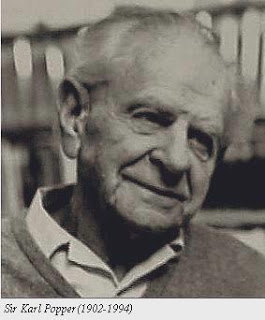
The philosopher Karl Popper said that it didn’t matter how you came up with a scientific theory, it was how you tested it that counted – and that since you can never establish something to be true everywhere, you were better to try and disprove a theory rather than prove it and thus find yourself in possession of something true for the time being… So he disagreed with the ideas of Freud and indeed all psychoanalytical theory because it was impossible to falsify. Einstein’s theories on the other hand, accounted for some of the flaws in the reigning Newtonian physics and so could be accepted for a time (they too have now got holes in and physicists are looking for theories to replace them…).
So perhaps it is not possible to get a definitive answer as to whether xenophobia is an instinct and focus instead on how it plays out in humans.

Is Xenophobia a choice?

If it’s difficult to screen out the teaching of xenophobia to infants then we must examine how that teaching takes place and for sure, it ranges from very subtle and unconscious biases that even good liberals may not be aware of as they raise their children, to raging bigoted indoctrination by other less liberal parents. Then again, it is not just parents who can consciously foster xenophobia – you only have to look at the exploitation of baseless, even non-sensical prejudice against immigrants in the ongoing Brexit debacle where just last week, vegetable pickers were being flown into the UK which has apparently voted against freedom of movement. What were the first actions of Trump upon election – the banning of Muslims traveling from certain countries, playing to the xenophobia he had stoked up in his election campaign? Of course, immigrants are always a handy distraction from politicians’ own failings be they management or putting their hand in the cookie jar.

Who are the ones that choose to teach their children hatred? They can be the wronged and downtrodden or the perpetrators of oppression. In Northern Ireland, partition took place to create six counties where the majority were Protestant and the minority, Catholic. The Protestants abused their power, “Catholics need not Apply” notices in job adverts, Catholic areas allowed to become slums, etc. So Catholics taught their children to hate the “Prods” whilst Protestants had to demonize the Catholics who remained a threat to them – if for no other reason than that their birth rate is higher and they will one day be in a position to vote for the reunification of Ireland.

Who chooses to oppose xenophobia? Liberals for sure, and they are usually prosperous enough not to be threatened by the alleged or actual consequences of high levels of immigration – their children not so likely to attend schools where multi-ethnic classes might reduce the academic standards. But also those who have learned better in life to trust and choose better.

Popper opposed Communism for the same reason as he opposed psychoanalysts – because he saw their beliefs as untestable, as matters of belief and thus choice. I believe that we should hold firm to this understanding that xenophobia is a choice, disproving the theories which its proponents push forward, for whatever spurious reasons and choosing instead to work together as human beings. If the present Covid 19 crisis has taught us nothing else – it is surely that together is strong, sharing is best in a common enterprise to beat the virus…

W is for Work…

This post is part of the A to Z 2020 Challenge. I have decided to theme the posts around personal and societal responses to the Covid 19 crisis, including my resumption of Blogging!

Work in the time of Covid 19

If I was still working at my normal job (General Manager in a Gelato and pudding factory) – I wouldn’t be sitting here blogging! It’s not just the time factor, I struggle to fit in the two-and-a-half hours it mostly takes me to write and promote each piece – no, its the lifestyle. After eleven hours out of the house, I don’t have the energy to sit and blog. Also, my partner is already retired and so, in “normal” times, we need to spend the three days I am not working doing more “together” things.
Covid 19 has changed a lot of things for a lot of people and made them, and certainly me, reassess work, priorities, life.
It has been hard not to be useful when, away from the calm, bird-song filled streets and parks, you know that some people are still working frantically, whether on the “front-line” of the health service or in companies than can do mail-order and delivery -which includes my own place of work. My particular work can’t easily be done from home and because of mine and my partner’s age, I have been furloughed anyway.


“Cedar Waxwing, March 25, 2020, Allen Station Park, Allen, Texas” by gurdonark is licensed under CC BY 2.0

I watch the news of apparent government incompetencies in the supply lines, and the management of testing and I itch to get in there and help sort things out. I have had such varied jobs over the years that I think I have the ability to think outside the box and to translate thought into action, whereas it seems to me, most politicians have no experience outside politics and are lacking in any other skills. At 65, I would until recently, have been entitled to my state pension this year, but being part of the post-war baby-boom, it has been necessary for the government to extend working lives…

New Values

Like many people then, I have had the time and opportunity to think about the future, post-crisis, the so-called “New Normal” and personally, I am not sure I want to go back to work as I used to. My job in the factory was hardly a vocation and the things it was promised that I would be able to apply my skills to improve, have mostly not happened. On the other hand, blogging and knocking an allotment into shape, have felt worthwhile. The allotment, we hope, will make a contribution to our and our daughter’s family larder whilst blogging, has I hope, provided food for thought or maybe entertainment. Coming back to a comatose blog with no followers and slowly making friends and readers suggests some small success. Indeed, it makes me think that I would have enjoyed journalism and even, that it is not too late to contribute in some way. 

Because let’s face it, the world was in a sorry state before Covid 19 – the looming environmental crisis, the rise of right-wing governments, the wanton break up that was Brexit, the failure of capitalism, based as it was on constant growth and spurious war mongering. I remember going to a debate whilst a student, and being frustrated at not being able to formulate the questions I wanted to ask the speakers in time. Over the years, the themes and issues that keep me awake at night, have become clearer to me, the links between things, more obvious. I do know the key questions and have some ideas about the desirable direction of travel – if not the full answers.

It might be some time before my age-group are deemed safe to return to work and my partner and I, when we finally examine this month’s spending, may find we can manage without me going back to work, or maybe I can find a new way to bring in a little extra money to keep us ticking over – for me, just as for many people, there are uncertainties and opportunities in the wake of the coronavirus…

V is for Vlogging – is it the Future or the Devil?

This post is part of the A to Z 2020 Challenge. I have decided to theme the posts around personal and societal responses to the Covid 19 crisis, including my resumption of Blogging!

Spoiler Alert!

If you are a Blogger who thinks that Vloggers are the spawn of the Devil then I must warn you that this post contains a Vlog post – by yours truly – but fear not, I am not going to become a regular Vlogger, this guest appearance is only in the interests of exploring the difference between the two phenomena – Blogging and Vlogging…

Appearances

Have you ever wondered how your favourite Bloggers look? In some cases, (including myself) they do provide a thumbnail or even a proper picture of themselves such as the writers Sharon Cathcart or Sarah Zama. I have a confession to make – my thumbnail is at least a decade old but I feel it strikes the right note – so it stays – if you want to see me now you will have to watch the Vlog… But there are others – and I am not criticising – such as my most faithful visitor, commenter and my mentor for promoting this blog – Frédérique at Applique Patchwork Quilting who remain a mystery. Frédérique has become a voice without appearance in my head and it is strange that we should apply that term to written words and that is one of the things that I want to explore by comparing blogs and vlogs.

Crossover

My first post in this A to Z 2020 Challenge was about Alistair Cooke and I suggested, that because he first wrote down and then read out  his iconic “Letter from America”, Cooke should be considered the prototypical Blogger and in recording his blog he made crossover to broadcasting – first Radio and later TV with his series “America”. Vlogging is the screen crossover child of blogging for the generation who hardly watch TV but get a lot of their screen leads from YouTube.

What is a Vlog?

Just like its progenitor, the Blog, the Vlog is, at its simplest, a dated video post. Like blogs, vlogs have many uses, diary, business tool, marketing, educational, documentary, political message but they differ from blogs because they each have different strengths and weaknesses.
Vlogs are visual and their authors (if blogs can have a voice, then videos can be authored) have to be seen – so not for the shy and self-conscious. in fact vlogs have been analyzed for “personality traits such as Extraversion, Conscientiousness, Agreeableness, Neuroticism, and Openness to Experience.” (Wikipedia) Since we humans learn in so many ways, then for some, video is a far more effective way to learn (or just be entertained) whereas others learn (or enjoy) the written word better. Surely the vlog conveys much more than the words that are spoken – the non-verbal cues are equally important and anyone who hs watched a nerd with a personality void give a video post about something technical will know what I mean. Text is notorious for being unreliable at conveying tone – short texts between people in particular but at least with a blog, we have longer pieces in which to develop our message and over the course of following a particular blogger, we get to recognize more accurately their “voice” and their stance through the choice of words, content and style.
This post has already included several links to other parts of the internet and this is more difficult to do on a vlog or indeed TV broadcasting – how many times following a TV programme – even drama, have we heard over the credits – “If any viewers have been affected by the issues raised in the programme – please go to our website for links to support you…” On the other hand a blog is limited to still photos or embedded videos to show the reader things with a flow – but then again – you can always go back to that link in a blog.

The Best of Both Worlds…

Perhaps the most effective way of managing content, if neither blogging nor blogging conveys everything you need to say, is a combination – a blog with a vlog embedded – that way you can put all the links, the carefully polished words into the blog whilst including the more emotional, personal, non-verbal communication into the vlog element.
To test this, I am going to take a leap into the dark, or considering that I will reveal myself, warts and all, a leap into the light by posting a vlog right here…

And Frédérique, there is something especially for you…


So there it is – Hit or a Miss? You decide…


You are invited to the Inlinkz link party!

Click here to enter


U is for UB40

This post is part of the A to Z 2020 Challenge. I have decided to theme the posts around personal and societal responses to the Covid 19 crisis, including my resumption of Blogging!


Two days ago I said how important music was to me (and it’s still not too late to join the game ) – not only listening to the music itself, but the musicology – the story of where the music came from, the influences, the writers, composers, and even the producers and my relationship to the music of UB40 typifies how music has changed for me and I suspect lots of others.

When I met my partner back in the mid 80’s, I did not like spending money on myself, so she made up for that on birthdays and Christmas by buying me lots of music! UB40’s “Labour of Love” was one such (vinyl) album and featured the chart-topping “Red, Red Wine” – a cover of the 1967 Neil Diamond song but in the 1968 reggae styled version by Tony Tribe. This album gave rise to the idea that all UB40’s songs were covers but this is not the case yet the band with a very mixed ethnicity make-up, was very influenced by Ska, early Reggae and Lovers Rock. By the time they hit the big time and went to Jamaica, they were looking forward to meeting their musical roots who in turn were looking forward to the band which had given their careers a much-needed boost!


Named for the form issued to unemployed people applying for the dole, the members of UB40 hailed from Birmingham and were all unemployed when they formed up and indeed – their first album was called “Signing Off” to signify that they no longer needed to claim unemployment benefit. But all of these details had to wait for the internet to develop before I could become aware of them.

Meanwhile, CD’s came and went and now we have Spotify as my default way to listen to music. Now I have more musicology on the internet than I know what to do with, concerts on TV, access to many groups whole back catalogues yet I still have that first UB40 vinyl album given to me by my beloved – and hey! Guess what? Vinyl records are back and we can again dream of affording a bigger and better hi-fi system,  maybe with exposed valve amplifier – nah! Just play me UB40 on any tinny device and you will find me singing along.

T is for Trust…

This post is part of the A to Z 2020 Challenge. I have decided to theme the posts around personal and societal responses to the Covid 19 crisis, including my resumption of Blogging!

Do you trust your Politicians?

In a democracy, we choose people to represent us in doing the job of managing our country because the knowledge, processes and institutions involved in running a country are beyond most of us. In an ideal world, politicians would be elder citizens who have worked in the “real” world and bring a variety of experiences to the table. Too often, we get instead, a class of professional politicians who have never done a day’s work outside the bubble of government.

We have to place our trust in the politicians we elect and under the stress test of the present Covid 19 crisis, many governments are being found wanting, many are taking the opportunity to seize power in a more authoritarian way under cover of the crisis yet some governments, many led by women, are doing much better than others.

Sex and Trust

I am fascinated by the part that instinct plays in the human way of life. We must spend something like 21 years raising a family so the power of sex and love must glue us together for the duration through what, for most couples, is bound to have some ups and downs. Yet is said that infidelity on the part of men is down to their instinct to spread their seed wherever they can, and before the advent of genetic testing, men (and women) could mostly get away with this. However trust, once broken by infidelity discovered, is hard, and for some, impossible to rebuild. Women are often portrayed as the opposite of wild oat sowing men – faithful nest-builders yet not only among humans but also among some birds, has it been discovered that certain females partner up with good providers – first of nest-building materials and then food for the chicks. However the female then secretly mates with a more “fit” and showy male thus getting the best of both worlds…
In some bird species, such as the Bower Bird, it is the quality of the nest building and decorating which is the criteria for selection of a mate by the female whilst for others, it’s all about the Peacock plumage. How does this relate to trust in politicians?

“Male” and “Female” Values in politicians.

In an article by Avivah Wittenberg-Cox in Forbes, she writes about how the countries which have the best response to the corona virus crisis have one thing in common – women leaders! Iceland, Taiwan, Germany, New Zealand, Finland, Iceland and Denmark all have women Premieres and all have had better responses to the crisis than say Britain, the US, Brazil, India or Russia where right-wing politicians are consolidating power and wielding it unwisely at the cost of the lives of their citizens. Taiwan has had an exemplary response to the virus – a fast, testing and tracing based response by Tsai Ing-wen in Taiwan (which was lost to the world because the WHO is China leaning and wouldn’t acknowledge the existence of Taiwan or the warnings it issued about what was happening in China let alone report on its successful strategy!).
Iceland is a large island with a small population and a pioneer of whole-population genetic testing (which revealed lots of infidelity-produced babies that led to many divorces in Iceland) and so tested its entire population under the leadership of Prime Minister Katrín Jakobsdóttir, and “will become a key case study in the true spread and fatality rates of COVID-19” according to Avivah Wittenberg-Cox. Avivah goes on to suggest that for years, research has shown that the leadership styles of women have much to recommend them and points us to an article on 7 Leadership Lessons men can Learn from Women.

Are men led by the instinct first to reproduce and then to grasp power – the biggest and best tail feathers? Are some women seduced by the Donald Trumps of this world with their bright orange colouring and big towers? Are all women consummate nest-builders and faithful partners? How much are we driven by instinct to the detriment of common sense? These are the things that keep me awake at night – but on the evidence of the present crisis, whatever drives the women premieres in whom their people have placed their trust, seems to be working much better than the countries where men are the chosen ones…