1 – There is a cake shop in Keighley, my local town, whose window always displays the most amazingly decorated cakes and this is their Christmas window display. I always stop to admire their work but this time I went in for a couple of homemade Mincepies and a chat with the utterly delightful owner…
2 – I completed the last demonstration piece of weaving on my loom – Satin Stitch. Now it may be hard to imagine that this is the stitch that produces all those shiny Satin finishes, but that’s because I was using very thick cotton yarn. So perhaps this example might be better called Weft-faced Weave. Then below, is the reverse Warp-faced Weave which is exactly what you see on the reverse of Weft-faced Weave… It is a form of exaggerated twill where the Warp skips over 5 warps before being tied in by a single stitch. If this was done with tiny, shiny silk threads, it would indeed have a shiny, satin finish.
3 – I made a Persimmon Cake yesterday and I have another in the oven as I type. Barbara’s brother went on a cruise many years ago an took up with an American lady, Cindy, and had a long-distance relationship for a couple of years. If she came over at this time of year, she would bring Persimmon Cake made to a secret family recipe which she would not reveal and which I have been trying to emulate ever since – there being plent of recipes on the internet to choose from. Als I can never achieve the moist, rich fruit cake style of Cindy’s family recipe – but the results of my experiments go down well each year nevertheless…
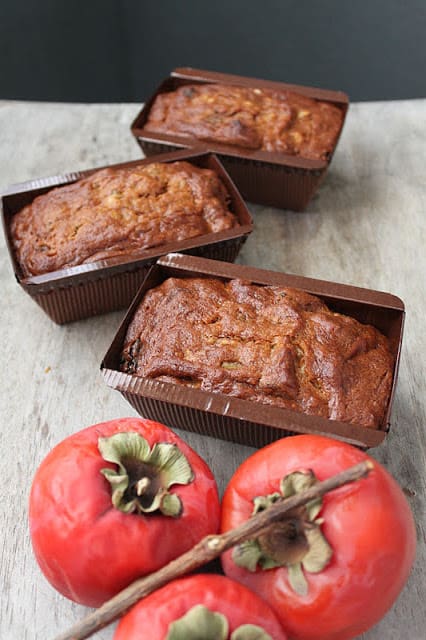
The Persimmon cake wrapped and drizzled with rum, ready for the family on Boxing Day…
4 – Barbara managed to make her coffee date with her best friend Jan on Friday!
5 – Jan uses the tote bag I helped Barbara make for her, every day! She says it goes with everything! FYI – furnishing fabric…
6 – A nice repeat shot of our Kunafa Cheese Bomb at the factory – don’t worry, the only thing this bomb can damage is your waistline! For those who don’t know, kunafa is having a moment – it started with Dubai Chocolate which a chocolate bar filled with Kunafa (like a very fine shredded wheat) toasted and mixed with Pistachio Sauce. Our Kunafa bomb is a pot lined with Kunafa, filled with sweetened cream cheese and sealed on top with more Kunafa – in the words of Weigh-watchers and the Pet Shop Boys – “It’s a Sin!”
7 – Found a Christmas present fo Barbara which I know she will like – I always want to choose something for her to wear but she never likes the things I choose so I am playing safe with this one 0 remind me to tell you what it was, after Christmas…
8 – Just checked the cake and lowered the temperature and put it back in for another 15 minutes – smells good! (You will note I am reprting gratitudes in real time here)…
9 – Barbara’s daughter is sending a stream of lovely videos of her trip to Bali which it seems is centred on a yoga retreat – so a happy bunny…
10 – Managed to think of 10 gratitudes for this week…
If you have seen my Theme Reveal for the A2Z Challenge 2022, then you will know that I am writing about becoming Vegetarian gradually as a response to the crisis in food supply chains sparked by the pandemic and made worse by the WAR in Ukraine. As well, I am keeping to the theme I originally planned of food which can be eaten in its own right as well as becoming an ingredient in other dishes…
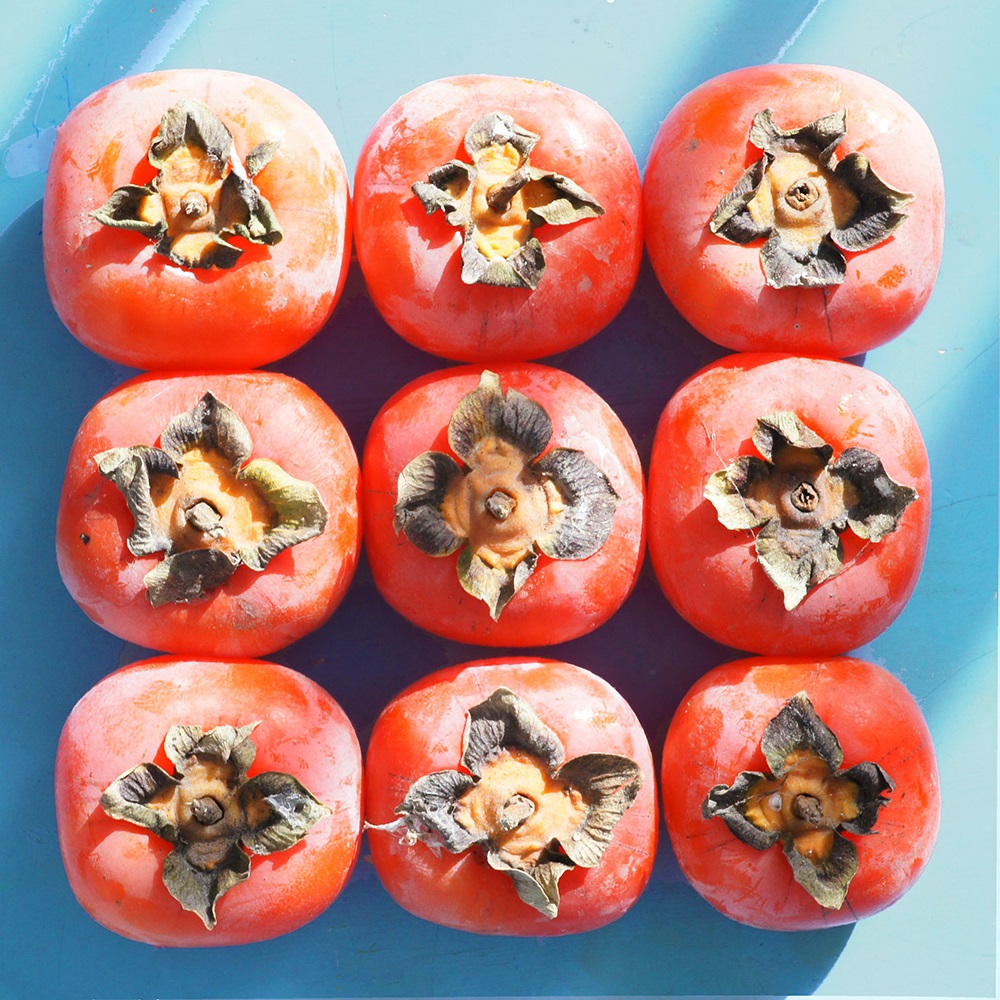
Persimmons, also known as Sharon Fruit, are certainly edible in their own right so they meet the criteria for my theme, but to be honest, by the time they are ripe enough to eat (very ripe!) they are rather bland, up to that point, they are rather astringent and not very nice to eat. You could add them to a fruit salad where they can be balanced by other fruit at either the astringent or ripe stage, but they really come into their own as an ingredient in Persimmon Cake – here’s how I learned about it…
My partner’s brother during a phase of being single, went on a cruise and met and dated a lovely American woman and for a time, they conducted a long-distance relationship with visits. She came to England and took to sending his and my partner’s parents a Persimmon Cake each year. It was a dark, rich, densely fruited cake made to a secret family recipe (Persimmons grow extensively in the southern states) and as guarded as the recipe was, so was the cake she sent and we were lucky to get given a small slice! So I had no option but to try and find a recipe on the internet and try to recreate the secret recipe – I am still searching…
I will not give you a recipe as such, because I still try a different recipe each time in my long search, but I will tell you what I have come to understand about this cake, which has an almost unique method. A Persimmon cake is made with a fruity batter where the acidity of the fruit, even when ripe and past the astringent stage, is what activates baking soda to make the cake rise. To disambiguate baking soda and baking powder, baking powder contains baking soda (bicarbonate of soda) together with an acid such that when mixed into a moist cake, they react and produce carbon dioxide bubbles. In Persimmon cake, you use more baking soda and a little baking powder as the fruit does the activating. Some recipes suggest adding the baking soda to the blender with the persimmons but I recommend mixing it with the flour and other dry ingredients – otherwise, the fruit froths up in the blender and I find it harder to mix with the dry ingredients.
Beyond that, Persimmon Cake has a lot of cake spices, which obviously, you can adjust to your own taste, pecan nuts (or walnuts if you can’t get them) and dried fruit appear in some recipes. The first time I made it, I chopped the persimmons into tiny pieces rather than blending them, which made the cake mix very orange and yet as it bakes, the fruit, even when pureed, turns to a dark brown and I wonder if that might be a feature of the secret family recipe – puree and thinly sliced persimmon. I include a link to a good post on PersimmonsP and Persimmon cake here but try different ones out and see what you think…
I have spoken about beans and using small amounts of chorizo or prawns as a way to reduce your meat intake but pulses also covers a multitude of types which you might not think of in the same way as beans but pulses, or legumes, are anything that grows in a pod, – like peas, or peanuts (which grow in underground pods) but also lentils as well as the rest of the beans – butter, soya, broad, etc. Here is a good article that sets out a few of the well-known beans My favourite way of eating beans is in Cassoulet, originally a way of using leftover meats from a banquet by extending them with dried sausage (garlic, chorizo etc.) and beans. To this day most French butchers or delis offer cassoulet. It is similar to the great American staple Pork and Beans but given our current times and the increasing cost of meat (monetarily and environmentally), I recommend using strong flavoured sausage like chorizo and reducing the meat proportion altogether.
Cassoulet 1. Cook onions till transparent see M for using the microwave to speed this up. Leeks are good too. Garlic too, to your taste. 2. fry mushrooms and add carrots and other root vegetables. 3. Add dried beans that have soaked overnight and then been rinsed or if you have fresh beans then do the next stage first. 4. Add stock of any kind – enough to cover the beans and tinned tomatoes. 5. Add the chopped leftover meats and dried/cured sausages 6. place in a casserole dish and cover, bake in the oven – slow to medium until the beans are cooked – enjoy!
Pressure Cookers
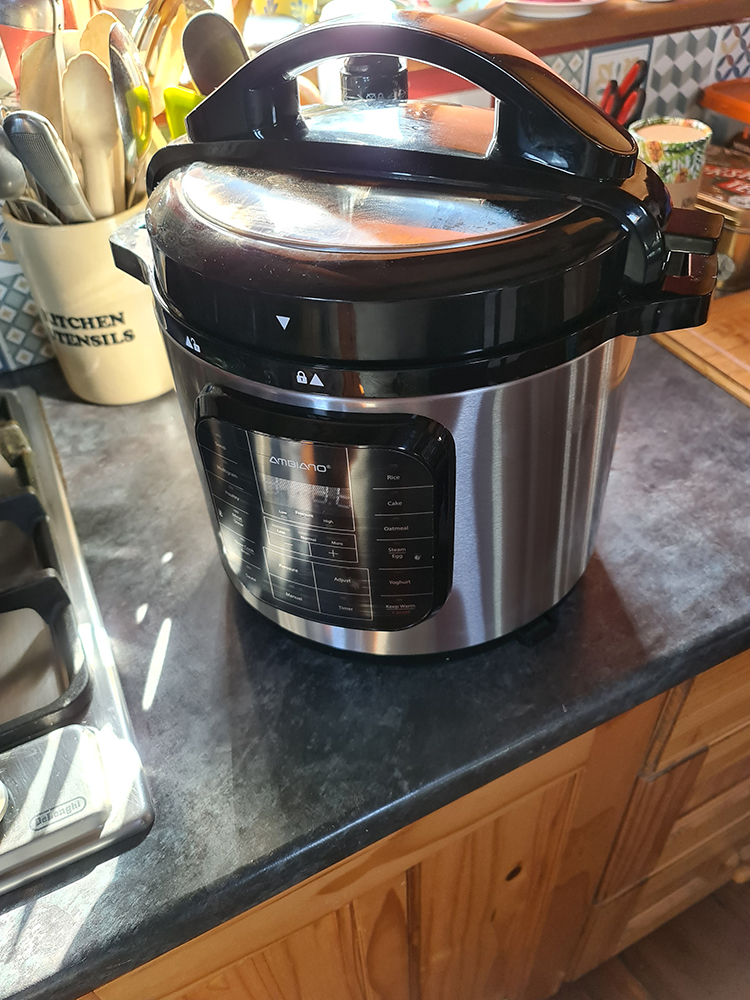
I grew up with pressure cooking, mostly my mother used a pressure cooker to speed up cooking potatoes, but the microwave has come to supplant the pressure cooker even though it does not do exactly the same thing. She also cooked Christmas puddings in the pressure cooker and had a specially tall one for bottling fruit in tall Kilner jars. Pressure cookers cook more quickly because of the raised pressure so they are still more energy-efficient than cooking in a saucepan on the stovetop. You really need a gas hob to get the temperature just right once the correct pressure is reached. I probably wouldn’t use a pressure cooker to cook potatoes now, but they are ideal for cooking pulses – the bigger the bean, the better! And today, there is a new generation of pressure cookers that are self-heating rather than cooker top. They are energy-efficient and programmable and here is my latest addition to my kitchen…
My 21st century pressure cooker…
So far so good – I have yet to try cooking pulses and as there is only one setting for beans, I anticipate using the +/- buttons to find the right cooking time for different beans… If you want save energy, keep in flavour , I urge you to give pressure cookers a try.
Let me know if you have any secret family recipes for Persimmon Cake (or anything else) or if you use a pressure cooker – please share your story in the comments if not your secret recipes…